Latest
issue
GET SPA BUSINESS
magazine
Yes! Send me the FREE digital editions of Spa Business and Spa Business insider magazines and the FREE weekly Spa Business and Spa Business insider ezines and breaking news alerts!
Not right now, thanksclose this window I've already subscribed.
Uniting the world of spa & wellness
Get Spa Business and Spa Business insider digital magazines FREE
Sign up here ▸
News   Features   Products   Company profilesProfiles   Press releasesProfiles   Magazine   Handbook   Advertise    Subscribe  
NEWS
UK Active and Savanta launch quarterly consumer engagement insight
POSTED 15 May 2024 . BY Kath Hudson
Well motivated members know the gym is good for their physical and mental health Credit: shutterstock/Ground Picture
Trade body UK Active has launched a regular Consumer Engagement report
Insights have been compiled over 16 months and following 10,000 interviews
Improving/maintaining physical strength and fitness is the most popular reason for joining
Cost, time and motivation are the main reasons for ending a membership
Improving physical strength and fitness, mental health and confidence are the main reasons for joining a health club, while cost, time and motivation are the main reasons for leaving.

These were some of the key findings of the first UK Active Consumer Engagement report, undertaken in collaboration with insight specialist Savanta.

The report is based on 16 months' of data and five waves of polling.

This first report will be followed by the publication of quarterly insights which provide analysis of consumer attitudes and trends – supporting the sector in its goal of reaching five million new members by 2030 as part of UK Active’s Vision 2030 strategy.

It will also be used to help the sector create a more inclusive service, with new programmes and services and insight-led, inclusive, targeted campaigns.

More than 10,000 existing, former and potential health club members were asked about their physical activity levels; health club membership status and usage; barriers and motivations to physical activity participation; what health means to them; the impact of the cost-of-living crisis; and how the sector is supporting them with long-term health conditions.

The fact that existing, former and potential health club members were polled on a variety of variables enables the report to make numerous comparisons between these three groups, creating complex layers of analysis which are beyond the scope of this news story.

You can enjoy our summary below, look out for more in-depth analysis in the next edition of HCM and read the report here.

HCM SUMMARY – UK Active Consumer Engagement report

Reasons for joining
At 82 per cent, improving or maintaining physical strength and fitness are the most popular reasons for joining a gym.

This was followed by improving mental health and wellbeing, including managing anxiety or depression (79 per cent).

Improving overall confidence and improving and maintaining physical appearance both scored 75 per cent, while 67 per cent took out a membership to improve their sleep – a growing priority for consumers and a factor that has not been assessed in many previous research studies.

Also scoring well were making new friends (46 per cent) or to prepare for an important event such as a wedding, or holiday (43 per cent).

The most important factors for choosing which specific health club to join are location, cost, quality of facilities through the variety of weights and machines and swimming pool access.

Of lesser importance for existing members and the lowest reasons provided for selecting a particular facility were the staff (6 per cent), recommendations from someone else (6 per cent), additional facilities such as creche, café (6 per cent) and access to online content (3 per cent).

There are many reasons for these 'lesser importance' scores. There is no breakdown given in the research as to whether the clubs selected were staffed or unstaffed and this would impact the staffing score, for example. Also it could be that access to online content is now so ubiquitous that it is expected and therefore is no longer a differentiator.

The scores do not indicate that these variables are universally of lesser importance in choosing to join a health club, only that they are not a differentiator between clubs.

'Current members' are the biggest engagers in home activity at 42 per cent, compared to 22 per cent of 'never-been' members, while 34 per cent of 'former members' still work out at home, suggesting they still have an appetite for being active, but are using other methods of exercising outside the health club.

Barriers
The main reasons for not taking out a health club membership were cited as the cost, with 69 per cent still seeing a membership as too expensive and there being 'no need for a membership' (47 per cent).

It's worth noting that low-cost options are not available everywhere and in rural locations, with low populations, memberships can cost more than in urban areas.

Not having the confidence to join a health club was cited by 43 per cent and some said they felt uncomfortable at the thought of joining a health club or leisure facility or were simply not interested.

Why consumers view health clubs as being too costly to join is not examined, so we are not clear on whether this is an absolute measure – ie, they do not have the funds – whether this is an assessment of the perceived value of health clubs, given what consumers understand about them or whether this is a judgement they make around expenditure in relation to health clubs versus other areas of discretionary spend.

These are all areas where HCM would like to see further research being conducted.

Cost was also the main reason for ending a membership; followed by not using the health club enough; the impact of the cost of living crisis; lost motivation and not having enough time.

The UK Active/Savanta research found people appear to lose the most motivation in July, possibly because of the draw to be outside, childcare responsibilities and the holiday season bringing about a loss of routine.

Opportunities or challenges
Solutions need to be found to the main issues of cost, time and motivation, which cause people to leave. UK Active suggests flexible price plans, loyalty points and schemes for regular attendance.

Digital tours could be used more as a tool to overcome the fear of joining, so prospective members have an idea of what to expect.

UK Active is calling on the government to help spread the message of the health benefits of health club membership, as well as making people with health conditions aware of how local gyms and leisure centres can help them.

Efforts should be made to keep current members engaged, for example, by highlighting new products.

Next steps
UK Active will be using the data in its lobbying efforts and calling for the government to raise awareness of health programmes available in health clubs and leisure centres.
Huw Edwards, CEO of UK Active, said: “Any future government must prioritise three simple things if it is serious about shifting the dial on the nation’s health and our economy. The first is working with our sector to recognise the fullest role it can play in supporting the nation’s mental health.

“The second is empowering our sector to reach even more people, which can be achieved through reforms to the tax and regulatory system that would help operators to lower prices. Finally, collaborate with our sector on a national campaign to increase awareness of the fantastic health programmes that are available in gyms* and leisure centres," he said.

UK Active Consumer Engagement report
The insight assessed:
• Current physical activity levels
• Gym membership status, length, usage and uptake
• Barriers and motivations for physical activity participation and membership at a gym or leisure centre
• Workplace physical activity opportunities and impact of avoiding sickness and work absence
• Leisure facility digital platform user experience
• What health means to consumers and how leisure facilities can support health conditions
• The impact of the cost-of-living crisis
• Environmental sustainability importance

Sign up to get the your free digital edition of HCM containing our report on this research.

* Editor's note
In using the term 'gym' UK Active means health clubs, studios and gyms across all sectors.

RELATED STORIES
  4Global and UK Active launch private sector health club benchmarking


The first annual Private Sector Benchmarking report was released today (27 March). A collaboration between UK Active and 4Global, the aim of the research is to provide accurate insight into the state of UK-based private sector health clubs.
  New campaign challenges politicians to prove they're 'Fit for Office' by engaging in physical activity


In a soft power exercise, politicians in the UK have been invited to take part in a challenge which encourages them to be more active, while raising awareness of the benefits of physical activity.
  No wealth without health, says UK Active chief Huw Edwards


As the UK's political parties set their sights on the general election in 2024, UK Active CEO, Huw Edwards, says there can be no economic growth without better health in the population.
MORE NEWS
Accor reinvents its 1970s Thalassa hotel to launch Bel Hotel Oléron Thalasso and Spa
Bel Hotel Oléron Thalasso and Spa, MGallery Collection has opened on the French island Île d'Oléron off the country’s western coast with a 27-treatment-room spa.
Brain plasticity could be improved by manipulating the gut microbiome
Manipulating the gut microbiome could become a powerful tool for preserving brain health and resilience as people age, according to research led by Professor Paola Tognini, a neuroscientist at the Sant'Anna School of Advanced Studies in Pisa, Italy.
Jessica Sloyan establishes UK Academy of Sound and Therapeutic Arts
Jessica Sloyan, a wellness operations and training expert, has established an independent private training academy to provide professional qualifications for practitioners looking to offer immersive wellness experiences.
ISPA releases full 2026 US Spa Industry Study as annual industry revenue rises by US$1bn
The International Spa Association (ISPA) has published its full 2026 US Spa Industry Study, providing further insights into the region’s total US$1 billion (€855 million, £780 million) industry revenue increase from 2024 to 2025.
+ More news   

FEATURED SUPPLIERS

Elemis launches its first Red Light Mask, lighting the way to advanced skin health and restoration
Elemis has branched into LED skincare with the launch of its breakthrough Red Light Mask. [more...]

Embrace the chill: TechnoAlpin's Snowsky revolutionises post-fitness recovery with falling snow
In the fast-paced world of fitness and wellness, where high-intensity workouts push us to our limits and the sweat pours, the importance of efficient recovery cannot be overstated. [more...]
+ More featured suppliers  
COMPANY PROFILES
Capsix

Founded in 2016 by Carole Eyssautier, PhD in AI, François Eyssautier, robotics engineer, and Stéphan [more...]
Fenix Group srl

Founded in Italy by Gianluca Cavalletti, Fenix Group introduced Endospheres with the aim of redefini [more...]
+ More profiles  
CATALOGUE GALLERY
 

+ More catalogues  

DIRECTORY
+ More directory  
DIARY


23-26 Aug 2026

Elevate Spa Riviera Maya Edition

The Riviera Maya Edition Kanai, Playa del Carmen, Mexico
31 Aug - 02 Sep 2026

SpaTec North America

Pier Sixty Six, Fort Lauderdale, United States
+ More diary  
 
ABOUT LEISURE MEDIA
LEISURE MEDIA MAGAZINES
LEISURE MEDIA HANDBOOKS
LEISURE MEDIA WEBSITES
LEISURE MEDIA PRODUCT SEARCH
 
SPA BUSINESS
SPA OPPORTUNITIES
SPA BUSINESS HANDBOOK
PRINT SUBSCRIPTIONS
FREE DIGITAL SUBSCRIPTIONS
ADVERTISE . CONTACT US

Leisure Media
Tel: +44 (0)1462 431385

©Cybertrek 2026
Uniting the world of spa & wellness
Get Spa Business and Spa Business insider digital magazines FREE
Sign up here ▸
News   Products   Magazine   Subscribe
NEWS
UK Active and Savanta launch quarterly consumer engagement insight
POSTED 15 May 2024 . BY Kath Hudson
Well motivated members know the gym is good for their physical and mental health Credit: shutterstock/Ground Picture
Trade body UK Active has launched a regular Consumer Engagement report
Insights have been compiled over 16 months and following 10,000 interviews
Improving/maintaining physical strength and fitness is the most popular reason for joining
Cost, time and motivation are the main reasons for ending a membership
Improving physical strength and fitness, mental health and confidence are the main reasons for joining a health club, while cost, time and motivation are the main reasons for leaving.

These were some of the key findings of the first UK Active Consumer Engagement report, undertaken in collaboration with insight specialist Savanta.

The report is based on 16 months' of data and five waves of polling.

This first report will be followed by the publication of quarterly insights which provide analysis of consumer attitudes and trends – supporting the sector in its goal of reaching five million new members by 2030 as part of UK Active’s Vision 2030 strategy.

It will also be used to help the sector create a more inclusive service, with new programmes and services and insight-led, inclusive, targeted campaigns.

More than 10,000 existing, former and potential health club members were asked about their physical activity levels; health club membership status and usage; barriers and motivations to physical activity participation; what health means to them; the impact of the cost-of-living crisis; and how the sector is supporting them with long-term health conditions.

The fact that existing, former and potential health club members were polled on a variety of variables enables the report to make numerous comparisons between these three groups, creating complex layers of analysis which are beyond the scope of this news story.

You can enjoy our summary below, look out for more in-depth analysis in the next edition of HCM and read the report here.

HCM SUMMARY – UK Active Consumer Engagement report

Reasons for joining
At 82 per cent, improving or maintaining physical strength and fitness are the most popular reasons for joining a gym.

This was followed by improving mental health and wellbeing, including managing anxiety or depression (79 per cent).

Improving overall confidence and improving and maintaining physical appearance both scored 75 per cent, while 67 per cent took out a membership to improve their sleep – a growing priority for consumers and a factor that has not been assessed in many previous research studies.

Also scoring well were making new friends (46 per cent) or to prepare for an important event such as a wedding, or holiday (43 per cent).

The most important factors for choosing which specific health club to join are location, cost, quality of facilities through the variety of weights and machines and swimming pool access.

Of lesser importance for existing members and the lowest reasons provided for selecting a particular facility were the staff (6 per cent), recommendations from someone else (6 per cent), additional facilities such as creche, café (6 per cent) and access to online content (3 per cent).

There are many reasons for these 'lesser importance' scores. There is no breakdown given in the research as to whether the clubs selected were staffed or unstaffed and this would impact the staffing score, for example. Also it could be that access to online content is now so ubiquitous that it is expected and therefore is no longer a differentiator.

The scores do not indicate that these variables are universally of lesser importance in choosing to join a health club, only that they are not a differentiator between clubs.

'Current members' are the biggest engagers in home activity at 42 per cent, compared to 22 per cent of 'never-been' members, while 34 per cent of 'former members' still work out at home, suggesting they still have an appetite for being active, but are using other methods of exercising outside the health club.

Barriers
The main reasons for not taking out a health club membership were cited as the cost, with 69 per cent still seeing a membership as too expensive and there being 'no need for a membership' (47 per cent).

It's worth noting that low-cost options are not available everywhere and in rural locations, with low populations, memberships can cost more than in urban areas.

Not having the confidence to join a health club was cited by 43 per cent and some said they felt uncomfortable at the thought of joining a health club or leisure facility or were simply not interested.

Why consumers view health clubs as being too costly to join is not examined, so we are not clear on whether this is an absolute measure – ie, they do not have the funds – whether this is an assessment of the perceived value of health clubs, given what consumers understand about them or whether this is a judgement they make around expenditure in relation to health clubs versus other areas of discretionary spend.

These are all areas where HCM would like to see further research being conducted.

Cost was also the main reason for ending a membership; followed by not using the health club enough; the impact of the cost of living crisis; lost motivation and not having enough time.

The UK Active/Savanta research found people appear to lose the most motivation in July, possibly because of the draw to be outside, childcare responsibilities and the holiday season bringing about a loss of routine.

Opportunities or challenges
Solutions need to be found to the main issues of cost, time and motivation, which cause people to leave. UK Active suggests flexible price plans, loyalty points and schemes for regular attendance.

Digital tours could be used more as a tool to overcome the fear of joining, so prospective members have an idea of what to expect.

UK Active is calling on the government to help spread the message of the health benefits of health club membership, as well as making people with health conditions aware of how local gyms and leisure centres can help them.

Efforts should be made to keep current members engaged, for example, by highlighting new products.

Next steps
UK Active will be using the data in its lobbying efforts and calling for the government to raise awareness of health programmes available in health clubs and leisure centres.
Huw Edwards, CEO of UK Active, said: “Any future government must prioritise three simple things if it is serious about shifting the dial on the nation’s health and our economy. The first is working with our sector to recognise the fullest role it can play in supporting the nation’s mental health.

“The second is empowering our sector to reach even more people, which can be achieved through reforms to the tax and regulatory system that would help operators to lower prices. Finally, collaborate with our sector on a national campaign to increase awareness of the fantastic health programmes that are available in gyms* and leisure centres," he said.

UK Active Consumer Engagement report
The insight assessed:
• Current physical activity levels
• Gym membership status, length, usage and uptake
• Barriers and motivations for physical activity participation and membership at a gym or leisure centre
• Workplace physical activity opportunities and impact of avoiding sickness and work absence
• Leisure facility digital platform user experience
• What health means to consumers and how leisure facilities can support health conditions
• The impact of the cost-of-living crisis
• Environmental sustainability importance

Sign up to get the your free digital edition of HCM containing our report on this research.

* Editor's note
In using the term 'gym' UK Active means health clubs, studios and gyms across all sectors.

RELATED STORIES
4Global and UK Active launch private sector health club benchmarking


The first annual Private Sector Benchmarking report was released today (27 March). A collaboration between UK Active and 4Global, the aim of the research is to provide accurate insight into the state of UK-based private sector health clubs.

New campaign challenges politicians to prove they're 'Fit for Office' by engaging in physical activity


In a soft power exercise, politicians in the UK have been invited to take part in a challenge which encourages them to be more active, while raising awareness of the benefits of physical activity.
No wealth without health, says UK Active chief Huw Edwards


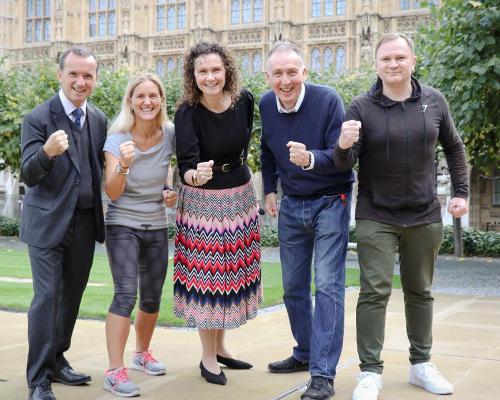
As the UK's political parties set their sights on the general election in 2024, UK Active CEO, Huw Edwards, says there can be no economic growth without better health in the population.
MORE NEWS
Accor reinvents its 1970s Thalassa hotel to launch Bel Hotel Oléron Thalasso and Spa
Bel Hotel Oléron Thalasso and Spa, MGallery Collection has opened on the French island Île d'Oléron off the country’s western coast with a 27-treatment-room spa.
Brain plasticity could be improved by manipulating the gut microbiome
Manipulating the gut microbiome could become a powerful tool for preserving brain health and resilience as people age, according to research led by Professor Paola Tognini, a neuroscientist at the Sant'Anna School of Advanced Studies in Pisa, Italy.
Jessica Sloyan establishes UK Academy of Sound and Therapeutic Arts
Jessica Sloyan, a wellness operations and training expert, has established an independent private training academy to provide professional qualifications for practitioners looking to offer immersive wellness experiences.
ISPA releases full 2026 US Spa Industry Study as annual industry revenue rises by US$1bn
The International Spa Association (ISPA) has published its full 2026 US Spa Industry Study, providing further insights into the region’s total US$1 billion (€855 million, £780 million) industry revenue increase from 2024 to 2025.
Hot spring wellness community Ameyalli sells residences and breaks ground on resort and spa
Ameyalli, the 78-acre wellbeing resort and residential community in Midway in Utah, US, has broken ground on phase two of the hot spring development – the Ameyalli Resort and Spa – which is due to open in 2028.
AI firm Midjourney enters wellness with spa, fitness and body scanning concept
TLee Spas and Wellness has revealed the design concept for a high-tech spa with body mapping scanners to improve public health, for AI company Midjourney.
+ More news   
 
FEATURED SUPPLIERS

Elemis launches its first Red Light Mask, lighting the way to advanced skin health and restoration
Elemis has branched into LED skincare with the launch of its breakthrough Red Light Mask. [more...]

Embrace the chill: TechnoAlpin's Snowsky revolutionises post-fitness recovery with falling snow
In the fast-paced world of fitness and wellness, where high-intensity workouts push us to our limits and the sweat pours, the importance of efficient recovery cannot be overstated. [more...]
+ More featured suppliers  
COMPANY PROFILES
Capsix

Founded in 2016 by Carole Eyssautier, PhD in AI, François Eyssautier, robotics engineer, and Stéphan [more...]
+ More profiles  
CATALOGUE GALLERY
+ More catalogues  

DIRECTORY
+ More directory  
DIARY


23-26 Aug 2026

Elevate Spa Riviera Maya Edition

The Riviera Maya Edition Kanai, Playa del Carmen, Mexico
31 Aug - 02 Sep 2026

SpaTec North America

Pier Sixty Six, Fort Lauderdale, United States
+ More diary  


ADVERTISE . CONTACT US

Leisure Media
Tel: +44 (0)1462 431385

©Cybertrek 2026

ABOUT LEISURE MEDIA
LEISURE MEDIA MAGAZINES
LEISURE MEDIA HANDBOOKS
LEISURE MEDIA WEBSITES
LEISURE MEDIA PRODUCT SEARCH
PRINT SUBSCRIPTIONS
FREE DIGITAL SUBSCRIPTIONS