Latest
issue
Uniting the world of spa & wellness
Get Spa Business and Spa Business insider digital magazines FREE
Sign up here ▸
News   Features   Products   Company profilesProfiles   Press releasesProfiles   Magazine   Handbook   Advertise    Subscribe  
NEWS
Wellness real estate market booming – forecast to reach $913bn by 2028, reports GWI
POSTED 17 May 2024 . BY Megan Whitby
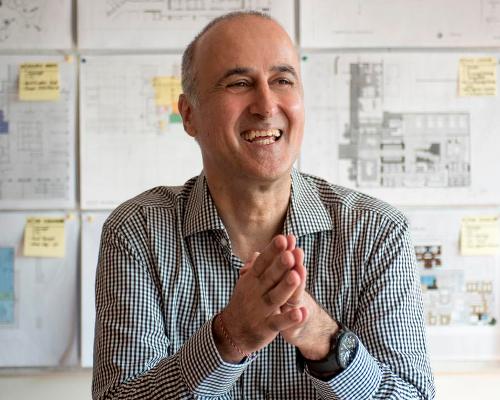
Established operators like SHA Wellness are making substantial investments in wellness real estate – the group’s upcoming Emirates outpost will feature a large real estate component with 150 residences and 120 suites Credit: SHA Wellness

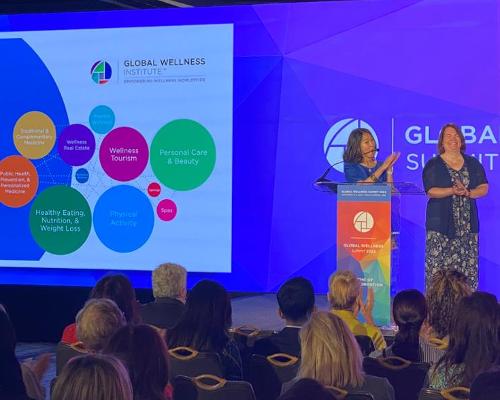
Credit: GWI
More than any other wellness sector, wellness real estate embodies the multidimensionality of wellness
– Katherine Johnston
The GWI reports that wellness real estate surged from US$225 billion in 2019 to US$438 billion in 2023, with 18.1 per cent annual growth
The findings come from the GWI's latest research paper – Wellness Real Estate: Market Growth (2019-2023) and Future Developments – which indicates wellness real estate is the fastest-growing segment in the wellness economy
The market is projected to grow 15.8 per cent annually, reaching US$913 billion by 2028, driven by increased awareness of the impact of environments on health and wellbeing
The US, China and the UK lead the market, accounting for the majority of global wellness real estate investments
The Global Wellness Institute (GWI) has released promising new research on the wellness real estate market at its third-annual Wellness Real Estate & Communities Symposium in Manhattan.

The GWI defines wellness real estate as homes and buildings that are proactively designed, built and operated to support the holistic health of their residents.

Called Wellness Real Estate: Market Growth (2019-2023) and Future Developments, the paper reveals wellness real estate is by far the fastest-growing segment in the 11-sector wellness economy, surging from US$225 billion in 2019 to US$438 billion in 2023.

This represents an 18.1 per cent annual growth over the past four years, which is significantly higher than the 5.1 per cent annual growth rate for the overall global construction industry.

According to the GWI, the pandemic supercharged the market because it dramatically accelerated the understanding among consumers and the building industry about how much external environments impact our physical and mental health.

Now, the GWI forecasts that the sector will grow 15.8 per cent annually from 2023 to 2028 when it will approach the trillion-dollar mark (US$913 billion).

“As long-time industry researchers, we’re not at all surprised by this finding,” said Katherine Johnston and Ophelia Yeung, GWI’s senior research fellows.

“More than any other wellness sector, wellness real estate embodies the multidimensionality of wellness. When done right, it has the greatest potential within the wellness economy to improve our holistic wellbeing and that of entire communities.

“As more people realise that their biggest investment – their home – is the ‘next frontier of their health’, the demand for wellness real estate will only continue to grow.”

The report includes regional and country data and finds that the US (US$181 billion, 41 per cent of the global market), China (US$73 billion) and the UK (US$29 billion) remain the three biggest national markets. It also analyses the biggest drivers and opportunities – as well as the biggest challenges – for wellness real estate in the future.

Global wellness real estate market, 2017-2028
• 2017 – US$148.5 billion.
• 2019 – US$225.2 billion.
• 2020 – US$274 billion.
• 2021 – US$342 billion.
• 2022 – US$386.6 billion.
• 2023 – US$438.2 billion.
• Projection for 2028 – US$912.6 billion.

Wellness real estate has been the growth leader in the wellness industry since the GWI started measuring it in 2017.

During the pandemic year (2019-2020), it was one of the few wellness sectors that continued to grow rapidly (21.6 per cent growth), even as overall construction output and global GDP shrank (-0.8 per cent and -2.6 per cent respectively).

Over the last couple of years, global construction growth has slowed considerably, from 16.7 per cent in 2020-21 to only 1.9 per cent in 2022-2023. But, between 2022 and 2023, wellness real estate grew an impressive 13.4 per cent.

The regional view
(Numbers refer to market sizes for 2019 and 2023 and average annual growth rate 2019-2023)

• Latin America-Caribbean: US$550 million - US$1.2 billion (+ 22 per cent).
• Europe: US$46 billion - US$96 billion (+ 20 per cent).
• Middle East-North Africa: US$710 million - US$1.4 billion (+ 19 per cent).
• North America: US$100 billion - US$194 billion (+ 18 per cent).
• Asia-Pacific: US$77.5 billion - US$145 billion (+ 17 per cent).
• Sub-Saharan Africa: US$240 million - US$390 million (+ 13 per cent).

The GWI discovered that the market is heavily concentrated in North America (making up 44 per cent of the market in 2023), Asia-Pacific and Europe, which together account for 99 per cent of the global sector.

Latin America-Caribbean and Europe have been the fastest-growing regional markets from 2019 to 2023. The Middle East-North Africa also remained one of the fastest-expanding markets over the last four years, even with slower construction growth (including a significant construction downturn in 2022-2023).

North America has maintained powerful growth since 2017, but it tapered off in 2022-2023 alongside a slowdown in overall construction.

Meanwhile, Asia-Pacific is home to several very large, fast-growing countries for wellness real estate (e.g. Australia, Japan, China, India).

At the regional level, wellness real estate growth has outpaced overall construction growth across every region since 2019, by at least 3-4 times or more.

Top 10 markets
(Numbers refer to market sizes for 2019 and 2023, and average annual growth rate 2019-2023)

• US: US$94 billion - US$181 billion (+ 17.6 per cent).
• China: US$$37 billion - US$73 billion (+ 18.4 per cent).
• UK: US$11 billion - US$29 billion (+ 28 per cent).
• Australia: US$15.6 billion - US$26 billion (+ 13.3 per cent).
• France: US$9.5 billion - US$21 billion (+ 21.3 per cent).
• Japan: US$7.6 billion - US$17 billion (+ 22.4 per cent).
• Germany: US$8.7 billion - US$13.7 billion (+ 12.1 per cent).
• Canada: US$5.9 billion - US$13.3 billion (+ 22.7 per cent).
• South Korea: US$5.7 billion - US$9.5 billion (+ 13.8 per cent).
• India: US$5 billion - US$9 billion (+ 16 per cent).

The report covers the top 20 national markets and illustrates how heavily concentrated the sector is in just a few countries.

The US (41 per cent of the market in 2023) and Canada, plus a few countries in Asia (China, Australia, Japan) and Europe (UK, France, Germany), account for 85 per cent of the global market.

RELATED STORIES
  US named world’s largest wellness economy, reaching US$1.8 trillion valuation


The Global Wellness Institute (GWI) has released new data on the US’ wellness economy, valuing it at US$1.8 trillion.
  GOCO and Fullerton Fund Management collaborate on wellness investment, reveals Ingo Schweder


GOCO Hospitality is collaborating with Fullerton Fund Management (Fullerton) to invest in wellness-centric properties in the Asia-Pacific region, via the Fullerton Thai Private Equity fund.
  Global wellness economy reaches record-breaking $5.6trn – predicted to hit $8.5trn by 2027


The global wellness economy will be worth US$8.5 trillion by 2027, according to new research unveiled by the Global Wellness Institute (GWI).
MORE NEWS
Belgin Aksoy prepares to mark 15 years of Global Wellness Day on Saturday 13 June
Global Wellness Day (GWD) will mark its 15th anniversary on Saturday 13 June 2026, with the theme: #JoyMagenta – a celebration of the healing qualities of simple gestures and activities that spark joy.
HUM2N opens longevity clinic at Six Senses London
Global luxury hospitality brand, Six Senses, has partnered with longevity healthcare provider, HUM2N, to launch a clinic at Six Senses London, at The Whiteley.
Mayrlife opens first hotel day clinic in partnership with Rosewood Vienna
As part of its first hotel partnership, Mayrlife – the medical health resort company known for its site in Altaussee, Austria – has launched a day clinic at the Rosewood Vienna.
KX Chelsea invests £15 million to upgrade its wellness offering
Premium London health club, KX Chelsea, will imminently unveil its most significant redevelopment since its launch in 2002 to create an integrated wellness model combining training, recovery and relaxation.
+ More news   

FEATURED SUPPLIERS

Endospheres' new protocols are designed to meet real client needs
Spa professionals see it every day: clients are arriving with more complex expectations. [more...]

Embrace the chill: TechnoAlpin's Snowsky revolutionises post-fitness recovery with falling snow
In the fast-paced world of fitness and wellness, where high-intensity workouts push us to our limits and the sweat pours, the importance of efficient recovery cannot be overstated. [more...]
+ More featured suppliers  
COMPANY PROFILES
Borghese Roma

Borghese is an Italian luxury skincare brand founded in 1957 by Princess Marcella Borghese. [more...]
Sommerhuber GmbH

Sommerhuber specialises in the manufacturing of heat-storing ceramics for spas. [more...]
+ More profiles  
CATALOGUE GALLERY
 

+ More catalogues  

DIRECTORY
+ More directory  
DIARY


21-23 Jun 2026

Spa Life International (UK)

Midlands (Venue TBA), Liphook, United Kingdom
22-22 Jun 2026

World Bathing Day

Worldwide,
+ More diary  
 
ABOUT LEISURE MEDIA
LEISURE MEDIA MAGAZINES
LEISURE MEDIA HANDBOOKS
LEISURE MEDIA WEBSITES
LEISURE MEDIA PRODUCT SEARCH
 
SPA BUSINESS
SPA OPPORTUNITIES
SPA BUSINESS HANDBOOK
PRINT SUBSCRIPTIONS
FREE DIGITAL SUBSCRIPTIONS
ADVERTISE . CONTACT US

Leisure Media
Tel: +44 (0)1462 431385

©Cybertrek 2026
Uniting the world of spa & wellness
Get Spa Business and Spa Business insider digital magazines FREE
Sign up here ▸
News   Products   Magazine   Subscribe
NEWS
Wellness real estate market booming – forecast to reach $913bn by 2028, reports GWI
POSTED 17 May 2024 . BY Megan Whitby
Established operators like SHA Wellness are making substantial investments in wellness real estate – the group’s upcoming Emirates outpost will feature a large real estate component with 150 residences and 120 suites Credit: SHA Wellness
Credit: GWI
More than any other wellness sector, wellness real estate embodies the multidimensionality of wellness
– Katherine Johnston
The GWI reports that wellness real estate surged from US$225 billion in 2019 to US$438 billion in 2023, with 18.1 per cent annual growth
The findings come from the GWI's latest research paper – Wellness Real Estate: Market Growth (2019-2023) and Future Developments – which indicates wellness real estate is the fastest-growing segment in the wellness economy
The market is projected to grow 15.8 per cent annually, reaching US$913 billion by 2028, driven by increased awareness of the impact of environments on health and wellbeing
The US, China and the UK lead the market, accounting for the majority of global wellness real estate investments
The Global Wellness Institute (GWI) has released promising new research on the wellness real estate market at its third-annual Wellness Real Estate & Communities Symposium in Manhattan.

The GWI defines wellness real estate as homes and buildings that are proactively designed, built and operated to support the holistic health of their residents.

Called Wellness Real Estate: Market Growth (2019-2023) and Future Developments, the paper reveals wellness real estate is by far the fastest-growing segment in the 11-sector wellness economy, surging from US$225 billion in 2019 to US$438 billion in 2023.

This represents an 18.1 per cent annual growth over the past four years, which is significantly higher than the 5.1 per cent annual growth rate for the overall global construction industry.

According to the GWI, the pandemic supercharged the market because it dramatically accelerated the understanding among consumers and the building industry about how much external environments impact our physical and mental health.

Now, the GWI forecasts that the sector will grow 15.8 per cent annually from 2023 to 2028 when it will approach the trillion-dollar mark (US$913 billion).

“As long-time industry researchers, we’re not at all surprised by this finding,” said Katherine Johnston and Ophelia Yeung, GWI’s senior research fellows.

“More than any other wellness sector, wellness real estate embodies the multidimensionality of wellness. When done right, it has the greatest potential within the wellness economy to improve our holistic wellbeing and that of entire communities.

“As more people realise that their biggest investment – their home – is the ‘next frontier of their health’, the demand for wellness real estate will only continue to grow.”

The report includes regional and country data and finds that the US (US$181 billion, 41 per cent of the global market), China (US$73 billion) and the UK (US$29 billion) remain the three biggest national markets. It also analyses the biggest drivers and opportunities – as well as the biggest challenges – for wellness real estate in the future.

Global wellness real estate market, 2017-2028
• 2017 – US$148.5 billion.
• 2019 – US$225.2 billion.
• 2020 – US$274 billion.
• 2021 – US$342 billion.
• 2022 – US$386.6 billion.
• 2023 – US$438.2 billion.
• Projection for 2028 – US$912.6 billion.

Wellness real estate has been the growth leader in the wellness industry since the GWI started measuring it in 2017.

During the pandemic year (2019-2020), it was one of the few wellness sectors that continued to grow rapidly (21.6 per cent growth), even as overall construction output and global GDP shrank (-0.8 per cent and -2.6 per cent respectively).

Over the last couple of years, global construction growth has slowed considerably, from 16.7 per cent in 2020-21 to only 1.9 per cent in 2022-2023. But, between 2022 and 2023, wellness real estate grew an impressive 13.4 per cent.

The regional view
(Numbers refer to market sizes for 2019 and 2023 and average annual growth rate 2019-2023)

• Latin America-Caribbean: US$550 million - US$1.2 billion (+ 22 per cent).
• Europe: US$46 billion - US$96 billion (+ 20 per cent).
• Middle East-North Africa: US$710 million - US$1.4 billion (+ 19 per cent).
• North America: US$100 billion - US$194 billion (+ 18 per cent).
• Asia-Pacific: US$77.5 billion - US$145 billion (+ 17 per cent).
• Sub-Saharan Africa: US$240 million - US$390 million (+ 13 per cent).

The GWI discovered that the market is heavily concentrated in North America (making up 44 per cent of the market in 2023), Asia-Pacific and Europe, which together account for 99 per cent of the global sector.

Latin America-Caribbean and Europe have been the fastest-growing regional markets from 2019 to 2023. The Middle East-North Africa also remained one of the fastest-expanding markets over the last four years, even with slower construction growth (including a significant construction downturn in 2022-2023).

North America has maintained powerful growth since 2017, but it tapered off in 2022-2023 alongside a slowdown in overall construction.

Meanwhile, Asia-Pacific is home to several very large, fast-growing countries for wellness real estate (e.g. Australia, Japan, China, India).

At the regional level, wellness real estate growth has outpaced overall construction growth across every region since 2019, by at least 3-4 times or more.

Top 10 markets
(Numbers refer to market sizes for 2019 and 2023, and average annual growth rate 2019-2023)

• US: US$94 billion - US$181 billion (+ 17.6 per cent).
• China: US$$37 billion - US$73 billion (+ 18.4 per cent).
• UK: US$11 billion - US$29 billion (+ 28 per cent).
• Australia: US$15.6 billion - US$26 billion (+ 13.3 per cent).
• France: US$9.5 billion - US$21 billion (+ 21.3 per cent).
• Japan: US$7.6 billion - US$17 billion (+ 22.4 per cent).
• Germany: US$8.7 billion - US$13.7 billion (+ 12.1 per cent).
• Canada: US$5.9 billion - US$13.3 billion (+ 22.7 per cent).
• South Korea: US$5.7 billion - US$9.5 billion (+ 13.8 per cent).
• India: US$5 billion - US$9 billion (+ 16 per cent).

The report covers the top 20 national markets and illustrates how heavily concentrated the sector is in just a few countries.

The US (41 per cent of the market in 2023) and Canada, plus a few countries in Asia (China, Australia, Japan) and Europe (UK, France, Germany), account for 85 per cent of the global market.

RELATED STORIES
US named world’s largest wellness economy, reaching US$1.8 trillion valuation


The Global Wellness Institute (GWI) has released new data on the US’ wellness economy, valuing it at US$1.8 trillion.

GOCO and Fullerton Fund Management collaborate on wellness investment, reveals Ingo Schweder


GOCO Hospitality is collaborating with Fullerton Fund Management (Fullerton) to invest in wellness-centric properties in the Asia-Pacific region, via the Fullerton Thai Private Equity fund.
Global wellness economy reaches record-breaking $5.6trn – predicted to hit $8.5trn by 2027


The global wellness economy will be worth US$8.5 trillion by 2027, according to new research unveiled by the Global Wellness Institute (GWI).
MORE NEWS
Belgin Aksoy prepares to mark 15 years of Global Wellness Day on Saturday 13 June
Global Wellness Day (GWD) will mark its 15th anniversary on Saturday 13 June 2026, with the theme: #JoyMagenta – a celebration of the healing qualities of simple gestures and activities that spark joy.
HUM2N opens longevity clinic at Six Senses London
Global luxury hospitality brand, Six Senses, has partnered with longevity healthcare provider, HUM2N, to launch a clinic at Six Senses London, at The Whiteley.
Mayrlife opens first hotel day clinic in partnership with Rosewood Vienna
As part of its first hotel partnership, Mayrlife – the medical health resort company known for its site in Altaussee, Austria – has launched a day clinic at the Rosewood Vienna.
KX Chelsea invests £15 million to upgrade its wellness offering
Premium London health club, KX Chelsea, will imminently unveil its most significant redevelopment since its launch in 2002 to create an integrated wellness model combining training, recovery and relaxation.
Rosewood Le Guanahani St Barth offers ocean-themed yoga for Global Wellness Day
Rosewood Le Guanahani St Barth, on the northeast coast of Saint Barthélemy in the French West Indies, is offering a programme of ocean-inspired yoga classes between 8-14 June to celebrate Global Wellness Day (GWD).
Butterfly sanctuary to host hot yoga during retreat at Jersey Zoo for Hotel de France
Hotel de France, located on the British Isle of Jersey, has created a wellness retreat package that includes a hot yoga session that will take place in Jersey Zoo’s butterfly sanctuary.
+ More news   
 
FEATURED SUPPLIERS

Endospheres' new protocols are designed to meet real client needs
Spa professionals see it every day: clients are arriving with more complex expectations. [more...]

Embrace the chill: TechnoAlpin's Snowsky revolutionises post-fitness recovery with falling snow
In the fast-paced world of fitness and wellness, where high-intensity workouts push us to our limits and the sweat pours, the importance of efficient recovery cannot be overstated. [more...]
+ More featured suppliers  
COMPANY PROFILES
Borghese Roma

Borghese is an Italian luxury skincare brand founded in 1957 by Princess Marcella Borghese. [more...]
+ More profiles  
CATALOGUE GALLERY
+ More catalogues  

DIRECTORY
+ More directory  
DIARY


21-23 Jun 2026

Spa Life International (UK)

Midlands (Venue TBA), Liphook, United Kingdom
22-22 Jun 2026

World Bathing Day

Worldwide,
+ More diary  


ADVERTISE . CONTACT US

Leisure Media
Tel: +44 (0)1462 431385

©Cybertrek 2026

ABOUT LEISURE MEDIA
LEISURE MEDIA MAGAZINES
LEISURE MEDIA HANDBOOKS
LEISURE MEDIA WEBSITES
LEISURE MEDIA PRODUCT SEARCH
PRINT SUBSCRIPTIONS
FREE DIGITAL SUBSCRIPTIONS