Yes! Send me the FREE digital editions of Spa Business and Spa Business insider magazines and the FREE weekly Spa Business and Spa Business insider ezines and breaking news alerts!
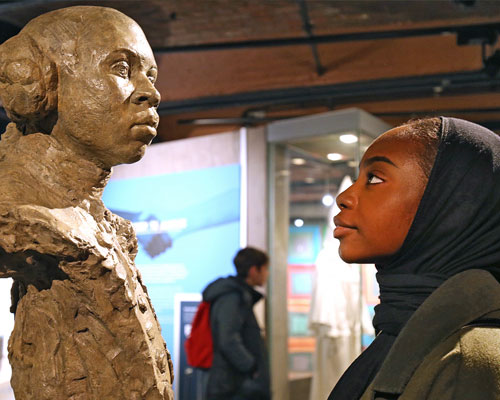
The Black Lives Matter movement has challenged museums professionals to ask testing questions about their role in reparative history and the way we display and interpret racist and colonial collections
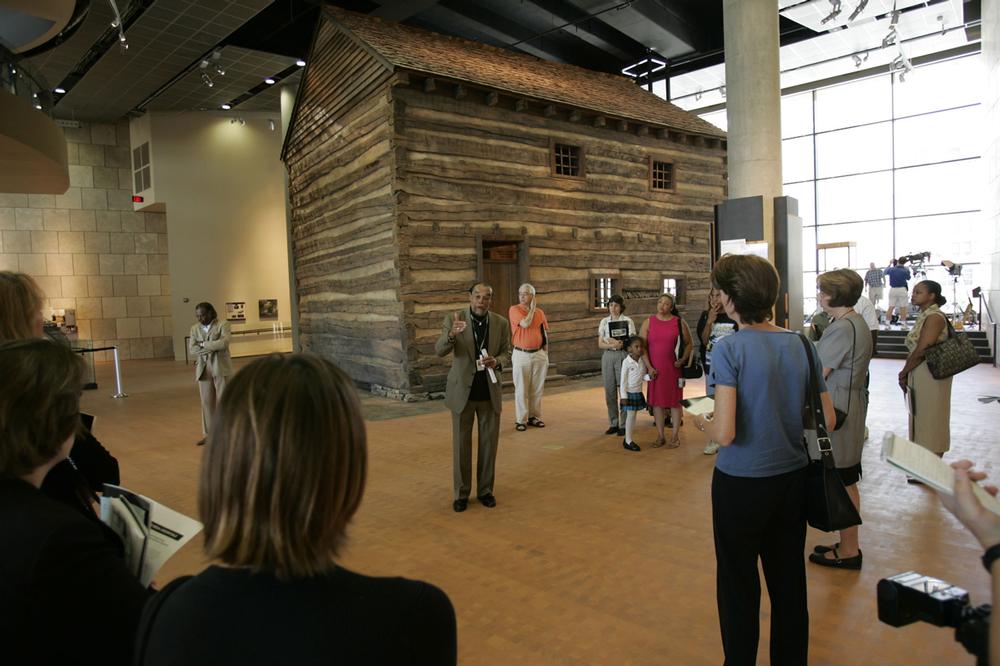
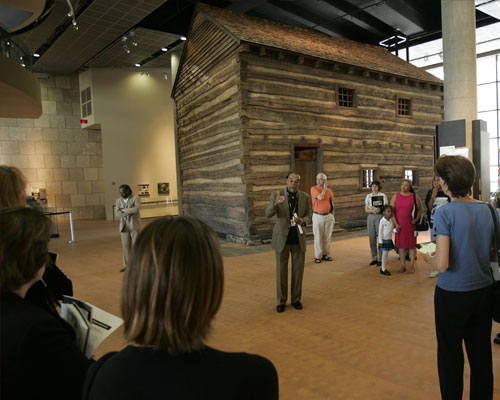
A slave pen explained at The National Underground Railroad Freedom Center in Cincinnati / Photo: NURFC
Nine months have passed since the murder of George Floyd ignited the Black Lives Matter movement, causing many to pause, reflect and commit to change.
BLM didn’t make demands – protesters were simply saying, this is a catastrophic problem but not of our making, we’ve done nothing wrong. What are YOU going to do about it?
The global response was immediate and unprecedented, with organisations, private individuals and corporations promising change.
Museums found themselves facing hard questions: had they been founded or funded by slave owners? Were collections gathered during colonial plundering? Were they displaying human remains?
These soul searchings have led to initiatives to right wrongs and on page 34 we investigate actions being taken by museums around the world in relation to BLM and hear their views about the challenges ahead.
Many BLM protests focused on the statues of controversial figures, with repeated calls made for them to be destroyed or ‘put in a museum’.
This has raised questions about how we deal with objects associated with slavery and racism and the role museums will play.
Some governments have passed legislation to protect historic monuments, while acknowledging their past, with an instruction to ‘retain and explain’, rather than destroy, in all but the most ‘exceptional circumstances.’
However, many museums are baulking at the idea of becoming ‘dumping grounds’ for artefacts associated with racism and prejudice.
A new review from Historic England has revealed the extent of this challenge in just one country. Commissioned in 2020 and published in February 2021, The Transatlantic Slave Economy and England’s Built Environment traces hundreds of associations between the slave trade and monuments, people and buildings, to guide the way history is honestly recorded and interpreted.
Museums have a vital role to play in this process of reparative history and we must find a balance between removing artefacts that cause distress and whitewashing what has gone before.
The way histories are retold will also enable museums to be responsive to the needs of diverse audiences – in some cases, telling their stories for the first time – as professionals in the museums sector work to address this complex challenge.
Read more from this issue of Spa Business magazine
View contents of Spa Business 2021 issue 1
Editor's letter: Doing better
The Black Lives Matter movement has challenged museums professionals to ask testing questions about their role in reparative history and the way we display and interpret racist and colonial collections
People: Brent Bushnell
Two Bit Circus has pivoted to an innovative online model aimed at keeping its community in touch
People: Michel Linet-Frion
After decades creating for Disney, Grévin and Center Parcs, Linet-Frion has launched his own consultancy
People: Anthony Rawlins
The Digital Visitor CEO explains a new whitepaper on how attractions can survive 2021 and beyond
Interview: Sarah Roots
Warner Bros’ Sarah Roots shares exciting details of the second Harry Potter Studio Tour, set to open in Japan in 2023
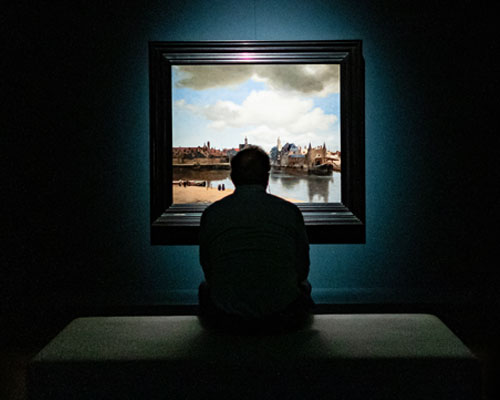
Inspired: Alone with Vermeer
The Mauritshuis in The Hague has allowed visitors one-to-one time with Vermeer’s <i>View of Delft</i>, ‘the most beautiful painting in the world’
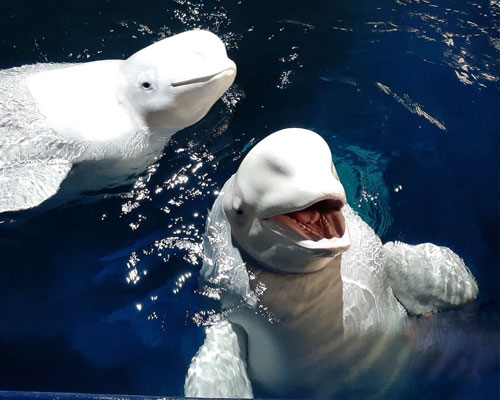
Aquariums: Into the deep
Merlin and the Sea Life Trust share the highs and lows of the epic journey to get two whales to their new home in the world’s first beluga whale sanctuary in Iceland
Innovation: Sea change
Edge Innovations’ incredibly
life-like robot dolphins could spell the end of marine mammals in aquariums, says CEO Walt Conti
Interview: Bob Rogers
As BRC Imagination Arts celebrates 40 years in business, its founder celebrates his team’s achievements
Sponsored: Technically Creative
With clients including the Xplore
Family Entertainment Centre in Athens,
Technically Creative provides a one
stop, in-house solution to create
memorable and magical experiences.
We talk to CEO, Marc Broadbent
Sponsored: Fun Spot: Providing turnkey solutions
Industry innovator, Fun Spot, is on a roll, with a new EMEA
office and a range of innovative new products to help operators
deliver excellence to the family fun market. We find out more
Interview: Phil Hettema
The Hettema Group president on weathering the pandemic and creating powerful experiences
In the fast-paced world of fitness and wellness, where high-intensity workouts push us to
our limits and the sweat pours, the importance of efficient recovery cannot be overstated. [more...]
The Black Lives Matter movement has challenged museums professionals to ask testing questions about their role in reparative history and the way we display and interpret racist and colonial collections
A slave pen explained at The National Underground Railroad Freedom Center in Cincinnati / Photo: NURFC
Nine months have passed since the murder of George Floyd ignited the Black Lives Matter movement, causing many to pause, reflect and commit to change.
BLM didn’t make demands – protesters were simply saying, this is a catastrophic problem but not of our making, we’ve done nothing wrong. What are YOU going to do about it?
The global response was immediate and unprecedented, with organisations, private individuals and corporations promising change.
Museums found themselves facing hard questions: had they been founded or funded by slave owners? Were collections gathered during colonial plundering? Were they displaying human remains?
These soul searchings have led to initiatives to right wrongs and on page 34 we investigate actions being taken by museums around the world in relation to BLM and hear their views about the challenges ahead.
Many BLM protests focused on the statues of controversial figures, with repeated calls made for them to be destroyed or ‘put in a museum’.
This has raised questions about how we deal with objects associated with slavery and racism and the role museums will play.
Some governments have passed legislation to protect historic monuments, while acknowledging their past, with an instruction to ‘retain and explain’, rather than destroy, in all but the most ‘exceptional circumstances.’
However, many museums are baulking at the idea of becoming ‘dumping grounds’ for artefacts associated with racism and prejudice.
A new review from Historic England has revealed the extent of this challenge in just one country. Commissioned in 2020 and published in February 2021, The Transatlantic Slave Economy and England’s Built Environment traces hundreds of associations between the slave trade and monuments, people and buildings, to guide the way history is honestly recorded and interpreted.
Museums have a vital role to play in this process of reparative history and we must find a balance between removing artefacts that cause distress and whitewashing what has gone before.
The way histories are retold will also enable museums to be responsive to the needs of diverse audiences – in some cases, telling their stories for the first time – as professionals in the museums sector work to address this complex challenge.
Read more from this issue of Spa Business magazine
View contents of Spa Business 2021 issue 1
Editor's letter: Doing better
The Black Lives Matter movement has challenged museums professionals to ask testing questions about their role in reparative history and the way we display and interpret racist and colonial collections
People: Brent Bushnell
Two Bit Circus has pivoted to an innovative online model aimed at keeping its community in touch
People: Michel Linet-Frion
After decades creating for Disney, Grévin and Center Parcs, Linet-Frion has launched his own consultancy
People: Anthony Rawlins
The Digital Visitor CEO explains a new whitepaper on how attractions can survive 2021 and beyond
Interview: Sarah Roots
Warner Bros’ Sarah Roots shares exciting details of the second Harry Potter Studio Tour, set to open in Japan in 2023
Inspired: Alone with Vermeer
The Mauritshuis in The Hague has allowed visitors one-to-one time with Vermeer’s <i>View of Delft</i>, ‘the most beautiful painting in the world’
Aquariums: Into the deep
Merlin and the Sea Life Trust share the highs and lows of the epic journey to get two whales to their new home in the world’s first beluga whale sanctuary in Iceland
Innovation: Sea change
Edge Innovations’ incredibly
life-like robot dolphins could spell the end of marine mammals in aquariums, says CEO Walt Conti
Interview: Bob Rogers
As BRC Imagination Arts celebrates 40 years in business, its founder celebrates his team’s achievements
Sponsored: Technically Creative
With clients including the Xplore
Family Entertainment Centre in Athens,
Technically Creative provides a one
stop, in-house solution to create
memorable and magical experiences.
We talk to CEO, Marc Broadbent
Sponsored: Fun Spot: Providing turnkey solutions
Industry innovator, Fun Spot, is on a roll, with a new EMEA
office and a range of innovative new products to help operators
deliver excellence to the family fun market. We find out more
Interview: Phil Hettema
The Hettema Group president on weathering the pandemic and creating powerful experiences
The UK spa review and discovery platform for consumers, the Good Spa Guide, has announced
it will host the Good Spa Guide Awards 2026 during an event on 16 November at Sopwell House
Hotel in St Albans, UK.
Eighty-four per cent of consumers now say wellness is a top priority in their lives, with this
percentage increasing year on year, according to a preview presentation of McKinsey’s Future of
Wellness 2026 research report.
Mass protests have been taking place since Monday 1 June in Albania over the development of
a luxury resort by Donald Trump’s daughter Ivanka Trump and her husband Jared Kushner.
Global Wellness Day (GWD) marked its 15th anniversary on Saturday 13 June 2026, with the
theme: #JoyMagenta – a celebration of the healing qualities of simple gestures and activities
that spark joy.
Global luxury hospitality brand, Six Senses, has partnered with longevity healthcare provider,
HUM2N, to launch a clinic at Six Senses London, at The Whiteley.
As part of its first hotel partnership, Mayrlife – the medical health resort company known for its
site in Altaussee, Austria – has launched a day clinic at the Rosewood Vienna.
Premium London health club, KX Chelsea, will imminently unveil its most significant
redevelopment since its launch in 2002 to create an integrated wellness model combining
training, recovery and relaxation.
Rosewood Le Guanahani St Barth, on the northeast coast of Saint Barthélemy in the French
West Indies, is offering a programme of ocean-inspired yoga classes between 8-14 June to
celebrate Global Wellness Day (GWD).
Hotel de France, located on the British Isle of Jersey, has created a wellness retreat package
that includes a hot yoga session that will take place in Jersey Zoo’s butterfly sanctuary.
The Ritz-Carlton, Langkawi, in Malaysia, has revealed a schedule for Global Wellness Day
(GWD) that includes guided rainforest walks, mindful movement and guided coastal meditation
experiences.
In the fast-paced world of fitness and wellness, where high-intensity workouts push us to
our limits and the sweat pours, the importance of efficient recovery cannot be overstated. [more...]