Yes! Send me the FREE digital editions of Spa Business and Spa Business insider magazines and the FREE weekly Spa Business and Spa Business insider ezines and breaking news alerts!
From wearables and gamification to online therapists and virtual spas,
the future’s looking high-tech in the spa world, but what areas hold the
most potential for operators? We ask the brains behind the technology
By Kate Parker | Published in Spa Business 2019 issue 1
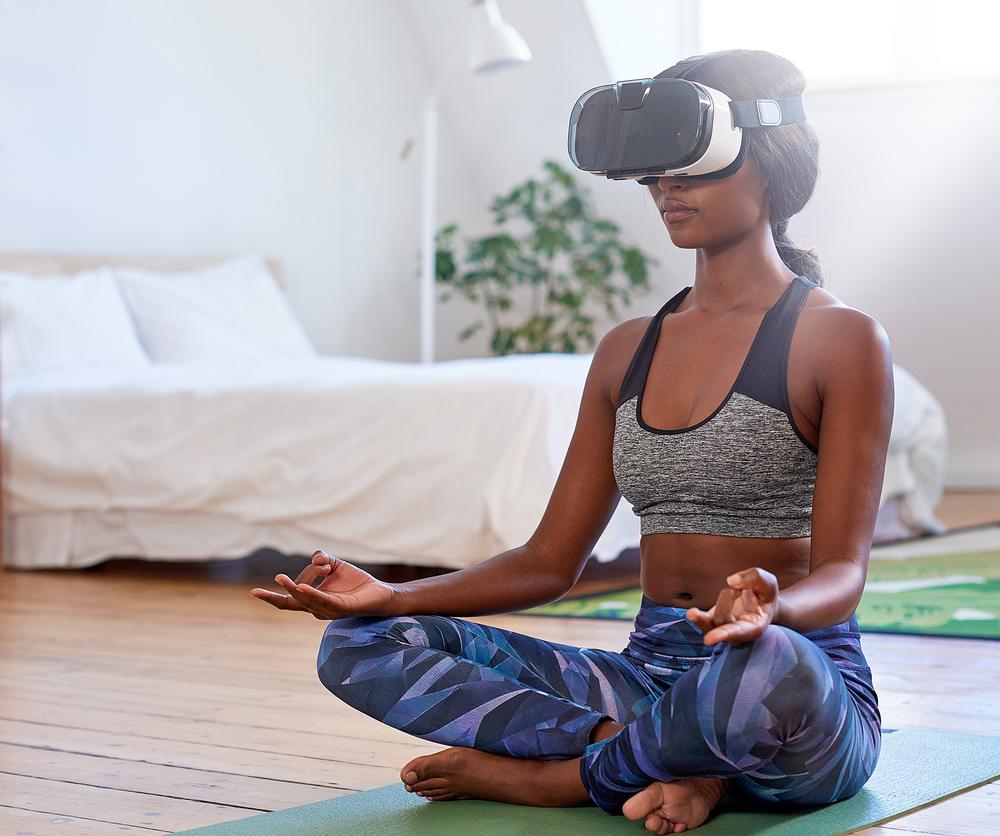
Millennials are driving change – they expect 24/7 connectivity and super personalisation / Stock-Studio/shutterstock.com
Technology is ever-changing and now that online booking, smart marketing and mobile check-in are entering the mainstream, there are some exciting developments on the horizon that have the potential to revolutionise the spa customer experience. But what should operators be paying attention to and how are spa software companies helping them to keep up with the latest trends?
Virtual wellness Millennials are driving the latest advances in technology and expect the very latest functionality that gives them 24/7 accessibility alongside a super-personalised experience. So how can operators keep their customers engaged and happy, now and in the future?
Constant connectivity and digital experiences that blur the boundaries of the real and virtual aren’t new, but in the coming years their convergence will give spas the opportunity to forge an even deeper, more personal relationship with customers by enabling them to escape, relax and connect like never before. But what’s the pay-off for spas?
Leonie Wileman, COO of Premier Software, believes that spas need to start thinking about how their clients interact with technology: “Virtual reality provides something different. A chance to visit exotic beaches or locations while enjoying the ambience of a spa setting. For many, it’s about improving mental health and wellbeing. We’re already seeing spin classes set in virtual environments to improve performance and it won’t be long before demand for virtual settings to improve wellbeing will be introduced. But whether you’re talking about online therapists or virtual/augmented reality, it’s all about attracting and retaining clients.”
Roger Sholanki, CEO of Book4Time, agrees: “We see AI as the next big thing for the spa software industry. AI will be capable of helping with marketing automation, streamline booking, reporting and even helping attract new customers. It’s an entirely new level of technology and will take spa management to a whole new level, maximising operational efficiencies and freeing up staff to focus on driving value through more face time with clients.”
Sholanki sees AI being applied in the form of virtual employees: “One of the biggest challenges spas face is high staff turnover, leading to training issues and new staff not following SOPs when guests check-in, check-out and call to book appointments. AI technology can help with addressing these challenges.”
Looking at what tech-savvy millennials want is key, but new systems must support and enhance both sides of the relationship. Mindbody’s director of product marketing and research, Amaya Weddle, believes it’s about removing obstacles for spa customers: “I’m seeing a lot of spas integrating chatbots into their websites. Rather than making a phone call to the spa, customers can look for services, ask questions and book, all in one spot!”
Premier Software’s Wileman adds: “We’re already seeing online therapists providing advice to clients. Essentially this is a secure, online chat and usually precedes a visit or booking to the spa, and, although not face-to-face, this is still a personal interaction that enhances the overall spa experience.
“Premier Software is also working on an open Application Programming Interface (API) which will allow our spa’s application to talk to their client’s systems to make the customer journey smoother. It’s a smarter way of communicating and assimilating data quickly without compromising the relationship.”
Keeping track of tech By keeping track of what’s driving customer engagement, or spa trends in general, operators can make a call on what new technology will benefit their business.
In the drive for ever greater personalisation, The Assistant Company (TAC) sees growing potential around wearables, gamification, emotion recognition and high-tech rooms, in both enhancing customer experience and leveraging insights to boost customer retention. As MD Günther Pöllabauer explains: “User tracking provided by wearables means spas can offer services individually tailored to each guest, while gamification presents clients with additional benefits for continued loyalty: collecting enough points when booking a treatment to win a bottle of champagne on the next visit is a huge motivator.
“Visual sensors that recognise emotion can be used for guest preparation, before guiding them to a high-tech treatment room that creates the right atmosphere to best suit their frame of mind.”
Tying tech developments to business efficiency and understanding a spa’s pressure points are key. ResortSuite’s founder and CEO Frank Pitsikalis explains: “GPS notifications are a trending marketing tool. ResortSuite is developing the ability for a customised and branded spa app, ResortSuite Mobile, to be able to deliver notifications, promotions and alerts when it recognises that a guest is close or on property. If a spa treatment time frees up on a busy Saturday, for example, a quick and easy function could be to send out a promotion of the time and service to a group of loyal customers most likely to respond to the offer.
“The added ability of the guest being able to click the offer and be taken directly into the online booking engine to reserve their treatment quickly and easily for the time offered saves staff time and streamlines the promotion and booking process to make sure your rooms are always profitable.”
The human connection While the promise of emerging technologies is in its infancy, in what direction is the general drift moving and how are spas starting to accommodate the desire for cutting-edge tech in their day-to-day businesses? Premier’s Wileman says: “Everything is moving online and with it the need for spas to improve their services and ability to engage with clients when they are not in the spa setting. We’re already starting to see online therapists providing product advice and skincare guidance, but while augmented or virtual reality and gamification will enhance this experience, it won’t replace the one-to-one experience which makes so many spas successful.
So, for all the promise of leading-edge innovation, the message is clear: tech savvy customers they may be, but not at the expense of the human connection. As Mindbody’s Weddle explains: “A big reason why people go to the spa is for human connection. I think we’ll see technology that further streamlines the interactions between customers and staff. Removing mundane tasks allows staff to focus more on the customer experience: Mindbody and Booker by Mindbody offer many solutions to remove friction for staff and I believe more and more spas will begin integrating those tools.”
As TAC’s Pöllabauer adds: “Technology should primarily support employees in their daily tasks, but should never and can never completely replace them. Likewise, future digital strategies should take into account those people who do not wish to be confronted with digitisation. It should still be up to the guest to decide whether and to what extent they respond to digital processes.”
And therein lies the challenge facing spa operators: offsetting the drive to adopt the latest ground-breaking innovation with the need to keep the human at the heart of the spa journey.
Roger Sholanki, Book4Time
"We see AI as the next big thing for the spa software industry"
Amaya Weddle, Mindbody
"I’m seeing a lot of spas integrating chatbots into their websites"
Günther Pöllabauer, TAC
"Visual sensors that recognise emotion can be used for guest preparation, before guiding them to a high-tech treatment room"
Frank Pitsikalis, ResortSuite
"GPS notifications are a trending marketing tool"
Read more from this issue of Spa Business magazine
Spa Programmes: On the menu
Event saunas, sunlight therapy
and health and happiness retreats
feature in our programming series
Interview: Marc Cohen
Dr Marc Cohen is launching an extreme
bathing retreat and writing children’s
books. He talks to Jane Kitchen
Promotional feature: Vital Tech
Infrared technology is growing in popularity, Vital Tech’s Alexandra Gavsevitch
and Serge Parienti explain how it works
Focus on: Equine therapy
What is equine therapy and how
can spas tap into horsepower?
Kathleen Whyman finds out
Wellness: Chill out
Is going sub-zero the next big thing?
Kath Hudson takes a closer look
at the benefits of cryotherapy
Promotional feature: The Wellness
Noha Khalil of The Wellness discusses how
gym and spa elements are increasingly
coming together through design to
deliver outstanding fitness concepts
From wearables and gamification to online therapists and virtual spas,
the future’s looking high-tech in the spa world, but what areas hold the
most potential for operators? We ask the brains behind the technology
By Kate Parker | Published in Spa Business 2019 issue 1
Millennials are driving change – they expect 24/7 connectivity and super personalisation / Stock-Studio/shutterstock.com
Technology is ever-changing and now that online booking, smart marketing and mobile check-in are entering the mainstream, there are some exciting developments on the horizon that have the potential to revolutionise the spa customer experience. But what should operators be paying attention to and how are spa software companies helping them to keep up with the latest trends?
Virtual wellness Millennials are driving the latest advances in technology and expect the very latest functionality that gives them 24/7 accessibility alongside a super-personalised experience. So how can operators keep their customers engaged and happy, now and in the future?
Constant connectivity and digital experiences that blur the boundaries of the real and virtual aren’t new, but in the coming years their convergence will give spas the opportunity to forge an even deeper, more personal relationship with customers by enabling them to escape, relax and connect like never before. But what’s the pay-off for spas?
Leonie Wileman, COO of Premier Software, believes that spas need to start thinking about how their clients interact with technology: “Virtual reality provides something different. A chance to visit exotic beaches or locations while enjoying the ambience of a spa setting. For many, it’s about improving mental health and wellbeing. We’re already seeing spin classes set in virtual environments to improve performance and it won’t be long before demand for virtual settings to improve wellbeing will be introduced. But whether you’re talking about online therapists or virtual/augmented reality, it’s all about attracting and retaining clients.”
Roger Sholanki, CEO of Book4Time, agrees: “We see AI as the next big thing for the spa software industry. AI will be capable of helping with marketing automation, streamline booking, reporting and even helping attract new customers. It’s an entirely new level of technology and will take spa management to a whole new level, maximising operational efficiencies and freeing up staff to focus on driving value through more face time with clients.”
Sholanki sees AI being applied in the form of virtual employees: “One of the biggest challenges spas face is high staff turnover, leading to training issues and new staff not following SOPs when guests check-in, check-out and call to book appointments. AI technology can help with addressing these challenges.”
Looking at what tech-savvy millennials want is key, but new systems must support and enhance both sides of the relationship. Mindbody’s director of product marketing and research, Amaya Weddle, believes it’s about removing obstacles for spa customers: “I’m seeing a lot of spas integrating chatbots into their websites. Rather than making a phone call to the spa, customers can look for services, ask questions and book, all in one spot!”
Premier Software’s Wileman adds: “We’re already seeing online therapists providing advice to clients. Essentially this is a secure, online chat and usually precedes a visit or booking to the spa, and, although not face-to-face, this is still a personal interaction that enhances the overall spa experience.
“Premier Software is also working on an open Application Programming Interface (API) which will allow our spa’s application to talk to their client’s systems to make the customer journey smoother. It’s a smarter way of communicating and assimilating data quickly without compromising the relationship.”
Keeping track of tech By keeping track of what’s driving customer engagement, or spa trends in general, operators can make a call on what new technology will benefit their business.
In the drive for ever greater personalisation, The Assistant Company (TAC) sees growing potential around wearables, gamification, emotion recognition and high-tech rooms, in both enhancing customer experience and leveraging insights to boost customer retention. As MD Günther Pöllabauer explains: “User tracking provided by wearables means spas can offer services individually tailored to each guest, while gamification presents clients with additional benefits for continued loyalty: collecting enough points when booking a treatment to win a bottle of champagne on the next visit is a huge motivator.
“Visual sensors that recognise emotion can be used for guest preparation, before guiding them to a high-tech treatment room that creates the right atmosphere to best suit their frame of mind.”
Tying tech developments to business efficiency and understanding a spa’s pressure points are key. ResortSuite’s founder and CEO Frank Pitsikalis explains: “GPS notifications are a trending marketing tool. ResortSuite is developing the ability for a customised and branded spa app, ResortSuite Mobile, to be able to deliver notifications, promotions and alerts when it recognises that a guest is close or on property. If a spa treatment time frees up on a busy Saturday, for example, a quick and easy function could be to send out a promotion of the time and service to a group of loyal customers most likely to respond to the offer.
“The added ability of the guest being able to click the offer and be taken directly into the online booking engine to reserve their treatment quickly and easily for the time offered saves staff time and streamlines the promotion and booking process to make sure your rooms are always profitable.”
The human connection While the promise of emerging technologies is in its infancy, in what direction is the general drift moving and how are spas starting to accommodate the desire for cutting-edge tech in their day-to-day businesses? Premier’s Wileman says: “Everything is moving online and with it the need for spas to improve their services and ability to engage with clients when they are not in the spa setting. We’re already starting to see online therapists providing product advice and skincare guidance, but while augmented or virtual reality and gamification will enhance this experience, it won’t replace the one-to-one experience which makes so many spas successful.
So, for all the promise of leading-edge innovation, the message is clear: tech savvy customers they may be, but not at the expense of the human connection. As Mindbody’s Weddle explains: “A big reason why people go to the spa is for human connection. I think we’ll see technology that further streamlines the interactions between customers and staff. Removing mundane tasks allows staff to focus more on the customer experience: Mindbody and Booker by Mindbody offer many solutions to remove friction for staff and I believe more and more spas will begin integrating those tools.”
As TAC’s Pöllabauer adds: “Technology should primarily support employees in their daily tasks, but should never and can never completely replace them. Likewise, future digital strategies should take into account those people who do not wish to be confronted with digitisation. It should still be up to the guest to decide whether and to what extent they respond to digital processes.”
And therein lies the challenge facing spa operators: offsetting the drive to adopt the latest ground-breaking innovation with the need to keep the human at the heart of the spa journey.
Roger Sholanki, Book4Time
"We see AI as the next big thing for the spa software industry"
Amaya Weddle, Mindbody
"I’m seeing a lot of spas integrating chatbots into their websites"
Günther Pöllabauer, TAC
"Visual sensors that recognise emotion can be used for guest preparation, before guiding them to a high-tech treatment room"
Frank Pitsikalis, ResortSuite
"GPS notifications are a trending marketing tool"
Read more from this issue of Spa Business magazine
Spa Programmes: On the menu
Event saunas, sunlight therapy
and health and happiness retreats
feature in our programming series
Interview: Marc Cohen
Dr Marc Cohen is launching an extreme
bathing retreat and writing children’s
books. He talks to Jane Kitchen
Promotional feature: Vital Tech
Infrared technology is growing in popularity, Vital Tech’s Alexandra Gavsevitch
and Serge Parienti explain how it works
Focus on: Equine therapy
What is equine therapy and how
can spas tap into horsepower?
Kathleen Whyman finds out
Wellness: Chill out
Is going sub-zero the next big thing?
Kath Hudson takes a closer look
at the benefits of cryotherapy
Promotional feature: The Wellness
Noha Khalil of The Wellness discusses how
gym and spa elements are increasingly
coming together through design to
deliver outstanding fitness concepts
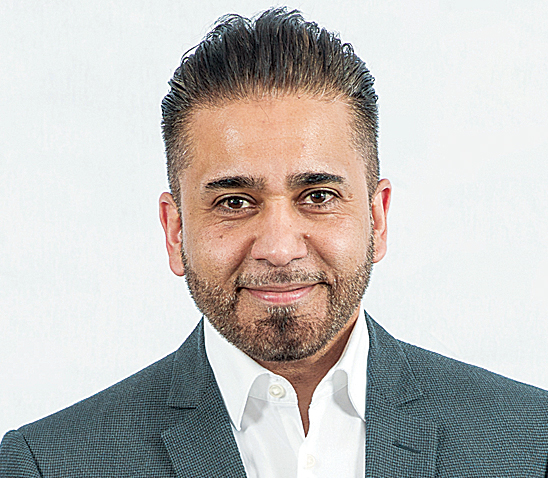
Aditya Saluja, an industry leader in luxury wellness hospitality, has been
appointed as
commercial director of spa and wellness for the spa management division of
Minor Hotels,
MSpa International.
Preidlhof Luxury DolceVita Resort, a destination resort and spa in Naturno, South Tyrol in Italy,
will reveal a new spa in February 2027, which has been designed by wellness expert and
consultant Patrizia Bortolin.
Virgin Active has officially opened its redesigned Mayfair club, unveiling its latest Social Wellness Club and
signalling a significant evolution of its proposition.
Private hotel owner and developer HVL Hotels will open a new luxury resort and tourism
destination called Laval Hunter Valley in the second half of 2027 in Pokolbin, Australia.
The annual wellness festival dedicated to wellbeing, culture, longevity and human connection,
called Alma, will be hosted by Rocco Forte hotel, Verdura Resort in Sicily, Italy.
Capella Hotel Group has appointed Feisal Jaffer as chief development officer as the company
ramps up its global expansion of both its Capella and Patina brands.




.jpg)