Tabata, a science-based workout, promises results in just four minutes.
We talk to Jane Irving of its licensing company Big Shot Productions
about how it could be used to innovate spa fitness offerings
By Kate Cracknell | Published in Spa Business 2013 issue 3
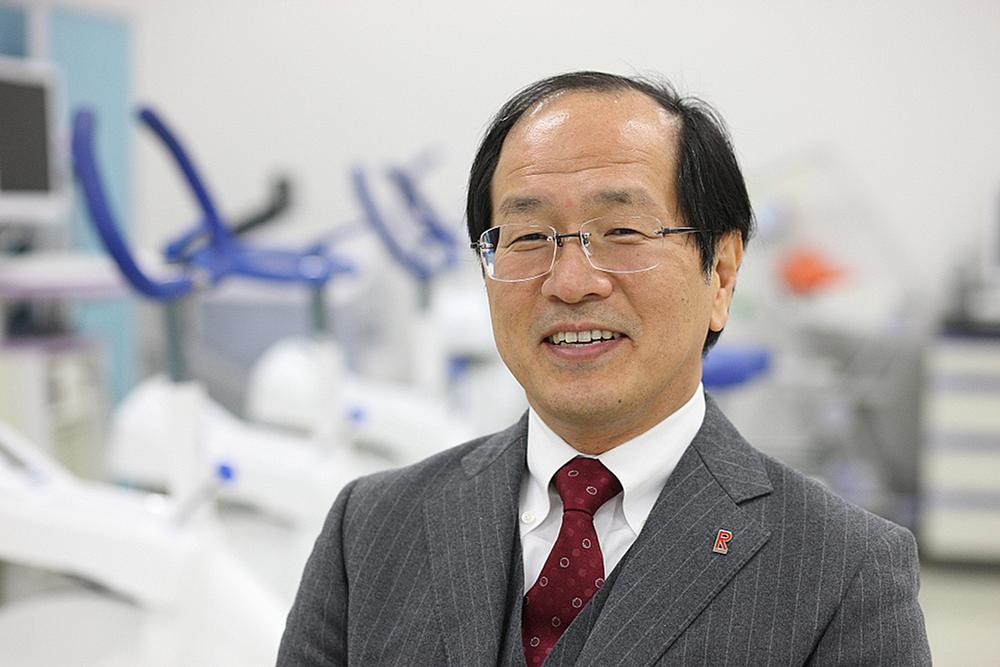
Scientist Izumi Tabata invented the protocol while helping to train the Japanese Olympic speed skating team in the early 90s
There’s increasing research focused on the value of exercise, from its protection against many chronic illnesses to reducing stress and lengthening telomeres: the DNA structures linked to biological and aesthetical ageing (see SB13/1 p54). Collectively, these numerous studies demonstrate that exercise is one of the biggest contributors to longevity and wellbeing.
This knowledge has encouraged a growth in science-based exercise protocols with measurable health outcomes that make them suitable for spas. Some of the most interesting are focused on high intensity interval training (HIT) – vigorous exercise systems which claim to deliver the same, if not better, results than traditional workouts in a much shorter time (see SB12/4 p84).
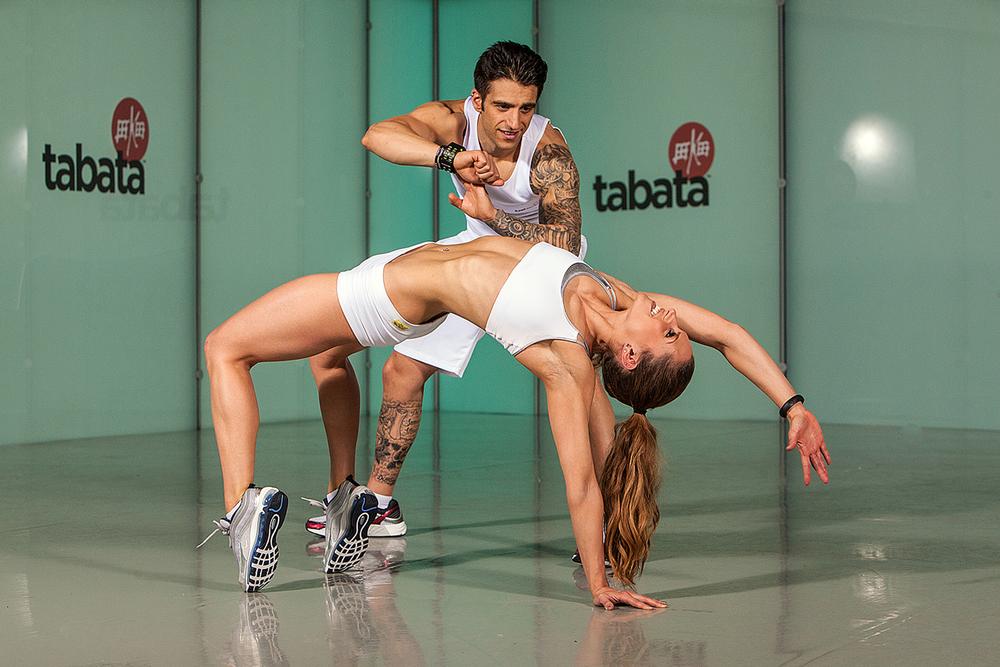
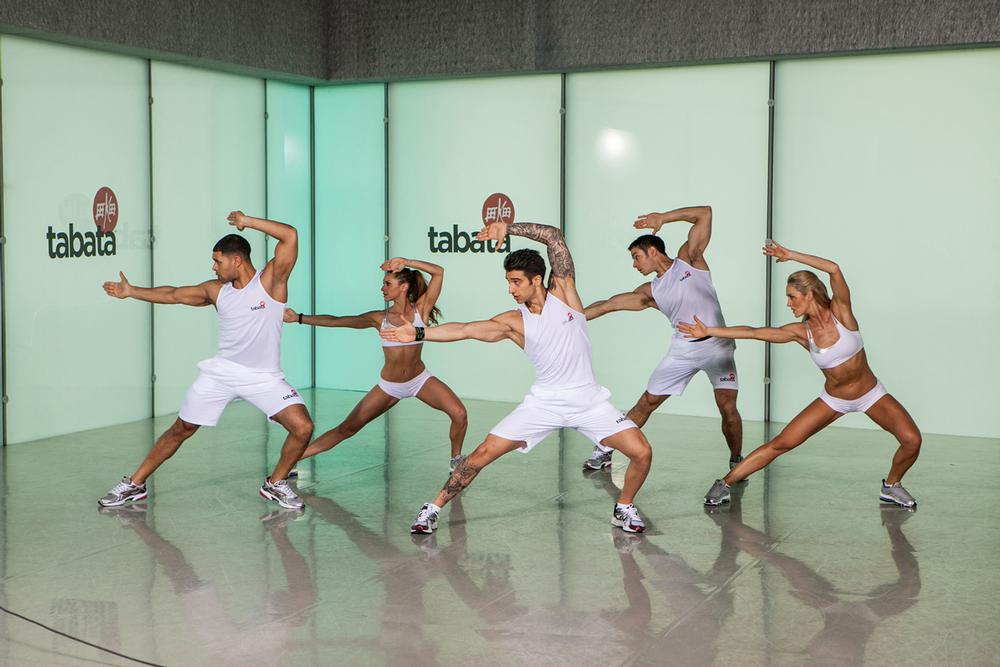
Tabata™ is one of the more radical forms of HIT: its four-minute session is designed to get you fitter than an hour’s moderate bike workout. It’s been created by a Japanese scientist, professor Izumi Tabata, who’s collaborated with fitness programme producers Big Shot Productions and global distribution company Universal Pictures Entertainment International to adapt the protocol into a group exercise format and license it to fitness facilities worldwide. The classes, which are also ideal for small group training programmes, debuted in 50 Fitness First clubs in London, UK in September and a US launch is imminent.
With more science coming into exercise, and the public increasingly in-tune with lifestyle and health choices, spas need to make sure their fitness offering is up to date.
Q&A Jane Irving, owner of Big Shot Productions, tells us more about Tabata, the exciting new protocol that’s hailed as an “exercise superbrand”
What is Tabata? Tabata is a clinically proven way to get fit in just four minutes. The protocol consists of 20 seconds of intense exercise followed by 10 seconds of rest, repeated eight times. It’s scientifically proven to be a highly effective way to increase both aerobic and anaerobic fitness.
Where did the idea come from? The system was developed by a Japanese scientist, professor Tabata, while working as an advisor for the Japanese Olympic speed skating team in the early 1990s. The head coach had developed a training technique that involved the athletes exercising in short bursts of high intensity; professor Tabata was asked to analyse the effectiveness of this training regime. He compared various HIT systems and found this technique to be the best at improving fitness levels.
What’s the science behind it? Research suggests that just one four-minute workout results in better fitness levels than an hour’s moderate training session on an exercise bike.
Professor Tabata’s original research involved two different trials. The first was conducted among reasonably fit young students majoring in physical education and playing university sport. One group cycled at a moderate speed for an hour and at 70 per cent of their maximal oxygen uptake (VO2 max). Another group took part in the so-called Tabata Protocol: 20 seconds of high intensity exercise, then 10 seconds of rest, repeated eight times and lasting a total of four minutes. This group cycled at 170 per cent of their VO2 max. Both groups carried out their routines five times a week.
By the end of the six-week trial, fitness levels in the four-minute group had improved more markedly than in the hour-long group. Both groups saw an improvement in aerobic fitness, however, while the hour-long group saw no improvement in anaerobic fitness levels, this went up by 28 per cent in the four-minute group.
In a second experiment, he compared the Tabata Protocol with another form of HIT involving 30 seconds of even higher intensity – 200 per cent of VO2 max – with two minutes’ rest in between. Again, the Tabata Protocol improved both aerobic and anaerobic fitness, whereas the other HIT system saw no significant improvement in either measure.
Although the two studies were carried out over a number of weeks, results were actually seen in participants after just one week of doing the Tabata Protocol.
Professor Tabata has also conducted a new experiment – due to be published this year – with results indicating that Tabata continues to burn up to 150 calories in the 12 hours after a workout.
How can spas get involved? Fitness instructors will be taught by highly qualified Tabata master trainers. This will ensure the protocol can be delivered correctly – while trainers can use the Tabata moves in any order they like, it’s imperative that they don’t adapt them as they’ll no longer bring about the benefits clients want.
No special equipment is required, although there are plans to add small hand weights to the programme at some stage.
This is the first fitness system born in a lab, not a gym. It hasn’t been made up by a fitness instructor or dancer – it’s the result of an internationally renowned scientist’s clinical findings. Professor Tabata has also approved all of the exercises in the programme.
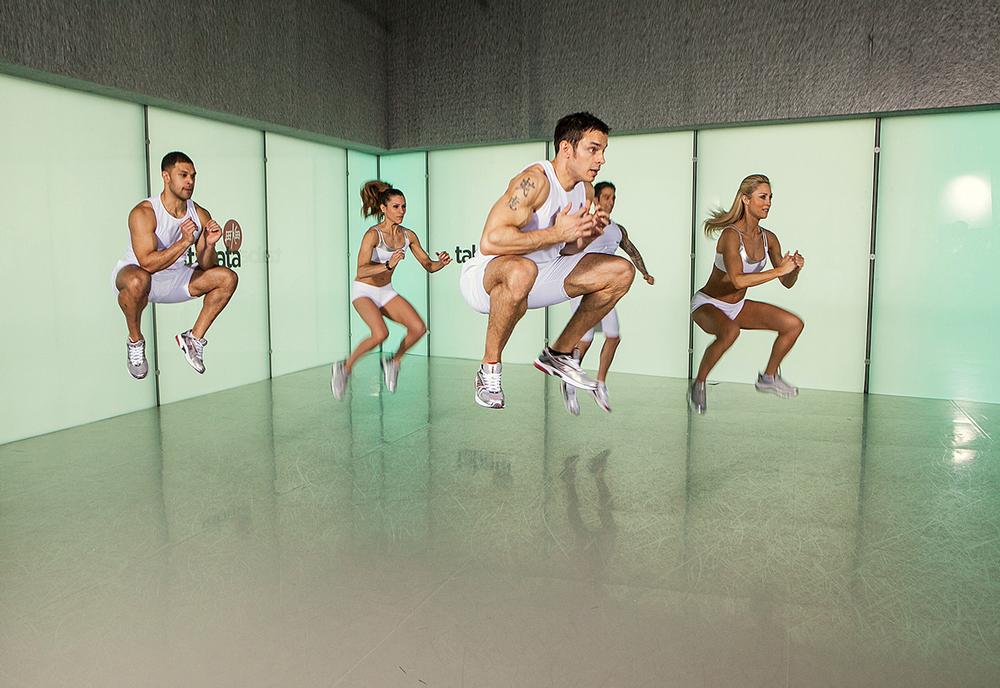
How does the Tabata class work? The group exercise classes will go on for 20 minutes, but to stay true to the authentic Tabata methodology only four minutes will be all-out. There will also be a 10-minute warm-up – four minutes of mobilisation and then six minutes to run through the Tabata exercises that will follow in the main four-minute section. Finally there will be a six-minute cool-down and stretch.
Two classes could easily be scheduled in the space of one hour, or they could work as an express session in lunch breaks.
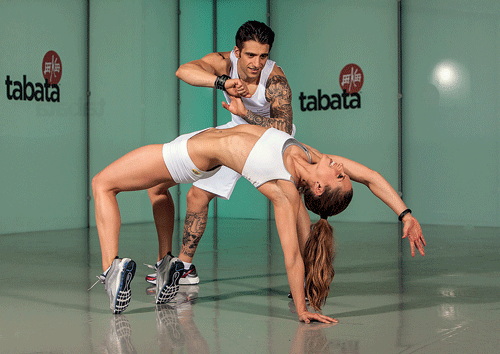
Team Tabata has worked for over a year to create exciting new body weight moves for trainers and fitness operators to take back to their clients: moves like the ‘skiva’, which is adapted from capoeira, or the ‘cockroach’, which is a take on primal training.
The key is to make sure these moves are being performed at the correct intensity level to have a true Tabata effect.
Who’s the target market? Tabata is fast, effective and credible, hence our key message: ‘four-minute fitness, scientifically proven.’ In a time-pressured society, that’s a great hook to get people interested.
The great benefit of Tabata is that people of completely different fitness levels can share a class and reap benefits from it. Team Tabata has developed a system of levels in the workout, with adaptations of exercises to suit beginners as well as advanced clients. Many of the body weight moves, for example, will involve jumping for the fit, but not for the beginner. Every class will have an easier option for less fit participants.
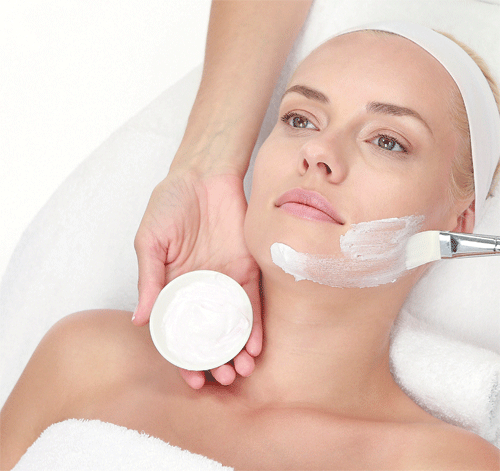
While we’ll focus on rolling out the system in health clubs and gyms, we see no reason why Tabata couldn’t run in spas like any other fitness class – provided that the consumer isn’t expecting a relaxing experience. So maybe operators would like to advise that a session comes before a massage or facial!
Why is Tabata really only now coming to the forefront? Professor Tabata has never given his backing to an official Tabata exercise system before. Until now, it has just been gyms interpreting his research – and getting it wrong a lot of the time.
He wants to see his clinically proven research used in a way that will really benefit the population. He’s already been approached by the Japanese government to help tackle the obesity epidemic there, and is keen to see Tabata used in other markets too – in the correct way – to help combat this growing global crisis.
Read more from this issue of Spa Business magazine
Interview: Lee David Stephens
Thai-based management company
MSpa runs 44 spas with 450 staff. The
General Manager talks to Katie Barnes
about a recent deal with Per Aquum
and its rapid expansion
Interview: Kathryn Moore
MSpa’s operations director is creating
a brand new wellness concept and a
fast track spa manager programme
Company Profile Promotion: GOCO Hospitality
After just four years of operation GOCO Hospitality is regarded as a global leader
in wellness hospitality segment of the industry. With 22 projects on its books,
spanning three continents, we look at what underpins the company’s success
Company profile promotion: Comfort Zone
The Comfort Zone spa brand has been newly revamped and revitalised to better communicate its core offerings as a natural, scientific and soul-centred skincare and lifestyle brand
Green: Being green
Ecocert’s new Being label is the first
public-facing green certification for
spa operations, eco-friendly
Promotional Feature: Part 4 - Pre-Opening
Opening a spa successfully is all about planning. Gary
Henkin, president of WTS and Doug Chambers, principal
of Blu Spas, share their experience of pre-opening
Company Profile Promotion: Aromatherapy Associates
Global product company Aromatherapy Associates knows how
to make treatments and retail work in a spa environment and
partners with operators to make a real point of difference
Industry survey: Price to pay
A GSWS report on global therapist pay focuses on differing salary composition, benefit and commission structures. Lisa Starr takes a closer look
Spa Retreat: Running on juice
Juice Master founder Jason Vale tells
Kate Cracknell about its retreats and
how juicing can help prevent disease
Interview: Wee Wei Ling
Neena Dhillon meets the founder of
St Gregory: the spa brand owned by Pan
Pacific that’s just opened a wellness
floor in Singapore’s ‘hotel in a garden’
Research: Moving target
A McKinsey study highlights the fast-changing
spending patterns of China’s
luxury consumers. Leonor Stanton
finds out what this means for spas
Advertisement Promotion: A gift from Ez-Runner...
Vouchers can be used as a stand-alone system integrated into your website or added as a module of Ez-Runner’s leisure management software to control your spa facility
Tabata, a science-based workout, promises results in just four minutes.
We talk to Jane Irving of its licensing company Big Shot Productions
about how it could be used to innovate spa fitness offerings
By Kate Cracknell | Published in Spa Business 2013 issue 3
Scientist Izumi Tabata invented the protocol while helping to train the Japanese Olympic speed skating team in the early 90s
There’s increasing research focused on the value of exercise, from its protection against many chronic illnesses to reducing stress and lengthening telomeres: the DNA structures linked to biological and aesthetical ageing (see SB13/1 p54). Collectively, these numerous studies demonstrate that exercise is one of the biggest contributors to longevity and wellbeing.
This knowledge has encouraged a growth in science-based exercise protocols with measurable health outcomes that make them suitable for spas. Some of the most interesting are focused on high intensity interval training (HIT) – vigorous exercise systems which claim to deliver the same, if not better, results than traditional workouts in a much shorter time (see SB12/4 p84).
Tabata™ is one of the more radical forms of HIT: its four-minute session is designed to get you fitter than an hour’s moderate bike workout. It’s been created by a Japanese scientist, professor Izumi Tabata, who’s collaborated with fitness programme producers Big Shot Productions and global distribution company Universal Pictures Entertainment International to adapt the protocol into a group exercise format and license it to fitness facilities worldwide. The classes, which are also ideal for small group training programmes, debuted in 50 Fitness First clubs in London, UK in September and a US launch is imminent.
With more science coming into exercise, and the public increasingly in-tune with lifestyle and health choices, spas need to make sure their fitness offering is up to date.
Q&A Jane Irving, owner of Big Shot Productions, tells us more about Tabata, the exciting new protocol that’s hailed as an “exercise superbrand”
What is Tabata? Tabata is a clinically proven way to get fit in just four minutes. The protocol consists of 20 seconds of intense exercise followed by 10 seconds of rest, repeated eight times. It’s scientifically proven to be a highly effective way to increase both aerobic and anaerobic fitness.
Where did the idea come from? The system was developed by a Japanese scientist, professor Tabata, while working as an advisor for the Japanese Olympic speed skating team in the early 1990s. The head coach had developed a training technique that involved the athletes exercising in short bursts of high intensity; professor Tabata was asked to analyse the effectiveness of this training regime. He compared various HIT systems and found this technique to be the best at improving fitness levels.
What’s the science behind it? Research suggests that just one four-minute workout results in better fitness levels than an hour’s moderate training session on an exercise bike.
Professor Tabata’s original research involved two different trials. The first was conducted among reasonably fit young students majoring in physical education and playing university sport. One group cycled at a moderate speed for an hour and at 70 per cent of their maximal oxygen uptake (VO2 max). Another group took part in the so-called Tabata Protocol: 20 seconds of high intensity exercise, then 10 seconds of rest, repeated eight times and lasting a total of four minutes. This group cycled at 170 per cent of their VO2 max. Both groups carried out their routines five times a week.
By the end of the six-week trial, fitness levels in the four-minute group had improved more markedly than in the hour-long group. Both groups saw an improvement in aerobic fitness, however, while the hour-long group saw no improvement in anaerobic fitness levels, this went up by 28 per cent in the four-minute group.
In a second experiment, he compared the Tabata Protocol with another form of HIT involving 30 seconds of even higher intensity – 200 per cent of VO2 max – with two minutes’ rest in between. Again, the Tabata Protocol improved both aerobic and anaerobic fitness, whereas the other HIT system saw no significant improvement in either measure.
Although the two studies were carried out over a number of weeks, results were actually seen in participants after just one week of doing the Tabata Protocol.
Professor Tabata has also conducted a new experiment – due to be published this year – with results indicating that Tabata continues to burn up to 150 calories in the 12 hours after a workout.
How can spas get involved? Fitness instructors will be taught by highly qualified Tabata master trainers. This will ensure the protocol can be delivered correctly – while trainers can use the Tabata moves in any order they like, it’s imperative that they don’t adapt them as they’ll no longer bring about the benefits clients want.
No special equipment is required, although there are plans to add small hand weights to the programme at some stage.
This is the first fitness system born in a lab, not a gym. It hasn’t been made up by a fitness instructor or dancer – it’s the result of an internationally renowned scientist’s clinical findings. Professor Tabata has also approved all of the exercises in the programme.
How does the Tabata class work? The group exercise classes will go on for 20 minutes, but to stay true to the authentic Tabata methodology only four minutes will be all-out. There will also be a 10-minute warm-up – four minutes of mobilisation and then six minutes to run through the Tabata exercises that will follow in the main four-minute section. Finally there will be a six-minute cool-down and stretch.
Two classes could easily be scheduled in the space of one hour, or they could work as an express session in lunch breaks.
Team Tabata has worked for over a year to create exciting new body weight moves for trainers and fitness operators to take back to their clients: moves like the ‘skiva’, which is adapted from capoeira, or the ‘cockroach’, which is a take on primal training.
The key is to make sure these moves are being performed at the correct intensity level to have a true Tabata effect.
Who’s the target market? Tabata is fast, effective and credible, hence our key message: ‘four-minute fitness, scientifically proven.’ In a time-pressured society, that’s a great hook to get people interested.
The great benefit of Tabata is that people of completely different fitness levels can share a class and reap benefits from it. Team Tabata has developed a system of levels in the workout, with adaptations of exercises to suit beginners as well as advanced clients. Many of the body weight moves, for example, will involve jumping for the fit, but not for the beginner. Every class will have an easier option for less fit participants.
While we’ll focus on rolling out the system in health clubs and gyms, we see no reason why Tabata couldn’t run in spas like any other fitness class – provided that the consumer isn’t expecting a relaxing experience. So maybe operators would like to advise that a session comes before a massage or facial!
Why is Tabata really only now coming to the forefront? Professor Tabata has never given his backing to an official Tabata exercise system before. Until now, it has just been gyms interpreting his research – and getting it wrong a lot of the time.
He wants to see his clinically proven research used in a way that will really benefit the population. He’s already been approached by the Japanese government to help tackle the obesity epidemic there, and is keen to see Tabata used in other markets too – in the correct way – to help combat this growing global crisis.
Read more from this issue of Spa Business magazine
Interview: Lee David Stephens
Thai-based management company
MSpa runs 44 spas with 450 staff. The
General Manager talks to Katie Barnes
about a recent deal with Per Aquum
and its rapid expansion
Interview: Kathryn Moore
MSpa’s operations director is creating
a brand new wellness concept and a
fast track spa manager programme
Company Profile Promotion: GOCO Hospitality
After just four years of operation GOCO Hospitality is regarded as a global leader
in wellness hospitality segment of the industry. With 22 projects on its books,
spanning three continents, we look at what underpins the company’s success
Company profile promotion: Comfort Zone
The Comfort Zone spa brand has been newly revamped and revitalised to better communicate its core offerings as a natural, scientific and soul-centred skincare and lifestyle brand
Green: Being green
Ecocert’s new Being label is the first
public-facing green certification for
spa operations, eco-friendly
Promotional Feature: Part 4 - Pre-Opening
Opening a spa successfully is all about planning. Gary
Henkin, president of WTS and Doug Chambers, principal
of Blu Spas, share their experience of pre-opening
Company Profile Promotion: Aromatherapy Associates
Global product company Aromatherapy Associates knows how
to make treatments and retail work in a spa environment and
partners with operators to make a real point of difference
Industry survey: Price to pay
A GSWS report on global therapist pay focuses on differing salary composition, benefit and commission structures. Lisa Starr takes a closer look
Spa Retreat: Running on juice
Juice Master founder Jason Vale tells
Kate Cracknell about its retreats and
how juicing can help prevent disease
Interview: Wee Wei Ling
Neena Dhillon meets the founder of
St Gregory: the spa brand owned by Pan
Pacific that’s just opened a wellness
floor in Singapore’s ‘hotel in a garden’
Research: Moving target
A McKinsey study highlights the fast-changing
spending patterns of China’s
luxury consumers. Leonor Stanton
finds out what this means for spas
Advertisement Promotion: A gift from Ez-Runner...
Vouchers can be used as a stand-alone system integrated into your website or added as a module of Ez-Runner’s leisure management software to control your spa facility
Mass protests have been taking place since Monday 1 June in Albania over the development of
a luxury resort by Donald Trump’s daughter Ivanka Trump and her husband Jared Kushner.
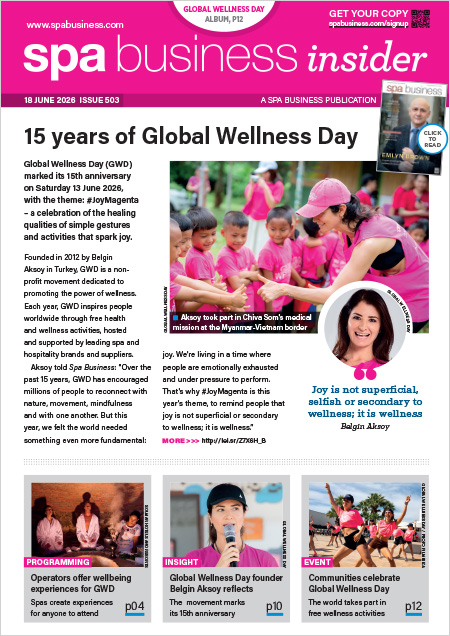
Global Wellness Day (GWD) marked its 15th anniversary on Saturday 13 June 2026, with the
theme: #JoyMagenta – a celebration of the healing qualities of simple gestures and activities
that spark joy.
Global luxury hospitality brand, Six Senses, has partnered with longevity healthcare provider,
HUM2N, to launch a clinic at Six Senses London, at The Whiteley.
As part of its first hotel partnership, Mayrlife – the medical health resort company known for its
site in Altaussee, Austria – has launched a day clinic at the Rosewood Vienna.
Premium London health club, KX Chelsea, will imminently unveil its most significant
redevelopment since its launch in 2002 to create an integrated wellness model combining
training, recovery and relaxation.
Rosewood Le Guanahani St Barth, on the northeast coast of Saint Barthélemy in the French
West Indies, is offering a programme of ocean-inspired yoga classes between 8-14 June to
celebrate Global Wellness Day (GWD).
Hotel de France, located on the British Isle of Jersey, has created a wellness retreat package
that includes a hot yoga session that will take place in Jersey Zoo’s butterfly sanctuary.
The Ritz-Carlton, Langkawi, in Malaysia, has revealed a schedule for Global Wellness Day
(GWD) that includes guided rainforest walks, mindful movement and guided coastal meditation
experiences.
Longevitix, a clinical platform for preventive and longevity medicine, has launched its AI-
powered intelligence system to help physicians deliver continuous, personalised longevity-
focused care at scale.
Atmantan Wellness Centre, an integrative wellness destination in Mulshi, near Pune in India, is
expanding its portfolio by adding a new centre in Hyderabad that will launch between 2028 and
2029.