Yes! Send me the FREE digital editions of Spa Business and Spa Business insider magazines and the FREE weekly Spa Business and Spa Business insider ezines and breaking news alerts!
China’s luxury consumers are becoming more sophisticated and their spending patterns are changing, according to research by McKinsey. Leonor Stanton analyses the findings
By Leonor Stanton | Published in Spa Business 2013 issue 3
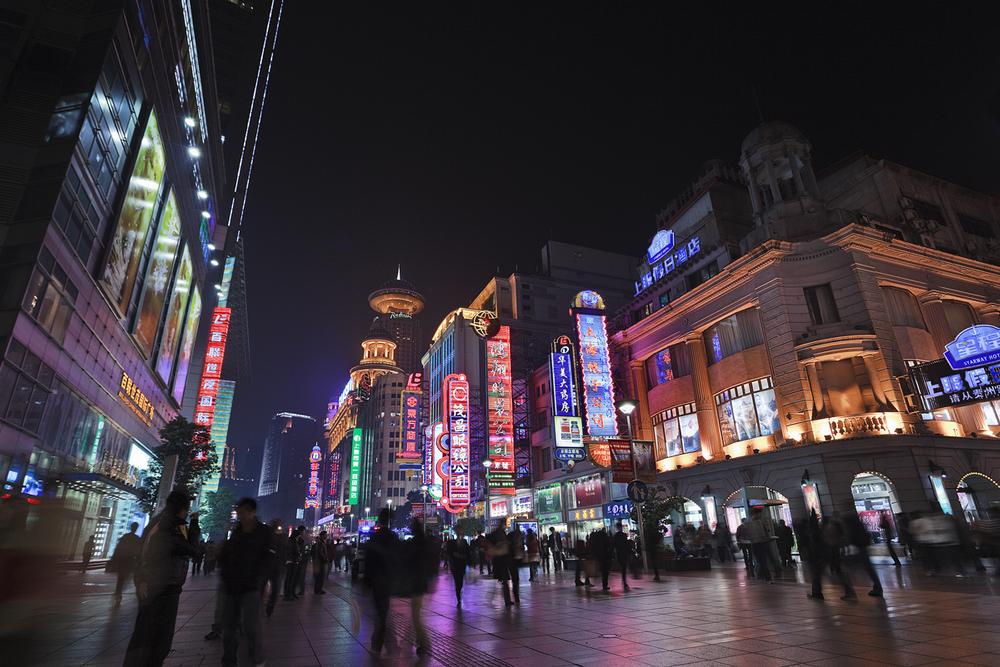
Chinese consumers will generate 34 per cent of demand for luxury goods worldwide, totalling US$118.2bn, by 2015 / shutterstock.com/TonyV3112
China. Without doubt one of the biggest emerging markets for spas. The growth is fuelled by its rapid rising economy and unprecedented consumer spending on high-end goods. With a compound annual growth rate (CAGR) of 27 per cent between 2008-2012, the Chinese market for luxury brands is now the largest in the world and is expected to continue on an upward trajectory until 2015.
Despite this robust outlook, consumer buying patterns are extremely changeable. A recent report by McKinsey – Luxury Without Borders: China’s New Class of Shoppers Take on the World – identifies significant challenges facing luxury brands including “the globalisation of Chinese luxury shopping, the rising sophistication of the country’s consumers, and the changing ways in which those consumers make purchases”.
While the report isn’t directly focused on spas, it outlines some interesting parallels for any operator in the luxury business.
Market Size Based on “interviews with over 1,000 luxury shoppers in 14 cities, extensive data analysis and conversations with industry leaders”, McKinsey forecasts that Chinese consumers will generate 34 per cent of demand for global luxury goods, totalling CNY726bn (US$118.2bn, €90.2bn, £77.5bn) by 2015. Luxury goods include ready to wear fashion, shoes, handbags, watches and fine jewellery. Growth is expected to slow to 12-16 per cent CAGR between 2012-2015 – partly due to the economic slowdown in China and concerns over gifting to government officials. Yet the outlook is still positive as a result of: * the rising number of those with disposable incomes above CNY1m (US$162,500, €124,200, £106,750). McKinsey forecasts that the number of very wealthy people will grow at over 20 per cent annually between 2012-2015. While only accounting for 0.4 per cent of China’s population, this segment is intended to generate 28 per cent of demand for luxury goods in 2015; * new entrants to the market such as the rising and aspiring middle classes; * relatively high levels of financial confidence; * women now account for three fifths of luxury purchases and are a fast growing segment; * individual gifting is “embedded in Chinese society… seen as a way of nurturing relationships – so it’s not about to diminish in importance anytime soon”, even in the face of increasing concerns about gifting to government officials; and * changing lifestyles – more socialising among the wealthy provides them with opportunities to wear their luxury purchases
Challenges in china Given the positive background, there are the obstacles facing luxury brands in China.
Market Splintering – even consumers with just a few years’ experience of buying luxury goods now want “low-key and understated goods to ones that are emblazoned with popular logos”. But new entrants still prefer “widely-recognisable brands that show off their status”. This presents a dilemma as trying to satisfy all markets “risks diluting their brands’ cachet”. This is a particular problem as 49 per cent of tenured shoppers, who’ve been purchasing luxury goods for over 10 years, “like to discover new brands before others, compared with only 31 per cent of new entrants”. Brands face the danger that as new entrants become customers, the “loyalty of more tenured consumers may weaken… as they seek to differentiate themselves… with a smaller, niche product… and new entrants may even follow [suit] leaving the once-fashionable brand abandoned by both ends of the market.”
McKinsey advise brands to “focus on the core and build on heritage… highlighting the skill of craftsmen… the length of history… Brands shouldn’t completely avoid expanding into new categories, rather they should do so in a way that enhances their key narrative.”
Pricing – should be “based on a strategy that’s coherent with the branding, merchandising and the global image”. McKinsey advises that in general “iconic categories and products that never go on sale should be kept distinct from those that might”. Promotions should also be limited to VIPs it believes.
Consistency – outbound tourism by Chinese residents is predicted to grow from 57 million trips in 2010 to 94 million by 2015. As a result, an increasing number of luxury purchases are now made abroad. In 2010, 65 per cent of shoppers purchased luxury goods in mainland China only. By 2012 this had declined to 38 per cent. Macau, Hong Kong and increasingly Europe are the key shopping destinations overseas.
However, brand consistency is difficult to achieve in different jurisdictions. China imposes taxes ranging from 20-70 per cent on imported luxury goods, leading to wide ranging retail price disparities. This can lead to price differentials on say, a handbag, of up to 40 per cent. While some luxury operators have recently reacted by increasing prices only outside Asia, and certain government officials have expressed the willingness in time to reduce import duties, “the price gap is unlikely to disappear… any reduction in taxes is almost certain to be gradual”.
In addition to price consistency, operators are also “obliged to maintain consistency of excellence in their retail establishments around the world… with the importance of the in-store experience for Chinese luxury consumers becoming ever more evident”.
In-store experience – the growing frequency of buying on impulse or after only a short consideration propels the in-store experience into a priority. McKinsey found that over half of survey respondents cited some aspect of the in-store experience as important in their purchase decision and “the longer consumers shop for luxury, the more they care about the stores they patronise”.
Operators have responded by increasing the size of outlets, in some cases significantly – “for some brands, a three to five-fold expansion of space in the average outlet since 2007”. Given annual rent and wage rises, this is an expensive investment.
McKinsey advises that “striking the right balance between store numbers and quality” is becoming increasingly important. “It’s advisable to… ensure that sites are prominent and stores globally consistent in terms of look and feel. Expanding selectively in a few untapped lower-tier cities may be desirable”. The researchers believe that opening outlets in non-exclusive locations “can hurt brand image”. Brands should also focus on airport duty-free outlets as the Chinese travel to more overseas destinations.
CRM and pampering to the ultra-wealthy – in the pursuit of customers, McKinsey suggest luxury brands “should fit their CRM programmes to surprise and impress their customers with personalised and exclusive offerings… starting small, with a few initiatives offering high-impact pampering, is often the best way to go”. The researchers found that ultra-wealthy consumers seek a VIP, individualised shopping experience – private rooms or floors and dedicated (Chinese speaking) salespeople. “In China, some brands have flown their best customers on all-expense-paid trips to enjoy fashion shows, art shows, and cruises; for VVIPs, these excursions can involve destinations as far away as Paris”. McKinsey also suggest “customising brand and product portfolios, using limited-edition offerings to create an aura of exclusivity… Super-rich Chinese consumers love, and count upon, ‘over-the-top’ VIP treatment”.
Embracing the online opportunity – while online purchases in the luxury sector in China are still in their infancy, “and not about to displace in-store shopping anytime in the foreseeable future”, this channel should not be ignored according to the researchers. Three-quarters of respondents to the survey cited worries about counterfeiting as a reason for not buying online. As elsewhere, consumers are increasingly using the internet to gain information – price comparisons, viewing editorial comments by other users. Those who did buy online reported price savings on websites such as Taobao.com and ihaveu.com. Official manufacturer’s websites only derived 4 per cent of online purchases. McKinsey advises “tailoring e-commerce operations to be ready if and when the channel takes off… through password-protected websites for select groups of registered customers” in order to confront fears of counterfeiting and payment security.
Implementing these strategies is unlikely to be cheap or easy, but essential to keep-up with the ever-changing sophistication of the largest luxury consuming market globally.
Luxury 2.0 Interestingly, a May 2013 study by global business consulting firm Bain & Company confirms many of the McKinsey findings. Luxury Goods Worldwide Market Study, Spring 2013 Update, which analyses the market and financial performance of more than 230 of the world’s leading luxury goods companies, reports that the key for winning in the luxury market over the next 10-15 years is “to get ready for Luxury 2.0, where success will be defined by a relentless focus on three luxury goods management principles”. Those principles are: 1. Superior customer service; 2. Flawless retail management; and 3. People excellence
“We’re entering a new phase in the evolution of the luxury market”, says Claudia D’Arpizio, a Bain partner in Milan and lead author of the study. “More markets, more segments, and more diversity of tastes all combine to create more variables to solve when pursuing the right strategy for growth.”
Read more from this issue of Spa Business magazine
Interview: Lee David Stephens
Thai-based management company
MSpa runs 44 spas with 450 staff. The
General Manager talks to Katie Barnes
about a recent deal with Per Aquum
and its rapid expansion
Interview: Kathryn Moore
MSpa’s operations director is creating
a brand new wellness concept and a
fast track spa manager programme
Company Profile Promotion: GOCO Hospitality
After just four years of operation GOCO Hospitality is regarded as a global leader
in wellness hospitality segment of the industry. With 22 projects on its books,
spanning three continents, we look at what underpins the company’s success
Company profile promotion: Comfort Zone
The Comfort Zone spa brand has been newly revamped and revitalised to better communicate its core offerings as a natural, scientific and soul-centred skincare and lifestyle brand
Green: Being green
Ecocert’s new Being label is the first
public-facing green certification for
spa operations, eco-friendly
Promotional Feature: Part 4 - Pre-Opening
Opening a spa successfully is all about planning. Gary
Henkin, president of WTS and Doug Chambers, principal
of Blu Spas, share their experience of pre-opening
Company Profile Promotion: Aromatherapy Associates
Global product company Aromatherapy Associates knows how
to make treatments and retail work in a spa environment and
partners with operators to make a real point of difference
Industry survey: Price to pay
A GSWS report on global therapist pay focuses on differing salary composition, benefit and commission structures. Lisa Starr takes a closer look
Spa Retreat: Running on juice
Juice Master founder Jason Vale tells
Kate Cracknell about its retreats and
how juicing can help prevent disease
Interview: Wee Wei Ling
Neena Dhillon meets the founder of
St Gregory: the spa brand owned by Pan
Pacific that’s just opened a wellness
floor in Singapore’s ‘hotel in a garden’
Research: Moving target
A McKinsey study highlights the fast-changing
spending patterns of China’s
luxury consumers. Leonor Stanton
finds out what this means for spas
Advertisement Promotion: A gift from Ez-Runner...
Vouchers can be used as a stand-alone system integrated into your website or added as a module of Ez-Runner’s leisure management software to control your spa facility
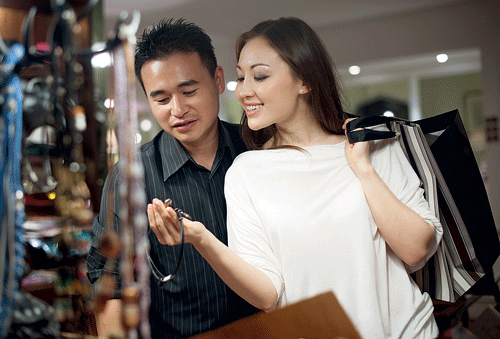
A consistent, quality in-store experience is becoming increasingly important / shutterstock.com/merzzie
Customer dilemma – tenured consumers want understated luxury, while new customers want widely-recognisable brands that show off their status / shutterstock.com/TonyV3112
The Spa Life UK Convention returns from 21–23 June 2026 at Whittlebury Park Hotel, Spa &
Golf Resort, bringing together spa managers, directors and owners for two days of focused
education, meaningful connection and commercial insight. [more...]
+ More featured suppliers
COMPANY PROFILES
Myrtha Wellness
Founded in Italy in 1961 by visionary Giorgio Colletto, Myrtha Wellness has become a global pioneer [more...]
The Wellness
Founded in 2007, headquartered in Dubai and based in Hong Kong and Singapore, The Wellness is an int [more...]
China’s luxury consumers are becoming more sophisticated and their spending patterns are changing, according to research by McKinsey. Leonor Stanton analyses the findings
By Leonor Stanton | Published in Spa Business 2013 issue 3
Chinese consumers will generate 34 per cent of demand for luxury goods worldwide, totalling US$118.2bn, by 2015 / shutterstock.com/TonyV3112
China. Without doubt one of the biggest emerging markets for spas. The growth is fuelled by its rapid rising economy and unprecedented consumer spending on high-end goods. With a compound annual growth rate (CAGR) of 27 per cent between 2008-2012, the Chinese market for luxury brands is now the largest in the world and is expected to continue on an upward trajectory until 2015.
Despite this robust outlook, consumer buying patterns are extremely changeable. A recent report by McKinsey – Luxury Without Borders: China’s New Class of Shoppers Take on the World – identifies significant challenges facing luxury brands including “the globalisation of Chinese luxury shopping, the rising sophistication of the country’s consumers, and the changing ways in which those consumers make purchases”.
While the report isn’t directly focused on spas, it outlines some interesting parallels for any operator in the luxury business.
Market Size Based on “interviews with over 1,000 luxury shoppers in 14 cities, extensive data analysis and conversations with industry leaders”, McKinsey forecasts that Chinese consumers will generate 34 per cent of demand for global luxury goods, totalling CNY726bn (US$118.2bn, €90.2bn, £77.5bn) by 2015. Luxury goods include ready to wear fashion, shoes, handbags, watches and fine jewellery. Growth is expected to slow to 12-16 per cent CAGR between 2012-2015 – partly due to the economic slowdown in China and concerns over gifting to government officials. Yet the outlook is still positive as a result of: * the rising number of those with disposable incomes above CNY1m (US$162,500, €124,200, £106,750). McKinsey forecasts that the number of very wealthy people will grow at over 20 per cent annually between 2012-2015. While only accounting for 0.4 per cent of China’s population, this segment is intended to generate 28 per cent of demand for luxury goods in 2015; * new entrants to the market such as the rising and aspiring middle classes; * relatively high levels of financial confidence; * women now account for three fifths of luxury purchases and are a fast growing segment; * individual gifting is “embedded in Chinese society… seen as a way of nurturing relationships – so it’s not about to diminish in importance anytime soon”, even in the face of increasing concerns about gifting to government officials; and * changing lifestyles – more socialising among the wealthy provides them with opportunities to wear their luxury purchases
Challenges in china Given the positive background, there are the obstacles facing luxury brands in China.
Market Splintering – even consumers with just a few years’ experience of buying luxury goods now want “low-key and understated goods to ones that are emblazoned with popular logos”. But new entrants still prefer “widely-recognisable brands that show off their status”. This presents a dilemma as trying to satisfy all markets “risks diluting their brands’ cachet”. This is a particular problem as 49 per cent of tenured shoppers, who’ve been purchasing luxury goods for over 10 years, “like to discover new brands before others, compared with only 31 per cent of new entrants”. Brands face the danger that as new entrants become customers, the “loyalty of more tenured consumers may weaken… as they seek to differentiate themselves… with a smaller, niche product… and new entrants may even follow [suit] leaving the once-fashionable brand abandoned by both ends of the market.”
McKinsey advise brands to “focus on the core and build on heritage… highlighting the skill of craftsmen… the length of history… Brands shouldn’t completely avoid expanding into new categories, rather they should do so in a way that enhances their key narrative.”
Pricing – should be “based on a strategy that’s coherent with the branding, merchandising and the global image”. McKinsey advises that in general “iconic categories and products that never go on sale should be kept distinct from those that might”. Promotions should also be limited to VIPs it believes.
Consistency – outbound tourism by Chinese residents is predicted to grow from 57 million trips in 2010 to 94 million by 2015. As a result, an increasing number of luxury purchases are now made abroad. In 2010, 65 per cent of shoppers purchased luxury goods in mainland China only. By 2012 this had declined to 38 per cent. Macau, Hong Kong and increasingly Europe are the key shopping destinations overseas.
However, brand consistency is difficult to achieve in different jurisdictions. China imposes taxes ranging from 20-70 per cent on imported luxury goods, leading to wide ranging retail price disparities. This can lead to price differentials on say, a handbag, of up to 40 per cent. While some luxury operators have recently reacted by increasing prices only outside Asia, and certain government officials have expressed the willingness in time to reduce import duties, “the price gap is unlikely to disappear… any reduction in taxes is almost certain to be gradual”.
In addition to price consistency, operators are also “obliged to maintain consistency of excellence in their retail establishments around the world… with the importance of the in-store experience for Chinese luxury consumers becoming ever more evident”.
In-store experience – the growing frequency of buying on impulse or after only a short consideration propels the in-store experience into a priority. McKinsey found that over half of survey respondents cited some aspect of the in-store experience as important in their purchase decision and “the longer consumers shop for luxury, the more they care about the stores they patronise”.
Operators have responded by increasing the size of outlets, in some cases significantly – “for some brands, a three to five-fold expansion of space in the average outlet since 2007”. Given annual rent and wage rises, this is an expensive investment.
McKinsey advises that “striking the right balance between store numbers and quality” is becoming increasingly important. “It’s advisable to… ensure that sites are prominent and stores globally consistent in terms of look and feel. Expanding selectively in a few untapped lower-tier cities may be desirable”. The researchers believe that opening outlets in non-exclusive locations “can hurt brand image”. Brands should also focus on airport duty-free outlets as the Chinese travel to more overseas destinations.
CRM and pampering to the ultra-wealthy – in the pursuit of customers, McKinsey suggest luxury brands “should fit their CRM programmes to surprise and impress their customers with personalised and exclusive offerings… starting small, with a few initiatives offering high-impact pampering, is often the best way to go”. The researchers found that ultra-wealthy consumers seek a VIP, individualised shopping experience – private rooms or floors and dedicated (Chinese speaking) salespeople. “In China, some brands have flown their best customers on all-expense-paid trips to enjoy fashion shows, art shows, and cruises; for VVIPs, these excursions can involve destinations as far away as Paris”. McKinsey also suggest “customising brand and product portfolios, using limited-edition offerings to create an aura of exclusivity… Super-rich Chinese consumers love, and count upon, ‘over-the-top’ VIP treatment”.
Embracing the online opportunity – while online purchases in the luxury sector in China are still in their infancy, “and not about to displace in-store shopping anytime in the foreseeable future”, this channel should not be ignored according to the researchers. Three-quarters of respondents to the survey cited worries about counterfeiting as a reason for not buying online. As elsewhere, consumers are increasingly using the internet to gain information – price comparisons, viewing editorial comments by other users. Those who did buy online reported price savings on websites such as Taobao.com and ihaveu.com. Official manufacturer’s websites only derived 4 per cent of online purchases. McKinsey advises “tailoring e-commerce operations to be ready if and when the channel takes off… through password-protected websites for select groups of registered customers” in order to confront fears of counterfeiting and payment security.
Implementing these strategies is unlikely to be cheap or easy, but essential to keep-up with the ever-changing sophistication of the largest luxury consuming market globally.
Luxury 2.0 Interestingly, a May 2013 study by global business consulting firm Bain & Company confirms many of the McKinsey findings. Luxury Goods Worldwide Market Study, Spring 2013 Update, which analyses the market and financial performance of more than 230 of the world’s leading luxury goods companies, reports that the key for winning in the luxury market over the next 10-15 years is “to get ready for Luxury 2.0, where success will be defined by a relentless focus on three luxury goods management principles”. Those principles are: 1. Superior customer service; 2. Flawless retail management; and 3. People excellence
“We’re entering a new phase in the evolution of the luxury market”, says Claudia D’Arpizio, a Bain partner in Milan and lead author of the study. “More markets, more segments, and more diversity of tastes all combine to create more variables to solve when pursuing the right strategy for growth.”
Read more from this issue of Spa Business magazine
Interview: Lee David Stephens
Thai-based management company
MSpa runs 44 spas with 450 staff. The
General Manager talks to Katie Barnes
about a recent deal with Per Aquum
and its rapid expansion
Interview: Kathryn Moore
MSpa’s operations director is creating
a brand new wellness concept and a
fast track spa manager programme
Company Profile Promotion: GOCO Hospitality
After just four years of operation GOCO Hospitality is regarded as a global leader
in wellness hospitality segment of the industry. With 22 projects on its books,
spanning three continents, we look at what underpins the company’s success
Company profile promotion: Comfort Zone
The Comfort Zone spa brand has been newly revamped and revitalised to better communicate its core offerings as a natural, scientific and soul-centred skincare and lifestyle brand
Green: Being green
Ecocert’s new Being label is the first
public-facing green certification for
spa operations, eco-friendly
Promotional Feature: Part 4 - Pre-Opening
Opening a spa successfully is all about planning. Gary
Henkin, president of WTS and Doug Chambers, principal
of Blu Spas, share their experience of pre-opening
Company Profile Promotion: Aromatherapy Associates
Global product company Aromatherapy Associates knows how
to make treatments and retail work in a spa environment and
partners with operators to make a real point of difference
Industry survey: Price to pay
A GSWS report on global therapist pay focuses on differing salary composition, benefit and commission structures. Lisa Starr takes a closer look
Spa Retreat: Running on juice
Juice Master founder Jason Vale tells
Kate Cracknell about its retreats and
how juicing can help prevent disease
Interview: Wee Wei Ling
Neena Dhillon meets the founder of
St Gregory: the spa brand owned by Pan
Pacific that’s just opened a wellness
floor in Singapore’s ‘hotel in a garden’
Research: Moving target
A McKinsey study highlights the fast-changing
spending patterns of China’s
luxury consumers. Leonor Stanton
finds out what this means for spas
Advertisement Promotion: A gift from Ez-Runner...
Vouchers can be used as a stand-alone system integrated into your website or added as a module of Ez-Runner’s leisure management software to control your spa facility
A consistent, quality in-store experience is becoming increasingly important / shutterstock.com/merzzie
Customer dilemma – tenured consumers want understated luxury, while new customers want widely-recognisable brands that show off their status / shutterstock.com/TonyV3112
Global Wellness Day (GWD) marked its 15th anniversary on Saturday 13 June 2026, with the
theme: #JoyMagenta – a celebration of the healing qualities of simple gestures and activities
that spark joy.
Global luxury hospitality brand, Six Senses, has partnered with longevity healthcare provider,
HUM2N, to launch a clinic at Six Senses London, at The Whiteley.
As part of its first hotel partnership, Mayrlife – the medical health resort company known for its
site in Altaussee, Austria – has launched a day clinic at the Rosewood Vienna.
Premium London health club, KX Chelsea, will imminently unveil its most significant
redevelopment since its launch in 2002 to create an integrated wellness model combining
training, recovery and relaxation.
Rosewood Le Guanahani St Barth, on the northeast coast of Saint Barthélemy in the French
West Indies, is offering a programme of ocean-inspired yoga classes between 8-14 June to
celebrate Global Wellness Day (GWD).
Hotel de France, located on the British Isle of Jersey, has created a wellness retreat package
that includes a hot yoga session that will take place in Jersey Zoo’s butterfly sanctuary.
The Ritz-Carlton, Langkawi, in Malaysia, has revealed a schedule for Global Wellness Day
(GWD) that includes guided rainforest walks, mindful movement and guided coastal meditation
experiences.
Longevitix, a clinical platform for preventive and longevity medicine, has launched its AI-
powered intelligence system to help physicians deliver continuous, personalised longevity-
focused care at scale.
Atmantan Wellness Centre, an integrative wellness destination in Mulshi, near Pune in India, is
expanding its portfolio by adding a new centre in Hyderabad that will launch between 2028 and
2029.
The Spa Life UK Convention returns from 21–23 June 2026 at Whittlebury Park Hotel, Spa &
Golf Resort, bringing together spa managers, directors and owners for two days of focused
education, meaningful connection and commercial insight. [more...]
+ More featured suppliers
COMPANY PROFILES
Myrtha Wellness Founded in Italy in 1961 by visionary Giorgio Colletto, Myrtha Wellness has become a global pioneer [more...]