Yes! Send me the FREE digital editions of Spa Business and Spa Business insider magazines and the FREE weekly Spa Business and Spa Business insider ezines and breaking news alerts!
Museums should go beyond the Big Five senses to create experiences that use visitors’ sense of danger, pain, balance and injustice to bring them
closer to issues that matter, the founder of immersive experience design firm Roto tells Magali Robathan
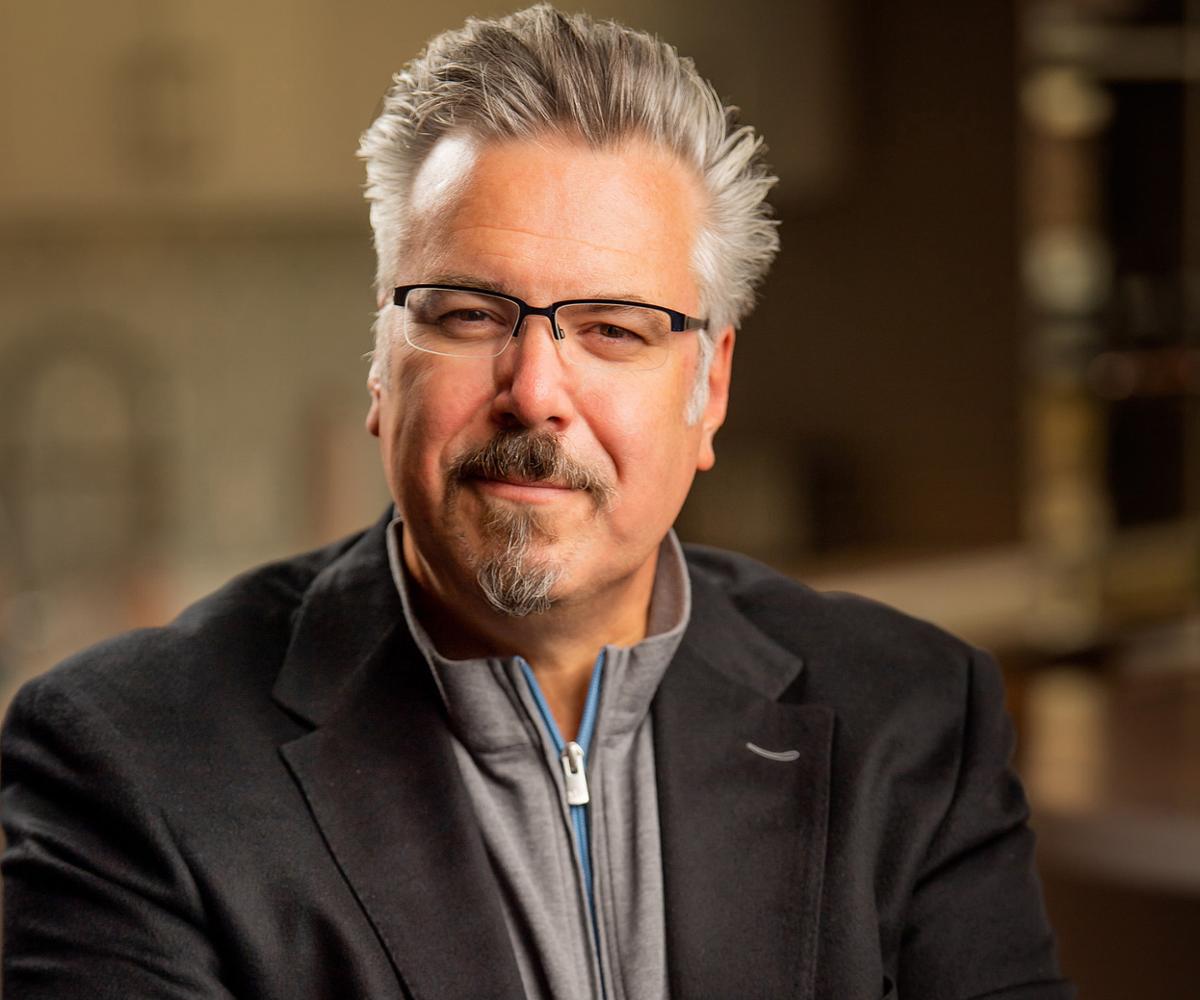
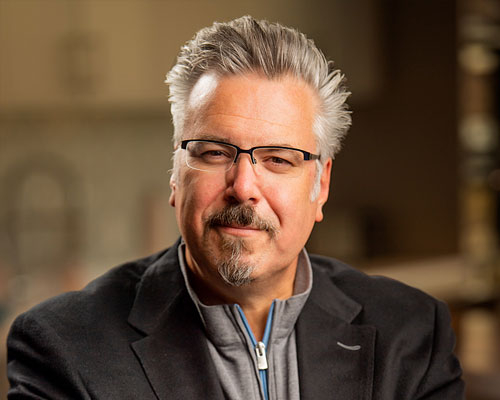
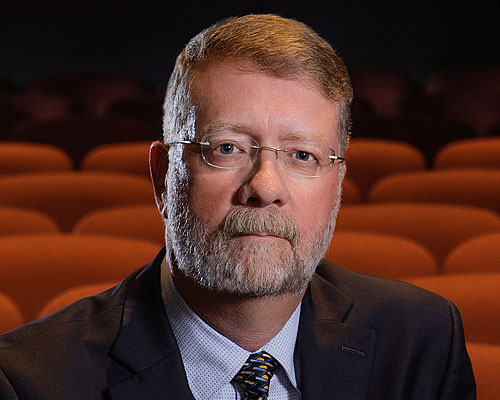
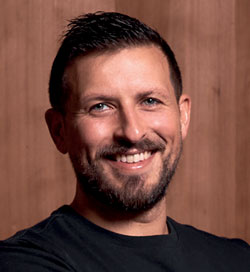
Joseph Wisne co-founded Roto in 2003, after seven years at COSI in Columbus, Ohio / Courtesy of Roto
You’ve argued that attractions wanting to achieve greater impact and commercial success should become supersensory. Tell us more The concept of ‘immersion’ in public attractions has been around for more than 20 years, and we see the term applied to many conventional exhibits and attractions. Simple things such as 360-degree photos and open-world video games are often called ‘immersive,’ even when viewed on a 25-inch monitor. We wanted a new term that better reflects the order-of-magnitude increase in sensory experience introduced within immersive art attractions while simultaneously capturing why their demand has been so strong. Humans have evolved an enormous sensory capacity. A supersensory experience stimulates that full sensory range in all its depth and diversity, going far beyond sight and sound.
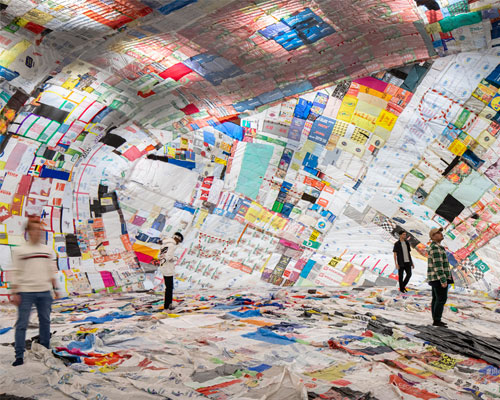
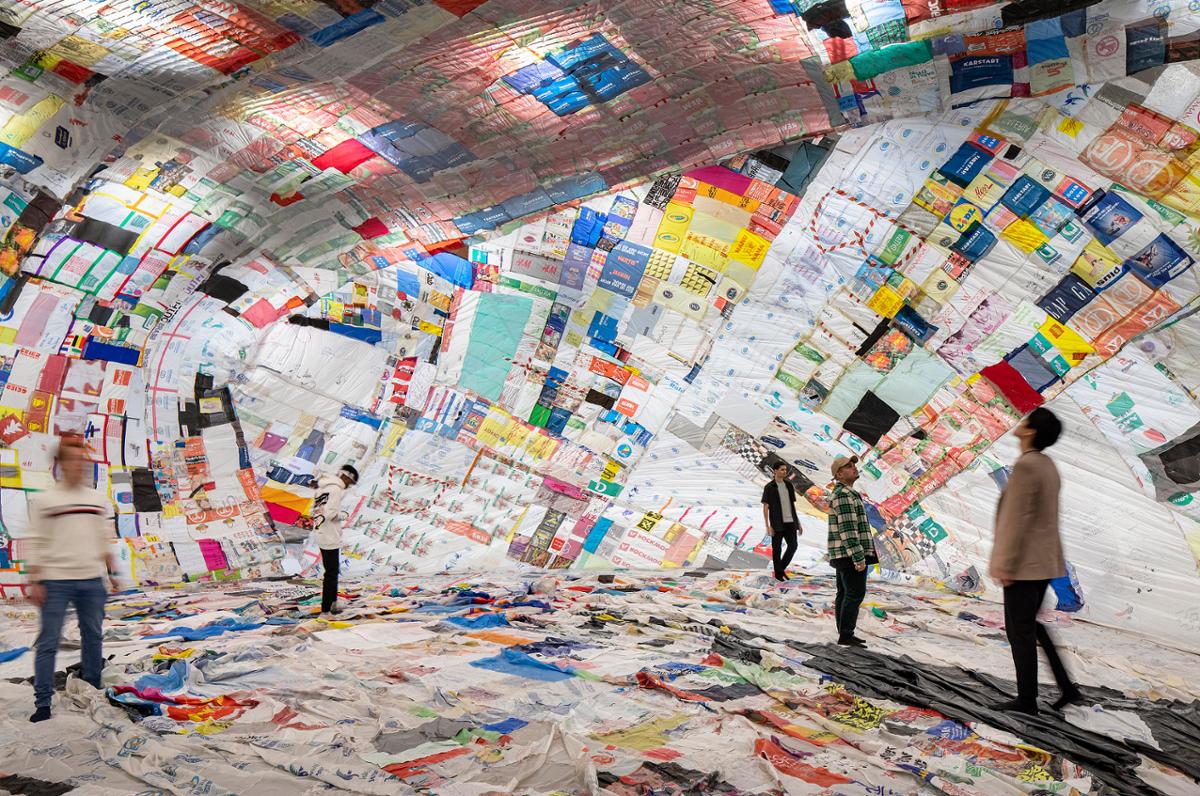
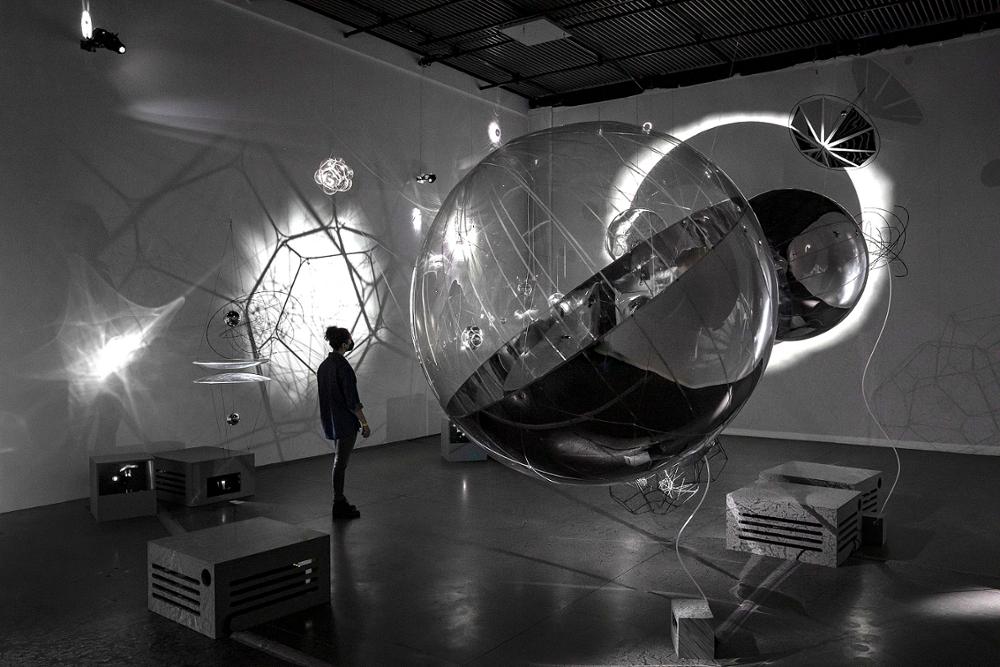
What’s exciting right now? New immersive art experiences are popping up across the landscape faster than I can check them out, and many have started to feel a bit reductive. Still, standouts for me include Tomas Saraceno’s current show at The Shed in New York. This installation gives humans the supersensory perceptions of spiders, suspended in a 95-foot diameter sphere – way cooler than watching a Spiderman film.
I think what Pace Gallery is doing with Superblue is very bold, and many of the installations fulfill the promise of the supersensory experience while also conveying a larger meaning or message. Grande Experiences have done well with their various Alive exhibitions, and we’re curious to see how they move forward now that their model is being so heavily copied. I think here is where content may begin to supersede format, like what we have seen in the ‘data sculptures’ of Refik Anadol, which clearly demonstrate the potential of AI-enhanced animations.
Offering immersive experiences based on the main five senses is now quite commonplace. Can you talk about the role of other senses such as danger, temperature, pain, and balance? We should remember that the five senses are something schoolteachers made up. Neuroscience identifies at least nine fundamental senses that are always in operation as we explore our world, including exhibits and attractions. I’m talking about specific receptors in the body that get interpreted by distinct regions of the brain —they’re all automatic, and we can’t turn them off.
We may not think of proprioception as significantly important, but maintaining a sense of where your limbs are in space matters in a motion simulator or a massive net climber, or when Van Gogh-style projections are sufficiently synced. This is a huge problem for VR attractions to assimilate effectively. Then yes, there are the second-order ‘senses’ that most humans possess which are more emotional, like a sense of humour or a sense of justice. I’m not just playing with words here; we believe these fundamental capacities are critical elements of what makes us human and makes experiences supersensory.
Can you think of any attractions and experiences that are playing with these additional senses in successful and impactful ways? Yes, hundreds! Despite all the attention paid to simulating fantastic new worlds in VR environments, the most compelling supersensory attractions that play with our sense of balance, space, orientation, and motion are still good old-fashioned rollercoasters, dark rides, and motion simulators. When friends and colleagues speak passionately about their favourite triple-A rides, I’m still hearing mostly about the authentic physical modalities of their adventures – soaring, flying, accelerating, cornering, dropping. The narratives and images continue to deliver an increasingly sophisticated ambiance, but the fundamentals of the experience are still rooted in real-world motion and acceleration. What is space tourism but the chance to escape our indelible sense of gravity?
How could the sense of danger and pain be used to create an intriguing experience or attraction? If we broaden what we mean by sensing danger and sensing pain, they absolutely become prospective tools for authentic future experiences. The best haunted attractions have been doing danger pretty well for years, although jump-scares only go so far.
Tough Mudder succeeds by adding social bonding to physical risk and endurance. Outdoor paintball parks trade on the basic human emotion of hunter/prey far better than most indoor laser tag arenas, for reasons that probably relate to supersensory danger and proportional pain. The best escape rooms don’t settle for merely offering complex timed puzzles – they tap into an ancient anxiety narrative around physical risk and entrapment, boosting adrenaline and becoming supersensory on a biochemical level.
Are there risks when designing immersive supersensory experiences? We designed a supersensory section within the Vietnam War gallery of the National Museum of Military Vehicles in Dubois, US, including custom odours reminiscent of cordite and swamp gas. They were very realistic and very immersive – and unfortunately also dangerously ‘on the nose’ for many veterans of that conflict and others suffering from PTSD. The odours were scrapped, and the sense of realism scaled down out of caution for those for whom violence and war were not a simulation.
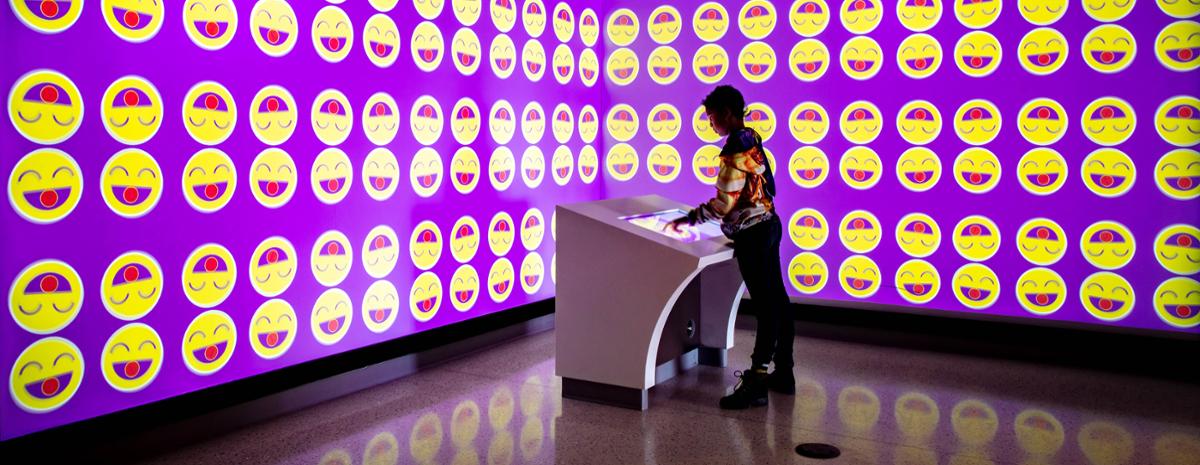
How could the more complex senses be used to heighten visitors’ experiences? This is largely unmapped terrain, which is why we’re excited to go exploring. The Laugh Battle interactive that Cortina and JRA created for the National Comedy Center in Jameston, New York, exploits the user’s inherent sense of humour at a fundamental level of behaviour. Trying not to laugh is the focus of the social encounter, which somehow makes the content even funnier. The fact that it uses AI to detect responses is both a part of the gag and somewhat independent from what makes it supersensory.
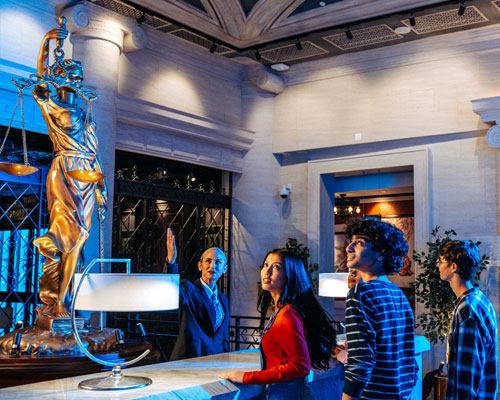
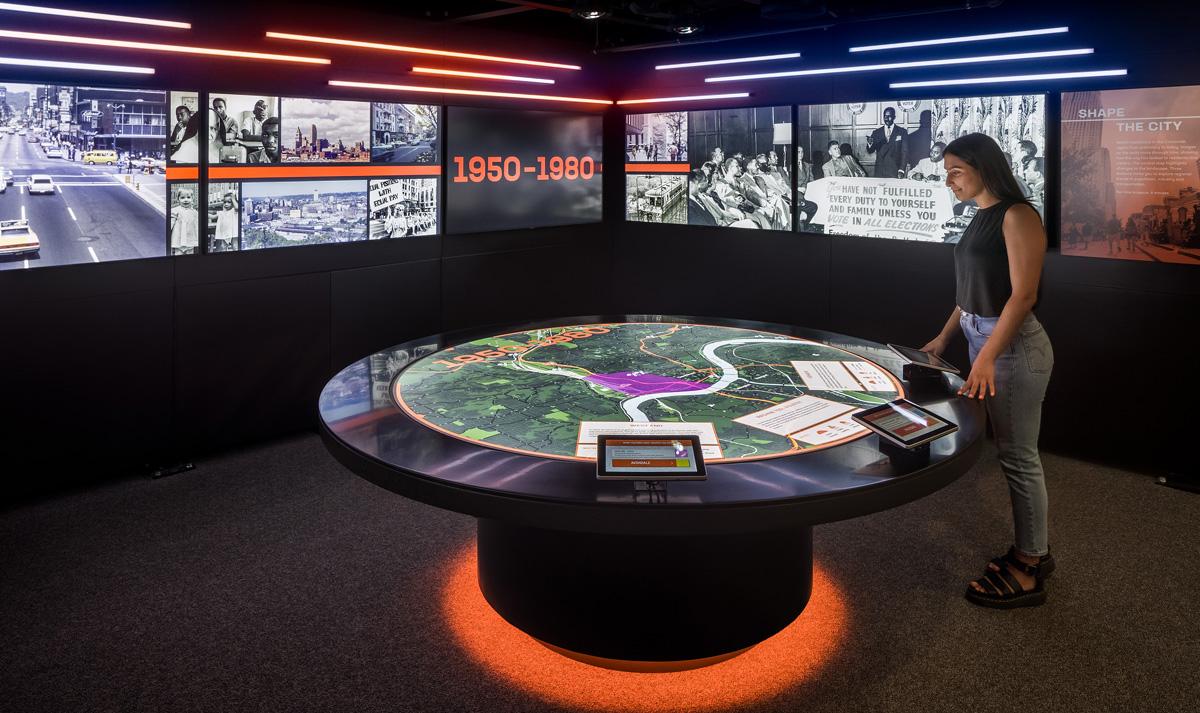
On the opposite end of the emotional spectrum, the new Legacy Museum in Alabama our company helped build with the Equal Justice Initiative leverages the fundamental human sense of justice to produce a lasting intellectual and emotional impact. The museum confronts participants with an overwhelming quantity and scale of incontestable facts, narratives, and artworks about the enslavement and mass incarceration of Black people in America. The effect is akin to that evoked by Dialog in the Dark experiences, which immerse participants in absolute darkness to engage a sense of empathy for the blind. The motivations and missions of these institutions may not resemble those of commercial entertainment attractions, but their supersensory techniques certainly do.
What insights do you have from your own work in this field? The psychologist Adam Grant wrote last summer about the concept of collective effervescence, describing it as “the synchrony you feel when you slide into rhythm with strangers on a dance floor, colleagues in a brainstorming session, cousins at a religious service or teammates on a soccer field.” I think we recognise something similar happening within the social dimension of many shared attraction experiences, whether thrill rides, scare events, or live shows – particularly when the audience numbers are modest – 12 to 25 people, for example.
We’re studying what causes this and asking how we can exploit it further, and we’re finding that it depends strongly on the audience’s makeup. Thus, rather than designing for the popular common denominator, ie the same for everyone, what happens when the attraction is customised for the particular curiosities or preferences of a particular group? If Google and Facebook can sell us targeted ads, can we build more targeted attractions? And then change them on the fly from cycle to cycle?
What projects are you working on at the moment? We have several projects in the major theme parks, both here in the US and Asia, following a far more integrated model than we’ve seen from Universal and WDI in the past.
Without disclosing the details, I’ll say these design-build assignments greatly benefit from Roto’s in-house design, engineering, and fabrication resources across theming, electromechanical, A/V, and digital media scopes.
Previously, these projects would have been split among multiple smaller firms, requiring heavy coordination overhead from the owners. This approach greatly benefits supersensory installations, where spatial design, animation, sound, sensing, control software, and sometimes the related interior architecture, must usually be coordinated by a single entity outside a set of drawings. The trend might have evolved as a result of so many younger show producers being raised around digital media and games – another discipline that relies heavily on integrated design-build methodologies.
What trends do you think we’ll see in the area of supersensory experiences over the next few years? You might notice a consistent theme in my comments about exploiting the fullness of our human sensory apparatus – they’re strongly connected to the tangible, physical world. While I’m intrigued about the future of the metaverse, I’m sceptical that it will eclipse what’s most durable and effective in location-based experiences.
I look forward to new innovations in augmented or mixed-reality applications – more so than with true virtual reality. I see technology becoming fused with physical placemaking, literally ‘augmenting’ our sensory apparatus rather than replacing it wholesale. Conscious humans cannot get completely outside of their own brains and bodies (at least not while awake and sober), so advances in miniaturisation and fast wireless networks should allow more digital content to be overlaid on what people are already seeing and feeling.
Can you highlight any interesting technology that’s being successfully deployed in this area? Wearables are keys to unlocking more versatility in these augmented attractions. We need to keep track of where guests are within the space and seamlessly connect their data to their individual experiences when possible. Better RFID and beacon network infrastructure can do that already, with future miniaturisation opening additional dimensions. Gesture and motion cameras have been adequate, if a bit clumsy to-date, but we’re excited to pursue more refined 3D tracking using multiple cameras for individual interactive elements. However, the biggest gains in the future attraction pipeline are in advanced digital tools. That may sound contradictory, but our next big project – one that fuses immersive media with supersensory participation and genuine human connection – relies most heavily on our incredibly talented software team.
About Roto
Launched in 2003, Roto is an interdisciplinary creative design agency offering planning, experience design, immersive media, interactive engineering, and custom fabrication for museums, brands, attractions and architectural placemaking.
CEO and founder Joseph Wisne has helped create more than 200 projects, including the Smithsonian’s National Museum of American History, the Northern Virginia Science Center, The Legacy Museum, and the new National Museum of Military Vehicles.
Read more from this issue of Spa Business magazine
View contents of Spa Business 2022 issue 1
Editor's letter: Supersensory
With our growing insight into how to engage visitors’ more complex senses, it’s time for a new approach, says Magali Robathan
Immersive experiences: Joseph Wisne
Truly ambitious attractions providers need to push the boundaries of immersive design by engaging visitors’ senses of pain, danger, balance, justice and more, argues Roto’s CEO
Interview: Esther Dugdale
As the Burrell Collection relaunches and Eden Qingdao takes shape, Event’s creative director shares her tips for creating experiences that spark joy and curiosity
The arts: Room to grow
Could the space age, ultra flexible design of the new Taipei Performing Arts Center provide a model for future attractions spaces?
Museums: Ones to watch
From an AI museum built by robots to the long-awaited Grand Egyptian Museum, we take a look at some exciting 2022 openings
Research: All of history
As demand for growing honesty in relation to links to slavery and colonialism grows, should attractions be open about their history? Jon Young investigates
Opinion: Vince Kadlubek
Art engages and delights visitors. Kadlubek argues that attractions should embrace and support artists and look for shared initiatives
Waterparks: Waves of change
As The Wave inland surf lake announces plans to open six more sites, we go along for a surf and a sit down with CEO Craig Stoddart
Experience economy: Joe Pine
Experience platforms represent one of the biggest growth opportunities in today’s experience economy, argues Joe Pine. Here’s how to get them right
Interview: Cale Heit
With new themed coasters open at Motiongate Dubai and some intruiging projects underway, Forrec is making the most of the pent up demand for shared experiences. CEO Cale Heit tells us more
In the fast-paced world of fitness and wellness, where high-intensity workouts push us to
our limits and the sweat pours, the importance of efficient recovery cannot be overstated. [more...]
In today’s premium spa environment, every detail shapes the guest experience – right down to
the softness of towels and the freshness of linens. [more...]
+ More featured suppliers
COMPANY PROFILES
The Wellness
Founded in 2007, headquartered in Dubai and based in Hong Kong and Singapore, The Wellness is an int [more...]
Templespa
Templespa was founded in 2000 by Liz and Mark Warom, seasoned entrepreneurs with a proven track reco [more...]
Museums should go beyond the Big Five senses to create experiences that use visitors’ sense of danger, pain, balance and injustice to bring them
closer to issues that matter, the founder of immersive experience design firm Roto tells Magali Robathan
Joseph Wisne co-founded Roto in 2003, after seven years at COSI in Columbus, Ohio / Courtesy of Roto
You’ve argued that attractions wanting to achieve greater impact and commercial success should become supersensory. Tell us more The concept of ‘immersion’ in public attractions has been around for more than 20 years, and we see the term applied to many conventional exhibits and attractions. Simple things such as 360-degree photos and open-world video games are often called ‘immersive,’ even when viewed on a 25-inch monitor. We wanted a new term that better reflects the order-of-magnitude increase in sensory experience introduced within immersive art attractions while simultaneously capturing why their demand has been so strong. Humans have evolved an enormous sensory capacity. A supersensory experience stimulates that full sensory range in all its depth and diversity, going far beyond sight and sound.
What’s exciting right now? New immersive art experiences are popping up across the landscape faster than I can check them out, and many have started to feel a bit reductive. Still, standouts for me include Tomas Saraceno’s current show at The Shed in New York. This installation gives humans the supersensory perceptions of spiders, suspended in a 95-foot diameter sphere – way cooler than watching a Spiderman film.
I think what Pace Gallery is doing with Superblue is very bold, and many of the installations fulfill the promise of the supersensory experience while also conveying a larger meaning or message. Grande Experiences have done well with their various Alive exhibitions, and we’re curious to see how they move forward now that their model is being so heavily copied. I think here is where content may begin to supersede format, like what we have seen in the ‘data sculptures’ of Refik Anadol, which clearly demonstrate the potential of AI-enhanced animations.
Offering immersive experiences based on the main five senses is now quite commonplace. Can you talk about the role of other senses such as danger, temperature, pain, and balance? We should remember that the five senses are something schoolteachers made up. Neuroscience identifies at least nine fundamental senses that are always in operation as we explore our world, including exhibits and attractions. I’m talking about specific receptors in the body that get interpreted by distinct regions of the brain —they’re all automatic, and we can’t turn them off.
We may not think of proprioception as significantly important, but maintaining a sense of where your limbs are in space matters in a motion simulator or a massive net climber, or when Van Gogh-style projections are sufficiently synced. This is a huge problem for VR attractions to assimilate effectively. Then yes, there are the second-order ‘senses’ that most humans possess which are more emotional, like a sense of humour or a sense of justice. I’m not just playing with words here; we believe these fundamental capacities are critical elements of what makes us human and makes experiences supersensory.
Can you think of any attractions and experiences that are playing with these additional senses in successful and impactful ways? Yes, hundreds! Despite all the attention paid to simulating fantastic new worlds in VR environments, the most compelling supersensory attractions that play with our sense of balance, space, orientation, and motion are still good old-fashioned rollercoasters, dark rides, and motion simulators. When friends and colleagues speak passionately about their favourite triple-A rides, I’m still hearing mostly about the authentic physical modalities of their adventures – soaring, flying, accelerating, cornering, dropping. The narratives and images continue to deliver an increasingly sophisticated ambiance, but the fundamentals of the experience are still rooted in real-world motion and acceleration. What is space tourism but the chance to escape our indelible sense of gravity?
How could the sense of danger and pain be used to create an intriguing experience or attraction? If we broaden what we mean by sensing danger and sensing pain, they absolutely become prospective tools for authentic future experiences. The best haunted attractions have been doing danger pretty well for years, although jump-scares only go so far.
Tough Mudder succeeds by adding social bonding to physical risk and endurance. Outdoor paintball parks trade on the basic human emotion of hunter/prey far better than most indoor laser tag arenas, for reasons that probably relate to supersensory danger and proportional pain. The best escape rooms don’t settle for merely offering complex timed puzzles – they tap into an ancient anxiety narrative around physical risk and entrapment, boosting adrenaline and becoming supersensory on a biochemical level.
Are there risks when designing immersive supersensory experiences? We designed a supersensory section within the Vietnam War gallery of the National Museum of Military Vehicles in Dubois, US, including custom odours reminiscent of cordite and swamp gas. They were very realistic and very immersive – and unfortunately also dangerously ‘on the nose’ for many veterans of that conflict and others suffering from PTSD. The odours were scrapped, and the sense of realism scaled down out of caution for those for whom violence and war were not a simulation.
How could the more complex senses be used to heighten visitors’ experiences? This is largely unmapped terrain, which is why we’re excited to go exploring. The Laugh Battle interactive that Cortina and JRA created for the National Comedy Center in Jameston, New York, exploits the user’s inherent sense of humour at a fundamental level of behaviour. Trying not to laugh is the focus of the social encounter, which somehow makes the content even funnier. The fact that it uses AI to detect responses is both a part of the gag and somewhat independent from what makes it supersensory.
On the opposite end of the emotional spectrum, the new Legacy Museum in Alabama our company helped build with the Equal Justice Initiative leverages the fundamental human sense of justice to produce a lasting intellectual and emotional impact. The museum confronts participants with an overwhelming quantity and scale of incontestable facts, narratives, and artworks about the enslavement and mass incarceration of Black people in America. The effect is akin to that evoked by Dialog in the Dark experiences, which immerse participants in absolute darkness to engage a sense of empathy for the blind. The motivations and missions of these institutions may not resemble those of commercial entertainment attractions, but their supersensory techniques certainly do.
What insights do you have from your own work in this field? The psychologist Adam Grant wrote last summer about the concept of collective effervescence, describing it as “the synchrony you feel when you slide into rhythm with strangers on a dance floor, colleagues in a brainstorming session, cousins at a religious service or teammates on a soccer field.” I think we recognise something similar happening within the social dimension of many shared attraction experiences, whether thrill rides, scare events, or live shows – particularly when the audience numbers are modest – 12 to 25 people, for example.
We’re studying what causes this and asking how we can exploit it further, and we’re finding that it depends strongly on the audience’s makeup. Thus, rather than designing for the popular common denominator, ie the same for everyone, what happens when the attraction is customised for the particular curiosities or preferences of a particular group? If Google and Facebook can sell us targeted ads, can we build more targeted attractions? And then change them on the fly from cycle to cycle?
What projects are you working on at the moment? We have several projects in the major theme parks, both here in the US and Asia, following a far more integrated model than we’ve seen from Universal and WDI in the past.
Without disclosing the details, I’ll say these design-build assignments greatly benefit from Roto’s in-house design, engineering, and fabrication resources across theming, electromechanical, A/V, and digital media scopes.
Previously, these projects would have been split among multiple smaller firms, requiring heavy coordination overhead from the owners. This approach greatly benefits supersensory installations, where spatial design, animation, sound, sensing, control software, and sometimes the related interior architecture, must usually be coordinated by a single entity outside a set of drawings. The trend might have evolved as a result of so many younger show producers being raised around digital media and games – another discipline that relies heavily on integrated design-build methodologies.
What trends do you think we’ll see in the area of supersensory experiences over the next few years? You might notice a consistent theme in my comments about exploiting the fullness of our human sensory apparatus – they’re strongly connected to the tangible, physical world. While I’m intrigued about the future of the metaverse, I’m sceptical that it will eclipse what’s most durable and effective in location-based experiences.
I look forward to new innovations in augmented or mixed-reality applications – more so than with true virtual reality. I see technology becoming fused with physical placemaking, literally ‘augmenting’ our sensory apparatus rather than replacing it wholesale. Conscious humans cannot get completely outside of their own brains and bodies (at least not while awake and sober), so advances in miniaturisation and fast wireless networks should allow more digital content to be overlaid on what people are already seeing and feeling.
Can you highlight any interesting technology that’s being successfully deployed in this area? Wearables are keys to unlocking more versatility in these augmented attractions. We need to keep track of where guests are within the space and seamlessly connect their data to their individual experiences when possible. Better RFID and beacon network infrastructure can do that already, with future miniaturisation opening additional dimensions. Gesture and motion cameras have been adequate, if a bit clumsy to-date, but we’re excited to pursue more refined 3D tracking using multiple cameras for individual interactive elements. However, the biggest gains in the future attraction pipeline are in advanced digital tools. That may sound contradictory, but our next big project – one that fuses immersive media with supersensory participation and genuine human connection – relies most heavily on our incredibly talented software team.
About Roto
Launched in 2003, Roto is an interdisciplinary creative design agency offering planning, experience design, immersive media, interactive engineering, and custom fabrication for museums, brands, attractions and architectural placemaking.
CEO and founder Joseph Wisne has helped create more than 200 projects, including the Smithsonian’s National Museum of American History, the Northern Virginia Science Center, The Legacy Museum, and the new National Museum of Military Vehicles.
Read more from this issue of Spa Business magazine
View contents of Spa Business 2022 issue 1
Editor's letter: Supersensory
With our growing insight into how to engage visitors’ more complex senses, it’s time for a new approach, says Magali Robathan
Immersive experiences: Joseph Wisne
Truly ambitious attractions providers need to push the boundaries of immersive design by engaging visitors’ senses of pain, danger, balance, justice and more, argues Roto’s CEO
Interview: Esther Dugdale
As the Burrell Collection relaunches and Eden Qingdao takes shape, Event’s creative director shares her tips for creating experiences that spark joy and curiosity
The arts: Room to grow
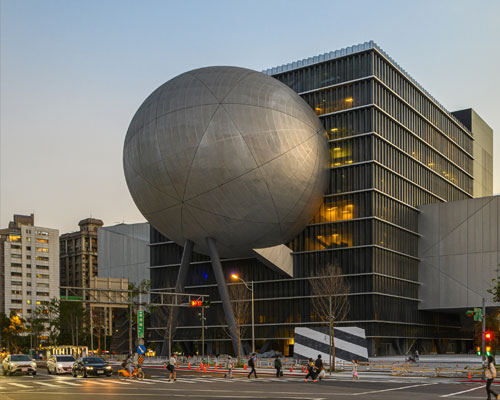
Could the space age, ultra flexible design of the new Taipei Performing Arts Center provide a model for future attractions spaces?
Museums: Ones to watch
From an AI museum built by robots to the long-awaited Grand Egyptian Museum, we take a look at some exciting 2022 openings
Research: All of history
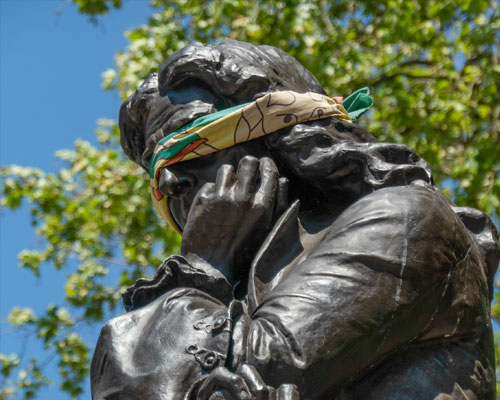
As demand for growing honesty in relation to links to slavery and colonialism grows, should attractions be open about their history? Jon Young investigates
Opinion: Vince Kadlubek
Art engages and delights visitors. Kadlubek argues that attractions should embrace and support artists and look for shared initiatives
Waterparks: Waves of change
As The Wave inland surf lake announces plans to open six more sites, we go along for a surf and a sit down with CEO Craig Stoddart
Experience economy: Joe Pine
Experience platforms represent one of the biggest growth opportunities in today’s experience economy, argues Joe Pine. Here’s how to get them right
Interview: Cale Heit
With new themed coasters open at Motiongate Dubai and some intruiging projects underway, Forrec is making the most of the pent up demand for shared experiences. CEO Cale Heit tells us more
Private hotel owner and developer HVL Hotels will open a new luxury resort and tourism
destination called Laval Hunter Valley in the second half of 2027 in Pokolbin, Australia.
The annual wellness festival dedicated to wellbeing, culture, longevity and human connection,
called Alma, will be hosted by Rocco Forte hotel, Verdura Resort in Sicily, Italy.
Capella Hotel Group has appointed Feisal Jaffer as chief development officer as the company
ramps up its global expansion of both its Capella and Patina brands.
People taking GLP-1 weight loss medications such as Ozempic, Wegovy, Mounjaro and Zepbound
may be losing weight, but they’re also becoming less physically active, according to new
research presented at the ENDO 2026 annual meeting of the Endocrine Society
Abu Dhabi-based investment firm Mubadala Capital has made a binding, fully financed
€1 billion
offer to acquire Pierre and Vacances SA, the European holiday resort operator behind the
continental European Center Parcs business.
Global retreat trade show, Synergy The Retreat Show, has launched a resource called The
Source, which hosts an open-access online Transformation Series programme.
The Standards Authority for Touch in Cancer Care (SATCC) charity has announced its first five-
day Living with Cancer and Beyond retreat, which will be held at Carden Park Hotel and Spa in
Cheshire, UK, between 1 and 5 September.
Patmos Aktis, a Luxury Collection Resort and Spa, has opened in Greece, with a renovated and
rebranded wellness offering called Ansana Wellness and Spa.
The Mauna Kea Beach Hotel, an Autograph Collection property in Hawaii, US, has opened its
22,000 sq ft indoor-outdoor Spa at Mauna Kea as the final step in the property’s overall
renovation, which has cost more than US$180 million (€166 million, £140 mill
The UK spa review and discovery platform for consumers, the Good Spa Guide, has announced
it will host the Good Spa Guide Awards 2026 during an event on 16 November at Sopwell House
Hotel in St Albans, UK.
In the fast-paced world of fitness and wellness, where high-intensity workouts push us to
our limits and the sweat pours, the importance of efficient recovery cannot be overstated. [more...]
In today’s premium spa environment, every detail shapes the guest experience – right down to
the softness of towels and the freshness of linens. [more...]
+ More featured suppliers
COMPANY PROFILES
The Wellness Founded in 2007, headquartered in Dubai and based in Hong Kong and Singapore, The Wellness is an int [more...]