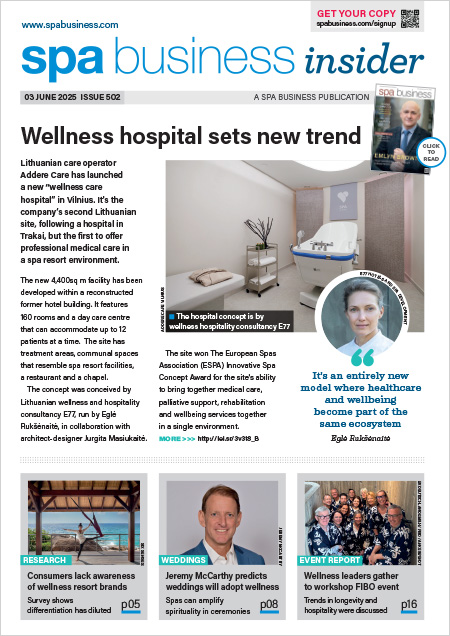
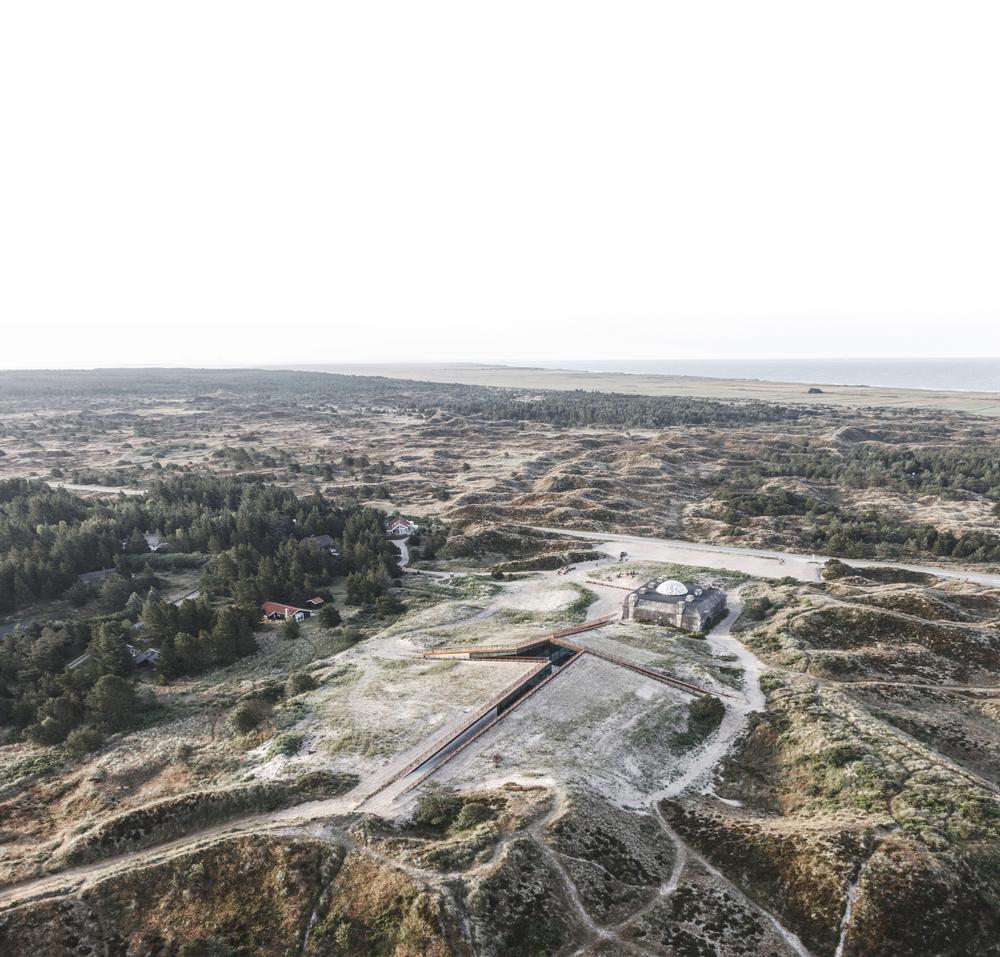
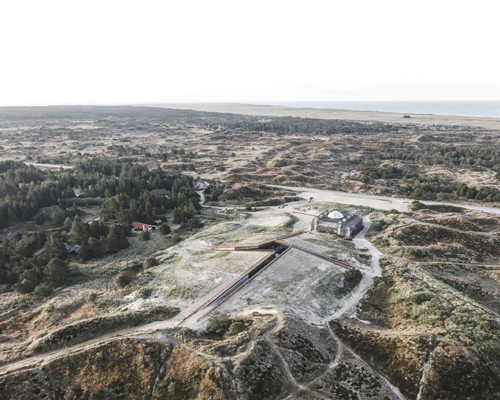
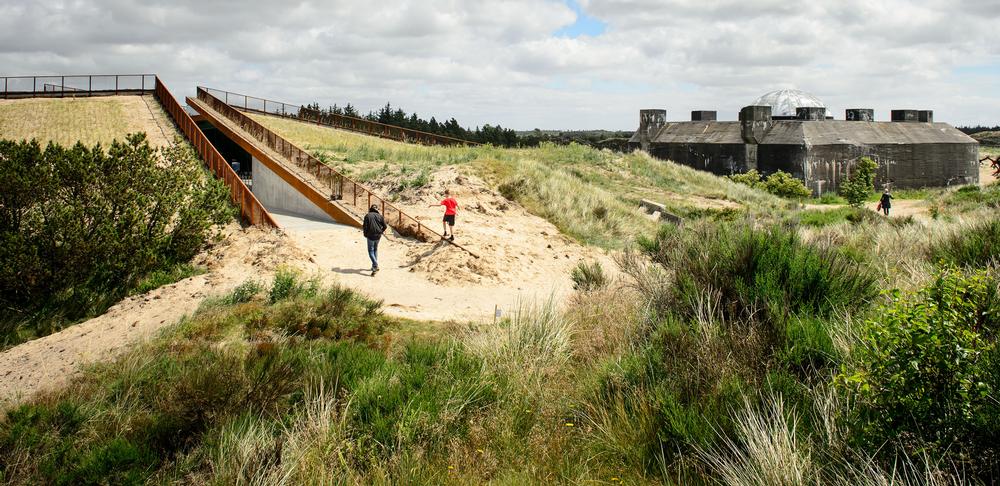
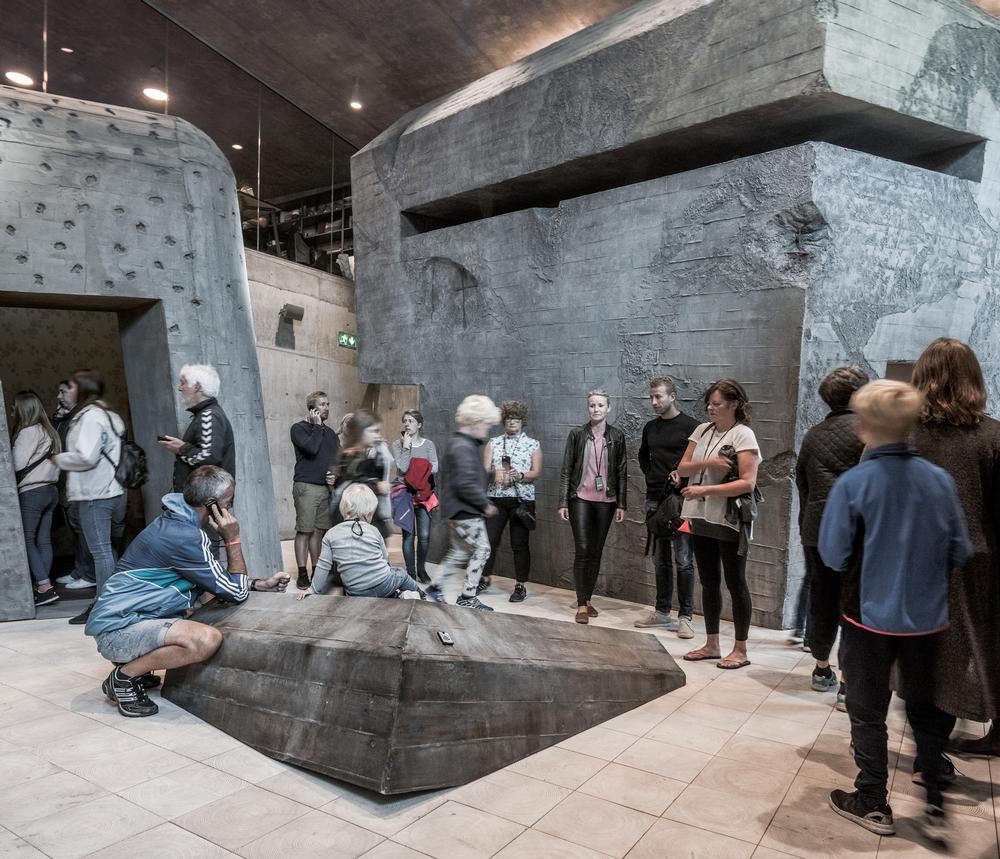
Tirpitz Museum is a former bunker, one of hundreds of coastal defences and fortifications built by the German army during World War II / photo: Rasmus Hjortshoj
Danish architects Bjarke Ingels Group’s (BIG) transformation of a World War II German bunker into a cultural complex camouflaged among the protected dunes of Blåvand, western Denmark, opened to the public on 30 June.
Named Tirpitz Museum, the 82,000sqm (882,600sq ft) attraction relates the history of the rugged coastal area, including stories of lost ships, smugglers and war. The architects describe the building as “a sanctuary in the sand that acts as a gentle counterbalance to the dramatic war history of the site”.
On approach, visitors first see the bunker, one of hundreds of coastal defences and fortifications built by the German army during the war to protect against invasion.
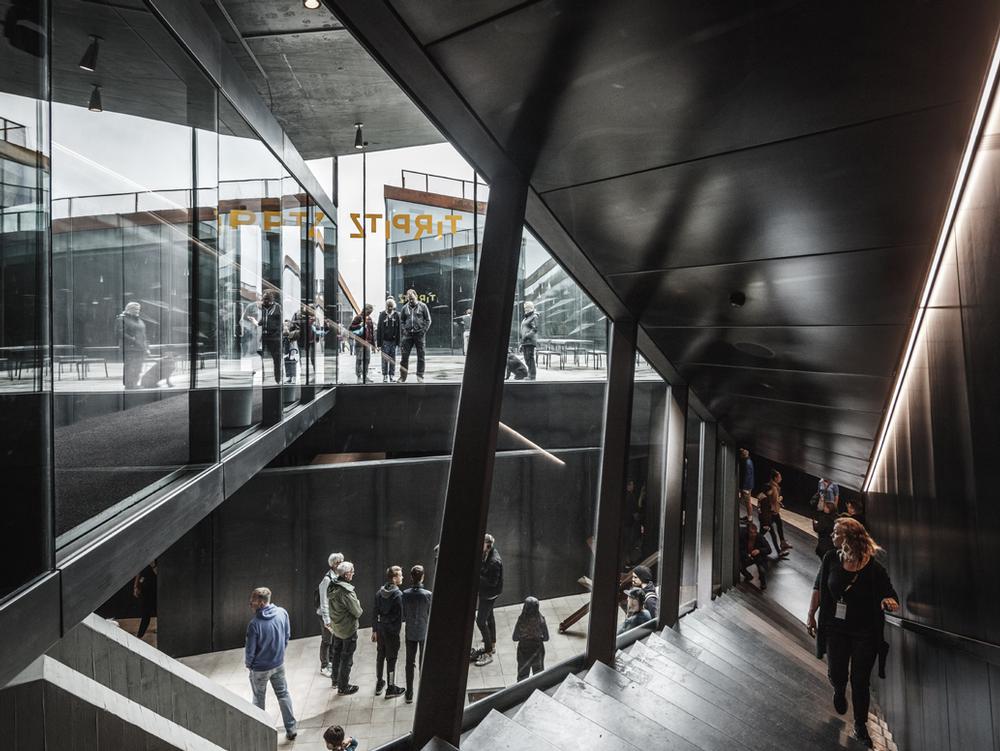
Museum complex Beyond the bunker, the new museum emerges, designed to contrast with the heavy volume of the wartime structure. The complex is divided into four main underground galleries. These can be viewed and accessed from a central courtyard on ground level, with 6-metre-tall (20-foot) glass panels allowing natural light to flood into the interior spaces. A tunnel links the galleries with the back of the bunker.
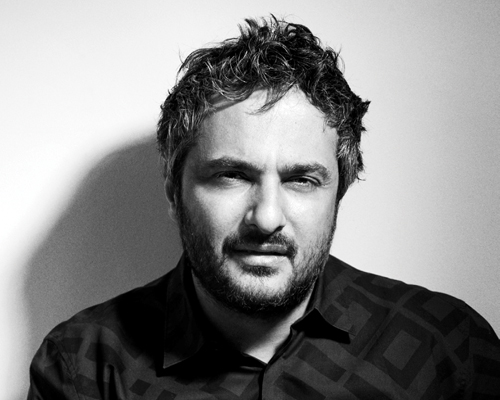
“The architecture of Tirpitz is the antithesis to the WWII bunker,” says BIG founder Bjarke Ingels. “The heavy hermetic object is countered by the inviting lightness and openness of the new museum.”
“The galleries are integrated into the dunes like an open oasis in the sand,” says Ingels. “The bunker remains the only landmark of a not-so-distant dark heritage that, upon close inspection, marks the entrance to a new cultural meeting place.”
Partner at BIG, Finn Nokjaer, explains that it was important to be sensitive to this rural region, which boasts some of Denmark’s most beautiful scenery.
“Everyone in Denmark loves the west coast,” Nokjaer says. “It’s a protected area, so to do something wild or to shout would be impossible and it’s not something we wanted to do. There were a lot of demands, a lot of things we couldn’t do. We also wanted to be extremely honest with the materials. What’s important in my mind is that it’s a very simple idea.”
Four exhibitions The four exhibition rooms, designed by Dutch agency Tinker Imagineers, showcase permanent and temporary themed experiences dedicated to Blåvand’s natural surroundings and history and its “treasure trove of hidden stories”.
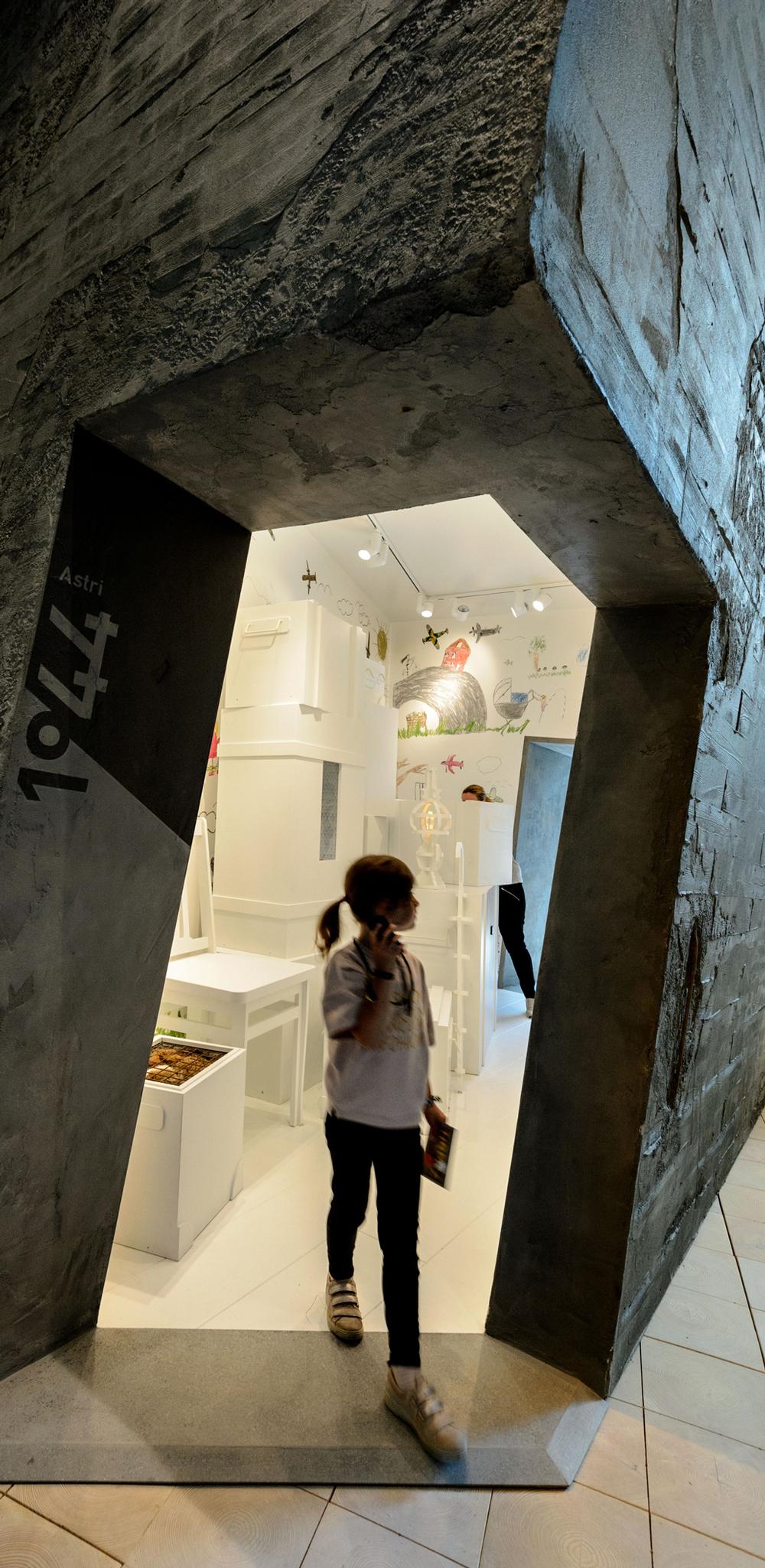
In the central room, visitors learn about the seafaring nation of Denmark. ‘Army of Concrete’ tells human stories in the shadow of Hitler’s enormous European defence project, the Atlantic Wall. Visitors learn the story of Danes and Germans who worked and lived here, such as the story of Anna, who had a child with a German soldier.
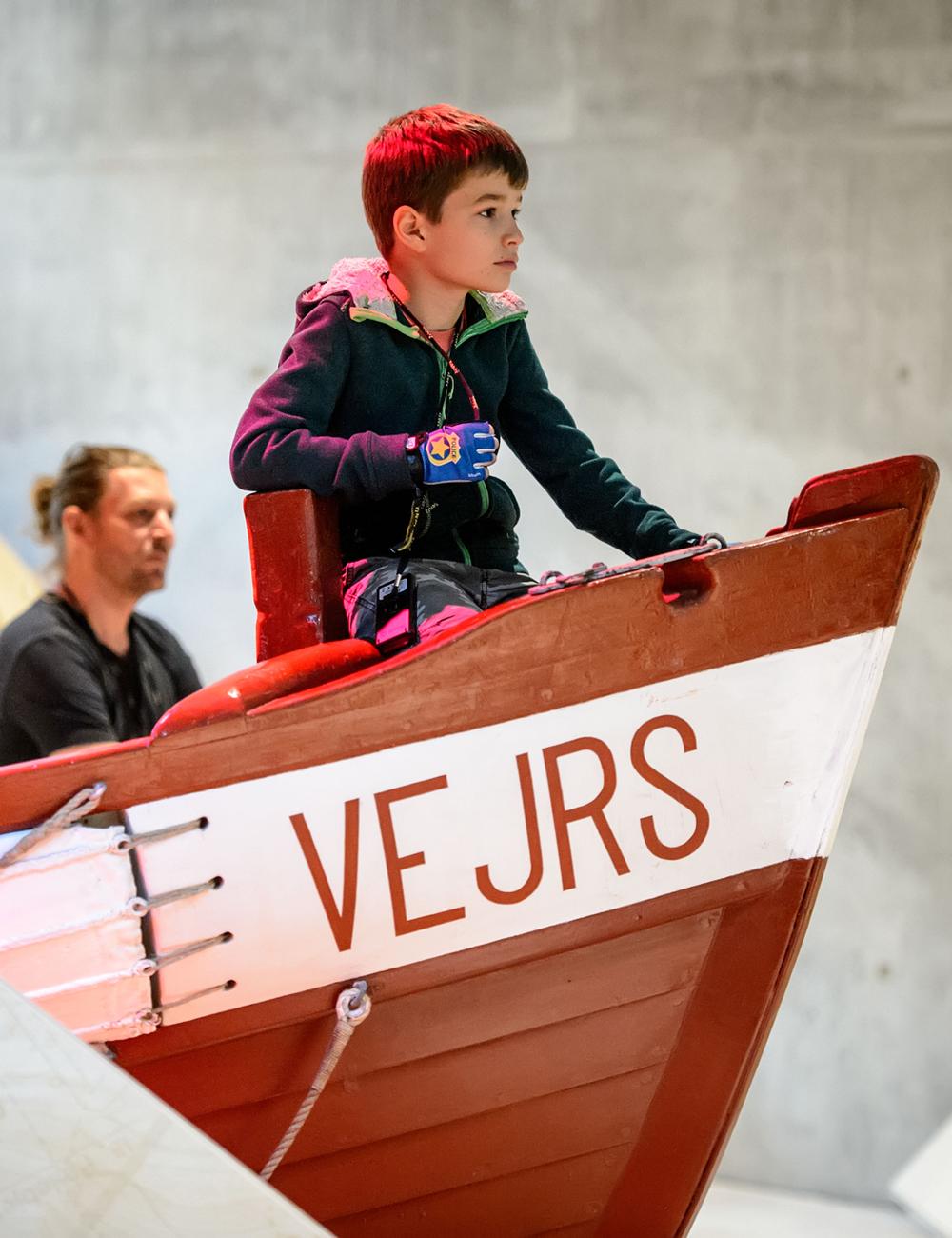
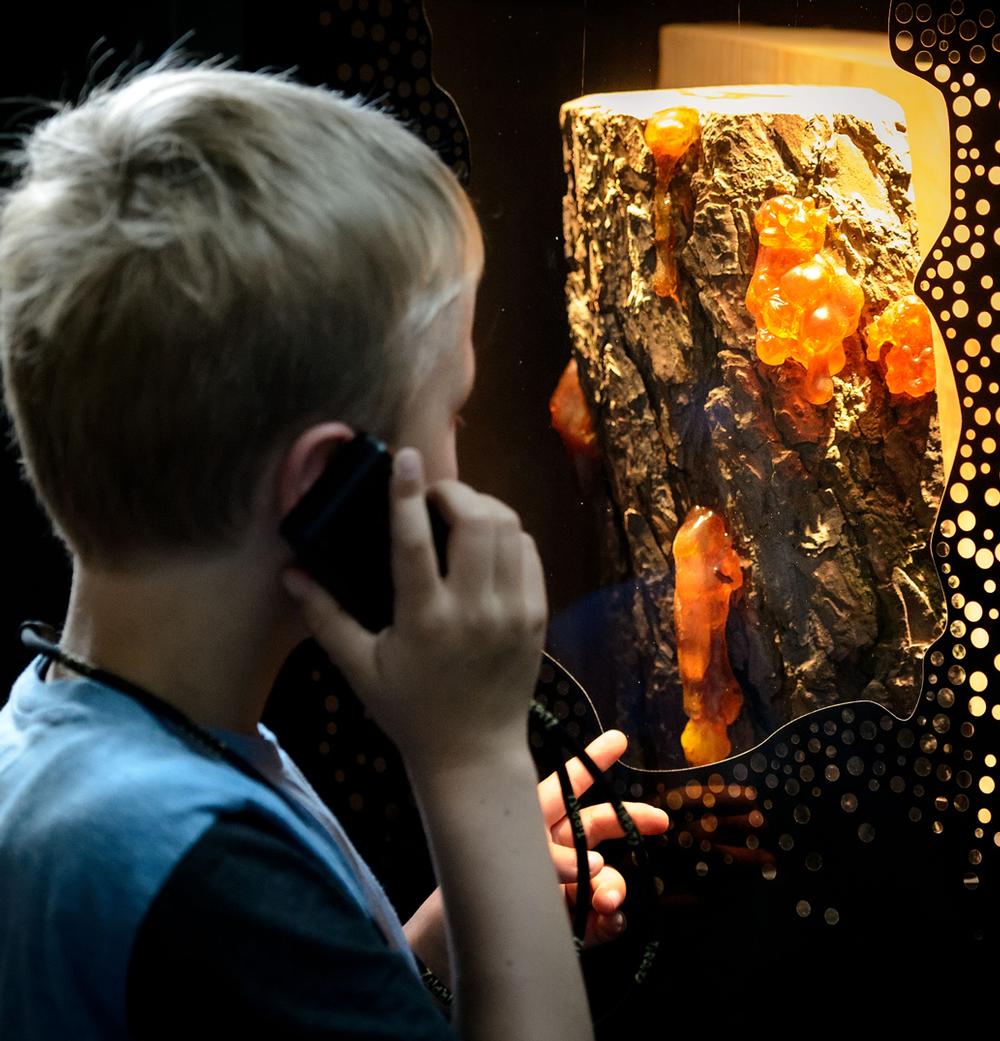
Collections are varied. The West Coast Stories exhibition describes thousands of years of west coast history and is turned into a nighttime 4D theatre every hour, where visitors sit inside a lifeboat that takes them on a thrilling journey. While Gold of the West Coast is Europe’s most comprehensive exhibition of amber.
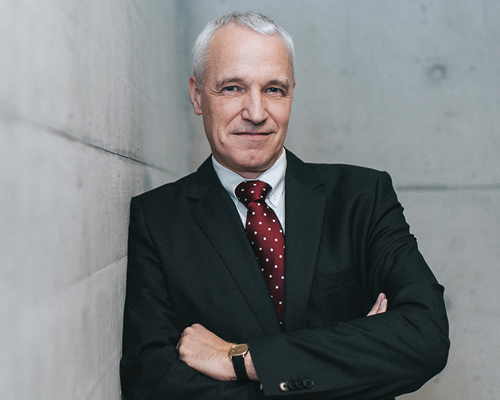
“Tirpitz was a unique opportunity to combine nature and culture in a spectacular fashion,” says founding partner at Tinker Imagineers Erik Bär. “A visit to the museum is not a visit to an exhibition gallery, but a scenic journey through time and space. The idea is that the whole place itself comes to life following the rhythms of nature.”
The museum was financed by the municipality of Varde, alongside the AP Møller and Chastine Mc-Kinney Møller Foundation, the Nordea Foundation and the Augustinus Foundation. It is expected to attract around 100,000 visitors annually.
Tirpitz Museum is the latest in a series of major cultural projects for BIG. In 2013, the studio completed the Danish National Maritime Museum. The firm is also working on the LEGO House in Billund, Denmark; the MECA Cultural Center in Bordeaux, France; and the Smithsonian Institution Masterplan in Washington, DC.
Read more from this issue of Spa Business magazine
Interview: Wolfgang Kiessling
We talked to Wolfgang Kiessling, who set
up a small parrot park on Tenerife in the
1970s. Today, Loro Parque and Siam Park
are some of Europe’s top attractions
Promotional feature: Sysco Productions
Sysco Productions is a world-class experience delivery
company, working for global clients in the museum and
heritage, exhibition, and sports and leisure industries
The museum building consists of four main materials and elements – concrete, steel, glass and wood – which are found in the existing structures and natural landscape of the area / photo: Rasmus Hjortshoj
The museum building consists of four main materials and elements – concrete, steel, glass and wood – which are found in the existing structures and natural landscape of the area / photo: Mike Bink
The museum building consists of four main materials and elements – concrete, steel, glass and wood – which are found in the existing structures and natural landscape of the area / photo: Mike Bink
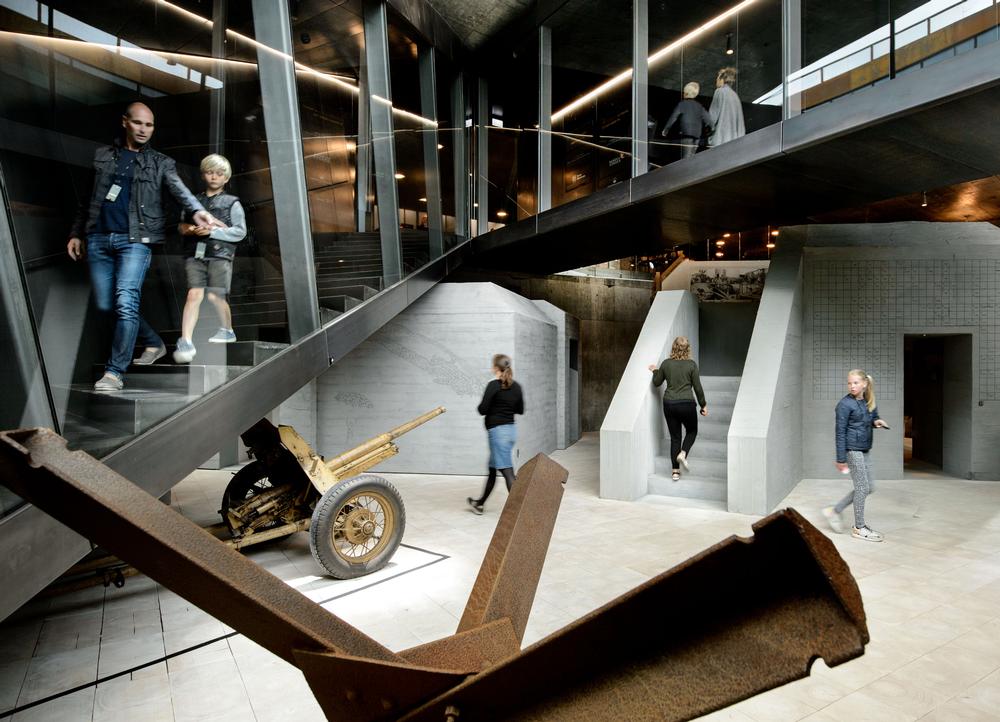
The Army of Concrete exhibition is about the Atlantic Wall and the history of the area / photo: Mike Bink
A lifeboat-themed 4D theatre in the West Coast Stories zone / photo: Mike Bink
interactives teach visitors about amber, in Gold of the West Coast / photo: Mike Bink
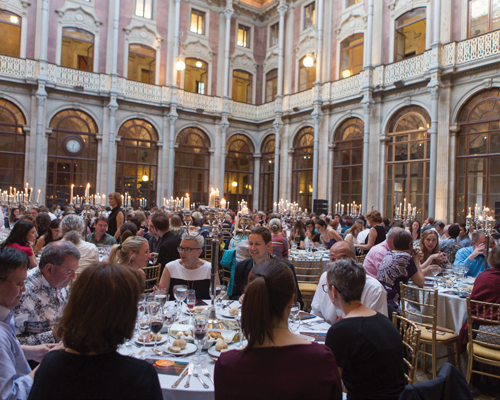
people gather in the central area / photo: Rasmus Hjortshoj
Le Atelier by C.O.D.E. doesn't offer a standard bespoke service, it provides a highly
customised approach to designing massage beds and loungers in high-end wellness
environments. [more...]
+ More featured suppliers
COMPANY PROFILES
Blue Rakun
Blue Rakun spaces are thoughtful, intuitive,
and designed around real human
behaviour, taking into [more...]
Aquaform
With a rich heritage in the spa industry, Aquaform offers a diverse array of water wellness experien [more...]
Tirpitz Museum is a former bunker, one of hundreds of coastal defences and fortifications built by the German army during World War II / photo: Rasmus Hjortshoj
Danish architects Bjarke Ingels Group’s (BIG) transformation of a World War II German bunker into a cultural complex camouflaged among the protected dunes of Blåvand, western Denmark, opened to the public on 30 June.
Named Tirpitz Museum, the 82,000sqm (882,600sq ft) attraction relates the history of the rugged coastal area, including stories of lost ships, smugglers and war. The architects describe the building as “a sanctuary in the sand that acts as a gentle counterbalance to the dramatic war history of the site”.
On approach, visitors first see the bunker, one of hundreds of coastal defences and fortifications built by the German army during the war to protect against invasion.
Museum complex Beyond the bunker, the new museum emerges, designed to contrast with the heavy volume of the wartime structure. The complex is divided into four main underground galleries. These can be viewed and accessed from a central courtyard on ground level, with 6-metre-tall (20-foot) glass panels allowing natural light to flood into the interior spaces. A tunnel links the galleries with the back of the bunker.
“The architecture of Tirpitz is the antithesis to the WWII bunker,” says BIG founder Bjarke Ingels. “The heavy hermetic object is countered by the inviting lightness and openness of the new museum.”
“The galleries are integrated into the dunes like an open oasis in the sand,” says Ingels. “The bunker remains the only landmark of a not-so-distant dark heritage that, upon close inspection, marks the entrance to a new cultural meeting place.”
Partner at BIG, Finn Nokjaer, explains that it was important to be sensitive to this rural region, which boasts some of Denmark’s most beautiful scenery.
“Everyone in Denmark loves the west coast,” Nokjaer says. “It’s a protected area, so to do something wild or to shout would be impossible and it’s not something we wanted to do. There were a lot of demands, a lot of things we couldn’t do. We also wanted to be extremely honest with the materials. What’s important in my mind is that it’s a very simple idea.”
Four exhibitions The four exhibition rooms, designed by Dutch agency Tinker Imagineers, showcase permanent and temporary themed experiences dedicated to Blåvand’s natural surroundings and history and its “treasure trove of hidden stories”.
In the central room, visitors learn about the seafaring nation of Denmark. ‘Army of Concrete’ tells human stories in the shadow of Hitler’s enormous European defence project, the Atlantic Wall. Visitors learn the story of Danes and Germans who worked and lived here, such as the story of Anna, who had a child with a German soldier.
Collections are varied. The West Coast Stories exhibition describes thousands of years of west coast history and is turned into a nighttime 4D theatre every hour, where visitors sit inside a lifeboat that takes them on a thrilling journey. While Gold of the West Coast is Europe’s most comprehensive exhibition of amber.
“Tirpitz was a unique opportunity to combine nature and culture in a spectacular fashion,” says founding partner at Tinker Imagineers Erik Bär. “A visit to the museum is not a visit to an exhibition gallery, but a scenic journey through time and space. The idea is that the whole place itself comes to life following the rhythms of nature.”
The museum was financed by the municipality of Varde, alongside the AP Møller and Chastine Mc-Kinney Møller Foundation, the Nordea Foundation and the Augustinus Foundation. It is expected to attract around 100,000 visitors annually.
Tirpitz Museum is the latest in a series of major cultural projects for BIG. In 2013, the studio completed the Danish National Maritime Museum. The firm is also working on the LEGO House in Billund, Denmark; the MECA Cultural Center in Bordeaux, France; and the Smithsonian Institution Masterplan in Washington, DC.
Read more from this issue of Spa Business magazine
Interview: Wolfgang Kiessling
We talked to Wolfgang Kiessling, who set
up a small parrot park on Tenerife in the
1970s. Today, Loro Parque and Siam Park
are some of Europe’s top attractions
Promotional feature: Sysco Productions
Sysco Productions is a world-class experience delivery
company, working for global clients in the museum and
heritage, exhibition, and sports and leisure industries
The museum building consists of four main materials and elements – concrete, steel, glass and wood – which are found in the existing structures and natural landscape of the area / photo: Rasmus Hjortshoj
The museum building consists of four main materials and elements – concrete, steel, glass and wood – which are found in the existing structures and natural landscape of the area / photo: Mike Bink
The museum building consists of four main materials and elements – concrete, steel, glass and wood – which are found in the existing structures and natural landscape of the area / photo: Mike Bink
The Army of Concrete exhibition is about the Atlantic Wall and the history of the area / photo: Mike Bink
A lifeboat-themed 4D theatre in the West Coast Stories zone / photo: Mike Bink
interactives teach visitors about amber, in Gold of the West Coast / photo: Mike Bink
people gather in the central area / photo: Rasmus Hjortshoj
Premium London health club, KX Chelsea, will imminently unveil its most significant
redevelopment since its launch in 2002 to create an integrated wellness model combining
training, recovery and relaxation.
Rosewood Le Guanahani St Barth, on the northeast coast of Saint Barthélemy in the French
West Indies, is offering a programme of ocean-inspired yoga classes between 8-14 June to
celebrate Global Wellness Day (GWD).
Hotel de France, located on the British Isle of Jersey, has created a wellness retreat package
that includes a hot yoga session that will take place in Jersey Zoo’s butterfly sanctuary.
The Ritz-Carlton, Langkawi, in Malaysia, has revealed a schedule for Global Wellness Day
(GWD) that includes guided rainforest walks, mindful movement and guided coastal meditation
experiences.
Longevitix, a clinical platform for preventive and longevity medicine, has launched its AI-
powered intelligence system to help physicians deliver continuous, personalised longevity-
focused care at scale.
Atmantan Wellness Centre, an integrative wellness destination in Mulshi, near Pune in India, is
expanding its portfolio by adding a new centre in Hyderabad that will launch between 2028 and
2029.
A recent survey by the UK Spa Association (UKSA) into the industry’s approach to cancer care
has revealed that almost half of participating respondents (46 per cent) are unaware that
cancer is a disability and guests with a cancer diagnosis must be given
Mexican operator, Solmar Hotels and Resorts, is hosting a series of events in celebration of
Global Wellness Day, including a Temazcal ceremony at its Playa Grande Resort and Spa in Los
Cabos.
Mandarin Oriental has announced a standalone residence brand, Mansions, which will debut at
Emirates Palace, Mandarin Oriental Mansions, Abu Dhabi, in 2029.
Le Atelier by C.O.D.E. doesn't offer a standard bespoke service, it provides a highly
customised approach to designing massage beds and loungers in high-end wellness
environments. [more...]
+ More featured suppliers
COMPANY PROFILES
Blue Rakun Blue Rakun spaces are thoughtful, intuitive,
and designed around real human
behaviour, taking into [more...]