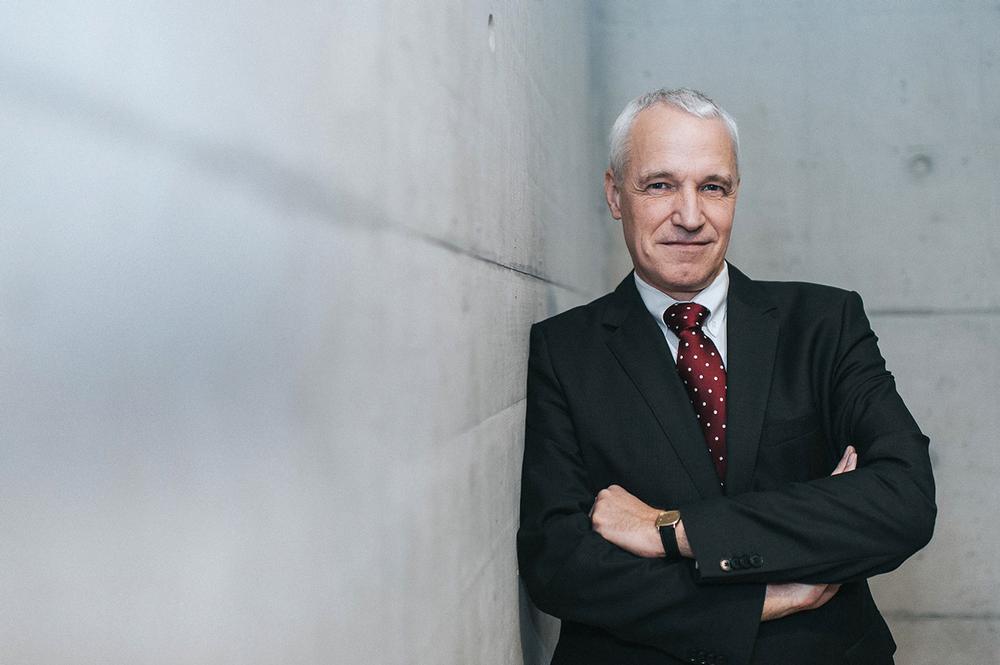
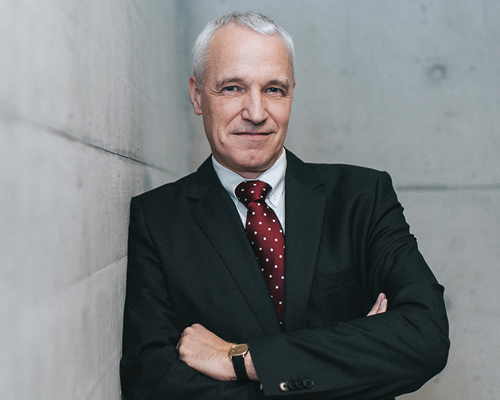
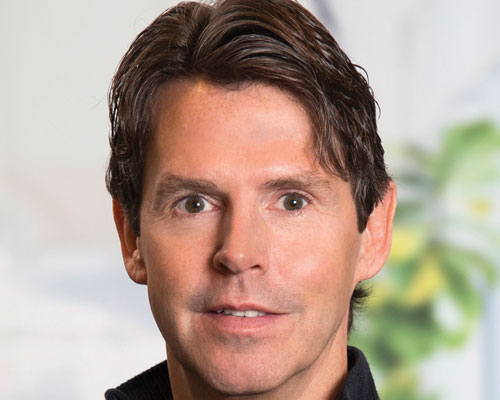
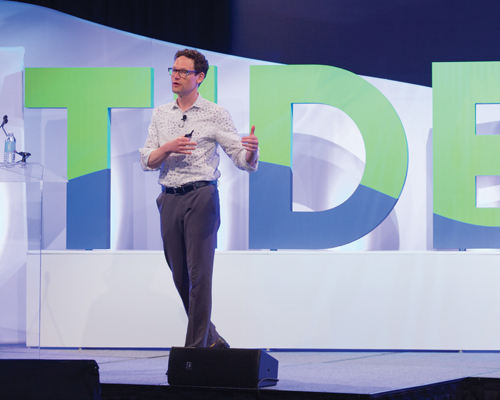
Ecsite’s new president, Herbert Münder, has said a pressing challenge for the science engagement community is the rise of the ‘post-truth’ era.
“For Ecsite members, there is one big challenge, and that’s what we’re calling the post-truth time,” Münder tells Attractions Management. “As a group of science centres and museums and science communicators, we have to think about how we can address this in an adequate and efficient way.”
One way forward posited by Münder is to talk more about the process of science. He says there are times when scientists have different interpretations concerning scientific observations, which can be confusing to people.
“But of course, in scientific research, there’s a need to have different views to be able to cross check, to challenge, to develop the thesis and antithesis, to determine repeatability – for example, would the same experiment in Australia and in Europe come back with same outcomes?” he says.
“These features of the scientific process must be more visible to the public and, I believe, we as science centres face a challenge to get these ideas across. This will help the public to think more critically about things they hear, read or see on TV, and they can create their own opinion.”
“We have to come up with a strategy to address this challenge. I feel science centres and museums will become even more important in the future because of this trend we observe now. And we have a responsibility to address it.
“Science centres make a huge impact already, but we are facing a new situation. To make an impact in the future we need to rethink our position and the things we do.”
Münder is general manager at Germany’s Universum Bremen science centre and is also past president of Eusea, the European Science Events Association, and current president of MINTaktiv, Germany’s science museum network.
He says Universum is not just a place for exhibitions, but also acts as a communication platform between different partners, such as businesses, researchers, NGOs, and other groups.
He says: “The curator of this platform is the science centre, which is more or less neutral. We bring together different views and citizens have a chance to build their own opinion about it and have a voice, so we are a platform for the voice of citizens.”
Münder adds that another point of focus during his presidency will be ensuring the science communication community has a voice at discussions for the next EU Framework Programme for Research and Innovation, with the current framework, Horizon 2020, drawing to a close in 2020.
“I believe strongly that science communication and science engagement is important for the future period of the framework, so my personal position is that we have to talk to the stakeholders and decision makers to show them it is necessary the sector is again visible in the programme.”
Read more from this issue of Spa Business magazine
Interview: Wolfgang Kiessling
We talked to Wolfgang Kiessling, who set
up a small parrot park on Tenerife in the
1970s. Today, Loro Parque and Siam Park
are some of Europe’s top attractions
Promotional feature: Sysco Productions
Sysco Productions is a world-class experience delivery
company, working for global clients in the museum and
heritage, exhibition, and sports and leisure industries
Ecsite’s new president, Herbert Münder, has said a pressing challenge for the science engagement community is the rise of the ‘post-truth’ era.
“For Ecsite members, there is one big challenge, and that’s what we’re calling the post-truth time,” Münder tells Attractions Management. “As a group of science centres and museums and science communicators, we have to think about how we can address this in an adequate and efficient way.”
One way forward posited by Münder is to talk more about the process of science. He says there are times when scientists have different interpretations concerning scientific observations, which can be confusing to people.
“But of course, in scientific research, there’s a need to have different views to be able to cross check, to challenge, to develop the thesis and antithesis, to determine repeatability – for example, would the same experiment in Australia and in Europe come back with same outcomes?” he says.
“These features of the scientific process must be more visible to the public and, I believe, we as science centres face a challenge to get these ideas across. This will help the public to think more critically about things they hear, read or see on TV, and they can create their own opinion.”
“We have to come up with a strategy to address this challenge. I feel science centres and museums will become even more important in the future because of this trend we observe now. And we have a responsibility to address it.
“Science centres make a huge impact already, but we are facing a new situation. To make an impact in the future we need to rethink our position and the things we do.”
Münder is general manager at Germany’s Universum Bremen science centre and is also past president of Eusea, the European Science Events Association, and current president of MINTaktiv, Germany’s science museum network.
He says Universum is not just a place for exhibitions, but also acts as a communication platform between different partners, such as businesses, researchers, NGOs, and other groups.
He says: “The curator of this platform is the science centre, which is more or less neutral. We bring together different views and citizens have a chance to build their own opinion about it and have a voice, so we are a platform for the voice of citizens.”
Münder adds that another point of focus during his presidency will be ensuring the science communication community has a voice at discussions for the next EU Framework Programme for Research and Innovation, with the current framework, Horizon 2020, drawing to a close in 2020.
“I believe strongly that science communication and science engagement is important for the future period of the framework, so my personal position is that we have to talk to the stakeholders and decision makers to show them it is necessary the sector is again visible in the programme.”
Read more from this issue of Spa Business magazine
Interview: Wolfgang Kiessling
We talked to Wolfgang Kiessling, who set
up a small parrot park on Tenerife in the
1970s. Today, Loro Parque and Siam Park
are some of Europe’s top attractions
Promotional feature: Sysco Productions
Sysco Productions is a world-class experience delivery
company, working for global clients in the museum and
heritage, exhibition, and sports and leisure industries
Global Wellness Day (GWD) will mark its 15th anniversary on Saturday 13 June 2026, with the
theme: #JoyMagenta – a celebration of the healing qualities of simple gestures and activities
that spark joy.
Global luxury hospitality brand, Six Senses, has partnered with longevity healthcare provider,
HUM2N, to launch a clinic at Six Senses London, at The Whiteley.
As part of its first hotel partnership, Mayrlife – the medical health resort company known for its
site in Altaussee, Austria – has launched a day clinic at the Rosewood Vienna.
Premium London health club, KX Chelsea, will imminently unveil its most significant
redevelopment since its launch in 2002 to create an integrated wellness model combining
training, recovery and relaxation.
Rosewood Le Guanahani St Barth, on the northeast coast of Saint Barthélemy in the French
West Indies, is offering a programme of ocean-inspired yoga classes between 8-14 June to
celebrate Global Wellness Day (GWD).
Hotel de France, located on the British Isle of Jersey, has created a wellness retreat package
that includes a hot yoga session that will take place in Jersey Zoo’s butterfly sanctuary.
The Ritz-Carlton, Langkawi, in Malaysia, has revealed a schedule for Global Wellness Day
(GWD) that includes guided rainforest walks, mindful movement and guided coastal meditation
experiences.
Longevitix, a clinical platform for preventive and longevity medicine, has launched its AI-
powered intelligence system to help physicians deliver continuous, personalised longevity-
focused care at scale.
Atmantan Wellness Centre, an integrative wellness destination in Mulshi, near Pune in India, is
expanding its portfolio by adding a new centre in Hyderabad that will launch between 2028 and
2029.
A recent survey by the UK Spa Association (UKSA) into the industry’s approach to cancer care
has revealed that almost half of participating respondents (46 per cent) are unaware that
cancer is a disability and guests with a cancer diagnosis must be given