Pittsburgh Children’s Museum’s
Tough Art programme challenges
artists to create art strong
enough to withstand children’s
eager hands. Programme manager
Lacey Murray talks unexpected
responses and weathering the
pandemic with Magali Robathan
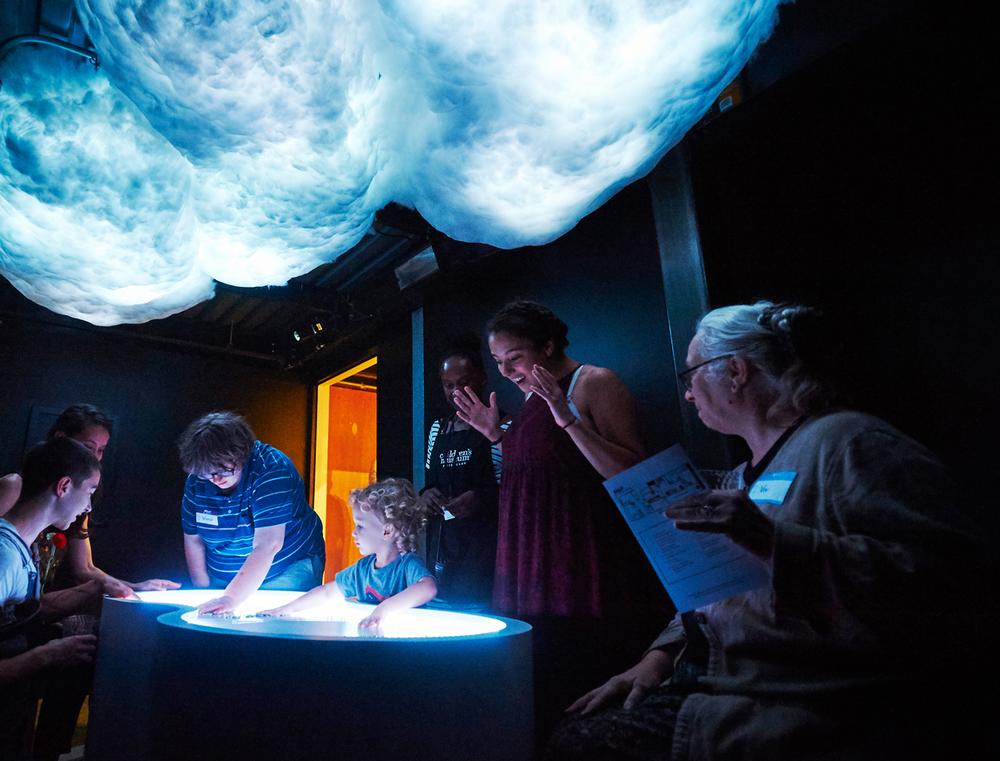
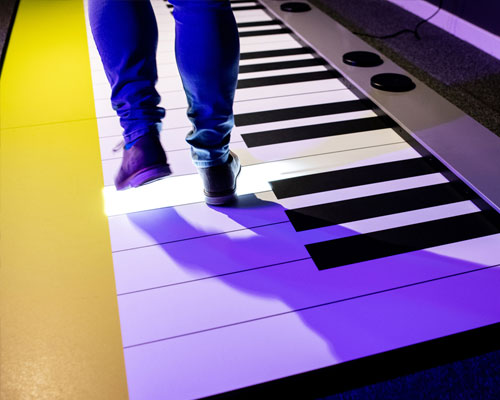
In 2017 Shohei Katayama showcased his kinetic sound artwork Nimbus Drum / Photo: Kristi Jan Hoover
Opened in 1983 in the old Allegheny Post Office in Pittsburgh’s Northside, the Children’s Museum of Pittsburgh (CMP) is a hands-on, interactive children’s museum.
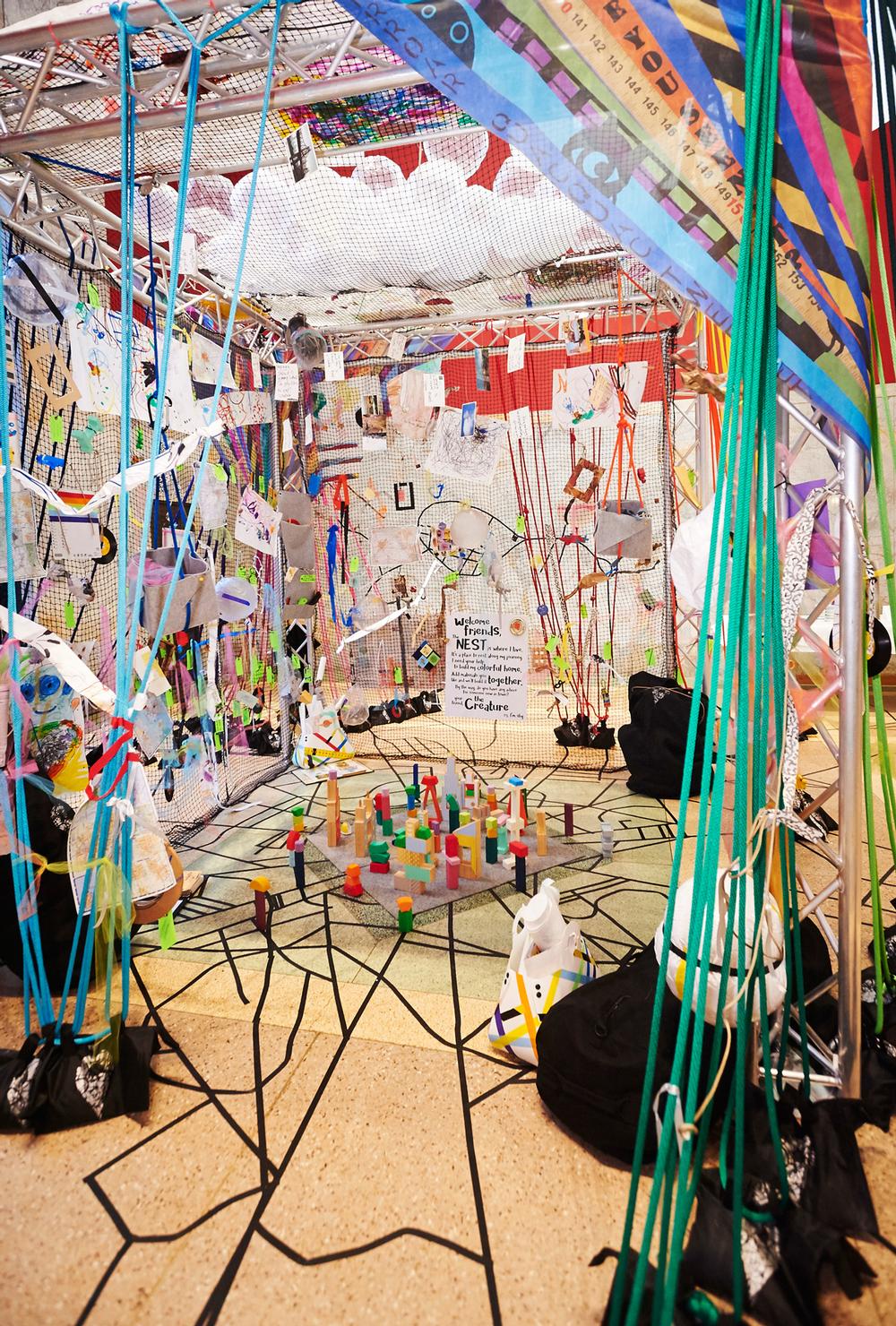
The museum’s Tough Art Residency Program, which was launched in 2007, challenges emerging and established artists to rethink their work for a new audience – children – while also enabling the museum to grow its collection of interactive artwork accessible to everyone. Each year, several artists are selected to work with the museum and its visitors through the course of the year, culminating in the creation of new artworks to be displayed in an exhibition at the end of the residency.
For artists more used to displaying their artworks in galleries where touching isn’t allowed, the programme presents a new set of challenges. As the organisers explain: “Our visitors are extremely motivated to engage with art in direct, physical, and sometimes aggressive ways that are completely different from a traditional venue.” As well as creating artworks that will interest and excite children, artists have to think about the robustness of their work – how to stop it being trashed by eager little hands – and make sure it’s safe for all ages to interact with.
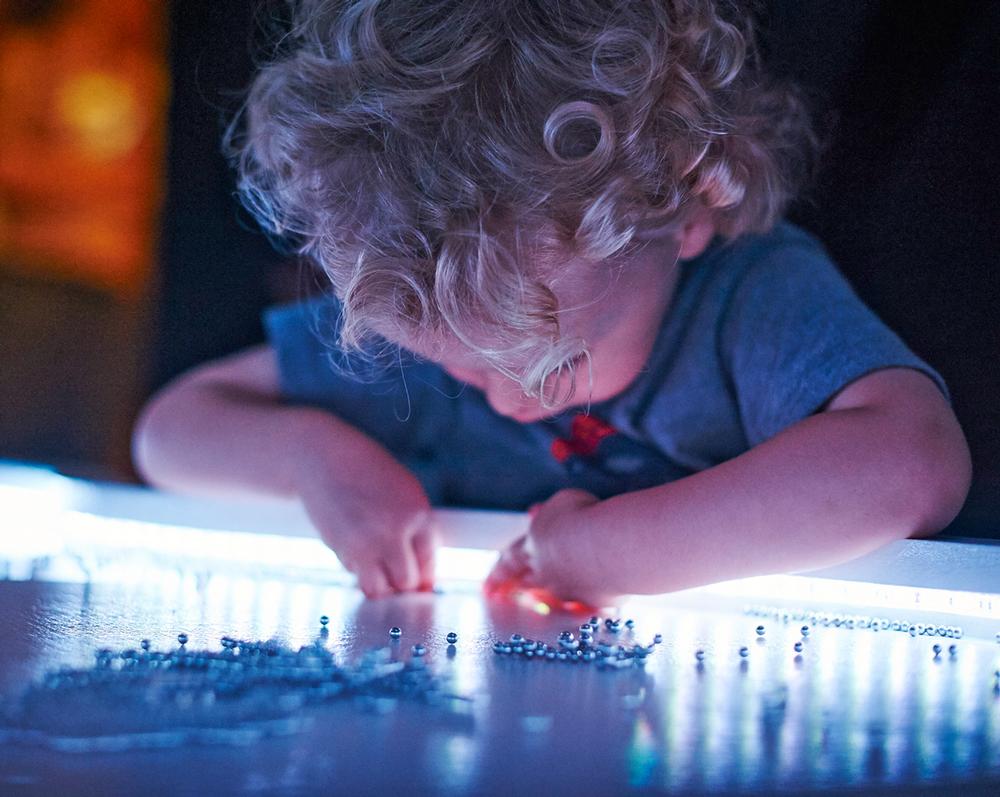
“Kids climb, kids lick, kids push buttons just to push buttons, kids run off with loose pieces, or worse, swallow them,” programme manager Lacey Murray tells Attractions Management. “It’s really a special kind of environment that can yield such joy and exploration, but the creators really have a lot to take into account to make it not only an enjoyable experience, but a safe one.”
Previous artworks include Neil Mendoza’s Mechanical Masterpieces, which saw classical art reimagined in a way that allowed visitors to ‘poke, switch, disco, water and inflate’ well known paintings; and Eunice Choi’s Tomato Medley – an interactive wall of ‘tomatoes with various visual and personality traits’.
This year, the in-house residency was cancelled in response to the COVID-19 pandemic, which has seen the museum closed since March 2020. With the museum shut, the management was keen to find a way to engage its audience and connect artists with visitors and vice versa. In response to this challenge, the Tough Art @ Home residency was born, which challenged artists to create an art-making activity that would inspire a do-it-yourself project for people to create at home. Five artists have now been chosen for the residency, and their art making activities, as well as their portfolios, are being shared on the CMP website.
Here we speak to Tough Art programme manager Lacey Murray about the ups and downs of her time at the CMP.
What are the aims of the Tough Art programme? The Museum is committed to working with artists to present excellent contemporary art to our visitors. Every year artists are invited to work with the museum through a multitude of programmes and projects. The annual Tough Art Residency Program enables the Museum to expand its ever-growing collection of interactive artwork which is accessible to all.
The main aim of the Tough Art residency is to bring in artists that are interested in making a hands-on, interactive work of art that is tough enough to withstand children’s interaction. Many artists are used to displaying artwork in a traditional gallery, where touching is not allowed. We invite artists into our space to work with our exhibitions staff, who design and build children’s museum exhibit components and prototype ideas with visitors while developing a new interactive work of art.
What are the practicalities of creating art that can sustain the rigours of intensive and regular use by children’s? The best way to prepare for the type of interaction a hands-on environment produces is to put the work out and observe. You truly don’t know how the audience will interact until you give them a chance to do so. A big component of the Tough Art Residency is generating ideas throughout the summer, putting things out on the museum floor, observing how visitors interact, and taking that information back to the studio and making adjustments as needed.
I would say that the emphasis on prototyping is something unique to this residency, and the greatest contributing factor to a piece being successful in the end.
Do children respond to the artwork in unexpected ways? Absolutely. You never know what children will do when interacting with a hands-on work of art until they are presented with it. We try to predict behaviour, and have solid past experiences that enable us to try to guess what will happen, but you truly never know.
For an example, one of our Tough Artists created a hand pump attached to the floor. Visitors were to use the device to ‘pump up’ an apple on a screen hanging just above it on the wall. There was a sensor in the pump so that when the pump handle went up and down, the apple on the screen became bigger. Some kids only cared about the pump – they didn’t even look up at the apple. They went to town on the pump, very vigorously, and ended up breaking the sensor. The artist learned this through prototyping, and was able to reposition the sensor in a safer location for the final piece to avoid this breakage.
What feedback have you had from the artists? We started doing ‘exit surveys’ at the end of the residency in 2019, but were able to get feedback by sending a survey to earlier artists as well. It’s been very useful.
As far as what the artists learn, we’ve received a lot of feedback on the value of prototyping and having access to a test audience, who happens to be the target audience, throughout the development and build of the artwork. Many artists are used to testing ideas out on friends or family, but having constant access to the demographic daily has been useful.
Many artists that come to this residency are not used to making a hands-on artwork, or a work for an ‘aggressive’ audience like children, for lack of a better term. This residency is like trial by fire – if you can create an interactive work of art for our audience, you can probably do it successfully in the larger art world. This is a valuable takeaway, and we provide a safe and supported environment for artists to dive into this hands-on, interactive realm.
How did the COVID-19 pandemic affect the 2020 programme? Right as America was shutting down in March, we were in the process of evaluating applications and selecting artists for the 2020 residency. We made the tough decision to cancel the residency, and it ended up being the right decision because we weren’t able to reopen during the summer. We informed artists and let them know that their applications would carry over to the next year if they so chose.
I didn’t know any of these artists personally, but it was a very difficult time for me having to write text and publish that the residency was cancelled for the year. We’d worked hard to get the residency in a good place over the years, and right when we were finding our footing, we had to take a step back. I felt bad for the artists and having to take away the opportunity, but it was so out of my control.
How did the Tough Art @ Home residency come about? With no funding or access to the museum, I was racking my brain for ways we could still support artists. I’m a former art educator, and was thinking of ways we could continue to introduce our audience, virtually, to new artists and their work. The Children’s Museum of Pittsburgh cultivates this wonderful hands-on environment, so I had to think of a way to not only introduce the audience to an artist, but to also give them some type of hands-on activity related to the work. My colleague was able to spare a little bit of money from her programming budget, and the Tough Art @ Home residency was born.
We worked with five artists to develop a hands-on artmaking activity that relates to their artwork. Using our online presence, we present the artist’s portfolio and practice with our audience, along with the artmaking activities they created inspired by their work. You can find the 2020 Tough Art @ Home projects on our website (pittsburghkidsdesign.org/tough-art-home-2020-artists).
Do you think any positives will come out of the pandemic for the Children’s Museum of Pittsburgh? I’ve found many silver linings during the pandemic. The pace at which we worked, from project to project, installation to installation, left us with little room to reflect and truly get the most out of the experiences we were producing. This time to slow down has allowed us to do that and think about what works, what doesn’t, and get creative with new ideas.
Read more from this issue of Spa Business magazine
View contents of Spa Business 2021 issue 1
Editor's letter: Doing better
The Black Lives Matter movement has challenged museums professionals to ask testing questions about their role in reparative history and the way we display and interpret racist and colonial collections
People: Brent Bushnell
Two Bit Circus has pivoted to an innovative online model aimed at keeping its community in touch
People: Michel Linet-Frion
After decades creating for Disney, Grévin and Center Parcs, Linet-Frion has launched his own consultancy
People: Anthony Rawlins
The Digital Visitor CEO explains a new whitepaper on how attractions can survive 2021 and beyond
Interview: Sarah Roots
Warner Bros’ Sarah Roots shares exciting details of the second Harry Potter Studio Tour, set to open in Japan in 2023
Inspired: Alone with Vermeer
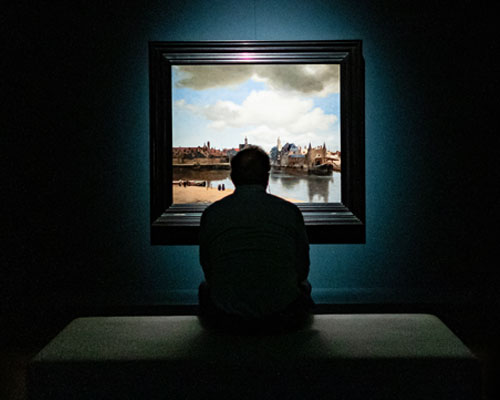
The Mauritshuis in The Hague has allowed visitors one-to-one time with Vermeer’s <i>View of Delft</i>, ‘the most beautiful painting in the world’
Aquariums: Into the deep
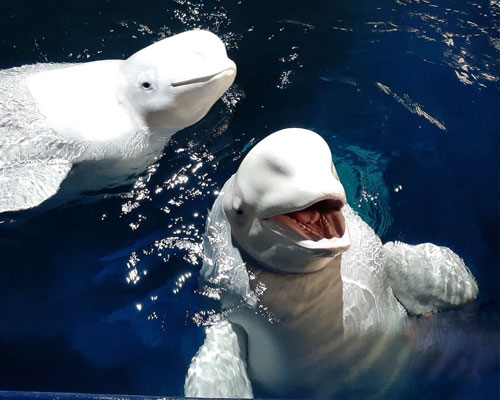
Merlin and the Sea Life Trust share the highs and lows of the epic journey to get two whales to their new home in the world’s first beluga whale sanctuary in Iceland
Innovation: Sea change
Edge Innovations’ incredibly
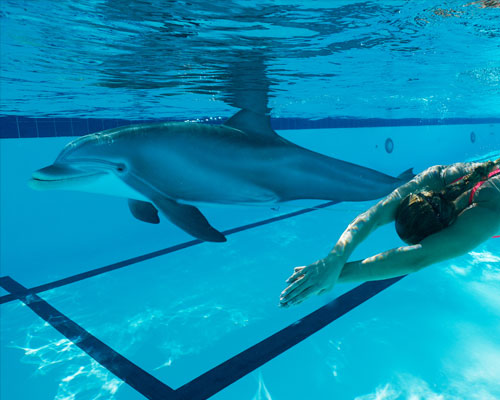
life-like robot dolphins could spell the end of marine mammals in aquariums, says CEO Walt Conti
Interview: Bob Rogers
As BRC Imagination Arts celebrates 40 years in business, its founder celebrates his team’s achievements
Sponsored: Technically Creative
With clients including the Xplore
Family Entertainment Centre in Athens,
Technically Creative provides a one
stop, in-house solution to create
memorable and magical experiences.
We talk to CEO, Marc Broadbent
Sponsored: Fun Spot: Providing turnkey solutions
Industry innovator, Fun Spot, is on a roll, with a new EMEA
office and a range of innovative new products to help operators
deliver excellence to the family fun market. We find out more
Interview: Phil Hettema
The Hettema Group president on weathering the pandemic and creating powerful experiences
Pittsburgh Children’s Museum’s
Tough Art programme challenges
artists to create art strong
enough to withstand children’s
eager hands. Programme manager
Lacey Murray talks unexpected
responses and weathering the
pandemic with Magali Robathan
In 2017 Shohei Katayama showcased his kinetic sound artwork Nimbus Drum / Photo: Kristi Jan Hoover
Opened in 1983 in the old Allegheny Post Office in Pittsburgh’s Northside, the Children’s Museum of Pittsburgh (CMP) is a hands-on, interactive children’s museum.
The museum’s Tough Art Residency Program, which was launched in 2007, challenges emerging and established artists to rethink their work for a new audience – children – while also enabling the museum to grow its collection of interactive artwork accessible to everyone. Each year, several artists are selected to work with the museum and its visitors through the course of the year, culminating in the creation of new artworks to be displayed in an exhibition at the end of the residency.
For artists more used to displaying their artworks in galleries where touching isn’t allowed, the programme presents a new set of challenges. As the organisers explain: “Our visitors are extremely motivated to engage with art in direct, physical, and sometimes aggressive ways that are completely different from a traditional venue.” As well as creating artworks that will interest and excite children, artists have to think about the robustness of their work – how to stop it being trashed by eager little hands – and make sure it’s safe for all ages to interact with.
“Kids climb, kids lick, kids push buttons just to push buttons, kids run off with loose pieces, or worse, swallow them,” programme manager Lacey Murray tells Attractions Management. “It’s really a special kind of environment that can yield such joy and exploration, but the creators really have a lot to take into account to make it not only an enjoyable experience, but a safe one.”
Previous artworks include Neil Mendoza’s Mechanical Masterpieces, which saw classical art reimagined in a way that allowed visitors to ‘poke, switch, disco, water and inflate’ well known paintings; and Eunice Choi’s Tomato Medley – an interactive wall of ‘tomatoes with various visual and personality traits’.
This year, the in-house residency was cancelled in response to the COVID-19 pandemic, which has seen the museum closed since March 2020. With the museum shut, the management was keen to find a way to engage its audience and connect artists with visitors and vice versa. In response to this challenge, the Tough Art @ Home residency was born, which challenged artists to create an art-making activity that would inspire a do-it-yourself project for people to create at home. Five artists have now been chosen for the residency, and their art making activities, as well as their portfolios, are being shared on the CMP website.
Here we speak to Tough Art programme manager Lacey Murray about the ups and downs of her time at the CMP.
What are the aims of the Tough Art programme? The Museum is committed to working with artists to present excellent contemporary art to our visitors. Every year artists are invited to work with the museum through a multitude of programmes and projects. The annual Tough Art Residency Program enables the Museum to expand its ever-growing collection of interactive artwork which is accessible to all.
The main aim of the Tough Art residency is to bring in artists that are interested in making a hands-on, interactive work of art that is tough enough to withstand children’s interaction. Many artists are used to displaying artwork in a traditional gallery, where touching is not allowed. We invite artists into our space to work with our exhibitions staff, who design and build children’s museum exhibit components and prototype ideas with visitors while developing a new interactive work of art.
What are the practicalities of creating art that can sustain the rigours of intensive and regular use by children’s? The best way to prepare for the type of interaction a hands-on environment produces is to put the work out and observe. You truly don’t know how the audience will interact until you give them a chance to do so. A big component of the Tough Art Residency is generating ideas throughout the summer, putting things out on the museum floor, observing how visitors interact, and taking that information back to the studio and making adjustments as needed.
I would say that the emphasis on prototyping is something unique to this residency, and the greatest contributing factor to a piece being successful in the end.
Do children respond to the artwork in unexpected ways? Absolutely. You never know what children will do when interacting with a hands-on work of art until they are presented with it. We try to predict behaviour, and have solid past experiences that enable us to try to guess what will happen, but you truly never know.
For an example, one of our Tough Artists created a hand pump attached to the floor. Visitors were to use the device to ‘pump up’ an apple on a screen hanging just above it on the wall. There was a sensor in the pump so that when the pump handle went up and down, the apple on the screen became bigger. Some kids only cared about the pump – they didn’t even look up at the apple. They went to town on the pump, very vigorously, and ended up breaking the sensor. The artist learned this through prototyping, and was able to reposition the sensor in a safer location for the final piece to avoid this breakage.
What feedback have you had from the artists? We started doing ‘exit surveys’ at the end of the residency in 2019, but were able to get feedback by sending a survey to earlier artists as well. It’s been very useful.
As far as what the artists learn, we’ve received a lot of feedback on the value of prototyping and having access to a test audience, who happens to be the target audience, throughout the development and build of the artwork. Many artists are used to testing ideas out on friends or family, but having constant access to the demographic daily has been useful.
Many artists that come to this residency are not used to making a hands-on artwork, or a work for an ‘aggressive’ audience like children, for lack of a better term. This residency is like trial by fire – if you can create an interactive work of art for our audience, you can probably do it successfully in the larger art world. This is a valuable takeaway, and we provide a safe and supported environment for artists to dive into this hands-on, interactive realm.
How did the COVID-19 pandemic affect the 2020 programme? Right as America was shutting down in March, we were in the process of evaluating applications and selecting artists for the 2020 residency. We made the tough decision to cancel the residency, and it ended up being the right decision because we weren’t able to reopen during the summer. We informed artists and let them know that their applications would carry over to the next year if they so chose.
I didn’t know any of these artists personally, but it was a very difficult time for me having to write text and publish that the residency was cancelled for the year. We’d worked hard to get the residency in a good place over the years, and right when we were finding our footing, we had to take a step back. I felt bad for the artists and having to take away the opportunity, but it was so out of my control.
How did the Tough Art @ Home residency come about? With no funding or access to the museum, I was racking my brain for ways we could still support artists. I’m a former art educator, and was thinking of ways we could continue to introduce our audience, virtually, to new artists and their work. The Children’s Museum of Pittsburgh cultivates this wonderful hands-on environment, so I had to think of a way to not only introduce the audience to an artist, but to also give them some type of hands-on activity related to the work. My colleague was able to spare a little bit of money from her programming budget, and the Tough Art @ Home residency was born.
We worked with five artists to develop a hands-on artmaking activity that relates to their artwork. Using our online presence, we present the artist’s portfolio and practice with our audience, along with the artmaking activities they created inspired by their work. You can find the 2020 Tough Art @ Home projects on our website (pittsburghkidsdesign.org/tough-art-home-2020-artists).
Do you think any positives will come out of the pandemic for the Children’s Museum of Pittsburgh? I’ve found many silver linings during the pandemic. The pace at which we worked, from project to project, installation to installation, left us with little room to reflect and truly get the most out of the experiences we were producing. This time to slow down has allowed us to do that and think about what works, what doesn’t, and get creative with new ideas.
Read more from this issue of Spa Business magazine
View contents of Spa Business 2021 issue 1
Editor's letter: Doing better
The Black Lives Matter movement has challenged museums professionals to ask testing questions about their role in reparative history and the way we display and interpret racist and colonial collections
People: Brent Bushnell
Two Bit Circus has pivoted to an innovative online model aimed at keeping its community in touch
People: Michel Linet-Frion
After decades creating for Disney, Grévin and Center Parcs, Linet-Frion has launched his own consultancy
People: Anthony Rawlins
The Digital Visitor CEO explains a new whitepaper on how attractions can survive 2021 and beyond
Interview: Sarah Roots
Warner Bros’ Sarah Roots shares exciting details of the second Harry Potter Studio Tour, set to open in Japan in 2023
Inspired: Alone with Vermeer
The Mauritshuis in The Hague has allowed visitors one-to-one time with Vermeer’s <i>View of Delft</i>, ‘the most beautiful painting in the world’
Aquariums: Into the deep
Merlin and the Sea Life Trust share the highs and lows of the epic journey to get two whales to their new home in the world’s first beluga whale sanctuary in Iceland
Innovation: Sea change
Edge Innovations’ incredibly
life-like robot dolphins could spell the end of marine mammals in aquariums, says CEO Walt Conti
Interview: Bob Rogers
As BRC Imagination Arts celebrates 40 years in business, its founder celebrates his team’s achievements
Sponsored: Technically Creative
With clients including the Xplore
Family Entertainment Centre in Athens,
Technically Creative provides a one
stop, in-house solution to create
memorable and magical experiences.
We talk to CEO, Marc Broadbent
Sponsored: Fun Spot: Providing turnkey solutions
Industry innovator, Fun Spot, is on a roll, with a new EMEA
office and a range of innovative new products to help operators
deliver excellence to the family fun market. We find out more
Interview: Phil Hettema
The Hettema Group president on weathering the pandemic and creating powerful experiences
The UK spa review and discovery platform for consumers, the Good Spa Guide, has announced
it will host the Good Spa Guide Awards 2026 during an event on 16 November at Sopwell House
Hotel in St Albans, UK.
Eighty-four per cent of consumers now say wellness is a top priority in their lives, with this
percentage increasing year on year, according to a preview presentation of McKinsey’s Future of
Wellness 2026 research report.
Mass protests have been taking place since Monday 1 June in Albania over the development of
a luxury resort by Donald Trump’s daughter Ivanka Trump and her husband Jared Kushner.
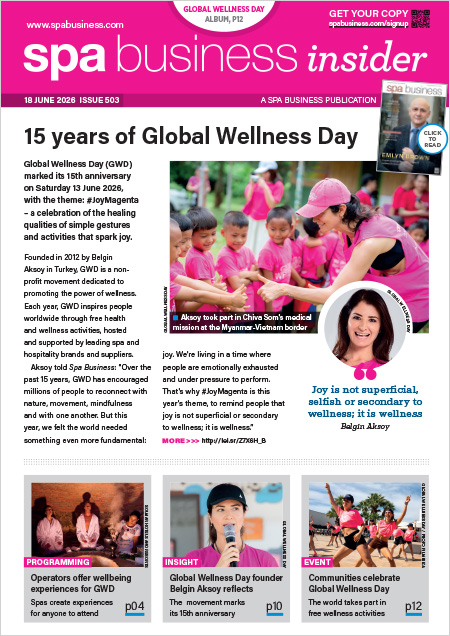
Global Wellness Day (GWD) marked its 15th anniversary on Saturday 13 June 2026, with the
theme: #JoyMagenta – a celebration of the healing qualities of simple gestures and activities
that spark joy.
Global luxury hospitality brand, Six Senses, has partnered with longevity healthcare provider,
HUM2N, to launch a clinic at Six Senses London, at The Whiteley.
As part of its first hotel partnership, Mayrlife – the medical health resort company known for its
site in Altaussee, Austria – has launched a day clinic at the Rosewood Vienna.
Premium London health club, KX Chelsea, will imminently unveil its most significant
redevelopment since its launch in 2002 to create an integrated wellness model combining
training, recovery and relaxation.
Rosewood Le Guanahani St Barth, on the northeast coast of Saint Barthélemy in the French
West Indies, is offering a programme of ocean-inspired yoga classes between 8-14 June to
celebrate Global Wellness Day (GWD).
Hotel de France, located on the British Isle of Jersey, has created a wellness retreat package
that includes a hot yoga session that will take place in Jersey Zoo’s butterfly sanctuary.
The Ritz-Carlton, Langkawi, in Malaysia, has revealed a schedule for Global Wellness Day
(GWD) that includes guided rainforest walks, mindful movement and guided coastal meditation
experiences.