Yes! Send me the FREE digital editions of Spa Business and Spa Business insider magazines and the FREE weekly Spa Business and Spa Business insider ezines and breaking news alerts!
The happiest people outlived those who were miserable
The argument that positive wellbeing could – and should – be used in the fight against bad health and stress has been highlighted by a UK study*. Scientists from the University College of London have found that the happiest people, who have a more positive outlook, are 35 per cent less likely to die in the short term than those who are miserable.
While many existing studies already show that happy people are healthier, this study is unique because the participants were accurately reporting their mood in real time rather than recollecting them at a later date which can prove unreliable.
In the mood The study was based on 3,853 people in total aged between 52 to 79. Using the ecological momentary assessment (EMA) method, they recorded their mood four times in one day – on waking, 30 minutes after waking, at 7pm and when they went to bed.
Each time, they rated the extent to which they felt happy, excited, content, worried, anxious or fearful on a scale of one to four. The first three feelings were combined and described as positive affect (PA) in the results.
The subjects were then divided into three groups based on their PA rankings – high, medium and low. After five years, the researchers followed up with the members of each group to record who had died during that time. Factors such as age, gender, depression, health and lifestyle – which might have influenced the results – were taken into account.
Don’t worry, be happy The group with the highest PA scores had a gradual increase in lifespan it was found. Only 3.6 per cent of the high-PA group had died during the five years. In contrast, 4.6 per cent in the middle bracket and 7.3 per cent in the lower third had died.
In short, the happiest people were 35 per cent less likely to die. Yet more negative emotions did not reverse the trend and had little influence on survival. “We were surprised that measures obtained over one single day might predict so strongly,” said lead author Andrew Steptoe in an article on the health-based website healthymagination.com. Other findings the website highlighted were:
- The happiest people were slightly younger and more likely to be male and married - Positive emotions overall were lowest at 7am and highest at 7pm - Ethnicity, paid employment, education and presence of serious disease made no significant difference to PA - Smoking was less common and physical activity higher among those with higher PAs - Happier people had higher opinions of their own health
However, Steptoe was keen to point out that the results don’t prove that happiness causes people to live longer. He told UK newspaper The Telegraph: “The happiness could be a marker of some other aspect of people’s lives which is particularly important for health. For example, happiness is quite strongly linked to good social relationships – maybe it’s things like that which are account for the link between happiness and health.”
He also suspects that biological processes could be at work: other studies have shown that positive moods reduce stress-related hormones and boost the immune system.
*Steptoe A and Wardle J. Positive affect measured using ecological momentary assessment and survival in older men and women. PNAS. Vol 108, no 45, November 2011
Read more from this issue of Spa Business magazine
View contents of Spa Business 2012 issue 2
Ask an expert...: overbuilding
Are large, extravagant spas and treatment rooms really sustainable? Or is it time to wise up about spa design? Katie Barnes reports
Interview: Darrell Metzger
Destination Resorts is creating world-class tourist developments in Malaysia on behalf of the government. Jennifer Harbottle speaks to the man heading it all up
Spa management training: The learning curve – part one
On the eve of a new GSWS study into the state of spa management training globally, we launch a three-part series to delve into our industry’s educational offering and operational needs. Rhianon Howells gets studying
US Hotel spa research: Closer look
Leonor Stanton analyses the findings from PKF’s latest Trends® in the Hotel Spa Industry study and gets the reaction of top spa professionals
Profile: Susie Ellis
SpaFinder Inc president and the face of the Global Spa & Wellness Summit talks to Rhianon Howells about the art of uncovering up-and-coming industry trends, ethics and the importance of innovation
Resort Spa: Dual purpose
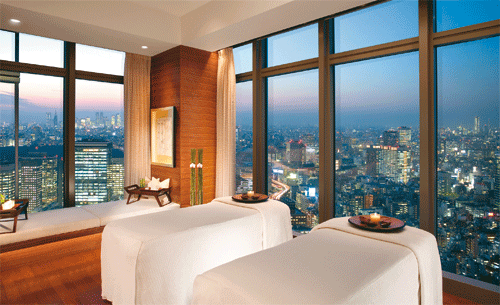
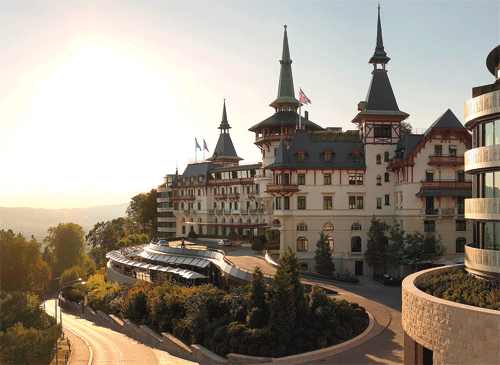
Switzerland’s renown Dolder Grand Spa has an offering to satisfy its onsite, longer-staying guests as well as local day spa customers. Katie Barnes pays a visit to this standout facility
Design: Jean-Michel Gathy
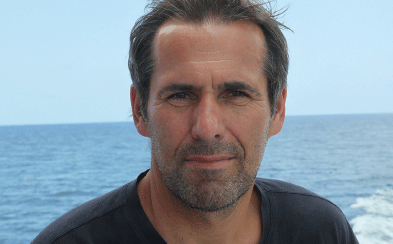
The owner of Asia-based design company Denniston has worked on some of the world’s leading spas and resorts. Jennifer Harbottle finds out about his passion for creativity
Samui spotlight:
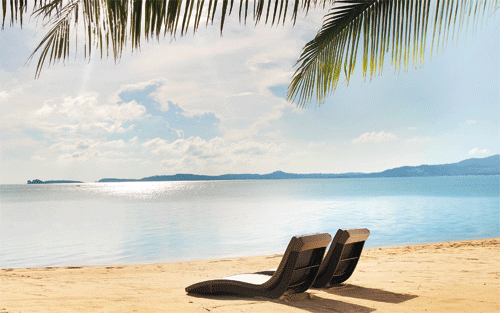
The second most popular Thai island has been transformed from a backpackers haven to a luxury lifestyle destination with a number of new five-star spa resorts. Neena Dhillon reports
Middle East benchmarks: Peaks & Troughs
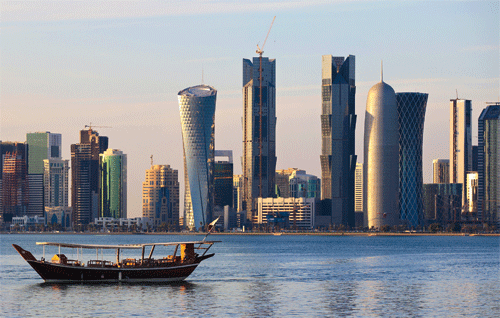
Leonor Stanton reviews hotel spa performance in Lebanon, Jordan and Doha following the 2011 benchmark surveys recently released by PwC in the Middle East
Online wellness gaming: Game Changer
Scoreboards, socialisation, challenges, rewards and feedback – the compelling components of online gaming could be key to getting people to become healthy says Susie Ellis
Kuwait focus: Cue Kuwait
The first in a two-part series on the Kuwaiti spa market by Kate Cracknell focuses on the spa-goers in the capital and the new Six Senses Spa at the Hotel Missoni
Research: Happiness
Older adults who are the most content and have a more positive outlook are likely to live longer according to a new study based on 3,800 participants
The happiest people outlived those who were miserable
The argument that positive wellbeing could – and should – be used in the fight against bad health and stress has been highlighted by a UK study*. Scientists from the University College of London have found that the happiest people, who have a more positive outlook, are 35 per cent less likely to die in the short term than those who are miserable.
While many existing studies already show that happy people are healthier, this study is unique because the participants were accurately reporting their mood in real time rather than recollecting them at a later date which can prove unreliable.
In the mood The study was based on 3,853 people in total aged between 52 to 79. Using the ecological momentary assessment (EMA) method, they recorded their mood four times in one day – on waking, 30 minutes after waking, at 7pm and when they went to bed.
Each time, they rated the extent to which they felt happy, excited, content, worried, anxious or fearful on a scale of one to four. The first three feelings were combined and described as positive affect (PA) in the results.
The subjects were then divided into three groups based on their PA rankings – high, medium and low. After five years, the researchers followed up with the members of each group to record who had died during that time. Factors such as age, gender, depression, health and lifestyle – which might have influenced the results – were taken into account.
Don’t worry, be happy The group with the highest PA scores had a gradual increase in lifespan it was found. Only 3.6 per cent of the high-PA group had died during the five years. In contrast, 4.6 per cent in the middle bracket and 7.3 per cent in the lower third had died.
In short, the happiest people were 35 per cent less likely to die. Yet more negative emotions did not reverse the trend and had little influence on survival. “We were surprised that measures obtained over one single day might predict so strongly,” said lead author Andrew Steptoe in an article on the health-based website healthymagination.com. Other findings the website highlighted were:
- The happiest people were slightly younger and more likely to be male and married - Positive emotions overall were lowest at 7am and highest at 7pm - Ethnicity, paid employment, education and presence of serious disease made no significant difference to PA - Smoking was less common and physical activity higher among those with higher PAs - Happier people had higher opinions of their own health
However, Steptoe was keen to point out that the results don’t prove that happiness causes people to live longer. He told UK newspaper The Telegraph: “The happiness could be a marker of some other aspect of people’s lives which is particularly important for health. For example, happiness is quite strongly linked to good social relationships – maybe it’s things like that which are account for the link between happiness and health.”
He also suspects that biological processes could be at work: other studies have shown that positive moods reduce stress-related hormones and boost the immune system.
*Steptoe A and Wardle J. Positive affect measured using ecological momentary assessment and survival in older men and women. PNAS. Vol 108, no 45, November 2011
Read more from this issue of Spa Business magazine
View contents of Spa Business 2012 issue 2
Ask an expert...: overbuilding
Are large, extravagant spas and treatment rooms really sustainable? Or is it time to wise up about spa design? Katie Barnes reports
Interview: Darrell Metzger
Destination Resorts is creating world-class tourist developments in Malaysia on behalf of the government. Jennifer Harbottle speaks to the man heading it all up
Spa management training: The learning curve – part one
On the eve of a new GSWS study into the state of spa management training globally, we launch a three-part series to delve into our industry’s educational offering and operational needs. Rhianon Howells gets studying
US Hotel spa research: Closer look
Leonor Stanton analyses the findings from PKF’s latest Trends® in the Hotel Spa Industry study and gets the reaction of top spa professionals
Profile: Susie Ellis
SpaFinder Inc president and the face of the Global Spa & Wellness Summit talks to Rhianon Howells about the art of uncovering up-and-coming industry trends, ethics and the importance of innovation
Resort Spa: Dual purpose
Switzerland’s renown Dolder Grand Spa has an offering to satisfy its onsite, longer-staying guests as well as local day spa customers. Katie Barnes pays a visit to this standout facility
Design: Jean-Michel Gathy
The owner of Asia-based design company Denniston has worked on some of the world’s leading spas and resorts. Jennifer Harbottle finds out about his passion for creativity
Samui spotlight:
The second most popular Thai island has been transformed from a backpackers haven to a luxury lifestyle destination with a number of new five-star spa resorts. Neena Dhillon reports
Middle East benchmarks: Peaks & Troughs
Leonor Stanton reviews hotel spa performance in Lebanon, Jordan and Doha following the 2011 benchmark surveys recently released by PwC in the Middle East
Online wellness gaming: Game Changer
Scoreboards, socialisation, challenges, rewards and feedback – the compelling components of online gaming could be key to getting people to become healthy says Susie Ellis
Kuwait focus: Cue Kuwait
The first in a two-part series on the Kuwaiti spa market by Kate Cracknell focuses on the spa-goers in the capital and the new Six Senses Spa at the Hotel Missoni
Research: Happiness
Older adults who are the most content and have a more positive outlook are likely to live longer according to a new study based on 3,800 participants
People taking GLP-1 weight loss medications such as Ozempic, Wegovy, Mounjaro and Zepbound
may be losing weight, but they’re also becoming less physically active, according to new
research presented at the ENDO 2026 annual meeting of the Endocrine Society
Abu Dhabi-based investment firm Mubadala Capital has made a binding, fully financed
€1 billion
offer to acquire Pierre and Vacances SA, the European holiday resort operator behind the
continental European Center Parcs business.
Global retreat trade show, Synergy The Retreat Show, has launched a resource called The
Source, which hosts an open-access online Transformation Series programme.
The Standards Authority for Touch in Cancer Care (SATCC) charity has announced its first five-
day Living with Cancer and Beyond retreat, which will be held at Carden Park Hotel and Spa in
Cheshire, UK, between 1 and 5 September.
Patmos Aktis, a Luxury Collection Resort and Spa, has opened in Greece, with a renovated and
rebranded wellness offering called Ansana Wellness and Spa.
The Mauna Kea Beach Hotel, an Autograph Collection property in Hawaii, US, has opened its
22,000 sq ft indoor-outdoor Spa at Mauna Kea as the final step in the property’s overall
renovation, which has cost more than US$180 million (€166 million, £140 mill
The UK spa review and discovery platform for consumers, the Good Spa Guide, has announced
it will host the Good Spa Guide Awards 2026 during an event on 16 November at Sopwell House
Hotel in St Albans, UK.
Eighty-four per cent of consumers now say wellness is a top priority in their lives, with this
percentage increasing year on year, according to a preview presentation of McKinsey’s Future of
Wellness 2026 research report.
Mass protests have been taking place since Monday 1 June in Albania over the development of
a luxury resort by Donald Trump’s daughter Ivanka Trump and her husband Jared Kushner.
Global Wellness Day (GWD) marked its 15th anniversary on Saturday 13 June 2026, with the
theme: #JoyMagenta – a celebration of the healing qualities of simple gestures and activities
that spark joy.