Is a pampering image really such a damaging one for the spa industry, or is the link between ‘me time’ and happiness more important than ever? We canvass some industry opinions
By Elly Earls | Published in Spa Business 2012 issue 4
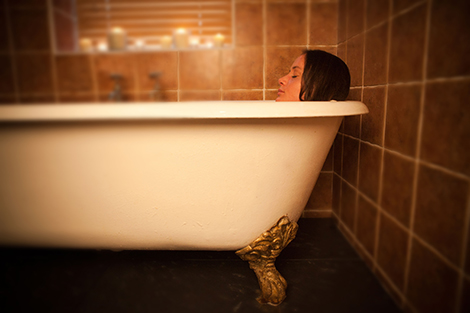
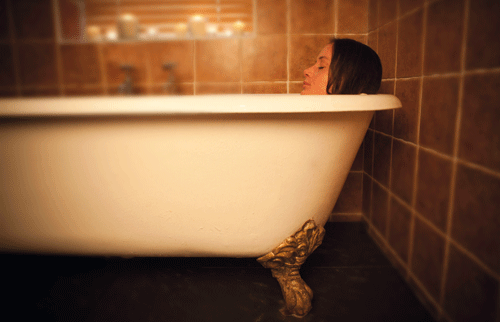
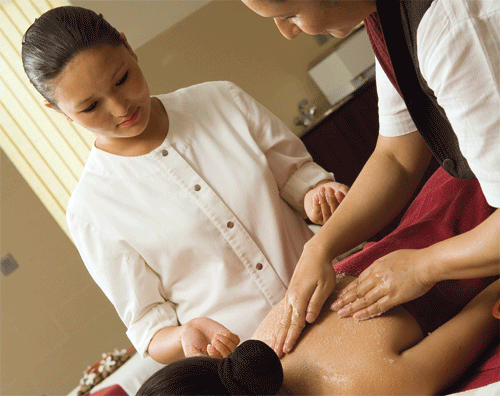
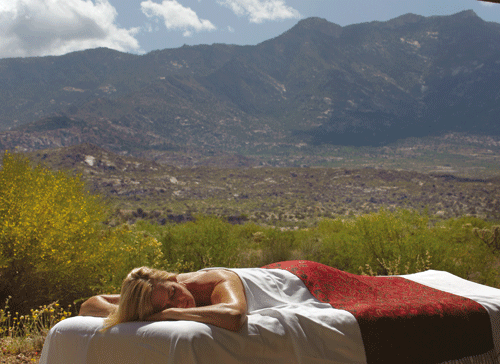
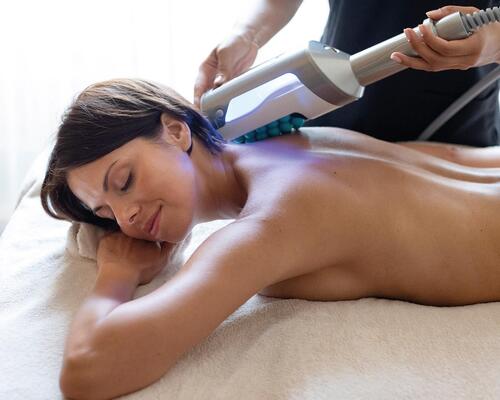
Pampering and wellness can coexist – Voya seaweed products can be added to an indulgent bath to make it therapeutic
Since the recession in 2008, many operators have started to move away from the idea of spa ‘pampering’ experiences, feeling that presenting their services as an indulgence or a one-off treat has become increasingly inappropriate for a consumer base wracked with money worries.
Instead, a growing number of spas are offering ‘wellness’-orientated, health-focused treatments, such as healing baths and lymphatic massages. They’re beginning to focus on the scientifically-proven medical benefits of their services (see sb10/3 p54) rather than the vague promise of making clients feel better.
But are those spas that are seeking to entirely disassociate themselves with what they perceive as the frivolity of pampering actually missing a trick? For Jeremy McCarthy, director of global spa development and operations for Starwood Hotels & Resorts, who spoke on this subject at the Global Spa and Wellness Summit this June (see sb12/3 p54), without a doubt, yes.
“Happiness tends to have a bad reputation – it’s very superficial and somewhat hedonistic,” he said. “I think we wrestle with our own pampering identity and making people feel good and therefore try to focus more on wellness than pampering. But there are some real, serious, beneficial outcomes that are tied to happiness and I think this is something we should really pay attention to.”
Furthermore, for McCarthy, there are already thousands of medical institutions that offer scientifically-proven treatments much more effectively than a spa ever could. What spas do really well is provide healing that people really love. “There’s no other healing institution that people look forward to going to, that they enjoy when they’re there, or that they remember fondly afterwards the way they do with spa,” he emphasised.
Not everyone in the spa industry, however, feels the same, with a growing number of experts and operators increasingly believing that today’s cash-strapped consumers are only interested in paying for a treatment if it will improve their health in a measurable way and advocating a return to the root of the spa movement when people visited hot or cold springs solely for their therapeutic and healing properties.
But is there a middle ground between pampering for pampering’s sake and entirely science-based treatments? We ask key industry players for their take on the matter.
Read more from this issue of Spa Business magazine
Interview: Laurent Houel
Evian's global brand development
director tells Katie Barnes about the
group's new evianSpa licence concept
that's set for a strategic global rollout
Promotional feature: Value Proposition
If you're thinking of investing in a spa development bigger than 300sq m,
a feasibility study – at a cost of only US$10k-US$18k – can reveal the
business model most likely to succeed.
Research: Work it out
Katherine Johnston reveals key
recommendations following a
much-needed study on global spa
management training
Top team: Miraval
The team that created the new spa at
Miraval shared a bold vision as Liz
Terry discovered on her visit
Family matters: The Brepohls
Natural medicine is the focus at
Lapinha: one of Brazil's original
medical spas. Neena Dhillon talks to
the founding family
The making of...: A massage table
Up to 18 million parts are needed for
a year's production of massage tables.
Lisa Starr takes an ‘undercover' look
at just what goes into making this
industry staple
Research: The cold war
Meditation and exercise can
significantly reduce sick days taken
due to colds and flu
Michael StusserFounderOsmosis Day Spa Sanctuary; and Green Spa Network
Michael Stusser
The problem I have with the word pampering is what it conjures up in the mind. Indulgence equates to excess, waste and lack of conscious behaviour and is linked to the capricious behaviours of the privileged class. In some ways, it’s just the opposite of enlightenment and mindfulness, which are key components for the psychological orientation of a healthy being. Moreover, it has a strong association with babies, which, in my opinion infantilises the spa experience and demeans the professional image we are trying to create.
Pampering has a limited appeal to a small segment of the population but is a huge turn-off for the larger portion, the people who we need to make understand our industry and hopefully partake in what it has to offer.
Since 2008, the industry has been on its knees. People have become much more sophisticated about what they’re willing to pay for and accept in a treatment. They’re looking for substantial value and want to know that the time and money they’re spending in a spa is going to contribute in a measurable way to improving their quality of life – beyond feeling good for a day.
It’s time for this industry to wake up and smell the coffee. We have to change our value proposition if we’re going to move beyond a struggle for survival. I think it’s really time for us to go deeper into the roots of what created the spa movement in the first place – which is healing and wellness. We strayed away from that during the years of opulence but I don’t think it is going to serve the future of our industry to continue to go down that road.
I cringe every time I hear the word pampering but, unfortunately, it’s deeply embedded in our spa culture. Both consumers and marketers continue to use it frequently but, in my opinion, I don’t want to use it at all in our vernacular as we promote our business. We can do much better and we will have to do much better if we’re going to be able to meet people where they’re going now. It’s time we moved beyond the solipsistic idea of spa we’ve been living in and understand how to become more relevant to what’s happening with wellness globally. Our industry needs an identity change.
It’s time we moved beyond the solipsistic idea of spa we’ve been living in and understand how to become more relevant to what’s happening with wellness globally
Stusser, the founder of Osmosis Day Spa Sanctuary, is also a founding member of The Green Spa Network, an association of eco-friendly spa professionals. Details: www.osmosis.com; http://greenspanetwork.org
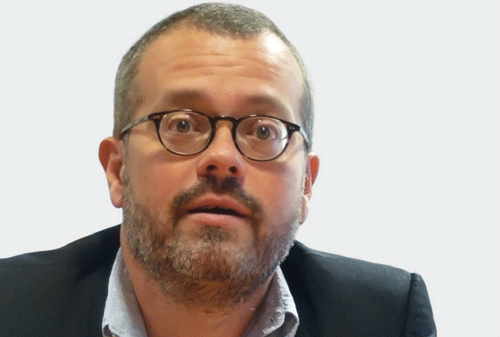
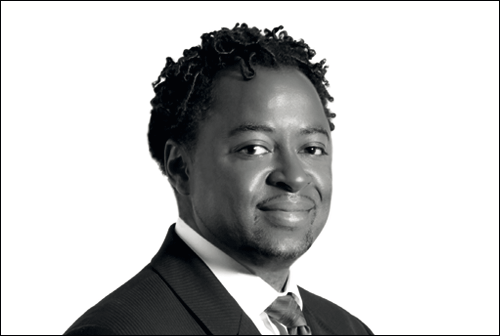
Jeremy McCarthyDirector of Global Spa Development and OperationsStarwood Hotels & Resorts
Jeremy McCarthy
As money has become a bigger factor in consumers’ decisions, the spa industry has become concerned that if we’re perceived as a luxury or indulgence, people will stop coming. So there’s been a general feeling that if we could focus more on wellness and health, consumers would really value our services and spend money with us, even in tough times.
But if the industry moves away from pampering, we move away from what differentiates us. There are a lot of other businesses and industries focused on health, but what spas do really well is offer healing that feels good and that people look forward to experiencing. If we can emphasise that as the strength of our industry, we could solidify our place as leaders in an aspect of wellness that few people are covering.
At Starwood, we think very deeply about the psychology of the spa experience, and we think it has a lot to do with time. A lot of what happens in a spa doesn’t have so much to do with the treatment being received, it has to do with the fact that you’re being separated from technology for a while and you’re alone in a room with silence. So, even before the therapist lays their hands on the guest, there are many things that are happening that are important to the guest’s psychological wellbeing.
Moreover, there are some pretty clear scientifically established links between feeling good and being well. For example, when we’re feeling better we become more open to positive health lifestyles and behaviours. And positive emotions act as a buffer, protecting us from the harmful effects of stress (see sb12/2 p98). Of course there is a superficial side to pampering and spas don’t want to be associated with that, but what I would argue is that what people don’t like about the concept of pampering is that it seems excessive. Yet, for me, the opposite is actually true: people aren’t being pampered enough. When we go to other healing institutions in our society, such as hospitals and clinics, they don’t make us feel good, and they don’t treat us the way we want to be treated.
The biggest mistake that we make is assuming that you have to be one or the other – pampering or wellness. I think what spas do really well is both and that’s what the industry is moving towards. By sharing some of the science behind positive emotions, I’ve been trying to elevate the discussion to move people towards more of a mindful approach to wellness and pampering, and I think we’re getting there.
The biggest mistake we make is assuming that you have to be one or the other – pampering or wellness. What spas do really well is both
McCarthy has over 20 years of experience in operating luxury resort spas and recently completed a masters degree in Applied Positive Psychology. He’s also recently authored The Psychology of Spas & Wellbeing. Details: www.starwoodhotels.com
Mark Lyttleton-FrancesGeneral ManagerThe BodyHoliday
Mark Lyttleton-Frances
Pampering is very much part of the whole holistic wellness experience – if you’re looking after your health, part of that is ‘me time’ and pampering. It’s an emotional rather than a physical thing – it’s not necessarily about the quality of the treatment or therapist, it’s about that hour of being totally looked after by someone else.
I’ve seen spas, particularly in the day spa/salon world, moving away from pampering towards holistic and wellness experiences because they think that is what people are looking for. But I don’t necessarily believe that to be true. If anything, The BodyHoliday does more pampering now, and we’re actually in the process of building a new manicure-pedicure suite and bringing on a full range of organic cosmetics. Our guests are actually telling us that they want that ‘me time’, that they want to be looked after and that they want to feel good.
I’ve seen a big change since the economic meltdown. I’m finding that those in the high-income group who still have money are spending it on time, rather than material things – they’re buying something emotional, something to make them feel better. Similarly, people in the middle-income bracket are coming out here [to the resort] because they have saved up to take themselves off and use these services to refresh, relax and refocus. I’m finding there’s more of a move back towards pampering rather than away from it.
But pampering is changing and we’re seeing a big move towards organic cosmetics. People are also moving away from things like Botox and surgical facelifts to natural pampering treatments such as thalassotherapy. The pampering is still going on, and it’s going on more than it ever did, but it’s refocused.
I don’t think spas moving towards wellness and holistic therapies will lose out on any business, but I do think they will become a dime a dozen – everybody will be offering the same health and wellness programmes. However, those who continue to offer pampering will find themselves capturing both ends of the market.
We did 108,000 treatments last year, so I think anyone out there who is giving salons or spas a hard time about pampering because it’s seen to be frivolous and for the wealthy got it wrong. Pampering is more for everyman than it ever has been before.
We did 108,000 treatments last year, so I think anyone giving spas a hard time about pampering because it’s seen to be frivolous and for the wealthy got it wrong
Lyttleton-Frances has been in the hospitality industry for over 20 years and currently runs St Lucia’s The BodyHoliday resort. Details: www.thebodyholiday.com
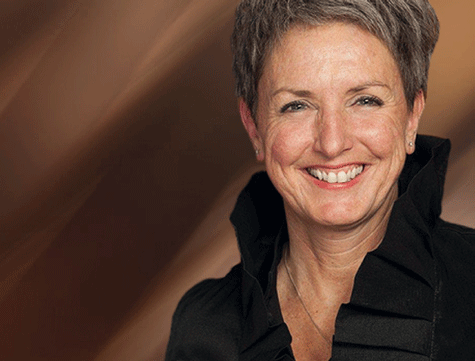
Jennifer HaackCorporate Director of Spa DevelopmentRosewood Hotels & Resorts
Jennifer Haack
The distinction between pampering and wellness is about how the two things are perceived. Pampering is often seen as something indulgent or selfish while wellness is defined as being in good physical condition and mental health.
Indeed, sometimes spas offer exactly the same services but use different words. For example, at one point soaking in a bath with candlelight and flowers could have seen as pampering, while the inclusion of aromatherapy and mineral-rich ingredients could have seen it packaged as a ‘luxe’ treatment to improve wellbeing. Now, however, we’re trying to create baths that are built around wellness. One example of a radical bath that is driven by healing is by Voya – the Irish company that hand harvests seaweed products (see sb12/3 p78) uses them in a bath treatment to ease aches and nourish the body.
For me, it’s really about stating the distinction between pampering and wellness, and seeing pampering as a discipline to achieve wellness or good health. Engaging in services that nurture, heal and feed the body is pampering but it’s an investment in oneself and the end result is wellness.
But although it’s a matter of semantics for me, for others, it’s a deciding factor – pampering is the first thing off their list as it’s become synonymous with something you can live without. People need to be re-educated about the word pampering. If we tie it together with wellness, people would begin to see it as something that isn’t disposable.
We’re trying to do this at Sense [Rosewood’s spa brand]. We source skincare and equipment charged with precious gems, representing luxury, but use these in tandem with biotechnology and science. For example, we’re using tables infused with amethyst or quartz which have been designed to help restore vitality and eliminate toxins. Indeed, we market our services as ‘a balance of science, nature, wellness and beauty, choreographed to achieve an improved state of wellbeing.’ As an industry, we’re trying to change our language to use words such as science, heal and wellness, rather than diluted words like revitalise and relax.
We also need to become more universal as we have to appeal to two separate groups of people. There are those who think only about pampering and we want to re-educate them so they see a visit to the spa as improving their state of being; and there are the people who we want to bring in who are looking for wellness but might not choose to come in because they think that what we’re doing is superficial.
My hope is that we grasp both with the same straw; the goal is to find a way to join the concepts and create awareness that pampering is, by nature, an opportunity to improve wellness. This can be achieved through the choreography of our services, careful selection of products and expert training and attention to detail. Our responsibility to the people who come in is awesome; we need to constantly be connected to the potential outcome of pampering: wellness.
Haack, has been with Rosewood for six years and oversees its nine Sense spas. She has four pending projects in the Middle East and more than five in development in Asia. Details: www.rosewoodhotels.com
Is a pampering image really such a damaging one for the spa industry, or is the link between ‘me time’ and happiness more important than ever? We canvass some industry opinions
By Elly Earls | Published in Spa Business 2012 issue 4
Pampering and wellness can coexist – Voya seaweed products can be added to an indulgent bath to make it therapeutic
Since the recession in 2008, many operators have started to move away from the idea of spa ‘pampering’ experiences, feeling that presenting their services as an indulgence or a one-off treat has become increasingly inappropriate for a consumer base wracked with money worries.
Instead, a growing number of spas are offering ‘wellness’-orientated, health-focused treatments, such as healing baths and lymphatic massages. They’re beginning to focus on the scientifically-proven medical benefits of their services (see sb10/3 p54) rather than the vague promise of making clients feel better.
But are those spas that are seeking to entirely disassociate themselves with what they perceive as the frivolity of pampering actually missing a trick? For Jeremy McCarthy, director of global spa development and operations for Starwood Hotels & Resorts, who spoke on this subject at the Global Spa and Wellness Summit this June (see sb12/3 p54), without a doubt, yes.
“Happiness tends to have a bad reputation – it’s very superficial and somewhat hedonistic,” he said. “I think we wrestle with our own pampering identity and making people feel good and therefore try to focus more on wellness than pampering. But there are some real, serious, beneficial outcomes that are tied to happiness and I think this is something we should really pay attention to.”
Furthermore, for McCarthy, there are already thousands of medical institutions that offer scientifically-proven treatments much more effectively than a spa ever could. What spas do really well is provide healing that people really love. “There’s no other healing institution that people look forward to going to, that they enjoy when they’re there, or that they remember fondly afterwards the way they do with spa,” he emphasised.
Not everyone in the spa industry, however, feels the same, with a growing number of experts and operators increasingly believing that today’s cash-strapped consumers are only interested in paying for a treatment if it will improve their health in a measurable way and advocating a return to the root of the spa movement when people visited hot or cold springs solely for their therapeutic and healing properties.
But is there a middle ground between pampering for pampering’s sake and entirely science-based treatments? We ask key industry players for their take on the matter.
Read more from this issue of Spa Business magazine
Interview: Laurent Houel
Evian's global brand development
director tells Katie Barnes about the
group's new evianSpa licence concept
that's set for a strategic global rollout
Promotional feature: Value Proposition
If you're thinking of investing in a spa development bigger than 300sq m,
a feasibility study – at a cost of only US$10k-US$18k – can reveal the
business model most likely to succeed.
Research: Work it out
Katherine Johnston reveals key
recommendations following a
much-needed study on global spa
management training
Top team: Miraval
The team that created the new spa at
Miraval shared a bold vision as Liz
Terry discovered on her visit
Family matters: The Brepohls
Natural medicine is the focus at
Lapinha: one of Brazil's original
medical spas. Neena Dhillon talks to
the founding family
The making of...: A massage table
Up to 18 million parts are needed for
a year's production of massage tables.
Lisa Starr takes an ‘undercover' look
at just what goes into making this
industry staple
Research: The cold war
Meditation and exercise can
significantly reduce sick days taken
due to colds and flu
Michael StusserFounderOsmosis Day Spa Sanctuary; and Green Spa Network
Michael Stusser
The problem I have with the word pampering is what it conjures up in the mind. Indulgence equates to excess, waste and lack of conscious behaviour and is linked to the capricious behaviours of the privileged class. In some ways, it’s just the opposite of enlightenment and mindfulness, which are key components for the psychological orientation of a healthy being. Moreover, it has a strong association with babies, which, in my opinion infantilises the spa experience and demeans the professional image we are trying to create.
Pampering has a limited appeal to a small segment of the population but is a huge turn-off for the larger portion, the people who we need to make understand our industry and hopefully partake in what it has to offer.
Since 2008, the industry has been on its knees. People have become much more sophisticated about what they’re willing to pay for and accept in a treatment. They’re looking for substantial value and want to know that the time and money they’re spending in a spa is going to contribute in a measurable way to improving their quality of life – beyond feeling good for a day.
It’s time for this industry to wake up and smell the coffee. We have to change our value proposition if we’re going to move beyond a struggle for survival. I think it’s really time for us to go deeper into the roots of what created the spa movement in the first place – which is healing and wellness. We strayed away from that during the years of opulence but I don’t think it is going to serve the future of our industry to continue to go down that road.
I cringe every time I hear the word pampering but, unfortunately, it’s deeply embedded in our spa culture. Both consumers and marketers continue to use it frequently but, in my opinion, I don’t want to use it at all in our vernacular as we promote our business. We can do much better and we will have to do much better if we’re going to be able to meet people where they’re going now. It’s time we moved beyond the solipsistic idea of spa we’ve been living in and understand how to become more relevant to what’s happening with wellness globally. Our industry needs an identity change.
It’s time we moved beyond the solipsistic idea of spa we’ve been living in and understand how to become more relevant to what’s happening with wellness globally
Stusser, the founder of Osmosis Day Spa Sanctuary, is also a founding member of The Green Spa Network, an association of eco-friendly spa professionals. Details: www.osmosis.com; http://greenspanetwork.org
Jeremy McCarthyDirector of Global Spa Development and OperationsStarwood Hotels & Resorts
Jeremy McCarthy
As money has become a bigger factor in consumers’ decisions, the spa industry has become concerned that if we’re perceived as a luxury or indulgence, people will stop coming. So there’s been a general feeling that if we could focus more on wellness and health, consumers would really value our services and spend money with us, even in tough times.
But if the industry moves away from pampering, we move away from what differentiates us. There are a lot of other businesses and industries focused on health, but what spas do really well is offer healing that feels good and that people look forward to experiencing. If we can emphasise that as the strength of our industry, we could solidify our place as leaders in an aspect of wellness that few people are covering.
At Starwood, we think very deeply about the psychology of the spa experience, and we think it has a lot to do with time. A lot of what happens in a spa doesn’t have so much to do with the treatment being received, it has to do with the fact that you’re being separated from technology for a while and you’re alone in a room with silence. So, even before the therapist lays their hands on the guest, there are many things that are happening that are important to the guest’s psychological wellbeing.
Moreover, there are some pretty clear scientifically established links between feeling good and being well. For example, when we’re feeling better we become more open to positive health lifestyles and behaviours. And positive emotions act as a buffer, protecting us from the harmful effects of stress (see sb12/2 p98). Of course there is a superficial side to pampering and spas don’t want to be associated with that, but what I would argue is that what people don’t like about the concept of pampering is that it seems excessive. Yet, for me, the opposite is actually true: people aren’t being pampered enough. When we go to other healing institutions in our society, such as hospitals and clinics, they don’t make us feel good, and they don’t treat us the way we want to be treated.
The biggest mistake that we make is assuming that you have to be one or the other – pampering or wellness. I think what spas do really well is both and that’s what the industry is moving towards. By sharing some of the science behind positive emotions, I’ve been trying to elevate the discussion to move people towards more of a mindful approach to wellness and pampering, and I think we’re getting there.
The biggest mistake we make is assuming that you have to be one or the other – pampering or wellness. What spas do really well is both
McCarthy has over 20 years of experience in operating luxury resort spas and recently completed a masters degree in Applied Positive Psychology. He’s also recently authored The Psychology of Spas & Wellbeing. Details: www.starwoodhotels.com
Mark Lyttleton-FrancesGeneral ManagerThe BodyHoliday
Mark Lyttleton-Frances
Pampering is very much part of the whole holistic wellness experience – if you’re looking after your health, part of that is ‘me time’ and pampering. It’s an emotional rather than a physical thing – it’s not necessarily about the quality of the treatment or therapist, it’s about that hour of being totally looked after by someone else.
I’ve seen spas, particularly in the day spa/salon world, moving away from pampering towards holistic and wellness experiences because they think that is what people are looking for. But I don’t necessarily believe that to be true. If anything, The BodyHoliday does more pampering now, and we’re actually in the process of building a new manicure-pedicure suite and bringing on a full range of organic cosmetics. Our guests are actually telling us that they want that ‘me time’, that they want to be looked after and that they want to feel good.
I’ve seen a big change since the economic meltdown. I’m finding that those in the high-income group who still have money are spending it on time, rather than material things – they’re buying something emotional, something to make them feel better. Similarly, people in the middle-income bracket are coming out here [to the resort] because they have saved up to take themselves off and use these services to refresh, relax and refocus. I’m finding there’s more of a move back towards pampering rather than away from it.
But pampering is changing and we’re seeing a big move towards organic cosmetics. People are also moving away from things like Botox and surgical facelifts to natural pampering treatments such as thalassotherapy. The pampering is still going on, and it’s going on more than it ever did, but it’s refocused.
I don’t think spas moving towards wellness and holistic therapies will lose out on any business, but I do think they will become a dime a dozen – everybody will be offering the same health and wellness programmes. However, those who continue to offer pampering will find themselves capturing both ends of the market.
We did 108,000 treatments last year, so I think anyone out there who is giving salons or spas a hard time about pampering because it’s seen to be frivolous and for the wealthy got it wrong. Pampering is more for everyman than it ever has been before.
We did 108,000 treatments last year, so I think anyone giving spas a hard time about pampering because it’s seen to be frivolous and for the wealthy got it wrong
Lyttleton-Frances has been in the hospitality industry for over 20 years and currently runs St Lucia’s The BodyHoliday resort. Details: www.thebodyholiday.com
Jennifer HaackCorporate Director of Spa DevelopmentRosewood Hotels & Resorts
Jennifer Haack
The distinction between pampering and wellness is about how the two things are perceived. Pampering is often seen as something indulgent or selfish while wellness is defined as being in good physical condition and mental health.
Indeed, sometimes spas offer exactly the same services but use different words. For example, at one point soaking in a bath with candlelight and flowers could have seen as pampering, while the inclusion of aromatherapy and mineral-rich ingredients could have seen it packaged as a ‘luxe’ treatment to improve wellbeing. Now, however, we’re trying to create baths that are built around wellness. One example of a radical bath that is driven by healing is by Voya – the Irish company that hand harvests seaweed products (see sb12/3 p78) uses them in a bath treatment to ease aches and nourish the body.
For me, it’s really about stating the distinction between pampering and wellness, and seeing pampering as a discipline to achieve wellness or good health. Engaging in services that nurture, heal and feed the body is pampering but it’s an investment in oneself and the end result is wellness.
But although it’s a matter of semantics for me, for others, it’s a deciding factor – pampering is the first thing off their list as it’s become synonymous with something you can live without. People need to be re-educated about the word pampering. If we tie it together with wellness, people would begin to see it as something that isn’t disposable.
We’re trying to do this at Sense [Rosewood’s spa brand]. We source skincare and equipment charged with precious gems, representing luxury, but use these in tandem with biotechnology and science. For example, we’re using tables infused with amethyst or quartz which have been designed to help restore vitality and eliminate toxins. Indeed, we market our services as ‘a balance of science, nature, wellness and beauty, choreographed to achieve an improved state of wellbeing.’ As an industry, we’re trying to change our language to use words such as science, heal and wellness, rather than diluted words like revitalise and relax.
We also need to become more universal as we have to appeal to two separate groups of people. There are those who think only about pampering and we want to re-educate them so they see a visit to the spa as improving their state of being; and there are the people who we want to bring in who are looking for wellness but might not choose to come in because they think that what we’re doing is superficial.
My hope is that we grasp both with the same straw; the goal is to find a way to join the concepts and create awareness that pampering is, by nature, an opportunity to improve wellness. This can be achieved through the choreography of our services, careful selection of products and expert training and attention to detail. Our responsibility to the people who come in is awesome; we need to constantly be connected to the potential outcome of pampering: wellness.
Haack, has been with Rosewood for six years and oversees its nine Sense spas. She has four pending projects in the Middle East and more than five in development in Asia. Details: www.rosewoodhotels.com
Private hotel owner and developer HVL Hotels will open a new luxury resort and tourism
destination called Laval Hunter Valley in the second half of 2027 in Pokolbin, Australia.
The annual wellness festival dedicated to wellbeing, culture, longevity and human connection,
called Alma, will be hosted by Rocco Forte hotel, Verdura Resort in Sicily, Italy.
Capella Hotel Group has appointed Feisal Jaffer as chief development officer as the company
ramps up its global expansion of both its Capella and Patina brands.
People taking GLP-1 weight loss medications such as Ozempic, Wegovy, Mounjaro and Zepbound
may be losing weight, but they’re also becoming less physically active, according to new
research presented at the ENDO 2026 annual meeting of the Endocrine Society
Abu Dhabi-based investment firm Mubadala Capital has made a binding, fully financed
€1 billion
offer to acquire Pierre and Vacances SA, the European holiday resort operator behind the
continental European Center Parcs business.
Global retreat trade show, Synergy The Retreat Show, has launched a resource called The
Source, which hosts an open-access online Transformation Series programme.
The Standards Authority for Touch in Cancer Care (SATCC) charity has announced its first five-
day Living with Cancer and Beyond retreat, which will be held at Carden Park Hotel and Spa in
Cheshire, UK, between 1 and 5 September.
Patmos Aktis, a Luxury Collection Resort and Spa, has opened in Greece, with a renovated and
rebranded wellness offering called Ansana Wellness and Spa.
The Mauna Kea Beach Hotel, an Autograph Collection property in Hawaii, US, has opened its
22,000 sq ft indoor-outdoor Spa at Mauna Kea as the final step in the property’s overall
renovation, which has cost more than US$180 million (€166 million, £140 mill