The TrendsWatch 2019 Report from the American Alliance of Museums
(AAM) and the Center for the Future of Museums (CFM), explores
important cultural,technological, economic, environmental, and policy
events, identifying the major trends that will shape the way museums
worldwide will handle affairs, do business and engage visitors
Trust in government, media, academia, industry, and even nonprofit organisations are at an all-time low, according to the latest edition of TrendsWatch – an annual report on the future of museums.
Compiled by CFM’s vice president of strategic foresight and founding director, Elizabeth Merritt, “Truth, Trust and Fake News” is one of five major trends identified in the eighth edition of the report.
With declines in trust, it questions how nonprofits in general, and museums in particular, can remain among the most trusted sources of information, asking how museums, which are rated as extremely trustworthy by the general public, can build on this trust. It also asks how they can help society re-establish a framework for telling fact from fiction.
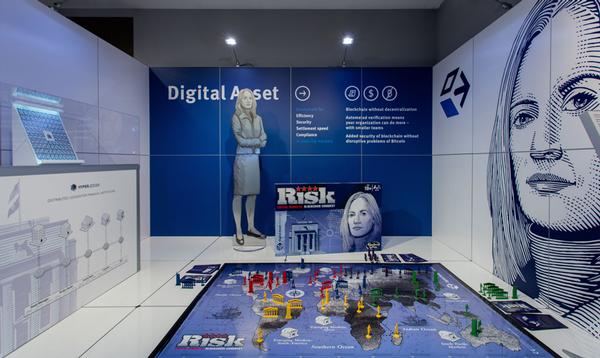
Blockchain The way in which blockchain will transform multiple types of transactions is the second trend identified.
Blockchain, in its simplest form, is a set records, linked using cryptography, to create a list of physical or digital transactions between two parties in a verifiable and permanent way.
The technology has been around for more than a decade, but in the past year, there has been huge growth in its experimental applications, including refugee aid, educational credentialing, land registries and provenance tracking.
Because blockchain has such wide-reaching potential for every sector, it means that museum leaders must understand what the technology is and how it’s likely to impact their communities.
“Museums are all about keeping secure, immutable records of transactions about collections,” says the report. “In past centuries, these records were kept in paper ledgers and more recently on in-house databases. The distributed nature of blockchain ledgers could make this data less vulnerable to loss or degradation.”
It also suggests that using blockchain means museums can be transparent about the history of their collections, enabling anyone to access data by use of a public key. This will help to support claims from indigenous communities, identify the lineage of Nazi-era assets and better help repatriation of artefacts.
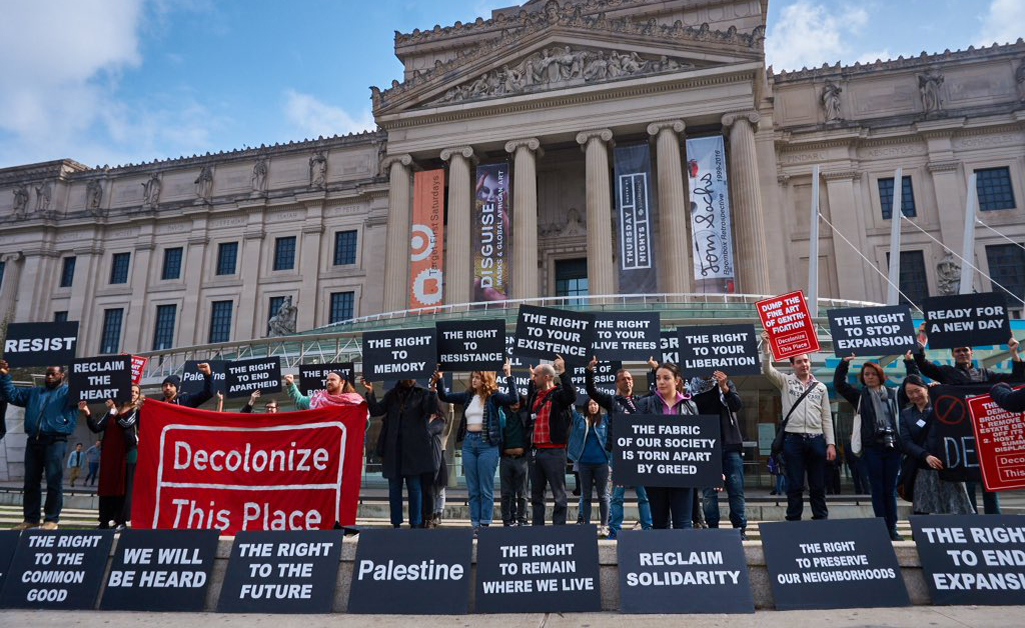
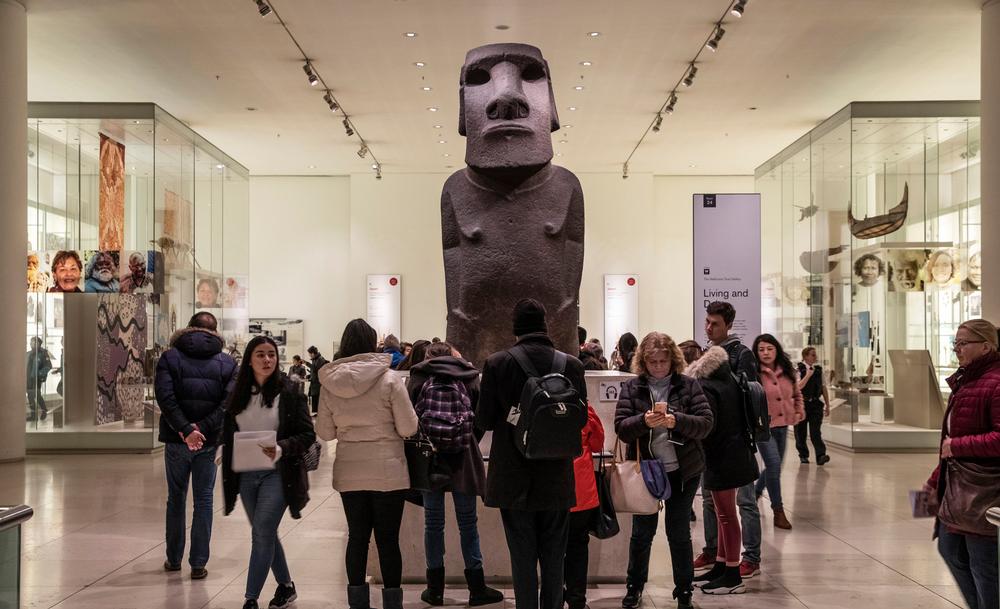
Decolonisation While many museums successfully address the dark side of history, one of the most profound challenges is to address colonisation, which for many older institutions, is the basis of their existence.
“Decolonisation is the long, slow, painful, and imperfect process of undoing damage inflicted by colonial practices that remain deeply embedded in our culture, politics, and economies,” says the report.
“Many museums reflect a Eurocentric view of the world. Many were born directly from colonial practices, serving as trophy rooms of conquest and superiority.
“All museums share a responsibility for helping their country and their society address the legacy of damage.”
To resolve this, museums can actively take part in the return of heritage removed by colonial occupiers – though some argue their collections are for all the people of the world and that they should not have to return these treasures.
This work should also extend, says the report, to examining how museum governance and operations may perpetuate colonial attitudes and power structures – how, for example, are indigenous people given authority and voice in museums that serve their communities, preserve heritage and influence how society sees their culture?
“Museums, in their cultural roles of memory keeper, conscience, and healer, have an obligation to provoke reflection, rethinking, and rebalancing,” says the report. “Museums can help us deal with the dark side of history, not just emotionally and personally, but in a way that helps us build a just and equitable society, despite our legacy of theft and violence.”
Housing insecurity Housing insecurity, a significant social or cultural challenge that’s difficult to solve for multiple reasons, is something that museums should be thinking more about.
“Housing security is both a symptom and a cause of the deepening inequality of wealth, opportunity, and access that characterises the start of the 21st century, and solving these problems will require all actors – government, industry, non-profits, and philanthropy – to rethink their roles and responsibilities,” the report explains, asking how a cultural non-profit can play a bigger role in the area, saying that museums need to serve not just people who have reached the “tip of the pyramid” but “those who are not yet adequately housed, fed, or safe”.
The report suggests that museums find ways to serve families and individuals experiencing this insecurity, by making them feel welcome. By prioritising social inclusion, museums can combat the isolation that often results from homelessness, helping people to build social networks and foster self-worth.
Self-care The final trend identified in the report revolves around museum staff and helpers. In the face of rising stress and stretched resources, it’s more important than ever for individuals and institutions to recognise the need for setting aside time and resources for restorative practice.
CFM points to research by Tech Impact, which indicates that nonprofit workers often feel overstretched and that their productivity drops when the workweek reaches 50 hours or more. Post-recession trends in the form of low pay, long hours and high expectations mean that 30 per cent of the nonprofit workforce is experiencing burnout, with a further 20 per cent at risk.
The impact of this stress can come at a high price for museum employers.
“Turnover of staff results in a loss of knowledge, experience, and institutional memory. It necessitates recruitment, hiring, and training, as well as incurring the hidden costs of work that goes undone while a vacancy is unfilled,” says the report, which suggests talking to employees about what conditions drive stress in their jobs, reviewing policies to identify practices such as working from home and flex time, and creating an annual quality of life survey to benchmark progress in lowering stress.
FORWARD THINKING
Elizabeth Merritt, vice president of strategic foresight and founding director for the Center for the Future of Museums speaks about the report and what it could mean for the culture sector.
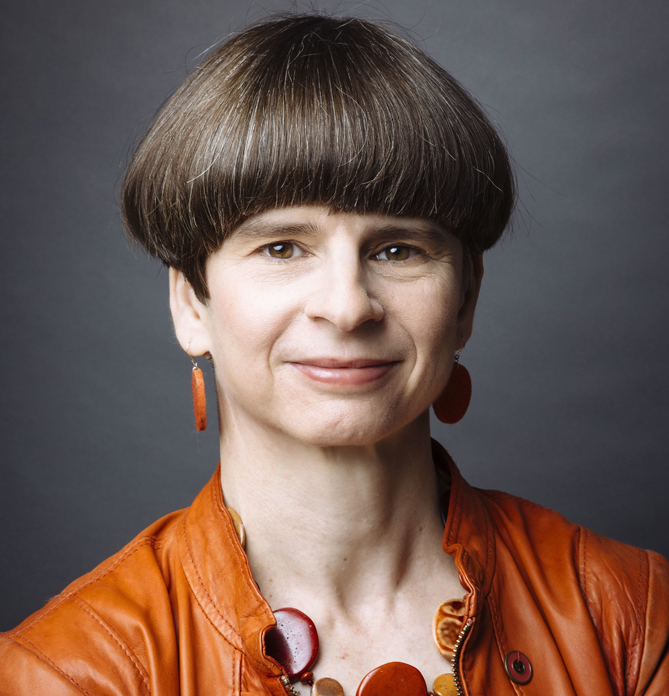
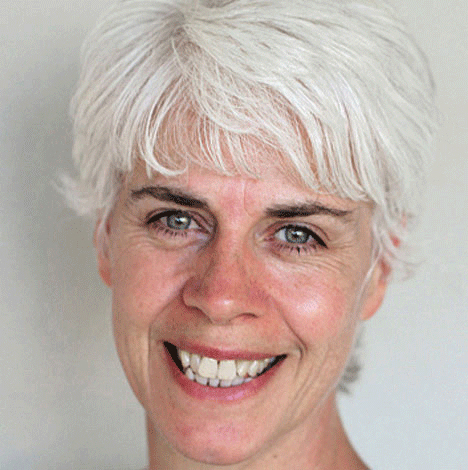
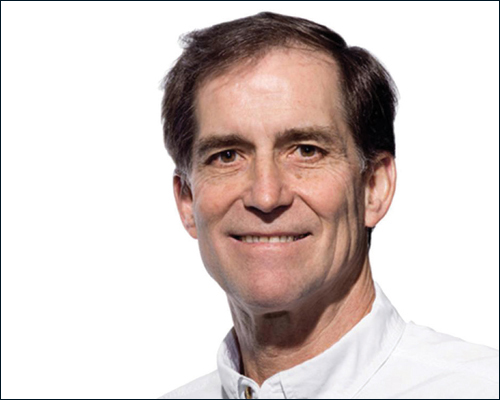
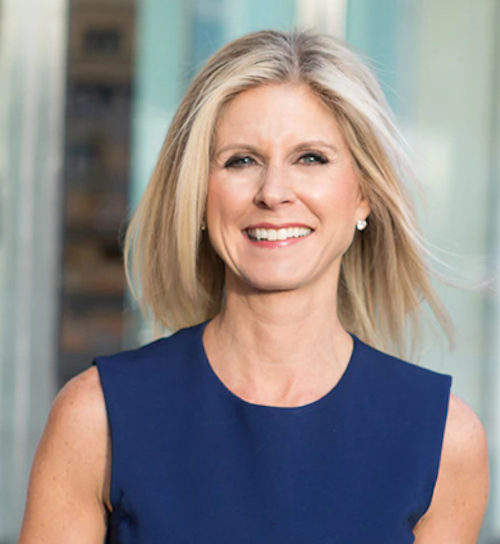
Elizabeth Merritt is the report’s author
How can museums retain trust in an era of fake news?
Trust is rooted in accountability, and museums can foster trust by being transparent about their own operations. Some people are vaguely aware that there are directors and curators in a museum, but most people don’t know who decides what a museum collects, and how it is interpreted. More museums are beginning to abandon the anonymous voice of authority, and to identify whose voice is reflected in the label copy.
If trust has been lost how can it be rebuilt?
If an institution or an individual has lost the public’s trust because they made a mistake, I think the first step is to take full responsibility. If they are simply wrong on a matter of fact, correct it! Don’t say “we’ll fix that when the exhibit is renovated in ten years.” If a museum has acted in a way that damages a community, it can apologise, and ask what it can do to make amends.
How are museums currently viewed in terms of trust?
Museums are one of the most trusted sources of information, in a time when trust in government, journalism, academia and business is in rapid decline. Libraries are highly trusted too. The public recognises the work of museums and libraries is, at heart, helping them learn for themselves.
What applications does blockchain have for museums that haven’t used it yet?
I’m intrigued by the potential applications for blockchain-based smart contracts. A museum could collect micropayments when someone downloads or shares a digital derivation of works from the collection. Or an artist whose work is displayed in a museum might receive fees based on a museum’s visitation numbers.
How will blockchain affect issues such as war relics, colonial-era artefacts and trafficked/stolen property?
If we develop resilient, tamper-proof ways to link artefacts to digital records, that could make it easier for museums and law enforcement to proactively identify stolen material. A global, publicly accessible ledger of artefacts could make it easier to identify stolen or trafficked property.
How do museums confront historic wrongs when it could mean losing parts of their own collections telling this story?
I’d rather not think of it as “losing their collections,” but as “playing a key role in restitution.” It’s important for museums to document and share difficult stories about injustice, but not in a way that itself perpetuates historic wrongs.
"It’s important for museums to document and share difficult stories about injustice, but not in a way that itself perpetuates historic wrongs"
How does a museum, intrinsically colonial at its core, address the issue of colonialism?
Confronting their own past is a good place to start. Any institution, if it survives long enough, accumulates problematic episodes in its history, some more than others. Owning up to that history can be painful and difficult, but it is a first step towards de-colonising the future.
How can a museum better support its indigenous communities?
That’s exactly the question the museum should be asking the indigenous communities it serves. Better yet, go beyond asking for input, and actually share the power to make decisions about how the museum operates. That could be through advisory councils or by recruiting significant indigenous representation to the board of trustees.
What is a museum’s responsibility to its community and homelessness?
I think all museums should be aware of issues that are important to their communities, and in many, many communities in America homelessness and housing insecurity is a significant challenge. What a particular museum can do to help address that issue will depend on its mission, resources and circumstances. Many museums are playing a role in educating the public about the facts of homelessness, fostering awareness and empathy.
How can a museum serve its homeless population?
That would be a very good question for any museum’s board to consider. At the least, any museum can have a thoughtful policy about how to welcome all visitors (including people who might be experiencing homelessness) and make them feel welcome. If a museum has a significant number of people without shelter in their neighbourhood or on their grounds, why not partner with other organisations to help connect these people with essential services?
How can museums keep their workforce happy?
I think that answer is the same for museums as for any other organisation: give people the chance to do meaningful work, as much control over their working environment as possible. Treat employees with respect, recognise them as individuals, and be flexible in creating an environment that supports them in doing their best work.
What’s the best balance for staff in terms of work and life?
I think that is for every one of us to figure out individually – and it will probably change as a person moves through life.
Where are museums succeeding right now?
I think museums collectively are doing a splendid job of questioning the received wisdom about “what a museum does.” The more museums experiment around the edges, the more new ways we discover for museums to become essential assets for their communities.
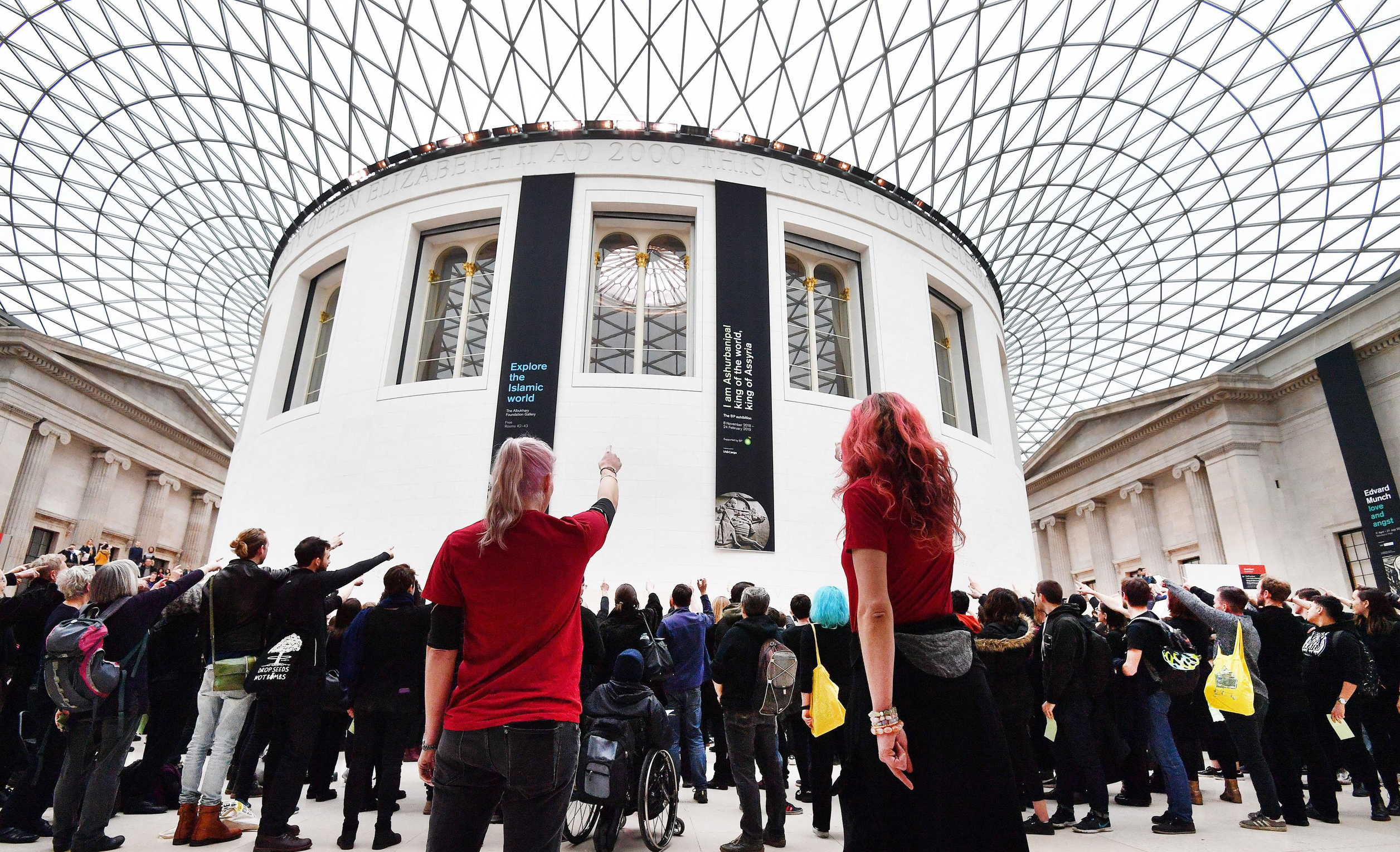
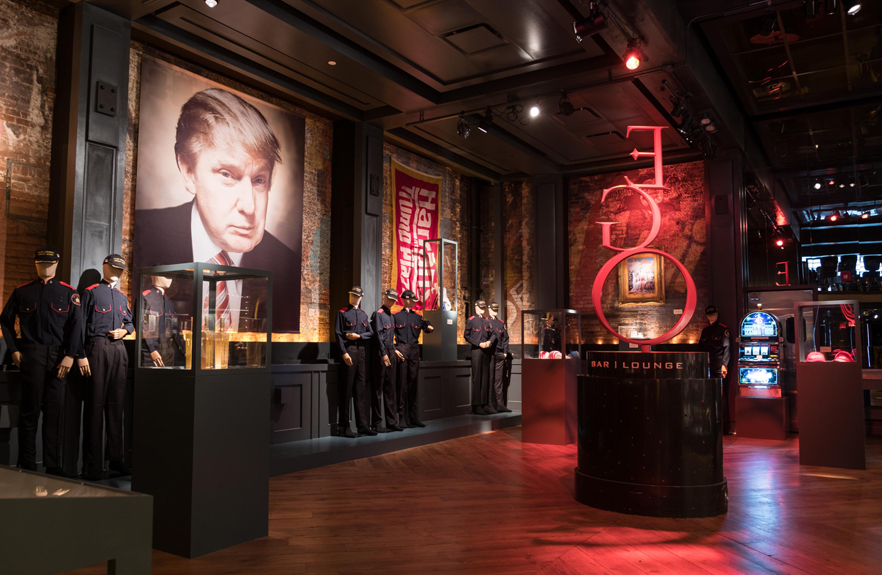
Colonialisation and the rise of fake news are currently hot button topics in the world of museums
Colonialisation and the rise of fake news are currently hot button topics in the world of museums
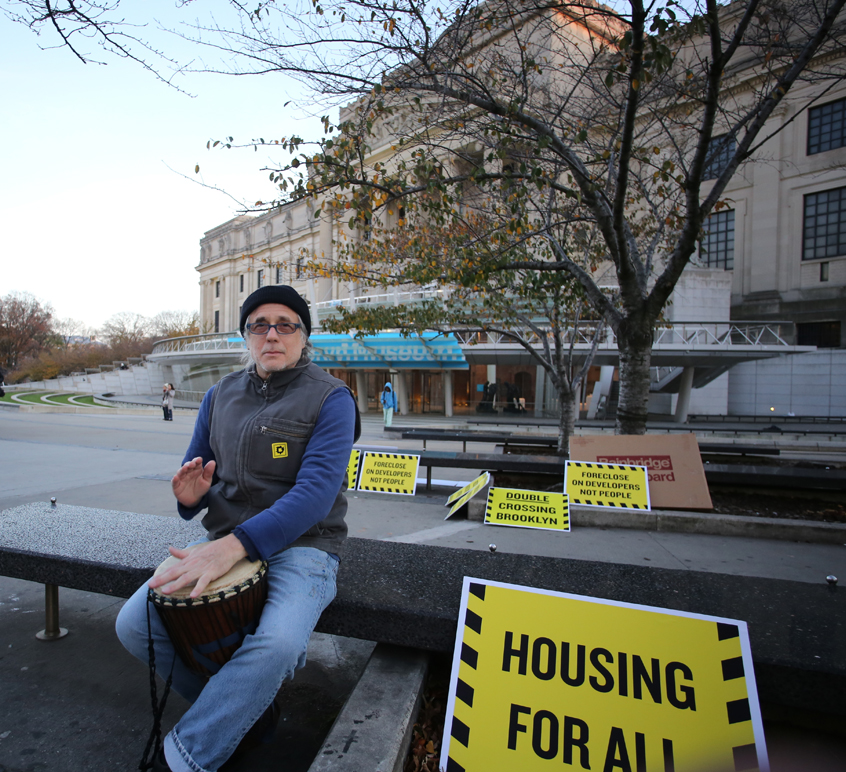
Merrit says museums could do more to serve its homeless population through outreach and programming
Read more from this issue of Spa Business magazine
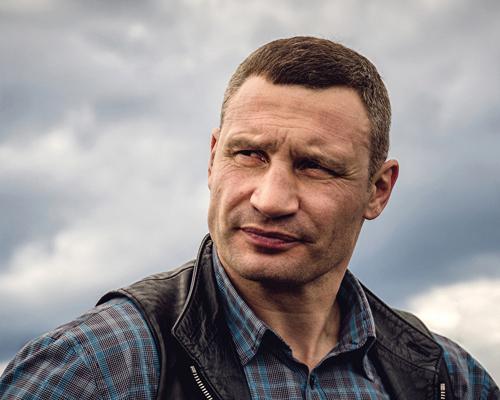
People profile: Vitali Klitschko
With the help of Europa Park, the multi-time boxing champion turned politician dreams up theme park plan for Kyiv, Ukraine
Rides: Art Attack
We look at major ride openings at
visitor attractions across the globe
Top team: Made in China
The birthplace of William
Shakespeare will be recreated at
the home of China’s most famous
playwright. We speak to the team
behind the ambitious project
Promotional feature: Animalive - Lights, camera, action!
Animalive is a premier manufacturer of interactive animation products.
Its founder, Ali Kord, explains how its recent joint venture will
take the company’s award-winning products to the next level
Museums: Day out at the museum
The Network of European Museum
Organisations has launched a Political
Internships scheme. We speak to
the programme’s creator about what
this could mean for museums
Promotional feature: Red Raion - Building a new IP
Red Raion, the CGI studio specialised in media based attractions, has
collaborated with Unlimited Leisure Holdings to create a new 4D movie, which
will be presented at Unlimited Snow’s newest park
Show report: Global Appeal
TEA Summit and SATE Europe
Christine Kerr reports from the TEA’s
Summit, Thea Awards and SATE Europe
Interview: Pure Imagication
Adlabs Imagica is India’s largest
theme park destination. Its joint
CEO speaks to Kath Hudson
Le Atelier by C.O.D.E. doesn't offer a standard bespoke service, it provides a highly
customised approach to designing massage beds and loungers in high-end wellness
environments. [more...]
+ More featured suppliers
COMPANY PROFILES
Hydrafacial
Founded in 1997, Hydrafacial has grown to become one of the world’s leading skin health brands. [more...]
The TrendsWatch 2019 Report from the American Alliance of Museums
(AAM) and the Center for the Future of Museums (CFM), explores
important cultural,technological, economic, environmental, and policy
events, identifying the major trends that will shape the way museums
worldwide will handle affairs, do business and engage visitors
Trust in government, media, academia, industry, and even nonprofit organisations are at an all-time low, according to the latest edition of TrendsWatch – an annual report on the future of museums.
Compiled by CFM’s vice president of strategic foresight and founding director, Elizabeth Merritt, “Truth, Trust and Fake News” is one of five major trends identified in the eighth edition of the report.
With declines in trust, it questions how nonprofits in general, and museums in particular, can remain among the most trusted sources of information, asking how museums, which are rated as extremely trustworthy by the general public, can build on this trust. It also asks how they can help society re-establish a framework for telling fact from fiction.
Blockchain The way in which blockchain will transform multiple types of transactions is the second trend identified.
Blockchain, in its simplest form, is a set records, linked using cryptography, to create a list of physical or digital transactions between two parties in a verifiable and permanent way.
The technology has been around for more than a decade, but in the past year, there has been huge growth in its experimental applications, including refugee aid, educational credentialing, land registries and provenance tracking.
Because blockchain has such wide-reaching potential for every sector, it means that museum leaders must understand what the technology is and how it’s likely to impact their communities.
“Museums are all about keeping secure, immutable records of transactions about collections,” says the report. “In past centuries, these records were kept in paper ledgers and more recently on in-house databases. The distributed nature of blockchain ledgers could make this data less vulnerable to loss or degradation.”
It also suggests that using blockchain means museums can be transparent about the history of their collections, enabling anyone to access data by use of a public key. This will help to support claims from indigenous communities, identify the lineage of Nazi-era assets and better help repatriation of artefacts.
Decolonisation While many museums successfully address the dark side of history, one of the most profound challenges is to address colonisation, which for many older institutions, is the basis of their existence.
“Decolonisation is the long, slow, painful, and imperfect process of undoing damage inflicted by colonial practices that remain deeply embedded in our culture, politics, and economies,” says the report.
“Many museums reflect a Eurocentric view of the world. Many were born directly from colonial practices, serving as trophy rooms of conquest and superiority.
“All museums share a responsibility for helping their country and their society address the legacy of damage.”
To resolve this, museums can actively take part in the return of heritage removed by colonial occupiers – though some argue their collections are for all the people of the world and that they should not have to return these treasures.
This work should also extend, says the report, to examining how museum governance and operations may perpetuate colonial attitudes and power structures – how, for example, are indigenous people given authority and voice in museums that serve their communities, preserve heritage and influence how society sees their culture?
“Museums, in their cultural roles of memory keeper, conscience, and healer, have an obligation to provoke reflection, rethinking, and rebalancing,” says the report. “Museums can help us deal with the dark side of history, not just emotionally and personally, but in a way that helps us build a just and equitable society, despite our legacy of theft and violence.”
Housing insecurity Housing insecurity, a significant social or cultural challenge that’s difficult to solve for multiple reasons, is something that museums should be thinking more about.
“Housing security is both a symptom and a cause of the deepening inequality of wealth, opportunity, and access that characterises the start of the 21st century, and solving these problems will require all actors – government, industry, non-profits, and philanthropy – to rethink their roles and responsibilities,” the report explains, asking how a cultural non-profit can play a bigger role in the area, saying that museums need to serve not just people who have reached the “tip of the pyramid” but “those who are not yet adequately housed, fed, or safe”.
The report suggests that museums find ways to serve families and individuals experiencing this insecurity, by making them feel welcome. By prioritising social inclusion, museums can combat the isolation that often results from homelessness, helping people to build social networks and foster self-worth.
Self-care The final trend identified in the report revolves around museum staff and helpers. In the face of rising stress and stretched resources, it’s more important than ever for individuals and institutions to recognise the need for setting aside time and resources for restorative practice.
CFM points to research by Tech Impact, which indicates that nonprofit workers often feel overstretched and that their productivity drops when the workweek reaches 50 hours or more. Post-recession trends in the form of low pay, long hours and high expectations mean that 30 per cent of the nonprofit workforce is experiencing burnout, with a further 20 per cent at risk.
The impact of this stress can come at a high price for museum employers.
“Turnover of staff results in a loss of knowledge, experience, and institutional memory. It necessitates recruitment, hiring, and training, as well as incurring the hidden costs of work that goes undone while a vacancy is unfilled,” says the report, which suggests talking to employees about what conditions drive stress in their jobs, reviewing policies to identify practices such as working from home and flex time, and creating an annual quality of life survey to benchmark progress in lowering stress.
FORWARD THINKING
Elizabeth Merritt, vice president of strategic foresight and founding director for the Center for the Future of Museums speaks about the report and what it could mean for the culture sector.
Elizabeth Merritt is the report’s author
How can museums retain trust in an era of fake news?
Trust is rooted in accountability, and museums can foster trust by being transparent about their own operations. Some people are vaguely aware that there are directors and curators in a museum, but most people don’t know who decides what a museum collects, and how it is interpreted. More museums are beginning to abandon the anonymous voice of authority, and to identify whose voice is reflected in the label copy.
If trust has been lost how can it be rebuilt?
If an institution or an individual has lost the public’s trust because they made a mistake, I think the first step is to take full responsibility. If they are simply wrong on a matter of fact, correct it! Don’t say “we’ll fix that when the exhibit is renovated in ten years.” If a museum has acted in a way that damages a community, it can apologise, and ask what it can do to make amends.
How are museums currently viewed in terms of trust?
Museums are one of the most trusted sources of information, in a time when trust in government, journalism, academia and business is in rapid decline. Libraries are highly trusted too. The public recognises the work of museums and libraries is, at heart, helping them learn for themselves.
What applications does blockchain have for museums that haven’t used it yet?
I’m intrigued by the potential applications for blockchain-based smart contracts. A museum could collect micropayments when someone downloads or shares a digital derivation of works from the collection. Or an artist whose work is displayed in a museum might receive fees based on a museum’s visitation numbers.
How will blockchain affect issues such as war relics, colonial-era artefacts and trafficked/stolen property?
If we develop resilient, tamper-proof ways to link artefacts to digital records, that could make it easier for museums and law enforcement to proactively identify stolen material. A global, publicly accessible ledger of artefacts could make it easier to identify stolen or trafficked property.
How do museums confront historic wrongs when it could mean losing parts of their own collections telling this story?
I’d rather not think of it as “losing their collections,” but as “playing a key role in restitution.” It’s important for museums to document and share difficult stories about injustice, but not in a way that itself perpetuates historic wrongs.
"It’s important for museums to document and share difficult stories about injustice, but not in a way that itself perpetuates historic wrongs"
How does a museum, intrinsically colonial at its core, address the issue of colonialism?
Confronting their own past is a good place to start. Any institution, if it survives long enough, accumulates problematic episodes in its history, some more than others. Owning up to that history can be painful and difficult, but it is a first step towards de-colonising the future.
How can a museum better support its indigenous communities?
That’s exactly the question the museum should be asking the indigenous communities it serves. Better yet, go beyond asking for input, and actually share the power to make decisions about how the museum operates. That could be through advisory councils or by recruiting significant indigenous representation to the board of trustees.
What is a museum’s responsibility to its community and homelessness?
I think all museums should be aware of issues that are important to their communities, and in many, many communities in America homelessness and housing insecurity is a significant challenge. What a particular museum can do to help address that issue will depend on its mission, resources and circumstances. Many museums are playing a role in educating the public about the facts of homelessness, fostering awareness and empathy.
How can a museum serve its homeless population?
That would be a very good question for any museum’s board to consider. At the least, any museum can have a thoughtful policy about how to welcome all visitors (including people who might be experiencing homelessness) and make them feel welcome. If a museum has a significant number of people without shelter in their neighbourhood or on their grounds, why not partner with other organisations to help connect these people with essential services?
How can museums keep their workforce happy?
I think that answer is the same for museums as for any other organisation: give people the chance to do meaningful work, as much control over their working environment as possible. Treat employees with respect, recognise them as individuals, and be flexible in creating an environment that supports them in doing their best work.
What’s the best balance for staff in terms of work and life?
I think that is for every one of us to figure out individually – and it will probably change as a person moves through life.
Where are museums succeeding right now?
I think museums collectively are doing a splendid job of questioning the received wisdom about “what a museum does.” The more museums experiment around the edges, the more new ways we discover for museums to become essential assets for their communities.
Colonialisation and the rise of fake news are currently hot button topics in the world of museums
Colonialisation and the rise of fake news are currently hot button topics in the world of museums
Merrit says museums could do more to serve its homeless population through outreach and programming
Read more from this issue of Spa Business magazine
People profile: Vitali Klitschko
With the help of Europa Park, the multi-time boxing champion turned politician dreams up theme park plan for Kyiv, Ukraine
Rides: Art Attack
We look at major ride openings at
visitor attractions across the globe
Top team: Made in China
The birthplace of William
Shakespeare will be recreated at
the home of China’s most famous
playwright. We speak to the team
behind the ambitious project
Promotional feature: Animalive - Lights, camera, action!
Animalive is a premier manufacturer of interactive animation products.
Its founder, Ali Kord, explains how its recent joint venture will
take the company’s award-winning products to the next level
Museums: Day out at the museum
The Network of European Museum
Organisations has launched a Political
Internships scheme. We speak to
the programme’s creator about what
this could mean for museums
Promotional feature: Red Raion - Building a new IP
Red Raion, the CGI studio specialised in media based attractions, has
collaborated with Unlimited Leisure Holdings to create a new 4D movie, which
will be presented at Unlimited Snow’s newest park
Show report: Global Appeal
TEA Summit and SATE Europe
Christine Kerr reports from the TEA’s
Summit, Thea Awards and SATE Europe
Interview: Pure Imagication
Adlabs Imagica is India’s largest
theme park destination. Its joint
CEO speaks to Kath Hudson
A recent survey by the UK Spa Association (UKSA) into the industry’s approach to cancer care
has revealed that almost half of participating respondents (46 per cent) are unaware that
cancer is a disability and guests with a cancer diagnosis must be given
Mexican operator, Solmar Hotels and Resorts, is hosting a series of events in celebration of
Global Wellness Day, including a Temazcal ceremony at its Playa Grande Resort and Spa in Los
Cabos.
Mandarin Oriental has announced a standalone residence brand, Mansions, which will debut at
Emirates Palace, Mandarin Oriental Mansions, Abu Dhabi, in 2029.
Four Seasons Resort The Nam Hai in Hoi An, Vietnam, has put together a Global Wellness Day
(GWD) agenda with activations rooted in nature and shaped by four pillars of Joy – in
alignment with the day’s theme #JoyMagenta.
The Global Wellness Summit (GWS) will celebrate its 20th anniversary at the 2026 event in
Phuket, Thailand, later this year with the theme: The Science, Art and Soul of Wellness.
Auko, an all-inclusive development, is opening in Phong Nha in Vietnam in Q3 2026, with a
series of 30 tented eco-lodges and wellness hospitality operations by Lumina Wellbeing.
Therme Manchester’s 28-acre development, which will include interconnected glass pavilions
that measure 65,000sq m, will be the largest bathing and wellbeing attraction in the world once
complete, according to prof David Russell, CEO of Therme UK.
Naples Beach Club, a Four Seasons Resort, has opened a 2,800sq m spa called The Sanctuary,
with the design and concept inspired by the Native American people that populated Florida’s
Southwest coast – the Calusa.
Swire Hotels’ luxury hospitality brand Upper House has revealed it will roll out its two-day
House of Healing retreats at its three hotels in Hong Kong, Chengdu and Shanghai.
Le Atelier by C.O.D.E. doesn't offer a standard bespoke service, it provides a highly
customised approach to designing massage beds and loungers in high-end wellness
environments. [more...]
+ More featured suppliers
COMPANY PROFILES
Hydrafacial Founded in 1997, Hydrafacial has grown to become one of the world’s leading skin health brands. [more...]