Latest
issue
GET SPA BUSINESS
magazine
Yes! Send me the FREE digital editions of Spa Business and Spa Business insider magazines and the FREE weekly Spa Business and Spa Business insider ezines and breaking news alerts!
Not right now, thanksclose this window I've already subscribed.
Uniting the world of spa & wellness
Get Spa Business and Spa Business insider digital magazines FREE
Sign up here ▸
News   Features   Products   Company profilesProfiles   Press releasesProfiles   Magazine   Handbook   Advertise    Subscribe  
NEWS
Brain could be retrained to favour healthier, low-calorie foods: study
POSTED 05 Sep 2014 . BY Chris Dodd
Researchers have called for further investigation following the small-scale study Credit: Shutterstock.com/v.schlichting
The brain could potentially be retrained to prefer healthy foods, helping people with weight loss and healthy eating plans, according to a small-scale pilot study published in the journal Nutrition & Diabetes.

Conducted by researchers at the Harvard Medical School and other research centres in the US, the study observed how the brain’s reward system responds to healthy and unhealthy food.

The research looked at a part of our brain that seemingly gives us rewards by releasing chemicals such as dopamine in anticipation of our consumption of food.

For the study, scientists followed 13 healthy but overweight obese men and women, who were part of a randomised trial of a novel weight-loss intervention over a six-month period.

This saw them randomly separated into groups, with one set taking part in a workplace diet known as the iDiet, while the others were told to take no dieting steps at all.

The scientists also sought to give MRI scans to each participant at the start and the end of the six months to see how the reward section of their brains reacted to dietary and food intake measures.

It was found that of those who followed the iDiet, which sought to educate and allow people to reduce calorie intake and eat healthier foods, the participants not only lost weight, but the part of their brain that gave rewards was more active when they were shown low-calorie foods.

The part of the brain, known as the striatum, also demonstrated less of a response when shown high-calorie foods after the six-month period.

When compared with the control group which didn’t partake in the diet, the participants on the iDiet also showed a greater increase in desire to consume the low-calorie foods and a greater reduction in desire to consume high-calorie food items.

Given that the research was conducted with an extremely small group, the scientists behind it have concluded that their findings require more investigation into the relationship of how the reward system relates to food.

Going forward, they have recommended that the striatum area of the brain should be explored for its ability to potentially impact on the effectiveness of behavioural weight loss interventions.

Other pieces of recent research have alluded to how the brain can be controlled to benefit our health, with one such study potentially unlocking the part of the brain linked to exercise motivation.

RELATED STORIES
  Aerobic exercise could help to maintain self-control and prevent junk food cravings: study


Running and other forms of aerobic exercise could help people to maintain self- control and prevent cravings for junk food, according to research published in the journal Psychosomatic Medicine.
MORE NEWS
Robert Thurman: a life dedicated to enlightenment
Robert Thurman, an expert on Tibetan Buddhism and the spiritual director of Menla Retreat and Dewa Spa in Woodstock, has died, aged 84.
BBSpa Group to launch holistic bathhouse Atera in Glasgow
International spa, wellness and longevity consultancy, BBSpa, will launch a new bathhouse called Atera in Glasgow, Scotland, in September.
Ananda in the Himalayas publishes Ayurvedic cookbook
Ananda in the Himalayas, India, has published its first cookbook, built on the wellness retreat’s 25 years of Ayurvedic cuisine expertise.
Minor Hotels appoints Aditya Saluja as commercial director for MSpa International
Aditya Saluja, an industry leader in luxury wellness hospitality, has been appointed as commercial director of spa and wellness for the spa management division of Minor Hotels, MSpa International.
+ More news   

FEATURED SUPPLIERS

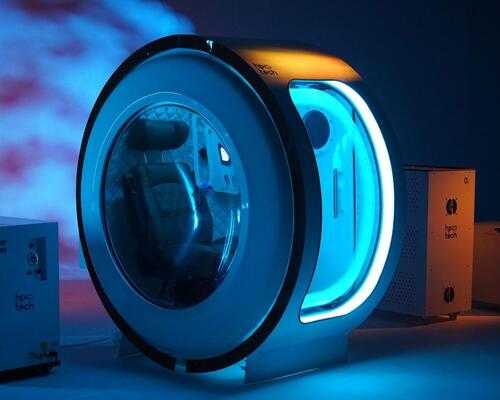
HPO Tech brings design-led hyperbaric systems to the spa floor
Hyperbaric oxygen therapy has moved well beyond the clinic and spa operators represent the fastest-growing market for the technology. [more...]

Elemis launches its first Red Light Mask, lighting the way to advanced skin health and restoration
Elemis has branched into LED skincare with the launch of its breakthrough Red Light Mask. [more...]
+ More featured suppliers  
COMPANY PROFILES
TAC | The Assistant Company

Founded in 2001, TAC is an owner-managed company with more than 110 employees and four locations: in [more...]
RKF Luxury Linen

RKF Luxury Linen, established in the East of France for several decades, owns an artisanal know-how [more...]
+ More profiles  
CATALOGUE GALLERY
 

+ More catalogues  

DIRECTORY
+ More directory  
DIARY


23-26 Aug 2026

Elevate Spa Riviera Maya Edition

The Riviera Maya Edition Kanai, Playa del Carmen, Mexico
10-12 Sep 2026

ASEAN Patio Pool Spa Expo 2026

MITEC Kuala Lumpur,Malaysia, Malaysia
+ More diary  
 
ABOUT LEISURE MEDIA
LEISURE MEDIA MAGAZINES
LEISURE MEDIA HANDBOOKS
LEISURE MEDIA WEBSITES
LEISURE MEDIA PRODUCT SEARCH
 
SPA BUSINESS
SPA OPPORTUNITIES
SPA BUSINESS HANDBOOK
PRINT SUBSCRIPTIONS
FREE DIGITAL SUBSCRIPTIONS
ADVERTISE . CONTACT US

Leisure Media
Tel: +44 (0)1462 431385

©Cybertrek 2026
Uniting the world of spa & wellness
Get Spa Business and Spa Business insider digital magazines FREE
Sign up here ▸
News   Products   Magazine   Subscribe
NEWS
Brain could be retrained to favour healthier, low-calorie foods: study
POSTED 05 Sep 2014 . BY Chris Dodd
Researchers have called for further investigation following the small-scale study Credit: Shutterstock.com/v.schlichting
The brain could potentially be retrained to prefer healthy foods, helping people with weight loss and healthy eating plans, according to a small-scale pilot study published in the journal Nutrition & Diabetes.

Conducted by researchers at the Harvard Medical School and other research centres in the US, the study observed how the brain’s reward system responds to healthy and unhealthy food.

The research looked at a part of our brain that seemingly gives us rewards by releasing chemicals such as dopamine in anticipation of our consumption of food.

For the study, scientists followed 13 healthy but overweight obese men and women, who were part of a randomised trial of a novel weight-loss intervention over a six-month period.

This saw them randomly separated into groups, with one set taking part in a workplace diet known as the iDiet, while the others were told to take no dieting steps at all.

The scientists also sought to give MRI scans to each participant at the start and the end of the six months to see how the reward section of their brains reacted to dietary and food intake measures.

It was found that of those who followed the iDiet, which sought to educate and allow people to reduce calorie intake and eat healthier foods, the participants not only lost weight, but the part of their brain that gave rewards was more active when they were shown low-calorie foods.

The part of the brain, known as the striatum, also demonstrated less of a response when shown high-calorie foods after the six-month period.

When compared with the control group which didn’t partake in the diet, the participants on the iDiet also showed a greater increase in desire to consume the low-calorie foods and a greater reduction in desire to consume high-calorie food items.

Given that the research was conducted with an extremely small group, the scientists behind it have concluded that their findings require more investigation into the relationship of how the reward system relates to food.

Going forward, they have recommended that the striatum area of the brain should be explored for its ability to potentially impact on the effectiveness of behavioural weight loss interventions.

Other pieces of recent research have alluded to how the brain can be controlled to benefit our health, with one such study potentially unlocking the part of the brain linked to exercise motivation.

RELATED STORIES
Aerobic exercise could help to maintain self-control and prevent junk food cravings: study


Running and other forms of aerobic exercise could help people to maintain self- control and prevent cravings for junk food, according to research published in the journal Psychosomatic Medicine.
MORE NEWS
Robert Thurman: a life dedicated to enlightenment
Robert Thurman, an expert on Tibetan Buddhism and the spiritual director of Menla Retreat and Dewa Spa in Woodstock, has died, aged 84.
BBSpa Group to launch holistic bathhouse Atera in Glasgow
International spa, wellness and longevity consultancy, BBSpa, will launch a new bathhouse called Atera in Glasgow, Scotland, in September.
Ananda in the Himalayas publishes Ayurvedic cookbook
Ananda in the Himalayas, India, has published its first cookbook, built on the wellness retreat’s 25 years of Ayurvedic cuisine expertise.
Minor Hotels appoints Aditya Saluja as commercial director for MSpa International
Aditya Saluja, an industry leader in luxury wellness hospitality, has been appointed as commercial director of spa and wellness for the spa management division of Minor Hotels, MSpa International.
Preidlhof Luxury DolceVita Resort to unveil new spa in February 2027
Preidlhof Luxury DolceVita Resort, a destination resort and spa in Naturno, South Tyrol in Italy, will reveal a new spa in February 2027, which has been designed by wellness expert and consultant Patrizia Bortolin.

ISPA launches on-demand customer experience course by Dan Gingiss
The International Spa Association (ISPA) has launched a course by customer experience expert Dan Gingiss on its iLearn platform.
+ More news   
 
FEATURED SUPPLIERS

HPO Tech brings design-led hyperbaric systems to the spa floor
Hyperbaric oxygen therapy has moved well beyond the clinic and spa operators represent the fastest-growing market for the technology. [more...]

Elemis launches its first Red Light Mask, lighting the way to advanced skin health and restoration
Elemis has branched into LED skincare with the launch of its breakthrough Red Light Mask. [more...]
+ More featured suppliers  
COMPANY PROFILES
TAC | The Assistant Company

Founded in 2001, TAC is an owner-managed company with more than 110 employees and four locations: in [more...]
+ More profiles  
CATALOGUE GALLERY
+ More catalogues  

DIRECTORY
+ More directory  
DIARY


23-26 Aug 2026

Elevate Spa Riviera Maya Edition

The Riviera Maya Edition Kanai, Playa del Carmen, Mexico
10-12 Sep 2026

ASEAN Patio Pool Spa Expo 2026

MITEC Kuala Lumpur,Malaysia, Malaysia
+ More diary  


ADVERTISE . CONTACT US

Leisure Media
Tel: +44 (0)1462 431385

©Cybertrek 2026

ABOUT LEISURE MEDIA
LEISURE MEDIA MAGAZINES
LEISURE MEDIA HANDBOOKS
LEISURE MEDIA WEBSITES
LEISURE MEDIA PRODUCT SEARCH
PRINT SUBSCRIPTIONS
FREE DIGITAL SUBSCRIPTIONS