Yes! Send me the FREE digital editions of Spa Business and Spa Business insider magazines and the FREE weekly Spa Business and Spa Business insider ezines and breaking news alerts!
The global CEO of Virgin Active tells Liz Terry about how he’s
transforming the gym business into a social wellness brand
with 230 sites in nine countries and more than 1 million members
Kowarski has a background in investment banking / photo: VIRGIN ACTIVE
In 2022, Virgin Active merged with The Real Foods Group in a ZAR581 million (US$32 million, €30.3 million, £25.3 million) deal. The move combined Virgin’s fitness business with Real Foods’ nutrition assets, including the Kauai and Nu Health Café brands.
Dean Kowarski, the founder of Real Foods, became the CEO of the new company. Kowarski, who’s built his career in both corporate finance and operational roles worldwide, has spent the last two years re-engineering the gym business, steering it into the wellness realm with a high-value offering.
Today, there are 230 Virgin Active clubs in nine countries – in major cities from Sydney and Bangkok to Rome and London. In addition, there are 238 Kauai Juice outlets in service stations, shopping centres, offices and Virgin Active clubs and Nu Health Cafés on high streets and flagship Virgin Active Collection sites. Between the two entities, they boast 1.2 million members and serve 50,000 smoothies and meals a day.
The ever-innovative Kowarski talks to Spa Business’ Liz Terry about his personal route into wellness and plans for market disruption.
How did it all start for you? I’m incredibly passionate about wellness. It resonates very powerfully with me and has made a huge difference in my life.
I come from an investment banking background – an accountant by qualification. I worked at KPMG and then in New York in corporate finance and while working there I was eating unhealthily and not exercising and eventually, although my career was going well, I got Crohn’s disease, which I believe was caused by stress.
Doctors wanted to operate, but instead of going down that road, I changed my diet, began exercising again and eventually, I was able to take myself off all medication and totally recovered.
I’m the kind of person who has to see, touch and feel things to believe them and having gone on that journey, I understood the power of nutrition and exercise and how it can change lives.
How has that shaped your life? I was fortunate in my financial businesses and out of pure passion opened a little healthy food restaurant about 12 years ago in my home country of South Africa, so I had a place to go and eat.
At the time, in the fast-casual food space in South Africa, there were burger, chicken and pizza brands, but nothing healthy. We started opening restaurants, then bought a health food group and expanded that to include 238 stores globally under the Kauai and Nu brands.
However, the major foundations of wellness for me are health and fitness as well as nutrition and that’s when the Virgin Active business came onto my radar.
So you made a deal? Yes. We merged and now Virgin Active and the two food brands are absolutely aligned – commercially, financially and philosophically.
You integrated them very quickly… The food business is 100 per cent owned by Virgin Active. I sit across both and they have the same objective – an obsession with empowering people to change their lives.
The old Virgin Active structure was very territorial. We had businesses around the world that hardly spoke to each other, never mind aligning food with fitness. There was no sharing of best practice and a huge duplication of costs.
We’ve totally rebuilt the company, overhauling structures, simplifying head office and reorganising the territories. We’ve appointed a new group CTO, group CMO, group COO, head of legal and chief of customer value and created a raft of other positions. They sit in different countries, but work across the business.
What’s the impact of these changes? The new centralised structure gives us the ability to expand fast. We can go into new markets just by launching flagship clubs without needing to set up a head office in that country or opening multiple sites to sustain that overhead.
What’s the plan for growth? We’re looking at territories beyond our existing footprint – Qatar will be the first in collaboration with a local partner.
Our goal is to have flagship premium clubs in major cities. We see Europe as one ‘country’ and we think there are between 28 and 32 cities for expansion.
We aim to build out our global operations everywhere but the US and then look for a merger with a major US player to complete the portfolio.
How are you repositioning Virgin Active? We no longer see ourselves as a gym business. Today, we see ourselves as a global wellness brand and those two words, global and wellness, are key to how we’ve evolved and changed.
We’re clear on our position in the market. We play in the premium space and our new-builds are more like five-star hotels. We see ourselves as wellness clubs and this is our priority with future openings and upgrades.
We have everything a gym offers and have spent a lot of time redeveloping our gym-floor concept, adding more free weights and strength and plate-loaded equipment. Most of our programmes are bespoke – from yoga to boxing to strength & conditioning and cycling. We also have in excess of 2,000 reformer pilates beds and 260 pools across our estate and are currently rolling out padel and pickleball courts.
However, we’re way more than that. The deal with Real Foods means we now find Kauai and Nu brands in all clubs. This isn’t just a gym business doing food; it’s an experienced food business with an incredible amount of knowledge, fantastic product, innovation, two menu releases a year and people constantly checking the quality.
Where do spas fit? They’re integral to our positioning as a premium lifestyle provider and differentiating us from standard gyms.
Typical facilities include hydrotherapy pools and heat experiences to support recovery, relaxation and overall wellbeing. We also have sound bath and mindfulness sessions. Hands-on services such as physiotherapy, biokinetics and massage are available in some properties, but the core strategy is to offer self-guided options for scalability.
Contrast therapy is becoming popular so we’re adding in quite a few cold plunges, as well as new technologies such as infrared saunas, cryotherapy, light therapy and specialised heated slabs for stretching and relaxation.
We’re also rolling out dedicated recovery zones offering compression and massage technology to decrease inflammation, improve muscle elasticity and treat/prevent injuries.
What’s your ‘second space’ approach? You’ve heard of the term ‘third space’, well, this is what we’re not. We see ourselves as a ‘second space’. We’re purposefully creating social wellness areas with restaurants and a big work component offering co-working spaces and the ability to book board rooms. There are also lounges to encourage people to engage, socialise and get to know new people, not just their own community.
Where we’ve got the mix right, we see a very different behaviour from that of a typical gym, where there’s a morning peak, a lunchtime peak and an evening peak. These are all-day spaces where you can do multiple things outside the home between 8am and 5pm. People may train in the morning, but they don’t leave – they have their breakfast, do some work, have meetings, they meet friends and socialise.
What’s the rationale behind this? The World Health Organization has said that loneliness is one of the most significant global health concerns and it exceeds the risk associated with obesity. The US surgeon general has warned that the heightened risk of mortality from loneliness equals that of smoking 15 cigarettes a day or being an alcoholic.
What we’ve also seen post-COVID-19 is people looking for real-life experiences. We’re in a digital age and I see it with my teenage daughters living on their phones. But we see people looking for more than that, wanting to go to places where they feel they belong for real.
Younger generations are looking for non-toxic spaces to come together and connect with like-minded people – whether that’s with their tribes from yoga and reformer pilates or members of staff. They’re tired of going to bars and clubs where the relationships they form are shallow. Midlifers and older people are looking for ways to be more active and be part of a community and, ultimately, to live longer. But not only live longer but live better.
What’s the commercial value of a social wellness club? Ultimately, it’s around engagement and usage and how you keep members for life.
I don’t come from the gym industry, so I was shocked to find that even though it’s subscription-based, it’s like a leaky bucket and can have up to 40-50 per cent churn each year – even if operators are selling, selling, selling, it just flows out of the bucket.
This approach makes no sense and doesn’t work for anyone and we’re moving to a better business model. I remember my parents joined a country club and felt part of a community and that’s the environment we want to create.
There’s been a very significant impact on churn in the facilities where we now have a strong food offering and work and social spaces. People join and they don’t want to leave. It makes sense to expand this model, as it delivers results a gym business alone can’t.
Tell us about the Virgin Active app and rewards programme. Since the merger, we’ve launched this in South Africa and the UK and Italy will be next.
Around 72 per cent of our members are on the Virgin Active app and it’s based on rewarding wellness behaviours. Use the club twice a week and on your second visit, you get a free smoothie and those goals are dynamic, visit three times a week and you’ll get something like a PT session or different classes.
More than just rewarding good behaviour, however, it’s about engagement. The longer we get members to interact with us, the bigger share of wallet we get and we see a big reduction in churn.
In addition to this, we get incredibly rich data. There’s obviously the first-party data – which clubs members train at, at what time of day, what classes they book and how long they stay. But we’re also getting zero-party data, giving us insights into why they come to our gyms, what their goals are and which instructors they like.
When we pull all of this information together, we can understand our members better, provide more tailored, personal solutions and create strong, emotional connections.
What’s your take on how consumers view wellness as a sector? There are many obstacles when it comes to people exercising or eating healthily. Some financial. Some around accessibility or education or just life getting in the way.
Unfortunately, it can also be very intimidating. Consumers are bombarded with information about what wellness means and some of this is a load of BS and some is just self-serving, so they don’t know what to believe and don’t engage.
We’ve got to simplify wellness and make it more accessible. That’s the journey our businesses are on. We’re always asking ourselves how we can make our services approachable, simple and meaningful.
What are your long-term plans – will you list or go for a trade sale? It’s too soon to say. We want to show we’ve got a model where churn is at Netflix-type levels. If we can show the investment community we’ve changed the typical gym model and adopted a more hospitality-focused model that’s much more sticky, we believe we’ll get the valuations we’re looking for.
You could hear a pin drop at
the inaugural HCM Summit as Dean Kowarski, global CEO of Virgin Active, told health, fitness and wellness leaders from around the world about his plans for the company.
The stellar event was hosted by HCM and Spa Business magazines in October.
Interview: Dean Kowarski
Virgin Active is transforming its gym business with 230 sites and 1.2 million members into a social wellness brand. The CEO reveals more details to Liz Terry
First person: Steamy situation
Cassandra Cavanah is moved to tears (and also a little nervous) as she joins hundreds of near-naked heat enthusiasts at this year's Aufguss World Championships
Promotion: TechnoAlpin: In touch
Sara Brenninger talks
to wellness expert
Alina Hernandez
about the power of
real snow to create
immersive touchless
wellness experiences
Interview: Fabian Dolman
How can operators make a successful business out of aufguss programmes? Thermen Resort's CEO gives some tips
Sponsored: Best of both
Alina Hernandez, Gharieni Group advisory board member, explains how Metawell – its portfolio of tech-forward mind/body technologies – is right on time for the next era of wellness
Sponsored: Elevate your business with EGYM
Transform your business with fully connected, personalised and data-powered solutions that drive results
for members, trainers and businesses
Sponsored: Outstanding in its field
RKF Luxury Linen has had a stellar year in 2024, hitting new standards of excellence with a raft of certifications
Promotion: Rest and repeat
Starpool is drawing on science, innovation and equilibrium to offer the industry’s leading recovery solutions
Sponsored: Iyashi Dôme's Oteire
Modern consumers demand solutions that blend cutting-edge technology with proven results, and Iyashi Dôme is rising to the challenge by redefining industry standards
First person: Sparkling Water
Mary Bemis is one of the first to visit the stunning new Sacred River Spa at Four Seasons Bali at Sayan
Contrast therapy, based on the alternation of hot and cold rituals, has become one of the
most valued practices in the fields of wellness and recovery. [more...]
+ More featured suppliers
COMPANY PROFILES
Beautylizer
Beautylizer brings
its deep aesthetic expertise and
strong R&D focus to holistic wellness,
offeri [more...]
Blue Rakun
Blue Rakun spaces are thoughtful, intuitive,
and designed around real human
behaviour, taking into [more...]
The global CEO of Virgin Active tells Liz Terry about how he’s
transforming the gym business into a social wellness brand
with 230 sites in nine countries and more than 1 million members
Kowarski has a background in investment banking / photo: VIRGIN ACTIVE
In 2022, Virgin Active merged with The Real Foods Group in a ZAR581 million (US$32 million, €30.3 million, £25.3 million) deal. The move combined Virgin’s fitness business with Real Foods’ nutrition assets, including the Kauai and Nu Health Café brands.
Dean Kowarski, the founder of Real Foods, became the CEO of the new company. Kowarski, who’s built his career in both corporate finance and operational roles worldwide, has spent the last two years re-engineering the gym business, steering it into the wellness realm with a high-value offering.
Today, there are 230 Virgin Active clubs in nine countries – in major cities from Sydney and Bangkok to Rome and London. In addition, there are 238 Kauai Juice outlets in service stations, shopping centres, offices and Virgin Active clubs and Nu Health Cafés on high streets and flagship Virgin Active Collection sites. Between the two entities, they boast 1.2 million members and serve 50,000 smoothies and meals a day.
The ever-innovative Kowarski talks to Spa Business’ Liz Terry about his personal route into wellness and plans for market disruption.
How did it all start for you? I’m incredibly passionate about wellness. It resonates very powerfully with me and has made a huge difference in my life.
I come from an investment banking background – an accountant by qualification. I worked at KPMG and then in New York in corporate finance and while working there I was eating unhealthily and not exercising and eventually, although my career was going well, I got Crohn’s disease, which I believe was caused by stress.
Doctors wanted to operate, but instead of going down that road, I changed my diet, began exercising again and eventually, I was able to take myself off all medication and totally recovered.
I’m the kind of person who has to see, touch and feel things to believe them and having gone on that journey, I understood the power of nutrition and exercise and how it can change lives.
How has that shaped your life? I was fortunate in my financial businesses and out of pure passion opened a little healthy food restaurant about 12 years ago in my home country of South Africa, so I had a place to go and eat.
At the time, in the fast-casual food space in South Africa, there were burger, chicken and pizza brands, but nothing healthy. We started opening restaurants, then bought a health food group and expanded that to include 238 stores globally under the Kauai and Nu brands.
However, the major foundations of wellness for me are health and fitness as well as nutrition and that’s when the Virgin Active business came onto my radar.
So you made a deal? Yes. We merged and now Virgin Active and the two food brands are absolutely aligned – commercially, financially and philosophically.
You integrated them very quickly… The food business is 100 per cent owned by Virgin Active. I sit across both and they have the same objective – an obsession with empowering people to change their lives.
The old Virgin Active structure was very territorial. We had businesses around the world that hardly spoke to each other, never mind aligning food with fitness. There was no sharing of best practice and a huge duplication of costs.
We’ve totally rebuilt the company, overhauling structures, simplifying head office and reorganising the territories. We’ve appointed a new group CTO, group CMO, group COO, head of legal and chief of customer value and created a raft of other positions. They sit in different countries, but work across the business.
What’s the impact of these changes? The new centralised structure gives us the ability to expand fast. We can go into new markets just by launching flagship clubs without needing to set up a head office in that country or opening multiple sites to sustain that overhead.
What’s the plan for growth? We’re looking at territories beyond our existing footprint – Qatar will be the first in collaboration with a local partner.
Our goal is to have flagship premium clubs in major cities. We see Europe as one ‘country’ and we think there are between 28 and 32 cities for expansion.
We aim to build out our global operations everywhere but the US and then look for a merger with a major US player to complete the portfolio.
How are you repositioning Virgin Active? We no longer see ourselves as a gym business. Today, we see ourselves as a global wellness brand and those two words, global and wellness, are key to how we’ve evolved and changed.
We’re clear on our position in the market. We play in the premium space and our new-builds are more like five-star hotels. We see ourselves as wellness clubs and this is our priority with future openings and upgrades.
We have everything a gym offers and have spent a lot of time redeveloping our gym-floor concept, adding more free weights and strength and plate-loaded equipment. Most of our programmes are bespoke – from yoga to boxing to strength & conditioning and cycling. We also have in excess of 2,000 reformer pilates beds and 260 pools across our estate and are currently rolling out padel and pickleball courts.
However, we’re way more than that. The deal with Real Foods means we now find Kauai and Nu brands in all clubs. This isn’t just a gym business doing food; it’s an experienced food business with an incredible amount of knowledge, fantastic product, innovation, two menu releases a year and people constantly checking the quality.
Where do spas fit? They’re integral to our positioning as a premium lifestyle provider and differentiating us from standard gyms.
Typical facilities include hydrotherapy pools and heat experiences to support recovery, relaxation and overall wellbeing. We also have sound bath and mindfulness sessions. Hands-on services such as physiotherapy, biokinetics and massage are available in some properties, but the core strategy is to offer self-guided options for scalability.
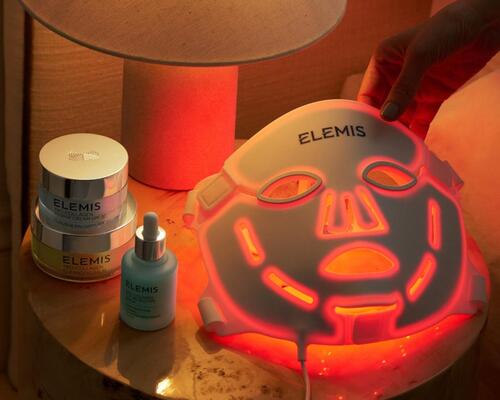
Contrast therapy is becoming popular so we’re adding in quite a few cold plunges, as well as new technologies such as infrared saunas, cryotherapy, light therapy and specialised heated slabs for stretching and relaxation.
We’re also rolling out dedicated recovery zones offering compression and massage technology to decrease inflammation, improve muscle elasticity and treat/prevent injuries.
What’s your ‘second space’ approach? You’ve heard of the term ‘third space’, well, this is what we’re not. We see ourselves as a ‘second space’. We’re purposefully creating social wellness areas with restaurants and a big work component offering co-working spaces and the ability to book board rooms. There are also lounges to encourage people to engage, socialise and get to know new people, not just their own community.
Where we’ve got the mix right, we see a very different behaviour from that of a typical gym, where there’s a morning peak, a lunchtime peak and an evening peak. These are all-day spaces where you can do multiple things outside the home between 8am and 5pm. People may train in the morning, but they don’t leave – they have their breakfast, do some work, have meetings, they meet friends and socialise.
What’s the rationale behind this? The World Health Organization has said that loneliness is one of the most significant global health concerns and it exceeds the risk associated with obesity. The US surgeon general has warned that the heightened risk of mortality from loneliness equals that of smoking 15 cigarettes a day or being an alcoholic.
What we’ve also seen post-COVID-19 is people looking for real-life experiences. We’re in a digital age and I see it with my teenage daughters living on their phones. But we see people looking for more than that, wanting to go to places where they feel they belong for real.
Younger generations are looking for non-toxic spaces to come together and connect with like-minded people – whether that’s with their tribes from yoga and reformer pilates or members of staff. They’re tired of going to bars and clubs where the relationships they form are shallow. Midlifers and older people are looking for ways to be more active and be part of a community and, ultimately, to live longer. But not only live longer but live better.
What’s the commercial value of a social wellness club? Ultimately, it’s around engagement and usage and how you keep members for life.
I don’t come from the gym industry, so I was shocked to find that even though it’s subscription-based, it’s like a leaky bucket and can have up to 40-50 per cent churn each year – even if operators are selling, selling, selling, it just flows out of the bucket.
This approach makes no sense and doesn’t work for anyone and we’re moving to a better business model. I remember my parents joined a country club and felt part of a community and that’s the environment we want to create.
There’s been a very significant impact on churn in the facilities where we now have a strong food offering and work and social spaces. People join and they don’t want to leave. It makes sense to expand this model, as it delivers results a gym business alone can’t.
Tell us about the Virgin Active app and rewards programme. Since the merger, we’ve launched this in South Africa and the UK and Italy will be next.
Around 72 per cent of our members are on the Virgin Active app and it’s based on rewarding wellness behaviours. Use the club twice a week and on your second visit, you get a free smoothie and those goals are dynamic, visit three times a week and you’ll get something like a PT session or different classes.
More than just rewarding good behaviour, however, it’s about engagement. The longer we get members to interact with us, the bigger share of wallet we get and we see a big reduction in churn.
In addition to this, we get incredibly rich data. There’s obviously the first-party data – which clubs members train at, at what time of day, what classes they book and how long they stay. But we’re also getting zero-party data, giving us insights into why they come to our gyms, what their goals are and which instructors they like.
When we pull all of this information together, we can understand our members better, provide more tailored, personal solutions and create strong, emotional connections.
What’s your take on how consumers view wellness as a sector? There are many obstacles when it comes to people exercising or eating healthily. Some financial. Some around accessibility or education or just life getting in the way.
Unfortunately, it can also be very intimidating. Consumers are bombarded with information about what wellness means and some of this is a load of BS and some is just self-serving, so they don’t know what to believe and don’t engage.
We’ve got to simplify wellness and make it more accessible. That’s the journey our businesses are on. We’re always asking ourselves how we can make our services approachable, simple and meaningful.
What are your long-term plans – will you list or go for a trade sale? It’s too soon to say. We want to show we’ve got a model where churn is at Netflix-type levels. If we can show the investment community we’ve changed the typical gym model and adopted a more hospitality-focused model that’s much more sticky, we believe we’ll get the valuations we’re looking for.
You could hear a pin drop at
the inaugural HCM Summit as Dean Kowarski, global CEO of Virgin Active, told health, fitness and wellness leaders from around the world about his plans for the company.
The stellar event was hosted by HCM and Spa Business magazines in October.
Interview: Dean Kowarski
Virgin Active is transforming its gym business with 230 sites and 1.2 million members into a social wellness brand. The CEO reveals more details to Liz Terry
First person: Steamy situation
Cassandra Cavanah is moved to tears (and also a little nervous) as she joins hundreds of near-naked heat enthusiasts at this year's Aufguss World Championships
Promotion: TechnoAlpin: In touch
Sara Brenninger talks
to wellness expert
Alina Hernandez
about the power of
real snow to create
immersive touchless
wellness experiences
Interview: Fabian Dolman
How can operators make a successful business out of aufguss programmes? Thermen Resort's CEO gives some tips
Sponsored: Best of both
Alina Hernandez, Gharieni Group advisory board member, explains how Metawell – its portfolio of tech-forward mind/body technologies – is right on time for the next era of wellness
Sponsored: Elevate your business with EGYM
Transform your business with fully connected, personalised and data-powered solutions that drive results
for members, trainers and businesses
Sponsored: Outstanding in its field
RKF Luxury Linen has had a stellar year in 2024, hitting new standards of excellence with a raft of certifications
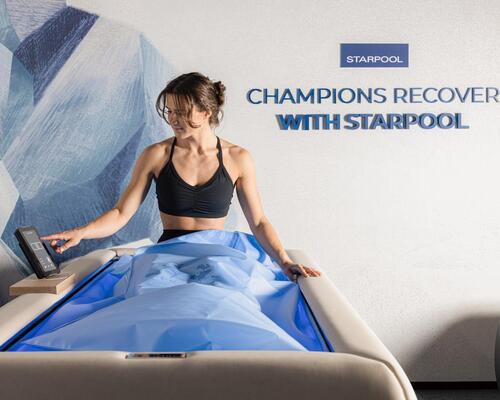
Promotion: Rest and repeat
Starpool is drawing on science, innovation and equilibrium to offer the industry’s leading recovery solutions
Sponsored: Iyashi Dôme's Oteire
Modern consumers demand solutions that blend cutting-edge technology with proven results, and Iyashi Dôme is rising to the challenge by redefining industry standards
First person: Sparkling Water
Mary Bemis is one of the first to visit the stunning new Sacred River Spa at Four Seasons Bali at Sayan
A new survey of UK and international spa practitioners shows that stress, burnout and
wellbeing concerns have caused one in three respondents to consider leaving the industry.
The UK's four Chief Medical Officers have published a refreshed edition of Physical activity
guidelines: UK Chief Medical Officers' report, updating the evidence that underpins the nation's
physical activity recommendations and placing greater emphasis on strength, balance, reducing
sedentary behaviour and, for the first time, supporting people taking weight loss medications.
Anna Bjurstam has left her role as Wellness Pioneer at Six Senses Hotels and Resorts and
launched a new wellness, longevity and “consciousness consultancy” called Wahayla.
Fairmont Cheshire, The Mere, has opened today (10 July) in the Northwest of England
with a
1,715sq m Fairmont Spa that has been designed using a ‘Wellness without Walls’
concept.
Wellness hotels generating less than US$1 million (€932,700, £785,200) – or 10 per cent of
total revenue from wellness and leisure – recorded the strongest RevPAR and TRevPAR growth
in 2025 across categories when compared with 2024, according to the latest Wellness Real
Estate Report by RLA Global, produced in partnership with P and L benchmarking firm HotStats.
Lefay Resorts, the portfolio of two luxury wellness properties in Italy, has added emotional
dance classes and group cold plunge sessions in response to market demand for social
connection.
Aditya Saluja, an industry leader in luxury wellness hospitality, has been
appointed as
commercial director of spa and wellness for the spa management division of
Minor Hotels,
MSpa International.
Contrast therapy, based on the alternation of hot and cold rituals, has become one of the
most valued practices in the fields of wellness and recovery. [more...]
+ More featured suppliers
COMPANY PROFILES
Beautylizer Beautylizer brings
its deep aesthetic expertise and
strong R&D focus to holistic wellness,
offeri [more...]