Yes! Send me the FREE digital editions of Spa Business and Spa Business insider magazines and the FREE weekly Spa Business and Spa Business insider ezines and breaking news alerts!
New GWI research indicates the global wellness economy has smashed
previous records to reach US$6.3 trillion at the peak of the ‘wellness decade’. Katherine Johnston and Ophelia Yeung present the highlights
The research was revealed at the Global Wellness Summit in November / photo: Global Wellness Summit 2024
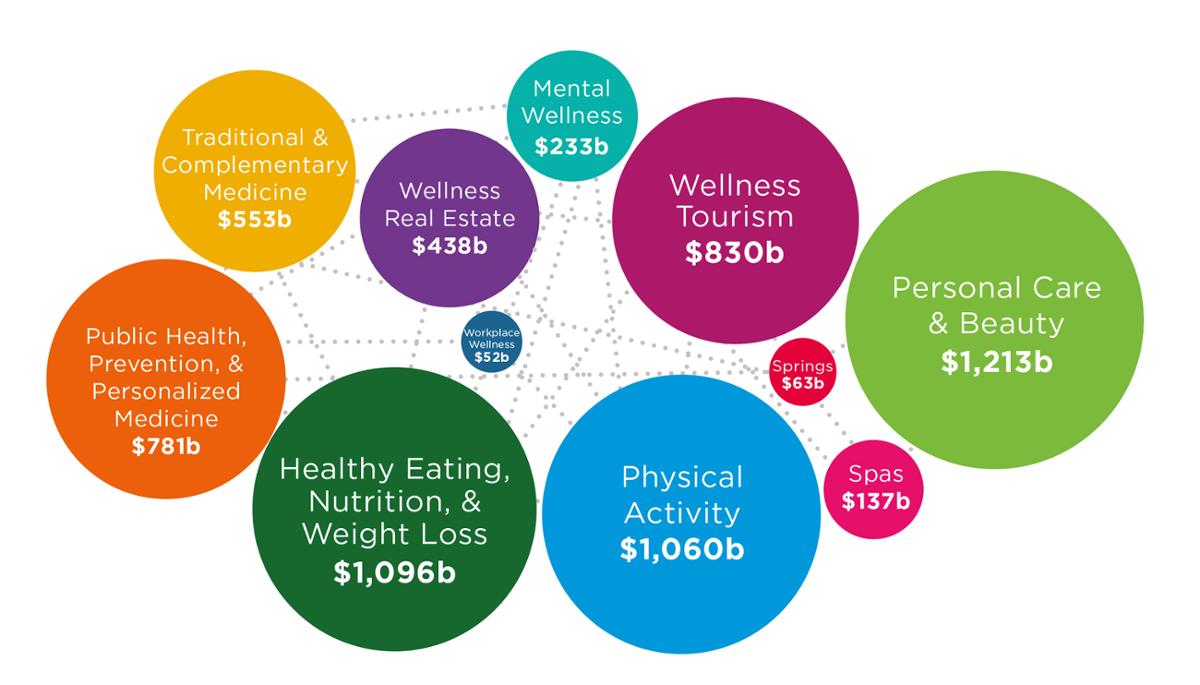
The global wellness economy soared to a valuation of US$6.3 trillion (€5.99 trillion, £4.98 trillion) in 2023, marking its third consecutive year of remarkably strong growth and recovery in the post-pandemic period. We project continued robust expansion, with the wellness economy expected to reach US$9 trillion (€8.6 trillion, £7.1 trillion) by 2028, nearly doubling its 2019 size.
This equates to a compound annual growth rate (CAGR) of 7.3 per cent from 2023 to 2028, significantly outpacing the global GDP growth forecast of 4.8 per cent annually. At this point, the wellness economy will account for 6.8 per cent of global GDP.
Nine of the 11 wellness sectors – including the spa industry – have already surpassed their 2019 market sizes and wellness markets across every global region experienced strong growth between 2019 and 2023.
Ones to watch These markets will grow the fastest by 2028, GWI says:
◆ Wellness real estate: +15.8 per cent annually
◆ Mental wellness: +12.2 per cent annually
◆ Wellness tourism: +10.2 per cent annually
◆ Thermal & mineral springs: +9.2 per cent annually
The spa sector is also expected to increase 6.1 per cent a year by 2028, reaching US$184.3 billion (€175.09 billion, £145.73 billion). By then the personal care & beauty, healthy eating, physical activity, wellness tourism and public health & personalised medicine markets will each surpass US$1 trillion (€950 billion, £790.7 billion).
Driving forces Senior GWI researchers Katherine Johnston and Ophelia Yeung presented the new findings at the recent 2024 Global Wellness Summit in Scotland (see p86). They noted that several enduring trends – including an ageing population, rising rates of chronic disease and widespread mental health challenges – are propelling the wellness economy forward.
“Despite declines in global wellbeing on several fronts, the wellness economy continues to thrive, demonstrating the growing consumer focus on health and self-care,” they said.
To underscore the industry’s scale, GWI compared it to other major sectors, revealing that the wellness economy is now larger than the pharmaceutical, sports, IT, tourism and green economy industries.
Top-performing sectors: 2022–2023 All 11 wellness sectors saw positive growth from 2022 to 2023, with the following leading the way – wellness tourism: +30.3 per cent; spas: +29.3 per cent; and thermal/mineral springs: +28.7 per cent.
This rise reflects a post-pandemic surge in wellness travel, as these sectors had suffered significant setbacks during the pandemic.
Long-term leaders: 2019–2023 Between 2019 and 2023, the sectors with the highest average annual growth rates were:
◆ Wellness real estate: +18.1 per cent
◆ Public health, prevention & personalised medicine: +15.2 per cent
◆ Mental wellness: +11.6 per cent
◆ Healthy eating, nutrition & weight loss: +4.7 per cent
◆ Wellness tourism: +4.5 per cent
Wellness real estate emerged as the standout, driven by an increasing awareness of how physical environments influence mental and physical health.
Regional market insights Since the pandemic, all global regions have experienced wellness market growth, with the top performers being:
◆ North America: 137 per cent of its 2019 size
◆ Middle East-North Africa: 130 per cent of 2019 levels
◆ Europe: 125 per cent of 2019 levels
The largest regional wellness markets are North America at US$2.2 trillion (€2.09 trillion, £1.74 trillion), Asia-Pacific at US$1.9 trillion (€1.81 trillion, £1.5 trillion) and Europe at US$1.7 trillion (€1.62 trillion, £1.34 trillion). Together, these account for more than 90 per cent of the global wellness economy.
A ‘wellness decade’ in retrospect Between 2013 and 2023, the wellness economy grew at a CAGR of 6.5 per cent, a period GWI researchers dub “the wellness decade”. Consumer interest in wellness has shifted from a trend to a permanent, explosive global movement, with significant growth anticipated well into the future.
Read more from this issue of Spa Business magazine
View contents of Spa Business 2024 issue 4
Editor's letter: Pleasure time
It’s time to make ‘pleasure health’ the new ‘play’ to realise the true value of the wellness sector, says Katie Barnes
Spa people: Luuk Melisse
Sanctum's co-founder Luuk Melisse on going global with the unique, spiritual workout that originated in Amsterdam
Interview: Dean Kowarski
Virgin Active is transforming its gym business with 230 sites and 1.2 million members into a social wellness brand. The CEO reveals more details to Liz Terry
First person: Steamy situation
Cassandra Cavanah is moved to tears (and also a little nervous) as she joins hundreds of near-naked heat enthusiasts at this year's Aufguss World Championships
Promotion: TechnoAlpin: In touch
Sara Brenninger talks
to wellness expert
Alina Hernandez
about the power of
real snow to create
immersive touchless
wellness experiences
Interview: Fabian Dolman
How can operators make a successful business out of aufguss programmes? Thermen Resort's CEO gives some tips
Sponsored: Best of both
Alina Hernandez, Gharieni Group advisory board member, explains how Metawell – its portfolio of tech-forward mind/body technologies – is right on time for the next era of wellness
Sponsored: Elevate your business with EGYM
Transform your business with fully connected, personalised and data-powered solutions that drive results
for members, trainers and businesses
Sponsored: Outstanding in its field
RKF Luxury Linen has had a stellar year in 2024, hitting new standards of excellence with a raft of certifications
Promotion: Rest and repeat
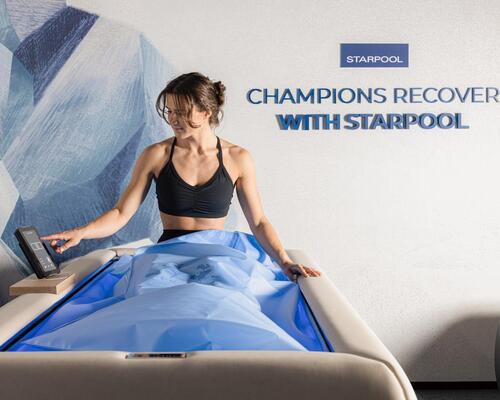
Starpool is drawing on science, innovation and equilibrium to offer the industry’s leading recovery solutions
Sponsored: Iyashi Dôme's Oteire
Modern consumers demand solutions that blend cutting-edge technology with proven results, and Iyashi Dôme is rising to the challenge by redefining industry standards
First person: Sparkling Water
Mary Bemis is one of the first to visit the stunning new Sacred River Spa at Four Seasons Bali at Sayan
Contrast therapy, based on the alternation of hot and cold rituals, has become one of the
most valued practices in the fields of wellness and recovery. [more...]
New GWI research indicates the global wellness economy has smashed
previous records to reach US$6.3 trillion at the peak of the ‘wellness decade’. Katherine Johnston and Ophelia Yeung present the highlights
The research was revealed at the Global Wellness Summit in November / photo: Global Wellness Summit 2024
The global wellness economy soared to a valuation of US$6.3 trillion (€5.99 trillion, £4.98 trillion) in 2023, marking its third consecutive year of remarkably strong growth and recovery in the post-pandemic period. We project continued robust expansion, with the wellness economy expected to reach US$9 trillion (€8.6 trillion, £7.1 trillion) by 2028, nearly doubling its 2019 size.
This equates to a compound annual growth rate (CAGR) of 7.3 per cent from 2023 to 2028, significantly outpacing the global GDP growth forecast of 4.8 per cent annually. At this point, the wellness economy will account for 6.8 per cent of global GDP.
Nine of the 11 wellness sectors – including the spa industry – have already surpassed their 2019 market sizes and wellness markets across every global region experienced strong growth between 2019 and 2023.
Ones to watch These markets will grow the fastest by 2028, GWI says:
◆ Wellness real estate: +15.8 per cent annually
◆ Mental wellness: +12.2 per cent annually
◆ Wellness tourism: +10.2 per cent annually
◆ Thermal & mineral springs: +9.2 per cent annually
The spa sector is also expected to increase 6.1 per cent a year by 2028, reaching US$184.3 billion (€175.09 billion, £145.73 billion). By then the personal care & beauty, healthy eating, physical activity, wellness tourism and public health & personalised medicine markets will each surpass US$1 trillion (€950 billion, £790.7 billion).
Driving forces Senior GWI researchers Katherine Johnston and Ophelia Yeung presented the new findings at the recent 2024 Global Wellness Summit in Scotland (see p86). They noted that several enduring trends – including an ageing population, rising rates of chronic disease and widespread mental health challenges – are propelling the wellness economy forward.
“Despite declines in global wellbeing on several fronts, the wellness economy continues to thrive, demonstrating the growing consumer focus on health and self-care,” they said.
To underscore the industry’s scale, GWI compared it to other major sectors, revealing that the wellness economy is now larger than the pharmaceutical, sports, IT, tourism and green economy industries.
Top-performing sectors: 2022–2023 All 11 wellness sectors saw positive growth from 2022 to 2023, with the following leading the way – wellness tourism: +30.3 per cent; spas: +29.3 per cent; and thermal/mineral springs: +28.7 per cent.
This rise reflects a post-pandemic surge in wellness travel, as these sectors had suffered significant setbacks during the pandemic.
Long-term leaders: 2019–2023 Between 2019 and 2023, the sectors with the highest average annual growth rates were:
◆ Wellness real estate: +18.1 per cent
◆ Public health, prevention & personalised medicine: +15.2 per cent
◆ Mental wellness: +11.6 per cent
◆ Healthy eating, nutrition & weight loss: +4.7 per cent
◆ Wellness tourism: +4.5 per cent
Wellness real estate emerged as the standout, driven by an increasing awareness of how physical environments influence mental and physical health.
Regional market insights Since the pandemic, all global regions have experienced wellness market growth, with the top performers being:
◆ North America: 137 per cent of its 2019 size
◆ Middle East-North Africa: 130 per cent of 2019 levels
◆ Europe: 125 per cent of 2019 levels
The largest regional wellness markets are North America at US$2.2 trillion (€2.09 trillion, £1.74 trillion), Asia-Pacific at US$1.9 trillion (€1.81 trillion, £1.5 trillion) and Europe at US$1.7 trillion (€1.62 trillion, £1.34 trillion). Together, these account for more than 90 per cent of the global wellness economy.
A ‘wellness decade’ in retrospect Between 2013 and 2023, the wellness economy grew at a CAGR of 6.5 per cent, a period GWI researchers dub “the wellness decade”. Consumer interest in wellness has shifted from a trend to a permanent, explosive global movement, with significant growth anticipated well into the future.
Read more from this issue of Spa Business magazine
View contents of Spa Business 2024 issue 4
Editor's letter: Pleasure time
It’s time to make ‘pleasure health’ the new ‘play’ to realise the true value of the wellness sector, says Katie Barnes
Spa people: Luuk Melisse
Sanctum's co-founder Luuk Melisse on going global with the unique, spiritual workout that originated in Amsterdam
Interview: Dean Kowarski
Virgin Active is transforming its gym business with 230 sites and 1.2 million members into a social wellness brand. The CEO reveals more details to Liz Terry
First person: Steamy situation
Cassandra Cavanah is moved to tears (and also a little nervous) as she joins hundreds of near-naked heat enthusiasts at this year's Aufguss World Championships
Promotion: TechnoAlpin: In touch
Sara Brenninger talks
to wellness expert
Alina Hernandez
about the power of
real snow to create
immersive touchless
wellness experiences
Interview: Fabian Dolman
How can operators make a successful business out of aufguss programmes? Thermen Resort's CEO gives some tips
Sponsored: Best of both
Alina Hernandez, Gharieni Group advisory board member, explains how Metawell – its portfolio of tech-forward mind/body technologies – is right on time for the next era of wellness
Sponsored: Elevate your business with EGYM
Transform your business with fully connected, personalised and data-powered solutions that drive results
for members, trainers and businesses
Sponsored: Outstanding in its field
RKF Luxury Linen has had a stellar year in 2024, hitting new standards of excellence with a raft of certifications
Promotion: Rest and repeat
Starpool is drawing on science, innovation and equilibrium to offer the industry’s leading recovery solutions
Sponsored: Iyashi Dôme's Oteire
Modern consumers demand solutions that blend cutting-edge technology with proven results, and Iyashi Dôme is rising to the challenge by redefining industry standards
First person: Sparkling Water
Mary Bemis is one of the first to visit the stunning new Sacred River Spa at Four Seasons Bali at Sayan
A new survey of UK and international spa practitioners shows that stress, burnout and
wellbeing concerns have caused one in three respondents to consider leaving the industry.
The UK's four Chief Medical Officers have published a refreshed edition of Physical activity
guidelines: UK Chief Medical Officers' report, updating the evidence that underpins the nation's
physical activity recommendations and placing greater emphasis on strength, balance, reducing
sedentary behaviour and, for the first time, supporting people taking weight loss medications.
Anna Bjurstam has left her role as Wellness Pioneer at Six Senses Hotels and Resorts and
launched a new wellness, longevity and “consciousness consultancy” called Wahayla.
Fairmont Cheshire, The Mere, has opened today (10 July) in the Northwest of England
with a
1,715sq m Fairmont Spa that has been designed using a ‘Wellness without Walls’
concept.
Wellness hotels generating less than US$1 million (€932,700, £785,200) – or 10 per cent of
total revenue from wellness and leisure – recorded the strongest RevPAR and TRevPAR growth
in 2025 across categories when compared with 2024, according to the latest Wellness Real
Estate Report by RLA Global, produced in partnership with P and L benchmarking firm HotStats.
Lefay Resorts, the portfolio of two luxury wellness properties in Italy, has added emotional
dance classes and group cold plunge sessions in response to market demand for social
connection.
Aditya Saluja, an industry leader in luxury wellness hospitality, has been
appointed as
commercial director of spa and wellness for the spa management division of
Minor Hotels,
MSpa International.
Contrast therapy, based on the alternation of hot and cold rituals, has become one of the
most valued practices in the fields of wellness and recovery. [more...]