Yes! Send me the FREE digital editions of Spa Business and Spa Business insider magazines and the FREE weekly Spa Business and Spa Business insider ezines and breaking news alerts!
Attractions Management’s Tom Anstey visited the brand new Aquatis Aquarium-Vivarium in
Lausanne, Switzerland for a fascinating journey through our planet’s freshwater environments
By Tom Anstey | Published in Attractions Management 2018 issue 3
Aquatis Aquarium-Vivarium in
Lausanne, Switzerland
To look at the entire history of one of Europe’s largest freshwater aquariums, you have to go back 18 years to November 2000.
At the time, city planers in Lausanne, Switzerland, was in the midst of planning to build its new Metro line. Attached to one of its stops near the city’s edge would be a multi-storey car park.
Envisioned as a park and ride system, the line would boost accessibility and tourism to the city, providing an easy route into central Lausanne and easy access to Lake Geneva, by which the city sits.
City officials decided they wanted to do more than create the new transport system, so called for proposals for an attraction to sit on top of the giant parking structure.
Jacques Richter, co-founder of architectural practice RDR, teamed with aquarium specialists AEP Concept to propose an eye-catching aquarium and hotel development overlooking the city.
The brief was specific and called for no commercial centres such as shopping malls or offices, as that would result in much of the parking being used through the day, but not for the purpose it was created.
“We thought about what we could put on the top of a park and ride so people would use the parking spaces at night and on weekends,” says Richter. “That’s why we made a proposal for an aquarium and a hotel.”
RDR’s proposal was an L-shaped hotel, with a shimmering circular aquarium at its heart. AEP would create the interiors for the attraction, which combines an aquarium setting with an interactive museum experience.
“The location is a strategic location,” says Richter. “You have the highway passing nearby. If you take the Metro you can be downtown in 15 minutes.”
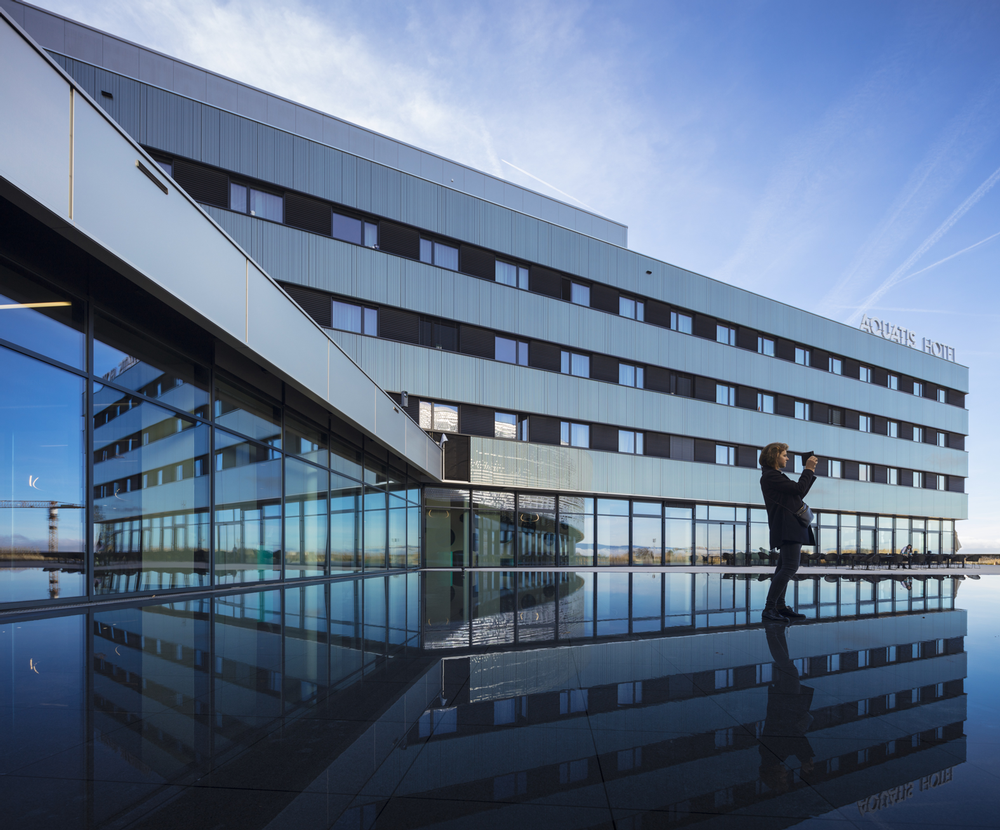
In 2005, the city approved the plans, which meant RDR could move on to the design and development phase. The moveable facade of the aquarium was the focal point of the design, with a body of water separating two terraces for the aquarium and the hotel.
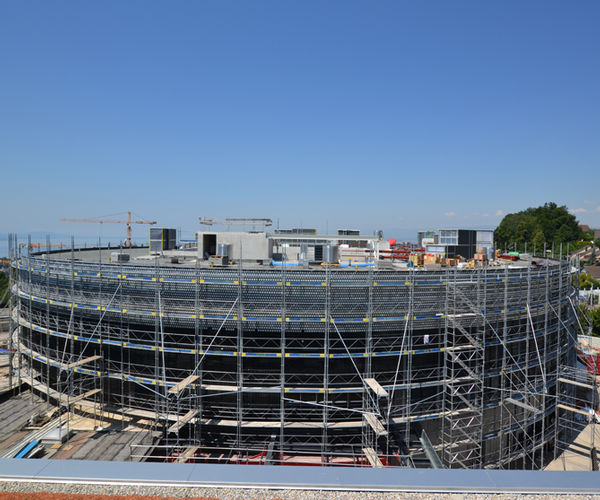
Made up of 100,000 anodised aluminium discs, which can move in any direction on a pivot point, the facade was inspired by the scales of a fish moving through the water. As the fish moves, its scales sparkle in the sunlight. For the aquarium, the wind moves the discs, creating a constantly changing artwork.
“The exterior is a wrapping on a black box. Because we’re on a raised platform, the facade catches your eye from far away,” says Richter. “We had to test it because of the wind and to check the angles of everything. Then it was quite easy to do and easy to put it up,” he says.
AEP handled the museum’s interiors, which uses a number of technologies and special effects to wow the visitors.
“Nowadays if you’re doing a museum or an aquarium you need to astonish people,” says Richter. “Many aquariums follow a template and there’s a very expected, basic formula that you see frequently. The visitors will begin to feel they’ve seen it before or start to find it boring. Because of this, you always need to bring in new things. AEP did a really incredible job of doing that.”
Over the 18 years from conception to reality, the plans have changed multiple times, constantly evolving to meet the demands of style, structure and cost.
“We knew the shape from the very beginning,” says Richter. “We tried to adjust the parking at the border of the site to maximise the space. We then adjusted the round shape on top of the platform.
“The plan didn’t come together right away. We knew there would be a restaurant and terrace, for example, but the water basin was bigger and the terrace was made of wood. Things changed quite a lot.
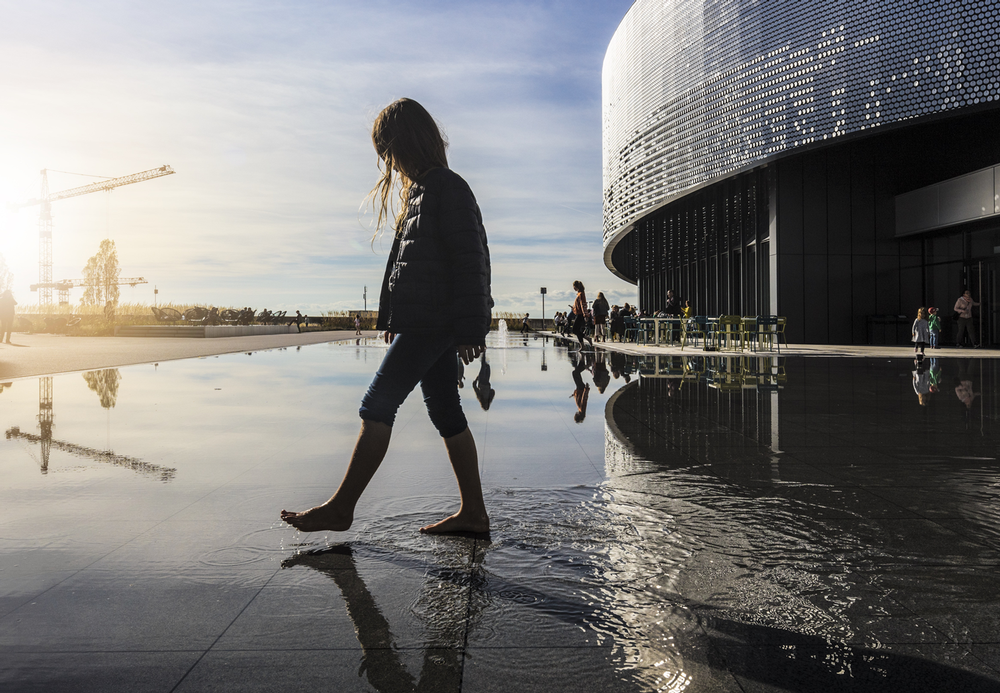
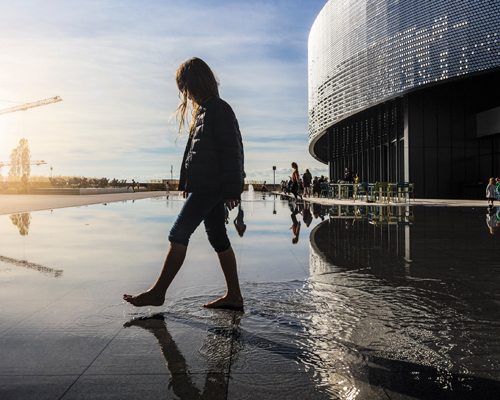
“We originally wanted to have more green on the site, but you can’t control everything and you have to compromise. What is interesting here is that we always wanted to separate the aquarium and hotel terrace with water. The hotel terrace was originally smaller, but then we realised it could double as a space for events and parties. The pool separating the two terraces is only five centimetres deep, so children can also play in it and have fun without worry. Because of the aquarium we wanted water to represent it. It’s like bringing a little piece of the lake of Geneva up here into the hills.”
As a resident of Lausanne, the project is a particular triumph for Richter. “The response has been great. It’s unusual but not aggressive and people are intrigued by it,” he says. “I live downtown and, for me to be able to build something like this in Lausanne, I’m very proud of what we’ve accomplished.”
Read more from this issue of Spa Business magazine
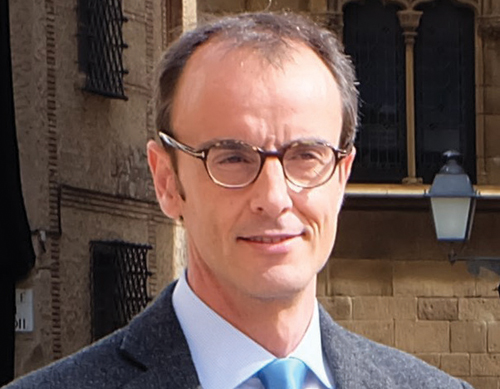
People profile: Anton Vidal
Anton Vidal is director general of Poble Espanyol which has completed a 10-year, €10m improvement plan
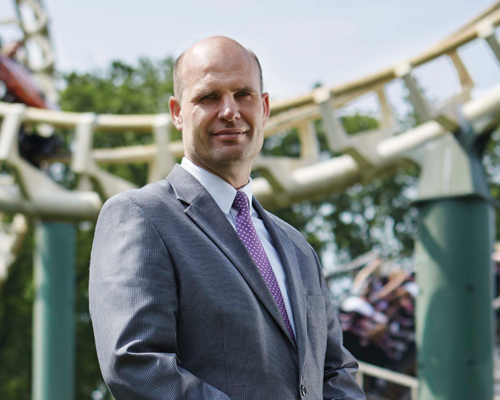
Interview: Coen Bertens
Fairytale theme park Efteling has
gone from strength to strength
during its 65-year history, enchanting
more visitors last year than
ever before. We talk to COO Coen
Bertens about its success
Promotional feature: EAS - Learning curves
This year’s Euro Attractions Show promises to
be the biggest in the history of the event, with
a brand new schedule of seminars to match
Aquariums: High Waters
We visited the brand new Aquatis
Aquarium-Vivarium in Switzerland
for a journey through our planet’s
freshwater environments
Promotional feature: nWave - The big picture
With more than two decades
of experience creating high quality
original content, nWave looks
ahead as it continues to produce
its own industry-leading creations
Analysis: TEA/AECOM Theme Index 2017
The TEA/AECOM Report 2017 shows major theme park
operators had an outstanding year, while stabilised global
economies and strong investment planning bodes well
for the global attractions industry going forward
Analysis: EMEA Focus
Margreet Papamichael, founder of CLEAR Associates about what The TEA/AECOM Report 2017 means for the EMEA region
Review: MuseumNext
Intellectuals from across the
museums sector gathered recently for
the European edition of MuseumNext
Theme parks: Playing the Looney Tune
As new and exciting leisure opportunities
increase in the Middle East, Yas
Island welcomes the US$1bn Warner
Bros World Abu Dhabi. We speak to
the two key members of the team
behind the landmark project
Museums: License to Thrill
A brand new James Bond visitor attraction,
nestled snugly inside a mountain peak
in Sölden, Austria, opened this July. We
talked to the operator and architect
Aquatis by numbers • Different types of ecosystem: 20 • Litres of water: 2 million • Number of aquariums, vivariums and terrariums: 46 • Size: 3,500sq m (37,673sq ft) • Space: 12,000sq m (129,166sq ft) • Parking spaces: 1,200 (park and ride system connected to metro line) • Areas: 5 (each representing a different continent) • Reptiles and amphibians: 100 • Fish: 10,000 • Hotel rooms: 143 • Aluminium discs on facade 100,000 • Educational footage: 75 minutes
The aquarium was first discussed in 2000
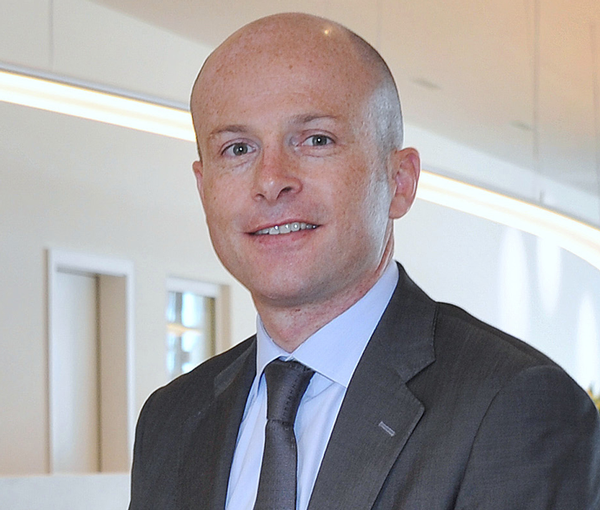
Quentin Delohen, Director, Aquatis What’s your history with the project? I joined in March 2015 when we opened the hotel. Following the launch, we concentrated on the aquarium project, before opening in October last year. With the hotel, I arrived one week before the opening, which is a bit unusual. Now it’s going well in terms of business revenue. We have very good occupancy levels, which are increasing. We reached more than 70 per cent in June. Last year we reached 50 per cent for the year, which was not bad. Hopefully this year we can be closer to 60 per cent occupancy.
Has there been notable growth in occupancy since the aquarium’s launch? There has, especially on weekends. Before, it was very quiet and now we reach 50 per cent occupancy, which is what we need to achieve for profitability. At the weekend, we get families and people travelling for leisure. During the week – Monday to Thursday – we get a lot of business customers.
How does the aquarium fit in with the rest of the city? We have the Metro station downstairs, which makes it very practical. In 10 minutes you are at the main train station and within 20 minutes you are down at Lake Geneva. At the lake you have the Olympic Museum. In two years we will have the Pôle muséal – an arts district, which is under construction at the main train station. This means the three main attractions in Geneva will be on the same Metro line, which is perfect for leisure.
What’s the journey been like to get to this point? The aquarium process was long. The first idea came in 2001, so it has taken 17 years to finally deliver this project. The people who started out the project were not the same people at the end and the vision has changed a lot during that time too.
What we wanted to exhibit also changed. It’s not like a normal museum or aquarium at all. There’s a lot of scenography and design outside of the tanks. When we first envisioned it, it was more of a “basic style” aquarium – really what you would expect – but all of this changed.
We also had to integrate the Lausanne vivarium’s reptiles. It’s always been very famous in the city. People liked it but it couldn’t afford to operate independently. They always had help from the community and the city and in the end they had to close it because the model wasn’t sustainable.
We decided to take it and integrate the vivarium into our aquarium. It took time to rethink the project to accommodate that.
The finances on the deal changed too. We initially budgeted the project at CHF18m (US$18.1m) but costs rose by CHF16.7m (US$17.1m) to CHF35m ($35.2m) You don’t find millions under the sofa, so it was quite a challenge for us.
How has attendance been since launch? We’ve had more than 280,000 people since opening. We would like to reach 450,000 visitors at the end of our first year, which is a little bit ambitious, but we should be close to 400,000 by that point.
What is the aquarium experience? There isn’t an aquarium like this anywhere else in the world – through the aquarium and vivarium, you travel across five continents.
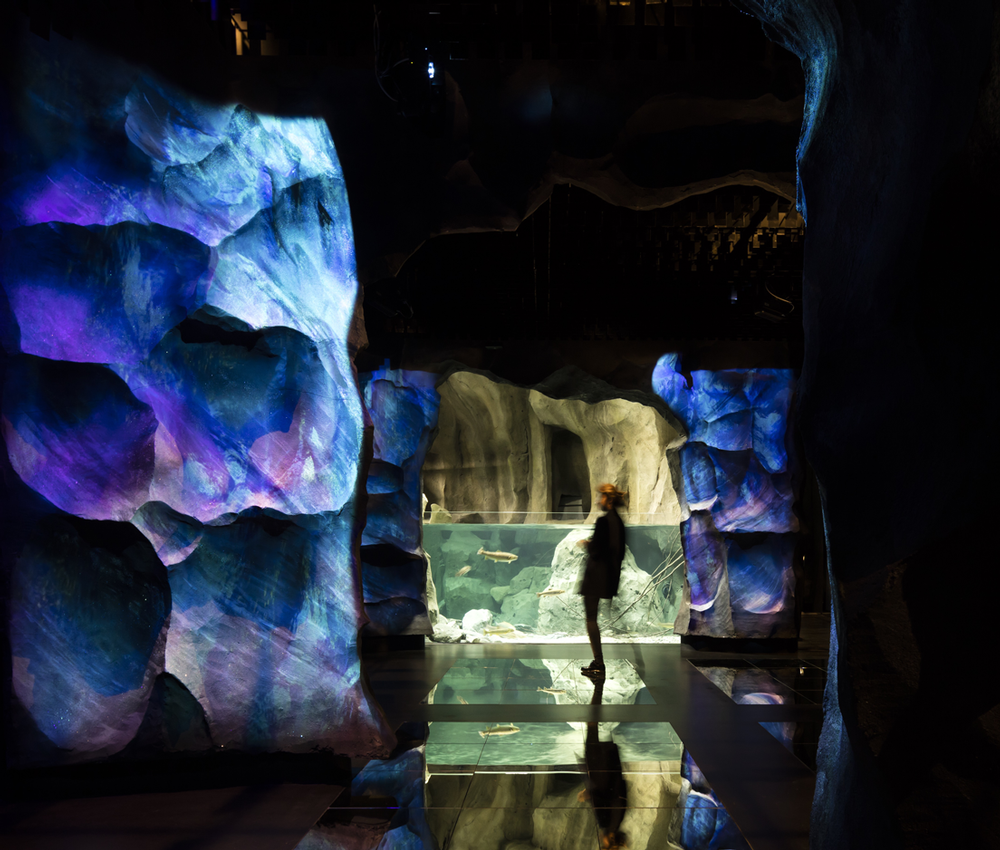
You start in Europe inside a glacier, then you go through Switzerland and France. Upstairs you visit Africa, Asia and Oceania. When people visit they forget where they are and feel as though they’re abroad.
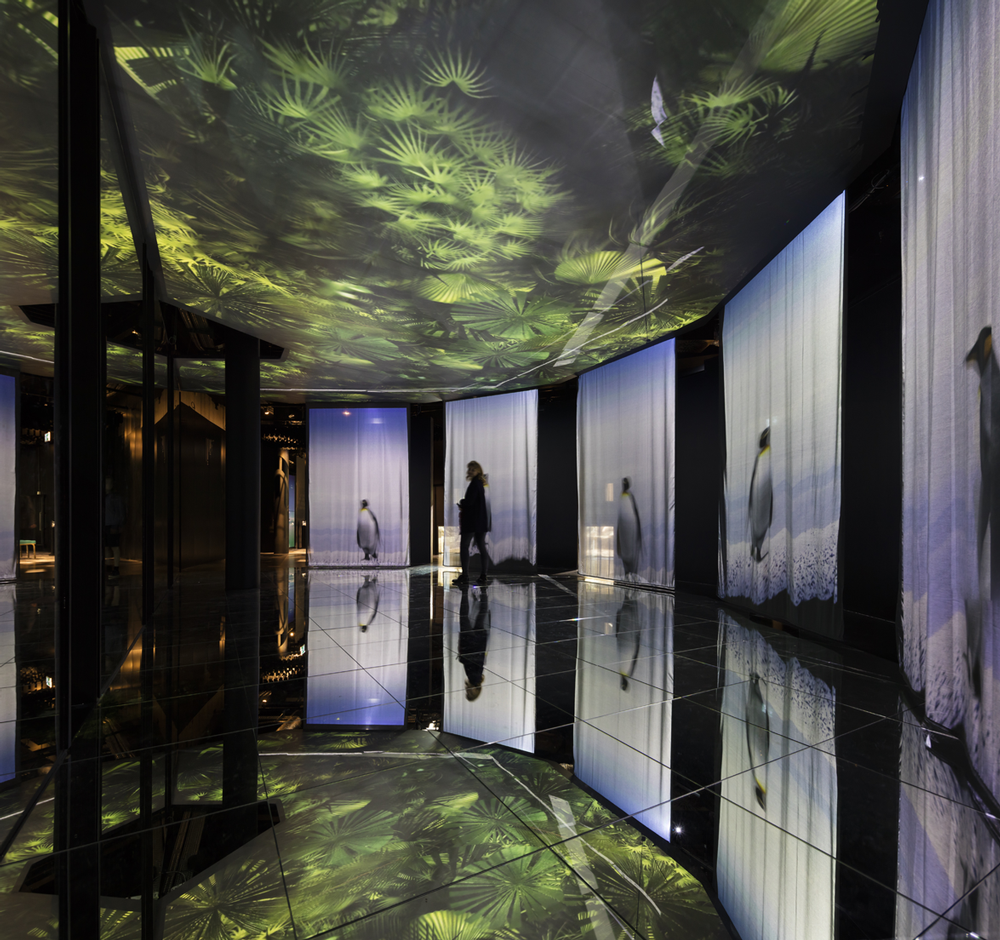
Throughout the experience you have use of different technologies. There are mirrors on the floor, with decorations on the wall and ceilings creating special effects. These kind of things are making the experience unique.
The main idea is to actually teach people that fresh water preservation is a challenge worldwide. There are parts of the world where people need to walk long distances to reach fresh water – the thing we need most. There are screens in the aquarium that tell people how to conserve water and how to be careful not to waste it.
We also tell the history of freshwater and the people and things around it. You have the dinosaurs and the story of how the countries and the continents were created. It tells the history of our planet.
Quentin Delohen
Is there room for expansion? We have three empty rooms ranging from 120sqm to 250sqm. We’re planning to expand into these spaces in a number of ways, including building a cinema and we want to develop a maker space on our theme of fresh water.
Who are you targeting in terms of visitors? Lausanne is not enough for us when it comes to outreach and visitation, we want to extend our message to the French part of Switzerland, then the Swiss part – places like Zurich, Basel, Bern and Lucerne. People will drive between two and three hours to see us and it’s perfect for the hotel because they can stay and enjoy the rest of the city.
Then there’s Europe – the UK, France and Germany are the three main countries we’re targeting in terms of visitors.
Did you encounter any problems along the way? We have to admit it was not as perfect as it is now. When we opened, it was a rush. The water was not as clear, the fish were a lot smaller. The piranhas when they arrived were 2-3 centimetres compared to now where they are more mature. The feedback generally has been quite positive.
When it’s crowded it is difficult to get the overall picture. You can see the aquarium but you cannot hear well with the screens and feel the technology. Sometimes people are a bit frustrated. There were teething problems. We’re on the way to solving it. As soon as you talk about technology there are always some problems.
What are the future goals and targets for the aquarium? We want the aquarium to be famous across Europe and the rest of the world. We also plan to be more involved in special actions for the environment. We need to be part of a special dialogue on that topic and to be involved in cleaning rivers and lakes.
This isn’t just an attraction, it’s something that people come to visit and have a nice time but also it’s a place to really highlight to people the importance of freshwater to the human race. We have to be careful with the environment, the plastic, the garbage that we produce. They need to know and they need to react. Now is the time to take action.
The Freshwater Crisis The key message coming out of Aquatis is that the human population needs to better protect and safeguard freshwater sources.
While 70 per cent of the Earth’s surface is water – remaining constant at 1,386,000,000 cubic kilometres – 97.5 per cent of that is undrinkable seawater. The combination of global warming and the continuous increase in the global population have placed freshwater levels under severe strain across the world.
Between 2000 and 2050, global water demand is predicted to rise by 55 per cent. Agriculture accounts for 70 per cent of global freshwater usage and the population increase will mean that by 2035 food production will need to increase by 69 per cent to sustain the human population. Water use in energy creation is also expected to rise by 20 per cent, putting the planet’s water sources in higher demand. According to Nasa, many of the world’s freshwater sources are depleting faster than they are being replenished, spelling potential disaster for future generations.
The aquarium’s conservation message is strong, reminding visitors of the importance of freshwater throughout its journey
FIRST PERSON
Tom Anstey, managing editor, Attractions Management
Tom Anstey
Aquatis is unlike any aquarium I have ever experienced. From the moment you enter, it feels a completely different beast to a traditional aquarium encounter – from its presentation, to its message, to its teaching philosophy.
Technology is there from the moment you walk in, with a mirror at the entrance showing not only the viewer’s reflection, but also using special effects to make water droplets and names appear in the mirror.
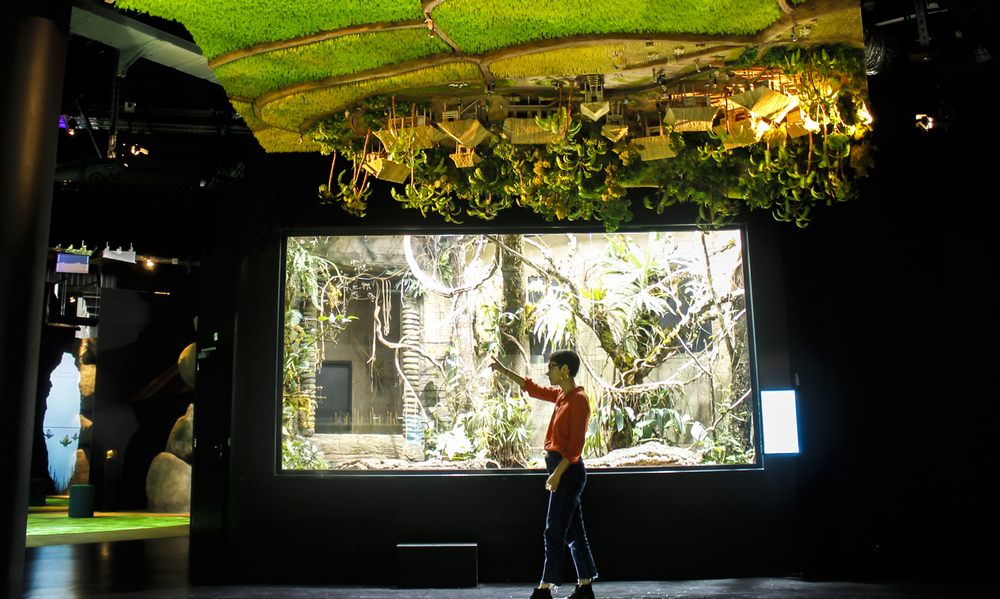
From there the technology experience continues, with information stations available in a number of languages, with a simple touch screen interface allowing visitors to choose their selected media. Through the aquarium, special moving sets installed in its ceiling reflect into glass panels on the floor, creating the effect that you are walking over amazing scenes taking place beneath your feet.
More than a simple aquarium, Aquatis tells you the history of freshwater, particularly locally, with stories of the people who worked on the river and how its change affected the wider population and planet.
The history lesson dates back as far as the Cretaceous period 112 million years ago, with a full-size moving replica spinosaurus on display as visitors climb from the first to second floor.
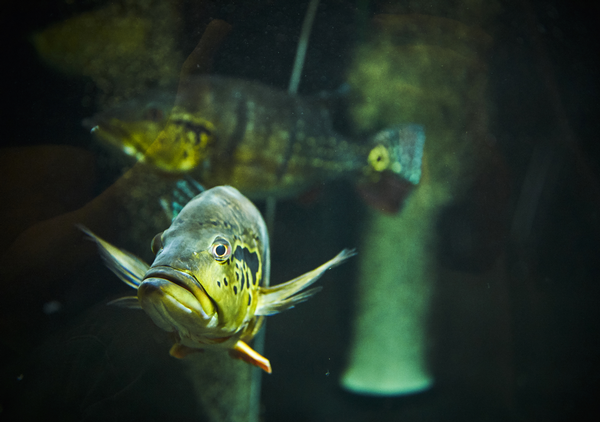
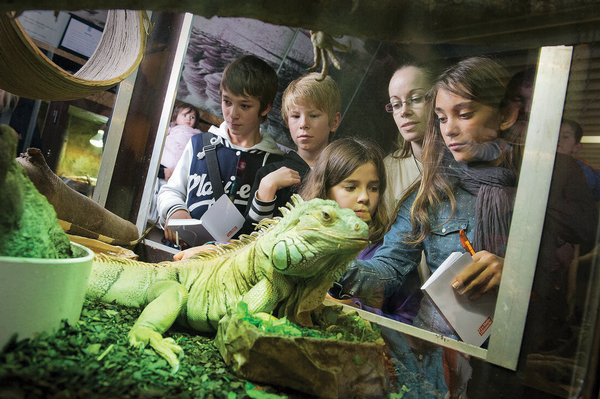
In addition to the 10,000 fish that call the aquarium home, a number of reptiles, snakes, lizards, crocodiles and even a komodo dragon are on display.
It’s a vast and varied collection, immersing visitors in each world region, no more so than in the Amazon-themed vivarium. Walking into the climate-controlled room, the change in humidity hits you immediately. Walking along a series of wooden walkways, a collection of South American fish and reptiles fill the space, with a series of pools holding the majority of the marine life. From there you step out back into the real world, which places you directly at the door of either the hotel or the park and ride/metro system.
For aquarium-, or even museum-, lovers, Aquatis is definitely something different. The team has set the goal of being one of Europe’s top aquariums and the ambition they’ve shown with the project suggests that this is likely to be the case very soon.
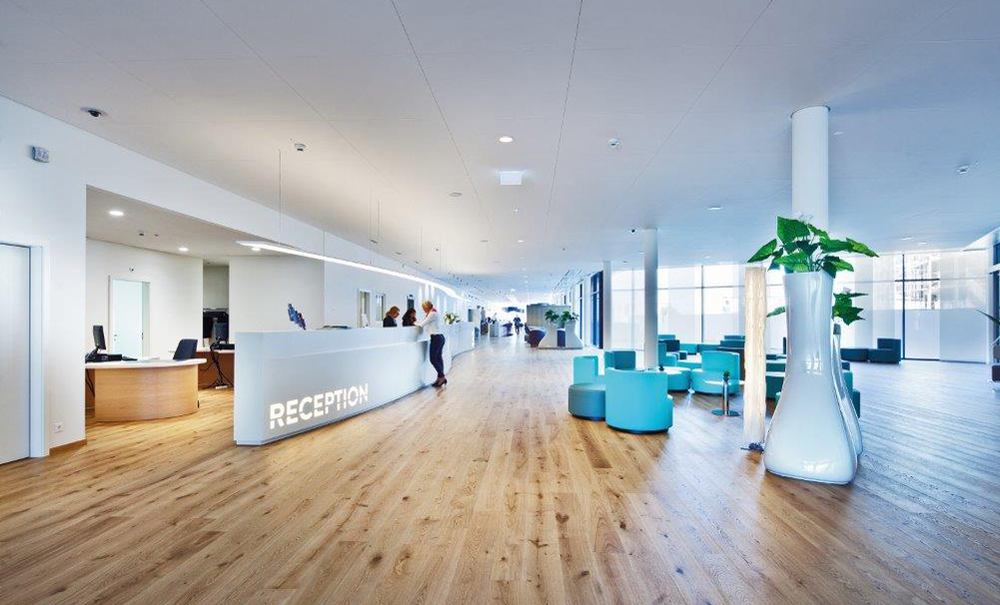
The Aquatis Hotel serves business people through the week and visiting tourists on weekends
The Aquatis Hotel serves business people through the week and visiting tourists on weekends
The Aquatis Hotel serves business people through the week and visiting tourists on weekends
The aquarium and its hotel are located just a few minutes away from central Lausanne
The aquarium and its hotel are located just a few minutes away from central Lausanne
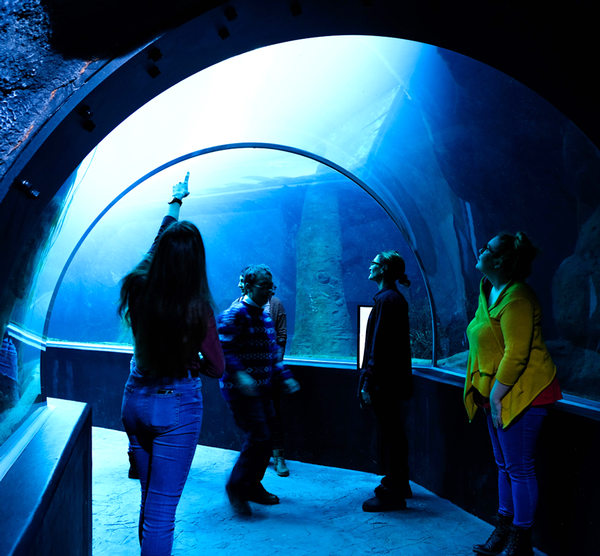
Aquatis is divided up into five biozones and 12 natural environments, each with its own unique scenography representing a different world region
Aquatis is divided up into five biozones and 12 natural environments, each with its own unique scenography representing a different world region
Aquatis is divided up into five biozones and 12 natural environments, each with its own unique scenography representing a different world region
Guests are invited on a trip of the five continents to learn about their rich and diverse freshwater ecosystems
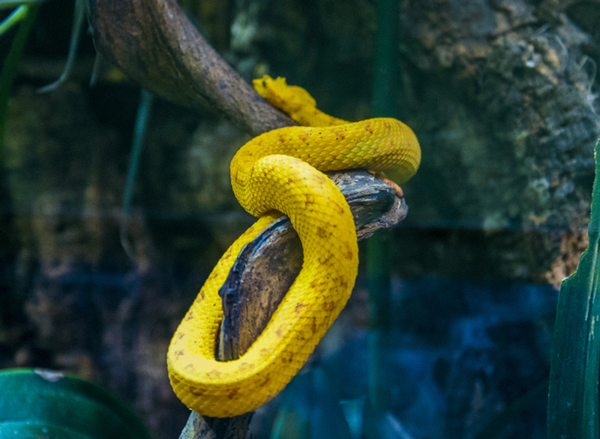
Aquatis is also home to an array of different reptiles and plant species
Attractions Management’s Tom Anstey visited the brand new Aquatis Aquarium-Vivarium in
Lausanne, Switzerland for a fascinating journey through our planet’s freshwater environments
By Tom Anstey | Published in Attractions Management 2018 issue 3
Aquatis Aquarium-Vivarium in
Lausanne, Switzerland
To look at the entire history of one of Europe’s largest freshwater aquariums, you have to go back 18 years to November 2000.
At the time, city planers in Lausanne, Switzerland, was in the midst of planning to build its new Metro line. Attached to one of its stops near the city’s edge would be a multi-storey car park.
Envisioned as a park and ride system, the line would boost accessibility and tourism to the city, providing an easy route into central Lausanne and easy access to Lake Geneva, by which the city sits.
City officials decided they wanted to do more than create the new transport system, so called for proposals for an attraction to sit on top of the giant parking structure.
Jacques Richter, co-founder of architectural practice RDR, teamed with aquarium specialists AEP Concept to propose an eye-catching aquarium and hotel development overlooking the city.
The brief was specific and called for no commercial centres such as shopping malls or offices, as that would result in much of the parking being used through the day, but not for the purpose it was created.
“We thought about what we could put on the top of a park and ride so people would use the parking spaces at night and on weekends,” says Richter. “That’s why we made a proposal for an aquarium and a hotel.”
RDR’s proposal was an L-shaped hotel, with a shimmering circular aquarium at its heart. AEP would create the interiors for the attraction, which combines an aquarium setting with an interactive museum experience.
“The location is a strategic location,” says Richter. “You have the highway passing nearby. If you take the Metro you can be downtown in 15 minutes.”
In 2005, the city approved the plans, which meant RDR could move on to the design and development phase. The moveable facade of the aquarium was the focal point of the design, with a body of water separating two terraces for the aquarium and the hotel.
Made up of 100,000 anodised aluminium discs, which can move in any direction on a pivot point, the facade was inspired by the scales of a fish moving through the water. As the fish moves, its scales sparkle in the sunlight. For the aquarium, the wind moves the discs, creating a constantly changing artwork.
“The exterior is a wrapping on a black box. Because we’re on a raised platform, the facade catches your eye from far away,” says Richter. “We had to test it because of the wind and to check the angles of everything. Then it was quite easy to do and easy to put it up,” he says.
AEP handled the museum’s interiors, which uses a number of technologies and special effects to wow the visitors.
“Nowadays if you’re doing a museum or an aquarium you need to astonish people,” says Richter. “Many aquariums follow a template and there’s a very expected, basic formula that you see frequently. The visitors will begin to feel they’ve seen it before or start to find it boring. Because of this, you always need to bring in new things. AEP did a really incredible job of doing that.”
Over the 18 years from conception to reality, the plans have changed multiple times, constantly evolving to meet the demands of style, structure and cost.
“We knew the shape from the very beginning,” says Richter. “We tried to adjust the parking at the border of the site to maximise the space. We then adjusted the round shape on top of the platform.
“The plan didn’t come together right away. We knew there would be a restaurant and terrace, for example, but the water basin was bigger and the terrace was made of wood. Things changed quite a lot.
“We originally wanted to have more green on the site, but you can’t control everything and you have to compromise. What is interesting here is that we always wanted to separate the aquarium and hotel terrace with water. The hotel terrace was originally smaller, but then we realised it could double as a space for events and parties. The pool separating the two terraces is only five centimetres deep, so children can also play in it and have fun without worry. Because of the aquarium we wanted water to represent it. It’s like bringing a little piece of the lake of Geneva up here into the hills.”
As a resident of Lausanne, the project is a particular triumph for Richter. “The response has been great. It’s unusual but not aggressive and people are intrigued by it,” he says. “I live downtown and, for me to be able to build something like this in Lausanne, I’m very proud of what we’ve accomplished.”
Read more from this issue of Spa Business magazine
People profile: Anton Vidal
Anton Vidal is director general of Poble Espanyol which has completed a 10-year, €10m improvement plan
Interview: Coen Bertens
Fairytale theme park Efteling has
gone from strength to strength
during its 65-year history, enchanting
more visitors last year than
ever before. We talk to COO Coen
Bertens about its success
Promotional feature: EAS - Learning curves
This year’s Euro Attractions Show promises to
be the biggest in the history of the event, with
a brand new schedule of seminars to match
Aquariums: High Waters
We visited the brand new Aquatis
Aquarium-Vivarium in Switzerland
for a journey through our planet’s
freshwater environments
Promotional feature: nWave - The big picture
With more than two decades
of experience creating high quality
original content, nWave looks
ahead as it continues to produce
its own industry-leading creations
Analysis: TEA/AECOM Theme Index 2017
The TEA/AECOM Report 2017 shows major theme park
operators had an outstanding year, while stabilised global
economies and strong investment planning bodes well
for the global attractions industry going forward
Analysis: EMEA Focus
Margreet Papamichael, founder of CLEAR Associates about what The TEA/AECOM Report 2017 means for the EMEA region
Review: MuseumNext
Intellectuals from across the
museums sector gathered recently for
the European edition of MuseumNext
Theme parks: Playing the Looney Tune
As new and exciting leisure opportunities
increase in the Middle East, Yas
Island welcomes the US$1bn Warner
Bros World Abu Dhabi. We speak to
the two key members of the team
behind the landmark project
Museums: License to Thrill
A brand new James Bond visitor attraction,
nestled snugly inside a mountain peak
in Sölden, Austria, opened this July. We
talked to the operator and architect
Aquatis by numbers • Different types of ecosystem: 20 • Litres of water: 2 million • Number of aquariums, vivariums and terrariums: 46 • Size: 3,500sq m (37,673sq ft) • Space: 12,000sq m (129,166sq ft) • Parking spaces: 1,200 (park and ride system connected to metro line) • Areas: 5 (each representing a different continent) • Reptiles and amphibians: 100 • Fish: 10,000 • Hotel rooms: 143 • Aluminium discs on facade 100,000 • Educational footage: 75 minutes
The aquarium was first discussed in 2000
Quentin Delohen, Director, Aquatis What’s your history with the project? I joined in March 2015 when we opened the hotel. Following the launch, we concentrated on the aquarium project, before opening in October last year. With the hotel, I arrived one week before the opening, which is a bit unusual. Now it’s going well in terms of business revenue. We have very good occupancy levels, which are increasing. We reached more than 70 per cent in June. Last year we reached 50 per cent for the year, which was not bad. Hopefully this year we can be closer to 60 per cent occupancy.
Has there been notable growth in occupancy since the aquarium’s launch? There has, especially on weekends. Before, it was very quiet and now we reach 50 per cent occupancy, which is what we need to achieve for profitability. At the weekend, we get families and people travelling for leisure. During the week – Monday to Thursday – we get a lot of business customers.
How does the aquarium fit in with the rest of the city? We have the Metro station downstairs, which makes it very practical. In 10 minutes you are at the main train station and within 20 minutes you are down at Lake Geneva. At the lake you have the Olympic Museum. In two years we will have the Pôle muséal – an arts district, which is under construction at the main train station. This means the three main attractions in Geneva will be on the same Metro line, which is perfect for leisure.
What’s the journey been like to get to this point? The aquarium process was long. The first idea came in 2001, so it has taken 17 years to finally deliver this project. The people who started out the project were not the same people at the end and the vision has changed a lot during that time too.
What we wanted to exhibit also changed. It’s not like a normal museum or aquarium at all. There’s a lot of scenography and design outside of the tanks. When we first envisioned it, it was more of a “basic style” aquarium – really what you would expect – but all of this changed.
We also had to integrate the Lausanne vivarium’s reptiles. It’s always been very famous in the city. People liked it but it couldn’t afford to operate independently. They always had help from the community and the city and in the end they had to close it because the model wasn’t sustainable.
We decided to take it and integrate the vivarium into our aquarium. It took time to rethink the project to accommodate that.
The finances on the deal changed too. We initially budgeted the project at CHF18m (US$18.1m) but costs rose by CHF16.7m (US$17.1m) to CHF35m ($35.2m) You don’t find millions under the sofa, so it was quite a challenge for us.
How has attendance been since launch? We’ve had more than 280,000 people since opening. We would like to reach 450,000 visitors at the end of our first year, which is a little bit ambitious, but we should be close to 400,000 by that point.
What is the aquarium experience? There isn’t an aquarium like this anywhere else in the world – through the aquarium and vivarium, you travel across five continents.
You start in Europe inside a glacier, then you go through Switzerland and France. Upstairs you visit Africa, Asia and Oceania. When people visit they forget where they are and feel as though they’re abroad.
Throughout the experience you have use of different technologies. There are mirrors on the floor, with decorations on the wall and ceilings creating special effects. These kind of things are making the experience unique.
The main idea is to actually teach people that fresh water preservation is a challenge worldwide. There are parts of the world where people need to walk long distances to reach fresh water – the thing we need most. There are screens in the aquarium that tell people how to conserve water and how to be careful not to waste it.
We also tell the history of freshwater and the people and things around it. You have the dinosaurs and the story of how the countries and the continents were created. It tells the history of our planet.
Quentin Delohen
Is there room for expansion? We have three empty rooms ranging from 120sqm to 250sqm. We’re planning to expand into these spaces in a number of ways, including building a cinema and we want to develop a maker space on our theme of fresh water.
Who are you targeting in terms of visitors? Lausanne is not enough for us when it comes to outreach and visitation, we want to extend our message to the French part of Switzerland, then the Swiss part – places like Zurich, Basel, Bern and Lucerne. People will drive between two and three hours to see us and it’s perfect for the hotel because they can stay and enjoy the rest of the city.
Then there’s Europe – the UK, France and Germany are the three main countries we’re targeting in terms of visitors.
Did you encounter any problems along the way? We have to admit it was not as perfect as it is now. When we opened, it was a rush. The water was not as clear, the fish were a lot smaller. The piranhas when they arrived were 2-3 centimetres compared to now where they are more mature. The feedback generally has been quite positive.
When it’s crowded it is difficult to get the overall picture. You can see the aquarium but you cannot hear well with the screens and feel the technology. Sometimes people are a bit frustrated. There were teething problems. We’re on the way to solving it. As soon as you talk about technology there are always some problems.
What are the future goals and targets for the aquarium? We want the aquarium to be famous across Europe and the rest of the world. We also plan to be more involved in special actions for the environment. We need to be part of a special dialogue on that topic and to be involved in cleaning rivers and lakes.
This isn’t just an attraction, it’s something that people come to visit and have a nice time but also it’s a place to really highlight to people the importance of freshwater to the human race. We have to be careful with the environment, the plastic, the garbage that we produce. They need to know and they need to react. Now is the time to take action.
The Freshwater Crisis The key message coming out of Aquatis is that the human population needs to better protect and safeguard freshwater sources.
While 70 per cent of the Earth’s surface is water – remaining constant at 1,386,000,000 cubic kilometres – 97.5 per cent of that is undrinkable seawater. The combination of global warming and the continuous increase in the global population have placed freshwater levels under severe strain across the world.
Between 2000 and 2050, global water demand is predicted to rise by 55 per cent. Agriculture accounts for 70 per cent of global freshwater usage and the population increase will mean that by 2035 food production will need to increase by 69 per cent to sustain the human population. Water use in energy creation is also expected to rise by 20 per cent, putting the planet’s water sources in higher demand. According to Nasa, many of the world’s freshwater sources are depleting faster than they are being replenished, spelling potential disaster for future generations.
The aquarium’s conservation message is strong, reminding visitors of the importance of freshwater throughout its journey
FIRST PERSON
Tom Anstey, managing editor, Attractions Management
Tom Anstey
Aquatis is unlike any aquarium I have ever experienced. From the moment you enter, it feels a completely different beast to a traditional aquarium encounter – from its presentation, to its message, to its teaching philosophy.
Technology is there from the moment you walk in, with a mirror at the entrance showing not only the viewer’s reflection, but also using special effects to make water droplets and names appear in the mirror.
From there the technology experience continues, with information stations available in a number of languages, with a simple touch screen interface allowing visitors to choose their selected media. Through the aquarium, special moving sets installed in its ceiling reflect into glass panels on the floor, creating the effect that you are walking over amazing scenes taking place beneath your feet.
More than a simple aquarium, Aquatis tells you the history of freshwater, particularly locally, with stories of the people who worked on the river and how its change affected the wider population and planet.
The history lesson dates back as far as the Cretaceous period 112 million years ago, with a full-size moving replica spinosaurus on display as visitors climb from the first to second floor.
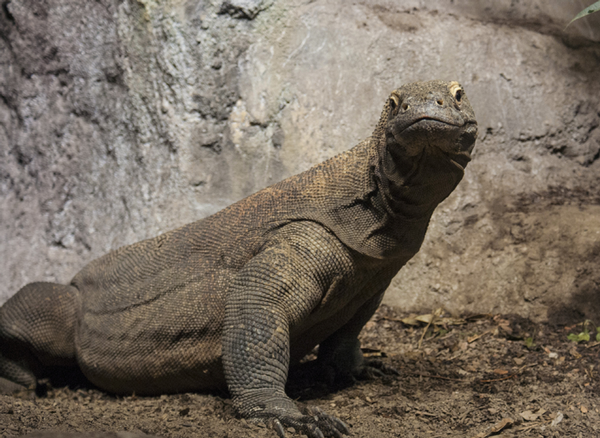
In addition to the 10,000 fish that call the aquarium home, a number of reptiles, snakes, lizards, crocodiles and even a komodo dragon are on display.
It’s a vast and varied collection, immersing visitors in each world region, no more so than in the Amazon-themed vivarium. Walking into the climate-controlled room, the change in humidity hits you immediately. Walking along a series of wooden walkways, a collection of South American fish and reptiles fill the space, with a series of pools holding the majority of the marine life. From there you step out back into the real world, which places you directly at the door of either the hotel or the park and ride/metro system.
For aquarium-, or even museum-, lovers, Aquatis is definitely something different. The team has set the goal of being one of Europe’s top aquariums and the ambition they’ve shown with the project suggests that this is likely to be the case very soon.
The Aquatis Hotel serves business people through the week and visiting tourists on weekends
The Aquatis Hotel serves business people through the week and visiting tourists on weekends
The Aquatis Hotel serves business people through the week and visiting tourists on weekends
The aquarium and its hotel are located just a few minutes away from central Lausanne
The aquarium and its hotel are located just a few minutes away from central Lausanne
Aquatis is divided up into five biozones and 12 natural environments, each with its own unique scenography representing a different world region
Aquatis is divided up into five biozones and 12 natural environments, each with its own unique scenography representing a different world region
Aquatis is divided up into five biozones and 12 natural environments, each with its own unique scenography representing a different world region
Guests are invited on a trip of the five continents to learn about their rich and diverse freshwater ecosystems
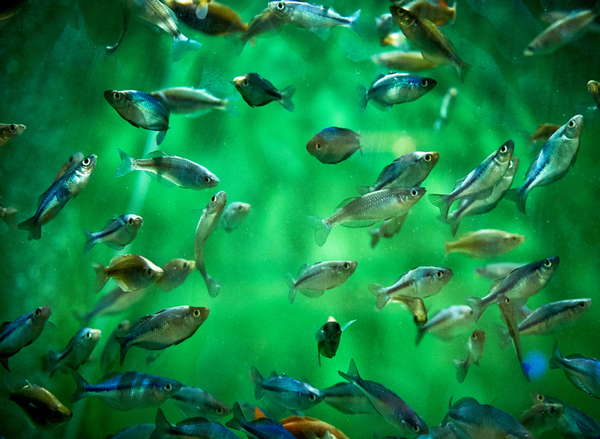
Aquatis is also home to an array of different reptiles and plant species
Global Wellness Day (GWD) marked its 15th anniversary on Saturday 13 June 2026, with the
theme: #JoyMagenta – a celebration of the healing qualities of simple gestures and activities
that spark joy.
Global luxury hospitality brand, Six Senses, has partnered with longevity healthcare provider,
HUM2N, to launch a clinic at Six Senses London, at The Whiteley.
As part of its first hotel partnership, Mayrlife – the medical health resort company known for its
site in Altaussee, Austria – has launched a day clinic at the Rosewood Vienna.
Premium London health club, KX Chelsea, will imminently unveil its most significant
redevelopment since its launch in 2002 to create an integrated wellness model combining
training, recovery and relaxation.
Rosewood Le Guanahani St Barth, on the northeast coast of Saint Barthélemy in the French
West Indies, is offering a programme of ocean-inspired yoga classes between 8-14 June to
celebrate Global Wellness Day (GWD).
Hotel de France, located on the British Isle of Jersey, has created a wellness retreat package
that includes a hot yoga session that will take place in Jersey Zoo’s butterfly sanctuary.
The Ritz-Carlton, Langkawi, in Malaysia, has revealed a schedule for Global Wellness Day
(GWD) that includes guided rainforest walks, mindful movement and guided coastal meditation
experiences.
Longevitix, a clinical platform for preventive and longevity medicine, has launched its AI-
powered intelligence system to help physicians deliver continuous, personalised longevity-
focused care at scale.
Atmantan Wellness Centre, an integrative wellness destination in Mulshi, near Pune in India, is
expanding its portfolio by adding a new centre in Hyderabad that will launch between 2028 and
2029.