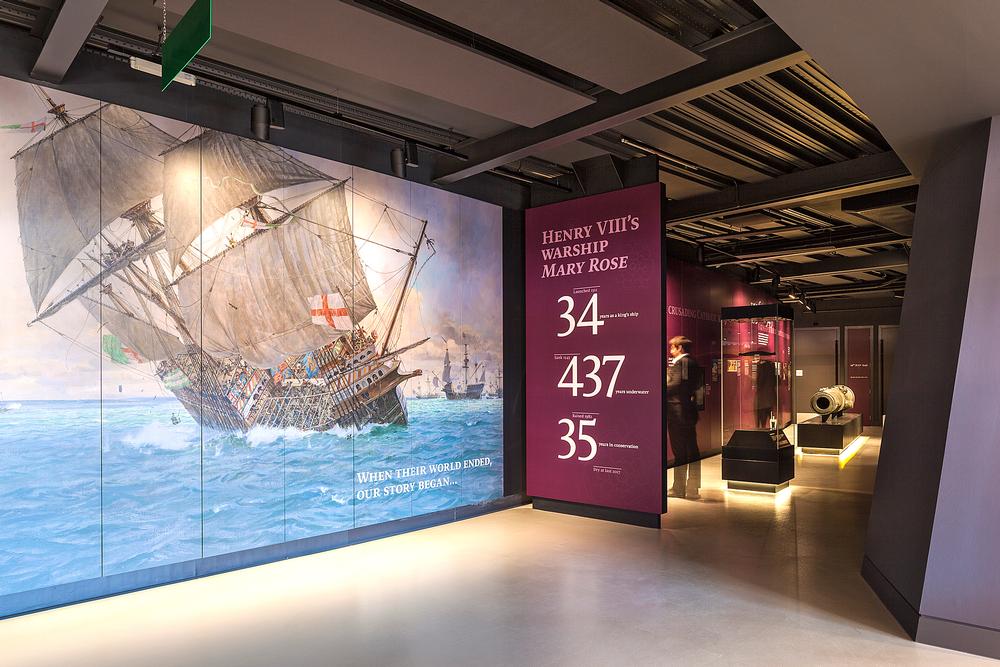
Designing a building for one of the largest objects ever displayed in a museum over an environmentally-controlled tent were among the challenges for the design team behind the Mary Rose Museum
By Kathleen Whyman | Published in Attractions Management 2013 issue 3
Read more from this issue of Spa Business magazine
View contents of Spa Business 2013 issue 3
Editor's letter: Authenticity
Having authenticity and human engagement at the heart of an attraction
creates an energy which ensures its success
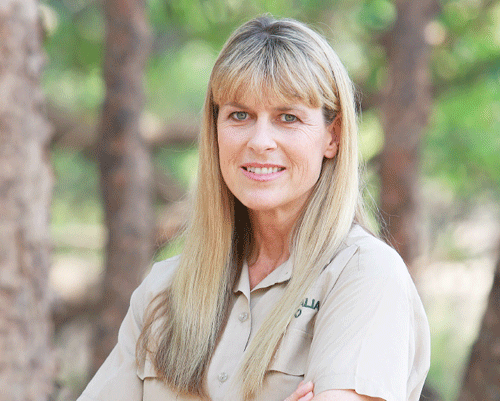
Profile: Terri Irwin
The conservationist, social entrepreneur
and operator of Australia Zoo describes
how she and her late husband, Steve,
built up their business and how she and
her children are continuing his legacy
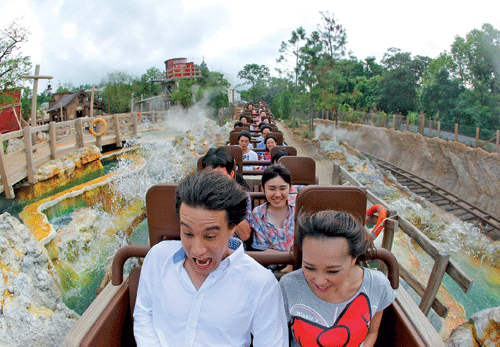
Analysis: Riding High
The TEA/AECOM theme index report
for 2012 shows that the industry's
continuing to do well with recordbreaking
attendances for many parks
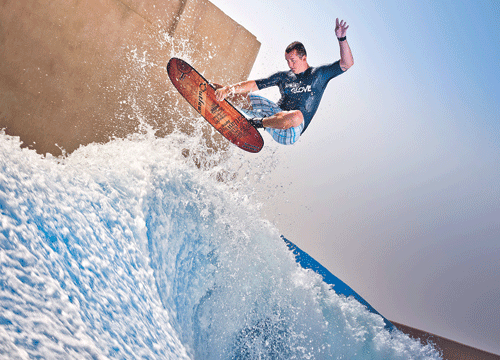
Waterparks: Tapping the experts
The merging of waterparks and theme
parks, shared experiences and multiple
sensation rides are among the trends,
as we find out from the operators
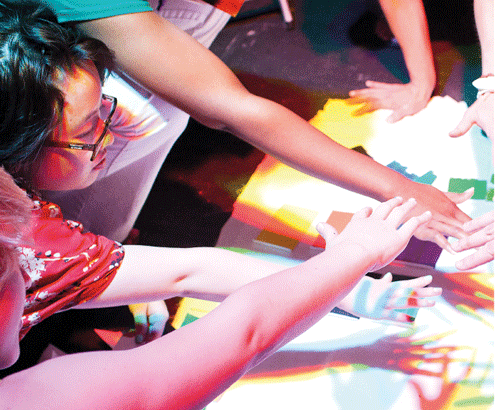
Top Team: Class act
The first themed entertainment design
degree launched last September at SCAD.
The team behind the programme describe
their inspiration and the challenges
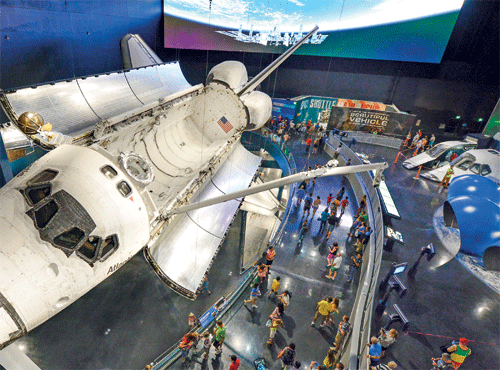
Space centre: Space age
Space Shuttle Atlantis has come home
to rest at Kennedy Space Centre Visitor
Complex. COO Bill Moore tells us how
people react when they see the shuttle
Mystery shopper: The cat's whiskers?
Sanrio Hello Kitty Town is among the
attractions at the new Puteri Harbour
Family Theme Park in Malaysia. We pay
a visit to learn more about the offer
Heritage: Mary Rose Museum
King Henry VIII's war ship is brought
back to life in an exciting new museum,
which takes visitors back to the day
she sank, almost 500 years ago
Design project profile: All hands on deck
Mary Rose Museum's design team
tell us how they created a building
that complemented, but didn't
compete with, the famous ship and
the challenges of working around
the hot box it's being conserved in
3D/4D/5D: Work dimension
We find out how film distributors work
with operators and look at some of
the new products that are available
on the market for attractions
Show preview: EAS 2013
The suppliers reveal the products and
projects they'll be showcasing in Paris
What’s the setting? When the Mary Rose was raised 30 years ago, the half of the hull that had been preserved in the mud was placed in a redundant, listed, 18th century dry dock in Portsmouth Historic Dockyard (PHD). The dock is an ancient monument in its own right. As with all dry docks, it goes down into the earth quite a long way, as it has a gate that opens out into the harbour.
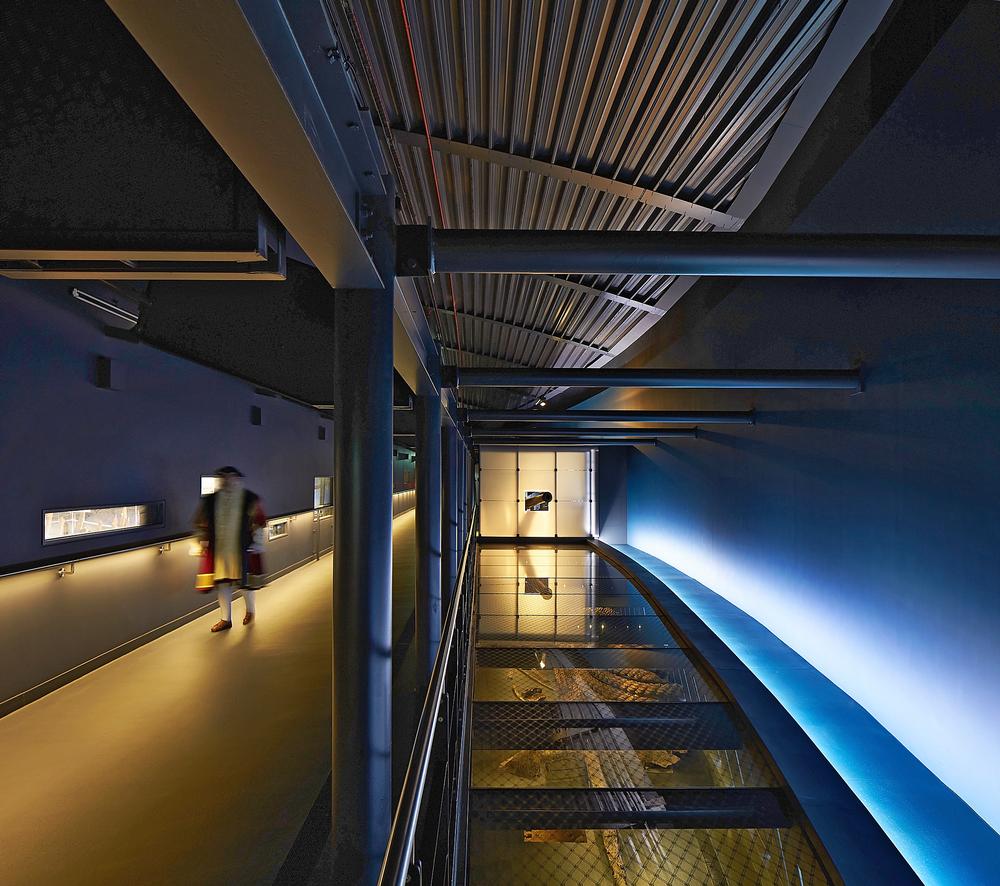
An environmentally controlled tent, or hot box, was built around the ship, which can’t come down for another five years. We had to build a museum over the top of it, which will remain perfectly intact when the hot box is taken away.
What’s the design? Our aim was to design a piece of architecture that’s relevant to both its context and contents while creating a certain amount of mystery. What we’re celebrating is the Mary Rose and the thousands of objects found in her. The architecture has to be secondary. I see it as a jewellery box, which needs to be interesting and intriguing enough to make you want to go in, but the main player is the jewel inside.
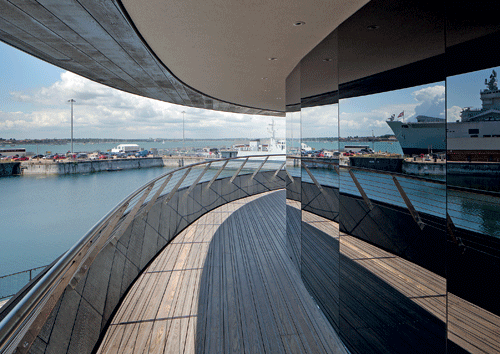
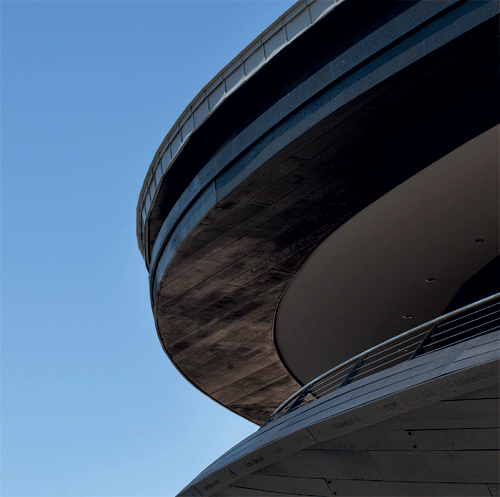
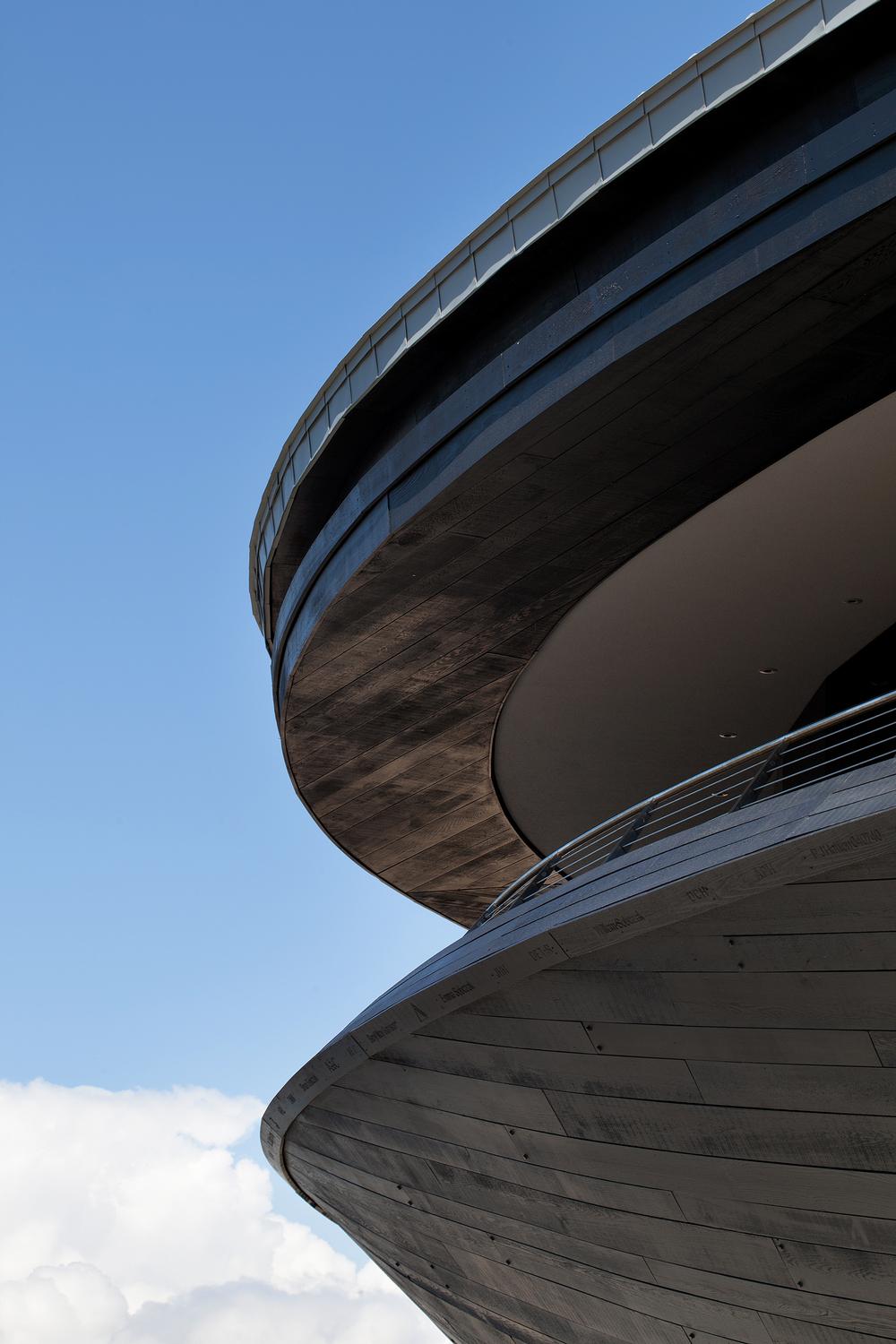
The architecture starts with the Mary Rose, so the geometry’s based on the hull with an asymmetric shape. It comes out towards the bow, which allows a terrace on the upper level, not dissimilar to the top deck of a ship. The walls are cladded timber and painted black – we needed something that gives longevity and it’s nice to use natural materials.
Working with Pringle Brandon Perkins+Will and Land Design Studio, we created a situation where the half of the Mary Rose’s remaining hull is on one side and a virtual hull containing all the objects is on the other side. Visitors walk down the centre through the context gallery and see the objects in their rightful place. At the moment there are windows looking onto the Mary Rose, but when the hot box is removed visitors will stand in the middle of this huge space with the Mary Rose on one side and the facsimile on the other.
What were the challenges? There’s no daylight inside the building for conservation reasons and it’s a challenge to provide a major museum without big windows. There are some small cut windows, like gun ports, in secondary spaces such as staff facilities.
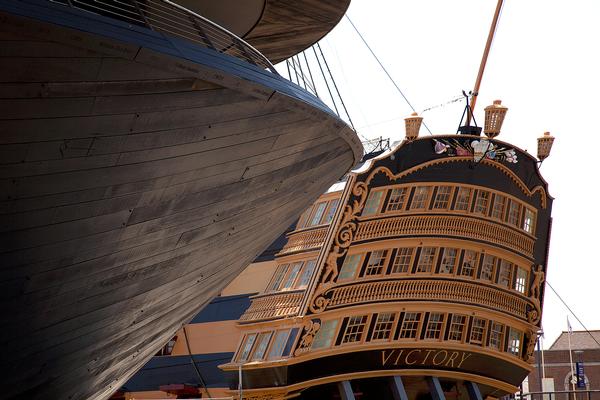
The volume of space inside had to be kept to a minimum because the air is so carefully controlled for the preservation of the timber, so we created a low profile dome roof. We also wanted to keep the height down because it sits next to Nelson’s flagship HMS Victory. It’s very unusual for architecture to be competing with such a famous ship, but I think the two communicate with each other.
What are you most proud of? People can be very critical about anything that’s out of the ordinary. When you put your head above the parapet with something like this you have to take the consequences, but it’s been well received. There’s a lot of interest and people are desperately keen to go.
Role: Interior architects
Chris Brandon
Chris BrandonPrincipalPringle Brandon Perkins+Will
When did you get involved? The design competition was announced in 2004. I know the Mary Rose Trust so had been looking out for it – I’m a marine archaeologist and can talk their language, which helped.
Knowing it’d require a powerful team to win, I approached Wilkinson Eyre, as we’d worked with Chris Wilkinson before, and he brought Land Design in.
What’s your design? Both the visual and physical connection between this extraordinary collection of objects and the ship was the essence of the design. Nature had decreed that half the ship was missing, so we replaced it with a virtual hull where we could put all the wonderful objects back in place in a mirror image. The interpretive galleries that explain what you’ve seen or are about to see go at either end.
We also wanted to explore the ship on a deck-by-deck basis. By luck, ground level was approximately the level of the main deck, from where we could go down to the hold or up to the castle deck. We put two floors in – one above ground and one below, which relate to the deck levels of the ship.
How did you decide on the galleries? The ship decided for us. Everything relates back to what was on the Mary Rose just before she sank, so the deck levels relate to that specific part of the ship. The ground floor was the main gun deck and the principle deck with fighting areas and living space – the barber’s, surgeon’s and carpenter’s cabins and all the guns. That dictated what was happening in terms of the interpretation and what was displayed.
The lower deck tells the story about storage and cooking – the purser, the cook, what people ate on board, what had to be stored and how that was arranged. Then you go up to the castle deck and it’s all about the officers, archery, rigging and sailing the ship.
What is the design’s aim? It’s the emotional attachment of being there. The interior’s very dark and the lighting is only on the objects. It’s deliberately claustrophobic to give the sense of being below deck in a ship – the floors aren’t level and you’re visually connected to the objects, which are very close to you. There’s the sound of water slapping against the sides of the ship and the watch bell ringing on the hour. You have the feeling you’re there – not in a Disney-type way, but in a very minimal way. I was really keen not to try and replicate a Tudor ship. We’re letting the objects tell the story, rather than displaying them in a theatrical way.
How did your marine experience help? Others might not have understood the nuances of what the archeological record meant, but I did. It meant we could display each object in the right place – exactly where it would have been, just before the ship sank, right down to the bricks that built the oven.
Which are you most pleased with? The context gallery, or virtual hull, with all these objects in it. It’s probably the world’s biggest showcase. It’s the heart of the museum because it’s where all the objects relate to the ship.
"Nature had decreed that half the ship was missing, so we replaced it with a virtual hull and put the objects back"
Role: Exhibition
Peter Higgins
Peter HigginsCreative directorLand Design Studio
What was your inspiration? We had one of the largest objects ever displayed in a museum in the world, which is daunting. The collaborative creative team – Wilkinson Eyre, Land Design Studio, and PBP+W – developed two big ideas, the first being the reflective hull. To help explain it, we liken it to artist Damian Hurst’s dissected cow, so you walk between two hulks of the body. It’s not a great comparison, but people seem to understand through this example.
The Mary Rose is a wonderful snapshot of Tudor history, so our second idea was to assemble everything in the exact place it would have been one minute before she sank.
What was your role? We were responsible for the total visitor experience that included the visitor sequencing, interpretation and graphics. We worked with Spiral Productions to help inform the communication media.
A very enjoyable part of this seven-year process has been not only working with the design team and the engineers, but also with the incredibly knowledgeable curatorial and conservation team within the Mary Rose Trust.
What’s your interpretation? There aren’t any labels or waxworks in the reflective hull. Instead, we use the two ends of the visitor experience for interpretive and narrative story telling.
The experience opens with a minute of media showing the horror of what it’s like to suddenly be engulfed in water, followed by the first gallery, which sets the scene. The other galleries have heavy interpretation of this wonderful collection of objects.
We developed character cases, taking members of the crew, such as the master gunner and the carpenter, and show more about them through the cases to help bring those real people to life with objects and displays. Forensic experts have reconstructed their faces with research from the human remains. Video reenactments show how the tools were used and what the people might have looked like, which enhances what otherwise might have been very beautiful, but inert displays.
What were the challenges? With such a long development period you have to be careful you don’t lose the dynamic of the creative process and that the narrative doesn’t become over analysed. If an idea’s good, don’t change it just because you have time to.
Is there anything you’d change? When the museum opened, Land Design received no acknowledgment for the exhibition design. We have to convince fellow professionals and journalists of our role as designers and storytellers and help establish respect of our craft and the importance that it has in creating a successful visitor experience.
THE MASTERPLAN
The Mary Rose Museum is just one element of Portsmouth Historic Dockyard’s heritage attraction. Forrec’s director, Matt Dawson, details the masterplan he’s drawing up for the whole site
Matt Dawson oversees the masterplan for Portsmouth Historic Dockyard
Matt DawsonDirectorForrec
What work are you doing for PHD? At Forrec, we’ve been working since September 2012 to develop a visitor experience masterplan for PHD.
As well as the Mary Rose Museum (MRM) – which opened on 31st May – the heritage attraction is home to HMS Victory, HMS Warrior, the National Museum of the Royal Navy, Harbour Tours and interactive Action Stations.
Our masterplan includes recommendations for additional experiences to be added to the site, improvements to the visitor experience, a site-wide interpretation strategy and revenue and business performance analyses.
We’re focusing on the underlying structure of the site’s visitor experience – the mix of programmatic offerings, how people move through the site, the importance of the choreography of time, the correct placement and sizing of visitor amenities and food and retail.
How has the MRM affected the plan? In terms of exhibition design, technology and interpretation, the MRM sets standards the rest of the site will need to match to meet visitor expectations.
This is a challenge, as some parts of the site haven’t been updated, so the visitor experience is uneven. We’re looking at the attractions that have been there for 20 years to see what we can do. Instead of changing the exhibitions, we may add an overlay to bring it up to date, such as an iPad audio tour.
What are the challenges? It’s some distance from the entrance gate to the Mary Rose, so the museum serves as an anchor attraction pulling visitors through the site, which is a positive. But it has also brought to light issues such as the lack of seated experiences, shade and rain shelter and other resting areas. We’re looking at all the basic visitor amenities that can make it a more pleasant day out.
What is the aim of the masterplan? The client realised that while the authority and authenticity of what they offer isn’t in doubt, they need to broaden their appeal beyond their core audience of naval history enthusiasts.
The visitor experience needs to be more engaging, more interactive, more personal and more exciting than it is at present to attract families.
We’re aiming to have the masterplan completed within the next six months and it’ll then be implemented over a five- to 10-year period. The MRM has given the dockyard a bump in attendance and publicity, so it can ride on this for the next year or two. They’re working out now, through this masterplan, what they need to do, so they can start doing it before the initial buzz starts to calm down.
In the fast-paced world of fitness and wellness, where high-intensity workouts push us to
our limits and the sweat pours, the importance of efficient recovery cannot be overstated. [more...]
The MSpa Oslo series is a perennial bestseller in global markets. With innovative
engineering and premium performance, this completely portable spa line-up is expertly
designed to meet the needs of customers worldwide. [more...]
+ More featured suppliers
COMPANY PROFILES
Living Earth Crafts
For over 50 years, LEC has been manufacturing award-winning spa equipment for the world’s finest spas [more...]
Myrtha Wellness
Founded in Italy in 1961 by visionary Giorgio Colletto, Myrtha Wellness has become a global pioneer [more...]
Designing a building for one of the largest objects ever displayed in a museum over an environmentally-controlled tent were among the challenges for the design team behind the Mary Rose Museum
By Kathleen Whyman | Published in Attractions Management 2013 issue 3
Read more from this issue of Spa Business magazine
View contents of Spa Business 2013 issue 3
Editor's letter: Authenticity
Having authenticity and human engagement at the heart of an attraction
creates an energy which ensures its success
Profile: Terri Irwin
The conservationist, social entrepreneur
and operator of Australia Zoo describes
how she and her late husband, Steve,
built up their business and how she and
her children are continuing his legacy
Analysis: Riding High
The TEA/AECOM theme index report
for 2012 shows that the industry's
continuing to do well with recordbreaking
attendances for many parks
Waterparks: Tapping the experts
The merging of waterparks and theme
parks, shared experiences and multiple
sensation rides are among the trends,
as we find out from the operators
Top Team: Class act
The first themed entertainment design
degree launched last September at SCAD.
The team behind the programme describe
their inspiration and the challenges
Space centre: Space age
Space Shuttle Atlantis has come home
to rest at Kennedy Space Centre Visitor
Complex. COO Bill Moore tells us how
people react when they see the shuttle
Mystery shopper: The cat's whiskers?
Sanrio Hello Kitty Town is among the
attractions at the new Puteri Harbour
Family Theme Park in Malaysia. We pay
a visit to learn more about the offer
Heritage: Mary Rose Museum
King Henry VIII's war ship is brought
back to life in an exciting new museum,
which takes visitors back to the day
she sank, almost 500 years ago
Design project profile: All hands on deck
Mary Rose Museum's design team
tell us how they created a building
that complemented, but didn't
compete with, the famous ship and
the challenges of working around
the hot box it's being conserved in
3D/4D/5D: Work dimension
We find out how film distributors work
with operators and look at some of
the new products that are available
on the market for attractions
Show preview: EAS 2013
The suppliers reveal the products and
projects they'll be showcasing in Paris
What’s the setting? When the Mary Rose was raised 30 years ago, the half of the hull that had been preserved in the mud was placed in a redundant, listed, 18th century dry dock in Portsmouth Historic Dockyard (PHD). The dock is an ancient monument in its own right. As with all dry docks, it goes down into the earth quite a long way, as it has a gate that opens out into the harbour.
An environmentally controlled tent, or hot box, was built around the ship, which can’t come down for another five years. We had to build a museum over the top of it, which will remain perfectly intact when the hot box is taken away.
What’s the design? Our aim was to design a piece of architecture that’s relevant to both its context and contents while creating a certain amount of mystery. What we’re celebrating is the Mary Rose and the thousands of objects found in her. The architecture has to be secondary. I see it as a jewellery box, which needs to be interesting and intriguing enough to make you want to go in, but the main player is the jewel inside.
The architecture starts with the Mary Rose, so the geometry’s based on the hull with an asymmetric shape. It comes out towards the bow, which allows a terrace on the upper level, not dissimilar to the top deck of a ship. The walls are cladded timber and painted black – we needed something that gives longevity and it’s nice to use natural materials.
Working with Pringle Brandon Perkins+Will and Land Design Studio, we created a situation where the half of the Mary Rose’s remaining hull is on one side and a virtual hull containing all the objects is on the other side. Visitors walk down the centre through the context gallery and see the objects in their rightful place. At the moment there are windows looking onto the Mary Rose, but when the hot box is removed visitors will stand in the middle of this huge space with the Mary Rose on one side and the facsimile on the other.
What were the challenges? There’s no daylight inside the building for conservation reasons and it’s a challenge to provide a major museum without big windows. There are some small cut windows, like gun ports, in secondary spaces such as staff facilities.
The volume of space inside had to be kept to a minimum because the air is so carefully controlled for the preservation of the timber, so we created a low profile dome roof. We also wanted to keep the height down because it sits next to Nelson’s flagship HMS Victory. It’s very unusual for architecture to be competing with such a famous ship, but I think the two communicate with each other.
What are you most proud of? People can be very critical about anything that’s out of the ordinary. When you put your head above the parapet with something like this you have to take the consequences, but it’s been well received. There’s a lot of interest and people are desperately keen to go.
Role: Interior architects
Chris Brandon
Chris BrandonPrincipalPringle Brandon Perkins+Will
When did you get involved? The design competition was announced in 2004. I know the Mary Rose Trust so had been looking out for it – I’m a marine archaeologist and can talk their language, which helped.
Knowing it’d require a powerful team to win, I approached Wilkinson Eyre, as we’d worked with Chris Wilkinson before, and he brought Land Design in.
What’s your design? Both the visual and physical connection between this extraordinary collection of objects and the ship was the essence of the design. Nature had decreed that half the ship was missing, so we replaced it with a virtual hull where we could put all the wonderful objects back in place in a mirror image. The interpretive galleries that explain what you’ve seen or are about to see go at either end.
We also wanted to explore the ship on a deck-by-deck basis. By luck, ground level was approximately the level of the main deck, from where we could go down to the hold or up to the castle deck. We put two floors in – one above ground and one below, which relate to the deck levels of the ship.
How did you decide on the galleries? The ship decided for us. Everything relates back to what was on the Mary Rose just before she sank, so the deck levels relate to that specific part of the ship. The ground floor was the main gun deck and the principle deck with fighting areas and living space – the barber’s, surgeon’s and carpenter’s cabins and all the guns. That dictated what was happening in terms of the interpretation and what was displayed.
The lower deck tells the story about storage and cooking – the purser, the cook, what people ate on board, what had to be stored and how that was arranged. Then you go up to the castle deck and it’s all about the officers, archery, rigging and sailing the ship.
What is the design’s aim? It’s the emotional attachment of being there. The interior’s very dark and the lighting is only on the objects. It’s deliberately claustrophobic to give the sense of being below deck in a ship – the floors aren’t level and you’re visually connected to the objects, which are very close to you. There’s the sound of water slapping against the sides of the ship and the watch bell ringing on the hour. You have the feeling you’re there – not in a Disney-type way, but in a very minimal way. I was really keen not to try and replicate a Tudor ship. We’re letting the objects tell the story, rather than displaying them in a theatrical way.
How did your marine experience help? Others might not have understood the nuances of what the archeological record meant, but I did. It meant we could display each object in the right place – exactly where it would have been, just before the ship sank, right down to the bricks that built the oven.
Which are you most pleased with? The context gallery, or virtual hull, with all these objects in it. It’s probably the world’s biggest showcase. It’s the heart of the museum because it’s where all the objects relate to the ship.
"Nature had decreed that half the ship was missing, so we replaced it with a virtual hull and put the objects back"
Role: Exhibition
Peter Higgins
Peter HigginsCreative directorLand Design Studio
What was your inspiration? We had one of the largest objects ever displayed in a museum in the world, which is daunting. The collaborative creative team – Wilkinson Eyre, Land Design Studio, and PBP+W – developed two big ideas, the first being the reflective hull. To help explain it, we liken it to artist Damian Hurst’s dissected cow, so you walk between two hulks of the body. It’s not a great comparison, but people seem to understand through this example.
The Mary Rose is a wonderful snapshot of Tudor history, so our second idea was to assemble everything in the exact place it would have been one minute before she sank.
What was your role? We were responsible for the total visitor experience that included the visitor sequencing, interpretation and graphics. We worked with Spiral Productions to help inform the communication media.
A very enjoyable part of this seven-year process has been not only working with the design team and the engineers, but also with the incredibly knowledgeable curatorial and conservation team within the Mary Rose Trust.
What’s your interpretation? There aren’t any labels or waxworks in the reflective hull. Instead, we use the two ends of the visitor experience for interpretive and narrative story telling.
The experience opens with a minute of media showing the horror of what it’s like to suddenly be engulfed in water, followed by the first gallery, which sets the scene. The other galleries have heavy interpretation of this wonderful collection of objects.
We developed character cases, taking members of the crew, such as the master gunner and the carpenter, and show more about them through the cases to help bring those real people to life with objects and displays. Forensic experts have reconstructed their faces with research from the human remains. Video reenactments show how the tools were used and what the people might have looked like, which enhances what otherwise might have been very beautiful, but inert displays.
What were the challenges? With such a long development period you have to be careful you don’t lose the dynamic of the creative process and that the narrative doesn’t become over analysed. If an idea’s good, don’t change it just because you have time to.
Is there anything you’d change? When the museum opened, Land Design received no acknowledgment for the exhibition design. We have to convince fellow professionals and journalists of our role as designers and storytellers and help establish respect of our craft and the importance that it has in creating a successful visitor experience.
THE MASTERPLAN
The Mary Rose Museum is just one element of Portsmouth Historic Dockyard’s heritage attraction. Forrec’s director, Matt Dawson, details the masterplan he’s drawing up for the whole site
Matt Dawson oversees the masterplan for Portsmouth Historic Dockyard
Matt DawsonDirectorForrec
What work are you doing for PHD? At Forrec, we’ve been working since September 2012 to develop a visitor experience masterplan for PHD.
As well as the Mary Rose Museum (MRM) – which opened on 31st May – the heritage attraction is home to HMS Victory, HMS Warrior, the National Museum of the Royal Navy, Harbour Tours and interactive Action Stations.
Our masterplan includes recommendations for additional experiences to be added to the site, improvements to the visitor experience, a site-wide interpretation strategy and revenue and business performance analyses.
We’re focusing on the underlying structure of the site’s visitor experience – the mix of programmatic offerings, how people move through the site, the importance of the choreography of time, the correct placement and sizing of visitor amenities and food and retail.
How has the MRM affected the plan? In terms of exhibition design, technology and interpretation, the MRM sets standards the rest of the site will need to match to meet visitor expectations.
This is a challenge, as some parts of the site haven’t been updated, so the visitor experience is uneven. We’re looking at the attractions that have been there for 20 years to see what we can do. Instead of changing the exhibitions, we may add an overlay to bring it up to date, such as an iPad audio tour.
What are the challenges? It’s some distance from the entrance gate to the Mary Rose, so the museum serves as an anchor attraction pulling visitors through the site, which is a positive. But it has also brought to light issues such as the lack of seated experiences, shade and rain shelter and other resting areas. We’re looking at all the basic visitor amenities that can make it a more pleasant day out.
What is the aim of the masterplan? The client realised that while the authority and authenticity of what they offer isn’t in doubt, they need to broaden their appeal beyond their core audience of naval history enthusiasts.
The visitor experience needs to be more engaging, more interactive, more personal and more exciting than it is at present to attract families.
We’re aiming to have the masterplan completed within the next six months and it’ll then be implemented over a five- to 10-year period. The MRM has given the dockyard a bump in attendance and publicity, so it can ride on this for the next year or two. They’re working out now, through this masterplan, what they need to do, so they can start doing it before the initial buzz starts to calm down.
Ameyalli, the 78-acre wellbeing resort and residential community in Midway in Utah, US, has
broken ground on phase two of the hot spring development – the Ameyalli Resort and Spa –
which is due to open in 2028.
Gran Hotel Taoro in northern Tenerife, Spain, has completed the final phase of its three-year
renovation with the debut of its Sandára Wellness Centre.
Hand and Stone Massage and Facial Spa, the spa business with more than 650 locations across
the US and Canada, has appointed franchise expert Carrie Walsh as CEO as the company plans
to expand.
Synergy – The Retreat Show, the global trade show for retreats, has launched a global research
initiative that will provide insights into the retreat sector from both consumer and industry
perspectives.
The Wellness Tourism Association (WTA) has published a non-regulatory global industry
framework designed to ensure the retreat market offers responsible experiences.
A new survey of UK and international spa practitioners shows that stress, burnout and
wellbeing concerns have caused one in three respondents to consider leaving the industry.
The UK's four Chief Medical Officers have published a refreshed edition of Physical activity
guidelines: UK Chief Medical Officers' report, updating the evidence that underpins the nation's
physical activity recommendations and placing greater emphasis on strength, balance, reducing
sedentary behaviour and, for the first time, supporting people taking weight loss medications.
In the fast-paced world of fitness and wellness, where high-intensity workouts push us to
our limits and the sweat pours, the importance of efficient recovery cannot be overstated. [more...]
The MSpa Oslo series is a perennial bestseller in global markets. With innovative
engineering and premium performance, this completely portable spa line-up is expertly
designed to meet the needs of customers worldwide. [more...]
+ More featured suppliers
COMPANY PROFILES
Living Earth Crafts For over 50 years, LEC has been manufacturing award-winning spa equipment for the world’s finest spas [more...]