Yes! Send me the FREE digital editions of Spa Business and Spa Business insider magazines and the FREE weekly Spa Business and Spa Business insider ezines and breaking news alerts!
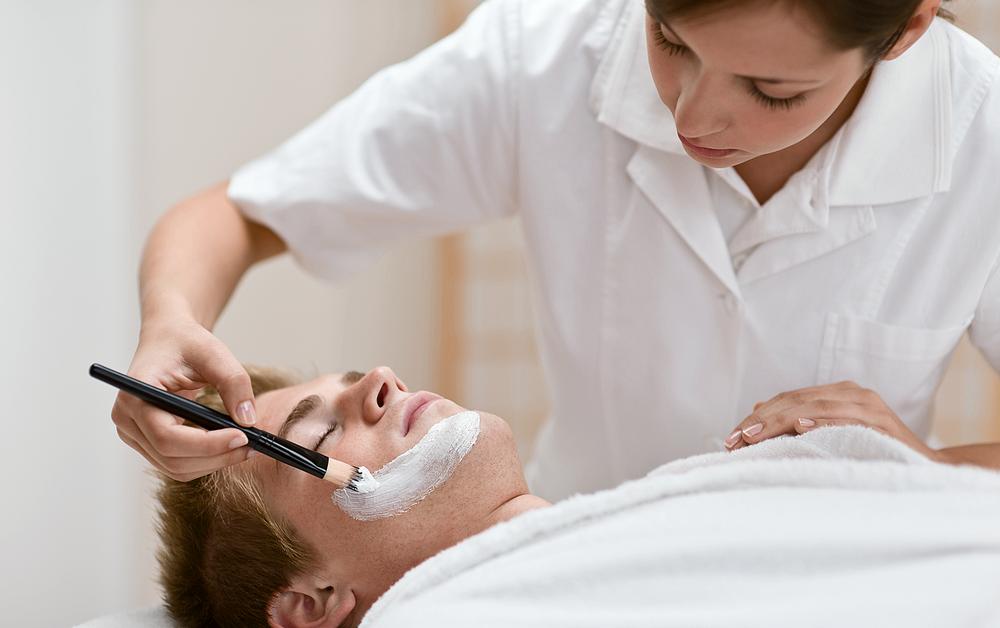
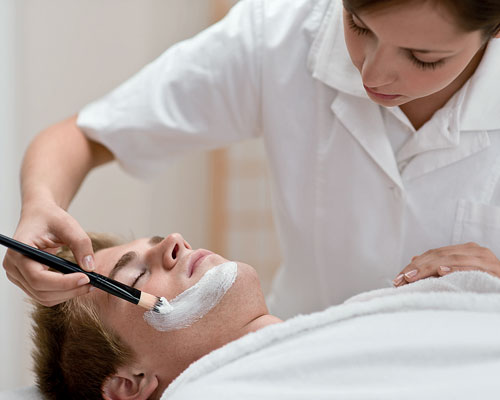
Male millennials are experimenting beyond massage, trying out facials and manicures / shutterstock/CandyBox Images
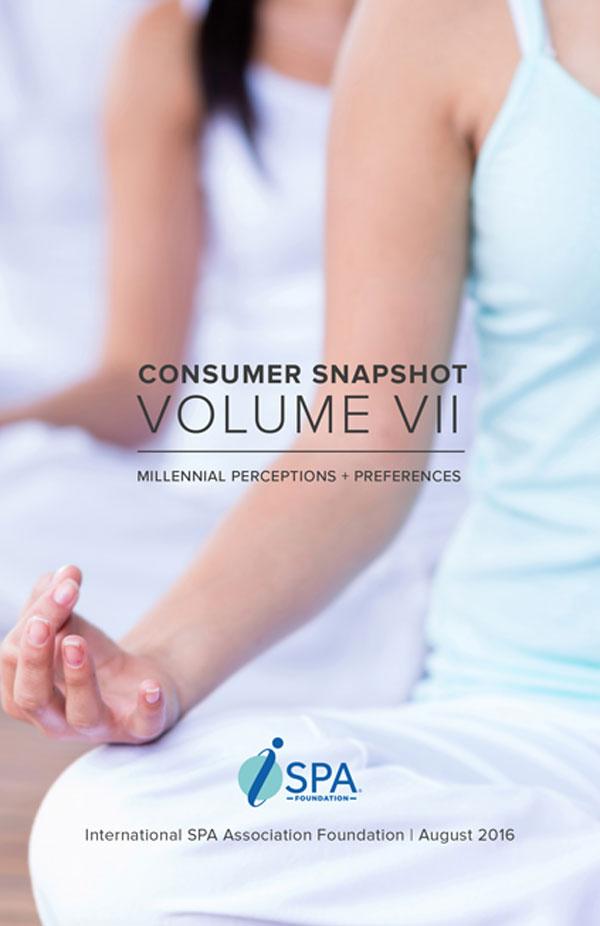
The perceptions and preferences of millennials – those born between 1980 and 1997 – was the focus of this year’s Consumer Snapshot Initiative by the International Spa Association (ISPA) and PricewaterhouseCoopers (PwC), results of which were released in September. And out of the 1,000-plus 17- to 35-year-olds who responded to the survey, 56 per cent reported having visited a spa in the last 12 months, compared to 44 per cent who had not.
This is the first time in the five-year history of ISPA’s consumer surveys that spa-goers have outnumbered non-spa-goers – evidence that young people have become powerful players in the spa market. “Millennials will be the core spa-going generation for years to come,” notes Russell Donaldson, senior associate of research at PwC.
Perhaps most notably, 46 per cent of the male millennials surveyed are spa-goers. And men are increasingly exploring treatments outside of massage; 52 per cent claim to have had a manicure or pedicure, and over half – 59 per cent – have had a facial at a spa. That said, 24 per cent of the men who did go to a spa said they were put off from visiting more often because they were either not comfortable or familiar with the spa environment or etiquette, suggesting the industry would do well to address this.
Not surprisingly, the majority of millennial spa-goers – 64 per cent – are aged 25-35, with just over one in three aged 17-25. However, significantly more millennials aged over 25 think spa-going is too expensive, compared to those aged 25 or under (71 per cent compared to 53 per cent).
Most millennials are infrequent spa-goers – 83 per cent go to a spa less than five times a year – and a high amount (60 per cent) stay no longer than two hours and spend between US$50 and US$150 on treatments (61 per cent).
Money (65 per cent) and time (51 per cent) are the two top reasons for not visiting a spa more often, which is in line with previous ISPA/PwC consumer studies of other demographics.
Interestingly, millennials’ affinity with technology hasn’t spilled over into the spa industry yet. Just 32 per cent book their spa appointments online (by laptop, smartphone or tablet), compared to 40 per cent who book via telephone.
That said, men were more likely to make an appointment online (36 per cent) rather than by phone (30 per cent). In contrast, 49 per cent of women booked treatments by phone, compared to 29 per cent who booked online.
ISPA’s consumer surveys are published in addition to its annual industry study, the latest of which shows that spa revenues in the US passed the US$16bn (€14.5bn, £13.1bn) mark in 2015.
Read more from this issue of Spa Business magazine
Promotional feature: Phytomer
As a pioneer of marine skincare, Phytomer represents a story of three impassioned generations and a dedication to cultivating the purest spa ingredients from the northern French coast
Le Atelier by C.O.D.E. doesn't offer a standard bespoke service, it provides a highly
customised approach to designing massage beds and loungers in high-end wellness
environments. [more...]
Male millennials are experimenting beyond massage, trying out facials and manicures / shutterstock/CandyBox Images
The perceptions and preferences of millennials – those born between 1980 and 1997 – was the focus of this year’s Consumer Snapshot Initiative by the International Spa Association (ISPA) and PricewaterhouseCoopers (PwC), results of which were released in September. And out of the 1,000-plus 17- to 35-year-olds who responded to the survey, 56 per cent reported having visited a spa in the last 12 months, compared to 44 per cent who had not.
This is the first time in the five-year history of ISPA’s consumer surveys that spa-goers have outnumbered non-spa-goers – evidence that young people have become powerful players in the spa market. “Millennials will be the core spa-going generation for years to come,” notes Russell Donaldson, senior associate of research at PwC.
Perhaps most notably, 46 per cent of the male millennials surveyed are spa-goers. And men are increasingly exploring treatments outside of massage; 52 per cent claim to have had a manicure or pedicure, and over half – 59 per cent – have had a facial at a spa. That said, 24 per cent of the men who did go to a spa said they were put off from visiting more often because they were either not comfortable or familiar with the spa environment or etiquette, suggesting the industry would do well to address this.
Not surprisingly, the majority of millennial spa-goers – 64 per cent – are aged 25-35, with just over one in three aged 17-25. However, significantly more millennials aged over 25 think spa-going is too expensive, compared to those aged 25 or under (71 per cent compared to 53 per cent).
Most millennials are infrequent spa-goers – 83 per cent go to a spa less than five times a year – and a high amount (60 per cent) stay no longer than two hours and spend between US$50 and US$150 on treatments (61 per cent).
Money (65 per cent) and time (51 per cent) are the two top reasons for not visiting a spa more often, which is in line with previous ISPA/PwC consumer studies of other demographics.
Interestingly, millennials’ affinity with technology hasn’t spilled over into the spa industry yet. Just 32 per cent book their spa appointments online (by laptop, smartphone or tablet), compared to 40 per cent who book via telephone.
That said, men were more likely to make an appointment online (36 per cent) rather than by phone (30 per cent). In contrast, 49 per cent of women booked treatments by phone, compared to 29 per cent who booked online.
ISPA’s consumer surveys are published in addition to its annual industry study, the latest of which shows that spa revenues in the US passed the US$16bn (€14.5bn, £13.1bn) mark in 2015.
Read more from this issue of Spa Business magazine
Promotional feature: Phytomer
As a pioneer of marine skincare, Phytomer represents a story of three impassioned generations and a dedication to cultivating the purest spa ingredients from the northern French coast
Global Wellness Day (GWD) marked its 15th anniversary on Saturday 13 June 2026, with the
theme: #JoyMagenta – a celebration of the healing qualities of simple gestures and activities
that spark joy.
Global luxury hospitality brand, Six Senses, has partnered with longevity healthcare provider,
HUM2N, to launch a clinic at Six Senses London, at The Whiteley.
As part of its first hotel partnership, Mayrlife – the medical health resort company known for its
site in Altaussee, Austria – has launched a day clinic at the Rosewood Vienna.
Premium London health club, KX Chelsea, will imminently unveil its most significant
redevelopment since its launch in 2002 to create an integrated wellness model combining
training, recovery and relaxation.
Rosewood Le Guanahani St Barth, on the northeast coast of Saint Barthélemy in the French
West Indies, is offering a programme of ocean-inspired yoga classes between 8-14 June to
celebrate Global Wellness Day (GWD).
Hotel de France, located on the British Isle of Jersey, has created a wellness retreat package
that includes a hot yoga session that will take place in Jersey Zoo’s butterfly sanctuary.
The Ritz-Carlton, Langkawi, in Malaysia, has revealed a schedule for Global Wellness Day
(GWD) that includes guided rainforest walks, mindful movement and guided coastal meditation
experiences.
Longevitix, a clinical platform for preventive and longevity medicine, has launched its AI-
powered intelligence system to help physicians deliver continuous, personalised longevity-
focused care at scale.
Atmantan Wellness Centre, an integrative wellness destination in Mulshi, near Pune in India, is
expanding its portfolio by adding a new centre in Hyderabad that will launch between 2028 and
2029.
Le Atelier by C.O.D.E. doesn't offer a standard bespoke service, it provides a highly
customised approach to designing massage beds and loungers in high-end wellness
environments. [more...]