Yes! Send me the FREE digital editions of Spa Business and Spa Business insider magazines and the FREE weekly Spa Business and Spa Business insider ezines and breaking news alerts!
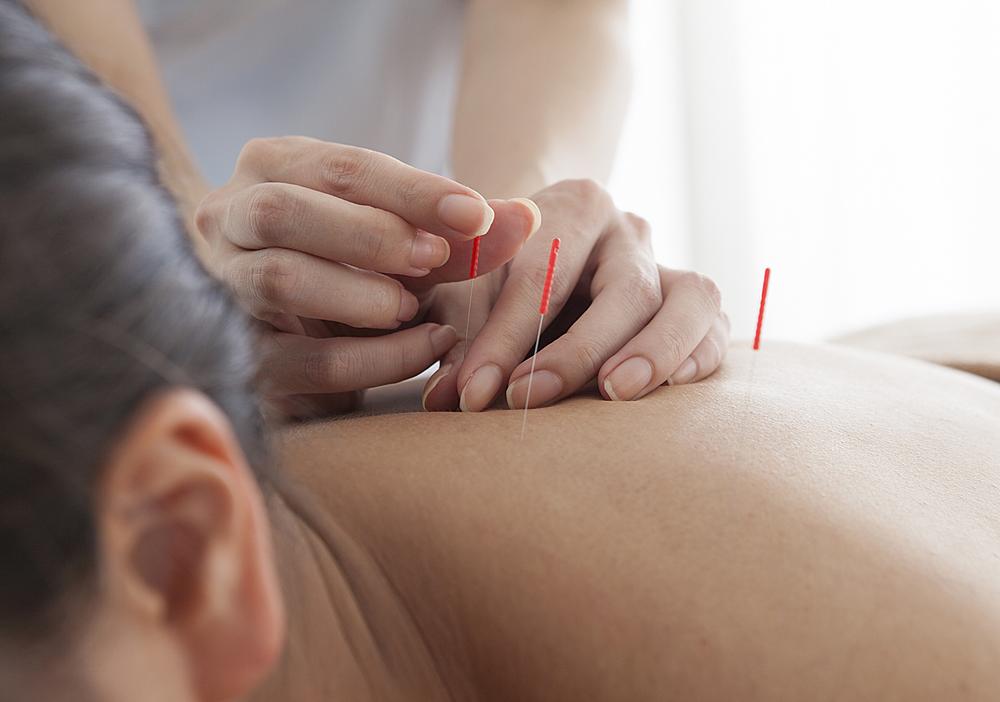
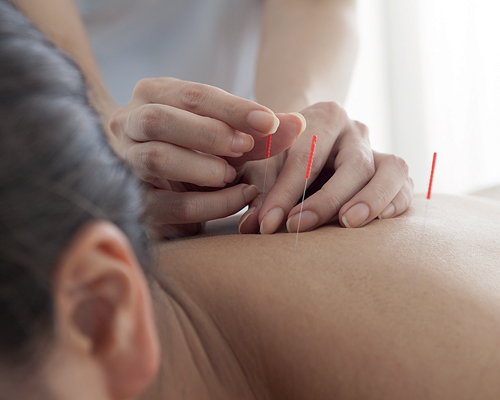
Cohen says the study shows acupuncture can be a viable alternative to drugs / Leonardo da/SHUTTERSTOCK
Professor Marc Cohen of RMIT University in Melbourne, Australia – a familiar face in the spa industry – has led a large study on the use of acupuncture for treating acute pain, finding the practice provides relief equivalent to the use of drugs in an emergency room setting.
The randomised, controlled trial involved 528 patients with acute lower back pain, migraine or ankle sprains who presented at the emergency departments of four leading Melbourne hospitals between January 2010 and December 2011.
“While acupuncture is widely used by practitioners in community settings for treating pain, it is rarely used in hospital emergency departments,” says Cohen.
Patients who identified their level of pain as at least four on a 10-point scale randomly received one of three types of treatment: acupuncture alone, acupuncture plus pharmacotherapy, or pharmacotherapy alone.
One hour after treatment, less than 40 per cent of patients across all three groups felt any significant pain reduction (two or more points), but 48 hours later, the vast majority found their treatment acceptable, with 82.8 per cent of acupuncture-only patients saying they would probably or definitely repeat their treatment. This is compared with 80.8 per cent in the combined group, and 78.2 per cent in the pharmacotherapy-only group.
Cohen says the study shows acupuncture is a viable alternative and would be especially beneficial for patients who are unable to take standard pain-relieving drugs.
And while the emergency room setting is a far cry from the relaxed vibes of a destination spa, Cohen says that beyond providing further evidence of acupuncture’s efficacy, there are takeaways for our industry.
“Acupuncture stimulates the body’s immune system,” he explains. “You’re not applying a drug, you’re just manipulating the body’s own healing mechanisms. The study also speaks to the integration of ancient and modern technology – which is often what we do in spas. They’re not incompatible.”
Cohen is currently working on several other wellness-related studies, including the Global Sauna Survey, which seeks to gain insight into people’s sauna habits and experiences (saunasurvey.org); and a study on users of the Wim Hof method – which uses cold therapy, breathing exercises and a committed mindset – to ascertain its health and resilience benefits (WHMsurvey.org).
Read more from this issue of Spa Business magazine
Promotional feature: Elemis - Deep Benefits
With its market-leading Pro-Collagen skincare products already
a worldwide success, Elemis has further expanded its premium
anti-ageing range with a potent new seaweed-based Marine Oil
Promotional feature: RKF - a touch of luxury
As a global leader in the field of luxury
fabrics for spas and hospitality, RKF
is known for pushing the boundaries
of design and function. We find out
about the company's latest work
In the fast-paced world of fitness and wellness, where high-intensity workouts push us to
our limits and the sweat pours, the importance of efficient recovery cannot be overstated. [more...]
+ More featured suppliers
COMPANY PROFILES
Esse
Esse is a professional microbiome skincare brand founded in South Africa in 2002 by organic chemist, [more...]
Art of Cryo
Art of Cryo is the premium wellness and recovery brand of L&R Kältetechnik, a German family-owned en [more...]
Cohen says the study shows acupuncture can be a viable alternative to drugs / Leonardo da/SHUTTERSTOCK
Professor Marc Cohen of RMIT University in Melbourne, Australia – a familiar face in the spa industry – has led a large study on the use of acupuncture for treating acute pain, finding the practice provides relief equivalent to the use of drugs in an emergency room setting.
The randomised, controlled trial involved 528 patients with acute lower back pain, migraine or ankle sprains who presented at the emergency departments of four leading Melbourne hospitals between January 2010 and December 2011.
“While acupuncture is widely used by practitioners in community settings for treating pain, it is rarely used in hospital emergency departments,” says Cohen.
Patients who identified their level of pain as at least four on a 10-point scale randomly received one of three types of treatment: acupuncture alone, acupuncture plus pharmacotherapy, or pharmacotherapy alone.
One hour after treatment, less than 40 per cent of patients across all three groups felt any significant pain reduction (two or more points), but 48 hours later, the vast majority found their treatment acceptable, with 82.8 per cent of acupuncture-only patients saying they would probably or definitely repeat their treatment. This is compared with 80.8 per cent in the combined group, and 78.2 per cent in the pharmacotherapy-only group.
Cohen says the study shows acupuncture is a viable alternative and would be especially beneficial for patients who are unable to take standard pain-relieving drugs.
And while the emergency room setting is a far cry from the relaxed vibes of a destination spa, Cohen says that beyond providing further evidence of acupuncture’s efficacy, there are takeaways for our industry.
“Acupuncture stimulates the body’s immune system,” he explains. “You’re not applying a drug, you’re just manipulating the body’s own healing mechanisms. The study also speaks to the integration of ancient and modern technology – which is often what we do in spas. They’re not incompatible.”
Cohen is currently working on several other wellness-related studies, including the Global Sauna Survey, which seeks to gain insight into people’s sauna habits and experiences (saunasurvey.org); and a study on users of the Wim Hof method – which uses cold therapy, breathing exercises and a committed mindset – to ascertain its health and resilience benefits (WHMsurvey.org).
Read more from this issue of Spa Business magazine
Promotional feature: Elemis - Deep Benefits
With its market-leading Pro-Collagen skincare products already
a worldwide success, Elemis has further expanded its premium
anti-ageing range with a potent new seaweed-based Marine Oil
Promotional feature: RKF - a touch of luxury
As a global leader in the field of luxury
fabrics for spas and hospitality, RKF
is known for pushing the boundaries
of design and function. We find out
about the company's latest work
TLee Spas and Wellness has revealed the design concept for a high-tech spa with body
mapping scanners to improve public health, for AI company Midjourney.
Ameyalli, the 78-acre wellbeing resort and residential community in Midway in Utah, US, has
broken ground on phase two of the hot spring development – the Ameyalli Resort and Spa –
which is due to open in 2028.
Gran Hotel Taoro in northern Tenerife, Spain, has completed the final phase of its three-year
renovation with the debut of its Sandára Wellness Centre.
Hand and Stone Massage and Facial Spa, the spa business with more than 650 locations across
the US and Canada, has appointed franchise expert Carrie Walsh as CEO as the company plans
to expand.
Synergy – The Retreat Show, the global trade show for retreats, has launched a global research
initiative that will provide insights into the retreat sector from both consumer and industry
perspectives.
The Wellness Tourism Association (WTA) has published a non-regulatory global industry
framework designed to ensure the retreat market offers responsible experiences.
A new survey of UK and international spa practitioners shows that stress, burnout and
wellbeing concerns have caused one in three respondents to consider leaving the industry.
The UK's four Chief Medical Officers have published a refreshed edition of Physical activity
guidelines: UK Chief Medical Officers' report, updating the evidence that underpins the nation's
physical activity recommendations and placing greater emphasis on strength, balance, reducing
sedentary behaviour and, for the first time, supporting people taking weight loss medications.
In the fast-paced world of fitness and wellness, where high-intensity workouts push us to
our limits and the sweat pours, the importance of efficient recovery cannot be overstated. [more...]
+ More featured suppliers
COMPANY PROFILES
Esse Esse is a professional microbiome skincare brand founded in South Africa in 2002 by organic chemist, [more...]