Yes! Send me the FREE digital editions of Spa Business and Spa Business insider magazines and the FREE weekly Spa Business and Spa Business insider ezines and breaking news alerts!
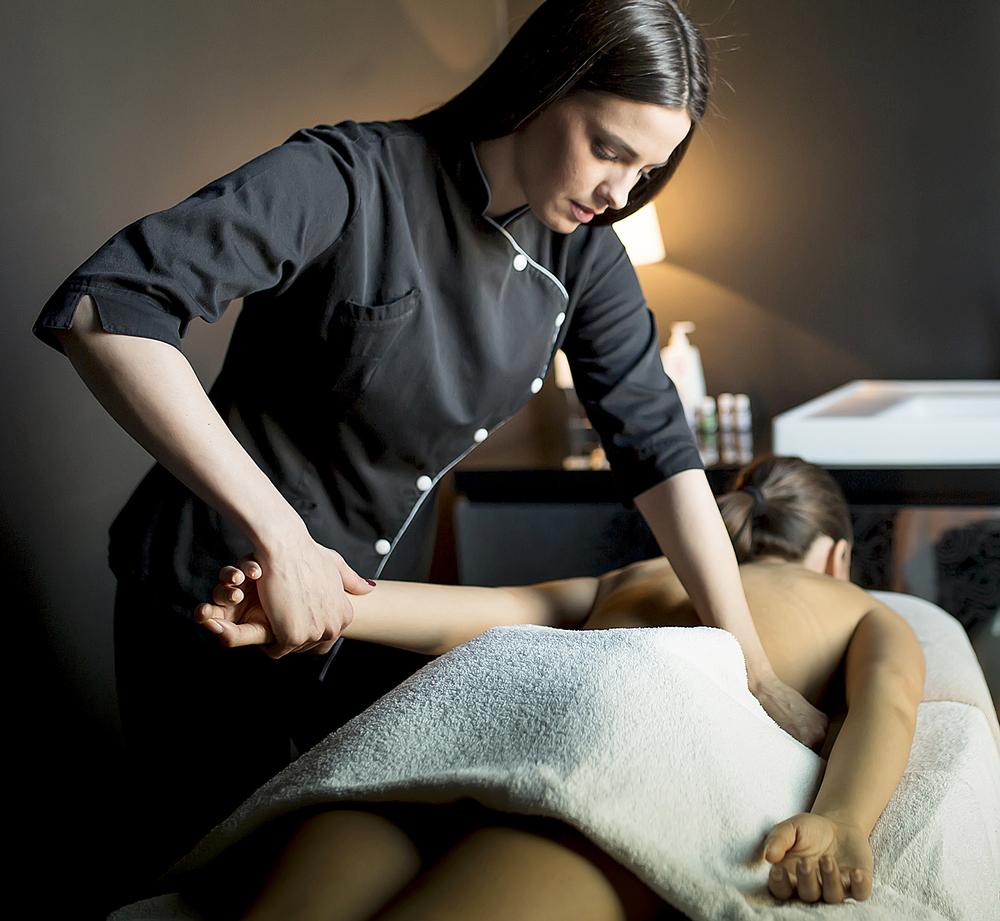
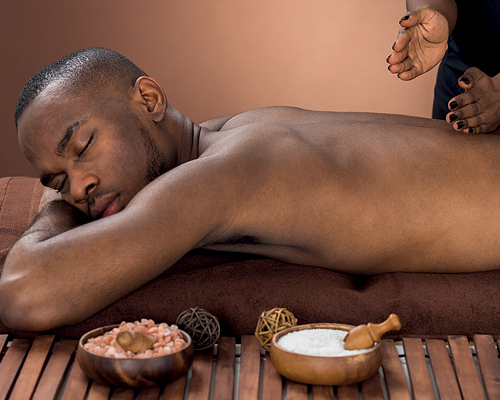
Skin feels softer when touch is
delivered intentionally the study found / Goran Bogicevic/SHUTTERSTOCK
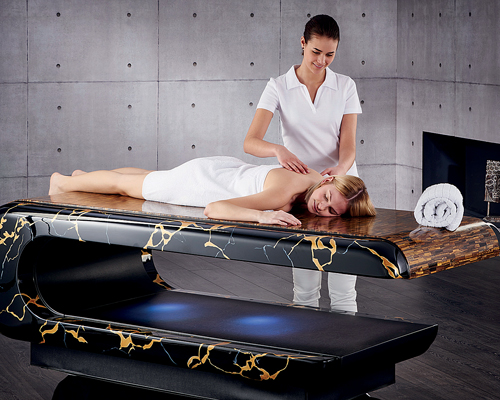
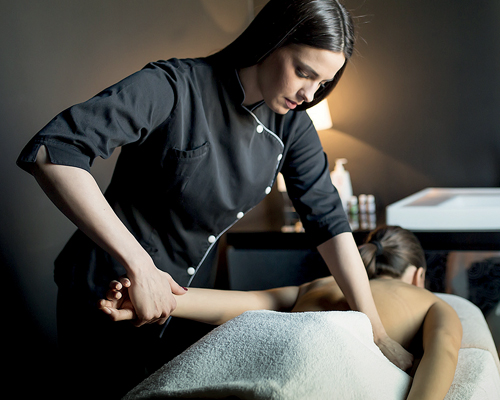
Spas know about the power of touch and its mental and physical benefits from first-hand experience. Scientific studies have backed up these beliefs as well. Yet until recently, most research has focused on the benefits for the person receiving touch. But now a study* by University College London, UK, has highlighted the effect on the person actively touching others with some interesting findings.
The scientists found that participants consistently rated the skin of another person softer than their own, whether or not it really was. They suggest that this phenomenon may exist to ensure that humans are motivated to build social bonds through touch. “What’s intriguing about the illusion is its specificity,” says Antje Gentsch of UCL. “We found the illusion to be strongest when the stroking was applied intentionally and according to the optimal properties of the specialised system in the skin for receiving affective touch.”
This system typically responds to slow, gentle stroking found in intimate relationships and encodes the pleasure of touch, Gentsch explains.
“The illusion reveals a largely automatic and unconscious mechanism by which ‘giving pleasure is receiving pleasure’ in the touch domain,” says lead researcher Aikaterini Fotopoulou.
Earlier studies show that softness and smoothness stimulate parts of the brain associated with emotion and reward. Therefore, the ‘illusion’ that other people are softer ensures that reaching out and touching another person comes as its own reward. The UCL team believe this rewarding illusion acts as a kind of social glue, bonding people to each other.
In the last issue of Spa Business (see SB16/2 p58), neuroscientist Dr Claudia Aguirre also describes how gentle pressure – the kind we feel during a light massage – activates a different part of the brain to touch that is harder and quicker. This softer kind of touch reaches the brain at a much slower rate via slow-conducting fibres known c-tactile or CT fibres.
• Read more: http://lei.sr?a=k3w2e l
*Source: Fotopoulou, A et al. Active Interpersonal Touch Gives Rise to the Social Softness Illusion. Current Biology. September 2015
Read more from this issue of Spa Business magazine
Top team: Gwinganna Lifestyle Retreat
The people behind this world-renowned lifestyle retreat share their business insights with Julie Cramer. Plus a focus on co-investor Hugh Jackman
Ask an expert: Visiting practitioners
Done well, visiting practitioner programmes can boost profits by up to 40 per cent. But how can spas get the offer right? Kate Parker investigates
Promotional feature: Esadore - creating a splash
The MD of Esadore International, Theodora Kioussis, explains how the company’s creative, manufacturing and operational skill sets can bring an international managing director
of UAE-based esadore International to life in a short space of time
In the fast-paced world of fitness and wellness, where high-intensity workouts push us to
our limits and the sweat pours, the importance of efficient recovery cannot be overstated. [more...]
Skin feels softer when touch is
delivered intentionally the study found / Goran Bogicevic/SHUTTERSTOCK
Spas know about the power of touch and its mental and physical benefits from first-hand experience. Scientific studies have backed up these beliefs as well. Yet until recently, most research has focused on the benefits for the person receiving touch. But now a study* by University College London, UK, has highlighted the effect on the person actively touching others with some interesting findings.
The scientists found that participants consistently rated the skin of another person softer than their own, whether or not it really was. They suggest that this phenomenon may exist to ensure that humans are motivated to build social bonds through touch. “What’s intriguing about the illusion is its specificity,” says Antje Gentsch of UCL. “We found the illusion to be strongest when the stroking was applied intentionally and according to the optimal properties of the specialised system in the skin for receiving affective touch.”
This system typically responds to slow, gentle stroking found in intimate relationships and encodes the pleasure of touch, Gentsch explains.
“The illusion reveals a largely automatic and unconscious mechanism by which ‘giving pleasure is receiving pleasure’ in the touch domain,” says lead researcher Aikaterini Fotopoulou.
Earlier studies show that softness and smoothness stimulate parts of the brain associated with emotion and reward. Therefore, the ‘illusion’ that other people are softer ensures that reaching out and touching another person comes as its own reward. The UCL team believe this rewarding illusion acts as a kind of social glue, bonding people to each other.
In the last issue of Spa Business (see SB16/2 p58), neuroscientist Dr Claudia Aguirre also describes how gentle pressure – the kind we feel during a light massage – activates a different part of the brain to touch that is harder and quicker. This softer kind of touch reaches the brain at a much slower rate via slow-conducting fibres known c-tactile or CT fibres.
• Read more: http://lei.sr?a=k3w2e l
*Source: Fotopoulou, A et al. Active Interpersonal Touch Gives Rise to the Social Softness Illusion. Current Biology. September 2015
Read more from this issue of Spa Business magazine
Top team: Gwinganna Lifestyle Retreat
The people behind this world-renowned lifestyle retreat share their business insights with Julie Cramer. Plus a focus on co-investor Hugh Jackman
Ask an expert: Visiting practitioners
Done well, visiting practitioner programmes can boost profits by up to 40 per cent. But how can spas get the offer right? Kate Parker investigates
Promotional feature: Esadore - creating a splash
The MD of Esadore International, Theodora Kioussis, explains how the company’s creative, manufacturing and operational skill sets can bring an international managing director
of UAE-based esadore International to life in a short space of time
People taking GLP-1 weight loss medications such as Ozempic, Wegovy, Mounjaro and Zepbound
may be losing weight, but they’re also becoming less physically active, according to new
research presented at the ENDO 2026 annual meeting of the Endocrine Society
Abu Dhabi-based investment firm Mubadala Capital has made a binding, fully financed
€1 billion
offer to acquire Pierre and Vacances SA, the European holiday resort operator behind the
continental European Center Parcs business.
Global retreat trade show, Synergy The Retreat Show, has launched a resource called The
Source, which hosts an open-access online Transformation Series programme.
The Standards Authority for Touch in Cancer Care (SATCC) charity has announced its first five-
day Living with Cancer and Beyond retreat, which will be held at Carden Park Hotel and Spa in
Cheshire, UK, between 1 and 5 September.
Patmos Aktis, a Luxury Collection Resort and Spa, has opened in Greece, with a renovated and
rebranded wellness offering called Ansana Wellness and Spa.
The Mauna Kea Beach Hotel, an Autograph Collection property in Hawaii, US, has opened its
22,000 sq ft indoor-outdoor Spa at Mauna Kea as the final step in the property’s overall
renovation, which has cost more than US$180 million (€166 million, £140 mill
The UK spa review and discovery platform for consumers, the Good Spa Guide, has announced
it will host the Good Spa Guide Awards 2026 during an event on 16 November at Sopwell House
Hotel in St Albans, UK.
Eighty-four per cent of consumers now say wellness is a top priority in their lives, with this
percentage increasing year on year, according to a preview presentation of McKinsey’s Future of
Wellness 2026 research report.
Mass protests have been taking place since Monday 1 June in Albania over the development of
a luxury resort by Donald Trump’s daughter Ivanka Trump and her husband Jared Kushner.
Global Wellness Day (GWD) marked its 15th anniversary on Saturday 13 June 2026, with the
theme: #JoyMagenta – a celebration of the healing qualities of simple gestures and activities
that spark joy.
In the fast-paced world of fitness and wellness, where high-intensity workouts push us to
our limits and the sweat pours, the importance of efficient recovery cannot be overstated. [more...]