New research from the Global Wellness Institute values wellness real estate at US$134bn in 2017 – and it’s growing quickly. Research authors Katherine Johnston and Ophelia Yeung outline the findings of this first-ever study
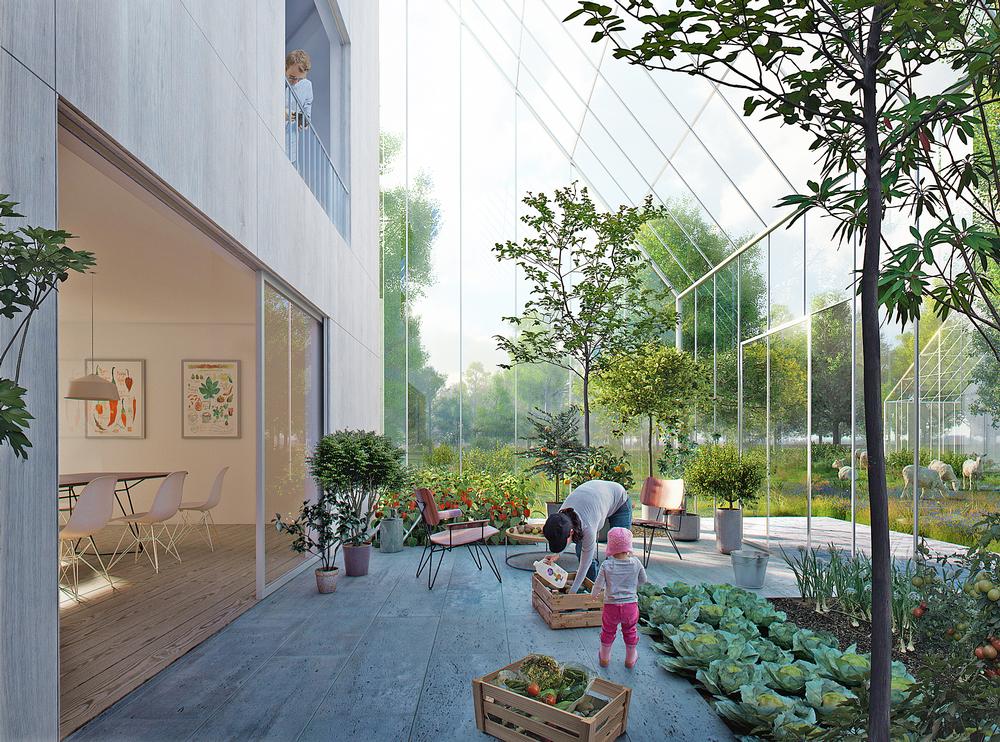
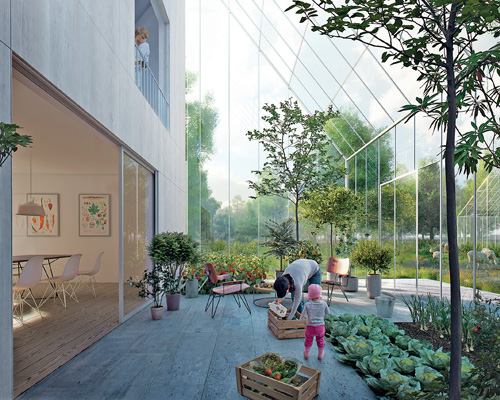
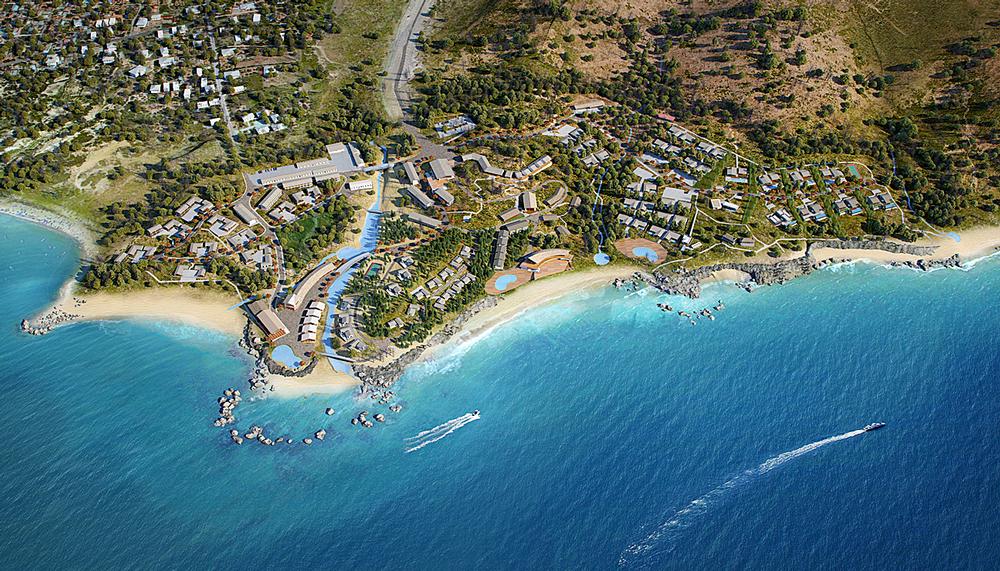
ReGen Village in The Netherlands is one of more than 740 wellness communities being built / PHOTO: Effekt Architects
Wellness is a US$3.7tn industry, growing faster than the global economy. The Global Wellness Institute (GWI) sees residential real estate as the next frontier to transform the wellness movement. Our homes, communities and surrounding environment directly affect our daily behaviours and lifestyles, which together determine between 80 and 90 per cent of our health outcomes, so it’s only logical that consumers should increasingly want to invest in health and wellbeing there.
Why now The way our homes have been built in the last century is reinforcing lifestyles that make us sick, stressed, alienated and unhappy. Our modern environment has created new health risks – sedentary lifestyles, lack of physical activity, poor diet, stress, social isolation and environmental degradation. Our built environment favours driving over biking, sitting over walking, riding in elevators over using the stairs, texting over face-to-face conversations, and screen time over outdoor recreation. Even as we live longer, more of us are living lonely, unhealthy and unhappy lives. We cannot address the global crisis of rising chronic disease and unsustainable health costs without committing to a dramatic transformation in where and how we live.
Defining wellness real estate Wellness is not just about physical health; it is multi-dimensional, encompassing the physical, social, mental, emotional, spiritual and other dimensions of our selves. All aspects of a person – mind, body and spirit – need to work in harmony for that person to be truly well.
Wellness lifestyle real estate includes homes that are proactively designed and built to support the holistic health of their residents, while a wellness community is a group of people living in close proximity who share common goals, interests and experiences in proactively pursuing wellness. The power of wellness lifestyle real estate lies in its potential to foster wellness communities, but the connection between the two is not automatic, and requires a shift. This includes moving from not just preventing “sick buildings”, but building homes that enhance health and wellbeing; shifting from passive to active wellness; complementing bricks and mortar with policies, management and programming that build social connections and nurture healthy behaviours; and creating awareness that our individual health and wellbeing is intrinsically linked to our broader environment and the people around us – a shift from “me” to “we”.
Wellness lifestyle real estate is a nascent industry that recognises – and has the potential to meet – today’s immense health challenges. It represents a shift that explicitly puts people’s wellness at the centre of the conception, design, creation and redevelopment of our homes and neighbourhoods.
A growing market Wellness real estate was a US$134bn industry in 2017, growing by 6.4 per cent annually since 2015, and making up about 1.5 per cent of the total annual global construction market. The GWI projects that the wellness real estate sector will expand by 6 per cent annually in the next several years, growing to US$180bn by 2022. The GWI’s wellness real estate figures capture the construction of residential and commercial or institutional (office, hospitality, mixed-use/multi-family, medical, leisure) properties that incorporate intentional wellness elements in their design, materials and building, as well as their amenities, services and/or programming.
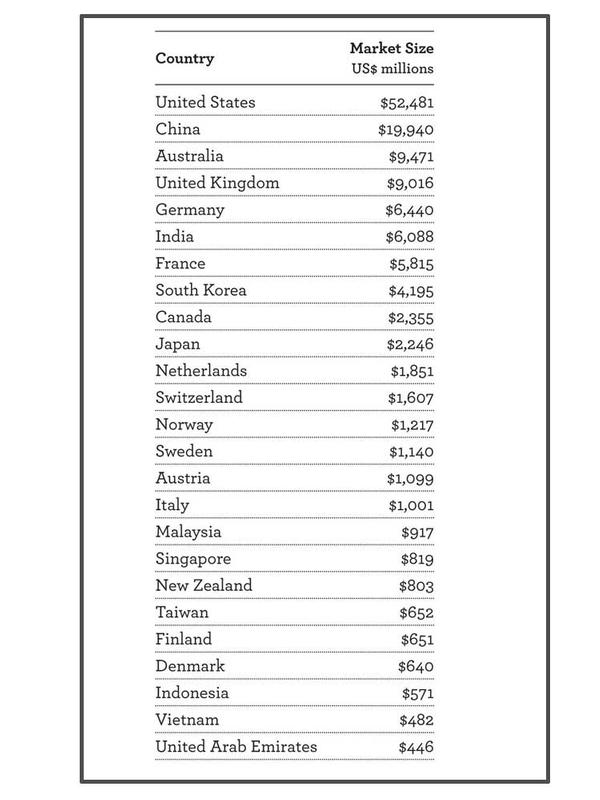
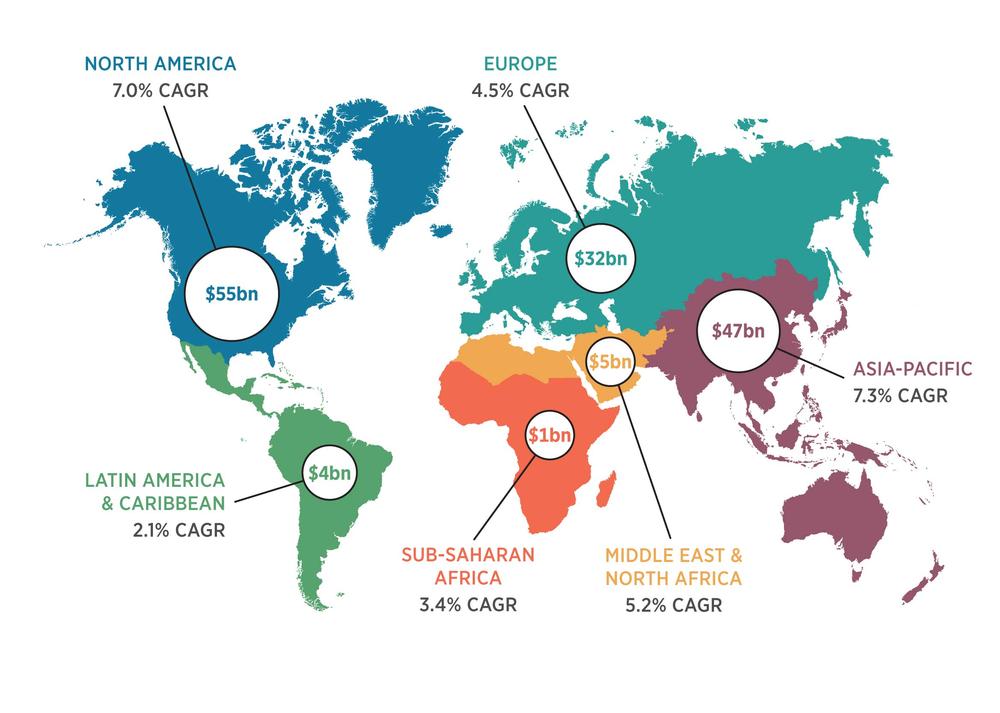
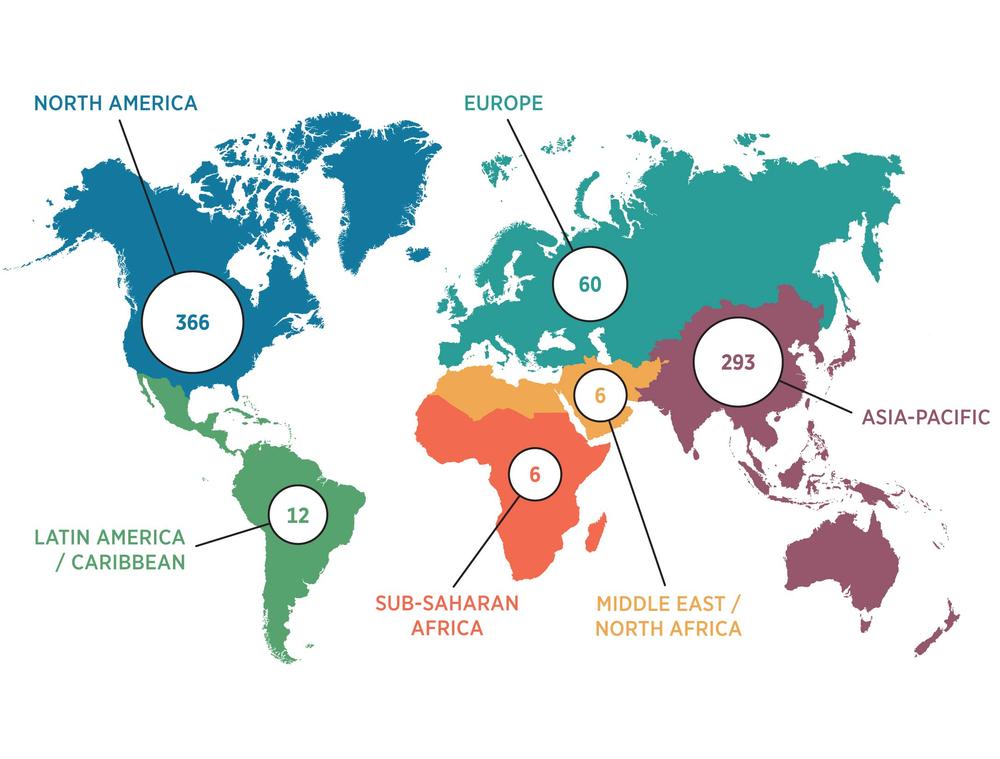
The US, along with China, Australia, India, the UK and Germany, accounts for three-quarters of the global wellness real estate market, with the biggest growth occurring in the US (7 per cent), Asia-Pacific (7.3 per cent) and Europe (4.5 per cent). As recently as the 1990s and early 2000s, a relatively small number of wellness lifestyle real estate or community projects were under construction or in development – we estimate fewer than 50 projects globally. Contrast that with today, where more than 740 wellness lifestyle real estate and community developments are being built in the world, across 34 countries – and this number is growing daily.
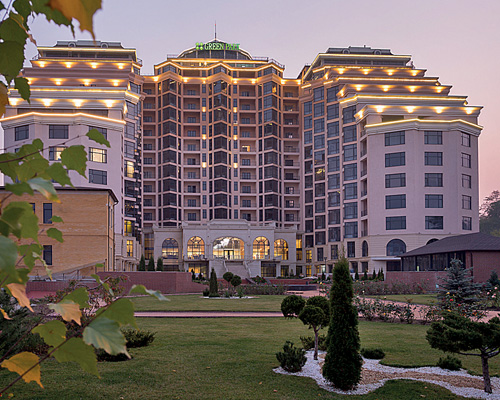
These developments include masterplanned communities, multi-family housing, urban districts, mixed-use projects, and resort/spa-based real estate. Increasingly they are undertaken by larger, professional development companies with portfolios of multiple properties, some of which have codified a set of core principles focused on human health and wellbeing used to shape their community design and marketing approaches. Additionally, many destination spas and wellness resorts are adding a wellness component for customers looking for a second home or vacation properties – or even to live a full-time wellness lifestyle. We estimate that there are more than 1.5m units either already built or planned to be built out over the next several decades, which will house more than 4.1m people.
Increasing consumer demand The demand for wellness lifestyle real estate and communities is rapidly accelerating, as consumers are seeking out healthy places to live – and are ready to pay for them. Industry leaders are pioneering innovative ways to meet consumer lifestyle needs, and governments are beginning to support these efforts. Standards, guidelines and design principles are emerging to facilitate them. The confluence of these developments means that wellness lifestyle real estate is poised to go from niche to mainstream; eventually, building for wellness will become the norm.
Buyers have demonstrated that they’re willing to pay more for healthier built environments; wellness lifestyle real estate developments positioned at the middle and upper ends of the market are achieving home sales price premiums averaging 10 to 25 per cent, and up to 55 per cent. One reason is that there is not enough supply to meet demand; there are an estimated 1.3m potential buyers in the US alone for wellness-infused homes and communities. Projects with a greater level of differentiation, a more unique community environment, higher-quality residences and/or more extensive amenities and services typically earn higher sales price premiums. In the case of Serenbe, Georgia – one of the pioneers in wellness communities, having broken ground on its first house in 2004 – residences are commanding price premiums of 30 to 55 per cent versus comparable homes in the Atlanta metro area.
Upscale residential properties around the world are adding wellness components to appeal to higher-income consumers, including enhanced indoor air, water and lighting; fitness centres and spas; health food restaurants; classes and other programming; and even on-site, full-time wellness professionals. Demand is also coming from middle-income consumers, who are looking for homes and neighbourhoods that support a healthy lifestyle, through features such as bike paths and dog parks, community gardens and farmers’ markets, and walkability and mass-transit access. Even in the affordable housing segment, builders are incorporating wellness design features to address the public health needs of these populations, and they are increasingly encouraged to do so through public policy initiatives. All these segments are expected to grow within the wellness lifestyle real estate sector going forward.
Differentiation There is enormous potential in wellness lifestyle real estate for differentiation based on market needs, target audiences and unique site characteristics. In global megacities, buyers may be most concerned about air and water quality, noise pollution, restful sleep and access to green space or wellness amenities. In suburban US, UK or Australia, buyers may be seeking better walkability and mass transit options, bike paths, and more social interaction with neighbours. A project aiming to appeal to consumers interested in healthy eating may incorporate organic farming, a CSA, a farmer’s market, edible landscaping or farm-to-table restaurants.
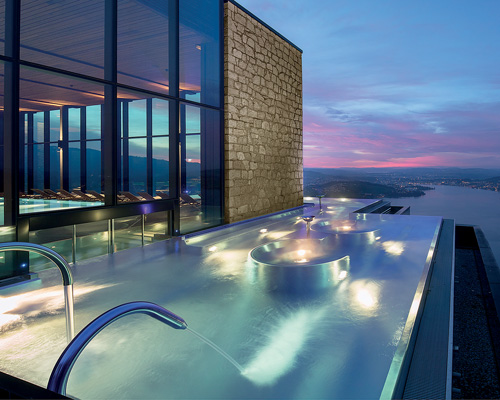
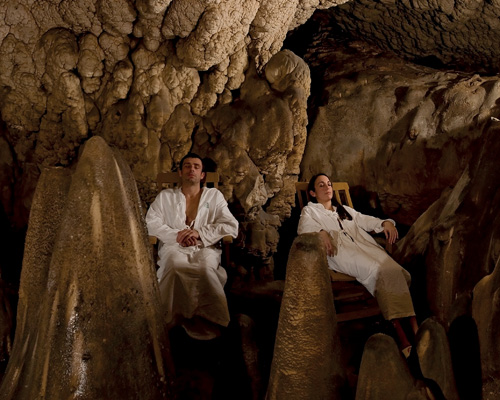
Other projects may prioritise environmental sustainability, wellness and fitness amenities and programming, the importance of the arts, or living in harmony with nature. Some aim to appeal to the specific needs of particular demographic groups, while developers also have opportunities to create unique wellness living concepts by leveraging local characteristics, such as mountains, woodlands, thermal and mineral springs, mud or salt caves, or farmland.
Looking to the future At the GWI, we’ve identified several emerging wellness living concepts that we predict will soon drive the future development and growth of wellness lifestyle real estate and will push the design of healthy living environments to the next level.
Blurring the lines between home, work and leisure means strategic colocation and integration of homes, coworking facilities and ample wellness amenities and programming in response to the rapid rise of remote work, the sharing economy and the travails of loneliness and attempts to find work-life balance.
Bringing back multigenerational and diverse neighbourhoods will cater to people seeking communities with a greater mix of ages, life stages, backgrounds and social classes, recognising the growing evidence that social connections in the physical realm are essential for our health and wellbeing, our society and our economy. Developers are also collaborating with governments to target lower-income and vulnerable populations, who are at the highest risk for many health conditions.
Building wellness communities by combining medical industry companies, research organisations, hospitals, clinics and health services with holistically designed wellness-infused homes and neighbourhoods – such as in Lake Nona in Florida or the Destination Medical Center in Rochester, Minnesota – will also be key to growth.
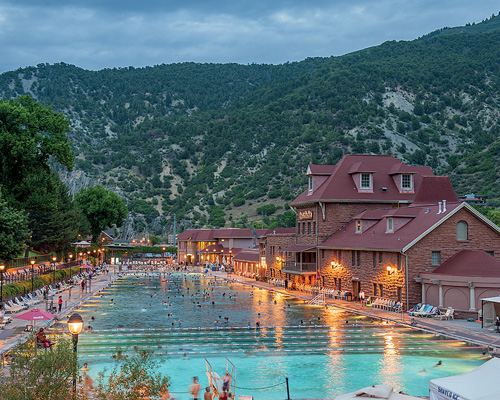
We also see a move from green to regenerative living – where communities will produce their own healthy food and renewable energy, clean the air, recycle their own water and be net-positive for people and planet. Harnessing future technologies will also help bring on-demand wellness into the design of homes, neighbourhoods and cities. And we see hot springs as a wellness living anchor as people rediscover the therapeutic properties and benefits of communal bathing, and historic spa towns around the world are redeveloped as holistic wellness living communities.
Perhaps most importantly, we expect new metrics that will capture Return on Wellness, or ROW, and a deeper exploration of the relationships between physical and virtual communities, and between our individual, personal wellness and the wellness of our community – and planet.
Read more from this issue of Spa Business magazine
Promotional feature: Oakworks
Dafne Berlanga, vice president of international business
development of Oakworks, discusses the importance of sustainability
In today’s premium spa environment, every detail shapes the guest experience – right down to
the softness of towels and the freshness of linens. [more...]
New research from the Global Wellness Institute values wellness real estate at US$134bn in 2017 – and it’s growing quickly. Research authors Katherine Johnston and Ophelia Yeung outline the findings of this first-ever study
ReGen Village in The Netherlands is one of more than 740 wellness communities being built / PHOTO: Effekt Architects
Wellness is a US$3.7tn industry, growing faster than the global economy. The Global Wellness Institute (GWI) sees residential real estate as the next frontier to transform the wellness movement. Our homes, communities and surrounding environment directly affect our daily behaviours and lifestyles, which together determine between 80 and 90 per cent of our health outcomes, so it’s only logical that consumers should increasingly want to invest in health and wellbeing there.
Why now The way our homes have been built in the last century is reinforcing lifestyles that make us sick, stressed, alienated and unhappy. Our modern environment has created new health risks – sedentary lifestyles, lack of physical activity, poor diet, stress, social isolation and environmental degradation. Our built environment favours driving over biking, sitting over walking, riding in elevators over using the stairs, texting over face-to-face conversations, and screen time over outdoor recreation. Even as we live longer, more of us are living lonely, unhealthy and unhappy lives. We cannot address the global crisis of rising chronic disease and unsustainable health costs without committing to a dramatic transformation in where and how we live.
Defining wellness real estate Wellness is not just about physical health; it is multi-dimensional, encompassing the physical, social, mental, emotional, spiritual and other dimensions of our selves. All aspects of a person – mind, body and spirit – need to work in harmony for that person to be truly well.
Wellness lifestyle real estate includes homes that are proactively designed and built to support the holistic health of their residents, while a wellness community is a group of people living in close proximity who share common goals, interests and experiences in proactively pursuing wellness. The power of wellness lifestyle real estate lies in its potential to foster wellness communities, but the connection between the two is not automatic, and requires a shift. This includes moving from not just preventing “sick buildings”, but building homes that enhance health and wellbeing; shifting from passive to active wellness; complementing bricks and mortar with policies, management and programming that build social connections and nurture healthy behaviours; and creating awareness that our individual health and wellbeing is intrinsically linked to our broader environment and the people around us – a shift from “me” to “we”.
Wellness lifestyle real estate is a nascent industry that recognises – and has the potential to meet – today’s immense health challenges. It represents a shift that explicitly puts people’s wellness at the centre of the conception, design, creation and redevelopment of our homes and neighbourhoods.
A growing market Wellness real estate was a US$134bn industry in 2017, growing by 6.4 per cent annually since 2015, and making up about 1.5 per cent of the total annual global construction market. The GWI projects that the wellness real estate sector will expand by 6 per cent annually in the next several years, growing to US$180bn by 2022. The GWI’s wellness real estate figures capture the construction of residential and commercial or institutional (office, hospitality, mixed-use/multi-family, medical, leisure) properties that incorporate intentional wellness elements in their design, materials and building, as well as their amenities, services and/or programming.
The US, along with China, Australia, India, the UK and Germany, accounts for three-quarters of the global wellness real estate market, with the biggest growth occurring in the US (7 per cent), Asia-Pacific (7.3 per cent) and Europe (4.5 per cent). As recently as the 1990s and early 2000s, a relatively small number of wellness lifestyle real estate or community projects were under construction or in development – we estimate fewer than 50 projects globally. Contrast that with today, where more than 740 wellness lifestyle real estate and community developments are being built in the world, across 34 countries – and this number is growing daily.
These developments include masterplanned communities, multi-family housing, urban districts, mixed-use projects, and resort/spa-based real estate. Increasingly they are undertaken by larger, professional development companies with portfolios of multiple properties, some of which have codified a set of core principles focused on human health and wellbeing used to shape their community design and marketing approaches. Additionally, many destination spas and wellness resorts are adding a wellness component for customers looking for a second home or vacation properties – or even to live a full-time wellness lifestyle. We estimate that there are more than 1.5m units either already built or planned to be built out over the next several decades, which will house more than 4.1m people.
Increasing consumer demand The demand for wellness lifestyle real estate and communities is rapidly accelerating, as consumers are seeking out healthy places to live – and are ready to pay for them. Industry leaders are pioneering innovative ways to meet consumer lifestyle needs, and governments are beginning to support these efforts. Standards, guidelines and design principles are emerging to facilitate them. The confluence of these developments means that wellness lifestyle real estate is poised to go from niche to mainstream; eventually, building for wellness will become the norm.
Buyers have demonstrated that they’re willing to pay more for healthier built environments; wellness lifestyle real estate developments positioned at the middle and upper ends of the market are achieving home sales price premiums averaging 10 to 25 per cent, and up to 55 per cent. One reason is that there is not enough supply to meet demand; there are an estimated 1.3m potential buyers in the US alone for wellness-infused homes and communities. Projects with a greater level of differentiation, a more unique community environment, higher-quality residences and/or more extensive amenities and services typically earn higher sales price premiums. In the case of Serenbe, Georgia – one of the pioneers in wellness communities, having broken ground on its first house in 2004 – residences are commanding price premiums of 30 to 55 per cent versus comparable homes in the Atlanta metro area.
Upscale residential properties around the world are adding wellness components to appeal to higher-income consumers, including enhanced indoor air, water and lighting; fitness centres and spas; health food restaurants; classes and other programming; and even on-site, full-time wellness professionals. Demand is also coming from middle-income consumers, who are looking for homes and neighbourhoods that support a healthy lifestyle, through features such as bike paths and dog parks, community gardens and farmers’ markets, and walkability and mass-transit access. Even in the affordable housing segment, builders are incorporating wellness design features to address the public health needs of these populations, and they are increasingly encouraged to do so through public policy initiatives. All these segments are expected to grow within the wellness lifestyle real estate sector going forward.
Differentiation There is enormous potential in wellness lifestyle real estate for differentiation based on market needs, target audiences and unique site characteristics. In global megacities, buyers may be most concerned about air and water quality, noise pollution, restful sleep and access to green space or wellness amenities. In suburban US, UK or Australia, buyers may be seeking better walkability and mass transit options, bike paths, and more social interaction with neighbours. A project aiming to appeal to consumers interested in healthy eating may incorporate organic farming, a CSA, a farmer’s market, edible landscaping or farm-to-table restaurants.
Other projects may prioritise environmental sustainability, wellness and fitness amenities and programming, the importance of the arts, or living in harmony with nature. Some aim to appeal to the specific needs of particular demographic groups, while developers also have opportunities to create unique wellness living concepts by leveraging local characteristics, such as mountains, woodlands, thermal and mineral springs, mud or salt caves, or farmland.
Looking to the future At the GWI, we’ve identified several emerging wellness living concepts that we predict will soon drive the future development and growth of wellness lifestyle real estate and will push the design of healthy living environments to the next level.
Blurring the lines between home, work and leisure means strategic colocation and integration of homes, coworking facilities and ample wellness amenities and programming in response to the rapid rise of remote work, the sharing economy and the travails of loneliness and attempts to find work-life balance.
Bringing back multigenerational and diverse neighbourhoods will cater to people seeking communities with a greater mix of ages, life stages, backgrounds and social classes, recognising the growing evidence that social connections in the physical realm are essential for our health and wellbeing, our society and our economy. Developers are also collaborating with governments to target lower-income and vulnerable populations, who are at the highest risk for many health conditions.
Building wellness communities by combining medical industry companies, research organisations, hospitals, clinics and health services with holistically designed wellness-infused homes and neighbourhoods – such as in Lake Nona in Florida or the Destination Medical Center in Rochester, Minnesota – will also be key to growth.
We also see a move from green to regenerative living – where communities will produce their own healthy food and renewable energy, clean the air, recycle their own water and be net-positive for people and planet. Harnessing future technologies will also help bring on-demand wellness into the design of homes, neighbourhoods and cities. And we see hot springs as a wellness living anchor as people rediscover the therapeutic properties and benefits of communal bathing, and historic spa towns around the world are redeveloped as holistic wellness living communities.
Perhaps most importantly, we expect new metrics that will capture Return on Wellness, or ROW, and a deeper exploration of the relationships between physical and virtual communities, and between our individual, personal wellness and the wellness of our community – and planet.
Read more from this issue of Spa Business magazine
Promotional feature: Oakworks
Dafne Berlanga, vice president of international business
development of Oakworks, discusses the importance of sustainability
Global Wellness Day (GWD) marked its 15th anniversary on Saturday 13 June 2026, with the
theme: #JoyMagenta – a celebration of the healing qualities of simple gestures and activities
that spark joy.
Global luxury hospitality brand, Six Senses, has partnered with longevity healthcare provider,
HUM2N, to launch a clinic at Six Senses London, at The Whiteley.
As part of its first hotel partnership, Mayrlife – the medical health resort company known for its
site in Altaussee, Austria – has launched a day clinic at the Rosewood Vienna.
Premium London health club, KX Chelsea, will imminently unveil its most significant
redevelopment since its launch in 2002 to create an integrated wellness model combining
training, recovery and relaxation.
Rosewood Le Guanahani St Barth, on the northeast coast of Saint Barthélemy in the French
West Indies, is offering a programme of ocean-inspired yoga classes between 8-14 June to
celebrate Global Wellness Day (GWD).
Hotel de France, located on the British Isle of Jersey, has created a wellness retreat package
that includes a hot yoga session that will take place in Jersey Zoo’s butterfly sanctuary.
The Ritz-Carlton, Langkawi, in Malaysia, has revealed a schedule for Global Wellness Day
(GWD) that includes guided rainforest walks, mindful movement and guided coastal meditation
experiences.
Longevitix, a clinical platform for preventive and longevity medicine, has launched its AI-
powered intelligence system to help physicians deliver continuous, personalised longevity-
focused care at scale.
Atmantan Wellness Centre, an integrative wellness destination in Mulshi, near Pune in India, is
expanding its portfolio by adding a new centre in Hyderabad that will launch between 2028 and
2029.
In today’s premium spa environment, every detail shapes the guest experience – right down to
the softness of towels and the freshness of linens. [more...]