Yes! Send me the FREE digital editions of Spa Business and Spa Business insider magazines and the FREE weekly Spa Business and Spa Business insider ezines and breaking news alerts!
The waterpark industry has taken off in many parts of Southeast Asia, and the potential for growth is huge. Thailand is a prime example of a country that’s beginning to find its feet
By Alice Davis | Published in Attractions Management 2015 issue 1
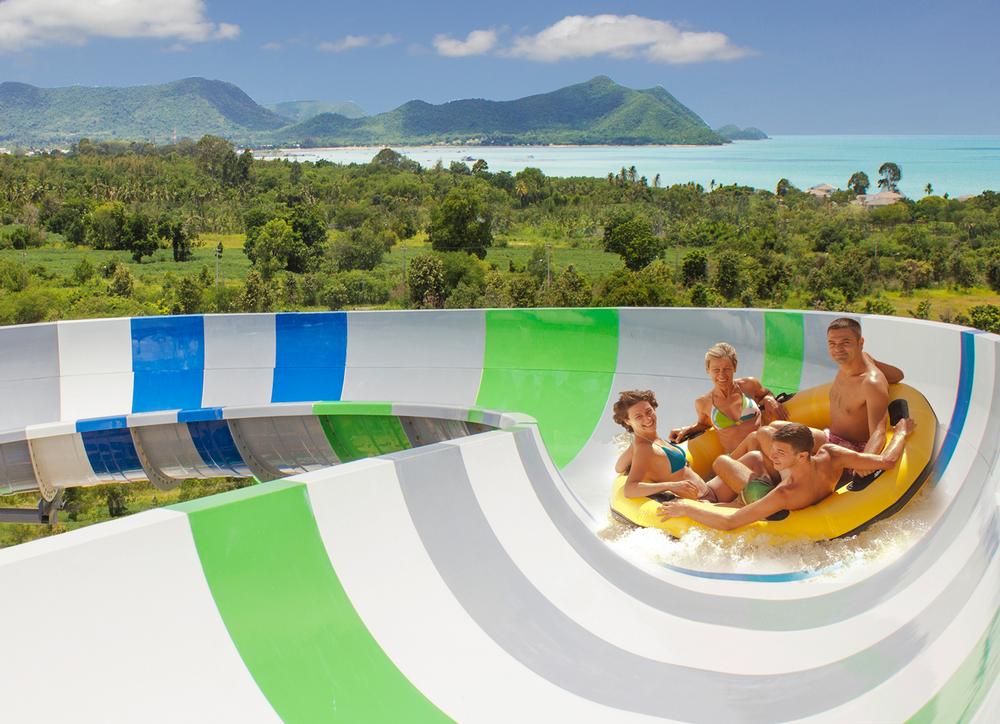
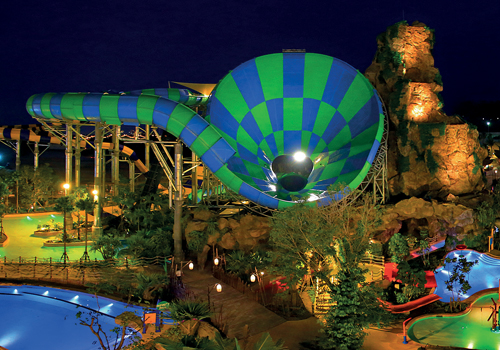
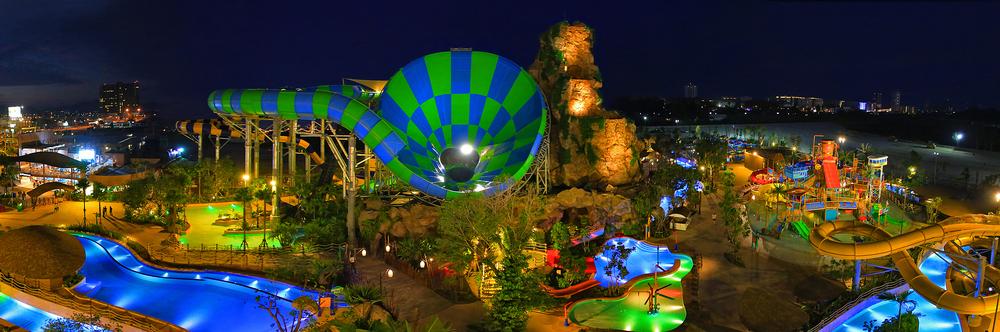
Polin worked closely with Cartoon Network to build slides that represent the brand
Thailand’s shaken off its image as a destination exclusively for partying backpackers, and developed into a more sophisticated travel option. The tourism industry is maturing and it’s now a more family-friendly vacation. Western backpackers who fell in love with Thailand years ago are returning with their families in tow, yet they make up just a fraction of its visitors.
The rise of budget airlines in the region makes it easier for Asian tourists to travel, and an adventurous young generation of holidaymakers from countries like Singapore, Malaysia and Indonesia is discovering the delights of the Land of Smiles. Southeast Asia’s expanding middle class has disposable income to travel in the region and Thailand is affordable and safe. As visa requirements relax this year within the Association of Southeast Asian Nations (ASEAN), movement will only increase.
With high tourism numbers and an enthusiastic domestic market, Thailand is a prime example of a location where the waterpark industry is aiming for growth.
Tourism will increase further with the opening of the ASEAN common market – the ASEAN Economic Community (AEC) – later this year. In 2015, the ASEAN regional common visa – similar to the EU’s Schengen visa system – is scheduled to be fully implemented for its 10 member states and research suggests that could generate between 6 million and 10 million extra visitors by 2016. Talk of an ASEAN single-visa for non-ASEAN citizens has also been tabled as an idea that would encourage foreigners to travel more widely in Southeast Asia.
“Tourists to Thailand have diversified so much and once the AEC is formally introduced we’re all going to be part of a common market with a regional common visa. That’s almost a billion people,” says Liakat Dhanji, chairman of developer Amazone Falls, who opened a Cartoon Network-themed waterpark in Thailand. “There’ll be a big increase in tourists; and the vast majority of growth over the next five years will be from Asia-Pacific.”
WATERPARK REVOLUTION The Chinese contingent can’t be forgotten either – Thailand’s biggest tourist group by origin, with almost 7.5 million Chinese visiting in 2013, and that’s only the start.
Thailand waived visa fees for Chinese tourists for three months in 2014, and Beijing has repeatedly asked the Thai government to negotiate mutual visa-free privileges for Thais and Chinese. “There’ll be even more Chinese tourists. It’s a huge market that’s just starting to go overseas,” Dhanji says.
Thailand – like other countries in Asia – has experienced problems in the past with its waterparks, too many of them built to poor standards and with questionable safety records. This is often due to inexperience in operations, lack of investment, inadequate build and installation standards and not having a clear approach to park safety. Where the attractions industry has developed quickly, in some cases the development and actioning of best practices got left behind.
However, a number of big-budget, world-class waterparks have newly opened or are under construction in the country. In terms of designers, manufacturers, technology and even IPs, these attractions have set their sights on achieving global standards and competing at the highest level.
There will be more investments like these and there are several reasons why Thailand is enjoying a waterpark revolution.
FAMILY FOCUS The Cartoon Network Amazone waterpark in Bang Saray opened at the end of 2014 and has already won a number of industry accolades. The $31m (£20m, €27m) project - set to become a fully developed resort with a hotel and potentially a theme park by 2018 – was masterminded by Dhanji. He wanted to create a family-oriented resort destination, and his nine-year-old son, a Cartoon Network fan, inspired him to go for the IP. “Cartoon Network is the top channel in almost every country in the region, with 200 million-plus viewers,” Dhanji says.
Cartoon Network Amazone is well positioned for Bangkok’s 8.5 million population, situated near Pattaya, a couple of hours from the capital. It’s close to the international Suvarnabhumi airport and a popular destination, putting the waterpark in the catchment area of the 9 million-plus foreign tourists who visit Pattaya annually.
Dhanji has a mix of 60 per cent local to 40 per cent foreign customers.
The demand for family-oriented experiences in Thailand is strong. In Phuket, another enduring destination located in the south of the country, Levente Perjesi is opening the $25m (£16m, €22m) Phuket Aquapark later this year.
Phuket’s tourism industry has been expanding since the 1980s, but family attractions are thin on the ground. This potential market is enormous and the island is still developing to keep up with demand – there are nearly 5,000 new hotel rooms in the pipeline for this year and next. In 2013, 12 million tourists visited Phuket, according to the Tourism Authority of Thailand (TAT).
“Year on year, there are more families coming to Phuket and there’s a demand for family activities,” Perjesi says. “Tourists are looking for something else in addition to the beach. Both tourists and residents want a new kind of experience.”
Perjesi, who’s from Hungary, is director of Csenki Co, and the company (like Amazone Falls) has benefited from support from the Thailand Board of Investment (BOI), which provides incentives for entrepreneurism.
INCENTIVES The government agency helps domestic and foreign businesses set up operations in Thailand. The agency encourages investment in the country by offering a range of incentives, which include corporate income tax exemption and tariff exemption or reduced tariffs on importing machinery and materials. The BOI also helps foreigners get permission to own their own company and land, and gain exemption from work permit and visa rules.
“Thailand is a safe country for investments. BOI privilege means support from the Thai government,” says Perjesi.
Thailand’s government has been doing what it can to encourage the development of this type of attraction, announcing in 2013 that more manmade tourist sites were needed to add value to tourism. The government believes the time is right to build these attractions, as investments are being made in the nation’s infrastructure and transport systems.
“Another benefit for the Ministry of Tourism and Sports is that the introduction of more manmade attractions can help delay the erosion of beaches and coastlines,” Dhanji says. “They want to see if more manmade attractions will help take some of the pressure off natural sites, and Cartoon Network Amazone is an attempt to do that.”
The TAT and the tourism ministry have been promoting the animation-themed waterpark, keen to show off the globally recognised brand and characters like Ben 10 and Gumball. “Cartoon Network Amazone is being promoted as a must-see destination to Japanese, Chinese and Malaysian tourists. It’s being actively supported,” Dhanji says.
SAFETY FIRST Another upcoming waterpark, scheduled to open in mid-2015, is Ramayana, which is also in Pattaya. The BOI-certified $50m-plus (£32m, €44m) attraction, owned by a group of private investors, has likewise “received strong endorsement and support from the local Thai authorities,” says Johannes Pattermann, Ramayana’s director of marketing and sales. “There are concrete plans in place to invite the public to participate in the project: in line with Thai regulations, Ramayana plans an IPO in 2016.”
It’s on course for a big future. Ramayana will be the largest waterpark in Southeast Asia, and it expects to attract 1 million visitors in its first year, and 2 million per year by 2020. The 16-hectare (40-acre) property – which will host events and functions for up to 3,000 people – predicts a visitor split of 60 per cent foreign to 40 per cent domestic. “One-quarter of Pattaya’s overnight visitors are Thai. Ramayana is within the two-hour drive limitation that waterparks normally experience so it’s able to attract the huge Bangkok market,” Pattermann says.
Jungle-themed eco-waterpark Vana Nava Hua Hin, which opened in December 2014, is also targeting the capital’s market. Proudputh Liptapanlop, managing director at developer Proud Real Estate, forecasts about 70 per cent of customers will be Thai, with most travelling from Bangkok.
“Hua Hin is a high-end beach town just one hour from Bangkok,” Liptapanlop says.
“In recent years, Hua Hin has changed dramatically, with new leisure projects, hotels and residences,” she says. “We’re confident it’ll be the next international tourist destination. It’s a beloved beach town with a strong identity and heritage.”
Vana Nava will be a family destination complex, with a hotel, residences and retail, in addition to the watermark.
“Thailand needs more international-standard leisure projects to lift our image as a destination,” she says. “Projects like this waterpark increase our ability to attract tourists from around the world.”
With inbound tourism numbers to Thailand more than doubling in the last decade to almost 25 million in 2014, tourism is today worth an estimated $35bn (£23bn, €31bn) annually.
Taking this increase and the warm climate into account, it’s surprising the industry hasn’t established itself more rapidly. This slow start seems to be related to concerns about three important factors: safety, water quality and international standards.
DEMAND FOR QUALITY Those concerns make safety something to highlight to customers who want to know they’re in good hands, but also to operators and developers coming into the market. As investment is ushered towards manmade attractions, the best quality becomes affordable, which is why reputable partners like WhiteWater West and Polin are finding they’re in demand. As well as reaching international safety levels, areas of operation such as security, ticketing and F&B are being undertaken with more professionalism.
As that happens, waterparks are becoming “something the Thai middle class sees as a form of regular entertainment,” Dhanji says. “Waterparks are a safe activity for Asians, who often love water but find the ocean can be daunting. A waterpark lets them enjoy the water without the risk.”
“It’s going to be a growing trend in Asia because it’s an immersive, engaging experience that brings the whole family together for the whole day,” he says. “The industry is going to boom in Asia.”
Pattermann agrees that the industry has plenty of room to grow. “There’s a market gap for high quality attractions,” he says. “Both local residents and foreign tourists want places which combine activity and leisure with uncompromising safety.”
At Ramayana, extensive qualitative and quantitative market research was carried out before the project began. The research revealed nine out of 10 Thais are concerned about safety aspects of both slides and of the water, while foreigners are less concerned about safety than they are with the type and selection of rides.
“Thais are currently quite cautious when it comes to waterparks,” explains Pattermann. “They’ve heard about bad experiences and therefore the safety of a waterpark is absolutely key to them. They relate safety not only to slides, but equally to the quality of water used in the park.”
To allay those fears, Ramayana will use clear drinking water from on-site natural wells paired with Pentair’s state-of-the-art filtration system. Thais also want to relax at the waterpark, demonstrating that most people would look for leisure and recreational activities beyond water slides.
“There’s huge demand for high quality waterparks in Thailand,” says Pattermann. “But, a small city waterpark with views of the motorway and no regard for quality will not be a successful proposition here.”
THAILAND’S CHALLENGES Of course there are challenges, and it’s not necessarily smooth sailing ahead for either the waterpark or tourism industries. The country’s prone to political volatility – officially it’s been under martial law since the junta took control last summer – and when a coup takes place, hundreds of thousands of visitors reroute. There’s rising competition from neighbours, with Cambodia, Laos and Vietnam vying for tourists’ dollars; and Thailand’s infrastructure needs improvement if it’s to cope effectively with the volume of tourists.
Tourism has been hit by the Russian situation, as sanctions and the fall of the rouble have had a knock-on effect on one of Thailand’s biggest markets; Phuket and Pattaya had become especially popular with Russian holidaymakers. “The significant drop in Russian tourists is not going to be short term,” says Dhanji.
Thailand is doing what it can to modernise its tourism industry and at the same time it’s discovering the economic and value benefits of introducing more top-grade manmade attractions to tourist-heavy areas. It must nurture its tourism industry if it’s to remain competitive.
“New government initiatives like clearing beaches and organising public transport have been applauded by international visitors,” Pattermann says. “They’ll come to Thailand more than ever before.”
Read more from this issue of Spa Business magazine
Interview: Dominique Cocquet
Euro Disney’s Villages Nature is
a next-generation approach to
park accommodation with leading
eco credentials. Resort manager
Dominque Cocquet tells all
Rides: The Ride Makers
In the second part of our series,
industry-leading manufacturers tell us
about the latest trends in family-friendly
coasters and child-friendly rides
Workplace Apps: Work Mates
Apps that manage an attraction’s
workforce make life easier for operators.
Could this software help you?
3D/4D/5D: New Dimensions
From zombie-themed dark rides to
3D films about supersonic cars, its the
latest news, products and launches
from the world of 3D/4D/5D
Alan Mahony, director at Mahony DMC, is a waterpark industry expert who’s worked in Asia since the mid-1990s.
He oversees design management and advises on the development of operations for waterparks. He was a consultant on Chimelong Waterpark, Guangzhou, Beijing Watercube Waterpark, and Ramayana. He says:
• Family outings are very important to Thais, so parks need a quality ride selection to cater for all ages with high levels of safety.
• The waterpark experience needs to be about more than just the rides: there needs to be entertainment, quality F&B plus shaded relaxation areas.
• On entering the market it’s critical to research the consumer, the competition, possible sales channels and audience mix to produce a marketing strategy.
• From your research, the guidelines for the waterpark’s parameters should be established. These parameters need to cover the size of the waterpark, waterslide selection and suppliers, plus the guest experience from entry to exit.
• The Thai market has great potential for growth, but as we’ve seen in the market in China, it’s important to get the formula correct. Waterparks need to be properly designed, using the correct ride mix and quality international suppliers and then followed up with a professional operation offering the highest standards in service and safety.
SIX WATERPARKS TO WATCH Cartoon Network Amazone Developer: Amazone Falls Location: Bang Saray, Pattaya Cost: $31m (£20m, €27m) Open: 2014 Suppliers: Polin, Neptune Benson, FlowRider, Murphy’s Waves Ticketing: Centaman
The Spa Life UK Convention returns from 21–23 June 2026 at Whittlebury Park Hotel, Spa &
Golf Resort, bringing together spa managers, directors and owners for two days of focused
education, meaningful connection and commercial insight. [more...]
The waterpark industry has taken off in many parts of Southeast Asia, and the potential for growth is huge. Thailand is a prime example of a country that’s beginning to find its feet
By Alice Davis | Published in Attractions Management 2015 issue 1
Polin worked closely with Cartoon Network to build slides that represent the brand
Thailand’s shaken off its image as a destination exclusively for partying backpackers, and developed into a more sophisticated travel option. The tourism industry is maturing and it’s now a more family-friendly vacation. Western backpackers who fell in love with Thailand years ago are returning with their families in tow, yet they make up just a fraction of its visitors.
The rise of budget airlines in the region makes it easier for Asian tourists to travel, and an adventurous young generation of holidaymakers from countries like Singapore, Malaysia and Indonesia is discovering the delights of the Land of Smiles. Southeast Asia’s expanding middle class has disposable income to travel in the region and Thailand is affordable and safe. As visa requirements relax this year within the Association of Southeast Asian Nations (ASEAN), movement will only increase.
With high tourism numbers and an enthusiastic domestic market, Thailand is a prime example of a location where the waterpark industry is aiming for growth.
Tourism will increase further with the opening of the ASEAN common market – the ASEAN Economic Community (AEC) – later this year. In 2015, the ASEAN regional common visa – similar to the EU’s Schengen visa system – is scheduled to be fully implemented for its 10 member states and research suggests that could generate between 6 million and 10 million extra visitors by 2016. Talk of an ASEAN single-visa for non-ASEAN citizens has also been tabled as an idea that would encourage foreigners to travel more widely in Southeast Asia.
“Tourists to Thailand have diversified so much and once the AEC is formally introduced we’re all going to be part of a common market with a regional common visa. That’s almost a billion people,” says Liakat Dhanji, chairman of developer Amazone Falls, who opened a Cartoon Network-themed waterpark in Thailand. “There’ll be a big increase in tourists; and the vast majority of growth over the next five years will be from Asia-Pacific.”
WATERPARK REVOLUTION The Chinese contingent can’t be forgotten either – Thailand’s biggest tourist group by origin, with almost 7.5 million Chinese visiting in 2013, and that’s only the start.
Thailand waived visa fees for Chinese tourists for three months in 2014, and Beijing has repeatedly asked the Thai government to negotiate mutual visa-free privileges for Thais and Chinese. “There’ll be even more Chinese tourists. It’s a huge market that’s just starting to go overseas,” Dhanji says.
Thailand – like other countries in Asia – has experienced problems in the past with its waterparks, too many of them built to poor standards and with questionable safety records. This is often due to inexperience in operations, lack of investment, inadequate build and installation standards and not having a clear approach to park safety. Where the attractions industry has developed quickly, in some cases the development and actioning of best practices got left behind.
However, a number of big-budget, world-class waterparks have newly opened or are under construction in the country. In terms of designers, manufacturers, technology and even IPs, these attractions have set their sights on achieving global standards and competing at the highest level.
There will be more investments like these and there are several reasons why Thailand is enjoying a waterpark revolution.
FAMILY FOCUS The Cartoon Network Amazone waterpark in Bang Saray opened at the end of 2014 and has already won a number of industry accolades. The $31m (£20m, €27m) project - set to become a fully developed resort with a hotel and potentially a theme park by 2018 – was masterminded by Dhanji. He wanted to create a family-oriented resort destination, and his nine-year-old son, a Cartoon Network fan, inspired him to go for the IP. “Cartoon Network is the top channel in almost every country in the region, with 200 million-plus viewers,” Dhanji says.
Cartoon Network Amazone is well positioned for Bangkok’s 8.5 million population, situated near Pattaya, a couple of hours from the capital. It’s close to the international Suvarnabhumi airport and a popular destination, putting the waterpark in the catchment area of the 9 million-plus foreign tourists who visit Pattaya annually.
Dhanji has a mix of 60 per cent local to 40 per cent foreign customers.
The demand for family-oriented experiences in Thailand is strong. In Phuket, another enduring destination located in the south of the country, Levente Perjesi is opening the $25m (£16m, €22m) Phuket Aquapark later this year.
Phuket’s tourism industry has been expanding since the 1980s, but family attractions are thin on the ground. This potential market is enormous and the island is still developing to keep up with demand – there are nearly 5,000 new hotel rooms in the pipeline for this year and next. In 2013, 12 million tourists visited Phuket, according to the Tourism Authority of Thailand (TAT).
“Year on year, there are more families coming to Phuket and there’s a demand for family activities,” Perjesi says. “Tourists are looking for something else in addition to the beach. Both tourists and residents want a new kind of experience.”
Perjesi, who’s from Hungary, is director of Csenki Co, and the company (like Amazone Falls) has benefited from support from the Thailand Board of Investment (BOI), which provides incentives for entrepreneurism.
INCENTIVES The government agency helps domestic and foreign businesses set up operations in Thailand. The agency encourages investment in the country by offering a range of incentives, which include corporate income tax exemption and tariff exemption or reduced tariffs on importing machinery and materials. The BOI also helps foreigners get permission to own their own company and land, and gain exemption from work permit and visa rules.
“Thailand is a safe country for investments. BOI privilege means support from the Thai government,” says Perjesi.
Thailand’s government has been doing what it can to encourage the development of this type of attraction, announcing in 2013 that more manmade tourist sites were needed to add value to tourism. The government believes the time is right to build these attractions, as investments are being made in the nation’s infrastructure and transport systems.
“Another benefit for the Ministry of Tourism and Sports is that the introduction of more manmade attractions can help delay the erosion of beaches and coastlines,” Dhanji says. “They want to see if more manmade attractions will help take some of the pressure off natural sites, and Cartoon Network Amazone is an attempt to do that.”
The TAT and the tourism ministry have been promoting the animation-themed waterpark, keen to show off the globally recognised brand and characters like Ben 10 and Gumball. “Cartoon Network Amazone is being promoted as a must-see destination to Japanese, Chinese and Malaysian tourists. It’s being actively supported,” Dhanji says.
SAFETY FIRST Another upcoming waterpark, scheduled to open in mid-2015, is Ramayana, which is also in Pattaya. The BOI-certified $50m-plus (£32m, €44m) attraction, owned by a group of private investors, has likewise “received strong endorsement and support from the local Thai authorities,” says Johannes Pattermann, Ramayana’s director of marketing and sales. “There are concrete plans in place to invite the public to participate in the project: in line with Thai regulations, Ramayana plans an IPO in 2016.”
It’s on course for a big future. Ramayana will be the largest waterpark in Southeast Asia, and it expects to attract 1 million visitors in its first year, and 2 million per year by 2020. The 16-hectare (40-acre) property – which will host events and functions for up to 3,000 people – predicts a visitor split of 60 per cent foreign to 40 per cent domestic. “One-quarter of Pattaya’s overnight visitors are Thai. Ramayana is within the two-hour drive limitation that waterparks normally experience so it’s able to attract the huge Bangkok market,” Pattermann says.
Jungle-themed eco-waterpark Vana Nava Hua Hin, which opened in December 2014, is also targeting the capital’s market. Proudputh Liptapanlop, managing director at developer Proud Real Estate, forecasts about 70 per cent of customers will be Thai, with most travelling from Bangkok.
“Hua Hin is a high-end beach town just one hour from Bangkok,” Liptapanlop says.
“In recent years, Hua Hin has changed dramatically, with new leisure projects, hotels and residences,” she says. “We’re confident it’ll be the next international tourist destination. It’s a beloved beach town with a strong identity and heritage.”
Vana Nava will be a family destination complex, with a hotel, residences and retail, in addition to the watermark.
“Thailand needs more international-standard leisure projects to lift our image as a destination,” she says. “Projects like this waterpark increase our ability to attract tourists from around the world.”
With inbound tourism numbers to Thailand more than doubling in the last decade to almost 25 million in 2014, tourism is today worth an estimated $35bn (£23bn, €31bn) annually.
Taking this increase and the warm climate into account, it’s surprising the industry hasn’t established itself more rapidly. This slow start seems to be related to concerns about three important factors: safety, water quality and international standards.
DEMAND FOR QUALITY Those concerns make safety something to highlight to customers who want to know they’re in good hands, but also to operators and developers coming into the market. As investment is ushered towards manmade attractions, the best quality becomes affordable, which is why reputable partners like WhiteWater West and Polin are finding they’re in demand. As well as reaching international safety levels, areas of operation such as security, ticketing and F&B are being undertaken with more professionalism.
As that happens, waterparks are becoming “something the Thai middle class sees as a form of regular entertainment,” Dhanji says. “Waterparks are a safe activity for Asians, who often love water but find the ocean can be daunting. A waterpark lets them enjoy the water without the risk.”
“It’s going to be a growing trend in Asia because it’s an immersive, engaging experience that brings the whole family together for the whole day,” he says. “The industry is going to boom in Asia.”
Pattermann agrees that the industry has plenty of room to grow. “There’s a market gap for high quality attractions,” he says. “Both local residents and foreign tourists want places which combine activity and leisure with uncompromising safety.”
At Ramayana, extensive qualitative and quantitative market research was carried out before the project began. The research revealed nine out of 10 Thais are concerned about safety aspects of both slides and of the water, while foreigners are less concerned about safety than they are with the type and selection of rides.
“Thais are currently quite cautious when it comes to waterparks,” explains Pattermann. “They’ve heard about bad experiences and therefore the safety of a waterpark is absolutely key to them. They relate safety not only to slides, but equally to the quality of water used in the park.”
To allay those fears, Ramayana will use clear drinking water from on-site natural wells paired with Pentair’s state-of-the-art filtration system. Thais also want to relax at the waterpark, demonstrating that most people would look for leisure and recreational activities beyond water slides.
“There’s huge demand for high quality waterparks in Thailand,” says Pattermann. “But, a small city waterpark with views of the motorway and no regard for quality will not be a successful proposition here.”
THAILAND’S CHALLENGES Of course there are challenges, and it’s not necessarily smooth sailing ahead for either the waterpark or tourism industries. The country’s prone to political volatility – officially it’s been under martial law since the junta took control last summer – and when a coup takes place, hundreds of thousands of visitors reroute. There’s rising competition from neighbours, with Cambodia, Laos and Vietnam vying for tourists’ dollars; and Thailand’s infrastructure needs improvement if it’s to cope effectively with the volume of tourists.
Tourism has been hit by the Russian situation, as sanctions and the fall of the rouble have had a knock-on effect on one of Thailand’s biggest markets; Phuket and Pattaya had become especially popular with Russian holidaymakers. “The significant drop in Russian tourists is not going to be short term,” says Dhanji.
Thailand is doing what it can to modernise its tourism industry and at the same time it’s discovering the economic and value benefits of introducing more top-grade manmade attractions to tourist-heavy areas. It must nurture its tourism industry if it’s to remain competitive.
“New government initiatives like clearing beaches and organising public transport have been applauded by international visitors,” Pattermann says. “They’ll come to Thailand more than ever before.”
Read more from this issue of Spa Business magazine
Interview: Dominique Cocquet
Euro Disney’s Villages Nature is
a next-generation approach to
park accommodation with leading
eco credentials. Resort manager
Dominque Cocquet tells all
Rides: The Ride Makers
In the second part of our series,
industry-leading manufacturers tell us
about the latest trends in family-friendly
coasters and child-friendly rides
Workplace Apps: Work Mates
Apps that manage an attraction’s
workforce make life easier for operators.
Could this software help you?
3D/4D/5D: New Dimensions
From zombie-themed dark rides to
3D films about supersonic cars, its the
latest news, products and launches
from the world of 3D/4D/5D
Alan Mahony, director at Mahony DMC, is a waterpark industry expert who’s worked in Asia since the mid-1990s.
He oversees design management and advises on the development of operations for waterparks. He was a consultant on Chimelong Waterpark, Guangzhou, Beijing Watercube Waterpark, and Ramayana. He says:
• Family outings are very important to Thais, so parks need a quality ride selection to cater for all ages with high levels of safety.
• The waterpark experience needs to be about more than just the rides: there needs to be entertainment, quality F&B plus shaded relaxation areas.
• On entering the market it’s critical to research the consumer, the competition, possible sales channels and audience mix to produce a marketing strategy.
• From your research, the guidelines for the waterpark’s parameters should be established. These parameters need to cover the size of the waterpark, waterslide selection and suppliers, plus the guest experience from entry to exit.
• The Thai market has great potential for growth, but as we’ve seen in the market in China, it’s important to get the formula correct. Waterparks need to be properly designed, using the correct ride mix and quality international suppliers and then followed up with a professional operation offering the highest standards in service and safety.
SIX WATERPARKS TO WATCH Cartoon Network Amazone Developer: Amazone Falls Location: Bang Saray, Pattaya Cost: $31m (£20m, €27m) Open: 2014 Suppliers: Polin, Neptune Benson, FlowRider, Murphy’s Waves Ticketing: Centaman
A recent survey by the UK Spa Association (UKSA) into the industry’s approach to cancer care
has revealed that almost half of participating respondents (46 per cent) are unaware that
cancer is a disability and guests with a cancer diagnosis must be given
Mexican operator, Solmar Hotels and Resorts, is hosting a series of events in celebration of
Global Wellness Day, including a Temazcal ceremony at its Playa Grande Resort and Spa in Los
Cabos.
Mandarin Oriental has announced a standalone residence brand, Mansions, which will debut at
Emirates Palace, Mandarin Oriental Mansions, Abu Dhabi, in 2029.
Four Seasons Resort The Nam Hai in Hoi An, Vietnam, has put together a Global Wellness Day
(GWD) agenda with activations rooted in nature and shaped by four pillars of Joy – in
alignment with the day’s theme #JoyMagenta.
The Global Wellness Summit (GWS) will celebrate its 20th anniversary at the 2026 event in
Phuket, Thailand, later this year with the theme: The Science, Art and Soul of Wellness.
Auko, an all-inclusive development, is opening in Phong Nha in Vietnam in Q3 2026, with a
series of 30 tented eco-lodges and wellness hospitality operations by Lumina Wellbeing.
Therme Manchester’s 28-acre development, which will include interconnected glass pavilions
that measure 65,000sq m, will be the largest bathing and wellbeing attraction in the world once
complete, according to prof David Russell, CEO of Therme UK.
Naples Beach Club, a Four Seasons Resort, has opened a 2,800sq m spa called The Sanctuary,
with the design and concept inspired by the Native American people that populated Florida’s
Southwest coast – the Calusa.
The Spa Life UK Convention returns from 21–23 June 2026 at Whittlebury Park Hotel, Spa &
Golf Resort, bringing together spa managers, directors and owners for two days of focused
education, meaningful connection and commercial insight. [more...]