Can world expos really raise global awareness about what matters for the planet? Christian Lachel considers how these high profile events can use modern story-telling and technology to help create change in the world
By Christian Lachel | Published in Attractions Management 2014 issue 2
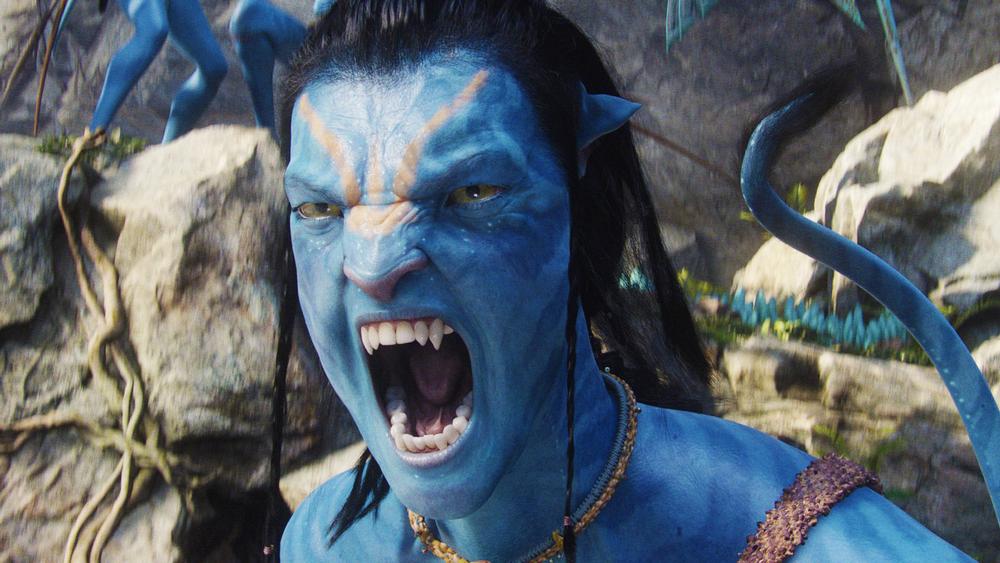
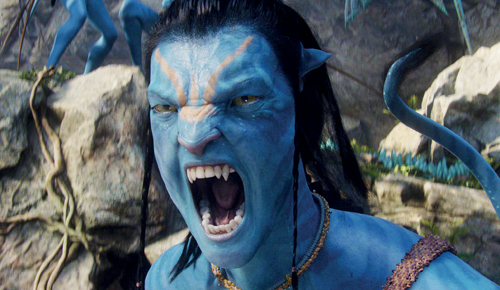
James Cameron’s Avatar is a reminder of our own world, and the need to protect natural resources
I have many smart, compassionate, public-spirited friends. I was having coffee with one of them when this particular friend said: “The world is in trouble. We’ve got so many challenges it just seems overwhelming.”
She almost ran out of fingers as she used them to tick off the challenges – climate change, population growth, plundering of natural resources, peak oil/dwindling fossil fuels, increased energy demand in emerging nations, and finding enough food to feed the planet. “The bigger the challenge, the less people seem to care. What actually are we doing about these things? What CAN we do?”
All great questions. Do we as individuals care about doing the hard work to ensure humankind has a viable future on Earth? Does our industry care?
I said: “First, let’s acknowledge our own power. We’re storytellers. It’s been our job to give meaning to our world and shape a narrative that awakens the tribe to the perils that lie ahead if we don’t change our behaviour. Our narrative must give a vision for a viable way forward, and inspiration that, together, we can make that vision a reality.”
And then we talked about the cultural narrative, and we discovered a lot of evidence that we – the storytellers – DO care. We ARE doing something.
Caring for our planet Let’s start with the single most popular form of out-of-home entertainment ever invented, the feature motion picture – always a harbinger of cultural change. James Cameron’s Avatar is the single most popular motion picture ever made. Underneath all the stunning special effects, the breath-taking action sequences and summer-blockbuster plotting, beats the heart of a profound environmental fable.
Avatar is about our world. In this film, a young man – crippled by war and alienated from an uncaring world, is literally re-born when he connects with a tribe of people who are one with the natural world they inhabit. Our hero heals himself, and becomes a warrior in defence of this powerful natural world.
Want more evidence? An Inconvenient Truth, World War Z, The Road, Erin Brockovitch, and Princess Mononoke, by the incomparable Hayao Miyazaki. And then there are documentaries like Fast Food Nation, Tapped, King Corn and Food Inc. that highlight the world of the corporate food giants as well as the challenges of feeding the planet.
But that’s just movie-making, right? Yes, but something significant is happening in our business of leisure and entertainment as well. And, as so often happens, this ‘really big thing’ has emerged from what seemed at the time as a small thing – an unsuccessful small thing at that.
Changing the world story This narrative shift began in 2000 at a World Expo in Hannover, Germany.
The theme of the Hannover Expo was ‘Man, Nature, Technology’. This expo was modestly attended, and considered an economic failure for the region. It was here that thought leaders Bill McDonough and Michael Braungart re-introduced The Hannover Principles for sustainable world abundance – which were first commissioned by Hannover in 1991 and first presented at the Earth Summit’s 1992 World Urban Forum.
In 2000, the Hannover Principles (see briefing box) started a revolution. They were then, and still are, audacious, thought-provoking and emphatic. The intention was to subvert that narrative and create an entirely new context for the discussion. This was a revolution. A re-boot. A new story.
The Hannover Principles inspired the US Green Building Council’s green building programme called LEED, and led to creation of the Cradle to Cradle Products Innovation Institute. The institute is described as a non-profit organisation “created to bring about a new industrial revolution that turns the making of things into a positive force for society, economy, and the planet.”
More importantly, the Principles sparked a cascade of inspiration for the enterprising thought-leaders heading up the next Expos. Consider the themes, always a statement of intention:
Expo 2005, Aichi, Japan – Nature’s Wisdom
Expo 2008, Zaragoza, Spain – Water and Sustainable Development
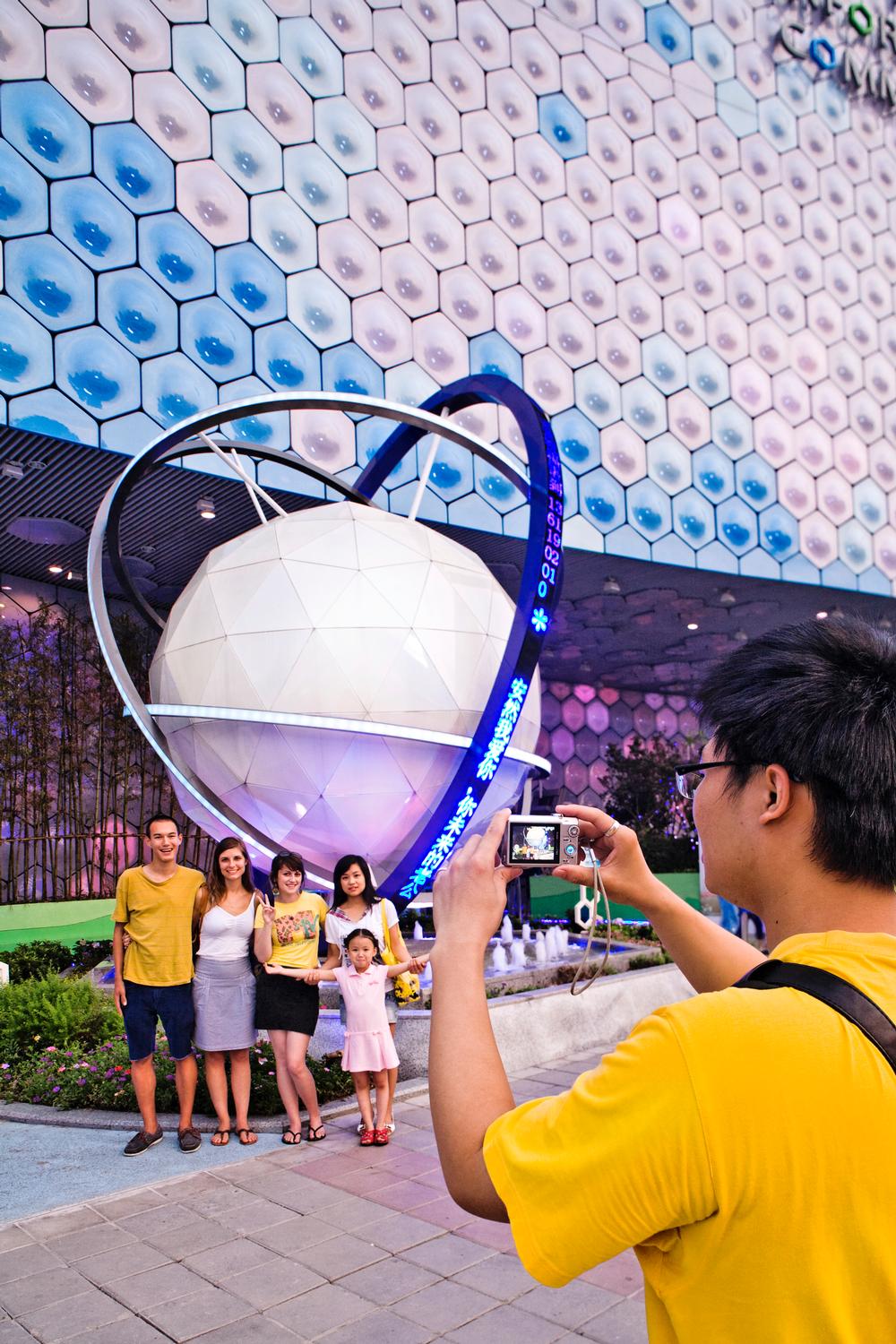
Expo 2010, Shanghai, China – Better City, Better Life
Expo 2012, Yeosu, South Korea – The Living Ocean and Coast – Preservation and Sustainable Development of the Ocean and Coast.
The subject of each of these expos was rooted in the Hannover Principles – creating sustainable abundance on planet Earth. So what is the theme for Expo 2015 in Milan, Italy? ‘Feeding the Planet, Energy for Life’.
Steering a new direction Most people will never go to World Expo, but those who do can be inspired, emotionally awakened, and changed. These guests can inspire others. Like a single pebble in a giant lake, they can send out thought waves that ripple to infinity.
Examples abound. Great expos like the first World’s Fair at Crystal Palace (1851) the Paris Exposition (1855), the Franco-British exhibition at London’s White City (1908), Century of Progress in Chicago (1933) and the World’s Fair in New York (1964) brought us great attractions that communicated amazing new ideas. The best of these attractions have stood the test of time, because their stories, lessons and inspirations are evergreen.
Global story-telling In 2000, we entered the 21st Century and ushered in a new era. The concept of the World Expo evolved with the times (see Hannover Principles). The global issues we face today are large and scary. World Expos empower a world of storytellers using the newest tools and technologies to create stories that spread life changing ideas – giving our children and children’s children the best chance to create a peaceful, healthy and abundant world.
This is the great work that we in the creative and leisure industries were put here to do. As modern storytellers and creators of experiences it’s our job to tackle these issues and provide meaning in the world.
The difference that we can all make is to, in the words of the great Russian thinker and philosopher, Alexander Herzen, “awaken men by dreaming their dreams more clearly than they dream them themselves”.
We can tell astonishing, transformative stories – like Avatar – that awaken in guests a sense of their own power and possibility. It’s why we’re here.
As the American anthropologist, Margaret Mead, once said: “Never doubt that a small group of thoughtful, committed individuals can change the world. Indeed, it is the only thing that ever has.” That’s us, as an industry. Here. Now. Let’s get busy.
Read more from this issue of Spa Business magazine
View contents of Spa Business 2014 issue 2
Editor's letter: The New Philanthropists
Tech is hot and as the growing number of tech millionaires
turn their thoughts to philanthropy, tech-related
attactions will prosper
Profile: Mario Mamon
The current chair of IAAPA talks about
his role with the organisation, doubling
the size of family theme park Enchanted
Kingdom in the Philippines and the
devastation of Super Typhoon Haiyan
Museums: MOHAI
MOHAI's executive director,
Leonard Garfield, talks about
the Seattle museum's new Bezos
Center for Innovation, named after
Amazon founder Jeff Bezos
Science centres: Appliance of science
Andreas Waschk and Mike Boris
explain how they made Blueprint
Entertainment into Europe's largest
private science centre operator
Museums: Olympic Movement
Director Francis Gabet describes how
The Olympic Museum's extensive
refurbishment reflects the excitement
and diveristy of the modern Games
Planetariums: Starry skies
The newly upgraded Fiske Planetarium in
Boulder, Colorado now boasts the highest
specification full dome theatre in the US.
Director Douglas Duncan tells us more
Museums: Beautiful minds
The founders of MoMath, the New York
Museum of Mathematics, tell us how
they're on a mission to get ordinary
people to fall in love with maths
World expos: Brave new world
Christian Lachel considers how world
expos can raise global awareness
about what matters for the planet
3D/4D/5D: IMERSA
A review of the fifth annual IMERSA
conference held in Denver, Colorado
Advertisement feature: EAS 2014
The exhibitors reveal what they’ll be showcasing at EAS in
September and what the hot topics of conversation will be
Waterparks: Wet'n'Wild
Wet'n'Wild Sydney has welcomed
a million visitors through its gates
since opening in December. Managing
director Chris Warhurst tells us why
Ticketing: Convenience store
Gateway's Liesel Tarquini explains
how mobile web stores can help
generate additional revenue
for attractions operators
Hannover Principles Design for Sustainability (prepared for Expo 2000) - Insist on rights of humanity and nature to co-exist in a healthy, supportive, diverse and sustainable condition.
- Recognize interdependence. The elements of human design interact with and depend upon the natural world, with broad and diverse implications at every scale. Expand design considerations to recognizing even distant effects.
- Respect relationships between spirit and matter. Consider all aspects of human settlement including community, dwelling, industry and trade in terms of existing and evolving connections between spiritual and material consciousness.
- Accept responsibility for the consequences of design decisions upon human well-being, the viability of natural systems and their right to co-exist.
- Create safe objects of long-term value. Do not burden future generations with requirements for maintenance or vigilant administration of potential danger due to the careless creation of products, processes or standards.
- Eliminate the concept of waste. Evaluate and optimize the full life-cycle of products and processes, to approach the state of natural systems, in which there is no waste.
- Rely on natural energy flows. Human designs should, like the living world, derive their creative forces from perpetual solar income. Incorporate this energy efficiently and safely for responsible use.
- Understand the limitations of design. No human creation lasts forever and design does not solve all problems. Those who create and plan should practise humility in the face of nature. Treat nature as a model and mentor, not as an inconvenience to be evaded or controlled.
- Seek constant improvement by the sharing of knowledge. Encourage direct and open communication between colleagues, patrons, manufacturers and users to link long term sustainable considerations with ethical responsibility, and re-establish the integral relationship between natural processes and human activity.
Dubai’s winning bid
On 26 November 2013, the delegates of the Bureau International des Exposition (BIE) chose Dubai as the host of Expo 2020.
Opening dates: 10 October 2020 – 10 April 2021
Theme: ‘Connecting minds, creating the future’
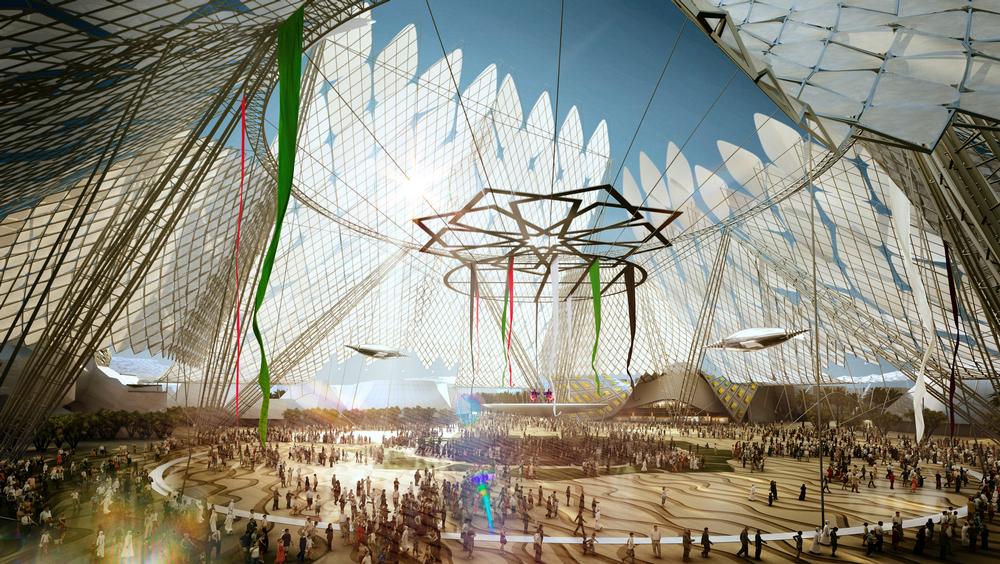
Details The 1,082-acre (438-hectares) Expo site, on the southwestern edge of Dubai in Jebel Ali, near Dubai’s new Al Maktoum International Airport, is being designed by HOK.
HOK’s design features three separate pavilions created to symbolise opportunity, sustainability and mobility, with ‘innovation pods’ in each thematic zone.
Inspired by the layout of a traditional Arabic souk, the design places larger pavilions to the perimeter while clustering smaller exhibit spaces toward the centre, to promote better visitor interaction.
Past and future Expos
2000 - Hannover, Germany 2005 - Aichi Prefecture, Japan 2008 - Zaragoza, Spain 2010 - Shanghai, China 2012 - Yeosu, South Korea 2015 - Milan, Italy 2017 - Astana, Kazakhstan 2020 - Dubai, United Arab Emirates
Christian Lachel is the executive creative director and VP for BRC Imagination Arts. Email: [email protected] Web: www.brcweb.com (Rich Procter, senior writer for BRC, also contributed to this article).
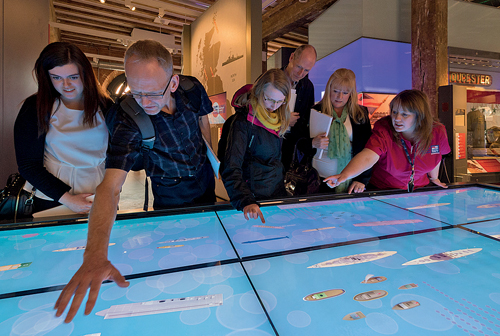
Given the financial investment, Expos may only attract a limited audience, but the core messages conveyed can have a ripple effect, says Lachel
Given the financial investment, Expos may only attract a limited audience, but the core messages conveyed can have a ripple effect, says Lachel
Ever since the World Expo in Aichi in Japan in 2005, official expo themes have all focused on nature, sustainability, creating a better world
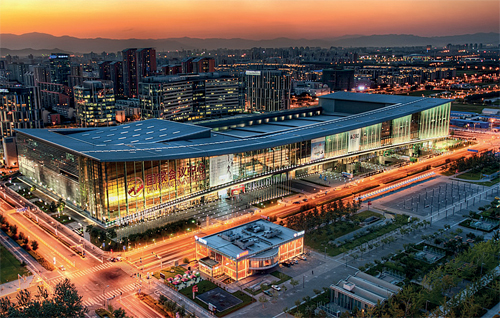
The theme for the World Expo in Dubai in 2020, which is being designed by HOK, is ‘Connecting minds, creating the future’
The theme for the World Expo in Dubai in 2020, which is being designed by HOK, is ‘Connecting minds, creating the future’
The theme for the World Expo in Dubai in 2020, which is being designed by HOK, is ‘Connecting minds, creating the future’
In today’s premium spa environment, every detail shapes the guest experience – right down to
the softness of towels and the freshness of linens. [more...]
Can world expos really raise global awareness about what matters for the planet? Christian Lachel considers how these high profile events can use modern story-telling and technology to help create change in the world
By Christian Lachel | Published in Attractions Management 2014 issue 2
James Cameron’s Avatar is a reminder of our own world, and the need to protect natural resources
I have many smart, compassionate, public-spirited friends. I was having coffee with one of them when this particular friend said: “The world is in trouble. We’ve got so many challenges it just seems overwhelming.”
She almost ran out of fingers as she used them to tick off the challenges – climate change, population growth, plundering of natural resources, peak oil/dwindling fossil fuels, increased energy demand in emerging nations, and finding enough food to feed the planet. “The bigger the challenge, the less people seem to care. What actually are we doing about these things? What CAN we do?”
All great questions. Do we as individuals care about doing the hard work to ensure humankind has a viable future on Earth? Does our industry care?
I said: “First, let’s acknowledge our own power. We’re storytellers. It’s been our job to give meaning to our world and shape a narrative that awakens the tribe to the perils that lie ahead if we don’t change our behaviour. Our narrative must give a vision for a viable way forward, and inspiration that, together, we can make that vision a reality.”
And then we talked about the cultural narrative, and we discovered a lot of evidence that we – the storytellers – DO care. We ARE doing something.
Caring for our planet Let’s start with the single most popular form of out-of-home entertainment ever invented, the feature motion picture – always a harbinger of cultural change. James Cameron’s Avatar is the single most popular motion picture ever made. Underneath all the stunning special effects, the breath-taking action sequences and summer-blockbuster plotting, beats the heart of a profound environmental fable.
Avatar is about our world. In this film, a young man – crippled by war and alienated from an uncaring world, is literally re-born when he connects with a tribe of people who are one with the natural world they inhabit. Our hero heals himself, and becomes a warrior in defence of this powerful natural world.
Want more evidence? An Inconvenient Truth, World War Z, The Road, Erin Brockovitch, and Princess Mononoke, by the incomparable Hayao Miyazaki. And then there are documentaries like Fast Food Nation, Tapped, King Corn and Food Inc. that highlight the world of the corporate food giants as well as the challenges of feeding the planet.
But that’s just movie-making, right? Yes, but something significant is happening in our business of leisure and entertainment as well. And, as so often happens, this ‘really big thing’ has emerged from what seemed at the time as a small thing – an unsuccessful small thing at that.
Changing the world story This narrative shift began in 2000 at a World Expo in Hannover, Germany.
The theme of the Hannover Expo was ‘Man, Nature, Technology’. This expo was modestly attended, and considered an economic failure for the region. It was here that thought leaders Bill McDonough and Michael Braungart re-introduced The Hannover Principles for sustainable world abundance – which were first commissioned by Hannover in 1991 and first presented at the Earth Summit’s 1992 World Urban Forum.
In 2000, the Hannover Principles (see briefing box) started a revolution. They were then, and still are, audacious, thought-provoking and emphatic. The intention was to subvert that narrative and create an entirely new context for the discussion. This was a revolution. A re-boot. A new story.
The Hannover Principles inspired the US Green Building Council’s green building programme called LEED, and led to creation of the Cradle to Cradle Products Innovation Institute. The institute is described as a non-profit organisation “created to bring about a new industrial revolution that turns the making of things into a positive force for society, economy, and the planet.”
More importantly, the Principles sparked a cascade of inspiration for the enterprising thought-leaders heading up the next Expos. Consider the themes, always a statement of intention:
Expo 2005, Aichi, Japan – Nature’s Wisdom
Expo 2008, Zaragoza, Spain – Water and Sustainable Development
Expo 2010, Shanghai, China – Better City, Better Life
Expo 2012, Yeosu, South Korea – The Living Ocean and Coast – Preservation and Sustainable Development of the Ocean and Coast.
The subject of each of these expos was rooted in the Hannover Principles – creating sustainable abundance on planet Earth. So what is the theme for Expo 2015 in Milan, Italy? ‘Feeding the Planet, Energy for Life’.
Steering a new direction Most people will never go to World Expo, but those who do can be inspired, emotionally awakened, and changed. These guests can inspire others. Like a single pebble in a giant lake, they can send out thought waves that ripple to infinity.
Examples abound. Great expos like the first World’s Fair at Crystal Palace (1851) the Paris Exposition (1855), the Franco-British exhibition at London’s White City (1908), Century of Progress in Chicago (1933) and the World’s Fair in New York (1964) brought us great attractions that communicated amazing new ideas. The best of these attractions have stood the test of time, because their stories, lessons and inspirations are evergreen.
Global story-telling In 2000, we entered the 21st Century and ushered in a new era. The concept of the World Expo evolved with the times (see Hannover Principles). The global issues we face today are large and scary. World Expos empower a world of storytellers using the newest tools and technologies to create stories that spread life changing ideas – giving our children and children’s children the best chance to create a peaceful, healthy and abundant world.
This is the great work that we in the creative and leisure industries were put here to do. As modern storytellers and creators of experiences it’s our job to tackle these issues and provide meaning in the world.
The difference that we can all make is to, in the words of the great Russian thinker and philosopher, Alexander Herzen, “awaken men by dreaming their dreams more clearly than they dream them themselves”.
We can tell astonishing, transformative stories – like Avatar – that awaken in guests a sense of their own power and possibility. It’s why we’re here.
As the American anthropologist, Margaret Mead, once said: “Never doubt that a small group of thoughtful, committed individuals can change the world. Indeed, it is the only thing that ever has.” That’s us, as an industry. Here. Now. Let’s get busy.
Read more from this issue of Spa Business magazine
View contents of Spa Business 2014 issue 2
Editor's letter: The New Philanthropists
Tech is hot and as the growing number of tech millionaires
turn their thoughts to philanthropy, tech-related
attactions will prosper
Profile: Mario Mamon
The current chair of IAAPA talks about
his role with the organisation, doubling
the size of family theme park Enchanted
Kingdom in the Philippines and the
devastation of Super Typhoon Haiyan
Museums: MOHAI
MOHAI's executive director,
Leonard Garfield, talks about
the Seattle museum's new Bezos
Center for Innovation, named after
Amazon founder Jeff Bezos
Science centres: Appliance of science
Andreas Waschk and Mike Boris
explain how they made Blueprint
Entertainment into Europe's largest
private science centre operator
Museums: Olympic Movement
Director Francis Gabet describes how
The Olympic Museum's extensive
refurbishment reflects the excitement
and diveristy of the modern Games
Planetariums: Starry skies
The newly upgraded Fiske Planetarium in
Boulder, Colorado now boasts the highest
specification full dome theatre in the US.
Director Douglas Duncan tells us more
Museums: Beautiful minds
The founders of MoMath, the New York
Museum of Mathematics, tell us how
they're on a mission to get ordinary
people to fall in love with maths
World expos: Brave new world
Christian Lachel considers how world
expos can raise global awareness
about what matters for the planet
3D/4D/5D: IMERSA
A review of the fifth annual IMERSA
conference held in Denver, Colorado
Advertisement feature: EAS 2014
The exhibitors reveal what they’ll be showcasing at EAS in
September and what the hot topics of conversation will be
Waterparks: Wet'n'Wild
Wet'n'Wild Sydney has welcomed
a million visitors through its gates
since opening in December. Managing
director Chris Warhurst tells us why
Ticketing: Convenience store
Gateway's Liesel Tarquini explains
how mobile web stores can help
generate additional revenue
for attractions operators
Hannover Principles Design for Sustainability (prepared for Expo 2000) - Insist on rights of humanity and nature to co-exist in a healthy, supportive, diverse and sustainable condition.
- Recognize interdependence. The elements of human design interact with and depend upon the natural world, with broad and diverse implications at every scale. Expand design considerations to recognizing even distant effects.
- Respect relationships between spirit and matter. Consider all aspects of human settlement including community, dwelling, industry and trade in terms of existing and evolving connections between spiritual and material consciousness.
- Accept responsibility for the consequences of design decisions upon human well-being, the viability of natural systems and their right to co-exist.
- Create safe objects of long-term value. Do not burden future generations with requirements for maintenance or vigilant administration of potential danger due to the careless creation of products, processes or standards.
- Eliminate the concept of waste. Evaluate and optimize the full life-cycle of products and processes, to approach the state of natural systems, in which there is no waste.
- Rely on natural energy flows. Human designs should, like the living world, derive their creative forces from perpetual solar income. Incorporate this energy efficiently and safely for responsible use.
- Understand the limitations of design. No human creation lasts forever and design does not solve all problems. Those who create and plan should practise humility in the face of nature. Treat nature as a model and mentor, not as an inconvenience to be evaded or controlled.
- Seek constant improvement by the sharing of knowledge. Encourage direct and open communication between colleagues, patrons, manufacturers and users to link long term sustainable considerations with ethical responsibility, and re-establish the integral relationship between natural processes and human activity.
Dubai’s winning bid
On 26 November 2013, the delegates of the Bureau International des Exposition (BIE) chose Dubai as the host of Expo 2020.
Opening dates: 10 October 2020 – 10 April 2021
Theme: ‘Connecting minds, creating the future’
Details The 1,082-acre (438-hectares) Expo site, on the southwestern edge of Dubai in Jebel Ali, near Dubai’s new Al Maktoum International Airport, is being designed by HOK.
HOK’s design features three separate pavilions created to symbolise opportunity, sustainability and mobility, with ‘innovation pods’ in each thematic zone.
Inspired by the layout of a traditional Arabic souk, the design places larger pavilions to the perimeter while clustering smaller exhibit spaces toward the centre, to promote better visitor interaction.
Past and future Expos
2000 - Hannover, Germany 2005 - Aichi Prefecture, Japan 2008 - Zaragoza, Spain 2010 - Shanghai, China 2012 - Yeosu, South Korea 2015 - Milan, Italy 2017 - Astana, Kazakhstan 2020 - Dubai, United Arab Emirates
Christian Lachel is the executive creative director and VP for BRC Imagination Arts. Email: [email protected] Web: www.brcweb.com (Rich Procter, senior writer for BRC, also contributed to this article).
Given the financial investment, Expos may only attract a limited audience, but the core messages conveyed can have a ripple effect, says Lachel
Given the financial investment, Expos may only attract a limited audience, but the core messages conveyed can have a ripple effect, says Lachel
Ever since the World Expo in Aichi in Japan in 2005, official expo themes have all focused on nature, sustainability, creating a better world
The theme for the World Expo in Dubai in 2020, which is being designed by HOK, is ‘Connecting minds, creating the future’
The theme for the World Expo in Dubai in 2020, which is being designed by HOK, is ‘Connecting minds, creating the future’
The theme for the World Expo in Dubai in 2020, which is being designed by HOK, is ‘Connecting minds, creating the future’
Four Seasons Resort The Nam Hai in Hoi An, Vietnam, has put together a Global Wellness Day
(GWD) agenda with activations rooted in nature and shaped by four pillars of Joy – in
alignment with the day’s theme #JoyMagenta.
The Global Wellness Summit (GWS) will celebrate its 20th anniversary at the 2026 event in
Phuket, Thailand, later this year with the theme: The Science, Art and Soul of Wellness.
Auko, an all-inclusive development, is opening in Phong Nha in Vietnam in Q3 2026, with a
series of 30 tented eco-lodges and wellness hospitality operations by Lumina Wellbeing.
Therme Manchester’s 28-acre development, which will include interconnected glass pavilions
that measure 65,000sq m, will be the largest bathing and wellbeing attraction in the world once
complete, according to prof David Russell, CEO of Therme UK.
Naples Beach Club, a Four Seasons Resort, has opened a 2,800sq m spa called The Sanctuary,
with the design and concept inspired by the Native American people that populated Florida’s
Southwest coast – the Calusa.
Swire Hotels’ luxury hospitality brand Upper House has revealed it will roll out its two-day
House of Healing retreats at its three hotels in Hong Kong, Chengdu and Shanghai.
LVMH-owned beauty house Guerlain will launch up to five spas with partners a year as part of
its plan to expand globally, according to the brand’s international spa and wellness director,
Diane Davody.
A new global study by Kevin Kelly and Peter Yesawich, called WELLSurvey 2.0, has revealed
more than half of consumers in the UK, US and Germany would not choose numerous high-
profile wellness resort brands for a future trip.
In today’s premium spa environment, every detail shapes the guest experience – right down to
the softness of towels and the freshness of linens. [more...]