Yes! Send me the FREE digital editions of Spa Business and Spa Business insider magazines and the FREE weekly Spa Business and Spa Business insider ezines and breaking news alerts!
In the past year, the number of smart phone users who report using their mobile device for a purchase is up 15 per cent, to 34 per cent of users
At first glance, mobile web stores for attractions may seem so 2011 trend-wise. I beg to differ – while it’s been on the horizon for the past two years or more, mobile web sales continue to swell and we haven’t yet seen a cresting point. This time last year, 45 per cent of American adults owned a smart phone. In one year, the number has grown a remarkable 11 per cent to more than half of all adults. Dig in even further to the core attractions demographic of 18- to 34-year-olds and that number surges to 80 per cent.
Smart use Smart phone ownership is only one facet of the mobile trend, however. We are, after all, far more interested in how potential guests and visitors are using their smart phones than we are in the fact that they own them. In the same one-year time frame, the number of smart phone users who report using their mobile devices to make a purchase is up 15 per cent to 34 per cent of users.
We know smart phone ownership and mobile purchases are growing across the board – it’s the no-brainer of mobile. But there’s also the question of perception when it comes to having a mobile web store. And it’s not one to be taken lightly. Kathi Patton, senior systems analyst at the Monterey Bay Aquarium, reports perception was key to the venue’s decision to implement a mobile web store: “When we were evaluating whether having a mobile web store was necessary, given we have a consumer store, our IT and web team came to us and basically said ‘If you can’t access it on your phone, it doesn’t exist.’
“There’s a definite perception among the under-40s group that everything that is anything can be done on your phone. And it’s not just emailing and texting, it includes purchases large and small, including tickets to our aquarium.”
Line up A simple truth is evident in any queuing line these days: nine out of 10 people in line will have their phone out to kill time. Many venues are taking advantage of this by placing signage with QR codes to their mobile stores along queue routes and even en route to the front gate from the car parks. In this way, mobile web stores have become the ultimate line-busting tool, surpassing self-serve kiosks in being both customer-friendly for guests and budget friendly regarding cost of ownership for venues.
Which leads us to additional facets in the mobile web gem: It’s good for the customer experience, boosts your bottom line, opens up new avenues for business intelligence and is operationally smart. Let’s unpack this statement, starting with the customer experience. When a visitor pulls out their phone while standing in line and orders a ticket, they improve both their customer experience and the visitor experience for the person behind them (with a lowly flip-phone). After all, if they’re having to stand in line, the only conscionable thing to do is to offer them the opportunity to get out of it.
By enabling them to purchase a ticket when and where they want – in the car, in line, in the loo – you’re giving them control over their guest experience from the outset: deciding when that experience will start. And we all know the less time they spend in line, the more time they have to be tempted by the concession and retail shops and to tweet about how amazing the rides are (as opposed to how epic the line is to get into the park).
Profit perks Mobile web sales also boost your bottom line, and not just as an additional sales channel. With less people in line, there’s the potential for labour expense reduction with fewer employees manning the ticket booths. So long as a guest has their phone, they have their ticket, which means less staff time spent on ticket look-up and reprints. Did I mention there’s no ticket printing for mobile tickets, thus saving on ticket stock and printer heads? Want to drive concession stand sales by offering a discount attached to the barcode on entry tickets? Your guests won’t need to dig for their ticket stub – they always know where their phone is.
Then there’s the opportunity for revenue through mobile convenience fees. Many venues drive sales to their mobile store by offering a discount on tickets purchased there, then offset (or even eliminate) the discount by charging a convenience fee. With regards to revenue, the favourite, of course, is to forego the discount altogether and keep the convenience fee. Let’s be honest, if ever a dollar fee was worth its weight in gold, it’s when it’s used to ditch a wait in a line.
Aside from raising your operational IQ by reducing ticket window staff and being the ultimate line-busting tool, mobile stores add value to print ads by generating direct buying response when a 2D barcode is placed on the page. There have even been venues that report a reduction in customer service calls when a mobile web store went live. The reason why? Regardless of whether or not you have a mobile store, your customers will try to buy tickets from their smart phone. When your consumer web store doesn’t display or function properly on their phone, call centres take the hit. In the end, you’ll give them that fantastic online discount and be paying call centre staff for the privilege.
Addressing the issue Unexpected benefits to a mobile web store often come packaged in the data that it brings you. Any marketer knows that willingly given email addresses are a treasure, and the spoils abound when tickets are bought online, whether through consumer or mobile web stores. The Point Defiance Zoo and Aquarium recently realised they could leverage the email addresses collected from their mobile sales to send an online survey to guests after their visit, says Metro Parks Tacoma business and administrative services manager, Donna Powell.
“We used to pay a vendor to come on-site and do a two-week long survey of zoo guests. It was a really narrow window of feedback that we received. Now, two days after a mobile or print-at-home ticket is scanned, the purchaser receives an email in their inbox. In addition to questions about purchasing online, we’re able to ask them all the questions we used to pay the vendor to ask. We’re able to get that information on a real-time basis, 52 weeks a year, at little to no cost, and from a much broader audience.”
This season, a major US theme park is implementing something similar with a bounce back offer that will be sent to visitors via email after their visit, encouraging guests to return to the park later in the year with discounts that can be used for special fall or winter events.
With operational savings, the potential for convenience fees and the value of business intelligence, mobile web stores provide a return on investment at a rate that leaves other more traditional sales channels in the dust. The Point Defiance Zoo & Aquarium recouped their mobile web store investment within two months of implementation: “Sixteen per cent of our total ticket sales were done online in 2013 and almost a quarter of our online sales were through mobile,” reports Powell. That’s 112,000 fewer visitors standing in ticket lines and a lot of potential to reduce overhead costs.
Powell concludes: “While decreasing staff costs is a goal, the ultimate driver for our mobile store was to improve the visitor experience and, without a doubt, we’ve done that.”
Read more from this issue of Spa Business magazine
View contents of Spa Business 2014 issue 2
Editor's letter: The New Philanthropists
Tech is hot and as the growing number of tech millionaires
turn their thoughts to philanthropy, tech-related
attactions will prosper
Profile: Mario Mamon
The current chair of IAAPA talks about
his role with the organisation, doubling
the size of family theme park Enchanted
Kingdom in the Philippines and the
devastation of Super Typhoon Haiyan
Museums: MOHAI
MOHAI's executive director,
Leonard Garfield, talks about
the Seattle museum's new Bezos
Center for Innovation, named after
Amazon founder Jeff Bezos
Science centres: Appliance of science
Andreas Waschk and Mike Boris
explain how they made Blueprint
Entertainment into Europe's largest
private science centre operator
Museums: Olympic Movement
Director Francis Gabet describes how
The Olympic Museum's extensive
refurbishment reflects the excitement
and diveristy of the modern Games
Planetariums: Starry skies
The newly upgraded Fiske Planetarium in
Boulder, Colorado now boasts the highest
specification full dome theatre in the US.
Director Douglas Duncan tells us more
Museums: Beautiful minds
The founders of MoMath, the New York
Museum of Mathematics, tell us how
they're on a mission to get ordinary
people to fall in love with maths
World expos: Brave new world
Christian Lachel considers how world
expos can raise global awareness
about what matters for the planet
3D/4D/5D: IMERSA
A review of the fifth annual IMERSA
conference held in Denver, Colorado
Advertisement feature: EAS 2014
The exhibitors reveal what they’ll be showcasing at EAS in
September and what the hot topics of conversation will be
Waterparks: Wet'n'Wild
Wet'n'Wild Sydney has welcomed
a million visitors through its gates
since opening in December. Managing
director Chris Warhurst tells us why
Ticketing: Convenience store
Gateway's Liesel Tarquini explains
how mobile web stores can help
generate additional revenue
for attractions operators
Consumer web stores are designed for desktop and laptop computers. Mobile web stores (and sites) are designed specifically for mobile devices – smartphones and tablets.
Mobile store functionality can be accomplished through apps or actual platform/phone independent sites.
There are differences in user experience between mobile and desktop stores. Mobile stores are streamlined and designed to work best on mobile devices: they fit mobile screens and often have print-to-phone functionality for tickets/barcodes. The difference is particularly clear when you come to a site that wasn’t designed for mobile, so has very small print that users have to zoom in on to read.
Liesel M Tarquini is marketing product manager at Gateway Ticketing Systems Inc. [email protected]
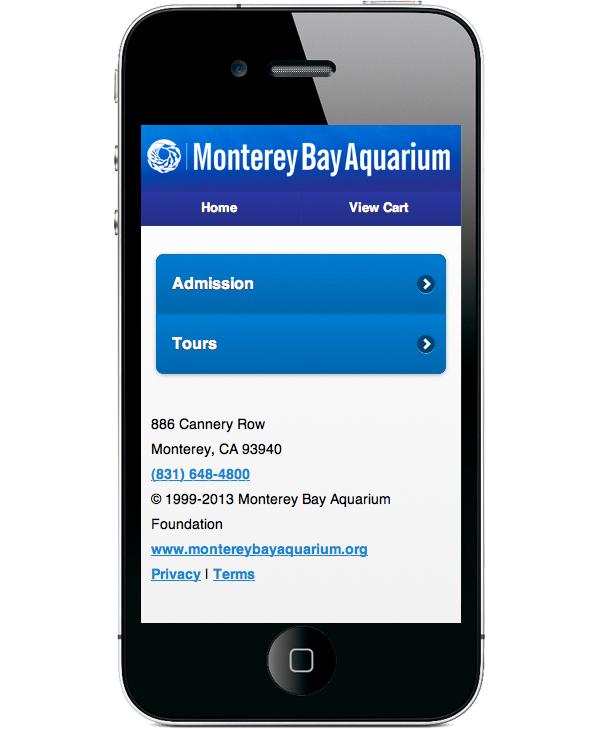
The Monterey Bay Aquarium in California added a mobile web store because its visitors aged 40 and under expected this type of service
The Monterey Bay Aquarium in California added a mobile web store because its visitors aged 40 and under expected this type of service
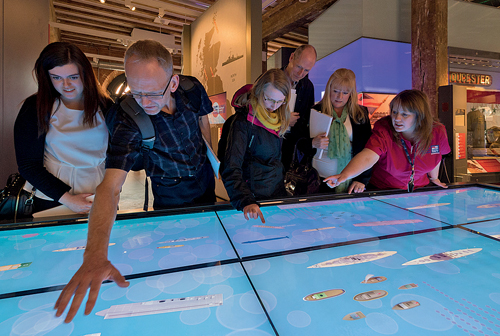
The less time visitors spend queuing, the more time they’ll have to explore and spend money in your facility
In the past year, the number of smart phone users who report using their mobile device for a purchase is up 15 per cent, to 34 per cent of users
At first glance, mobile web stores for attractions may seem so 2011 trend-wise. I beg to differ – while it’s been on the horizon for the past two years or more, mobile web sales continue to swell and we haven’t yet seen a cresting point. This time last year, 45 per cent of American adults owned a smart phone. In one year, the number has grown a remarkable 11 per cent to more than half of all adults. Dig in even further to the core attractions demographic of 18- to 34-year-olds and that number surges to 80 per cent.
Smart use Smart phone ownership is only one facet of the mobile trend, however. We are, after all, far more interested in how potential guests and visitors are using their smart phones than we are in the fact that they own them. In the same one-year time frame, the number of smart phone users who report using their mobile devices to make a purchase is up 15 per cent to 34 per cent of users.
We know smart phone ownership and mobile purchases are growing across the board – it’s the no-brainer of mobile. But there’s also the question of perception when it comes to having a mobile web store. And it’s not one to be taken lightly. Kathi Patton, senior systems analyst at the Monterey Bay Aquarium, reports perception was key to the venue’s decision to implement a mobile web store: “When we were evaluating whether having a mobile web store was necessary, given we have a consumer store, our IT and web team came to us and basically said ‘If you can’t access it on your phone, it doesn’t exist.’
“There’s a definite perception among the under-40s group that everything that is anything can be done on your phone. And it’s not just emailing and texting, it includes purchases large and small, including tickets to our aquarium.”
Line up A simple truth is evident in any queuing line these days: nine out of 10 people in line will have their phone out to kill time. Many venues are taking advantage of this by placing signage with QR codes to their mobile stores along queue routes and even en route to the front gate from the car parks. In this way, mobile web stores have become the ultimate line-busting tool, surpassing self-serve kiosks in being both customer-friendly for guests and budget friendly regarding cost of ownership for venues.
Which leads us to additional facets in the mobile web gem: It’s good for the customer experience, boosts your bottom line, opens up new avenues for business intelligence and is operationally smart. Let’s unpack this statement, starting with the customer experience. When a visitor pulls out their phone while standing in line and orders a ticket, they improve both their customer experience and the visitor experience for the person behind them (with a lowly flip-phone). After all, if they’re having to stand in line, the only conscionable thing to do is to offer them the opportunity to get out of it.
By enabling them to purchase a ticket when and where they want – in the car, in line, in the loo – you’re giving them control over their guest experience from the outset: deciding when that experience will start. And we all know the less time they spend in line, the more time they have to be tempted by the concession and retail shops and to tweet about how amazing the rides are (as opposed to how epic the line is to get into the park).
Profit perks Mobile web sales also boost your bottom line, and not just as an additional sales channel. With less people in line, there’s the potential for labour expense reduction with fewer employees manning the ticket booths. So long as a guest has their phone, they have their ticket, which means less staff time spent on ticket look-up and reprints. Did I mention there’s no ticket printing for mobile tickets, thus saving on ticket stock and printer heads? Want to drive concession stand sales by offering a discount attached to the barcode on entry tickets? Your guests won’t need to dig for their ticket stub – they always know where their phone is.
Then there’s the opportunity for revenue through mobile convenience fees. Many venues drive sales to their mobile store by offering a discount on tickets purchased there, then offset (or even eliminate) the discount by charging a convenience fee. With regards to revenue, the favourite, of course, is to forego the discount altogether and keep the convenience fee. Let’s be honest, if ever a dollar fee was worth its weight in gold, it’s when it’s used to ditch a wait in a line.
Aside from raising your operational IQ by reducing ticket window staff and being the ultimate line-busting tool, mobile stores add value to print ads by generating direct buying response when a 2D barcode is placed on the page. There have even been venues that report a reduction in customer service calls when a mobile web store went live. The reason why? Regardless of whether or not you have a mobile store, your customers will try to buy tickets from their smart phone. When your consumer web store doesn’t display or function properly on their phone, call centres take the hit. In the end, you’ll give them that fantastic online discount and be paying call centre staff for the privilege.
Addressing the issue Unexpected benefits to a mobile web store often come packaged in the data that it brings you. Any marketer knows that willingly given email addresses are a treasure, and the spoils abound when tickets are bought online, whether through consumer or mobile web stores. The Point Defiance Zoo and Aquarium recently realised they could leverage the email addresses collected from their mobile sales to send an online survey to guests after their visit, says Metro Parks Tacoma business and administrative services manager, Donna Powell.
“We used to pay a vendor to come on-site and do a two-week long survey of zoo guests. It was a really narrow window of feedback that we received. Now, two days after a mobile or print-at-home ticket is scanned, the purchaser receives an email in their inbox. In addition to questions about purchasing online, we’re able to ask them all the questions we used to pay the vendor to ask. We’re able to get that information on a real-time basis, 52 weeks a year, at little to no cost, and from a much broader audience.”
This season, a major US theme park is implementing something similar with a bounce back offer that will be sent to visitors via email after their visit, encouraging guests to return to the park later in the year with discounts that can be used for special fall or winter events.
With operational savings, the potential for convenience fees and the value of business intelligence, mobile web stores provide a return on investment at a rate that leaves other more traditional sales channels in the dust. The Point Defiance Zoo & Aquarium recouped their mobile web store investment within two months of implementation: “Sixteen per cent of our total ticket sales were done online in 2013 and almost a quarter of our online sales were through mobile,” reports Powell. That’s 112,000 fewer visitors standing in ticket lines and a lot of potential to reduce overhead costs.
Powell concludes: “While decreasing staff costs is a goal, the ultimate driver for our mobile store was to improve the visitor experience and, without a doubt, we’ve done that.”
Read more from this issue of Spa Business magazine
View contents of Spa Business 2014 issue 2
Editor's letter: The New Philanthropists
Tech is hot and as the growing number of tech millionaires
turn their thoughts to philanthropy, tech-related
attactions will prosper
Profile: Mario Mamon
The current chair of IAAPA talks about
his role with the organisation, doubling
the size of family theme park Enchanted
Kingdom in the Philippines and the
devastation of Super Typhoon Haiyan
Museums: MOHAI
MOHAI's executive director,
Leonard Garfield, talks about
the Seattle museum's new Bezos
Center for Innovation, named after
Amazon founder Jeff Bezos
Science centres: Appliance of science
Andreas Waschk and Mike Boris
explain how they made Blueprint
Entertainment into Europe's largest
private science centre operator
Museums: Olympic Movement
Director Francis Gabet describes how
The Olympic Museum's extensive
refurbishment reflects the excitement
and diveristy of the modern Games
Planetariums: Starry skies
The newly upgraded Fiske Planetarium in
Boulder, Colorado now boasts the highest
specification full dome theatre in the US.
Director Douglas Duncan tells us more
Museums: Beautiful minds
The founders of MoMath, the New York
Museum of Mathematics, tell us how
they're on a mission to get ordinary
people to fall in love with maths
World expos: Brave new world
Christian Lachel considers how world
expos can raise global awareness
about what matters for the planet
3D/4D/5D: IMERSA
A review of the fifth annual IMERSA
conference held in Denver, Colorado
Advertisement feature: EAS 2014
The exhibitors reveal what they’ll be showcasing at EAS in
September and what the hot topics of conversation will be
Waterparks: Wet'n'Wild
Wet'n'Wild Sydney has welcomed
a million visitors through its gates
since opening in December. Managing
director Chris Warhurst tells us why
Ticketing: Convenience store
Gateway's Liesel Tarquini explains
how mobile web stores can help
generate additional revenue
for attractions operators
Consumer web stores are designed for desktop and laptop computers. Mobile web stores (and sites) are designed specifically for mobile devices – smartphones and tablets.
Mobile store functionality can be accomplished through apps or actual platform/phone independent sites.
There are differences in user experience between mobile and desktop stores. Mobile stores are streamlined and designed to work best on mobile devices: they fit mobile screens and often have print-to-phone functionality for tickets/barcodes. The difference is particularly clear when you come to a site that wasn’t designed for mobile, so has very small print that users have to zoom in on to read.
Liesel M Tarquini is marketing product manager at Gateway Ticketing Systems Inc. [email protected]
The Monterey Bay Aquarium in California added a mobile web store because its visitors aged 40 and under expected this type of service
The Monterey Bay Aquarium in California added a mobile web store because its visitors aged 40 and under expected this type of service
The less time visitors spend queuing, the more time they’ll have to explore and spend money in your facility
Eighty-four per cent of consumers now say wellness is a top priority in their lives, with this
percentage increasing year on year, according to a preview presentation of McKinsey’s Future of
Wellness 2026 research report.
Mass protests have been taking place since Monday 1 June in Albania over the development of
a luxury resort by Donald Trump’s daughter Ivanka Trump and her husband Jared Kushner.
Global Wellness Day (GWD) marked its 15th anniversary on Saturday 13 June 2026, with the
theme: #JoyMagenta – a celebration of the healing qualities of simple gestures and activities
that spark joy.
Global luxury hospitality brand, Six Senses, has partnered with longevity healthcare provider,
HUM2N, to launch a clinic at Six Senses London, at The Whiteley.
As part of its first hotel partnership, Mayrlife – the medical health resort company known for its
site in Altaussee, Austria – has launched a day clinic at the Rosewood Vienna.
Premium London health club, KX Chelsea, will imminently unveil its most significant
redevelopment since its launch in 2002 to create an integrated wellness model combining
training, recovery and relaxation.
Rosewood Le Guanahani St Barth, on the northeast coast of Saint Barthélemy in the French
West Indies, is offering a programme of ocean-inspired yoga classes between 8-14 June to
celebrate Global Wellness Day (GWD).
Hotel de France, located on the British Isle of Jersey, has created a wellness retreat package
that includes a hot yoga session that will take place in Jersey Zoo’s butterfly sanctuary.
The Ritz-Carlton, Langkawi, in Malaysia, has revealed a schedule for Global Wellness Day
(GWD) that includes guided rainforest walks, mindful movement and guided coastal meditation
experiences.
Longevitix, a clinical platform for preventive and longevity medicine, has launched its AI-
powered intelligence system to help physicians deliver continuous, personalised longevity-
focused care at scale.