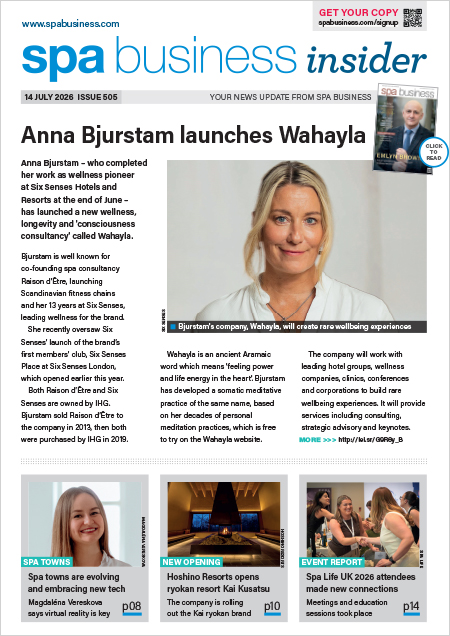
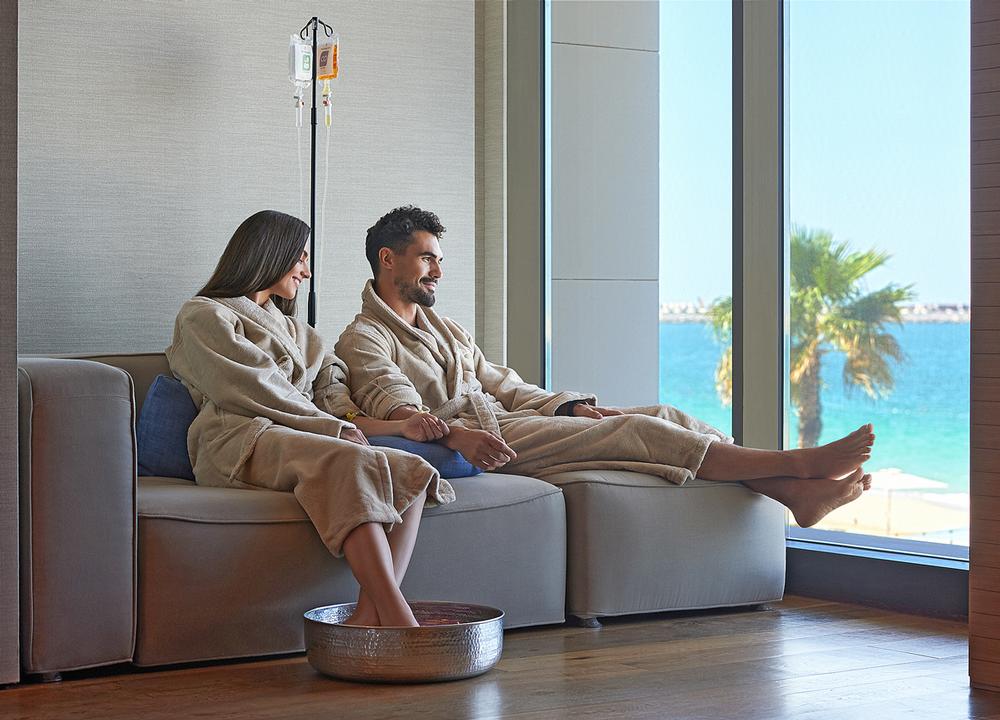
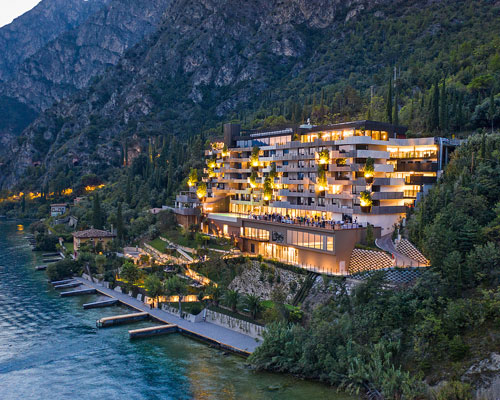
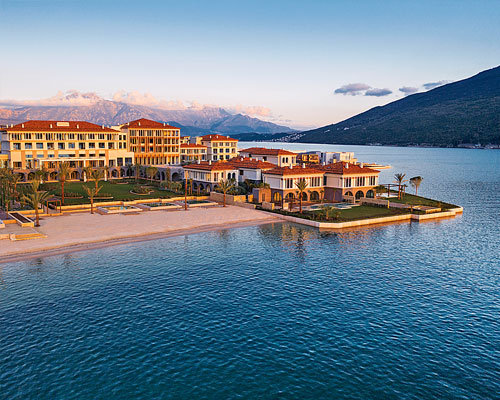
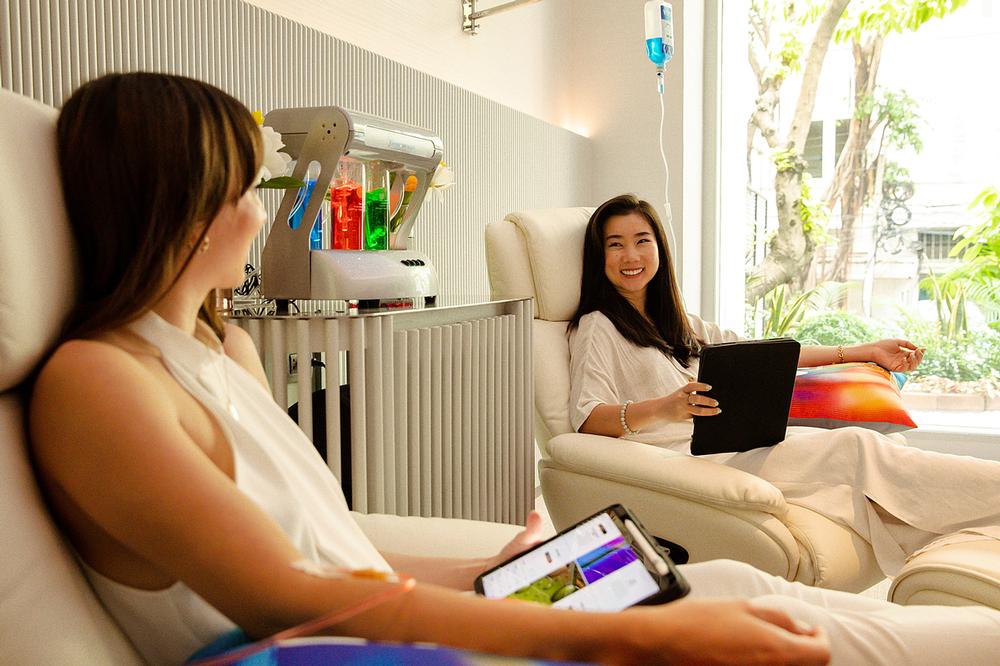
At Mandarin Oriental Dubai, guests enjoy the ability to have a clinical infusion in a spa setting / photo: ELIXIR CLINIC AT MANDARIN ORIENTAL DUBAI
Perusing spa menus today, you may come across IV nutrition or vitamin therapy. If hearing ‘IV’ makes you think of something medical, you’re not far off the mark. Sir Christopher Wren crafted the first intravenous device for human and animal blood transfusions in the late 1600s from a writing quill and pig’s bladder. Thankfully, the delivery system had been updated by the time it came into regular use by the medical establishment in the early 1900s and since then the scope of the treatment has widened.
The concept is based on injecting fluids, vitamins, minerals and amino acids directly into the bloodstream, bypassing the digestive system. Although the method isn’t without its sceptics (see p86), hospitals use it as a quick way to hydrate patients and get them essential nutrients and in the 1960s John Myer, a US doctor, became famous for his ‘cocktail’ of ingredients which help manage the symptoms of many conditions such as cardiovascular disorders, fibromyalgia, asthma and seasonal allergies. The mixture included vitamins B and C, selenium, magnesium sulphate and calcium gluconate and while the exact recipe died with Dr Myer in 1984, it forms the basis for many infusion menus today.
What’s on offer? As spas extend their menus for differentiation and venture into medi-wellness, IV nutrition therapy has become more available in these settings. It’s customary to see options that promise everything from a general wellness boost and hydration to fat-burning, anti-ageing and immune system benefits, as well as drips that address specific conditions such as hangovers, jet lag and morning sickness.
IV nutrition therapy is offered in a variety of settings, from wellness clinics and spas to chains and franchises such as VitaLounge and The Elixir Clinic. A 1-litre bag infusion typically takes 20-30 minutes and an individual treatment is usually priced between US$104-US$225 (€88-€188, £75-£162).
Training / partnerships IV therapy is deemed a medical service so regulations require the involvement and/or oversight of a physician or healthcare practitioner. Spas in the medi-wellness domain typically employ nurses to administer it and in some cases have medical teams to create their own IV ‘recipes’.
Those that don’t have medical personnel can form partnerships with existing clinics or providers. Mandarin Oriental in Dubai, for example, offers IV therapy in conjunction with The Elixir Clinic.
The Elixir Clinic has nine locations worldwide and specialises in VitaDrip® infusions. Other spa partnerships are with Emirates Palace in Abu Dhabi and ESPA Life at Corinthia in London.
When a client requests an IV treatment at a spa, a local Elixir Clinic physician will send a nurse to administer the drip in either a treatment room or a relaxation area.
Why should spas offer it? At Mandarin Oriental Dubai, senior spa director Sara Codner reports that guests enjoy the ability to have a clinical infusion in a spa setting. Customers having a mani/pedi service will often request a drip, which can be received at the same time, or the spa can provide an anti-ageing vitamin infusion to complement a facial.
Codner says they’re great for last-minute small group bookings. If five guests book and there are only four therapists available, a drip can be offered to the fifth person – and then “everyone wants it”! Since COVID-19, guests have also been very responsive to having immunity-boost drips, she adds.
In Thailand, the Anantara Siam Bangkok Hotel has partnered with local healthcare provider Verita to create VIVID Bangkok which it describes as a “vibrant IV drip bar, anti-ageing and aesthetics hub”. And the duo is set to launch another two in the country. VIVID offers IV infusions alongside other regenerative treatments such as ozone therapy and injectables.
Hotel PR manager Camilla Coburn Davis says many VIVID clients are new guests who’ve sought out the facility after seeing it on social media, or from word-of-mouth recommendations. “We’ve received overwhelmingly positive feedback about the IV therapy and we’re particularly proud of the glowing reviews of our qualified nurses,” she says.
The most popular package is an off-the-shelf infusion delivered once every two weeks for optimal results. However, one-off IVs can be personalised to suit the lifestyle needs of individuals.
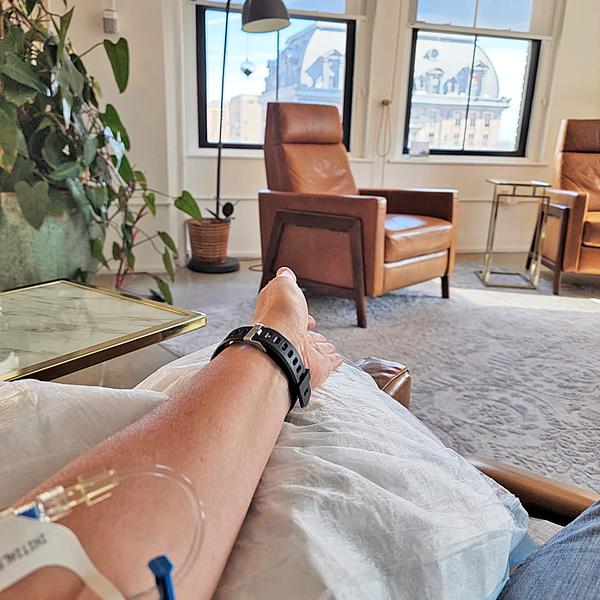
First-person experience I tried IV therapy at City Hydration, a clinic owned by a physician, in Philadelphia, Pennsylvania. The studio is a natural, light-filled space with six comfy seats, in a small office building in the city centre.
I was the only client when I visited at 1.15pm, although they said they’d been busy earlier. I was greeted by the only employee present, an emergency room nurse who works a few shifts a week, and presented with the menu. I opted for the US$155 (£111, €128) Health Maintenance and Energy drip, which was basically a Myer’s cocktail – 1 litre of saline with b-complex, magnesium, calcium and vitamin C.
I settled into my recliner and a needle was expertly and quickly inserted and I rested my arm on a disposable pad on top of a pillow. The nurse told me the drip would take about 30 minutes and using my free hand to scroll through Instagram and play a few games on my mobile, the time went by quickly.
I was advised that the treatment would make me feel more energetic that afternoon and the next day, and that no, I wouldn’t have to use the restroom more than normal!
Later that evening I’d forgotten about my visit until I saw the plaster on my arm and, in honesty, I can’t say I felt any different. If I was at a spa for an entire day, this might be something I’d try in what would otherwise be downtime, but for the money required, I’d likely opt for a more physically enjoyable treatment.
THE SCEPTIC’S VIEW
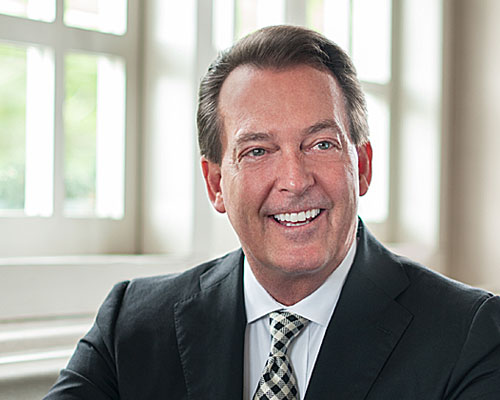
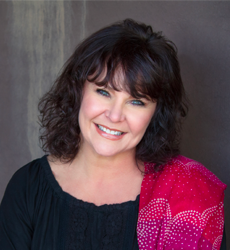
Rick Pescatore, attending physician, Einstein Medical Center, USA
photo: RICK PESCATORE
For the vast majority of healthy individuals, IV vitamin infusions are neither effective, useful, nor recommended since most consumers do not suffer from vitamin deficiencies. In the rare scenario that they do, oral supplementation is more than sufficient.
Spas offering vitamin infusions should be careful not to make misleading statements regarding their effects. While rare, there are always risks, such as overdose of fat-soluble vitamins (A, D, E & K), as well as infection from improper medication or medical supply handling techniques.
Spas offering vitamin infusions should be careful not to make any misleading statements regarding their effects
OPERATOR VIEW
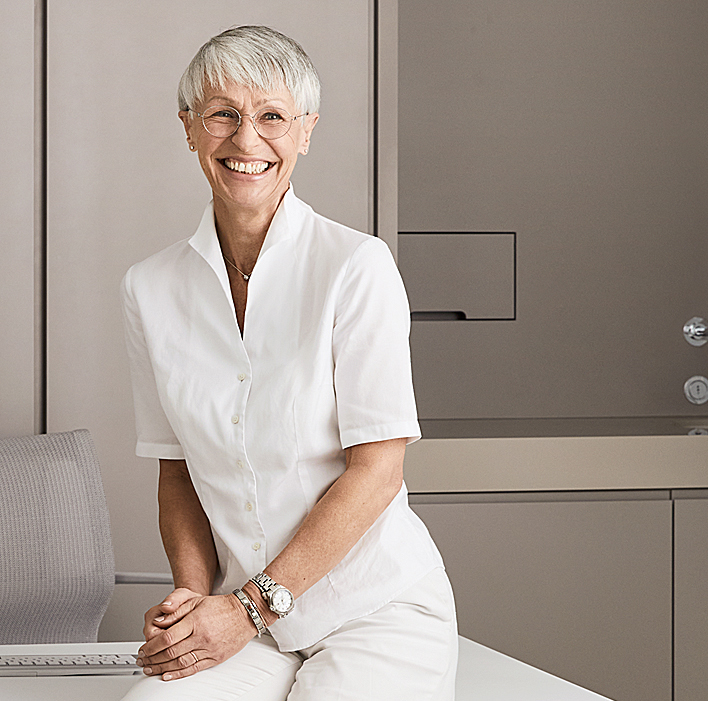
Dr Ursula Levine, general practitioner, Lanserhof Arts Club, London
photo: Lanserhof at The Arts Club
We’ve offered IV treatments at the Arts Club since opening in July 2019 and they’re an integral part of Lanserhof’s programmes across Europe. This includes the FX Mayr gut health method we’re known for, which is supported by both oral and IV supplementation and we’re pioneering this in the UK where it’s not as advanced as it is in German-speaking countries.
For us, IV treatments are medically-driven. Before any service, there’s a diagnosis, as medical services in the UK are heavily regulated. We provide a menu of drips, but advise on the best option. Most of our infusions are tailored to the individual before being administered by nurses.
IV bookings have risen by 20 per cent since the pandemic. People are trying them to help support their immune system and for detoxing and allergies in the spring. Many clients come in once a week for a month and then stretch out the treatments.
We expect popularity to continue, especially as we’ve just launched the first walk-in version of our renowned, customised fasting programme in the UK. The aim of the US$6,950 (€5,754, £5,000) package is to reset the gut in seven days by using IV therapy alongside lymph drainage, abdominal treatments, massage and personal training.
Before any service, there’s a diagnosis, as medical services in the UK are heavily regulated
Lisa Starr is a contributing editor at Spa Business magazine
| [email protected]
Read more from this issue of Spa Business magazine
Spa people: Adrian Zecha
Adrian Zecha talks about his latest brands and why he's not planning retirement anytime soon
Spa people: Michala Chatel
Ultima Collection's managing partner explains why and how it's adding wellness options to exclusively rented villas and properties
Spa people: Stephanie Stahl
The Ace of Air co-founder tackles sustainability head on with a 'buy the product rent the packaging' scheme
Menu engineering: At your service
Art and sauna bathing collide in a Japanese exhibition; Banyan Tree rolls out its Wellbeing Sanctuary concept globally
Top team: Capella
Neena Dhillon talks to the owning company and senior executives from this burgeoning Asian hospitality brand with a passion for wellness
Ask an Expert: Treating Long COVID
One in 20 people who've had coronavirus are still battling its side effects for three months or more. How can spas help?
Promotion: Art of Cryo: Cool night's sleep
High-performance cryo chamber specialist Art of Cryo joins forces with leading bed manufacturer Samina to launch cryo centres for sleep health
Interview: Stelian Iacob
Therme Group's COO tells Katie Barnes how it's making the traditional thermal facility model more relevant to today's consumers
First person: Yasuragi
Spas in Sweden stayed open in the pandemic, but does the nation still have an appetite for wellness? Andrew Gibson investigates at this Japanese concept spa hotel near Stockholm
Interview: Tammy Pahel
The VP of spa at Carillon Miami candidly shares some of the challenges of the past year with Lisa Starr and explains why she's investing in touchless innovations
Spa survey: Wellness time
A new consumer survey shows how people's attitudes towards wellness and spas have changed. Mindbody's Katherine Wernet
Focus on: IV nutrition therapy
Is IV nutrition therapy as credible as some spas claim? Lisa Starr investigates this increasingly popular treatment
In the fast-paced world of fitness and wellness, where high-intensity workouts push us to
our limits and the sweat pours, the importance of efficient recovery cannot be overstated. [more...]
At Mandarin Oriental Dubai, guests enjoy the ability to have a clinical infusion in a spa setting / photo: ELIXIR CLINIC AT MANDARIN ORIENTAL DUBAI
Perusing spa menus today, you may come across IV nutrition or vitamin therapy. If hearing ‘IV’ makes you think of something medical, you’re not far off the mark. Sir Christopher Wren crafted the first intravenous device for human and animal blood transfusions in the late 1600s from a writing quill and pig’s bladder. Thankfully, the delivery system had been updated by the time it came into regular use by the medical establishment in the early 1900s and since then the scope of the treatment has widened.
The concept is based on injecting fluids, vitamins, minerals and amino acids directly into the bloodstream, bypassing the digestive system. Although the method isn’t without its sceptics (see p86), hospitals use it as a quick way to hydrate patients and get them essential nutrients and in the 1960s John Myer, a US doctor, became famous for his ‘cocktail’ of ingredients which help manage the symptoms of many conditions such as cardiovascular disorders, fibromyalgia, asthma and seasonal allergies. The mixture included vitamins B and C, selenium, magnesium sulphate and calcium gluconate and while the exact recipe died with Dr Myer in 1984, it forms the basis for many infusion menus today.
What’s on offer? As spas extend their menus for differentiation and venture into medi-wellness, IV nutrition therapy has become more available in these settings. It’s customary to see options that promise everything from a general wellness boost and hydration to fat-burning, anti-ageing and immune system benefits, as well as drips that address specific conditions such as hangovers, jet lag and morning sickness.
IV nutrition therapy is offered in a variety of settings, from wellness clinics and spas to chains and franchises such as VitaLounge and The Elixir Clinic. A 1-litre bag infusion typically takes 20-30 minutes and an individual treatment is usually priced between US$104-US$225 (€88-€188, £75-£162).
Training / partnerships IV therapy is deemed a medical service so regulations require the involvement and/or oversight of a physician or healthcare practitioner. Spas in the medi-wellness domain typically employ nurses to administer it and in some cases have medical teams to create their own IV ‘recipes’.
Those that don’t have medical personnel can form partnerships with existing clinics or providers. Mandarin Oriental in Dubai, for example, offers IV therapy in conjunction with The Elixir Clinic.
The Elixir Clinic has nine locations worldwide and specialises in VitaDrip® infusions. Other spa partnerships are with Emirates Palace in Abu Dhabi and ESPA Life at Corinthia in London.
When a client requests an IV treatment at a spa, a local Elixir Clinic physician will send a nurse to administer the drip in either a treatment room or a relaxation area.
Why should spas offer it? At Mandarin Oriental Dubai, senior spa director Sara Codner reports that guests enjoy the ability to have a clinical infusion in a spa setting. Customers having a mani/pedi service will often request a drip, which can be received at the same time, or the spa can provide an anti-ageing vitamin infusion to complement a facial.
Codner says they’re great for last-minute small group bookings. If five guests book and there are only four therapists available, a drip can be offered to the fifth person – and then “everyone wants it”! Since COVID-19, guests have also been very responsive to having immunity-boost drips, she adds.
In Thailand, the Anantara Siam Bangkok Hotel has partnered with local healthcare provider Verita to create VIVID Bangkok which it describes as a “vibrant IV drip bar, anti-ageing and aesthetics hub”. And the duo is set to launch another two in the country. VIVID offers IV infusions alongside other regenerative treatments such as ozone therapy and injectables.
Hotel PR manager Camilla Coburn Davis says many VIVID clients are new guests who’ve sought out the facility after seeing it on social media, or from word-of-mouth recommendations. “We’ve received overwhelmingly positive feedback about the IV therapy and we’re particularly proud of the glowing reviews of our qualified nurses,” she says.
The most popular package is an off-the-shelf infusion delivered once every two weeks for optimal results. However, one-off IVs can be personalised to suit the lifestyle needs of individuals.
First-person experience I tried IV therapy at City Hydration, a clinic owned by a physician, in Philadelphia, Pennsylvania. The studio is a natural, light-filled space with six comfy seats, in a small office building in the city centre.
I was the only client when I visited at 1.15pm, although they said they’d been busy earlier. I was greeted by the only employee present, an emergency room nurse who works a few shifts a week, and presented with the menu. I opted for the US$155 (£111, €128) Health Maintenance and Energy drip, which was basically a Myer’s cocktail – 1 litre of saline with b-complex, magnesium, calcium and vitamin C.
I settled into my recliner and a needle was expertly and quickly inserted and I rested my arm on a disposable pad on top of a pillow. The nurse told me the drip would take about 30 minutes and using my free hand to scroll through Instagram and play a few games on my mobile, the time went by quickly.
I was advised that the treatment would make me feel more energetic that afternoon and the next day, and that no, I wouldn’t have to use the restroom more than normal!
Later that evening I’d forgotten about my visit until I saw the plaster on my arm and, in honesty, I can’t say I felt any different. If I was at a spa for an entire day, this might be something I’d try in what would otherwise be downtime, but for the money required, I’d likely opt for a more physically enjoyable treatment.
THE SCEPTIC’S VIEW
Rick Pescatore, attending physician, Einstein Medical Center, USA
photo: RICK PESCATORE
For the vast majority of healthy individuals, IV vitamin infusions are neither effective, useful, nor recommended since most consumers do not suffer from vitamin deficiencies. In the rare scenario that they do, oral supplementation is more than sufficient.
Spas offering vitamin infusions should be careful not to make misleading statements regarding their effects. While rare, there are always risks, such as overdose of fat-soluble vitamins (A, D, E & K), as well as infection from improper medication or medical supply handling techniques.
Spas offering vitamin infusions should be careful not to make any misleading statements regarding their effects
OPERATOR VIEW
Dr Ursula Levine, general practitioner, Lanserhof Arts Club, London
photo: Lanserhof at The Arts Club
We’ve offered IV treatments at the Arts Club since opening in July 2019 and they’re an integral part of Lanserhof’s programmes across Europe. This includes the FX Mayr gut health method we’re known for, which is supported by both oral and IV supplementation and we’re pioneering this in the UK where it’s not as advanced as it is in German-speaking countries.
For us, IV treatments are medically-driven. Before any service, there’s a diagnosis, as medical services in the UK are heavily regulated. We provide a menu of drips, but advise on the best option. Most of our infusions are tailored to the individual before being administered by nurses.
IV bookings have risen by 20 per cent since the pandemic. People are trying them to help support their immune system and for detoxing and allergies in the spring. Many clients come in once a week for a month and then stretch out the treatments.
We expect popularity to continue, especially as we’ve just launched the first walk-in version of our renowned, customised fasting programme in the UK. The aim of the US$6,950 (€5,754, £5,000) package is to reset the gut in seven days by using IV therapy alongside lymph drainage, abdominal treatments, massage and personal training.
Before any service, there’s a diagnosis, as medical services in the UK are heavily regulated
Lisa Starr is a contributing editor at Spa Business magazine
| [email protected]
Read more from this issue of Spa Business magazine
Spa people: Adrian Zecha
Adrian Zecha talks about his latest brands and why he's not planning retirement anytime soon
Spa people: Michala Chatel
Ultima Collection's managing partner explains why and how it's adding wellness options to exclusively rented villas and properties
Spa people: Stephanie Stahl
The Ace of Air co-founder tackles sustainability head on with a 'buy the product rent the packaging' scheme
Menu engineering: At your service
Art and sauna bathing collide in a Japanese exhibition; Banyan Tree rolls out its Wellbeing Sanctuary concept globally
Top team: Capella
Neena Dhillon talks to the owning company and senior executives from this burgeoning Asian hospitality brand with a passion for wellness
Ask an Expert: Treating Long COVID
One in 20 people who've had coronavirus are still battling its side effects for three months or more. How can spas help?
Promotion: Art of Cryo: Cool night's sleep
High-performance cryo chamber specialist Art of Cryo joins forces with leading bed manufacturer Samina to launch cryo centres for sleep health
Interview: Stelian Iacob
Therme Group's COO tells Katie Barnes how it's making the traditional thermal facility model more relevant to today's consumers
First person: Yasuragi
Spas in Sweden stayed open in the pandemic, but does the nation still have an appetite for wellness? Andrew Gibson investigates at this Japanese concept spa hotel near Stockholm
Interview: Tammy Pahel
The VP of spa at Carillon Miami candidly shares some of the challenges of the past year with Lisa Starr and explains why she's investing in touchless innovations
Spa survey: Wellness time
A new consumer survey shows how people's attitudes towards wellness and spas have changed. Mindbody's Katherine Wernet
Focus on: IV nutrition therapy
Is IV nutrition therapy as credible as some spas claim? Lisa Starr investigates this increasingly popular treatment
Synergy – The Retreat Show, the global trade show for retreats, has launched a global research
initiative that will provide insights into the retreat sector from both consumer and industry
perspectives.
The Wellness Tourism Association (WTA) has published a non-regulatory global industry
framework designed to ensure the retreat market offers responsible experiences.
A new survey of UK and international spa practitioners shows that stress, burnout and
wellbeing concerns have caused one in three respondents to consider leaving the industry.
The UK's four Chief Medical Officers have published a refreshed edition of Physical activity
guidelines: UK Chief Medical Officers' report, updating the evidence that underpins the nation's
physical activity recommendations and placing greater emphasis on strength, balance, reducing
sedentary behaviour and, for the first time, supporting people taking weight loss medications.
Anna Bjurstam has left her role as Wellness Pioneer at Six Senses Hotels and Resorts and
launched a new wellness, longevity and “consciousness consultancy” called Wahayla.
Fairmont Cheshire, The Mere, has opened today (10 July) in the Northwest of England
with a
1,715sq m Fairmont Spa that has been designed using a ‘Wellness without Walls’
concept.
Wellness hotels generating less than US$1 million (€932,700, £785,200) – or 10 per cent of
total revenue from wellness and leisure – recorded the strongest RevPAR and TRevPAR growth
in 2025 across categories when compared with 2024, according to the latest Wellness Real
Estate Report by RLA Global, produced in partnership with P and L benchmarking firm HotStats.
Lefay Resorts, the portfolio of two luxury wellness properties in Italy, has added emotional
dance classes and group cold plunge sessions in response to market demand for social
connection.
In the fast-paced world of fitness and wellness, where high-intensity workouts push us to
our limits and the sweat pours, the importance of efficient recovery cannot be overstated. [more...]