“Is it real?” is the usual response when visitors see Space Shuttle Atlantis in its new $100m home at Kennedy Space Center, which opened on 29th June, as the COO tells us
By Kathleen Whyman | Published in Attractions Management 2013 issue 3
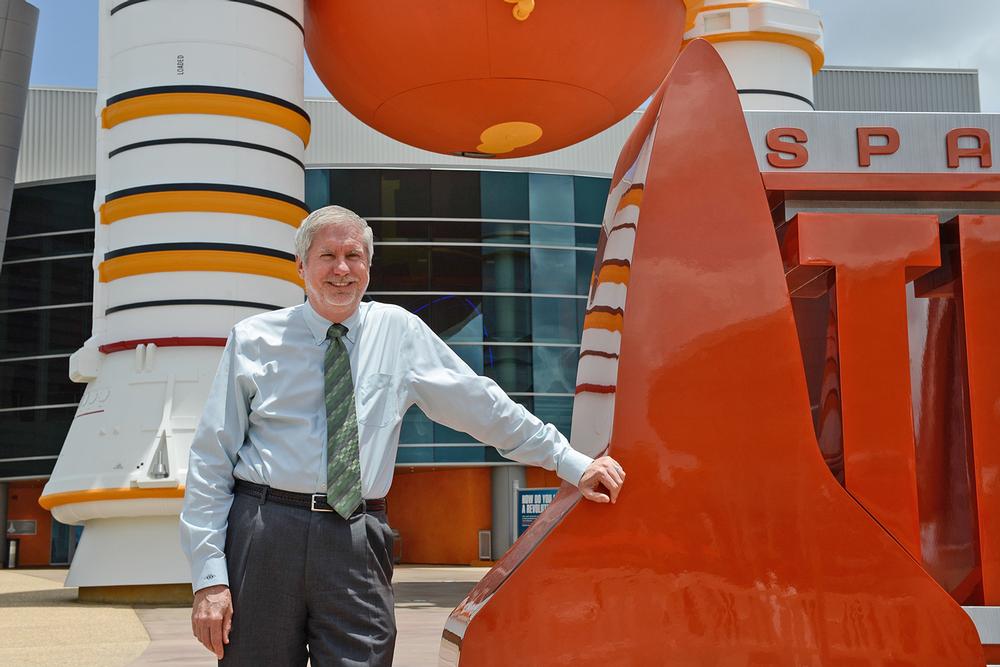
Bill Moore
COO Kennedy Space Center Visitor Complex
How did you win Space Shuttle Atlantis? NASA put out a request for proposals from US museums and attractions that would be interested in displaying any of their shuttles. We’d been working on our proposal for years because we knew Kennedy Space Center Visitor Complex (KSCVC) would be a good home for it – every shuttle flew from Kennedy and half of them landed back here. Also, we already get a lot of people coming here to learn about space.
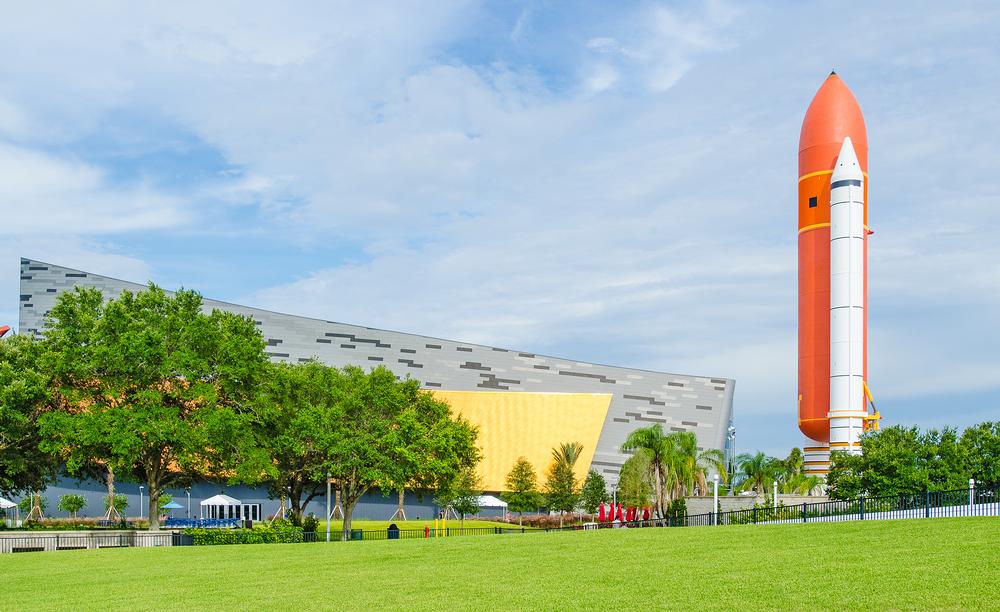
What does the Atlantis mean to KSCVC? It’s the biggest thing we’ve done, both in size and cost – the Atlantis measures 122.17ft (37.25m) long and the attraction covers 90,000sq ft (8,361sq m) and cost $100m (E75.6m, £65.1m) to build. It means a lot to us to have nationwide and international attention because we’ve reminded people that America’s still very much in the space business and is preparing for a different space programme, using a different capsule for the astronauts to ride in.
The KSCVC is in Orlando so we’re competing with the theme parks. To get people to come and see us, we have to do some pretty big things now and again.
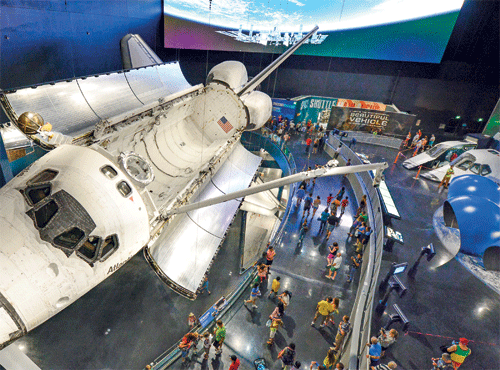
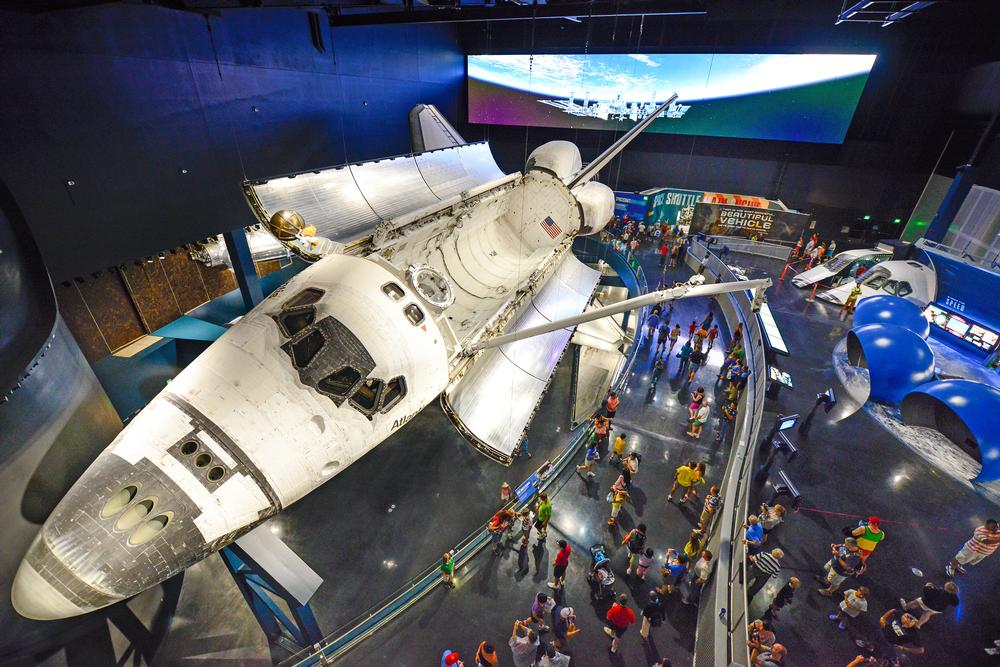
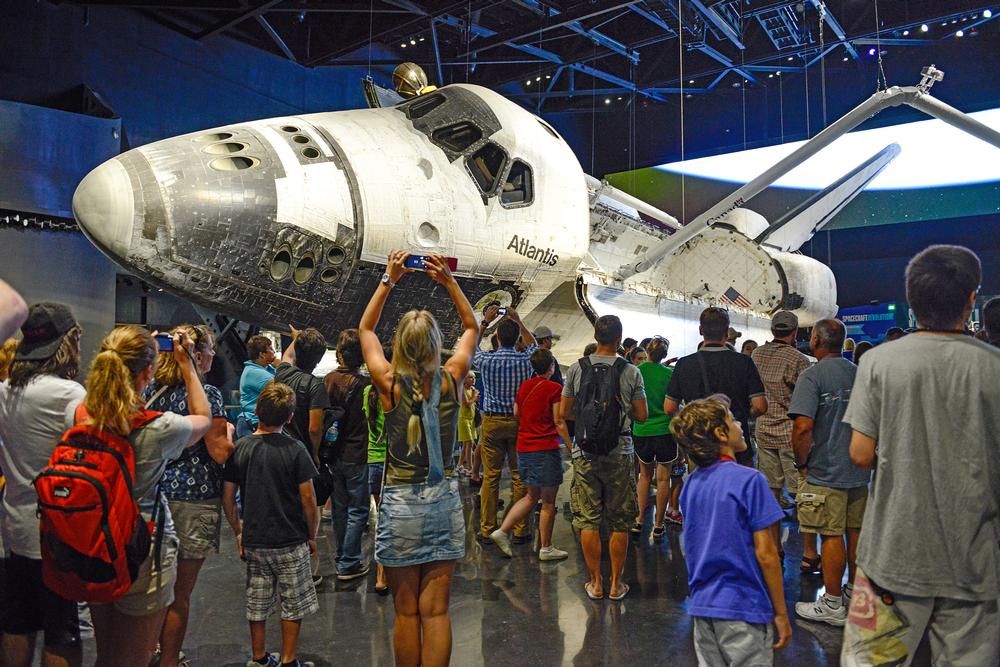
How’s the Atlantis being displayed? We thought it’d be neat to show the shuttle as if it were in flight, so came up with the idea of suspending it. This way people can see the bottom and sides of the ship, the engines and the docking mechanism and all the things that are unique to a space vehicle. We’ve tilted it at a 43.21-degree angle with its nose 30ft (9m) from the floor and its left wing down slightly. The payload bay doors are open, so visitors can imagine they’re about to board and go into space.
What was the inspiration? The people who worked on the Atlantis – who maintained it, prepared it for flight and brought it home – had a real relationship with the vehicle. The astronauts described that special moment when you first see the shuttle that’s going to take you into space. We wanted the average person to get a brief moment of what that must have been like.
What’s the experience? We wanted people to engage with the shuttle rather than just stand and stare at it, so there are 167 simulators and exhibits in the building including four cinematic productions and a 16ft (5m)-long interactive media wall.
Visitors can experience the sensation of floating in space, sit on a space potty and test their skills at landing an orbiter, docking to the International Space Station (ISS), manipulating the Canadarm and repairing the Hubble telescope. Everyone knows that the Hubble telescope is far out in space taking amazing pictures, but no one knows what it looks like, so we’ve made a full size mock up of it. It’s 43ft (13m)-long and 14ft (4m)-wide and helps people understand how it operates and gets power.
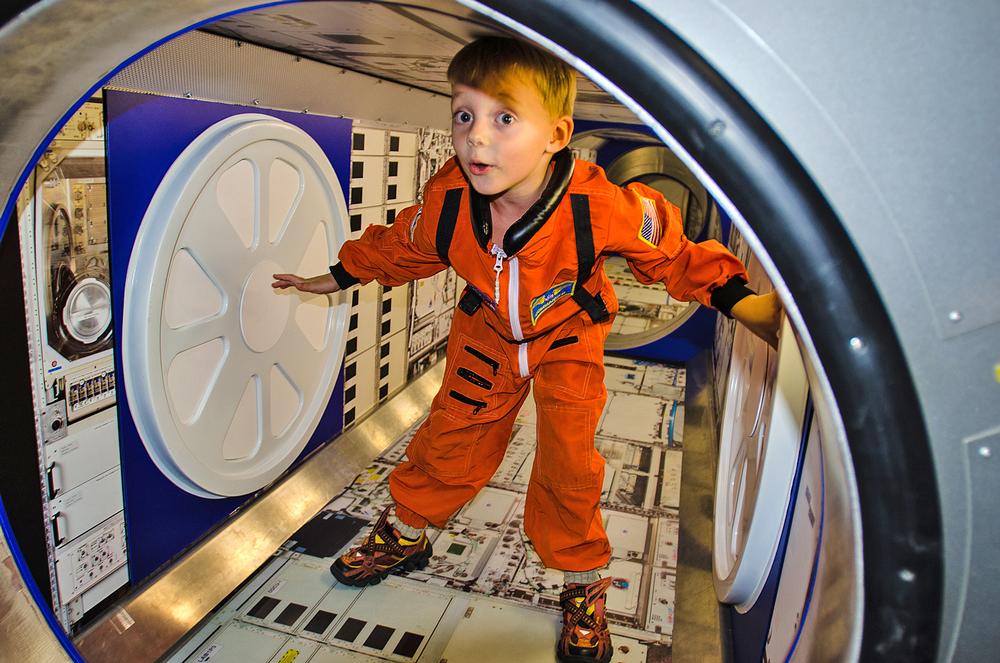
Going from large to small, there’s a mock up of parts of the ISS for children to explore plus tyres from the last mission on display. When a tyre hits the runway at 220 miles an hour it gets chewed up pretty bad.
All of these exhibits complement the existing Shuttle Launch Experience – a realistic simulation of what it’s like to launch into space. We’ve married the Launch Experience and the new shuttle attraction together so visitors can see the shuttle, get the history, understand why it was made, participate in some of the experiences the astronauts did in training, then go and ride it off the launch pad. It’s a whole experience and people are really enjoying that.
What’s the most popular? The Reveal Theatre is the one people talk about most. We show a film on the history of Atlantis on a large screen, which gives an emotional and visual sense of what it was like to be around the shuttle.
Then the screen opens and you’re staring at the shuttle from about 20ft away. It’s breath taking. Some people cry, others applaud, others are quiet and reverential. People come from all walks of life – they could be a labourer or the head of a company – and they’re all stunned.
At the other end of the spectrum is the Re-entry Slide that was built around the experience of coming in to land. It’s simple, but people love it. Some notable VIPs have asked to go on the slide – the NASA administrator went down it several times.
What have been the challenges? It was challenging to get $100m together. The way our contract works with NASA means we have a trust fund that we used. We also secured a line of credit and we’ll pay it back through revenue generated by ticket, food and retail sales.
Moving and fitting the Atlantis was another challenge. The fitting was pretty tight – there were just a couple of inches between the edge of the building and the edge of the wing. We left the far side of the building open so we could roll the shuttle in, and then hoisted it in the air to tilt it. It took two weeks to get it in the right position. It weighs quite a bit [151,315 lbs], so we were nervous.
Getting the payload bay doors to stay open was particularly nerve wracking. They’re 60ft (18ft)-long and weigh 2,500 lbs each and aren’t made to be opened here on earth other than by NASA’s giant machinery, which we don’t have. Some engineers said they weren’t sure we’d be able to do it, but we did.
Once the Atlantis was installed, we had to finish the building. That was difficult because we had to make sure nothing touched the vehicle when we were painting, putting in sprinkler systems, air conditioning and electrics. We were doing that with this giant, priceless vehicle [the Atlantis orbiter is valued at $2bn (E1.5bn, £1.3bn)] in the middle of where we were working, which was a tense process.
How long did the project take? We started planning four years ago, then spent 18 months building it.
The nuttiest thing we did was draw up the plans and get ready to build before we knew we were going to get the shuttle. That saved us a lot of time, as when we got the approval from the administrator, we were ready to start building.
What feedback have you had? The commonest feedback is: “Is it real?” People haven’t seen one this close so don’t know what to expect. They expect it to be beat up, but it’s in great shape.
Read more from this issue of Spa Business magazine
View contents of Spa Business 2013 issue 3
Editor's letter: Authenticity
Having authenticity and human engagement at the heart of an attraction
creates an energy which ensures its success
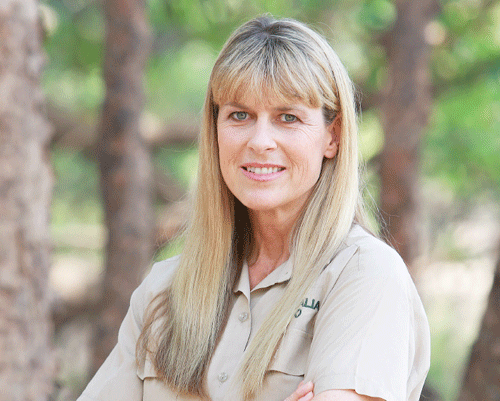
Profile: Terri Irwin
The conservationist, social entrepreneur
and operator of Australia Zoo describes
how she and her late husband, Steve,
built up their business and how she and
her children are continuing his legacy
Analysis: Riding High
The TEA/AECOM theme index report
for 2012 shows that the industry's
continuing to do well with recordbreaking
attendances for many parks
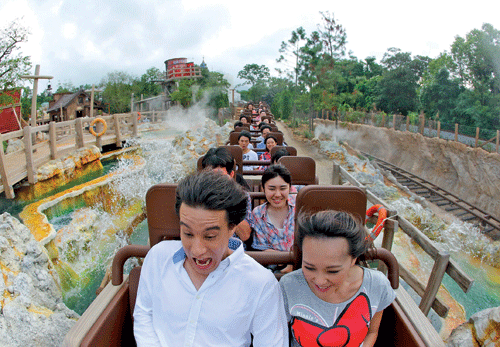
Waterparks: Tapping the experts
The merging of waterparks and theme
parks, shared experiences and multiple
sensation rides are among the trends,
as we find out from the operators
Top Team: Class act
The first themed entertainment design
degree launched last September at SCAD.
The team behind the programme describe
their inspiration and the challenges
Space centre: Space age
Space Shuttle Atlantis has come home
to rest at Kennedy Space Centre Visitor
Complex. COO Bill Moore tells us how
people react when they see the shuttle
Mystery shopper: The cat's whiskers?
Sanrio Hello Kitty Town is among the
attractions at the new Puteri Harbour
Family Theme Park in Malaysia. We pay
a visit to learn more about the offer
Heritage: Mary Rose Museum
King Henry VIII's war ship is brought
back to life in an exciting new museum,
which takes visitors back to the day
she sank, almost 500 years ago
Design project profile: All hands on deck
Mary Rose Museum's design team
tell us how they created a building
that complemented, but didn't
compete with, the famous ship and
the challenges of working around
the hot box it's being conserved in
3D/4D/5D: Work dimension
We find out how film distributors work
with operators and look at some of
the new products that are available
on the market for attractions
Show preview: EAS 2013
The suppliers reveal the products and
projects they'll be showcasing in Paris
How it happened – The suppliers behind the attraction
PGAV Destinations In 2010, PGAV developed a 10-year masterplan, which outlined and advised specific steps for Delaware North (operator of Kennedy Space Center Visitor Complex) regarding guest experience, food, retail, new attractions, and new NASA stories to tell.
PGAV were also the architects, exhibit designers, graphic designers, interior designers and media storytelling lead for Space Shuttle Atlantis.
In addition to NASA and PGAV, Delaware North’s other key partners have included:
* Electrosonic – provider of audiovisual systems * BRPH – architecture, engineering design and construction * Cortina Productions – media design, video and interactive experiences * Design Island – multimedia concept and production * projectiondesign – design and manufacture of high-performance projectors * Guard-Lee Inc – provider of high-fidelity aerospace replicas and models * Ivey’s Construction Inc – construction * Mousetrappe – media-based design and production studio * The Nassal Company – fabrication and installation of immersive and themed environments * Penwal Industries – designer, fabricator and installer of aerospace and military models * Unified Field Inc – interactive media, including multi-channel experiences and digital branding campaigns * Whiting-Turner – contracting and construction management services
NASA’s shuttle history
NASA’s first space shuttle launch was on April 12, 1981. Starting with Columbia and continuing with Challenger, Discovery, Atlantis and Endeavour, the spacecraft has carried people into orbit repeatedly, launched, recovered and repaired satellites, conducted cutting-edge research and built the largest structure in space, the International Space Station. The final space shuttle mission, STS-135, ended July 21, 2011 when Atlantis rolled to a stop at its home port, NASA’s Kennedy Space Center in Florida.
Where are they now?
Shuttle Enterprise, the first orbiter The Intrepid Sea, Air & Space Museum, New York
Discovery The Udvar-Hazy Center, Virginia
Shuttle Endeavour The California Science Center, LA
Shuttle Atlantis Kennedy Space Center Visitor’s Complex in Florida
In today’s premium spa environment, every detail shapes the guest experience – right down to
the softness of towels and the freshness of linens. [more...]
“Is it real?” is the usual response when visitors see Space Shuttle Atlantis in its new $100m home at Kennedy Space Center, which opened on 29th June, as the COO tells us
By Kathleen Whyman | Published in Attractions Management 2013 issue 3
Bill Moore
COO Kennedy Space Center Visitor Complex
How did you win Space Shuttle Atlantis? NASA put out a request for proposals from US museums and attractions that would be interested in displaying any of their shuttles. We’d been working on our proposal for years because we knew Kennedy Space Center Visitor Complex (KSCVC) would be a good home for it – every shuttle flew from Kennedy and half of them landed back here. Also, we already get a lot of people coming here to learn about space.
What does the Atlantis mean to KSCVC? It’s the biggest thing we’ve done, both in size and cost – the Atlantis measures 122.17ft (37.25m) long and the attraction covers 90,000sq ft (8,361sq m) and cost $100m (E75.6m, £65.1m) to build. It means a lot to us to have nationwide and international attention because we’ve reminded people that America’s still very much in the space business and is preparing for a different space programme, using a different capsule for the astronauts to ride in.
The KSCVC is in Orlando so we’re competing with the theme parks. To get people to come and see us, we have to do some pretty big things now and again.
How’s the Atlantis being displayed? We thought it’d be neat to show the shuttle as if it were in flight, so came up with the idea of suspending it. This way people can see the bottom and sides of the ship, the engines and the docking mechanism and all the things that are unique to a space vehicle. We’ve tilted it at a 43.21-degree angle with its nose 30ft (9m) from the floor and its left wing down slightly. The payload bay doors are open, so visitors can imagine they’re about to board and go into space.
What was the inspiration? The people who worked on the Atlantis – who maintained it, prepared it for flight and brought it home – had a real relationship with the vehicle. The astronauts described that special moment when you first see the shuttle that’s going to take you into space. We wanted the average person to get a brief moment of what that must have been like.
What’s the experience? We wanted people to engage with the shuttle rather than just stand and stare at it, so there are 167 simulators and exhibits in the building including four cinematic productions and a 16ft (5m)-long interactive media wall.
Visitors can experience the sensation of floating in space, sit on a space potty and test their skills at landing an orbiter, docking to the International Space Station (ISS), manipulating the Canadarm and repairing the Hubble telescope. Everyone knows that the Hubble telescope is far out in space taking amazing pictures, but no one knows what it looks like, so we’ve made a full size mock up of it. It’s 43ft (13m)-long and 14ft (4m)-wide and helps people understand how it operates and gets power.
Going from large to small, there’s a mock up of parts of the ISS for children to explore plus tyres from the last mission on display. When a tyre hits the runway at 220 miles an hour it gets chewed up pretty bad.
All of these exhibits complement the existing Shuttle Launch Experience – a realistic simulation of what it’s like to launch into space. We’ve married the Launch Experience and the new shuttle attraction together so visitors can see the shuttle, get the history, understand why it was made, participate in some of the experiences the astronauts did in training, then go and ride it off the launch pad. It’s a whole experience and people are really enjoying that.
What’s the most popular? The Reveal Theatre is the one people talk about most. We show a film on the history of Atlantis on a large screen, which gives an emotional and visual sense of what it was like to be around the shuttle.
Then the screen opens and you’re staring at the shuttle from about 20ft away. It’s breath taking. Some people cry, others applaud, others are quiet and reverential. People come from all walks of life – they could be a labourer or the head of a company – and they’re all stunned.
At the other end of the spectrum is the Re-entry Slide that was built around the experience of coming in to land. It’s simple, but people love it. Some notable VIPs have asked to go on the slide – the NASA administrator went down it several times.
What have been the challenges? It was challenging to get $100m together. The way our contract works with NASA means we have a trust fund that we used. We also secured a line of credit and we’ll pay it back through revenue generated by ticket, food and retail sales.
Moving and fitting the Atlantis was another challenge. The fitting was pretty tight – there were just a couple of inches between the edge of the building and the edge of the wing. We left the far side of the building open so we could roll the shuttle in, and then hoisted it in the air to tilt it. It took two weeks to get it in the right position. It weighs quite a bit [151,315 lbs], so we were nervous.
Getting the payload bay doors to stay open was particularly nerve wracking. They’re 60ft (18ft)-long and weigh 2,500 lbs each and aren’t made to be opened here on earth other than by NASA’s giant machinery, which we don’t have. Some engineers said they weren’t sure we’d be able to do it, but we did.
Once the Atlantis was installed, we had to finish the building. That was difficult because we had to make sure nothing touched the vehicle when we were painting, putting in sprinkler systems, air conditioning and electrics. We were doing that with this giant, priceless vehicle [the Atlantis orbiter is valued at $2bn (E1.5bn, £1.3bn)] in the middle of where we were working, which was a tense process.
How long did the project take? We started planning four years ago, then spent 18 months building it.
The nuttiest thing we did was draw up the plans and get ready to build before we knew we were going to get the shuttle. That saved us a lot of time, as when we got the approval from the administrator, we were ready to start building.
What feedback have you had? The commonest feedback is: “Is it real?” People haven’t seen one this close so don’t know what to expect. They expect it to be beat up, but it’s in great shape.
Read more from this issue of Spa Business magazine
View contents of Spa Business 2013 issue 3
Editor's letter: Authenticity
Having authenticity and human engagement at the heart of an attraction
creates an energy which ensures its success
Profile: Terri Irwin
The conservationist, social entrepreneur
and operator of Australia Zoo describes
how she and her late husband, Steve,
built up their business and how she and
her children are continuing his legacy
Analysis: Riding High
The TEA/AECOM theme index report
for 2012 shows that the industry's
continuing to do well with recordbreaking
attendances for many parks
Waterparks: Tapping the experts
The merging of waterparks and theme
parks, shared experiences and multiple
sensation rides are among the trends,
as we find out from the operators
Top Team: Class act
The first themed entertainment design
degree launched last September at SCAD.
The team behind the programme describe
their inspiration and the challenges
Space centre: Space age
Space Shuttle Atlantis has come home
to rest at Kennedy Space Centre Visitor
Complex. COO Bill Moore tells us how
people react when they see the shuttle
Mystery shopper: The cat's whiskers?
Sanrio Hello Kitty Town is among the
attractions at the new Puteri Harbour
Family Theme Park in Malaysia. We pay
a visit to learn more about the offer
Heritage: Mary Rose Museum
King Henry VIII's war ship is brought
back to life in an exciting new museum,
which takes visitors back to the day
she sank, almost 500 years ago
Design project profile: All hands on deck
Mary Rose Museum's design team
tell us how they created a building
that complemented, but didn't
compete with, the famous ship and
the challenges of working around
the hot box it's being conserved in
3D/4D/5D: Work dimension
We find out how film distributors work
with operators and look at some of
the new products that are available
on the market for attractions
Show preview: EAS 2013
The suppliers reveal the products and
projects they'll be showcasing in Paris
How it happened – The suppliers behind the attraction
PGAV Destinations In 2010, PGAV developed a 10-year masterplan, which outlined and advised specific steps for Delaware North (operator of Kennedy Space Center Visitor Complex) regarding guest experience, food, retail, new attractions, and new NASA stories to tell.
PGAV were also the architects, exhibit designers, graphic designers, interior designers and media storytelling lead for Space Shuttle Atlantis.
In addition to NASA and PGAV, Delaware North’s other key partners have included:
* Electrosonic – provider of audiovisual systems * BRPH – architecture, engineering design and construction * Cortina Productions – media design, video and interactive experiences * Design Island – multimedia concept and production * projectiondesign – design and manufacture of high-performance projectors * Guard-Lee Inc – provider of high-fidelity aerospace replicas and models * Ivey’s Construction Inc – construction * Mousetrappe – media-based design and production studio * The Nassal Company – fabrication and installation of immersive and themed environments * Penwal Industries – designer, fabricator and installer of aerospace and military models * Unified Field Inc – interactive media, including multi-channel experiences and digital branding campaigns * Whiting-Turner – contracting and construction management services
NASA’s shuttle history
NASA’s first space shuttle launch was on April 12, 1981. Starting with Columbia and continuing with Challenger, Discovery, Atlantis and Endeavour, the spacecraft has carried people into orbit repeatedly, launched, recovered and repaired satellites, conducted cutting-edge research and built the largest structure in space, the International Space Station. The final space shuttle mission, STS-135, ended July 21, 2011 when Atlantis rolled to a stop at its home port, NASA’s Kennedy Space Center in Florida.
Where are they now?
Shuttle Enterprise, the first orbiter The Intrepid Sea, Air & Space Museum, New York
Discovery The Udvar-Hazy Center, Virginia
Shuttle Endeavour The California Science Center, LA
Shuttle Atlantis Kennedy Space Center Visitor’s Complex in Florida
Global Wellness Day (GWD) marked its 15th anniversary on Saturday 13 June 2026, with the
theme: #JoyMagenta – a celebration of the healing qualities of simple gestures and activities
that spark joy.
Global luxury hospitality brand, Six Senses, has partnered with longevity healthcare provider,
HUM2N, to launch a clinic at Six Senses London, at The Whiteley.
As part of its first hotel partnership, Mayrlife – the medical health resort company known for its
site in Altaussee, Austria – has launched a day clinic at the Rosewood Vienna.
Premium London health club, KX Chelsea, will imminently unveil its most significant
redevelopment since its launch in 2002 to create an integrated wellness model combining
training, recovery and relaxation.
Rosewood Le Guanahani St Barth, on the northeast coast of Saint Barthélemy in the French
West Indies, is offering a programme of ocean-inspired yoga classes between 8-14 June to
celebrate Global Wellness Day (GWD).
Hotel de France, located on the British Isle of Jersey, has created a wellness retreat package
that includes a hot yoga session that will take place in Jersey Zoo’s butterfly sanctuary.
The Ritz-Carlton, Langkawi, in Malaysia, has revealed a schedule for Global Wellness Day
(GWD) that includes guided rainforest walks, mindful movement and guided coastal meditation
experiences.
Longevitix, a clinical platform for preventive and longevity medicine, has launched its AI-
powered intelligence system to help physicians deliver continuous, personalised longevity-
focused care at scale.
Atmantan Wellness Centre, an integrative wellness destination in Mulshi, near Pune in India, is
expanding its portfolio by adding a new centre in Hyderabad that will launch between 2028 and
2029.
In today’s premium spa environment, every detail shapes the guest experience – right down to
the softness of towels and the freshness of linens. [more...]