Yes! Send me the FREE digital editions of Spa Business and Spa Business insider magazines and the FREE weekly Spa Business and Spa Business insider ezines and breaking news alerts!
Do you have a strong opinion, or disagree with somebody else’s point of view on topics related to the spa industry? If so, Spa Business would love to hear from you. Email your letters, thoughts and suggestions to [email protected]
Wellness communities: Europe
Part 2 of our series explores some of
the most exciting European wellness
communities in development
Promotional feature: Babor
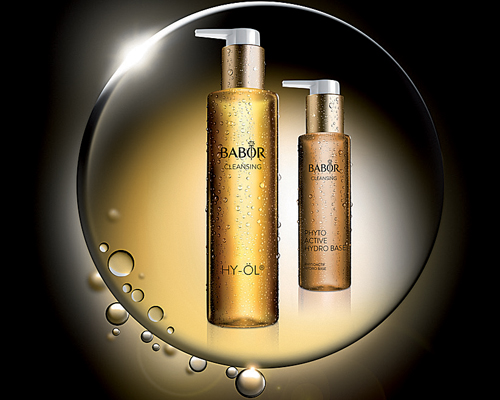
CEO Michael Schummert explains how the
company’s expertise in results-driven treatments makes its precision
‘Made in Germany’ products more relevant than ever before
Hyatt’s purchase of Miraval for US$215m is not a particularly large deal in the greater world of hospitality, but for what the deal lacks in size, it makes up for in strategic genius. In fact, with the “big box” mergers of Marriott and Starwood or Accor and FRHI, bigger does not necessarily mean smarter. Consolidation may have given these companies leverage in terms of marketing, distribution and even negotiations, but it’s yet to be seen if this will equate to consumer retention and acquisition.
On the other hand, Hyatt – in a rather stealthy move – has signaled that it recognises a need to better cater to the growing wellbeing needs of leisure and business travellers alike. Hyatt CEO Mark Hoplamazian has said that buying Miraval was fueled by Hyatt’s effort to “retool its relationship” with its customers by adding more “empathy” to its product. In other words, Hyatt seems to be saying “we hear you,” while the others appear to be saying “we want to win.” Both sentiments are compelling to shareholders, but one will create more brand loyalists faster.
Ultimately, this deal stands to spawn some healthy competition in both wellness and hospitality – and the increasingly mixed world of “wellness hospitality.” Any way you slice it, one thing is for sure: the game is on (see Top Team, p 43).
"What I love about this deal is that it stands to spawn some healthy competition"
Hyatt’s purchase of Miraval
Hyatt and Miraval – the long game
Trent Munday
Trent MundayVice PresidentSteiner Spa Consulting
What’s most interesting to me about Hyatt’s recent acquisition of Miraval is that there are two trends at play that have the potential to merge at some point in the future. If they do, Hyatt will win.
First, it stands to reason that smart hotel brands today are looking for more ways to engage with their guests – and not just when they are in the hotel. The more contact guests have with a hotel brand, the stronger the connection, and the more valuable the relationship. We see this logic in the strategy of hotels selling beds or linens: if guests take the experience home, they have an ongoing connection with the brand.
Secondly, people are more focused than ever on wanting to live well, and wellness is something that guests want to be part of their day-to-day lifestyle. This trend also ties in with corporate wellness.
So wellness is becoming something we do every day. Hotel brands are looking for ways to create ongoing connections with guests. And there it is: with the purchase of Miraval, Hyatt is now perfectly positioned to extend its brand into not only the homes, but also into the day-to-day lives of its guests.
"Smart hotel brands are looking for more ways to engage with their guests"
Gut health and mental wellness
Bryan Hoare
Bryan HoareGeneral ManagerESPA Baha Mar
I was happy to see that Liz Terry’s Editor’s Letter in the last issue of Spa Business addressed mental wellness as “the next frontier for spa.” As a member of the Global Wellness Institute’s Mental Wellness Initiative, this is an issue that’s particularly important to me.
One of the projects that we are working on as part of the GWI Initiative is to produce a white paper on the growing body of research around the microbiota-gut-brain axis (MGBA) and mental wellness, which we plan to have ready to present at the Global Wellness Summit.
There are 500 million information-transmitting neurons in our gut – the same amount as are in a cat’s brain. These form what is known as the enteric nervous system (ENS), also commonly referred to as the ‘second brain.’ In addition to these neurons, 40 trillion bacteria live in our gut, and together they work bidirectionally with the brain to keep our body in balance. A good proportion of the scientific literature on the MGBA addresses its effect on our mental wellness – from anorexia to Parkinson’s disease, to depression. There’s a lot of research out there – still in the early stages – but evidence suggests that if you don’t look after your gut health, it won’t be good for your mental wellness.
More studies are needed to understand what aspects of our lifestyles affect our gut microbiome, and we need to take the lead on ensuring that the information we share is valid and properly reviewed. We must guard against sensationalising our services, yet allow people who are interested in advancing their wellbeing to be informed and supported in this subject. Our aim should be not to over-promise and under-deliver, but to offer integrity and trust – and to promote services through the integration of our passion and knowledge.
"There are 500 million information-transmitting neurons in our gut the same amount as in a cat’s brain"
shutterstock
Gut health and mental wellness
On-demand providers fuelling industry change
Michael Tompkins
Michael TompkinsExecutive Recruiter Hutchinson Consulting and Immediate past chairISPA
The shortages of managers and providers in spa are staggering; in the US alone, there are 40,000 unfilled spa vacancies, and 80 per cent of hotel and resort spas have unstaffed positions.
But the most recent ISPA data show that incentives offered by spas don’t necessarily provide therapists what they want from employers, namely: flexible schedules, electronic communication like texting, and not being obligated to to stay at work when they’re not booked.
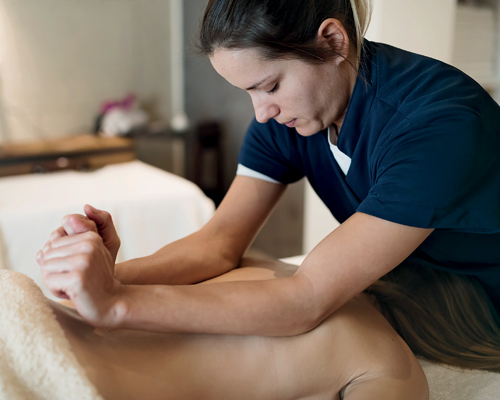
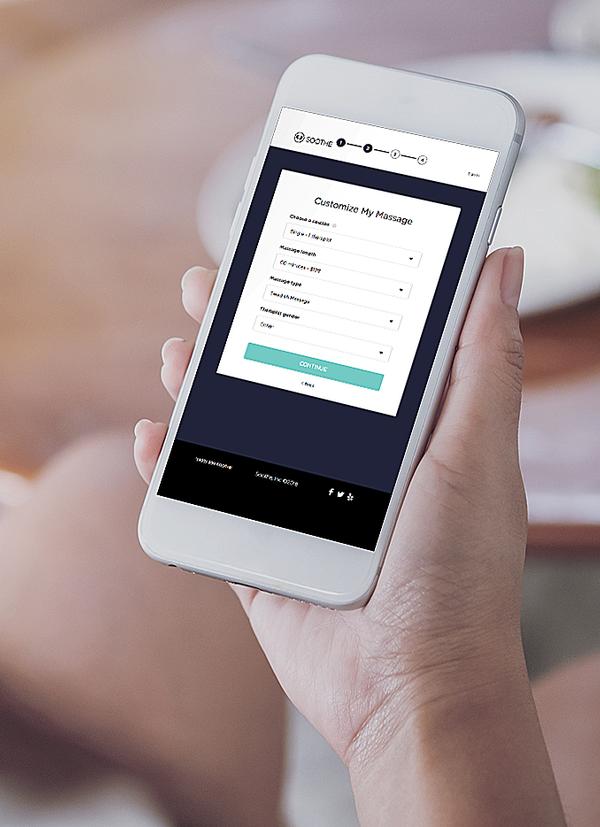
On-demand providers like Zeel and Soothe are not only changing the way consumers interact with spas, they’re changing the way therapists work. They’re making employment attractive because they offer flexibility in schedules, and they’re also able to offer therapists a larger portion of the service fee – up to 70 per cent at Soothe – because they have such low overhead.
With the new model of digital on-demand massage, therapists can make more money, control when they want to work – and leave behind the pressure of retail sales. What employees like is flexibility and nimbleness within the digital process – especially Millennials, who are used to coordinating their lives through their phones. This creates a challenging market in the brick-and-mortar realm, and with real estate continuing to be more expensive, don’t expect it to go away.
Spas need to think about what they can do to engage staff before they lose their business to on-demand providers. Change is coming, and we’re going to have to manipulate our businesses. If you’re not in the digital space, you need to ask how you can transform your business.
"What employees like is flexibility and nimbleness within the digital process"
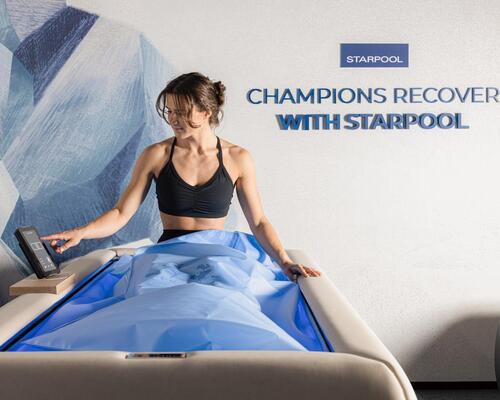
Contrast therapy, based on the alternation of hot and cold rituals, has become one of the
most valued practices in the fields of wellness and recovery. [more...]
+ More featured suppliers
COMPANY PROFILES
AKT Group
AKT Group is the Franco–Italian parent company of SKYY, C.O.D.E. and AKTMe, operating as an integrat [more...]
Wellhub
Wellhub (formerly Gympass) is the
world’s leading corporate wellness
platform, trusted by 70,000+ [more...]
Do you have a strong opinion, or disagree with somebody else’s point of view on topics related to the spa industry? If so, Spa Business would love to hear from you. Email your letters, thoughts and suggestions to [email protected]
Wellness communities: Europe
Part 2 of our series explores some of
the most exciting European wellness
communities in development
Promotional feature: Babor
CEO Michael Schummert explains how the
company’s expertise in results-driven treatments makes its precision
‘Made in Germany’ products more relevant than ever before
Hyatt’s purchase of Miraval for US$215m is not a particularly large deal in the greater world of hospitality, but for what the deal lacks in size, it makes up for in strategic genius. In fact, with the “big box” mergers of Marriott and Starwood or Accor and FRHI, bigger does not necessarily mean smarter. Consolidation may have given these companies leverage in terms of marketing, distribution and even negotiations, but it’s yet to be seen if this will equate to consumer retention and acquisition.
On the other hand, Hyatt – in a rather stealthy move – has signaled that it recognises a need to better cater to the growing wellbeing needs of leisure and business travellers alike. Hyatt CEO Mark Hoplamazian has said that buying Miraval was fueled by Hyatt’s effort to “retool its relationship” with its customers by adding more “empathy” to its product. In other words, Hyatt seems to be saying “we hear you,” while the others appear to be saying “we want to win.” Both sentiments are compelling to shareholders, but one will create more brand loyalists faster.
Ultimately, this deal stands to spawn some healthy competition in both wellness and hospitality – and the increasingly mixed world of “wellness hospitality.” Any way you slice it, one thing is for sure: the game is on (see Top Team, p 43).
"What I love about this deal is that it stands to spawn some healthy competition"
Hyatt’s purchase of Miraval
Hyatt and Miraval – the long game
Trent Munday
Trent MundayVice PresidentSteiner Spa Consulting
What’s most interesting to me about Hyatt’s recent acquisition of Miraval is that there are two trends at play that have the potential to merge at some point in the future. If they do, Hyatt will win.
First, it stands to reason that smart hotel brands today are looking for more ways to engage with their guests – and not just when they are in the hotel. The more contact guests have with a hotel brand, the stronger the connection, and the more valuable the relationship. We see this logic in the strategy of hotels selling beds or linens: if guests take the experience home, they have an ongoing connection with the brand.
Secondly, people are more focused than ever on wanting to live well, and wellness is something that guests want to be part of their day-to-day lifestyle. This trend also ties in with corporate wellness.
So wellness is becoming something we do every day. Hotel brands are looking for ways to create ongoing connections with guests. And there it is: with the purchase of Miraval, Hyatt is now perfectly positioned to extend its brand into not only the homes, but also into the day-to-day lives of its guests.
"Smart hotel brands are looking for more ways to engage with their guests"
Gut health and mental wellness
Bryan Hoare
Bryan HoareGeneral ManagerESPA Baha Mar
I was happy to see that Liz Terry’s Editor’s Letter in the last issue of Spa Business addressed mental wellness as “the next frontier for spa.” As a member of the Global Wellness Institute’s Mental Wellness Initiative, this is an issue that’s particularly important to me.
One of the projects that we are working on as part of the GWI Initiative is to produce a white paper on the growing body of research around the microbiota-gut-brain axis (MGBA) and mental wellness, which we plan to have ready to present at the Global Wellness Summit.
There are 500 million information-transmitting neurons in our gut – the same amount as are in a cat’s brain. These form what is known as the enteric nervous system (ENS), also commonly referred to as the ‘second brain.’ In addition to these neurons, 40 trillion bacteria live in our gut, and together they work bidirectionally with the brain to keep our body in balance. A good proportion of the scientific literature on the MGBA addresses its effect on our mental wellness – from anorexia to Parkinson’s disease, to depression. There’s a lot of research out there – still in the early stages – but evidence suggests that if you don’t look after your gut health, it won’t be good for your mental wellness.
More studies are needed to understand what aspects of our lifestyles affect our gut microbiome, and we need to take the lead on ensuring that the information we share is valid and properly reviewed. We must guard against sensationalising our services, yet allow people who are interested in advancing their wellbeing to be informed and supported in this subject. Our aim should be not to over-promise and under-deliver, but to offer integrity and trust – and to promote services through the integration of our passion and knowledge.
"There are 500 million information-transmitting neurons in our gut the same amount as in a cat’s brain"
shutterstock
Gut health and mental wellness
On-demand providers fuelling industry change
Michael Tompkins
Michael TompkinsExecutive Recruiter Hutchinson Consulting and Immediate past chairISPA
The shortages of managers and providers in spa are staggering; in the US alone, there are 40,000 unfilled spa vacancies, and 80 per cent of hotel and resort spas have unstaffed positions.
But the most recent ISPA data show that incentives offered by spas don’t necessarily provide therapists what they want from employers, namely: flexible schedules, electronic communication like texting, and not being obligated to to stay at work when they’re not booked.
On-demand providers like Zeel and Soothe are not only changing the way consumers interact with spas, they’re changing the way therapists work. They’re making employment attractive because they offer flexibility in schedules, and they’re also able to offer therapists a larger portion of the service fee – up to 70 per cent at Soothe – because they have such low overhead.
With the new model of digital on-demand massage, therapists can make more money, control when they want to work – and leave behind the pressure of retail sales. What employees like is flexibility and nimbleness within the digital process – especially Millennials, who are used to coordinating their lives through their phones. This creates a challenging market in the brick-and-mortar realm, and with real estate continuing to be more expensive, don’t expect it to go away.
Spas need to think about what they can do to engage staff before they lose their business to on-demand providers. Change is coming, and we’re going to have to manipulate our businesses. If you’re not in the digital space, you need to ask how you can transform your business.
"What employees like is flexibility and nimbleness within the digital process"
Hand and Stone Massage and Facial Spa, the spa business with more than 650 locations across
the US and Canada, has appointed franchise expert Carrie Walsh as CEO as the company plans
to expand.
Synergy – The Retreat Show, the global trade show for retreats, has launched a global research
initiative that will provide insights into the retreat sector from both consumer and industry
perspectives.
The Wellness Tourism Association (WTA) has published a non-regulatory global industry
framework designed to ensure the retreat market offers responsible experiences.
A new survey of UK and international spa practitioners shows that stress, burnout and
wellbeing concerns have caused one in three respondents to consider leaving the industry.
The UK's four Chief Medical Officers have published a refreshed edition of Physical activity
guidelines: UK Chief Medical Officers' report, updating the evidence that underpins the nation's
physical activity recommendations and placing greater emphasis on strength, balance, reducing
sedentary behaviour and, for the first time, supporting people taking weight loss medications.
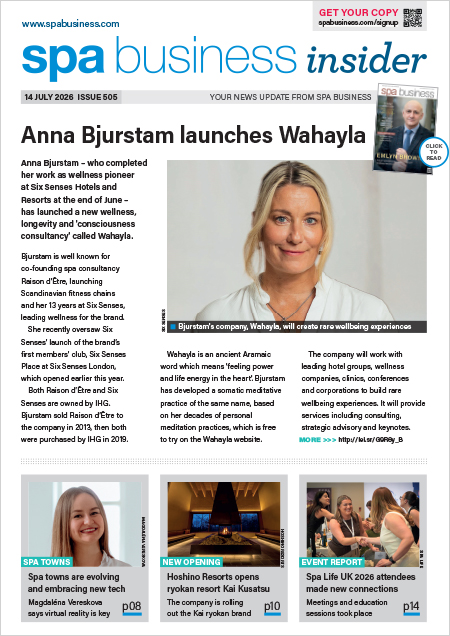
Anna Bjurstam has left her role as Wellness Pioneer at Six Senses Hotels and Resorts and
launched a new wellness, longevity and “consciousness consultancy” called Wahayla.
Fairmont Cheshire, The Mere, has opened today (10 July) in the Northwest of England
with a
1,715sq m Fairmont Spa that has been designed using a ‘Wellness without Walls’
concept.
Wellness hotels generating less than US$1 million (€932,700, £785,200) – or 10 per cent of
total revenue from wellness and leisure – recorded the strongest RevPAR and TRevPAR growth
in 2025 across categories when compared with 2024, according to the latest Wellness Real
Estate Report by RLA Global, produced in partnership with P and L benchmarking firm HotStats.
Contrast therapy, based on the alternation of hot and cold rituals, has become one of the
most valued practices in the fields of wellness and recovery. [more...]
+ More featured suppliers
COMPANY PROFILES
AKT Group AKT Group is the Franco–Italian parent company of SKYY, C.O.D.E. and AKTMe, operating as an integrat [more...]