Yes! Send me the FREE digital editions of Spa Business and Spa Business insider magazines and the FREE weekly Spa Business and Spa Business insider ezines and breaking news alerts!
New research shows the benefits of thermal bathing go beyond relaxation, and may even affect mental wellbeing. James Clark-Kennedy shines a light on the findings
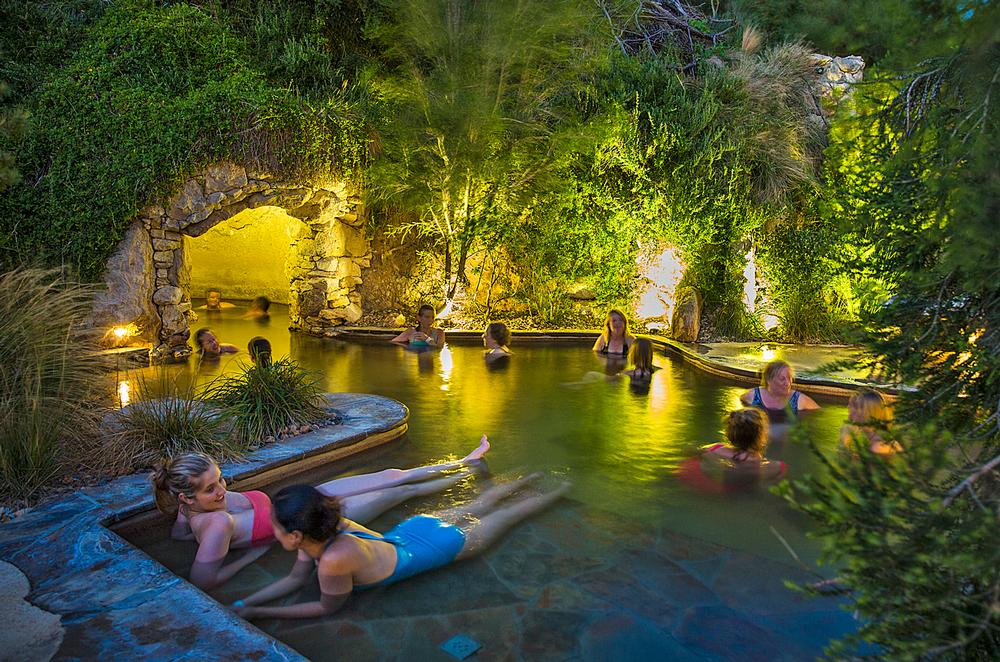
Hot springs bathing might provide relief for those suffering from depression or anxiety
The past 30 years has seen a large body of academic evidence amass showing the benefits of hot springs bathing for an uncooperative hand, a temperamental knee or an angry lower back.
Now we are increasingly seeing researchers explore the effects of hot springs bathing above the water surface – on mood and mind. The newer research has the interest and backing of hot springs worldwide because it holds learnings well beyond marketing, learnings that may inform such fundamentals as resort landscaping, pool and building design, mission and values.
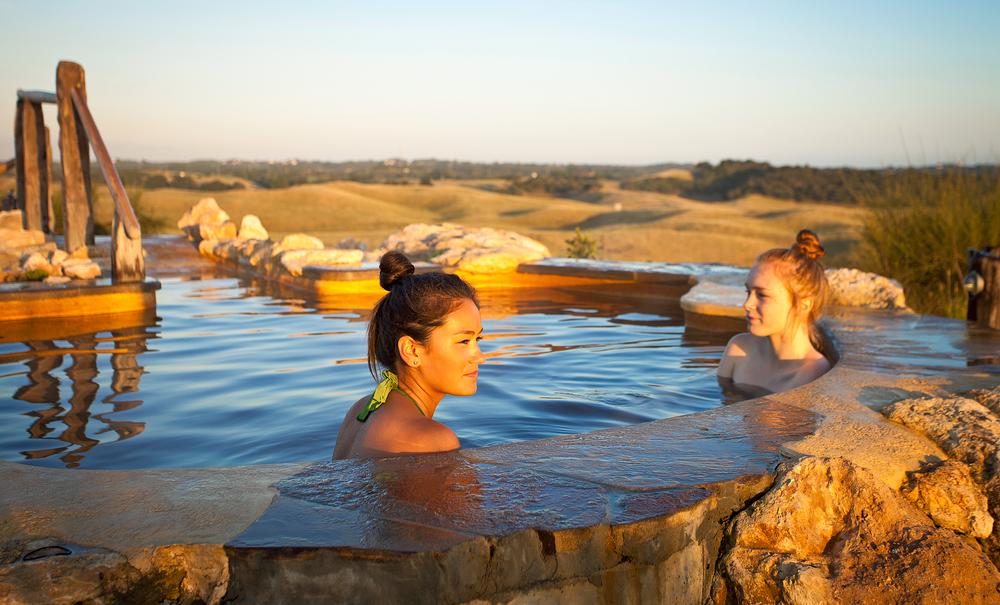
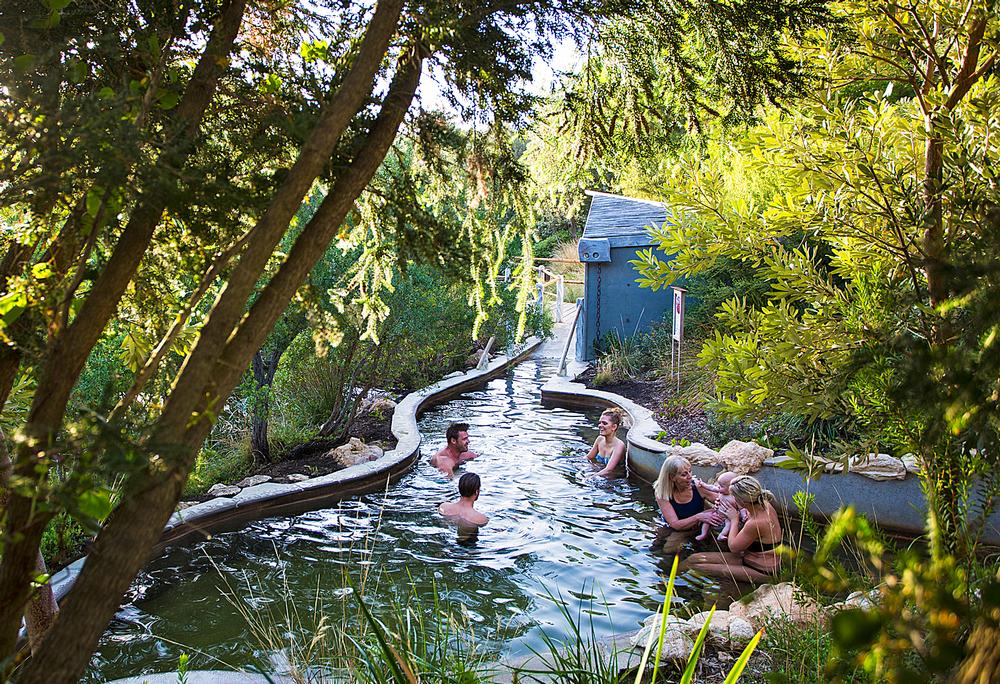
I took part in a new research project in conjunction with the RMIT University School of Health and Biomedical Sciences in Australia and the research was recently published in the Asia Pacific Journal of Tourism Research. The findings were drawn from a study of 4,265 respondents who bathed at Australia’s largest commercial hot springs, Peninsula Hot Springs. Located on Victoria’s Mornington Peninsula, the hot springs resort opened in 2005 welcomes more than 430,000 visitors annually. An expansion is under way to accommodate 600,000 visitors per year by 2018.
‘Me time’ or healing time? Therapy appears to be a large driver of Australian hot springs visitation. In an industry that has mostly marketed to domestic tourists seeking relaxation and escape over the past several decades, the study found that bathers are increasingly seeking therapy for a wide range of medical conditions, with significant benefits achieved: hot springs bathers report they are beating pain and moving more easily.
The study found that what was previously viewed as a tourist attraction is important to 28 per cent of respondents for the relief of specific medical conditions, and that 99 per cent of bathers with medical conditions feel better after bathing in the hot springs. Musculoskeletal issues – combining back pain, arthritis and joint pain – were the most prevalent medical conditions, with 22 per cent of bathers who responded reporting these problems, including 14 per cent who suffer regularly from back pain.
Brook Ramage, general manager of Peninsula Hot Springs, says the findings provide further credibility for Peninsula Hot Springs’ health and wellness initiatives, which include warm water exercise programmes and a DVD that caters to those seeking back pain relief. “The research provides us with evidence to support what we have been seeing for many years,” he explains. “What we can say from the study is that bathing in geothermal mineral water puts your body in the best possible place to heal itself.”
Among the 14 per cent of respondents who had back pain, 88 per cent of them reported some sort of relief (39 per cent reported ‘significant relief’ – defined as lasting more than two days and/or reducing reliance on other treatments – and 49 per cent reported ‘slight relief’) and of the 6 per cent of respondents with arthritis, 86 per cent reported relief (39 per cent of those reported significant relief, while 47 per cent reported slight relief).
The findings that balneology reduced their reliance on medication might be of great significance as we see more hot springs emerge: the pools are more than just entertainment, escape or indulgence.
These findings are consistent with a 2014 systematic review of 18 European randomised controlled trials of musculoskeletal conditions, which concluded that balneotherapy is an effective remedy for lower back pain, as well as knee and hand osteoarthritis.
Above the water, into the mind With the World Health Organisation estimating that 350 million people worldwide suffer from depression, it is of note that hot springs bathing also appears to provide significant relief for people with depression and stress or anxiety. Of the 11 per cent of survey respondents reporting stress or anxiety, 89 per cent reported relief, and of the 5 per cent of survey respondents reporting depression, 71 per cent reported relief. Seventy-one percent of those with depression rated their condition as ‘severe,’ with treatment from a health practitioner required, with 34 per cent of those rating hot springs bathing as providing significant relief – defined as lasting more than two days and reducing reliance on other treatments – and 37 per cent rating slight relief.
Another major finding for mental health is that bathing in hot springs shows significant sleep benefits. The research found that 82 per cent of respondents reported better sleep after hot springs bathing, with 62 per cent of those saying that the effect lasted for two days or longer. Additionally, 77 per cent of respondents with insomnia reported relief.
However, it is unlikely that the sleep benefits can be attributed to the specifics of high magnesium content or other mechanics of the geothermal mineral spring water alone. While bathing itself may be relaxing, the design of Peninsula Hot Springs also further encourages relaxation, with the provision of a specific relaxation room along with deck chairs and seats that overlook tranquil natural settings. Are hot springs bathers sleeping better because of a geothermal mineral bath, for having made an ‘escape’ from their worlds, or for resort qualities such as landscaping and natural surroundings?
“That the bathing environment generally precludes the use of mobile phones and other technology may further allow people to escape their usual routines and more fully relax and immerse themselves in nature, thereby further enhancing the relaxing effects of bathing,” says professor Marc Cohen, supervisor of the study and head of the Wellness Discipline at the School of Health and Biomedical Sciences at RMIT University.
Nature is key While you probably could establish a geothermal mineral springs by drilling below a shopping mall, it’s unlikely to offer the same benefits to bathers. Mineral elements such as magnesium and sulphur have been found to be important to muscle relaxation and alleviating pain over many years of study, but this new research found it might be the natural setting of the springs, including things like the sound of the water, that’s just as important.
While ‘relaxation,’ ‘peace and tranquility,’ ‘indulgence’ and ‘escape’ were the most important motivators for hot springs bathing at Peninsula Hot Springs, ‘connection with nature’ was rated as an important motivator by 74 per cent of those surveyed, and ‘the sounds of water and nature’ were rated as either important or somewhat important by 72 per cent of respondents. “These factors have a huge bearing on our mental health, reflected in the extremely important relief findings for anxiety, depression and insomnia, and the excellent outcomes for guests’ sleep,” explains Peninsula Hot Springs founder and CEO Charles Davidson.
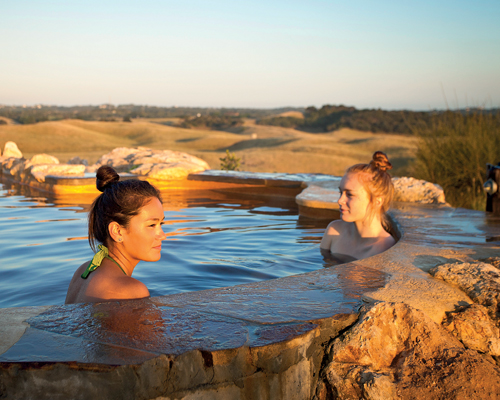
Social connectivity Over a decade ago, Davidson envisioned a place where quiet escape in tranquil surroundings could be offered parallel to a social experience. While some hot springs destinations may pitch a serene escape, it seems social bathing with free-flowing conversation is an important draw for many. “Peninsula Hot Springs often has bookings from families with three and four generations from the same family taking time out to enjoy and connect with their pure nature,” says Davidson.
The study asked regular bathers to give their reasons for visiting the hot springs, and more than 60 per cent rated the social aspect of connecting with friends and family as important, with nearly 70 per cent rating ‘being with other people’ as an important or somewhat important factor that positively influences their bathing experience – another pathway for future mental health research.
The study’s findings suggest an important evolution in social connectivity towards relaxation in healthy surroundings, and there are apparent outcomes for mental health. Peninsula Hot Springs sees a role for itself in a combination of these elements which it calls ‘community connectivity’; in 2016, it became a corporate friend of Mental Health Australia, and last year it partnered with an organisation that helps improve the quality of life of people who have muscle, bone and joint conditions.
The geothermal springs industry worldwide is expected to grow at a rate of approximately 7 per cent over the next 10 years, with Australian investment soaring – but predominantly with a relaxation and escape offering. “Further research is important for this growing industry,” says Davidson. “We can apply and integrate the learnings to constantly improve facilities, programmes and even landscapes for people who are coming for therapeutic health and wellbeing outcomes.”
Read more from this issue of Spa Business magazine
Wellness communities: Europe
Part 2 of our series explores some of
the most exciting European wellness
communities in development
Promotional feature: Babor
CEO Michael Schummert explains how the
company’s expertise in results-driven treatments makes its precision
‘Made in Germany’ products more relevant than ever before
The MSpa Oslo series is a perennial bestseller in global markets. With innovative
engineering and premium performance, this completely portable spa line-up is expertly
designed to meet the needs of customers worldwide. [more...]
New research shows the benefits of thermal bathing go beyond relaxation, and may even affect mental wellbeing. James Clark-Kennedy shines a light on the findings
Hot springs bathing might provide relief for those suffering from depression or anxiety
The past 30 years has seen a large body of academic evidence amass showing the benefits of hot springs bathing for an uncooperative hand, a temperamental knee or an angry lower back.
Now we are increasingly seeing researchers explore the effects of hot springs bathing above the water surface – on mood and mind. The newer research has the interest and backing of hot springs worldwide because it holds learnings well beyond marketing, learnings that may inform such fundamentals as resort landscaping, pool and building design, mission and values.
I took part in a new research project in conjunction with the RMIT University School of Health and Biomedical Sciences in Australia and the research was recently published in the Asia Pacific Journal of Tourism Research. The findings were drawn from a study of 4,265 respondents who bathed at Australia’s largest commercial hot springs, Peninsula Hot Springs. Located on Victoria’s Mornington Peninsula, the hot springs resort opened in 2005 welcomes more than 430,000 visitors annually. An expansion is under way to accommodate 600,000 visitors per year by 2018.
‘Me time’ or healing time? Therapy appears to be a large driver of Australian hot springs visitation. In an industry that has mostly marketed to domestic tourists seeking relaxation and escape over the past several decades, the study found that bathers are increasingly seeking therapy for a wide range of medical conditions, with significant benefits achieved: hot springs bathers report they are beating pain and moving more easily.
The study found that what was previously viewed as a tourist attraction is important to 28 per cent of respondents for the relief of specific medical conditions, and that 99 per cent of bathers with medical conditions feel better after bathing in the hot springs. Musculoskeletal issues – combining back pain, arthritis and joint pain – were the most prevalent medical conditions, with 22 per cent of bathers who responded reporting these problems, including 14 per cent who suffer regularly from back pain.
Brook Ramage, general manager of Peninsula Hot Springs, says the findings provide further credibility for Peninsula Hot Springs’ health and wellness initiatives, which include warm water exercise programmes and a DVD that caters to those seeking back pain relief. “The research provides us with evidence to support what we have been seeing for many years,” he explains. “What we can say from the study is that bathing in geothermal mineral water puts your body in the best possible place to heal itself.”
Among the 14 per cent of respondents who had back pain, 88 per cent of them reported some sort of relief (39 per cent reported ‘significant relief’ – defined as lasting more than two days and/or reducing reliance on other treatments – and 49 per cent reported ‘slight relief’) and of the 6 per cent of respondents with arthritis, 86 per cent reported relief (39 per cent of those reported significant relief, while 47 per cent reported slight relief).
The findings that balneology reduced their reliance on medication might be of great significance as we see more hot springs emerge: the pools are more than just entertainment, escape or indulgence.
These findings are consistent with a 2014 systematic review of 18 European randomised controlled trials of musculoskeletal conditions, which concluded that balneotherapy is an effective remedy for lower back pain, as well as knee and hand osteoarthritis.
Above the water, into the mind With the World Health Organisation estimating that 350 million people worldwide suffer from depression, it is of note that hot springs bathing also appears to provide significant relief for people with depression and stress or anxiety. Of the 11 per cent of survey respondents reporting stress or anxiety, 89 per cent reported relief, and of the 5 per cent of survey respondents reporting depression, 71 per cent reported relief. Seventy-one percent of those with depression rated their condition as ‘severe,’ with treatment from a health practitioner required, with 34 per cent of those rating hot springs bathing as providing significant relief – defined as lasting more than two days and reducing reliance on other treatments – and 37 per cent rating slight relief.
Another major finding for mental health is that bathing in hot springs shows significant sleep benefits. The research found that 82 per cent of respondents reported better sleep after hot springs bathing, with 62 per cent of those saying that the effect lasted for two days or longer. Additionally, 77 per cent of respondents with insomnia reported relief.
However, it is unlikely that the sleep benefits can be attributed to the specifics of high magnesium content or other mechanics of the geothermal mineral spring water alone. While bathing itself may be relaxing, the design of Peninsula Hot Springs also further encourages relaxation, with the provision of a specific relaxation room along with deck chairs and seats that overlook tranquil natural settings. Are hot springs bathers sleeping better because of a geothermal mineral bath, for having made an ‘escape’ from their worlds, or for resort qualities such as landscaping and natural surroundings?
“That the bathing environment generally precludes the use of mobile phones and other technology may further allow people to escape their usual routines and more fully relax and immerse themselves in nature, thereby further enhancing the relaxing effects of bathing,” says professor Marc Cohen, supervisor of the study and head of the Wellness Discipline at the School of Health and Biomedical Sciences at RMIT University.
Nature is key While you probably could establish a geothermal mineral springs by drilling below a shopping mall, it’s unlikely to offer the same benefits to bathers. Mineral elements such as magnesium and sulphur have been found to be important to muscle relaxation and alleviating pain over many years of study, but this new research found it might be the natural setting of the springs, including things like the sound of the water, that’s just as important.
While ‘relaxation,’ ‘peace and tranquility,’ ‘indulgence’ and ‘escape’ were the most important motivators for hot springs bathing at Peninsula Hot Springs, ‘connection with nature’ was rated as an important motivator by 74 per cent of those surveyed, and ‘the sounds of water and nature’ were rated as either important or somewhat important by 72 per cent of respondents. “These factors have a huge bearing on our mental health, reflected in the extremely important relief findings for anxiety, depression and insomnia, and the excellent outcomes for guests’ sleep,” explains Peninsula Hot Springs founder and CEO Charles Davidson.
Social connectivity Over a decade ago, Davidson envisioned a place where quiet escape in tranquil surroundings could be offered parallel to a social experience. While some hot springs destinations may pitch a serene escape, it seems social bathing with free-flowing conversation is an important draw for many. “Peninsula Hot Springs often has bookings from families with three and four generations from the same family taking time out to enjoy and connect with their pure nature,” says Davidson.
The study asked regular bathers to give their reasons for visiting the hot springs, and more than 60 per cent rated the social aspect of connecting with friends and family as important, with nearly 70 per cent rating ‘being with other people’ as an important or somewhat important factor that positively influences their bathing experience – another pathway for future mental health research.
The study’s findings suggest an important evolution in social connectivity towards relaxation in healthy surroundings, and there are apparent outcomes for mental health. Peninsula Hot Springs sees a role for itself in a combination of these elements which it calls ‘community connectivity’; in 2016, it became a corporate friend of Mental Health Australia, and last year it partnered with an organisation that helps improve the quality of life of people who have muscle, bone and joint conditions.
The geothermal springs industry worldwide is expected to grow at a rate of approximately 7 per cent over the next 10 years, with Australian investment soaring – but predominantly with a relaxation and escape offering. “Further research is important for this growing industry,” says Davidson. “We can apply and integrate the learnings to constantly improve facilities, programmes and even landscapes for people who are coming for therapeutic health and wellbeing outcomes.”
Read more from this issue of Spa Business magazine
Wellness communities: Europe
Part 2 of our series explores some of
the most exciting European wellness
communities in development
Promotional feature: Babor
CEO Michael Schummert explains how the
company’s expertise in results-driven treatments makes its precision
‘Made in Germany’ products more relevant than ever before
Hand and Stone Massage and Facial Spa, the spa business with more than 650 locations across
the US and Canada, has appointed franchise expert Carrie Walsh as CEO as the company plans
to expand.
Synergy – The Retreat Show, the global trade show for retreats, has launched a global research
initiative that will provide insights into the retreat sector from both consumer and industry
perspectives.
The Wellness Tourism Association (WTA) has published a non-regulatory global industry
framework designed to ensure the retreat market offers responsible experiences.
A new survey of UK and international spa practitioners shows that stress, burnout and
wellbeing concerns have caused one in three respondents to consider leaving the industry.
The UK's four Chief Medical Officers have published a refreshed edition of Physical activity
guidelines: UK Chief Medical Officers' report, updating the evidence that underpins the nation's
physical activity recommendations and placing greater emphasis on strength, balance, reducing
sedentary behaviour and, for the first time, supporting people taking weight loss medications.
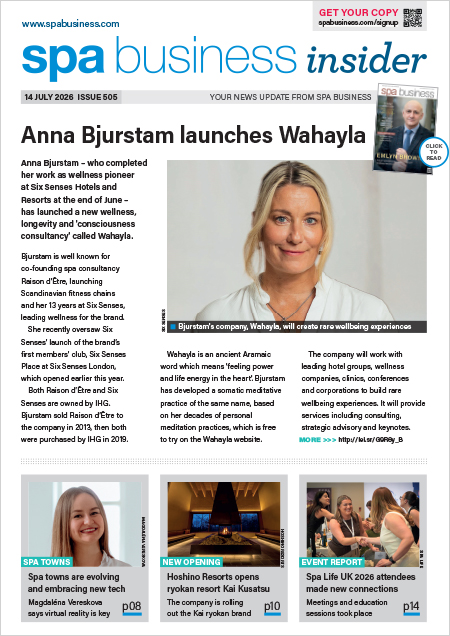
Anna Bjurstam has left her role as Wellness Pioneer at Six Senses Hotels and Resorts and
launched a new wellness, longevity and “consciousness consultancy” called Wahayla.
Fairmont Cheshire, The Mere, has opened today (10 July) in the Northwest of England
with a
1,715sq m Fairmont Spa that has been designed using a ‘Wellness without Walls’
concept.
Wellness hotels generating less than US$1 million (€932,700, £785,200) – or 10 per cent of
total revenue from wellness and leisure – recorded the strongest RevPAR and TRevPAR growth
in 2025 across categories when compared with 2024, according to the latest Wellness Real
Estate Report by RLA Global, produced in partnership with P and L benchmarking firm HotStats.
The MSpa Oslo series is a perennial bestseller in global markets. With innovative
engineering and premium performance, this completely portable spa line-up is expertly
designed to meet the needs of customers worldwide. [more...]