Yes! Send me the FREE digital editions of Spa Business and Spa Business insider magazines and the FREE weekly Spa Business and Spa Business insider ezines and breaking news alerts!
Two years ago Peabody Essex Museum made a groundbreaking move by appointing a neuroscientist to inform the way it displays art. Dr Tedi Asher speaks to Kath Hudson about what her research into gallery audiences has uncovered…
By Kath Hudson | Published in Attractions Management 2019 issue 3
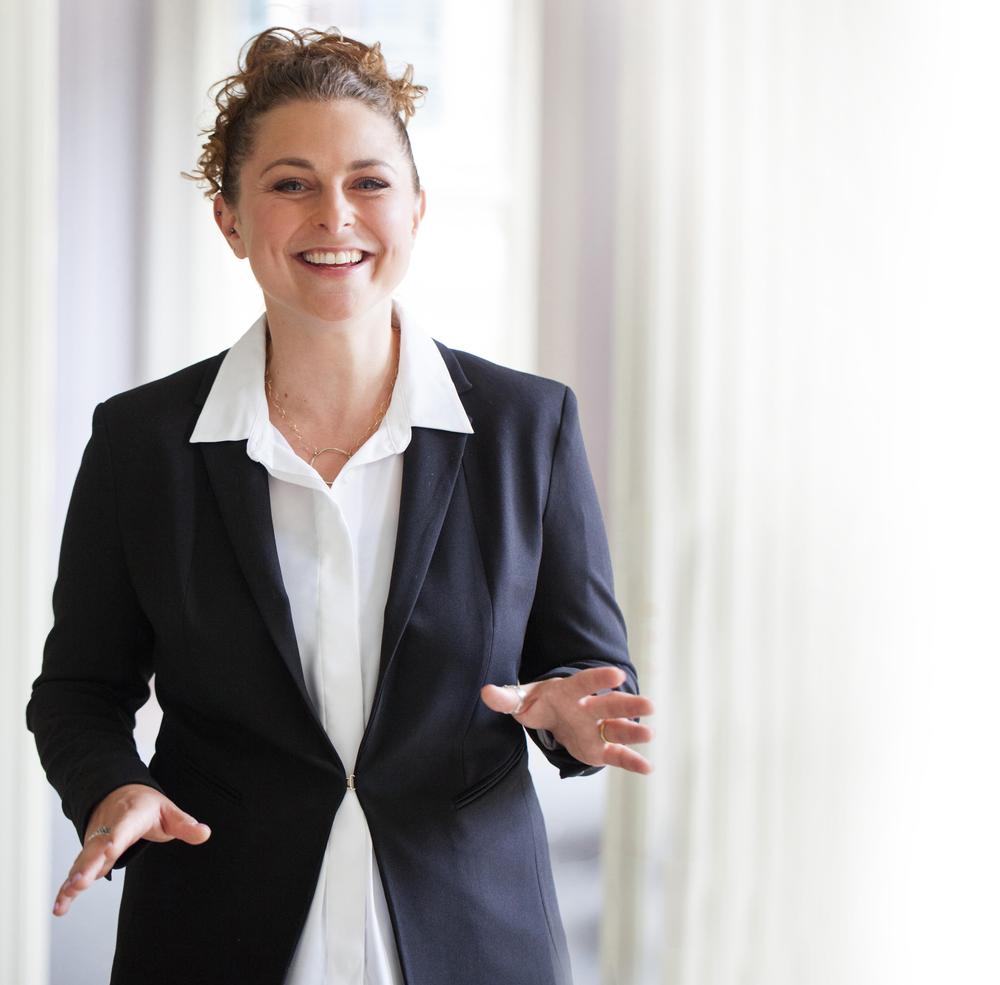
Tedi Asher, PhD, is a neuroscience researcher for the Peabody Essex Museum
Always on the lookout for new ways to display artwork from across the globe, the Salem-based Peabody Essex Museum in Massachusetts, US, has been exploring neuroscience over the last few years.
Museum CEO, Dan Monroe, came up with the idea initially, based on the reasoning that if all experiences are a product of our brains, then a better understanding of them would allow them to create more compelling experiences in the gallery.
This led to the museum delving into the world of neuroscience and experimenting with new, and surprising, ways of increasing visitor engagement. For example, strong smelling jars of spices were used to complement the exhibition Asia in Amsterdam: The Culture of Luxury in the Golden Age in 2016, to stimulate the senses as an unexpected experience through smell has been shown to boost the brain. The exhibition explored how new trade routes between Asia and the Netherlands, in the 17th century impacted the art, and spices would have been commonly been traded alongside.
Landmark appointment Later the same year, a generous grant from The Barr Foundation allowed PEM to truly commit to the concept and appoint the first neuroscientist based at an art gallery. Dr Tedi Asher joined in 2017, having just completed a PhD in Biological and Biomedical Sciences, at Harvard Medical School. Asher was looking for an opportunity to communicate science to non-scientists in a creative way.
“The role offered the opportunity to explore a whole different world,” says Asher. “The larger idea behind the initiative is to allow neuroscience to inform many different aspects of the museum – how we market ourselves, the shop layout, wayfinding and so on, but the starting point was the exhibition design, so I was tasked to look into a few really broad topics, like emotion and memory.”
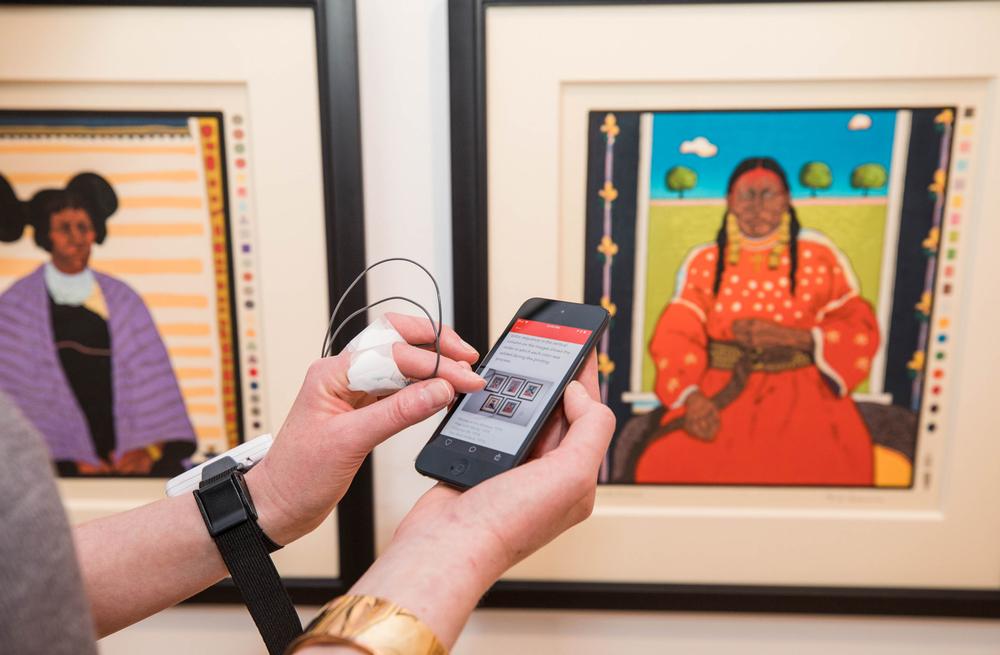
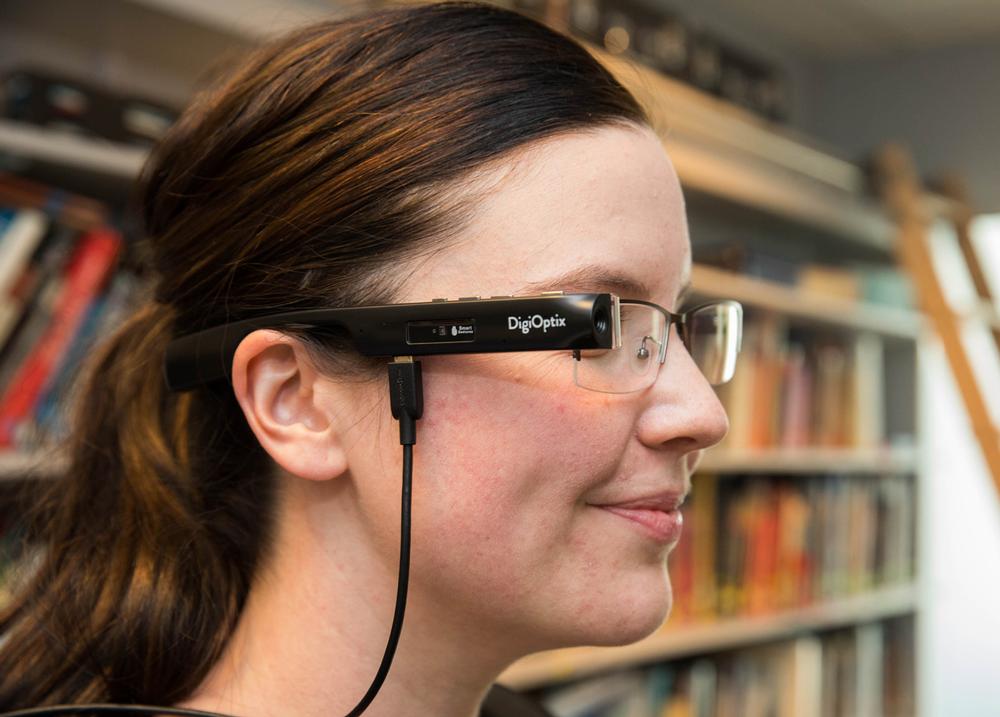
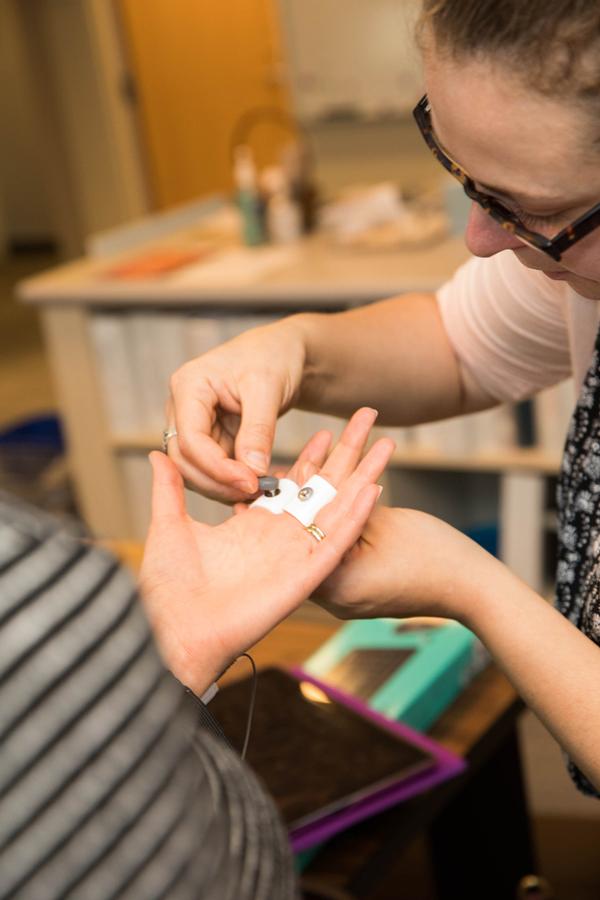
After diving into the existing literature, Asher concluded that PEM needed to carry out its own research and designed a study which could monitor attention, emotion and memory. Gaze tracking glasses were used to see where the respondents were looking; galvanic skin response – which measures sweat produced – was used for a biometric measurement of emotional intensity and exit surveys assessed memories.
“To establish what engages audiences, we borrowed Dr Carl Marci’s definition of engagement,” says Asher. “Engagement occurs when attention is directed in a way that elicits an emotional response, which leads to the formation of a memory.”
Proving theories The hypothesis of the first study was to establish whether viewing goals help gallery audiences to engage.
“It’s been shown repeatedly that the purpose with which you look at an image impacts how you move your eyes over it and therefore has the potential to impact your engagement,” says Asher.
The experiment was made up of four groups. One was tasked to look for something visual in the painting. Another group received judgment prompts asking them a question, such as if they were moved by the artwork. A third group received a historical fact as a prompt and the fourth were not given any prompts.
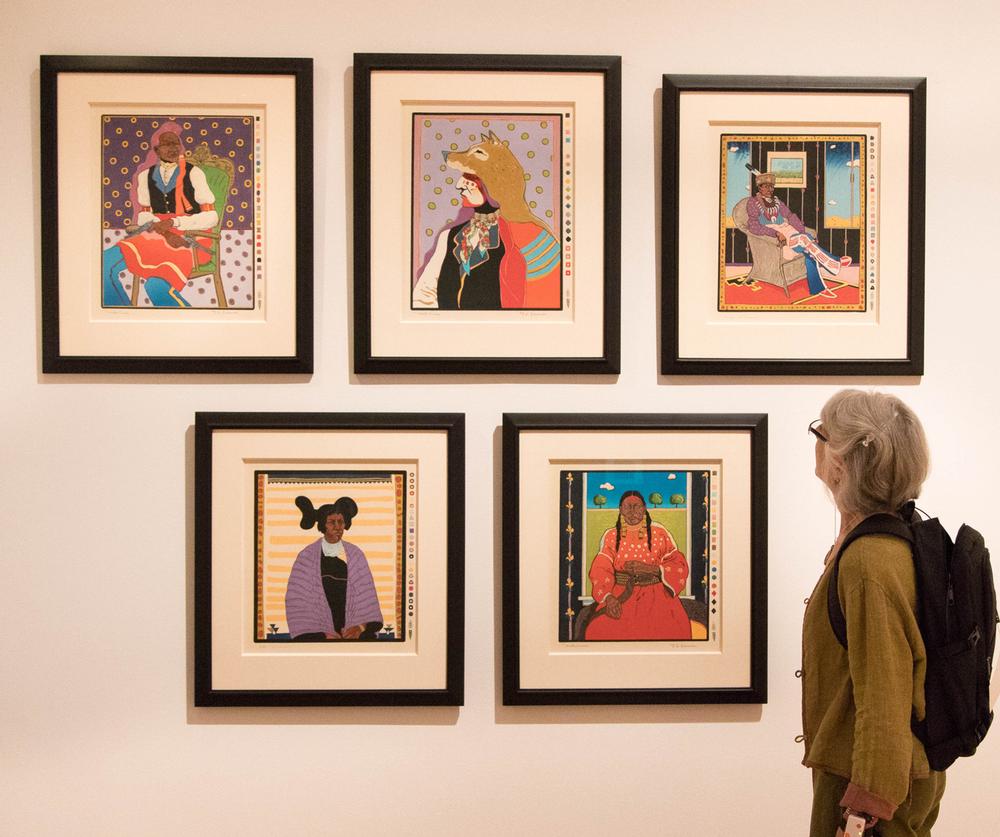
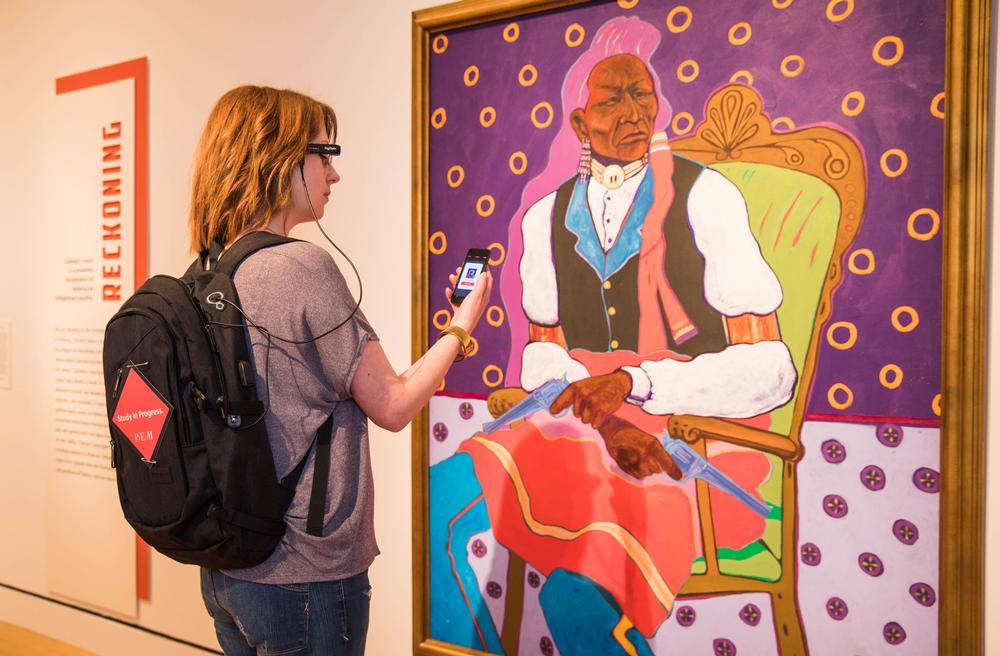
Fourteen volunteers were given viewing glasses and the galvanic skin response monitors and sent to look around a three-gallery exhibition, which had nine pieces of art relating to the experiment.
The research found that people who received a judgment prompt spent longer looking and had a more intense emotional experience than the people with the other prompts, or no prompt at all.
“This supported our hypothesis that the judgment prompt would be the most effective kind of prompt in facilitating engagement, because of the brain regions which are active when we have an emotionally moving aesthetic experience,” says Asher. “Previous research has found that when people are moved by a piece of artwork their default mode network is ‘de-repressed’. This network is active when people think introspectively, but suppressed when involved with external tasks. We attempted to induce this introspection using judgment prompts, which asked participants to relate themselves to the work of art they viewed. Based on the results of this study, it appears that although prompts may not be essential for engagement, they do help to facilitate it.”
Power of prompts The research also measured how fast people moved through the three galleries, finding that they doubled their pace in the last one, from 60 feet per minute to almost 120. “This is consistent with other data which has shown that attention and dwell time decrease over the course of an exhibition,” says Asher. “However, an interesting breakdown of the data showed that those who received the prompts moved much more slowly through the galleries than those who didn’t.
“This wasn’t simply down to having to read the prompts – which only took up about 25 per cent of the time difference between the two groups – so there must have been something else going on, either cognitively or emotionally.”
Now Asher is trying to establish how exhibitions should be optimally laid out – with the most interesting artwork at the beginning, when people are fresh, or at the end to sustain their attention.
During the exit survey, participants were asked to rate their experience in terms of enjoyment and emotion. When it came to enjoyment, the data showed there was no difference across the cohort whether they had a prompt or not, but the emotional experience threw up some interesting data.
“People in the no prompt group perceived themselves as having a more intense emotional experience than any of the prompted groups. But, this is the opposite of what the biometric data showed us,” says Asher.
“Our data showed that people who were prompted, and particularly those who received a judgment prompt, spent longer and had a more emotionally intense experience relative to the no prompt group and yet the no prompt group perceived they were having a more emotional experience.”
The reason behind this has yet to be determined: “One explanation is that the ratings might not be that accurate, because generally we are not practised at rating our level of emotional arousal. Another theory is that maybe having to flick through the packet and search for a prompt each time they stepped up to a piece of art might have dampened the intensity of emotional response.”
Repeating research Asher still has the results of another study – carried out last year – to review, so maybe this will give some further answers. A third study is also scheduled for the summer, with an expanded toolkit to include eye tracking glasses which show exactly where participants are looking, not just their field of view, as with the gaze tracking approach which we have used up until now.
“We’re hoping to use that technology to understand how people are using labels – do they read them all the way through, or part way and then look at the art and return to the labels, or stop reading. There are many different permutations,” says Asher.
The museum is also gearing up to start implementing the neuroscience findings in the context of an exhibition. “This research will incrementally start to inform how we design exhibitions. We’re at the beginning of that process, but it will snowball,” says Asher. “Not every label should have a judgement prompt, but they could be incorporated into gallery text at key points, where we want the audience to pause and engage in an emotionally intense way with a piece of work and could be used as a strategy to encourage slow looking.”
The art of interpretation PEM will continue doing more and more research, which will be shared with the public and the museum community via a new website. Asher also hopes that more scientists will come into and help grow this field, which is very different from working in a laboratory.
“One of the challenges for me, as a scientist, was that I was trained to interpret data very strictly, but in this role, I’m finding there is an art to interpreting the data. It requires some imagination and extrapolation about what a particular finding could mean in the context of an art exhibition, and it’s taken a while to develop that mental framework,” she says.
Monroe is confident PEM’s latest direction and Asher’s work will benefit both the museum and the wider sector. “PEM is committed to creating transformational and deeply impactful experiences of art, culture and other forms of creative expression,” he says. “We’re very excited to be the first art museum to employ a full-time neuroscientist as a means to help develop ways of designing experiences which are highly meaningful and relevant to visitors.
“Dr Asher’s unique perspective and deep insight will enable us to make the process of art exploration and discovery especially rewarding, stimulating and fun. We also believe our groundbreaking collaboration with her may benefit the museum community at large.”
One of the largest private foundations in New England. Based in Boston, The Barr Foundation has assets of US$1.6bn and has contributed more than $834m to charitable causes since 1999. It works in partnership with non-profits, foundations, the public sector and civic and business leaders to elevate the arts and creative expression, advance solutions for climate changes and connect students to success in high school and beyond.
Dr Tedi Asher’s research highlights:
• Judgment prompts, such as ‘how does this piece of art make you feel?’ encourage greater engagement, as well as a more emotional response.
• People take longer looking at pieces of art when they receive prompts.
• Respondents who were prompted rated themselves as having a less emotional response than those without prompts.
Upcoming research will focus on:
• How to use prompts for optimal impact, including slowing people down
• How people use labels when looking at artwork.
Read more from this issue of Spa Business magazine
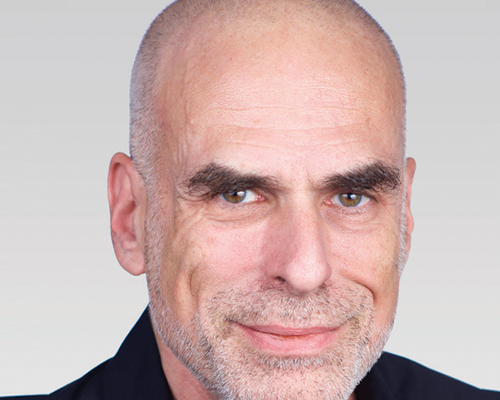
People profile: Tom Hennes
Tom Hennes discusses how he has transformed the Empire State Building's visitor experience
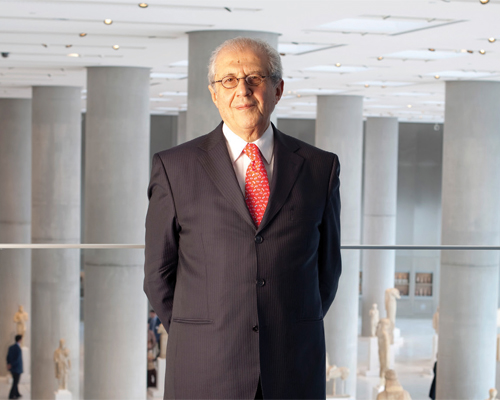
People profile: Dimitrios Pandermalis
The Acropolis Museum has just celebrated its 10-year anniversary. Its president, Dimitrios Pandermalis, talks about his plans to take the museum forward in the next decade and beyond
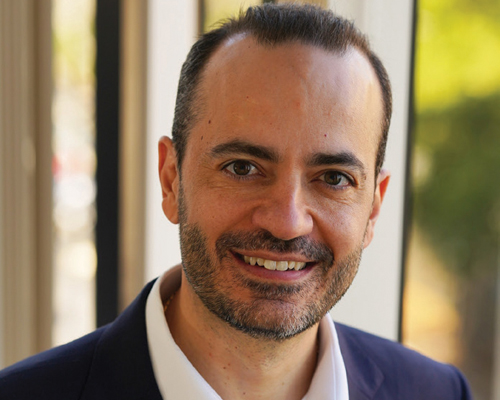
People profile: Gus Antorcha
SeaWorld's new CEO Gus Antorcha on the company's new direction as it starts to recover following several years of turmoil
Museums: A museum in motion
The Australian Centre for the Moving Image
is undergoing a AUS$40m renewal. CEO
Katrina Sedgwick talks about the plans
Tourism: The dark side
With locations like Chernobyl increasing
in popularity, Kath Hudson looks at the
dark side of the global tourism sector
Promotional feature: Whitewater
WhiteWater thinks outside the box to create memorable,
immersive experiences that go beyond the thrill
Rides: Monsters, myths and motorbikes
We take a look at some of the biggest ride
openings for visitor attractions worldwide,
including Universal’s new Hagrid coaster
Promotional feature: OurPeople
Home to the world-revered peppa pig world and welcoming more than one
million visitors every year, paultons park was voted Tripadvisor’s number
one UK amusement park for the fourth year running in 2019
Le Atelier by C.O.D.E. doesn't offer a standard bespoke service, it provides a highly
customised approach to designing massage beds and loungers in high-end wellness
environments. [more...]
Two years ago Peabody Essex Museum made a groundbreaking move by appointing a neuroscientist to inform the way it displays art. Dr Tedi Asher speaks to Kath Hudson about what her research into gallery audiences has uncovered…
By Kath Hudson | Published in Attractions Management 2019 issue 3
Tedi Asher, PhD, is a neuroscience researcher for the Peabody Essex Museum
Always on the lookout for new ways to display artwork from across the globe, the Salem-based Peabody Essex Museum in Massachusetts, US, has been exploring neuroscience over the last few years.
Museum CEO, Dan Monroe, came up with the idea initially, based on the reasoning that if all experiences are a product of our brains, then a better understanding of them would allow them to create more compelling experiences in the gallery.
This led to the museum delving into the world of neuroscience and experimenting with new, and surprising, ways of increasing visitor engagement. For example, strong smelling jars of spices were used to complement the exhibition Asia in Amsterdam: The Culture of Luxury in the Golden Age in 2016, to stimulate the senses as an unexpected experience through smell has been shown to boost the brain. The exhibition explored how new trade routes between Asia and the Netherlands, in the 17th century impacted the art, and spices would have been commonly been traded alongside.
Landmark appointment Later the same year, a generous grant from The Barr Foundation allowed PEM to truly commit to the concept and appoint the first neuroscientist based at an art gallery. Dr Tedi Asher joined in 2017, having just completed a PhD in Biological and Biomedical Sciences, at Harvard Medical School. Asher was looking for an opportunity to communicate science to non-scientists in a creative way.
“The role offered the opportunity to explore a whole different world,” says Asher. “The larger idea behind the initiative is to allow neuroscience to inform many different aspects of the museum – how we market ourselves, the shop layout, wayfinding and so on, but the starting point was the exhibition design, so I was tasked to look into a few really broad topics, like emotion and memory.”
After diving into the existing literature, Asher concluded that PEM needed to carry out its own research and designed a study which could monitor attention, emotion and memory. Gaze tracking glasses were used to see where the respondents were looking; galvanic skin response – which measures sweat produced – was used for a biometric measurement of emotional intensity and exit surveys assessed memories.
“To establish what engages audiences, we borrowed Dr Carl Marci’s definition of engagement,” says Asher. “Engagement occurs when attention is directed in a way that elicits an emotional response, which leads to the formation of a memory.”
Proving theories The hypothesis of the first study was to establish whether viewing goals help gallery audiences to engage.
“It’s been shown repeatedly that the purpose with which you look at an image impacts how you move your eyes over it and therefore has the potential to impact your engagement,” says Asher.
The experiment was made up of four groups. One was tasked to look for something visual in the painting. Another group received judgment prompts asking them a question, such as if they were moved by the artwork. A third group received a historical fact as a prompt and the fourth were not given any prompts.
Fourteen volunteers were given viewing glasses and the galvanic skin response monitors and sent to look around a three-gallery exhibition, which had nine pieces of art relating to the experiment.
The research found that people who received a judgment prompt spent longer looking and had a more intense emotional experience than the people with the other prompts, or no prompt at all.
“This supported our hypothesis that the judgment prompt would be the most effective kind of prompt in facilitating engagement, because of the brain regions which are active when we have an emotionally moving aesthetic experience,” says Asher. “Previous research has found that when people are moved by a piece of artwork their default mode network is ‘de-repressed’. This network is active when people think introspectively, but suppressed when involved with external tasks. We attempted to induce this introspection using judgment prompts, which asked participants to relate themselves to the work of art they viewed. Based on the results of this study, it appears that although prompts may not be essential for engagement, they do help to facilitate it.”
Power of prompts The research also measured how fast people moved through the three galleries, finding that they doubled their pace in the last one, from 60 feet per minute to almost 120. “This is consistent with other data which has shown that attention and dwell time decrease over the course of an exhibition,” says Asher. “However, an interesting breakdown of the data showed that those who received the prompts moved much more slowly through the galleries than those who didn’t.
“This wasn’t simply down to having to read the prompts – which only took up about 25 per cent of the time difference between the two groups – so there must have been something else going on, either cognitively or emotionally.”
Now Asher is trying to establish how exhibitions should be optimally laid out – with the most interesting artwork at the beginning, when people are fresh, or at the end to sustain their attention.
During the exit survey, participants were asked to rate their experience in terms of enjoyment and emotion. When it came to enjoyment, the data showed there was no difference across the cohort whether they had a prompt or not, but the emotional experience threw up some interesting data.
“People in the no prompt group perceived themselves as having a more intense emotional experience than any of the prompted groups. But, this is the opposite of what the biometric data showed us,” says Asher.
“Our data showed that people who were prompted, and particularly those who received a judgment prompt, spent longer and had a more emotionally intense experience relative to the no prompt group and yet the no prompt group perceived they were having a more emotional experience.”
The reason behind this has yet to be determined: “One explanation is that the ratings might not be that accurate, because generally we are not practised at rating our level of emotional arousal. Another theory is that maybe having to flick through the packet and search for a prompt each time they stepped up to a piece of art might have dampened the intensity of emotional response.”
Repeating research Asher still has the results of another study – carried out last year – to review, so maybe this will give some further answers. A third study is also scheduled for the summer, with an expanded toolkit to include eye tracking glasses which show exactly where participants are looking, not just their field of view, as with the gaze tracking approach which we have used up until now.
“We’re hoping to use that technology to understand how people are using labels – do they read them all the way through, or part way and then look at the art and return to the labels, or stop reading. There are many different permutations,” says Asher.
The museum is also gearing up to start implementing the neuroscience findings in the context of an exhibition. “This research will incrementally start to inform how we design exhibitions. We’re at the beginning of that process, but it will snowball,” says Asher. “Not every label should have a judgement prompt, but they could be incorporated into gallery text at key points, where we want the audience to pause and engage in an emotionally intense way with a piece of work and could be used as a strategy to encourage slow looking.”
The art of interpretation PEM will continue doing more and more research, which will be shared with the public and the museum community via a new website. Asher also hopes that more scientists will come into and help grow this field, which is very different from working in a laboratory.
“One of the challenges for me, as a scientist, was that I was trained to interpret data very strictly, but in this role, I’m finding there is an art to interpreting the data. It requires some imagination and extrapolation about what a particular finding could mean in the context of an art exhibition, and it’s taken a while to develop that mental framework,” she says.
Monroe is confident PEM’s latest direction and Asher’s work will benefit both the museum and the wider sector. “PEM is committed to creating transformational and deeply impactful experiences of art, culture and other forms of creative expression,” he says. “We’re very excited to be the first art museum to employ a full-time neuroscientist as a means to help develop ways of designing experiences which are highly meaningful and relevant to visitors.
“Dr Asher’s unique perspective and deep insight will enable us to make the process of art exploration and discovery especially rewarding, stimulating and fun. We also believe our groundbreaking collaboration with her may benefit the museum community at large.”
One of the largest private foundations in New England. Based in Boston, The Barr Foundation has assets of US$1.6bn and has contributed more than $834m to charitable causes since 1999. It works in partnership with non-profits, foundations, the public sector and civic and business leaders to elevate the arts and creative expression, advance solutions for climate changes and connect students to success in high school and beyond.
Dr Tedi Asher’s research highlights:
• Judgment prompts, such as ‘how does this piece of art make you feel?’ encourage greater engagement, as well as a more emotional response.
• People take longer looking at pieces of art when they receive prompts.
• Respondents who were prompted rated themselves as having a less emotional response than those without prompts.
Upcoming research will focus on:
• How to use prompts for optimal impact, including slowing people down
• How people use labels when looking at artwork.
Read more from this issue of Spa Business magazine
People profile: Tom Hennes
Tom Hennes discusses how he has transformed the Empire State Building's visitor experience
People profile: Dimitrios Pandermalis
The Acropolis Museum has just celebrated its 10-year anniversary. Its president, Dimitrios Pandermalis, talks about his plans to take the museum forward in the next decade and beyond
People profile: Gus Antorcha
SeaWorld's new CEO Gus Antorcha on the company's new direction as it starts to recover following several years of turmoil
Museums: A museum in motion
The Australian Centre for the Moving Image
is undergoing a AUS$40m renewal. CEO
Katrina Sedgwick talks about the plans
Tourism: The dark side
With locations like Chernobyl increasing
in popularity, Kath Hudson looks at the
dark side of the global tourism sector
Promotional feature: Whitewater
WhiteWater thinks outside the box to create memorable,
immersive experiences that go beyond the thrill
Rides: Monsters, myths and motorbikes
We take a look at some of the biggest ride
openings for visitor attractions worldwide,
including Universal’s new Hagrid coaster
Promotional feature: OurPeople
Home to the world-revered peppa pig world and welcoming more than one
million visitors every year, paultons park was voted Tripadvisor’s number
one UK amusement park for the fourth year running in 2019
Longevitix, a clinical platform for preventive and longevity medicine, has launched its AI-
powered intelligence system to help physicians deliver continuous, personalised longevity-
focused care at scale.
Atmantan Wellness Centre, an integrative wellness destination in Mulshi, near Pune in India, is
expanding its portfolio by adding a new centre in Hyderabad that will launch between 2028 and
2029.
A recent survey by the UK Spa Association (UKSA) into the industry’s approach to cancer care
has revealed that almost half of participating respondents (46 per cent) are unaware that
cancer is a disability and guests with a cancer diagnosis must be given
Mexican operator, Solmar Hotels and Resorts, is hosting a series of events in celebration of
Global Wellness Day, including a Temazcal ceremony at its Playa Grande Resort and Spa in Los
Cabos.
Mandarin Oriental has announced a standalone residence brand, Mansions, which will debut at
Emirates Palace, Mandarin Oriental Mansions, Abu Dhabi, in 2029.
Four Seasons Resort The Nam Hai in Hoi An, Vietnam, has put together a Global Wellness Day
(GWD) agenda with activations rooted in nature and shaped by four pillars of Joy – in
alignment with the day’s theme #JoyMagenta.
The Global Wellness Summit (GWS) will celebrate its 20th anniversary at the 2026 event in
Phuket, Thailand, later this year with the theme: The Science, Art and Soul of Wellness.
Auko, an all-inclusive development, is opening in Phong Nha in Vietnam in Q3 2026, with a
series of 30 tented eco-lodges and wellness hospitality operations by Lumina Wellbeing.
Le Atelier by C.O.D.E. doesn't offer a standard bespoke service, it provides a highly
customised approach to designing massage beds and loungers in high-end wellness
environments. [more...]