The Australian Centre for the Moving Image is undergoing an AUS$40m renewal, which has been designed to increase interactivity and engagement, as well as enable the centre to evolve with its subject matter. Steph Eaves talks to CEO Katrina Sedgwick about the plans
By Steph Eaves | Published in Attractions Management 2019 issue 3
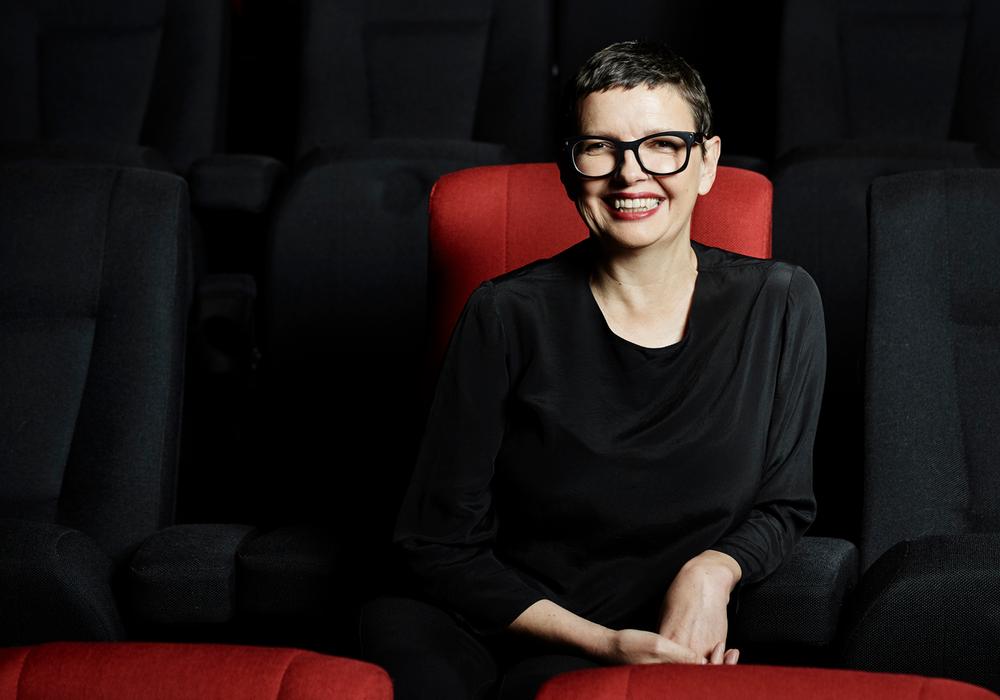
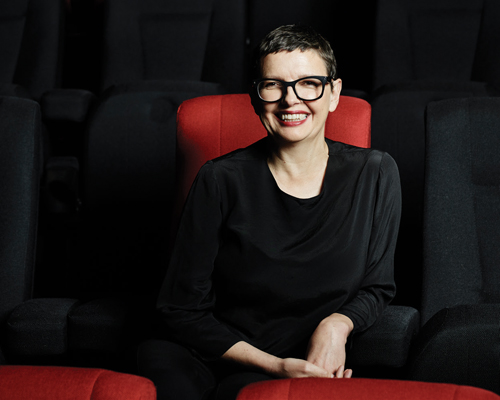
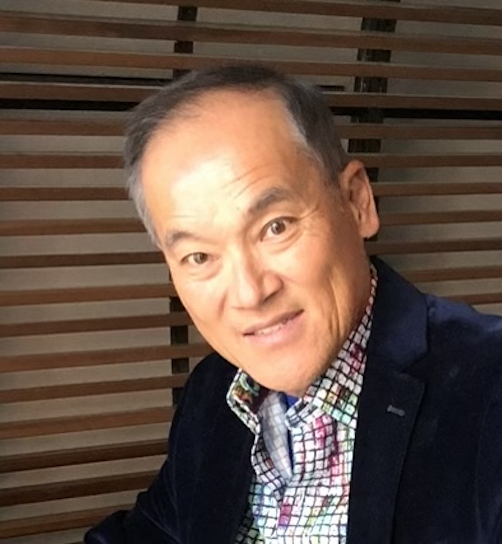
Katrina Sedgwick has worked as director and CEO of ACMI since 2015
How do you create a permanent exhibition that tells the story of the moving image? It’s very different from creating an exhibition about, say, dinosaurs – they are what they are and they’re not evolving any more! In our space, the reality is our subject is always changing.”
Katrina Sedgwick is director and CEO of the Australian Centre for the Moving Image (ACMI) – an institution taking inspiration from its title as it undergoes a AUS$40m (US$27.2m) redevelopment designed to put in motion a process of evolution that will continue long after its completion.
“We have the opportunity to transform the museum into one that is able to constantly change and respond to the rapidly evolving environment of moving image and technology,” says Sedgwick.
“But how do we future-proof our exhibition? The volume of content and the rapid shifts in technology, plus the expectations of audiences that they’re going to see these shifts reflected in any story about the moving image, makes this our biggest challenge.
“We’ve got money to spend on it now, but how do we make it ready and able to evolve with the content? These are questions we had to ask ourselves. So we designed an exhibition of which we expect around 30 per cent to change, in an ongoing way.”
More than film Situated in Melbourne, Australia, ACMI’s scope is wide. Although its cinemas host an array of international and national film festivals and special screenings, the centre is focused on much more than just film.
“We’re Australia’s national museum of film, television, video games, digital culture and art. I think the traditional notion of a moving image museum is that it’s about cinema, but we’re far broader than that.
“ACMI reflects the moving image as a part of our lives – right across art, culture, work and education. Our remit is to span this series of platforms and content that’s evolved over 130 years.”
This broad remit has, in the 17 years since it opened, attracted a wide audience, with more than 14.7 million visitors coming through its doors since 2002, and 1.5 million people attending last year, making it the most visited museum of moving image in the world. Despite this popularity, however, Sedgwick knew that it was time for the centre to upgrade its offering.
A national treasure “The centre was already very successful, but we knew that there was a lot more potential. This significant investment from the Victorian State Government is going to see us increase our visitation to up to two million visitors a year, enabling us to double our education visits, and increase participation in ways that couldn’t have been imagined a decade ago,” says Sedgwick.
The centrepiece of the old museum was its free permanent exhibition – Screen Worlds: The Story of Film, Television and Digital Culture – which was opened by actress Cate Blanchett in 2009.
“That exhibition, which celebrated the evolution of the moving image from the late 1800s to the present day, opened just as the iPhone arrived in Australia, and clearly a lot has changed since then,” Sedgwick laughs. “After ten years it was time for a change, so we’re going to completely redo this free experience for our visitors. We had nearly 700,000 visitors through Screen Worlds during the last year of its operation, so it’s a hugely influential and accessible exhibition for people of all ages. Within that, half of the visits were by tourists, both domestic and international, so it’s a big attractor.
“Being able to completely recreate this exhibition is a huge thing for us, and we’ll continue to tell the past, present and future of moving image through a very interactive, immersive and participatory exhibition, where you’ll be able to engage and create.”
Connection and cohesion In addition to updating old attractions, the project will also completely remodel the space. The centre sits within Melbourne’s Federation Square complex, in a building originally designed to be a shopping centre. Split over four levels, ACMI was lacking the kind of flow it needed to tell a coherent story.
“We’re making some changes that will better connect the building and enable much more of a conversation, from the cinemas right through to the major temporary exhibition and permanent exhibition spaces,” explains Sedgwick.
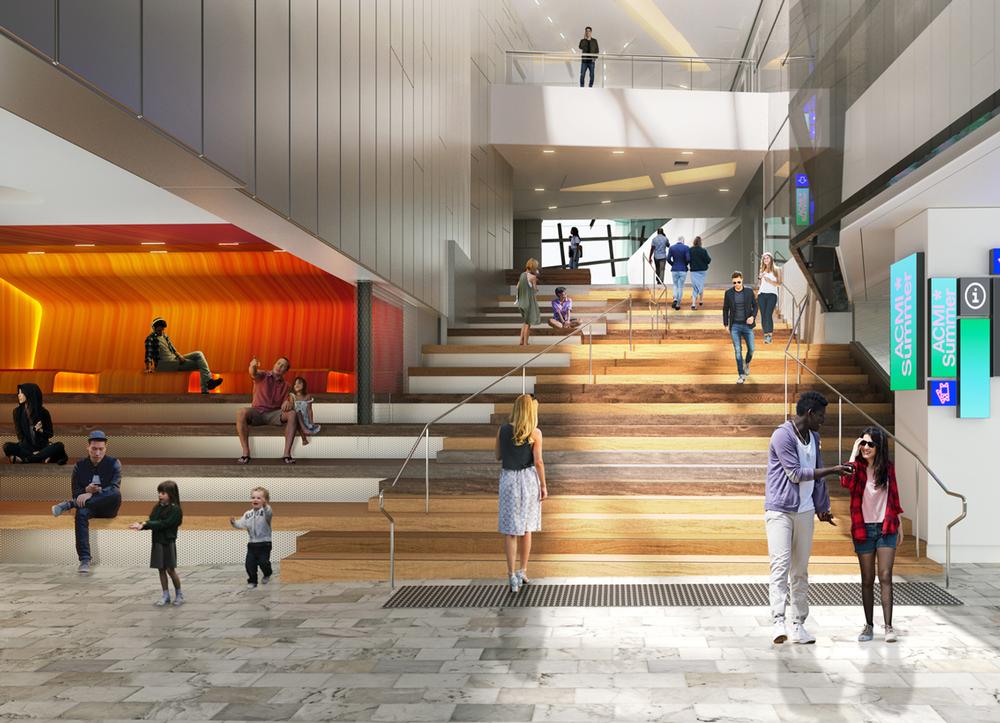
“Interestingly, some of the changes that we’re bringing in – for example, creating a living staircase between the two major levels – was something that actually existed in the original Federation Square designs.
“So it’s been a really positive experience working with BKK, a fantastic Melbourne-based architectural firm, and also collaborating with some of the original architects from LAB architecture studio to ensure that what we’re doing respects that original architectural vision, while still looking at how we can create a really holistic museum experience for visitors.
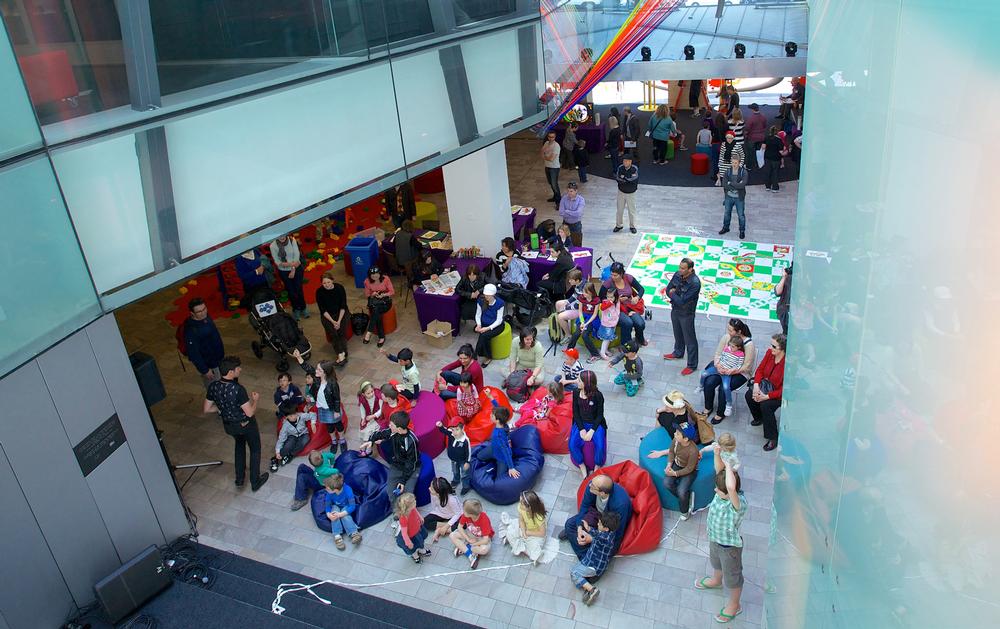
Immersed in motion Within this newly opened-up space, Sedgwick says the museum will become much more immersive and interactive, encouraging visitors to share their experience and continue learning after they leave.
“We’re creating a technology experience that allows our audiences to come into the building and use a special device to collect everything that they’re interested in and everything that they’ve created – from the stories they’ve discovered to the objects they’re interested in – and when they get home they’ll be able to explore more deeply that material through their own web page.
“We’re really interested in how we can empower our visitors to be able to curate their own experience within the stories that we’ve chosen to tell.”
In designing these new ways of allowing audiences to interact with the museum, the team took inspiration from the past work of its chief experience officer.
“Seb Chan was head of digital with one of the Smithsonian Institute Museums; the Cooper Hewitt, which is a museum of art and design in New York. He led the same sort of digital transformation there, at what is a very traditional object-based design museum, over a four year restoration and renovation process. He’s now applying that experience to our museum,” says Sedgwick.
Ready for the future But even with the most impressive technologies, the museum needs to be able to adapt to the ever-changing subject matter. The team is working to future-proof the centre as much as possible, through collaborations and the museum’s design.
“We’re working with a fantastic Australian animation and VA effects firm called Animal Logic. They make the Lego movies and they’ve just made Peter Rabbit, so they’re a really big global company. Our collaboration with them means that when their new films are coming out, we’ll be able to immediately incorporate them our exhibit – showing the details of how they’re made.
“This is just part of how we’ll shift and change the content and how we evolve our post-visit experience. It’s something that we’ve spent a lot of time working through so that it will constantly evolve and grow.
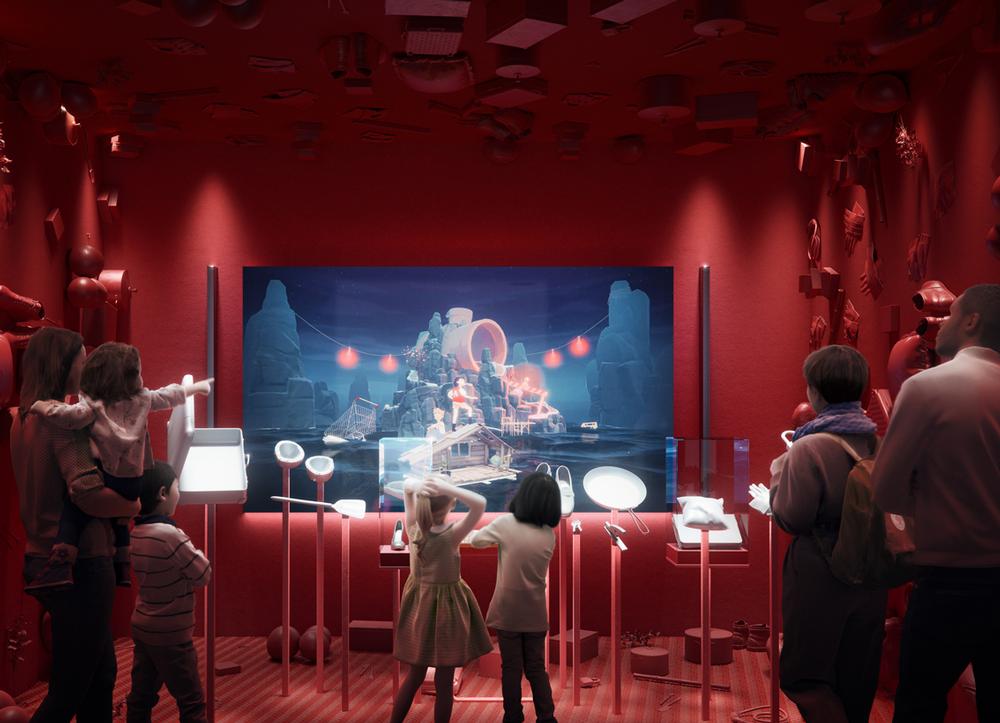
“We’re going to have a really fun section that will include a series of responsive screens, so that, when something new comes out that’s been impactful or talked about, we’ll be able to have that in our exhibition as it’s happening.”
Looking ahead With the redeveloped centre set to open in mid-2020, Sedgwick is excited to engage more people, more deeply.
“The 21st century offers so many creative opportunities through the tools that are now available to us: to digitise our collections and give visitors a chance to have a much more active engagement with the experience,” she says.
“This is where the museum sector is going: enabling things that have been hidden away in a white glove environment to be presented to audiences in a way that allows them to get their hands on it, play with it, share it, use it and explore it.
“I believe ACMI is at the forefront of this, and I hope this redevelopment will not only help us to become one of the major tourist attractions in Australia, but also to maintain a global reputation as being a really exciting creator of audience experience and exhibition making and programming.”
ACMI ON TOUR
Although the centre is being redeveloped in ACMI’s home, the museum creates its own exhibitions, which tour all over the world.
Dreamworks Animation
Featuring 400 unique items from the archives and highlighting beloved family favourites Shrek, Madagascar, Kung Fu Panda, How to Train Your Dragon and Trolls, visitors can explore and engage with the studio’s creative approach to the art of animation. See how characters and narratives transform from sketch to screen.
Game Masters
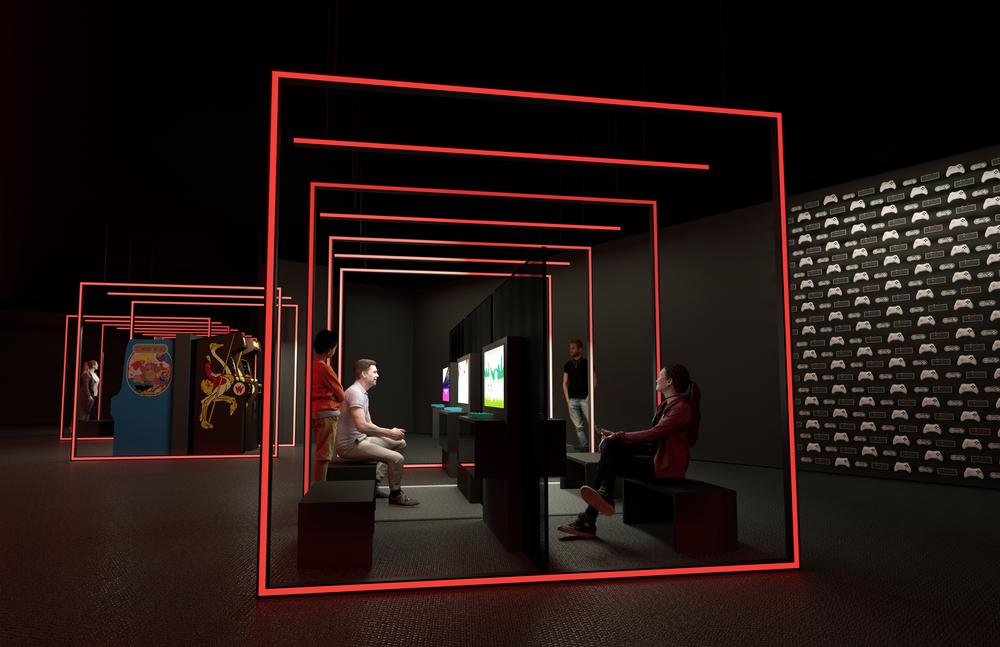
A highly interactive video game exhibition, showcasing the world’s most influential video game designers. From the arcade era to the latest console, PC, mobile and tablet game technology, this exhibition takes visitors behind the scenes, showcasing how video games are made as well as their makers.
Wonderland
The first ever large-scale immersive exhibition to celebrate the timeless stories of Lewis Carroll and Alice’s adventures on screen and in popular culture. This interactive experience also charts the evolution of special effects from pre-cinema and silent films, to animation, puppetry, live action and CGI.
ACMI’s upgrades include:
A reconfigured space
• Cinemas presenting the very best of screen culture from Australia and around the world
• A dramatic transformation of the building
• A ‘living staircase’ and new spaces to sit and relax
• A contemporary café and bar with new interior
• A revitalised shop devoted to art and culture
New event spaces
• A new exhibition to illuminate ACMI’s history
• A new permanent gallery that takes audiences on an immersive journey into the past, present and future of the moving image
Playable and interactive experiences
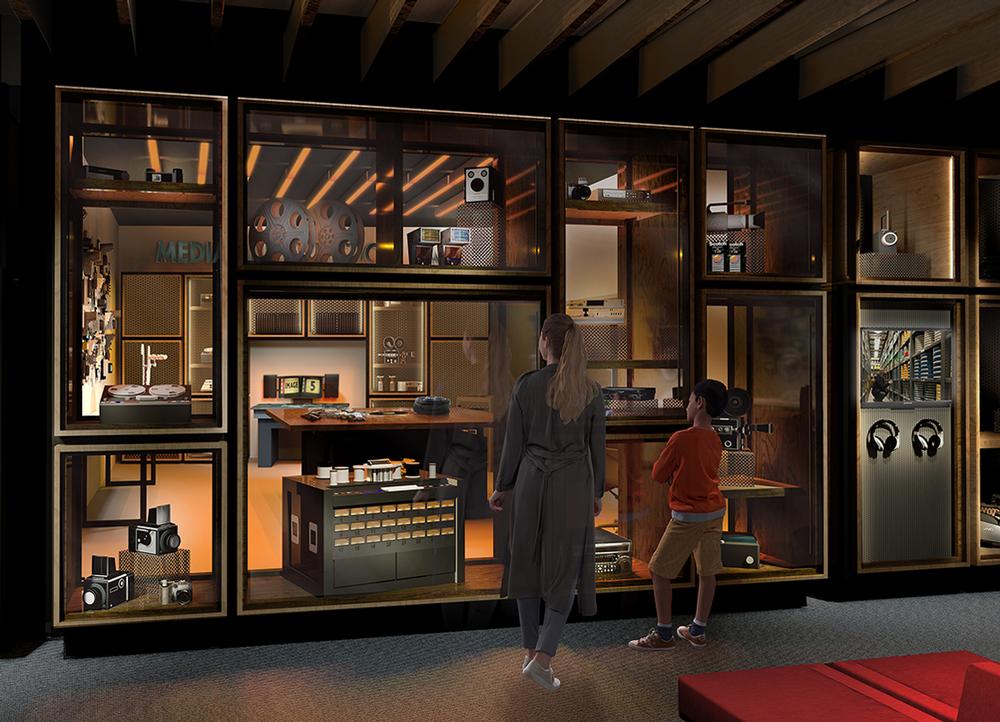
• Key moments of the moving image will come to life through interactive experiences that let visitors animate shadows, craft optical toys, experiment with time, assemble film scenes and create soundscapes in a custom Foley studio.
Media preservation lab
State-of-the-art education spaces
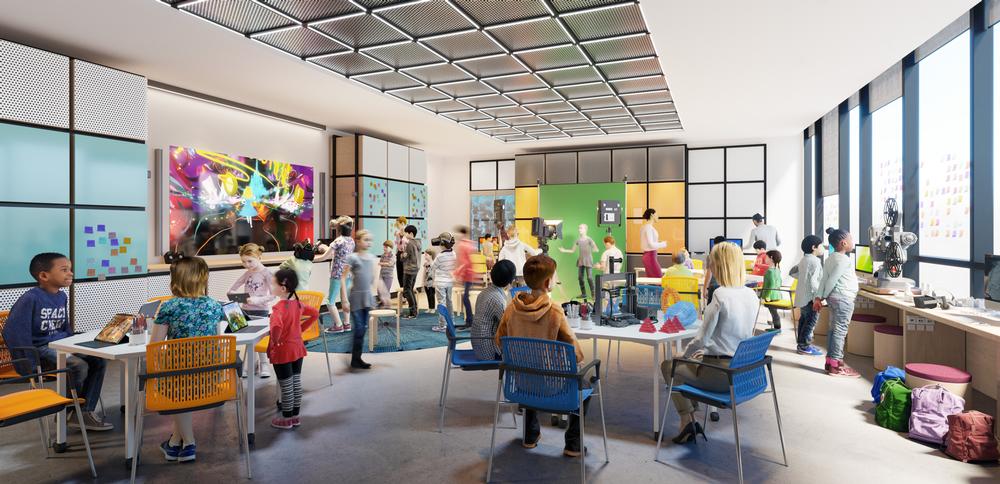
• The Gandel Digital Future Labs are two new spaces where students and teachers can access the technology and creative tools to create their own moving image works.
Read more from this issue of Spa Business magazine
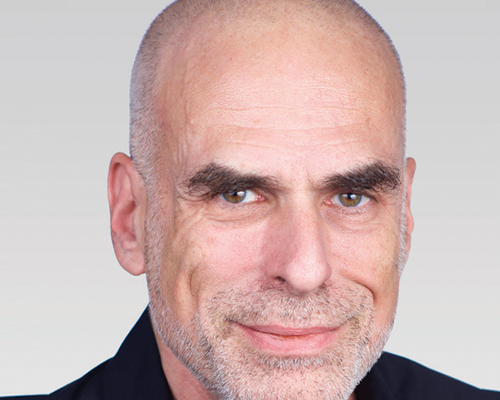
People profile: Tom Hennes
Tom Hennes discusses how he has transformed the Empire State Building's visitor experience
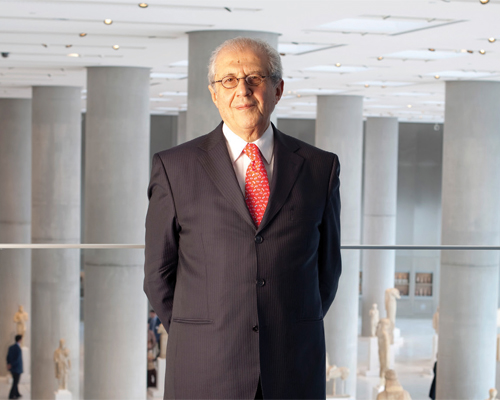
People profile: Dimitrios Pandermalis
The Acropolis Museum has just celebrated its 10-year anniversary. Its president, Dimitrios Pandermalis, talks about his plans to take the museum forward in the next decade and beyond
People profile: Gus Antorcha
SeaWorld's new CEO Gus Antorcha on the company's new direction as it starts to recover following several years of turmoil
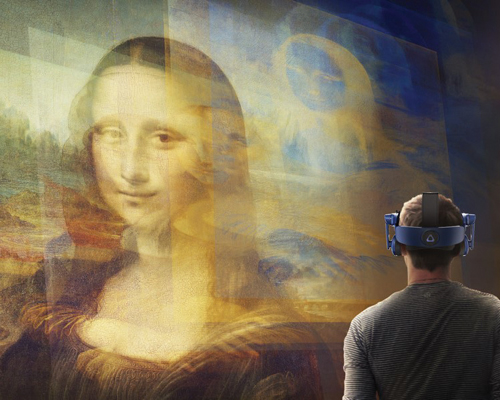
Museums: A museum in motion
The Australian Centre for the Moving Image
is undergoing a AUS$40m renewal. CEO
Katrina Sedgwick talks about the plans
Tourism: The dark side
With locations like Chernobyl increasing
in popularity, Kath Hudson looks at the
dark side of the global tourism sector
Promotional feature: Whitewater
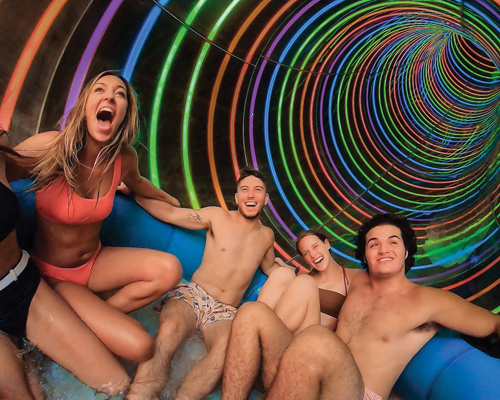
WhiteWater thinks outside the box to create memorable,
immersive experiences that go beyond the thrill
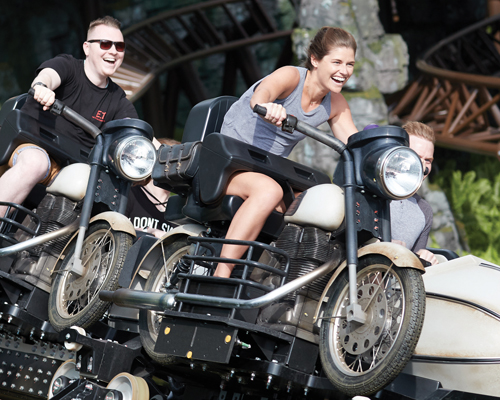
Rides: Monsters, myths and motorbikes
We take a look at some of the biggest ride
openings for visitor attractions worldwide,
including Universal’s new Hagrid coaster
Promotional feature: OurPeople
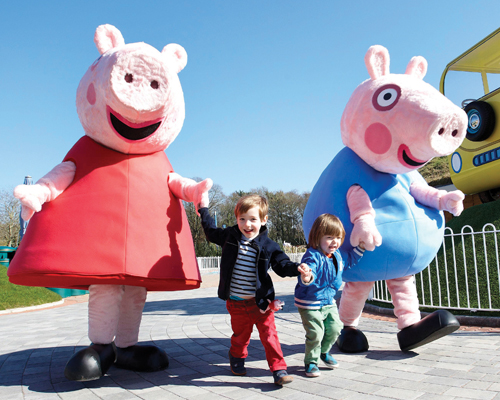
Home to the world-revered peppa pig world and welcoming more than one
million visitors every year, paultons park was voted Tripadvisor’s number
one UK amusement park for the fourth year running in 2019
Le Atelier by C.O.D.E. doesn't offer a standard bespoke service, it provides a highly
customised approach to designing massage beds and loungers in high-end wellness
environments. [more...]
The Australian Centre for the Moving Image is undergoing an AUS$40m renewal, which has been designed to increase interactivity and engagement, as well as enable the centre to evolve with its subject matter. Steph Eaves talks to CEO Katrina Sedgwick about the plans
By Steph Eaves | Published in Attractions Management 2019 issue 3
Katrina Sedgwick has worked as director and CEO of ACMI since 2015
How do you create a permanent exhibition that tells the story of the moving image? It’s very different from creating an exhibition about, say, dinosaurs – they are what they are and they’re not evolving any more! In our space, the reality is our subject is always changing.”
Katrina Sedgwick is director and CEO of the Australian Centre for the Moving Image (ACMI) – an institution taking inspiration from its title as it undergoes a AUS$40m (US$27.2m) redevelopment designed to put in motion a process of evolution that will continue long after its completion.
“We have the opportunity to transform the museum into one that is able to constantly change and respond to the rapidly evolving environment of moving image and technology,” says Sedgwick.
“But how do we future-proof our exhibition? The volume of content and the rapid shifts in technology, plus the expectations of audiences that they’re going to see these shifts reflected in any story about the moving image, makes this our biggest challenge.
“We’ve got money to spend on it now, but how do we make it ready and able to evolve with the content? These are questions we had to ask ourselves. So we designed an exhibition of which we expect around 30 per cent to change, in an ongoing way.”
More than film Situated in Melbourne, Australia, ACMI’s scope is wide. Although its cinemas host an array of international and national film festivals and special screenings, the centre is focused on much more than just film.
“We’re Australia’s national museum of film, television, video games, digital culture and art. I think the traditional notion of a moving image museum is that it’s about cinema, but we’re far broader than that.
“ACMI reflects the moving image as a part of our lives – right across art, culture, work and education. Our remit is to span this series of platforms and content that’s evolved over 130 years.”
This broad remit has, in the 17 years since it opened, attracted a wide audience, with more than 14.7 million visitors coming through its doors since 2002, and 1.5 million people attending last year, making it the most visited museum of moving image in the world. Despite this popularity, however, Sedgwick knew that it was time for the centre to upgrade its offering.
A national treasure “The centre was already very successful, but we knew that there was a lot more potential. This significant investment from the Victorian State Government is going to see us increase our visitation to up to two million visitors a year, enabling us to double our education visits, and increase participation in ways that couldn’t have been imagined a decade ago,” says Sedgwick.
The centrepiece of the old museum was its free permanent exhibition – Screen Worlds: The Story of Film, Television and Digital Culture – which was opened by actress Cate Blanchett in 2009.
“That exhibition, which celebrated the evolution of the moving image from the late 1800s to the present day, opened just as the iPhone arrived in Australia, and clearly a lot has changed since then,” Sedgwick laughs. “After ten years it was time for a change, so we’re going to completely redo this free experience for our visitors. We had nearly 700,000 visitors through Screen Worlds during the last year of its operation, so it’s a hugely influential and accessible exhibition for people of all ages. Within that, half of the visits were by tourists, both domestic and international, so it’s a big attractor.
“Being able to completely recreate this exhibition is a huge thing for us, and we’ll continue to tell the past, present and future of moving image through a very interactive, immersive and participatory exhibition, where you’ll be able to engage and create.”
Connection and cohesion In addition to updating old attractions, the project will also completely remodel the space. The centre sits within Melbourne’s Federation Square complex, in a building originally designed to be a shopping centre. Split over four levels, ACMI was lacking the kind of flow it needed to tell a coherent story.
“We’re making some changes that will better connect the building and enable much more of a conversation, from the cinemas right through to the major temporary exhibition and permanent exhibition spaces,” explains Sedgwick.
“Interestingly, some of the changes that we’re bringing in – for example, creating a living staircase between the two major levels – was something that actually existed in the original Federation Square designs.
“So it’s been a really positive experience working with BKK, a fantastic Melbourne-based architectural firm, and also collaborating with some of the original architects from LAB architecture studio to ensure that what we’re doing respects that original architectural vision, while still looking at how we can create a really holistic museum experience for visitors.
Immersed in motion Within this newly opened-up space, Sedgwick says the museum will become much more immersive and interactive, encouraging visitors to share their experience and continue learning after they leave.
“We’re creating a technology experience that allows our audiences to come into the building and use a special device to collect everything that they’re interested in and everything that they’ve created – from the stories they’ve discovered to the objects they’re interested in – and when they get home they’ll be able to explore more deeply that material through their own web page.
“We’re really interested in how we can empower our visitors to be able to curate their own experience within the stories that we’ve chosen to tell.”
In designing these new ways of allowing audiences to interact with the museum, the team took inspiration from the past work of its chief experience officer.
“Seb Chan was head of digital with one of the Smithsonian Institute Museums; the Cooper Hewitt, which is a museum of art and design in New York. He led the same sort of digital transformation there, at what is a very traditional object-based design museum, over a four year restoration and renovation process. He’s now applying that experience to our museum,” says Sedgwick.
Ready for the future But even with the most impressive technologies, the museum needs to be able to adapt to the ever-changing subject matter. The team is working to future-proof the centre as much as possible, through collaborations and the museum’s design.
“We’re working with a fantastic Australian animation and VA effects firm called Animal Logic. They make the Lego movies and they’ve just made Peter Rabbit, so they’re a really big global company. Our collaboration with them means that when their new films are coming out, we’ll be able to immediately incorporate them our exhibit – showing the details of how they’re made.
“This is just part of how we’ll shift and change the content and how we evolve our post-visit experience. It’s something that we’ve spent a lot of time working through so that it will constantly evolve and grow.
“We’re going to have a really fun section that will include a series of responsive screens, so that, when something new comes out that’s been impactful or talked about, we’ll be able to have that in our exhibition as it’s happening.”
Looking ahead With the redeveloped centre set to open in mid-2020, Sedgwick is excited to engage more people, more deeply.
“The 21st century offers so many creative opportunities through the tools that are now available to us: to digitise our collections and give visitors a chance to have a much more active engagement with the experience,” she says.
“This is where the museum sector is going: enabling things that have been hidden away in a white glove environment to be presented to audiences in a way that allows them to get their hands on it, play with it, share it, use it and explore it.
“I believe ACMI is at the forefront of this, and I hope this redevelopment will not only help us to become one of the major tourist attractions in Australia, but also to maintain a global reputation as being a really exciting creator of audience experience and exhibition making and programming.”
ACMI ON TOUR
Although the centre is being redeveloped in ACMI’s home, the museum creates its own exhibitions, which tour all over the world.
Dreamworks Animation
Featuring 400 unique items from the archives and highlighting beloved family favourites Shrek, Madagascar, Kung Fu Panda, How to Train Your Dragon and Trolls, visitors can explore and engage with the studio’s creative approach to the art of animation. See how characters and narratives transform from sketch to screen.
Game Masters
A highly interactive video game exhibition, showcasing the world’s most influential video game designers. From the arcade era to the latest console, PC, mobile and tablet game technology, this exhibition takes visitors behind the scenes, showcasing how video games are made as well as their makers.
Wonderland
The first ever large-scale immersive exhibition to celebrate the timeless stories of Lewis Carroll and Alice’s adventures on screen and in popular culture. This interactive experience also charts the evolution of special effects from pre-cinema and silent films, to animation, puppetry, live action and CGI.
ACMI’s upgrades include:
A reconfigured space
• Cinemas presenting the very best of screen culture from Australia and around the world
• A dramatic transformation of the building
• A ‘living staircase’ and new spaces to sit and relax
• A contemporary café and bar with new interior
• A revitalised shop devoted to art and culture
New event spaces
• A new exhibition to illuminate ACMI’s history
• A new permanent gallery that takes audiences on an immersive journey into the past, present and future of the moving image
Playable and interactive experiences
• Key moments of the moving image will come to life through interactive experiences that let visitors animate shadows, craft optical toys, experiment with time, assemble film scenes and create soundscapes in a custom Foley studio.
Media preservation lab
State-of-the-art education spaces
• The Gandel Digital Future Labs are two new spaces where students and teachers can access the technology and creative tools to create their own moving image works.
Read more from this issue of Spa Business magazine
People profile: Tom Hennes
Tom Hennes discusses how he has transformed the Empire State Building's visitor experience
People profile: Dimitrios Pandermalis
The Acropolis Museum has just celebrated its 10-year anniversary. Its president, Dimitrios Pandermalis, talks about his plans to take the museum forward in the next decade and beyond
People profile: Gus Antorcha
SeaWorld's new CEO Gus Antorcha on the company's new direction as it starts to recover following several years of turmoil
Museums: A museum in motion
The Australian Centre for the Moving Image
is undergoing a AUS$40m renewal. CEO
Katrina Sedgwick talks about the plans
Tourism: The dark side
With locations like Chernobyl increasing
in popularity, Kath Hudson looks at the
dark side of the global tourism sector
Promotional feature: Whitewater
WhiteWater thinks outside the box to create memorable,
immersive experiences that go beyond the thrill
Rides: Monsters, myths and motorbikes
We take a look at some of the biggest ride
openings for visitor attractions worldwide,
including Universal’s new Hagrid coaster
Promotional feature: OurPeople
Home to the world-revered peppa pig world and welcoming more than one
million visitors every year, paultons park was voted Tripadvisor’s number
one UK amusement park for the fourth year running in 2019
The UK spa review and discovery platform for consumers, the Good Spa Guide, has announced
it will host the Good Spa Guide Awards 2026 during an event on 16 November at Sopwell House
Hotel in St Albans, UK.
Eighty-four per cent of consumers now say wellness is a top priority in their lives, with this
percentage increasing year on year, according to a preview presentation of McKinsey’s Future of
Wellness 2026 research report.
Mass protests have been taking place since Monday 1 June in Albania over the development of
a luxury resort by Donald Trump’s daughter Ivanka Trump and her husband Jared Kushner.
Global Wellness Day (GWD) marked its 15th anniversary on Saturday 13 June 2026, with the
theme: #JoyMagenta – a celebration of the healing qualities of simple gestures and activities
that spark joy.
Global luxury hospitality brand, Six Senses, has partnered with longevity healthcare provider,
HUM2N, to launch a clinic at Six Senses London, at The Whiteley.
As part of its first hotel partnership, Mayrlife – the medical health resort company known for its
site in Altaussee, Austria – has launched a day clinic at the Rosewood Vienna.
Premium London health club, KX Chelsea, will imminently unveil its most significant
redevelopment since its launch in 2002 to create an integrated wellness model combining
training, recovery and relaxation.
Rosewood Le Guanahani St Barth, on the northeast coast of Saint Barthélemy in the French
West Indies, is offering a programme of ocean-inspired yoga classes between 8-14 June to
celebrate Global Wellness Day (GWD).
Hotel de France, located on the British Isle of Jersey, has created a wellness retreat package
that includes a hot yoga session that will take place in Jersey Zoo’s butterfly sanctuary.
The Ritz-Carlton, Langkawi, in Malaysia, has revealed a schedule for Global Wellness Day
(GWD) that includes guided rainforest walks, mindful movement and guided coastal meditation
experiences.
Le Atelier by C.O.D.E. doesn't offer a standard bespoke service, it provides a highly
customised approach to designing massage beds and loungers in high-end wellness
environments. [more...]