Yes! Send me the FREE digital editions of Spa Business and Spa Business insider magazines and the FREE weekly Spa Business and Spa Business insider ezines and breaking news alerts!
Sophie Benge reports from a gathering of passionate hot spring stakeholders in Budapest as they discuss plans to ensure thermal heritage has a bright future
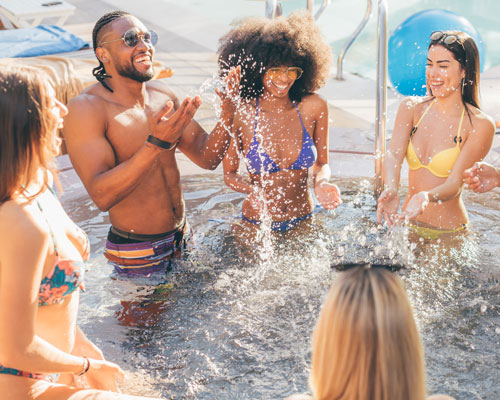
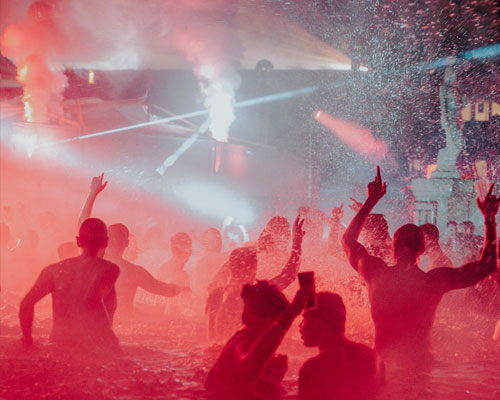
The Sparty concept in Budapest attracts younger generations / photo: Sparty
“Where is Gen Z in our wellness story? They’re the most health-conscious generation, but we’re overlooking them,” said Ivana Kolar, one of 23 speakers at the third International Thermal Tourism Congress recently held in Budapest.
Industry consultant Laszlo Puczko chaired an eye-opening panel on The TikTok-isation of Thermalism. Among the speakers, Ivana Kolar, the Croatian CEO of Julius Rose Business Consulting, urged delegates to steer their focus away from the ‘silver’ guest: "It’s time we rethink the products we offer and the way we communicate because by 2030 they’ll [Gen Z and alpha] hold over 25 per cent of global income. Longevity starts in your 20s. They’re not the next wave, they’re already the tide,” adding that TikTok’s #hotsprings had just short of 118,000 views in the previous month.
A sustainable future themed much of the creative conversation among the speakers and 150 delegates from more than 20 countries. The global thermal tourism market is valued at US$65.5 billion (€56.15 billion, £48.49 billion), according to a market report by Gran View Research and stakeholders from the market met at Ensana’s Thermal Margaret Island Hotel. The two intense days involved panel discussions, a spa town Mayor Summit, local spa visits and a gala night, all wrapped in collaborative camaraderie, reflecting the passion of thermal bathing in Europe and beyond.
Next visitor generation Congress organisers, the European Historic Thermal Towns Association (EHTTA) and Budapest Spas, together with Ensana hotel group and UN Tourism, cleverly brought social media experts from outside the sector to share strategies for engaging new generations.
“TikTok is a crucial research tool. Show, don’t tell. Be instant, flexible and clear with messaging,” suggested Yannick Blättler, CEO of social media company NeoViso, whose message was echoed by Dario Marčac, co-founder of Crew Media, who advised targeting ‘interest tribes’, not age groups with content to inspire action: “If a picture speaks a thousand words, a video speaks a million,” he said. The power of online was reinforced by Fabrizio Orlando, Tripadvisor’s global director of industry affairs. The travel site, which attracts up to 490 million users a month, says its thermal spa bookings have risen by 157 per cent in the past year.
Alongside socials, Budapest Spas is immensely successful in attracting the younger generation with its Sparty concept at the city’s elaborate Széchenyi Baths, which morphs, by night, into a live event space of performers, inflatable bars and audio-visual projections. These are driven by Gabor Kalman, marketing director of Sparty, whose recent survey revealed that 86 per cent of participants head to Sparty before anything else in Budapest.
Dr János Kóka, medic and founder of Doktor24, said: “The young generation is coming off alcohol and looking for new community platforms and wellness experiences.”
We also heard about the continuing draw of Liquid Sound, the immersive music and light experience at Toskana Terme in Bad Sulza, Germany, still popular more than nearly 25 years after its inception.
Cultural tourism Although Budapest Spas admits it’s starting to suffer from over tourism and, at the same time, onsens rank second among tourist attractions in Japan, most hot springs destinations are actively seeking international tour operators to co-create thermal tourism packages that showcase their uniquely defining blend of nature, culture, history, sport and potent healing resources. On behalf of EHTTA, which offers sales and marketing to its 50 thermal towns, executive director Simone Zagrodnik conceded, “there’s still a long way ahead to put spa towns in the catalogue”.
Ion Vilcu, director, UN Tourism Affiliate Members, added: “As thermal tourism has transitioned from niche to mainstream, cooperation between commercial experience and municipal knowledge remains essential to support sustainable tourism in this sector.”
Marion Roussel of La Route des Villes D’Eaux du Massif Central, an association of 17 spa towns across France, reported on Bathrobe Addicts, its new marketing approach to showcase its spa towns in a broader, playful way.
Community engagement Future-proofing thermal heritage also means engaging local communities, which are either sidelined by price and tourism or “fail to appreciate their DNA”, said Chiara Ronchini. As director general of The Great Spa Towns of Europe (GSTE) she’s secured EU funding to foster a local sense of belonging. “Our ‘Cool Design Creation’ project is a multi-country initiative, where 101 young people have submitted design ideas for their towns,” she said (see www.spabusiness.com/GSTEyouth). The transnational UNESCO World Heritage Site also holds Youth Parliaments that organise ‘clean-up’ days and gather ideas for the re-use of historic buildings.
Climate considerations The congress hosted various panels sharing complex, local efforts at water management, geothermal energy and grey water use.
In Termas de Sao Pedro do Sul in Portugal, the energy from the 69˚C water is captured to replace propane gas, resulting in 4,000 fewer tonnes of carbon dioxide emissions each year.
Similarly, in the town of Caldes de Montbui in Catalonia, local laundrettes and a pasta factory now use nearby hot thermal water in their operations.
Also, in the spirit of European co-operation, a seven-country, four-year project, called the Green Spas Partnership, in collaboration with Interegg Europe – an EU affiliate for sustainable development – coordinates best practices for environmental responsibility in a bid to influence public policy. One partner, Birštonas, in Lithuania, has spent five years focusing on energy efficiency projects in water piping systems, transportation and biodiversity initiatives, resulting in a 71 per cent drop in the town’s energy consumption, according to vice mayor, Edvardas Citvaras.
Evidence efforts In ongoing efforts to show the clinical and preventive value of spa medicine in national healthcare strategies, the Czech Republic’s Karlovy Vary has completed the first of a three-year research project at the city’s Institute of Spa & Balneology, thanks to a €10 million (US$11.7 million, £8.6 million) grant from the EU.
“If we want policymakers, insurers and even the next generation of physicians to take this field seriously, we must support our traditions with data, clinical studies and scientific evidence,” said director Alina Huseynli, citing the scheme’s early study results. Its team of 35 experts has seen a positive impact on physical mobility, diabetes, mental health prevention, female infertility and female oncology patients. “Our aim is to overturn the gap in the research for scientific measurements on the combined role of traditional practices and cutting-edge technologies.”
Petra Bailey, vice president of Ensana, spoke about the group’s focus to “combine natural resources together with innovation and biomarker analysis.” While in a counterargument, Puczko, who co-authored an EHTTA white paper aimed at bringing thermal tourism into a wider context, said: “bathing sums up ‘idyllic idleness’ and that in itself is prescription enough in current times”.
Rigorous research on the benefits of spa medicine in Slovakia was shared by Janka Zálešáková, a balneology and climatic therapy expert, who collates an annual report to negotiate for the extension of governmental financial support for thermal healthcare.
Armed with projects such as those in the Czech Republic and Slovakia, Czilla Mezösi, the secretary general of the European Spas Association (ESPA), lobbies the EU for funding and wider recognition for the thermal sector.
Overall, the determination for ongoing initiatives, plus a palpable spirit of learning and cooperation, left delegates departing this congress even more enthusiastic for their work in thermal wellness and excited for the yet-to-be-announced next event in 2027.
To find out more about EHTTA and GSTE, read Spa Business’ deep dive into the two thermal spa town associations at www.spabusiness.com/thermalheritage
photo: Sophie Benge
"We must support our traditions with data, clinical studies and scientific evidence" – Sophie Benge
Read more from this issue of Spa Business magazine
Spa people: Tim Fu
Leading a wellness architecture project in Slovenia that’s one of the first in the world to use AI in all stages of design
Spa people: Kayley Thomas
Lush is famous for its bath bombs and retail empire, but the co-founder of its day spa concept reveals why its 19 global spa facilities are so essential
Spa people: Colin Mcilheney
We find out more about Colin Mcilheney, the man who created the ISPA US Spa Industry Study and has been analysing the sector’s performance ever since
News report: Map of luxury
New research by WATG shows emerging wealth hubs in India, the Gulf, Southeast Asia and Africa are reshaping luxury travel demand
Interview: Chris Norton
The CEO of Equinox Hotels tells Katie Barnes how the uber-cool brand is scaling its bold fusion of fitness, spa and luxury
Ask an expert...: Recovery
From cryo to compression to contrast bathing, Julie Cramer investigates why and how spas and resorts are integrating recovery packages
Research: Behind the boom
What are the hidden messages in the latest US study by ISPA? Colin Mcilheney digs beneath the surface
Research: Bigger picture
Rising salaries and shifting consumer expectations – two new surveys by the UKSA and GSG reveal the trends impacting UK spa operators
Sponsored: Lemi - Good sensations
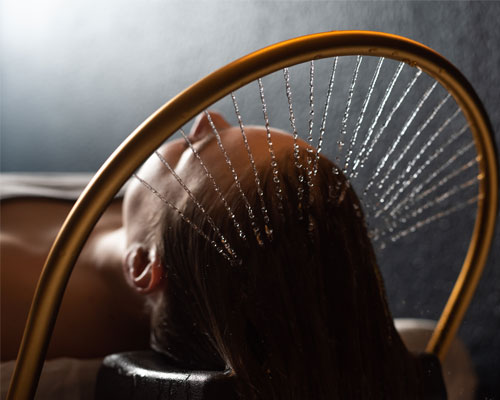
Lemi’s Venice Head Spa combines the beauty of Italian design with fine-tuned technology to provide the ultimate top-to-toe treatment station for spas
Sponsored: G.M. COLLIN – Smooth operator
The new toner from G.M. Collin represents a ‘gold standard’ in leave-on liquid exfoliation for smooth and radiant results, without the irritation of a scrub
Sponsored: TechnoAlpin – Snow for all seasons
TechnoAlpin’s magical Snowroom installation at the Alpenrose resort brings the Austrian landscape and feel-good nature factor to its wellbeing experience
First person: Costa Blanca cure
Jane Kitchen visits Spain to compare and contrast two world-class medi-wellness clinics: well-established SHA and ambitious newcomer ZEM
Sponsored: Gharieni Group – Tech-powered recovery
The new brand in the Gharieni Group portfolio – Metawell – is delivering what today’s wellness clients are seeking most – deep recovery and mind-body renewal
Sponsored: BC Softwear – Human touch
While touchless therapies are a positive addition to spas, nothing can replace the healing power of human touch, says Barbara Cooke
Sponsored: Yon-ka – A potent blend
Yon-Ka’s new Serum Omega is a potent blend of Omega 3, 6 and 9 to target
dry, stressed-out skin and deliver a calm and nourishing client experience
Menu engineering: At your service
Self-playing gongs in Sweden, surfing therapy in Morocco and Ananda launches holistic diabetes management programme in India
Sophie Benge reports from a gathering of passionate hot spring stakeholders in Budapest as they discuss plans to ensure thermal heritage has a bright future
The Sparty concept in Budapest attracts younger generations / photo: Sparty
“Where is Gen Z in our wellness story? They’re the most health-conscious generation, but we’re overlooking them,” said Ivana Kolar, one of 23 speakers at the third International Thermal Tourism Congress recently held in Budapest.
Industry consultant Laszlo Puczko chaired an eye-opening panel on The TikTok-isation of Thermalism. Among the speakers, Ivana Kolar, the Croatian CEO of Julius Rose Business Consulting, urged delegates to steer their focus away from the ‘silver’ guest: "It’s time we rethink the products we offer and the way we communicate because by 2030 they’ll [Gen Z and alpha] hold over 25 per cent of global income. Longevity starts in your 20s. They’re not the next wave, they’re already the tide,” adding that TikTok’s #hotsprings had just short of 118,000 views in the previous month.
A sustainable future themed much of the creative conversation among the speakers and 150 delegates from more than 20 countries. The global thermal tourism market is valued at US$65.5 billion (€56.15 billion, £48.49 billion), according to a market report by Gran View Research and stakeholders from the market met at Ensana’s Thermal Margaret Island Hotel. The two intense days involved panel discussions, a spa town Mayor Summit, local spa visits and a gala night, all wrapped in collaborative camaraderie, reflecting the passion of thermal bathing in Europe and beyond.
Next visitor generation Congress organisers, the European Historic Thermal Towns Association (EHTTA) and Budapest Spas, together with Ensana hotel group and UN Tourism, cleverly brought social media experts from outside the sector to share strategies for engaging new generations.
“TikTok is a crucial research tool. Show, don’t tell. Be instant, flexible and clear with messaging,” suggested Yannick Blättler, CEO of social media company NeoViso, whose message was echoed by Dario Marčac, co-founder of Crew Media, who advised targeting ‘interest tribes’, not age groups with content to inspire action: “If a picture speaks a thousand words, a video speaks a million,” he said. The power of online was reinforced by Fabrizio Orlando, Tripadvisor’s global director of industry affairs. The travel site, which attracts up to 490 million users a month, says its thermal spa bookings have risen by 157 per cent in the past year.
Alongside socials, Budapest Spas is immensely successful in attracting the younger generation with its Sparty concept at the city’s elaborate Széchenyi Baths, which morphs, by night, into a live event space of performers, inflatable bars and audio-visual projections. These are driven by Gabor Kalman, marketing director of Sparty, whose recent survey revealed that 86 per cent of participants head to Sparty before anything else in Budapest.
Dr János Kóka, medic and founder of Doktor24, said: “The young generation is coming off alcohol and looking for new community platforms and wellness experiences.”
We also heard about the continuing draw of Liquid Sound, the immersive music and light experience at Toskana Terme in Bad Sulza, Germany, still popular more than nearly 25 years after its inception.
Cultural tourism Although Budapest Spas admits it’s starting to suffer from over tourism and, at the same time, onsens rank second among tourist attractions in Japan, most hot springs destinations are actively seeking international tour operators to co-create thermal tourism packages that showcase their uniquely defining blend of nature, culture, history, sport and potent healing resources. On behalf of EHTTA, which offers sales and marketing to its 50 thermal towns, executive director Simone Zagrodnik conceded, “there’s still a long way ahead to put spa towns in the catalogue”.
Ion Vilcu, director, UN Tourism Affiliate Members, added: “As thermal tourism has transitioned from niche to mainstream, cooperation between commercial experience and municipal knowledge remains essential to support sustainable tourism in this sector.”
Marion Roussel of La Route des Villes D’Eaux du Massif Central, an association of 17 spa towns across France, reported on Bathrobe Addicts, its new marketing approach to showcase its spa towns in a broader, playful way.
Community engagement Future-proofing thermal heritage also means engaging local communities, which are either sidelined by price and tourism or “fail to appreciate their DNA”, said Chiara Ronchini. As director general of The Great Spa Towns of Europe (GSTE) she’s secured EU funding to foster a local sense of belonging. “Our ‘Cool Design Creation’ project is a multi-country initiative, where 101 young people have submitted design ideas for their towns,” she said (see www.spabusiness.com/GSTEyouth). The transnational UNESCO World Heritage Site also holds Youth Parliaments that organise ‘clean-up’ days and gather ideas for the re-use of historic buildings.
Climate considerations The congress hosted various panels sharing complex, local efforts at water management, geothermal energy and grey water use.
In Termas de Sao Pedro do Sul in Portugal, the energy from the 69˚C water is captured to replace propane gas, resulting in 4,000 fewer tonnes of carbon dioxide emissions each year.
Similarly, in the town of Caldes de Montbui in Catalonia, local laundrettes and a pasta factory now use nearby hot thermal water in their operations.
Also, in the spirit of European co-operation, a seven-country, four-year project, called the Green Spas Partnership, in collaboration with Interegg Europe – an EU affiliate for sustainable development – coordinates best practices for environmental responsibility in a bid to influence public policy. One partner, Birštonas, in Lithuania, has spent five years focusing on energy efficiency projects in water piping systems, transportation and biodiversity initiatives, resulting in a 71 per cent drop in the town’s energy consumption, according to vice mayor, Edvardas Citvaras.
Evidence efforts In ongoing efforts to show the clinical and preventive value of spa medicine in national healthcare strategies, the Czech Republic’s Karlovy Vary has completed the first of a three-year research project at the city’s Institute of Spa & Balneology, thanks to a €10 million (US$11.7 million, £8.6 million) grant from the EU.
“If we want policymakers, insurers and even the next generation of physicians to take this field seriously, we must support our traditions with data, clinical studies and scientific evidence,” said director Alina Huseynli, citing the scheme’s early study results. Its team of 35 experts has seen a positive impact on physical mobility, diabetes, mental health prevention, female infertility and female oncology patients. “Our aim is to overturn the gap in the research for scientific measurements on the combined role of traditional practices and cutting-edge technologies.”
Petra Bailey, vice president of Ensana, spoke about the group’s focus to “combine natural resources together with innovation and biomarker analysis.” While in a counterargument, Puczko, who co-authored an EHTTA white paper aimed at bringing thermal tourism into a wider context, said: “bathing sums up ‘idyllic idleness’ and that in itself is prescription enough in current times”.
Rigorous research on the benefits of spa medicine in Slovakia was shared by Janka Zálešáková, a balneology and climatic therapy expert, who collates an annual report to negotiate for the extension of governmental financial support for thermal healthcare.
Armed with projects such as those in the Czech Republic and Slovakia, Czilla Mezösi, the secretary general of the European Spas Association (ESPA), lobbies the EU for funding and wider recognition for the thermal sector.
Overall, the determination for ongoing initiatives, plus a palpable spirit of learning and cooperation, left delegates departing this congress even more enthusiastic for their work in thermal wellness and excited for the yet-to-be-announced next event in 2027.
To find out more about EHTTA and GSTE, read Spa Business’ deep dive into the two thermal spa town associations at www.spabusiness.com/thermalheritage
photo: Sophie Benge
"We must support our traditions with data, clinical studies and scientific evidence" – Sophie Benge
Read more from this issue of Spa Business magazine
Spa people: Tim Fu
Leading a wellness architecture project in Slovenia that’s one of the first in the world to use AI in all stages of design
Spa people: Kayley Thomas
Lush is famous for its bath bombs and retail empire, but the co-founder of its day spa concept reveals why its 19 global spa facilities are so essential
Spa people: Colin Mcilheney
We find out more about Colin Mcilheney, the man who created the ISPA US Spa Industry Study and has been analysing the sector’s performance ever since
News report: Map of luxury
New research by WATG shows emerging wealth hubs in India, the Gulf, Southeast Asia and Africa are reshaping luxury travel demand
Interview: Chris Norton
The CEO of Equinox Hotels tells Katie Barnes how the uber-cool brand is scaling its bold fusion of fitness, spa and luxury
Ask an expert...: Recovery
From cryo to compression to contrast bathing, Julie Cramer investigates why and how spas and resorts are integrating recovery packages
Research: Behind the boom
What are the hidden messages in the latest US study by ISPA? Colin Mcilheney digs beneath the surface
Research: Bigger picture
Rising salaries and shifting consumer expectations – two new surveys by the UKSA and GSG reveal the trends impacting UK spa operators
Sponsored: Lemi - Good sensations
Lemi’s Venice Head Spa combines the beauty of Italian design with fine-tuned technology to provide the ultimate top-to-toe treatment station for spas
Sponsored: G.M. COLLIN – Smooth operator
The new toner from G.M. Collin represents a ‘gold standard’ in leave-on liquid exfoliation for smooth and radiant results, without the irritation of a scrub
Sponsored: TechnoAlpin – Snow for all seasons
TechnoAlpin’s magical Snowroom installation at the Alpenrose resort brings the Austrian landscape and feel-good nature factor to its wellbeing experience
First person: Costa Blanca cure
Jane Kitchen visits Spain to compare and contrast two world-class medi-wellness clinics: well-established SHA and ambitious newcomer ZEM
Sponsored: Gharieni Group – Tech-powered recovery
The new brand in the Gharieni Group portfolio – Metawell – is delivering what today’s wellness clients are seeking most – deep recovery and mind-body renewal
Sponsored: BC Softwear – Human touch
While touchless therapies are a positive addition to spas, nothing can replace the healing power of human touch, says Barbara Cooke
Sponsored: Yon-ka – A potent blend
Yon-Ka’s new Serum Omega is a potent blend of Omega 3, 6 and 9 to target
dry, stressed-out skin and deliver a calm and nourishing client experience
Menu engineering: At your service
Self-playing gongs in Sweden, surfing therapy in Morocco and Ananda launches holistic diabetes management programme in India
Gran Hotel Taoro in northern Tenerife, Spain, has completed the final phase of its three-year
renovation with the debut of its Sandára Wellness Centre.
Hand and Stone Massage and Facial Spa, the spa business with more than 650 locations across
the US and Canada, has appointed franchise expert Carrie Walsh as CEO as the company plans
to expand.
Synergy – The Retreat Show, the global trade show for retreats, has launched a global research
initiative that will provide insights into the retreat sector from both consumer and industry
perspectives.
The Wellness Tourism Association (WTA) has published a non-regulatory global industry
framework designed to ensure the retreat market offers responsible experiences.
A new survey of UK and international spa practitioners shows that stress, burnout and
wellbeing concerns have caused one in three respondents to consider leaving the industry.
The UK's four Chief Medical Officers have published a refreshed edition of Physical activity
guidelines: UK Chief Medical Officers' report, updating the evidence that underpins the nation's
physical activity recommendations and placing greater emphasis on strength, balance, reducing
sedentary behaviour and, for the first time, supporting people taking weight loss medications.
Anna Bjurstam has left her role as Wellness Pioneer at Six Senses Hotels and Resorts and
launched a new wellness, longevity and “consciousness consultancy” called Wahayla.