Yes! Send me the FREE digital editions of Spa Business and Spa Business insider magazines and the FREE weekly Spa Business and Spa Business insider ezines and breaking news alerts!
Emerging wealth hubs in India, the Gulf, Southeast Asia and Africa are reshaping global luxury travel demand, with younger generations redefining expectations, according to new research by WATG
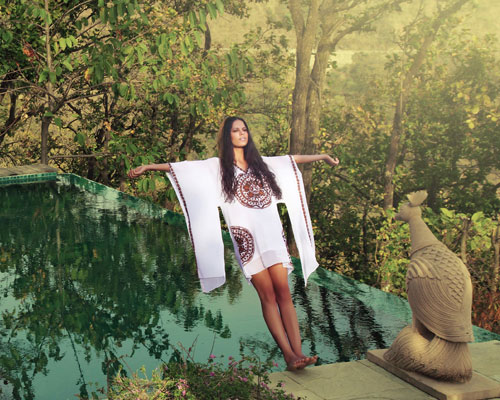
The luxury travel market reached US$219 billion last year / photo: Ananda in the Himalayas
A report by architectural firm WATG, Evolving Wealth: A New Paradigm for Luxury Travel, highlights the emergence of new wealth centres in Asia, the Middle East and Africa as key drivers of demand in the top-tier hospitality sector.
The data, revealed in August, shows that while the US and China remain dominant luxury seekers, with 80 per cent of China’s new wealthy consumers under 50 years old, other markets around the world are gaining momentum as well.
India’s affluent class is projected to grow from 60 million to 100 million by 2027 and the Gulf nations are forecast to see a 150 per cent increase in centi-millionaires by 2028. Southeast Asia and Africa are both registering a new wave of luxury travellers.
These shifts are setting the stage for fresh patterns of investment and development, prompting hospitality facilities to create designs and concepts that resonate with these consumers.
Generational drivers Using consumer research, the authors estimate the value of global luxury travel in 2024 was US$219 billion (€189 billion, £165 billion). The wider luxury sector, including goods and services, is worth US$1.54 trillion (€1.33 trillion, £1.16 trillion).
The demographics and behaviours of luxury consumers are changing, however, which WATG says serves as a reminder that a one-size-fits-all hospitality model won’t work.
Citing data by Cerulli Associates, WATG highlights that in the US alone, a US$84 trillion (€73 trillion, £63 trillion) intergenerational family wealth transfer is underway. This is accelerating the spending power among Gen X, millennials and Gen Z, who already represent a growing share of high-net-worth individuals.
While baby boomers still represent 80 per cent of luxury spending power, younger generations are catching up and they appear to prefer experiences over possessions. Overall, there’s a sway towards sustainability, personalisation and culture.
For example, 38 per cent of luxury seekers are willing to pay 30-50 per cent more for sustainable travel features. Millennials are leading the ‘bleisure’ trend, mixing business and leisure to create demand for long-stay flexible accommodation.
In addition, Gen Z is seeking self-discovery and transformation through immersive, non-traditional journeys – from deep-sea exploration to high-altitude treks.
Profiles of wealth To map this changing landscape, WATG categorises travellers into four groups:
• Aspiring luxury / mass affluent Financially secure people from dual-income households with assets between US$100,000 (€86,500, £75,300) to US$1 million (€865,000, £753,000). They represent 35 per cent of the luxury travel market and are expected to replace the middle class as growth drivers in the next decade. They selectively spend on premium experiences and are often brand-driven for validation.
• Millionaires next door These people live more frugally, below their means, despite their assets being worth US$1-5 million (€865,000-4.3 million, £753,000-3.8 million). They often reside in middle-class neighbourhoods and their purchasing priorities include quality and longevity as well as discreet luxury experiences. WATG says these consumers are key customers for well-designed premium hospitality with substance.
• High net worth individuals Have a wealth amounting to US$5-30 million (€4.3-26 million £3.8-22.6 million) and prefer top-tier, culturally rich experiences. Asia, the Middle East and North America are key growth markets of this group.
• Ultra-high net worth individuals With assets exceeding US$30m (€26 million, £22.6 million), this group represents less than 1 per cent of the global population but has a disproportionate effect on luxury markets. They demand rare, hyper-personalised and private experiences.
Top-end expansion As wealth and consumer behaviour evolve, supply is following suit, says WATG. Authors refer to data from real estate intelligence firm CoStar, which reports that global luxury room supply could grow from 1.6 million in 2023 to 1.9 million by 2030.
Meanwhile, the cost of luxury suites has risen 9.2 per cent worldwide, with high net worth individuals in the APAC region outspending all other regions on five-star hotels.
For investors and operators in spa and wellness, the implications are clear. With luxury consumers becoming younger, more globally dispersed and more demanding, facilities need to evolve beyond traditional models.
The winners will be those who deliver authentic, flexible, experience-rich stays, weaving together wellbeing, sustainability and cultural immersion.
Read more from this issue of Spa Business magazine
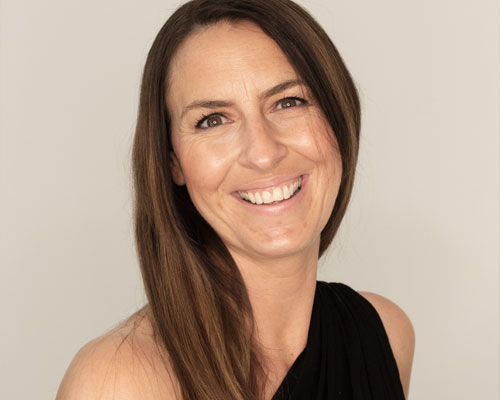
Spa people: Tim Fu
Leading a wellness architecture project in Slovenia that’s one of the first in the world to use AI in all stages of design
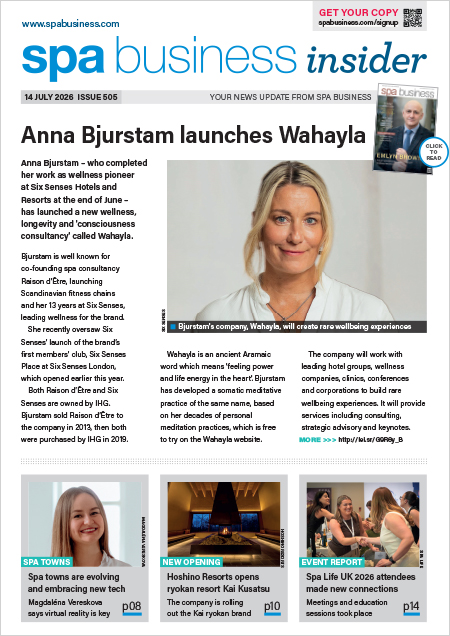
Spa people: Kayley Thomas
Lush is famous for its bath bombs and retail empire, but the co-founder of its day spa concept reveals why its 19 global spa facilities are so essential
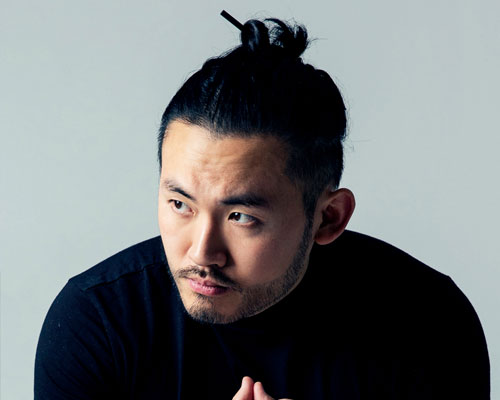
Spa people: Colin Mcilheney
We find out more about Colin Mcilheney, the man who created the ISPA US Spa Industry Study and has been analysing the sector’s performance ever since
News report: Map of luxury
New research by WATG shows emerging wealth hubs in India, the Gulf, Southeast Asia and Africa are reshaping luxury travel demand
Interview: Chris Norton
The CEO of Equinox Hotels tells Katie Barnes how the uber-cool brand is scaling its bold fusion of fitness, spa and luxury
Ask an expert...: Recovery
From cryo to compression to contrast bathing, Julie Cramer investigates why and how spas and resorts are integrating recovery packages
Research: Behind the boom
What are the hidden messages in the latest US study by ISPA? Colin Mcilheney digs beneath the surface
Research: Bigger picture
Rising salaries and shifting consumer expectations – two new surveys by the UKSA and GSG reveal the trends impacting UK spa operators
Sponsored: Lemi - Good sensations
Lemi’s Venice Head Spa combines the beauty of Italian design with fine-tuned technology to provide the ultimate top-to-toe treatment station for spas
Sponsored: G.M. COLLIN – Smooth operator
The new toner from G.M. Collin represents a ‘gold standard’ in leave-on liquid exfoliation for smooth and radiant results, without the irritation of a scrub
Sponsored: TechnoAlpin – Snow for all seasons
TechnoAlpin’s magical Snowroom installation at the Alpenrose resort brings the Austrian landscape and feel-good nature factor to its wellbeing experience
First person: Costa Blanca cure
Jane Kitchen visits Spain to compare and contrast two world-class medi-wellness clinics: well-established SHA and ambitious newcomer ZEM
Sponsored: Gharieni Group – Tech-powered recovery
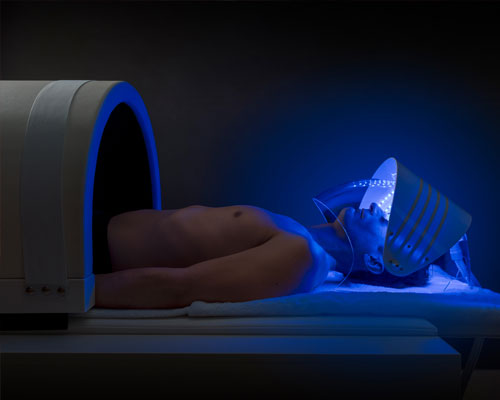
The new brand in the Gharieni Group portfolio – Metawell – is delivering what today’s wellness clients are seeking most – deep recovery and mind-body renewal
Sponsored: BC Softwear – Human touch
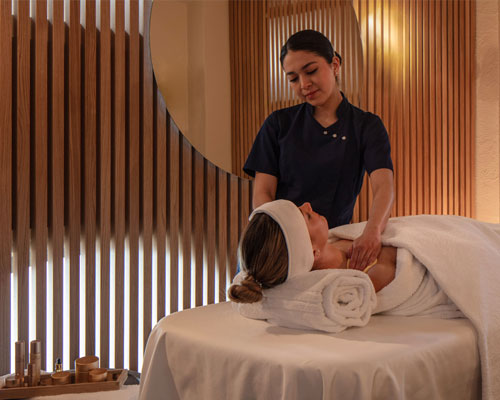
While touchless therapies are a positive addition to spas, nothing can replace the healing power of human touch, says Barbara Cooke
Sponsored: Yon-ka – A potent blend
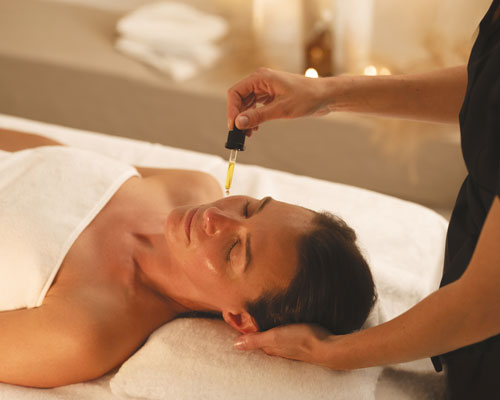
Yon-Ka’s new Serum Omega is a potent blend of Omega 3, 6 and 9 to target
dry, stressed-out skin and deliver a calm and nourishing client experience
Menu engineering: At your service
Self-playing gongs in Sweden, surfing therapy in Morocco and Ananda launches holistic diabetes management programme in India
Contrast therapy, based on the alternation of hot and cold rituals, has become one of the
most valued practices in the fields of wellness and recovery. [more...]
Emerging wealth hubs in India, the Gulf, Southeast Asia and Africa are reshaping global luxury travel demand, with younger generations redefining expectations, according to new research by WATG
The luxury travel market reached US$219 billion last year / photo: Ananda in the Himalayas
A report by architectural firm WATG, Evolving Wealth: A New Paradigm for Luxury Travel, highlights the emergence of new wealth centres in Asia, the Middle East and Africa as key drivers of demand in the top-tier hospitality sector.
The data, revealed in August, shows that while the US and China remain dominant luxury seekers, with 80 per cent of China’s new wealthy consumers under 50 years old, other markets around the world are gaining momentum as well.
India’s affluent class is projected to grow from 60 million to 100 million by 2027 and the Gulf nations are forecast to see a 150 per cent increase in centi-millionaires by 2028. Southeast Asia and Africa are both registering a new wave of luxury travellers.
These shifts are setting the stage for fresh patterns of investment and development, prompting hospitality facilities to create designs and concepts that resonate with these consumers.
Generational drivers Using consumer research, the authors estimate the value of global luxury travel in 2024 was US$219 billion (€189 billion, £165 billion). The wider luxury sector, including goods and services, is worth US$1.54 trillion (€1.33 trillion, £1.16 trillion).
The demographics and behaviours of luxury consumers are changing, however, which WATG says serves as a reminder that a one-size-fits-all hospitality model won’t work.
Citing data by Cerulli Associates, WATG highlights that in the US alone, a US$84 trillion (€73 trillion, £63 trillion) intergenerational family wealth transfer is underway. This is accelerating the spending power among Gen X, millennials and Gen Z, who already represent a growing share of high-net-worth individuals.
While baby boomers still represent 80 per cent of luxury spending power, younger generations are catching up and they appear to prefer experiences over possessions. Overall, there’s a sway towards sustainability, personalisation and culture.
For example, 38 per cent of luxury seekers are willing to pay 30-50 per cent more for sustainable travel features. Millennials are leading the ‘bleisure’ trend, mixing business and leisure to create demand for long-stay flexible accommodation.
In addition, Gen Z is seeking self-discovery and transformation through immersive, non-traditional journeys – from deep-sea exploration to high-altitude treks.
Profiles of wealth To map this changing landscape, WATG categorises travellers into four groups:
• Aspiring luxury / mass affluent Financially secure people from dual-income households with assets between US$100,000 (€86,500, £75,300) to US$1 million (€865,000, £753,000). They represent 35 per cent of the luxury travel market and are expected to replace the middle class as growth drivers in the next decade. They selectively spend on premium experiences and are often brand-driven for validation.
• Millionaires next door These people live more frugally, below their means, despite their assets being worth US$1-5 million (€865,000-4.3 million, £753,000-3.8 million). They often reside in middle-class neighbourhoods and their purchasing priorities include quality and longevity as well as discreet luxury experiences. WATG says these consumers are key customers for well-designed premium hospitality with substance.
• High net worth individuals Have a wealth amounting to US$5-30 million (€4.3-26 million £3.8-22.6 million) and prefer top-tier, culturally rich experiences. Asia, the Middle East and North America are key growth markets of this group.
• Ultra-high net worth individuals With assets exceeding US$30m (€26 million, £22.6 million), this group represents less than 1 per cent of the global population but has a disproportionate effect on luxury markets. They demand rare, hyper-personalised and private experiences.
Top-end expansion As wealth and consumer behaviour evolve, supply is following suit, says WATG. Authors refer to data from real estate intelligence firm CoStar, which reports that global luxury room supply could grow from 1.6 million in 2023 to 1.9 million by 2030.
Meanwhile, the cost of luxury suites has risen 9.2 per cent worldwide, with high net worth individuals in the APAC region outspending all other regions on five-star hotels.
For investors and operators in spa and wellness, the implications are clear. With luxury consumers becoming younger, more globally dispersed and more demanding, facilities need to evolve beyond traditional models.
The winners will be those who deliver authentic, flexible, experience-rich stays, weaving together wellbeing, sustainability and cultural immersion.
Read more from this issue of Spa Business magazine
Spa people: Tim Fu
Leading a wellness architecture project in Slovenia that’s one of the first in the world to use AI in all stages of design
Spa people: Kayley Thomas
Lush is famous for its bath bombs and retail empire, but the co-founder of its day spa concept reveals why its 19 global spa facilities are so essential
Spa people: Colin Mcilheney
We find out more about Colin Mcilheney, the man who created the ISPA US Spa Industry Study and has been analysing the sector’s performance ever since
News report: Map of luxury
New research by WATG shows emerging wealth hubs in India, the Gulf, Southeast Asia and Africa are reshaping luxury travel demand
Interview: Chris Norton
The CEO of Equinox Hotels tells Katie Barnes how the uber-cool brand is scaling its bold fusion of fitness, spa and luxury
Ask an expert...: Recovery
From cryo to compression to contrast bathing, Julie Cramer investigates why and how spas and resorts are integrating recovery packages
Research: Behind the boom
What are the hidden messages in the latest US study by ISPA? Colin Mcilheney digs beneath the surface
Research: Bigger picture
Rising salaries and shifting consumer expectations – two new surveys by the UKSA and GSG reveal the trends impacting UK spa operators
Sponsored: Lemi - Good sensations
Lemi’s Venice Head Spa combines the beauty of Italian design with fine-tuned technology to provide the ultimate top-to-toe treatment station for spas
Sponsored: G.M. COLLIN – Smooth operator
The new toner from G.M. Collin represents a ‘gold standard’ in leave-on liquid exfoliation for smooth and radiant results, without the irritation of a scrub
Sponsored: TechnoAlpin – Snow for all seasons
TechnoAlpin’s magical Snowroom installation at the Alpenrose resort brings the Austrian landscape and feel-good nature factor to its wellbeing experience
First person: Costa Blanca cure
Jane Kitchen visits Spain to compare and contrast two world-class medi-wellness clinics: well-established SHA and ambitious newcomer ZEM
Sponsored: Gharieni Group – Tech-powered recovery
The new brand in the Gharieni Group portfolio – Metawell – is delivering what today’s wellness clients are seeking most – deep recovery and mind-body renewal
Sponsored: BC Softwear – Human touch
While touchless therapies are a positive addition to spas, nothing can replace the healing power of human touch, says Barbara Cooke
Sponsored: Yon-ka – A potent blend
Yon-Ka’s new Serum Omega is a potent blend of Omega 3, 6 and 9 to target
dry, stressed-out skin and deliver a calm and nourishing client experience
Menu engineering: At your service
Self-playing gongs in Sweden, surfing therapy in Morocco and Ananda launches holistic diabetes management programme in India
Gran Hotel Taoro in northern Tenerife, Spain, has completed the final phase of its three-year
renovation with the debut of its Sandára Wellness Centre.
Hand and Stone Massage and Facial Spa, the spa business with more than 650 locations across
the US and Canada, has appointed franchise expert Carrie Walsh as CEO as the company plans
to expand.
Synergy – The Retreat Show, the global trade show for retreats, has launched a global research
initiative that will provide insights into the retreat sector from both consumer and industry
perspectives.
The Wellness Tourism Association (WTA) has published a non-regulatory global industry
framework designed to ensure the retreat market offers responsible experiences.
A new survey of UK and international spa practitioners shows that stress, burnout and
wellbeing concerns have caused one in three respondents to consider leaving the industry.
The UK's four Chief Medical Officers have published a refreshed edition of Physical activity
guidelines: UK Chief Medical Officers' report, updating the evidence that underpins the nation's
physical activity recommendations and placing greater emphasis on strength, balance, reducing
sedentary behaviour and, for the first time, supporting people taking weight loss medications.
Anna Bjurstam has left her role as Wellness Pioneer at Six Senses Hotels and Resorts and
launched a new wellness, longevity and “consciousness consultancy” called Wahayla.
Contrast therapy, based on the alternation of hot and cold rituals, has become one of the
most valued practices in the fields of wellness and recovery. [more...]