Yes! Send me the FREE digital editions of Spa Business and Spa Business insider magazines and the FREE weekly Spa Business and Spa Business insider ezines and breaking news alerts!
What is the value of an authentic spa treatment and who decides, the guest or the
operator? Andrew and Karin Gibson take to the hammams of Istanbul to investigate
Cağaloğlu Hamami has been in continuous use since 1741 / photo: Cagaloglu Hamami
Sense of place, that alluring concept of offering guests a genuinely traditional experience, steeped in local culture. Something many of us in the industry place great value on, but do we deliver? And does it have to be authentic for guests to appreciate the experience they receive?
Istanbul has over 300 hammams so this should be the place to experience a true Turkish bath and over a week, my wife Karin and I tried as many different forms of the bathing ritual in Istanbul as our skin could tolerate. We learned a lot and came away with a few surprises.
We tried public hammams, some of which have been in continuous service for hundreds of years, as well as luxury hotel hammams, to see if the sense of place remained in newer establishments.
We interviewed seven spa directors – all of whom were Turkish and had grown up with hammams as part of their culture. We spoke with hammam constructors. All had different ideas of what parts of the hammam should be heated, how the water should drain, what the shape of the slab should be and whether there should even be one.
what is an authentic hammam? What we call a Turkish bath or hammam is the result of thousands of years of tradition and evolution. It’s been influenced by the culture and religion of the people who’ve enjoyed it. Istanbul was once a Greek city with Greek baths. Then later, Roman, Ottoman and now Turkish. The bathhouses have remained a constant feature, as public establishments and private hammams still exist in the palaces of the wealthy. Today, many of Istanbul’s best hammams are located in its luxury hotels.
There are no official standards in Turkey for what constitutes a hammam experience. The facilities we visited varied greatly in size and use. Some were built from red brick, one had plastered walls and others featured stunning carved marble. The most ancient had the most modern online booking system. The one frequented only by locals featured a modern design that deviated the most from traditional styles.
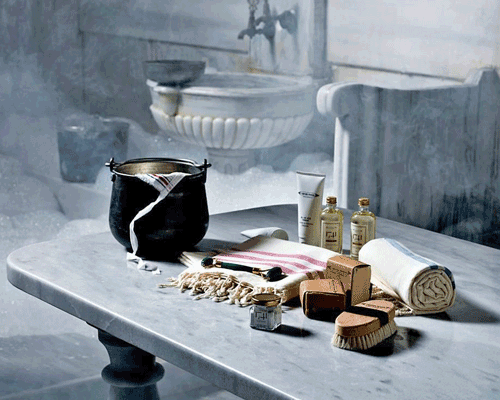
That said, the core treatment remained relatively consistent and was performed at every establishment. It includes a whole body scrub with an abrasive wet mitten, called a kese, to remove dead skin. An abundance of soap is then applied, sometimes in combination with a massage, before copious amounts of suds are heaped over the bather only to be rinsed off with numerous bowls of water. Shampooing of the hair is often the final part of the ritual.
Little touches, big differences Experiencing so many treatments back to back, highlighted subtle, yet significant variations. In larger hammams, the bather moved so the scrub was given by the tap and basin while the soap and massage was done on the slab. Some hammams had side rooms for the shampoo and final rinse.
In hotels, the hammam was used for the entire bath and sometimes the guest remained on the slab throughout. All of them, including Mandarin Oriental and Raffles, offered outstanding amenities, changing and relaxation facilities.
There were differences in the temperature of the water. In some rituals, only warm water was used while others alternated between hot and cold.
Attention to detail stood out too. At Çukurcuma Hamami, built in the early 1800s, antique paraphernalia such as wooden clogs with mother-of-pearl inlays, featured in decorative displays. At Peninsula, robes were made of peshtemal fabric, which is used in traditional hammam towels and the hammam featured local Marmara marble with its characteristic stripes.
Spa Soul, which operates the spa at the Ritz-Carlton, strives to tailor its hammam rituals by offering a choice of scrub mittens for different levels of abrasion, various soaps made by a local artisan and a selection of oils, skincare and bathing products.
At the Four Seasons, our welcome tea was served in a beautiful handmade cup with an olive wood saucer, an extra towel was placed on the slab for comfort and a soft cloth was used to apply the soap while our eyes were gently covered to protect them during the bath. The entire experience was a seamless and pampering one.
Local therapists are key Male hammam therapists are known as tellaks and females are called natirs. The trade can follow the family line for generations. Much was said about the need for local therapists for authenticity. This can make recruitment challenging, with some operators opting to recruit from Indonesia. Local therapists may also lead to potential language barriers but Hürrem Sultan Hamami, one of the oldest facilities, bypasses this by guiding bathers through each step of the ritual by holding their hand.
At Four Seasons, a third-generation natir called Pinar expertly synchronised our couple’s treatment, thoughtfully putting our hands together while we lay at the mercy of the kese. At Six Senses, it’s clear why Laleh, a sixth-generation natir, has a loyal following. Her attention to detail is meticulous and no one leaves without booking their next bath.
sought after experience It was clear to us that hammams are essential to people in Istanbul, visitors and locals alike. All operators said their business was limited by their facilities, not by lack of demand. The public hammams are very popular – busy in the week and usually full at weekends. Çağaloğlu Hamami, close to Hagia Sophia, has been in continuous use since 1741 and its experience is intense and true to the core.
The hotel hammams are also busy. When we asked the spa directors what extra facilities they might like, they all said they’d choose to add another hammam because they provide such consistent business and in many hotels, hammam rituals generate up to 55 per cent of spa revenues.
Upselling was used – adding massages, clay masks or wraps to the bath. Retailing included a variety of keses, soaps and oils. The spa at Ritz-Carlton specialised in building rituals around the hammam and connecting these to retail.
Who are the customers? Ancient public hammams are favoured by visitors. Much like bazaars and Turkish coffee, they’ve become a not-to-be-missed experience. Locals on the other hand seek the privacy and luxury of the newer, smaller hammams in top-end hotels.
There’s a regular clientele in all locations and in one hotel, 95 per cent of hammam treatments are taken by residents, while people who live nearby often book last minute, after work and come back habitually.
We heard stories of how traditional hammams are places to socialise and that bathers stay for hours.
This isn’t great from a revenue perspective, so public hammams encourage a fast flow of guests from entry to exit, while hotels offer a leisurely experience with pre-treatment wet facilities and post-treatment relaxation rooms. This may be another reason locals favour hotel hammams.
What makes a hammam authentic is almost impossible to say. One spa director called the hammam a ‘professional bath’ and many associated it with being scrubbed by their mothers as children.
It’s a very intimate affair and perhaps newer hotel hammams offer the most genuine emotional experience, with their cleansing journeys in a sanctuary away from everyday life.
While public hammams with their traditional buildings and facilities, may have lost some of their local soul, the steam, the heat and being scrubbed among strangers still offers a uniquely Turkish experience.
As visitors to Istanbul, we loved the experience of the public hammams, although bathing in the hotel hammams offered a five-star Turkish treatment wrapped in a more international spa experience and actually gave us a more deeply relaxing sensation.
HAMMAMS VISITED
Public hammams
• Cağaloğlu Hamami
• Çukurcuma Hamami
• Hürrem Sultan Hamami
Hotel hammams
• Four Seasons Bosphorus
• Mandarin Oriental Bosphorus
• Peninsula Istanbul
• Raffles Istanbul at the Zorlu Center
• Ritz-Carlton Istanbul
• Six Senses Kocataş Mansions
Be authentic
Mandatory
Create a genuine, local treatment
• A basis of tradition and culture
• A presence of that tradition and culture that still exists
• A standard process for everyone providing the treatment
Beneficial
Make replication difficult
• Local therapists with a generational history of the treatment
• Buildings have historical significance and are still in use
• Local products, such as soaps and oils are used in the services
Read more from this issue of Spa Business magazine
View contents of Spa Business 2024 issue 2
Editor's letter: Cool customers
Spas must adapt to unlock new avenues for growth while mitigating the impact of climate change, says Katie Barnes
Top Team: Therme Group
With its focus on affordable wellness, Therme Group is expanding its social spa concept globally. Jane Kitchen speaks to the people behind the brand
Interview: Susie Ellis
The chair of the Global Wellness Summit has been fundamental in defining the industry and continues to drive it forward
Sponsored: Comfort Zone: Powered by nature
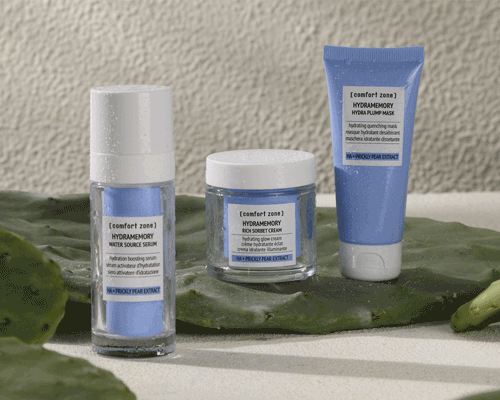
B Corp-certified skincare company Comfort Zone has added a new body lotion to its Hydramemory range, which is inspired by the water-retaining powers of desert plants
Interview: Roger Tempest
The owner of Broughton Sanctuary in the UK is transforming the 900-year-old estate into a retreat-based business
Sponsored: Lemi: touched by tech
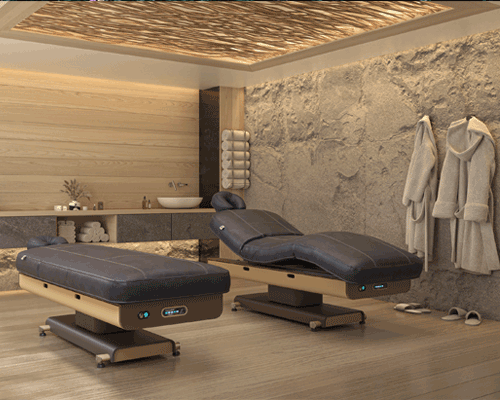
Italian spa equipment supplier, Lemi, is embracing the trend towards tech-driven wellness treatments, while also driving sustainable industry practices
First person: The real deal?
What’s the value of an authentic treatment? Andrew and Karin Gibson take to the hammams of Istanbul to find out
Wellness: Full recovery
SIRO is staking a claim to be the world’s first fitness and recovery hotel brand and is planning 100 properties. Lisa Starr visits the first site in Dubai
Sponsored: Gharieni: Defining the well universe
The launch of Gharieni’s new touchless technology brand
Metawell is perfectly aligned with the future direction of spa
and wellness, says the company’s CEO, Sammy Gharieni
Software: Member benefits
Up to a third of spa-goers now have a spa membership. What support can software systems offer?
Sponsored: Myrtha: Herbal Sauna
Pools and wellness facilities expert, Myrtha’s new Herbal Sauna, brings an innovative and therapeutic experience to the spa, says Stefano Cattaneo
The MSpa Oslo series is a perennial bestseller in global markets. With innovative
engineering and premium performance, this completely portable spa line-up is expertly
designed to meet the needs of customers worldwide. [more...]
What is the value of an authentic spa treatment and who decides, the guest or the
operator? Andrew and Karin Gibson take to the hammams of Istanbul to investigate
Cağaloğlu Hamami has been in continuous use since 1741 / photo: Cagaloglu Hamami
Sense of place, that alluring concept of offering guests a genuinely traditional experience, steeped in local culture. Something many of us in the industry place great value on, but do we deliver? And does it have to be authentic for guests to appreciate the experience they receive?
Istanbul has over 300 hammams so this should be the place to experience a true Turkish bath and over a week, my wife Karin and I tried as many different forms of the bathing ritual in Istanbul as our skin could tolerate. We learned a lot and came away with a few surprises.
We tried public hammams, some of which have been in continuous service for hundreds of years, as well as luxury hotel hammams, to see if the sense of place remained in newer establishments.
We interviewed seven spa directors – all of whom were Turkish and had grown up with hammams as part of their culture. We spoke with hammam constructors. All had different ideas of what parts of the hammam should be heated, how the water should drain, what the shape of the slab should be and whether there should even be one.
what is an authentic hammam? What we call a Turkish bath or hammam is the result of thousands of years of tradition and evolution. It’s been influenced by the culture and religion of the people who’ve enjoyed it. Istanbul was once a Greek city with Greek baths. Then later, Roman, Ottoman and now Turkish. The bathhouses have remained a constant feature, as public establishments and private hammams still exist in the palaces of the wealthy. Today, many of Istanbul’s best hammams are located in its luxury hotels.
There are no official standards in Turkey for what constitutes a hammam experience. The facilities we visited varied greatly in size and use. Some were built from red brick, one had plastered walls and others featured stunning carved marble. The most ancient had the most modern online booking system. The one frequented only by locals featured a modern design that deviated the most from traditional styles.
That said, the core treatment remained relatively consistent and was performed at every establishment. It includes a whole body scrub with an abrasive wet mitten, called a kese, to remove dead skin. An abundance of soap is then applied, sometimes in combination with a massage, before copious amounts of suds are heaped over the bather only to be rinsed off with numerous bowls of water. Shampooing of the hair is often the final part of the ritual.
Little touches, big differences Experiencing so many treatments back to back, highlighted subtle, yet significant variations. In larger hammams, the bather moved so the scrub was given by the tap and basin while the soap and massage was done on the slab. Some hammams had side rooms for the shampoo and final rinse.
In hotels, the hammam was used for the entire bath and sometimes the guest remained on the slab throughout. All of them, including Mandarin Oriental and Raffles, offered outstanding amenities, changing and relaxation facilities.
There were differences in the temperature of the water. In some rituals, only warm water was used while others alternated between hot and cold.
Attention to detail stood out too. At Çukurcuma Hamami, built in the early 1800s, antique paraphernalia such as wooden clogs with mother-of-pearl inlays, featured in decorative displays. At Peninsula, robes were made of peshtemal fabric, which is used in traditional hammam towels and the hammam featured local Marmara marble with its characteristic stripes.
Spa Soul, which operates the spa at the Ritz-Carlton, strives to tailor its hammam rituals by offering a choice of scrub mittens for different levels of abrasion, various soaps made by a local artisan and a selection of oils, skincare and bathing products.
At the Four Seasons, our welcome tea was served in a beautiful handmade cup with an olive wood saucer, an extra towel was placed on the slab for comfort and a soft cloth was used to apply the soap while our eyes were gently covered to protect them during the bath. The entire experience was a seamless and pampering one.
Local therapists are key Male hammam therapists are known as tellaks and females are called natirs. The trade can follow the family line for generations. Much was said about the need for local therapists for authenticity. This can make recruitment challenging, with some operators opting to recruit from Indonesia. Local therapists may also lead to potential language barriers but Hürrem Sultan Hamami, one of the oldest facilities, bypasses this by guiding bathers through each step of the ritual by holding their hand.
At Four Seasons, a third-generation natir called Pinar expertly synchronised our couple’s treatment, thoughtfully putting our hands together while we lay at the mercy of the kese. At Six Senses, it’s clear why Laleh, a sixth-generation natir, has a loyal following. Her attention to detail is meticulous and no one leaves without booking their next bath.
sought after experience It was clear to us that hammams are essential to people in Istanbul, visitors and locals alike. All operators said their business was limited by their facilities, not by lack of demand. The public hammams are very popular – busy in the week and usually full at weekends. Çağaloğlu Hamami, close to Hagia Sophia, has been in continuous use since 1741 and its experience is intense and true to the core.
The hotel hammams are also busy. When we asked the spa directors what extra facilities they might like, they all said they’d choose to add another hammam because they provide such consistent business and in many hotels, hammam rituals generate up to 55 per cent of spa revenues.
Upselling was used – adding massages, clay masks or wraps to the bath. Retailing included a variety of keses, soaps and oils. The spa at Ritz-Carlton specialised in building rituals around the hammam and connecting these to retail.
Who are the customers? Ancient public hammams are favoured by visitors. Much like bazaars and Turkish coffee, they’ve become a not-to-be-missed experience. Locals on the other hand seek the privacy and luxury of the newer, smaller hammams in top-end hotels.
There’s a regular clientele in all locations and in one hotel, 95 per cent of hammam treatments are taken by residents, while people who live nearby often book last minute, after work and come back habitually.
We heard stories of how traditional hammams are places to socialise and that bathers stay for hours.
This isn’t great from a revenue perspective, so public hammams encourage a fast flow of guests from entry to exit, while hotels offer a leisurely experience with pre-treatment wet facilities and post-treatment relaxation rooms. This may be another reason locals favour hotel hammams.
What makes a hammam authentic is almost impossible to say. One spa director called the hammam a ‘professional bath’ and many associated it with being scrubbed by their mothers as children.
It’s a very intimate affair and perhaps newer hotel hammams offer the most genuine emotional experience, with their cleansing journeys in a sanctuary away from everyday life.
While public hammams with their traditional buildings and facilities, may have lost some of their local soul, the steam, the heat and being scrubbed among strangers still offers a uniquely Turkish experience.
As visitors to Istanbul, we loved the experience of the public hammams, although bathing in the hotel hammams offered a five-star Turkish treatment wrapped in a more international spa experience and actually gave us a more deeply relaxing sensation.
HAMMAMS VISITED
Public hammams
• Cağaloğlu Hamami
• Çukurcuma Hamami
• Hürrem Sultan Hamami
Hotel hammams
• Four Seasons Bosphorus
• Mandarin Oriental Bosphorus
• Peninsula Istanbul
• Raffles Istanbul at the Zorlu Center
• Ritz-Carlton Istanbul
• Six Senses Kocataş Mansions
Be authentic
Mandatory
Create a genuine, local treatment
• A basis of tradition and culture
• A presence of that tradition and culture that still exists
• A standard process for everyone providing the treatment
Beneficial
Make replication difficult
• Local therapists with a generational history of the treatment
• Buildings have historical significance and are still in use
• Local products, such as soaps and oils are used in the services
Read more from this issue of Spa Business magazine
View contents of Spa Business 2024 issue 2
Editor's letter: Cool customers
Spas must adapt to unlock new avenues for growth while mitigating the impact of climate change, says Katie Barnes
Top Team: Therme Group
With its focus on affordable wellness, Therme Group is expanding its social spa concept globally. Jane Kitchen speaks to the people behind the brand
Interview: Susie Ellis
The chair of the Global Wellness Summit has been fundamental in defining the industry and continues to drive it forward
Sponsored: Comfort Zone: Powered by nature
B Corp-certified skincare company Comfort Zone has added a new body lotion to its Hydramemory range, which is inspired by the water-retaining powers of desert plants
Interview: Roger Tempest
The owner of Broughton Sanctuary in the UK is transforming the 900-year-old estate into a retreat-based business
Sponsored: Lemi: touched by tech
Italian spa equipment supplier, Lemi, is embracing the trend towards tech-driven wellness treatments, while also driving sustainable industry practices
First person: The real deal?
What’s the value of an authentic treatment? Andrew and Karin Gibson take to the hammams of Istanbul to find out
Wellness: Full recovery
SIRO is staking a claim to be the world’s first fitness and recovery hotel brand and is planning 100 properties. Lisa Starr visits the first site in Dubai
Sponsored: Gharieni: Defining the well universe
The launch of Gharieni’s new touchless technology brand
Metawell is perfectly aligned with the future direction of spa
and wellness, says the company’s CEO, Sammy Gharieni
Software: Member benefits
Up to a third of spa-goers now have a spa membership. What support can software systems offer?
Sponsored: Myrtha: Herbal Sauna
Pools and wellness facilities expert, Myrtha’s new Herbal Sauna, brings an innovative and therapeutic experience to the spa, says Stefano Cattaneo
Gran Hotel Taoro in northern Tenerife, Spain, has completed the final phase of its three-year
renovation with the debut of its Sandára Wellness Centre.
Hand and Stone Massage and Facial Spa, the spa business with more than 650 locations across
the US and Canada, has appointed franchise expert Carrie Walsh as CEO as the company plans
to expand.
Synergy – The Retreat Show, the global trade show for retreats, has launched a global research
initiative that will provide insights into the retreat sector from both consumer and industry
perspectives.
The Wellness Tourism Association (WTA) has published a non-regulatory global industry
framework designed to ensure the retreat market offers responsible experiences.
A new survey of UK and international spa practitioners shows that stress, burnout and
wellbeing concerns have caused one in three respondents to consider leaving the industry.
The UK's four Chief Medical Officers have published a refreshed edition of Physical activity
guidelines: UK Chief Medical Officers' report, updating the evidence that underpins the nation's
physical activity recommendations and placing greater emphasis on strength, balance, reducing
sedentary behaviour and, for the first time, supporting people taking weight loss medications.
Anna Bjurstam has left her role as Wellness Pioneer at Six Senses Hotels and Resorts and
launched a new wellness, longevity and “consciousness consultancy” called Wahayla.
Fairmont Cheshire, The Mere, has opened today (10 July) in the Northwest of England
with a
1,715sq m Fairmont Spa that has been designed using a ‘Wellness without Walls’
concept.
The MSpa Oslo series is a perennial bestseller in global markets. With innovative
engineering and premium performance, this completely portable spa line-up is expertly
designed to meet the needs of customers worldwide. [more...]