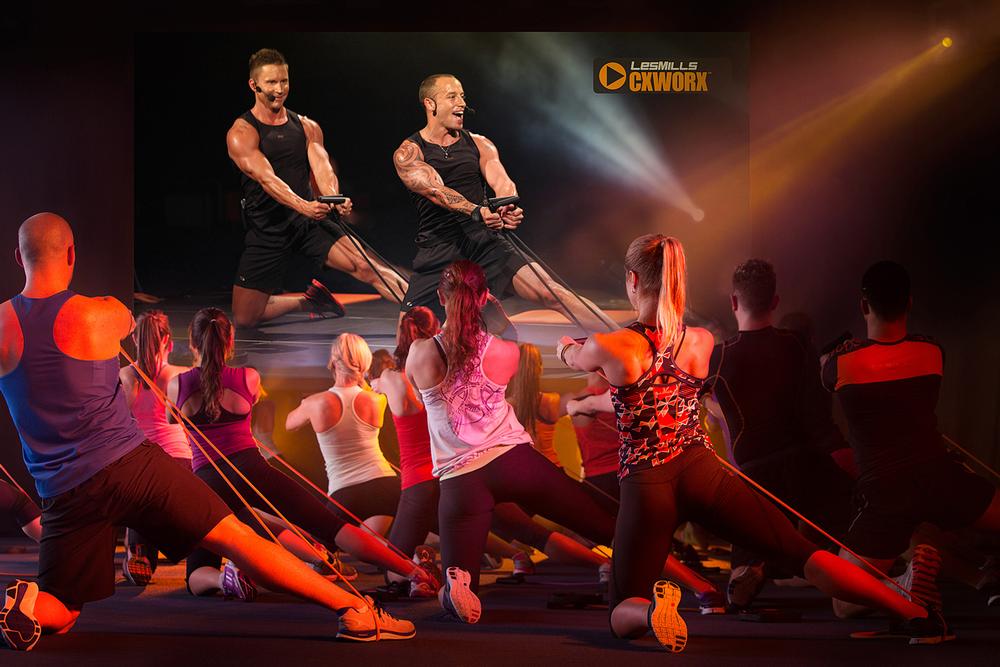
Virtual group exercise classes could be an ideal solution for spas which want to spice up their fitness offering with minimal effort. Rasmus Ingerslev takes a look at this growing trend
By Rasmus Ingerslev | Published in Spa Business 2014 issue 1
Virtual exercise classes is a trend that’s been picked up fast by health club and fitness operators and it’s one that could easily be implemented in spas. But what is it exactly: how can it be used, how does it work and what is its value?
A strong logic Let’s start with the why. Imagine investing in 30 treadmills and turning them off for 80 to 90 per cent of the day. It wouldn’t make sense. Yet this is what’s happening in group exercise studios in spas which are not used the majority of the time. Obviously offering group exercise classes is an extra cost to take on if there aren’t enough potential customers. This is where virtual classes come in. They can add value to a spa’s fitness offering throughout the day – guests can do the classes they want, when they want, while operators optimise the use of the space.
Surveys have suggested around two-thirds of new health club customers have been influenced take up a membership because virtual classes are available throughout the day. And there’s no reason why they wouldn’t be a draw for spa visitors too – whether regular customers or one-off visitors who want to maintain their health while travelling.
“Utilising dead space by offering classes all day will no doubt sell additional memberships for us and add value without detracting from the quantity or quality of our live class experience,” says David Patchell-Evans, CEO and founder of GoodLife Fitness in Canada, which will have virtual classes in 59 of its 300 sites by the end of the year. “We will ultimately add something like 25,000 virtual classes a week across all clubs, at a minimal cost,” he add.
Other chains already trialling or running virtual classes include Anytime Fitness, Health City, Holmes Place and Virgin Active.
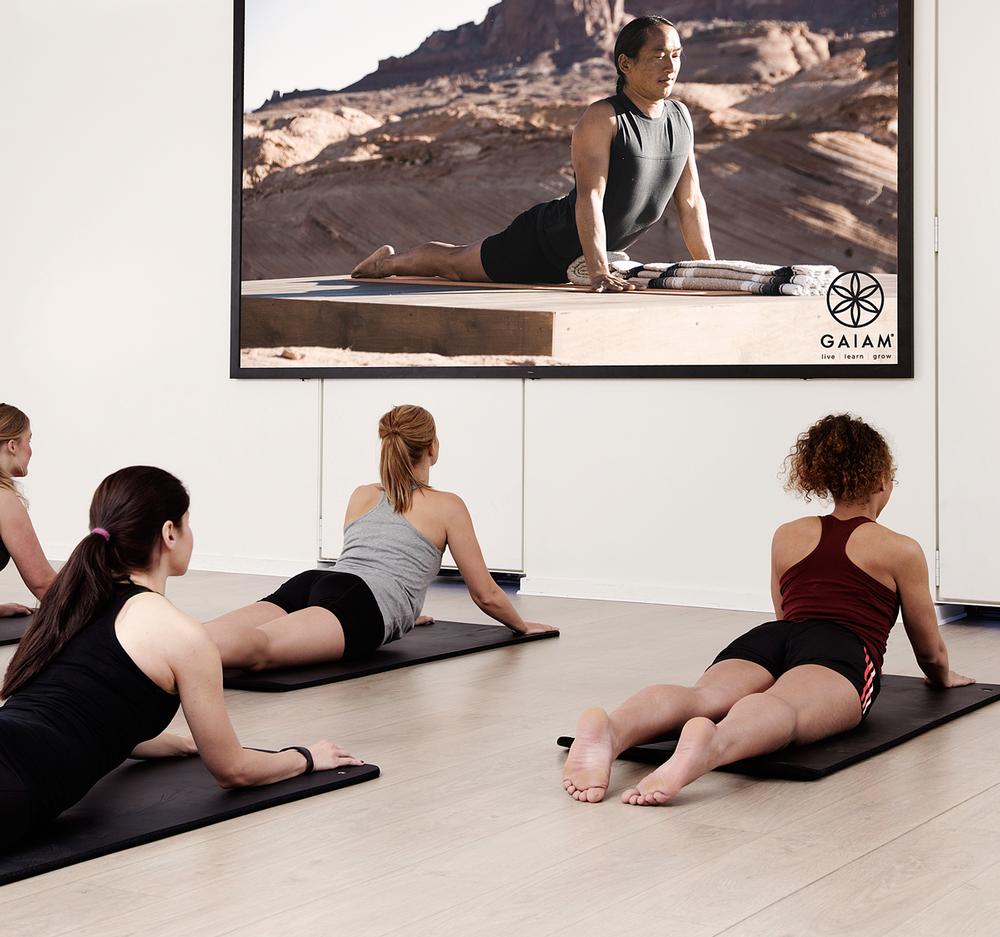
How does it work? The set-up for a virtual class is very straightforward: you need a screen, a projector and a computer connected to the internet that stores and runs your classes. The sound can run through existing audio systems.
Current platform providers include Fitness On Request, Fitness On Demand, MyRide (cycling only), Virtual Instructor (from Cyber Coach) and Wexer Virtual. Most allow operators to either pre-schedule classes or let customers choose classes on-demand or offer a combination of the two.
Installing a virtual class platform typically costs US$3,000-US$20,000 (€2,350-€15,600, £2,000-£13,000). There’s also a monthly licence fee that usually ranges from US$100–US$300 (€74-€221, £61-£181).
Substitution or addition? Judging from user feedback, group exercise instructors should not feel threatened about being replaced by a virtual trainer. Fewer than 10 per cent of participants say they prefer video-based instruction to a live instructor, and most choose virtual classes simply because it allows them to participate in a class when no live options are available. Indeed, statistics show that the majority of those who participate in virtual classes also participate in instructor-led classes, suggesting that people will do live classes when they can, and virtual classes at other times.
Based on available data, the average member in a health club uses a virtual class once or twice a week, typically a 30- to 45-minute beginner or intermediate class. Longer and/or more advanced classes are available but less used, suggesting that virtual classes appeal predominantly to people who are either new to group exercise or who need flexibility to fit them in.
Virtual classes are already being used as stand-alone solutions in budget fitness clubs such as The Gym Group and Xercise4Less in the UK where the model doesn’t allow for live classes. And this would probably make the most sense for spas where fitness isn’t necessarily the staple service. However, where the fitness offering is more substantial, operators are using virtual classes as ‘feeders’ to ultimately drive traffic to live classes.
Zumba® Fitness has recently started to offer Basic Steps videos to virtual content platforms as the videos allow people to learn the steps in preparation for a live class with an instructor. “Our decision to offer Basic Steps videos on virtual content platforms is consistent with our mission to make our instructors successful,” says Alberto Perlman, the founder and CEO of Zumba Fitness.
Virtual class platforms can also be used to enhance live classes. Virtual Active features videos of iconic trails, roads, cities and landscapes to help indoor exercise such as group cycling into an outdoor adventure.
In addition, a virtual instructor could help support a live instructor struggling to focus on individuals in a large beginners group.
Additional considerations A significant consideration – besides choosing a system that’s stable, well supported and easy to use – is content. People will want high quality classes, great instructors and variety in level, duration and type of classes. For that very reason, Wexer is now working with 15 content providers including Gaiam, Less Mills, YogaFit and KettleWorx.
Some would argue that, for health and safety reasons, beginners should not do a class without a live instructor present. However, Fresh Fitness Denmark has offered virtual classes for more than two years, without a single injury reported. It’s not uncommon for people to be left unsupervised in cardio areas or on strength machines in most fitness studios. So why shouldn’t that also be acceptable in a studio where, thanks to virtual classes, people are in fact also receiving guidance from top instructors?
This calibre of trainer is another notable selling point: virtual classes give a large number of people access to world-class instruction and a huge variety of trainers.
Future trends Given their ability to generate value from dead space, virtual classes are likely to be picked up by more operators going forward. The fact that major brands such as Zumba and Les Mills have entered the virtual arena suggests that it’s on the brink of rapid growth. Phillip Mills, CEO of Les Mills International says: “Originally I was sceptical, but having trialled a virtual product at Les Mills I’m now a convert. Offering members the convenience of receiving a group exercise experience at any time of the day is compelling. It’s a massive way to add value as facilities increasingly become 24/7 operations.”
The virtual class system is a customer-focused offering that mirrors those in other industries – innovations such as Netflix, which allows customers to watch what they want, when they want to watch it, and which is challenging the traditional cable TV providers that force viewers to follow their programme schedules. Similarly, virtual classes allow members to do the classes they want, when they want to do them. Operators can therefore meet, and indeed even exceed, customer expectations by adding hundreds of extra exercise classes every week – all for the price of a couple of treadmills. Not that it’s an either/or question, but it does put it into perspective.
Read more from this issue of Spa Business magazine
Interview: Paul Scialla
Delos founder talks to Katie Barnes about creating the first set of wellbeing building standards and securing investment from Leonardo DiCaprio
Ask an expert: Detox
Done well, detox presents numerous business opportunities – but what's the best approach to take and what treatments should be avoided?
Business analysis: Spa inclusive
Some resorts are enticing clients with free, daily spa treatments. Neena Dhillon takes a look at the business model
Wellness tourism: Time to shine
Sophie Benge reports on wellness tourism in central and eastern Europe – a market that's ripe for development
Wellness research: Culture king
The Futures Company provides an insightful overview on how different cultures view health and wellbeing
Hotel spa research: Top division
In the hotel sector, spa revenue is growing faster than other revenue streams, according to a new PKF report. Andrea Foster analyses the findings
Le Atelier by C.O.D.E. doesn't offer a standard bespoke service, it provides a highly
customised approach to designing massage beds and loungers in high-end wellness
environments. [more...]
Virtual group exercise classes could be an ideal solution for spas which want to spice up their fitness offering with minimal effort. Rasmus Ingerslev takes a look at this growing trend
By Rasmus Ingerslev | Published in Spa Business 2014 issue 1
Virtual exercise classes is a trend that’s been picked up fast by health club and fitness operators and it’s one that could easily be implemented in spas. But what is it exactly: how can it be used, how does it work and what is its value?
A strong logic Let’s start with the why. Imagine investing in 30 treadmills and turning them off for 80 to 90 per cent of the day. It wouldn’t make sense. Yet this is what’s happening in group exercise studios in spas which are not used the majority of the time. Obviously offering group exercise classes is an extra cost to take on if there aren’t enough potential customers. This is where virtual classes come in. They can add value to a spa’s fitness offering throughout the day – guests can do the classes they want, when they want, while operators optimise the use of the space.
Surveys have suggested around two-thirds of new health club customers have been influenced take up a membership because virtual classes are available throughout the day. And there’s no reason why they wouldn’t be a draw for spa visitors too – whether regular customers or one-off visitors who want to maintain their health while travelling.
“Utilising dead space by offering classes all day will no doubt sell additional memberships for us and add value without detracting from the quantity or quality of our live class experience,” says David Patchell-Evans, CEO and founder of GoodLife Fitness in Canada, which will have virtual classes in 59 of its 300 sites by the end of the year. “We will ultimately add something like 25,000 virtual classes a week across all clubs, at a minimal cost,” he add.
Other chains already trialling or running virtual classes include Anytime Fitness, Health City, Holmes Place and Virgin Active.
How does it work? The set-up for a virtual class is very straightforward: you need a screen, a projector and a computer connected to the internet that stores and runs your classes. The sound can run through existing audio systems.
Current platform providers include Fitness On Request, Fitness On Demand, MyRide (cycling only), Virtual Instructor (from Cyber Coach) and Wexer Virtual. Most allow operators to either pre-schedule classes or let customers choose classes on-demand or offer a combination of the two.
Installing a virtual class platform typically costs US$3,000-US$20,000 (€2,350-€15,600, £2,000-£13,000). There’s also a monthly licence fee that usually ranges from US$100–US$300 (€74-€221, £61-£181).
Substitution or addition? Judging from user feedback, group exercise instructors should not feel threatened about being replaced by a virtual trainer. Fewer than 10 per cent of participants say they prefer video-based instruction to a live instructor, and most choose virtual classes simply because it allows them to participate in a class when no live options are available. Indeed, statistics show that the majority of those who participate in virtual classes also participate in instructor-led classes, suggesting that people will do live classes when they can, and virtual classes at other times.
Based on available data, the average member in a health club uses a virtual class once or twice a week, typically a 30- to 45-minute beginner or intermediate class. Longer and/or more advanced classes are available but less used, suggesting that virtual classes appeal predominantly to people who are either new to group exercise or who need flexibility to fit them in.
Virtual classes are already being used as stand-alone solutions in budget fitness clubs such as The Gym Group and Xercise4Less in the UK where the model doesn’t allow for live classes. And this would probably make the most sense for spas where fitness isn’t necessarily the staple service. However, where the fitness offering is more substantial, operators are using virtual classes as ‘feeders’ to ultimately drive traffic to live classes.
Zumba® Fitness has recently started to offer Basic Steps videos to virtual content platforms as the videos allow people to learn the steps in preparation for a live class with an instructor. “Our decision to offer Basic Steps videos on virtual content platforms is consistent with our mission to make our instructors successful,” says Alberto Perlman, the founder and CEO of Zumba Fitness.
Virtual class platforms can also be used to enhance live classes. Virtual Active features videos of iconic trails, roads, cities and landscapes to help indoor exercise such as group cycling into an outdoor adventure.
In addition, a virtual instructor could help support a live instructor struggling to focus on individuals in a large beginners group.
Additional considerations A significant consideration – besides choosing a system that’s stable, well supported and easy to use – is content. People will want high quality classes, great instructors and variety in level, duration and type of classes. For that very reason, Wexer is now working with 15 content providers including Gaiam, Less Mills, YogaFit and KettleWorx.
Some would argue that, for health and safety reasons, beginners should not do a class without a live instructor present. However, Fresh Fitness Denmark has offered virtual classes for more than two years, without a single injury reported. It’s not uncommon for people to be left unsupervised in cardio areas or on strength machines in most fitness studios. So why shouldn’t that also be acceptable in a studio where, thanks to virtual classes, people are in fact also receiving guidance from top instructors?
This calibre of trainer is another notable selling point: virtual classes give a large number of people access to world-class instruction and a huge variety of trainers.
Future trends Given their ability to generate value from dead space, virtual classes are likely to be picked up by more operators going forward. The fact that major brands such as Zumba and Les Mills have entered the virtual arena suggests that it’s on the brink of rapid growth. Phillip Mills, CEO of Les Mills International says: “Originally I was sceptical, but having trialled a virtual product at Les Mills I’m now a convert. Offering members the convenience of receiving a group exercise experience at any time of the day is compelling. It’s a massive way to add value as facilities increasingly become 24/7 operations.”
The virtual class system is a customer-focused offering that mirrors those in other industries – innovations such as Netflix, which allows customers to watch what they want, when they want to watch it, and which is challenging the traditional cable TV providers that force viewers to follow their programme schedules. Similarly, virtual classes allow members to do the classes they want, when they want to do them. Operators can therefore meet, and indeed even exceed, customer expectations by adding hundreds of extra exercise classes every week – all for the price of a couple of treadmills. Not that it’s an either/or question, but it does put it into perspective.
Read more from this issue of Spa Business magazine
Interview: Paul Scialla
Delos founder talks to Katie Barnes about creating the first set of wellbeing building standards and securing investment from Leonardo DiCaprio
Ask an expert: Detox
Done well, detox presents numerous business opportunities – but what's the best approach to take and what treatments should be avoided?
Business analysis: Spa inclusive
Some resorts are enticing clients with free, daily spa treatments. Neena Dhillon takes a look at the business model
Wellness tourism: Time to shine
Sophie Benge reports on wellness tourism in central and eastern Europe – a market that's ripe for development
Wellness research: Culture king
The Futures Company provides an insightful overview on how different cultures view health and wellbeing
Hotel spa research: Top division
In the hotel sector, spa revenue is growing faster than other revenue streams, according to a new PKF report. Andrea Foster analyses the findings
Global Wellness Day (GWD) will mark its 15th anniversary on Saturday 13 June 2026, with the
theme: #JoyMagenta – a celebration of the healing qualities of simple gestures and activities
that spark joy.
Global luxury hospitality brand, Six Senses, has partnered with longevity healthcare provider,
HUM2N, to launch a clinic at Six Senses London, at The Whiteley.
As part of its first hotel partnership, Mayrlife – the medical health resort company known for its
site in Altaussee, Austria – has launched a day clinic at the Rosewood Vienna.
Premium London health club, KX Chelsea, will imminently unveil its most significant
redevelopment since its launch in 2002 to create an integrated wellness model combining
training, recovery and relaxation.
Rosewood Le Guanahani St Barth, on the northeast coast of Saint Barthélemy in the French
West Indies, is offering a programme of ocean-inspired yoga classes between 8-14 June to
celebrate Global Wellness Day (GWD).
Hotel de France, located on the British Isle of Jersey, has created a wellness retreat package
that includes a hot yoga session that will take place in Jersey Zoo’s butterfly sanctuary.
The Ritz-Carlton, Langkawi, in Malaysia, has revealed a schedule for Global Wellness Day
(GWD) that includes guided rainforest walks, mindful movement and guided coastal meditation
experiences.
Longevitix, a clinical platform for preventive and longevity medicine, has launched its AI-
powered intelligence system to help physicians deliver continuous, personalised longevity-
focused care at scale.
Atmantan Wellness Centre, an integrative wellness destination in Mulshi, near Pune in India, is
expanding its portfolio by adding a new centre in Hyderabad that will launch between 2028 and
2029.
Le Atelier by C.O.D.E. doesn't offer a standard bespoke service, it provides a highly
customised approach to designing massage beds and loungers in high-end wellness
environments. [more...]