French natural beauty retailer L’Occitane has 60 spas in 22 countries, but has
– until now – remained relatively quiet about its achievements within the spa industry. The company’s international spa director explains why all that’s about to change
By Rhianon Howells | Published in Spa Business 2013 issue 4
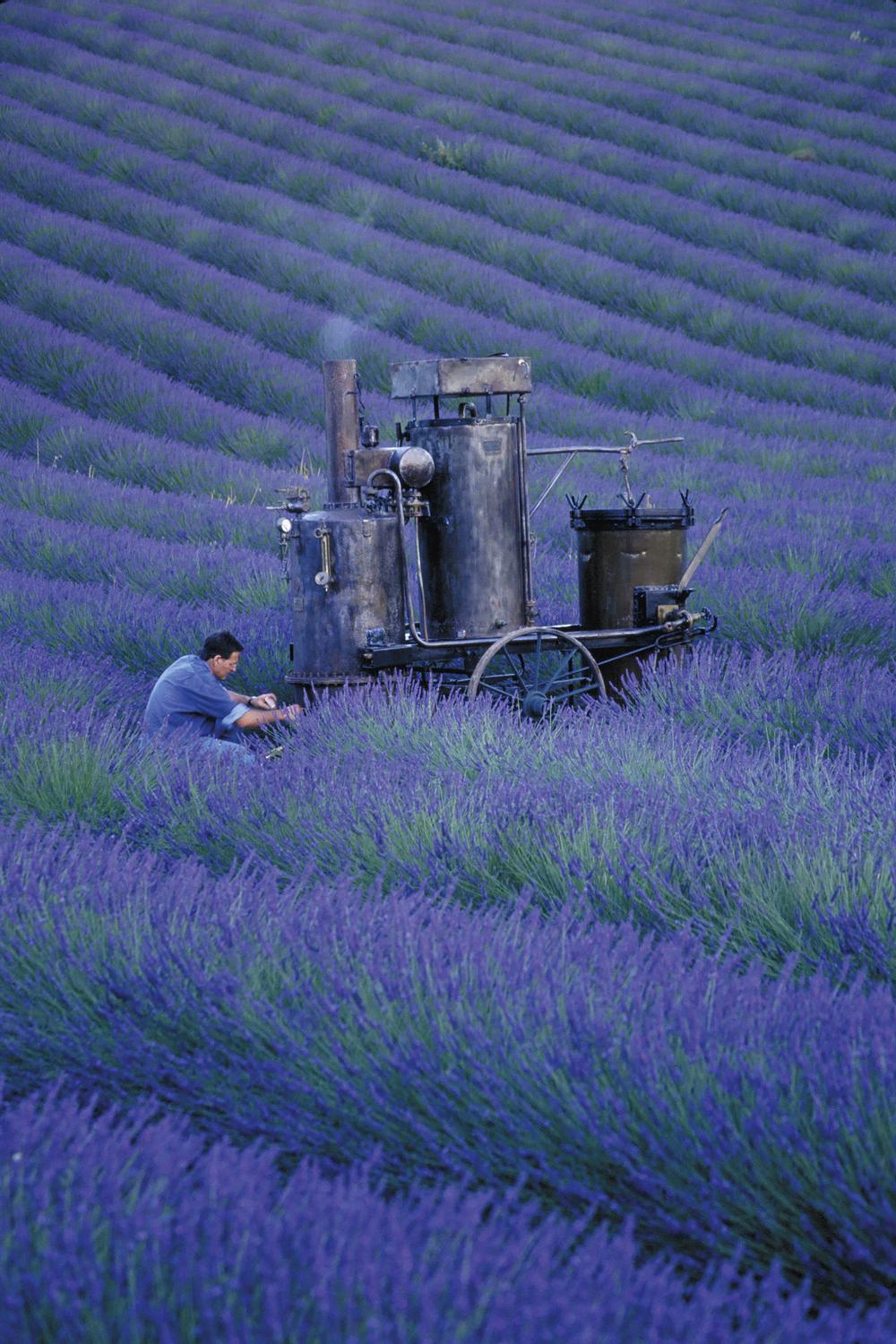
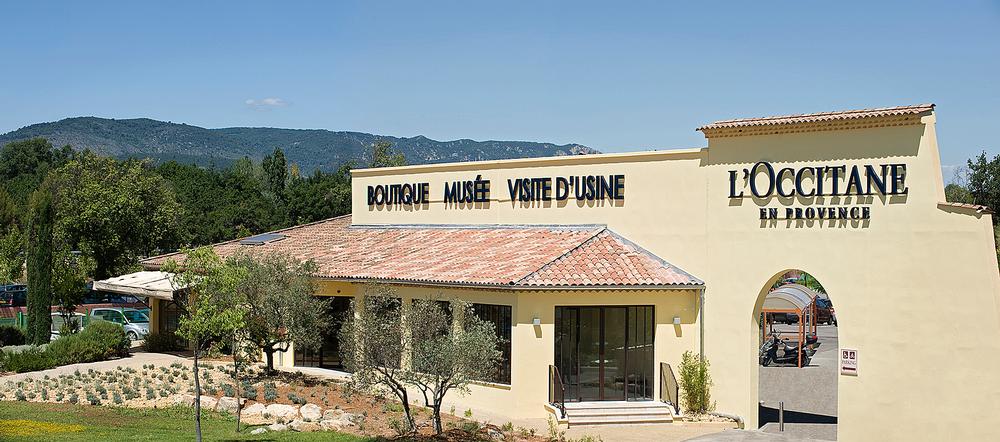
L’Occitane en Provence is a brand deeply rooted in the French region where it was born. Firstly, there’s the name: L’Occitane means ‘woman from Occitania’, a historical region of southern France, while for anyone not schooled in medieval geography the qualifier ‘en Provence’ drives the message home. Secondly, there’s the fact that despite boasting 2,230 consumer-facing outlets across more than 90 countries, an annual turnover of over €1 billion (US$1.4bn, £0.9bn) and a listing on the Hong Kong Stock Exchange, the natural beauty retailer still sources most of its ingredients locally and manufactures all of its products in a small Provençal town.
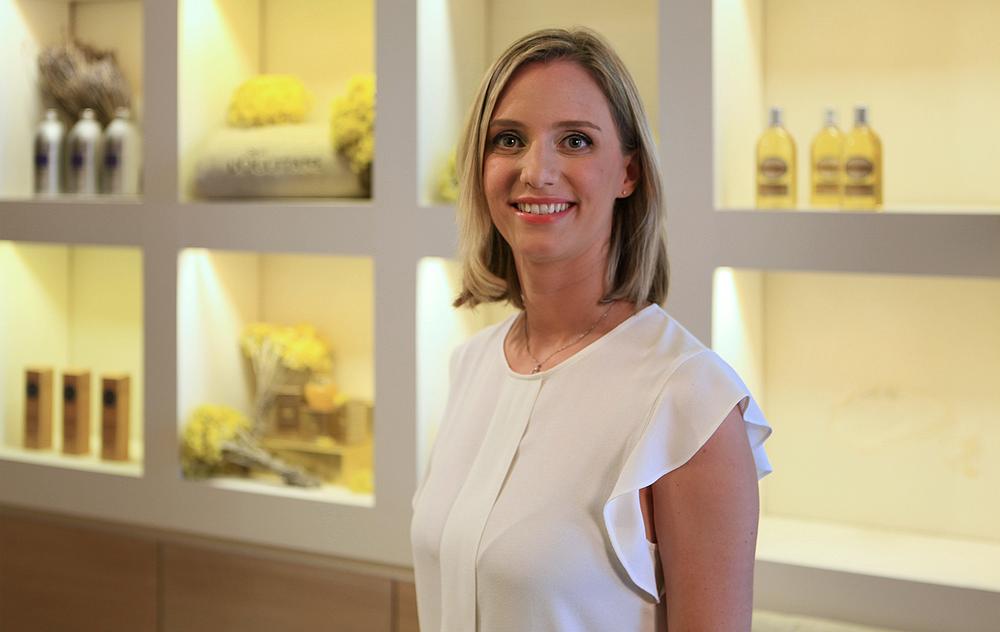
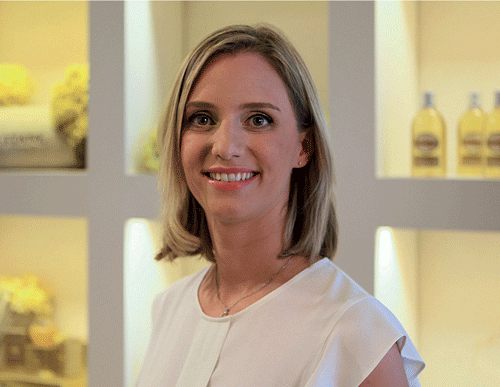
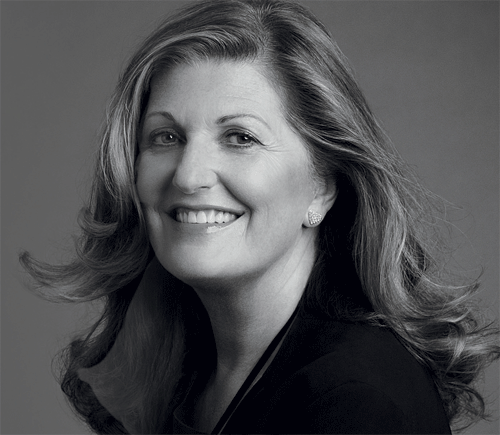
It’s a rare marriage of the local and the global, modesty and ambition and one that possibly goes some way to explaining why L’Occitane – despite opening its first spa 12 years ago and growing its portfolio to 60 today – has until now been flying largely under the spa industry radar. “We’re not a company that boasts everywhere about our accomplishments,” explains international spa director Helene Goetzelmann, a native Frenchwoman who joined L’Occitane 10 years ago in a product development role. “Clearly, we want to communicate more with the spa industry, but we wanted our offering to be strong before being too visible.”
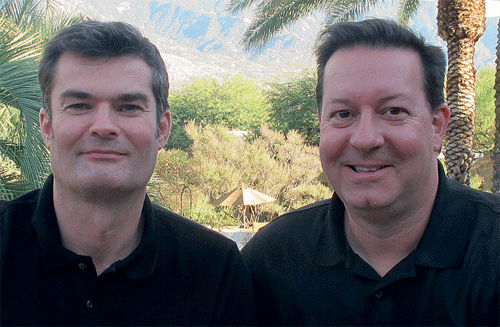
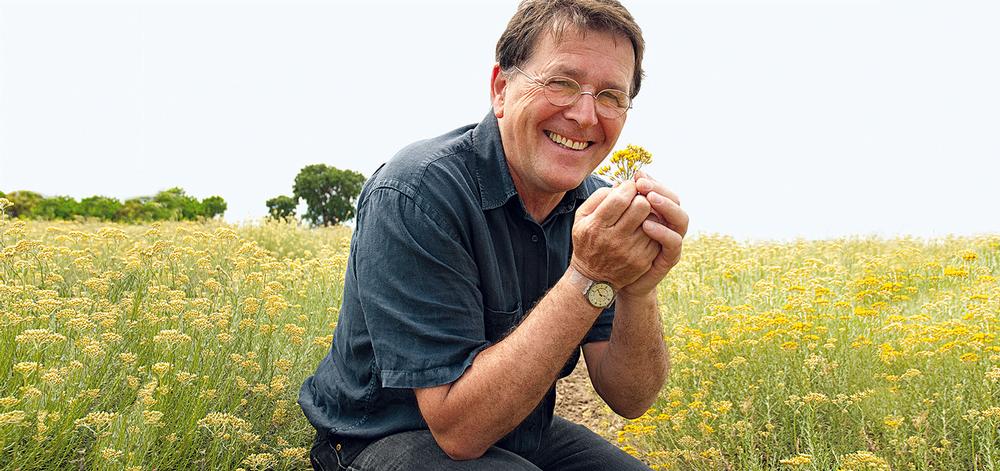
Local to global L’Occitane was founded in 1976 by 23-year-old Olivier Baussan, who sold his hand-distilled essential oils at markets in Provence before opening a small shop. Business ticked along nicely until the early 90s, when an unhappy interlude with venture capitalists saw the company lose money and Baussan pushed out. Then in 1994 Austrian businessman Reinold Geiger invested in the business; two years later, he became the majority shareholder and chairman, bought out the venture capitalists and brought Baussan back as creative director. Investing heavily in marketing, he’s spent the last 17 years driving the company’s global expansion as a mainstream retailer of natural beauty products, with a particular focus on Asia.
L’Occitane’s first foray into spa came in 2001 when two country managers – one in Brazil and one in Vietnam – independently approached management about opening affiliated spa operations. “At the time there was no standardised concept, but the style of the company is very entrepreneurial, so head office told them it was fine to try,” says Goetzelmann. “And for a few years that’s the way it was done; it was handled locally, with no international cooperation.”
As time went on, however, the company had more enquiries about spa, particularly from hotel partners already using its in-room amenity range. “We had to keep saying, ‘We’re not really ready; we don’t have an international offer’,” says Goetzelmann. “But the more demand there was, the more we felt it was high time we entered the market.”
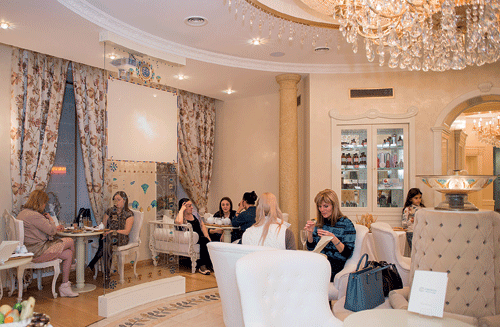
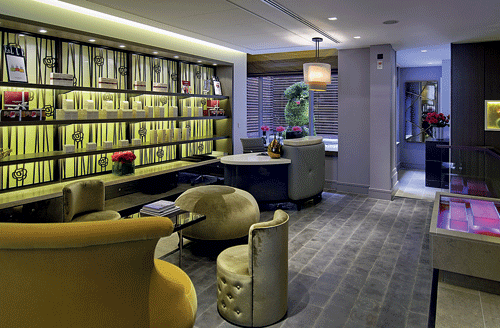
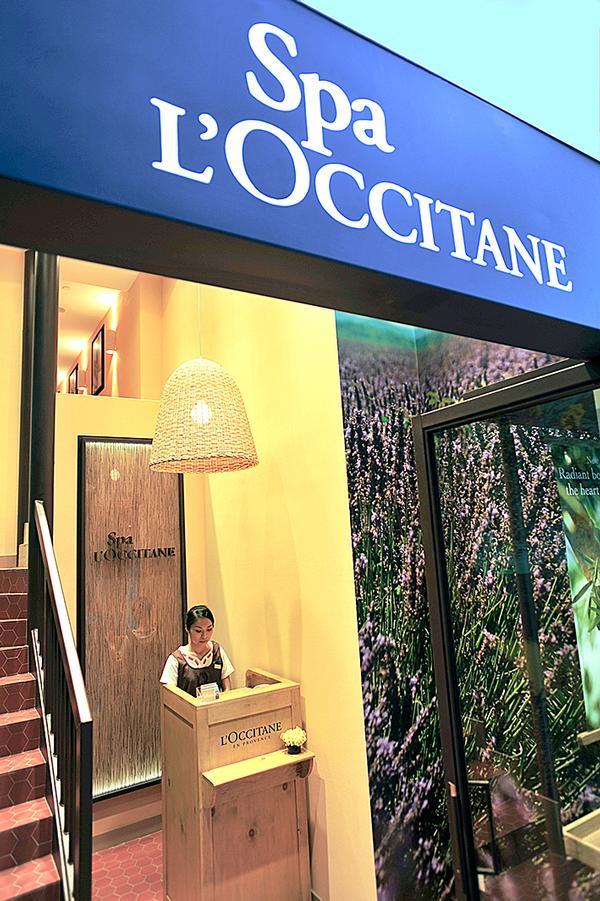
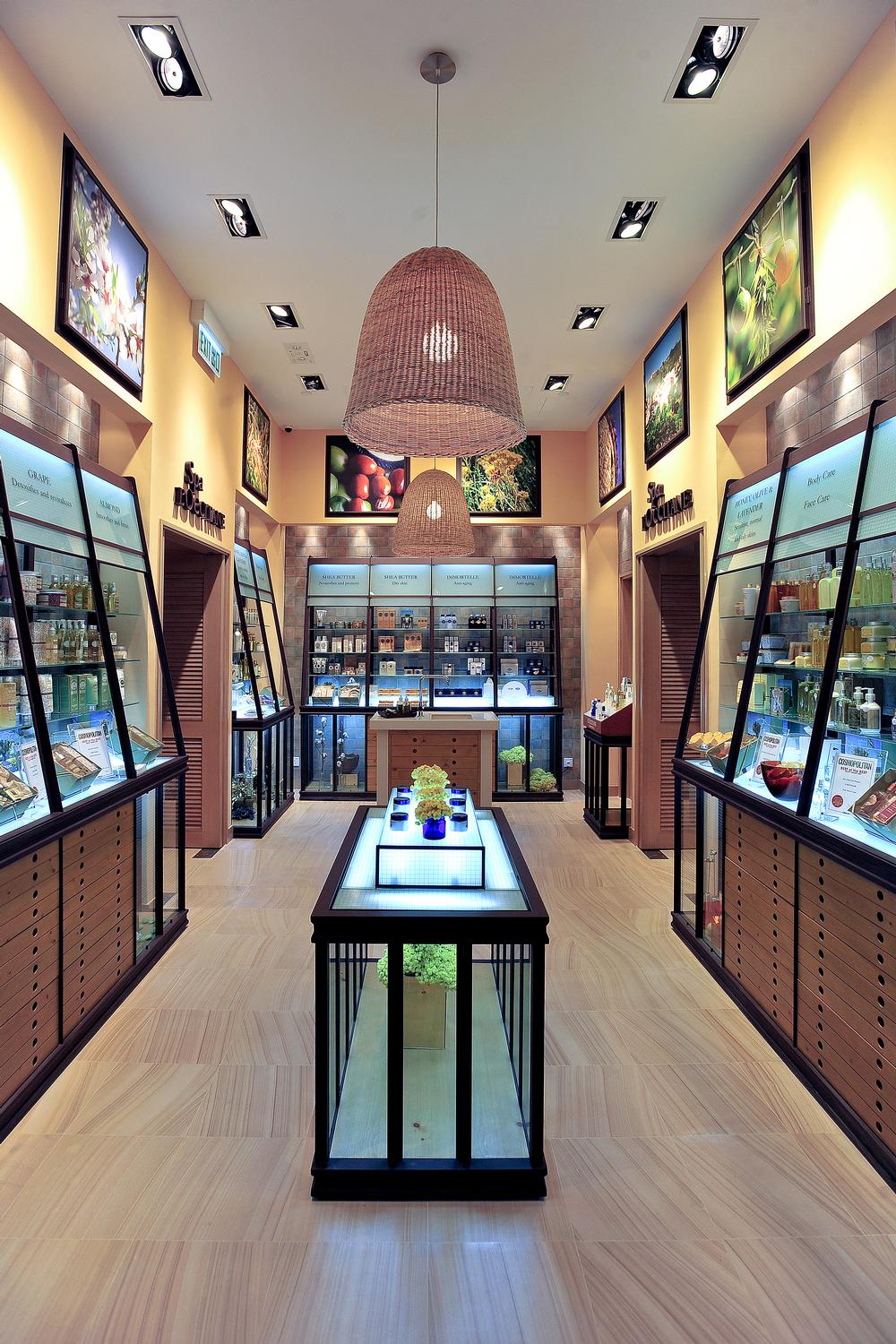
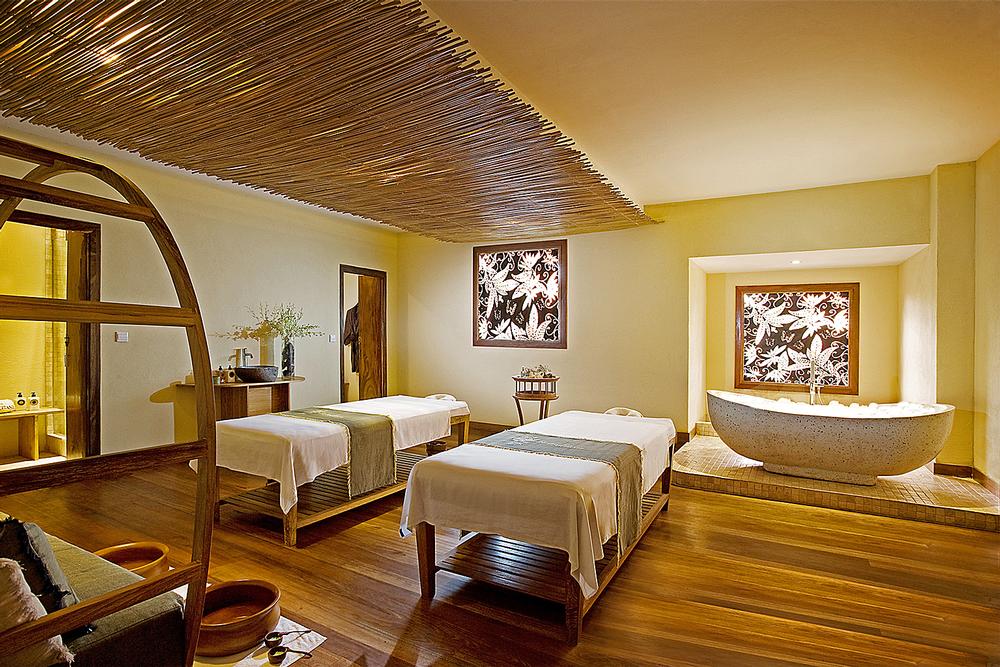
So it was that in 2006 Goetzelmann – who had been looking for an opportunity to move to Asia – relocated to Hong Kong to set up an international spa division and oversee the launch of a standardised spa concept for the company. With treatment protocols, design concept (all warm yellow and almond tones) and marketing tools in place, the Spa L’Occitane model was launched at the company’s flagship stores in Hong Kong and Paris in 2008, before rolling out to other shops worldwide. “We wanted to start with our own operations first to build our expertise before going into partnership with hotels,” explains Goetzelmann.
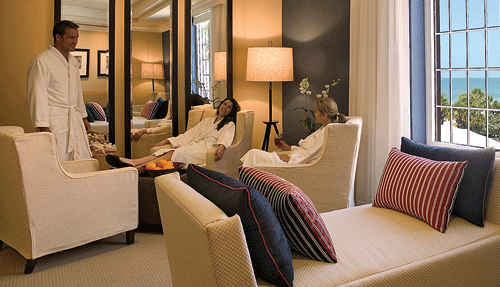
By 2009, Goetzelmann and her team felt ready to go back to their hotel partners with a saleable product: Hotel Spa by L’Occitane. Comprising a minimum of four treatment rooms and a retail area, the design concept blends with that of the hotel, although L’Occitane gives advice and supplies decorative items as needed. Once the spa is open, the hotel runs operations, while products, treatment protocols, training and marketing support are provided by L’Occitane. As prerequisites, all hotels wishing to open a Spa by L’Occitane must be five-star and willing to stock the company’s in-room amenity range.
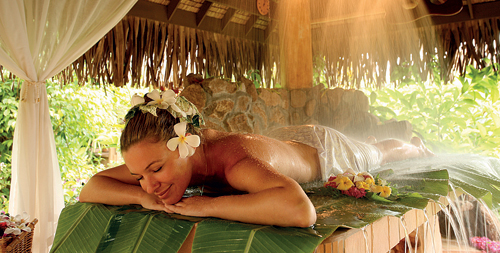
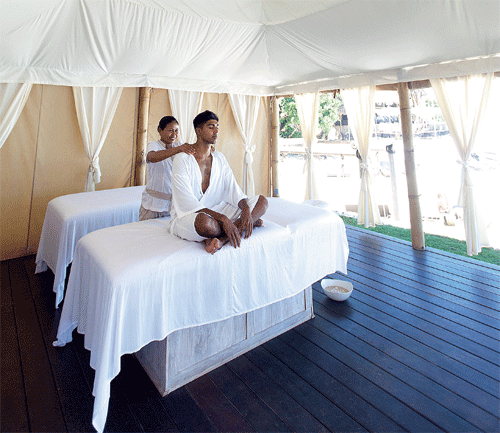
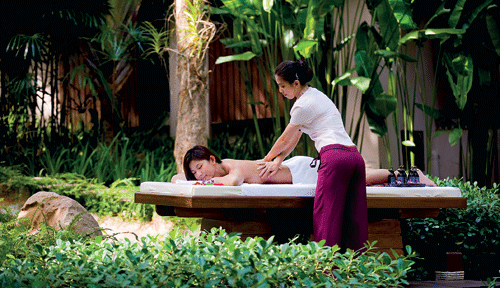
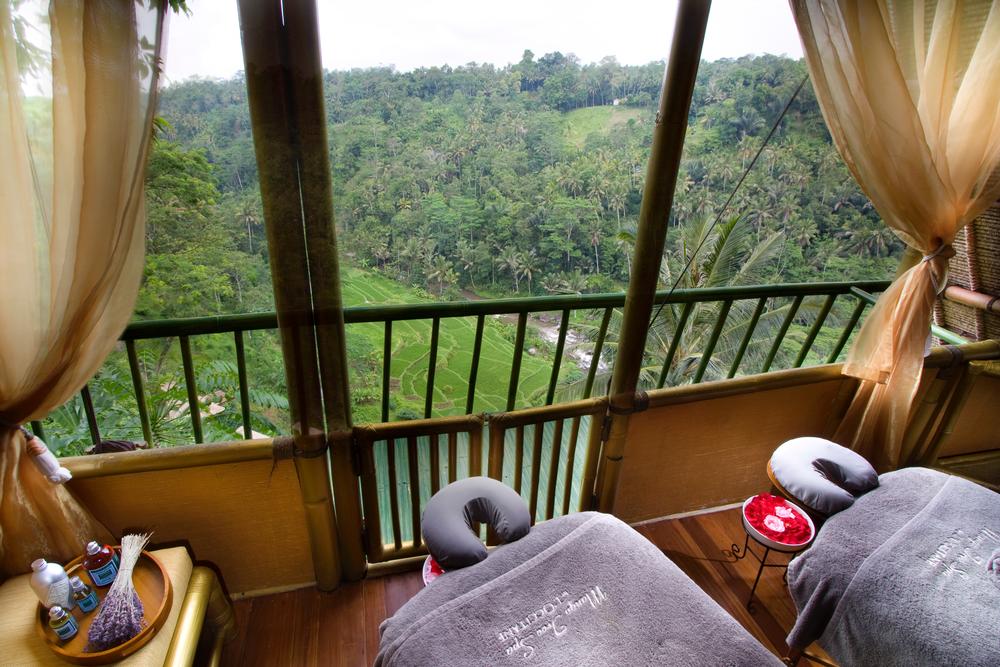
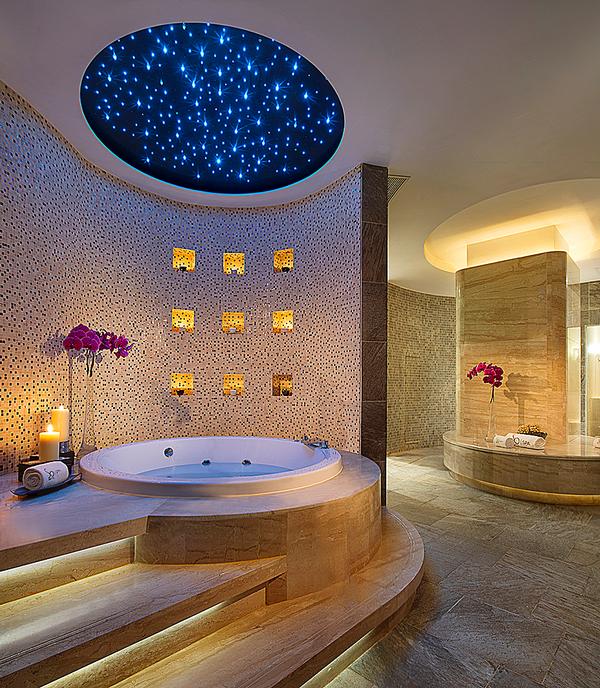
The first hotel spa to open was the Mango Tree Spa at Kupu Kupu Barong resort in Bali, with four treatment villas and two stunning treetop treatment rooms. Today, the company has 34 hotel spas in its portfolio, with recent openings including Switzerland, Israel, the Dominican Republic, Brazil and Western Australia, plus over 30 in the pipeline. In addition, it has four flagship Spa L’Occitane sites (with five or more treatment rooms plus hydrotherapy) and 22 Petit Spa L’Occitane sites (two to four treatment rooms) connected to its stores worldwide.
Brand awareness In 2010, L’Occitane was floated on the Hong Kong Stock Exchange. While Geiger retains a controlling share, the IPO raised more than US$700m (€509m, £433m), enabling the company to invest in manufacturing and R&D (the Provençal plant has doubled in size) and fast-track growth in China, Russia and Brazil. The impact in terms of brand awareness and cross-marketing (China alone now has 130 shops) has been significant.
From the outset, the company has viewed its spa activities not so much as a revenue generator as an opportunity to build brand loyalty. Goetzelmann says: “We want to give our clients a head-to-toe experience and an emotional connection with our brand. But although profit is not the main purpose, nearly all of our locations are profitable.”
With its hotel partners in particular, Goetzelmann and her team are proactive in providing a marketing plan to keep the spa in profit. While it’s not practical to launch more than a couple of new treatments a year, one way they keep the menu fresh is to offer limited edition versions of existing treatments using new fragrances launched around dates such as Christmas. “They’re easy to implement but still allow us to create a buzz, and the hotels like them because it’s a good way to animate the calendar,” she says.
The greatest advantage to hotels of choosing L’Occitane over another spa brand, however, is the immense cross-marketing potential afforded by access to its retail network and three million-strong international client database. “It’s visibility in our shops; spa messages in our direct mail and emails; spa news on our websites, Facebook and Twitter,” says Goetzelmann. “Plus we give the hotel exposure to our PR network: we work closely with beauty editors to promote our products, and as soon as there’s an opportunity to highlight spa, we do it.”
Goetzelmann is very quick to point out it’s not a one-way street, however. “Working with hotels is a way for L’Occitane to bring fresh messages to our clients, to talk about wellbeing destinations and to offer them a journey and a dream.”
Face and body The L’Occitane spa vision, says Goetzelmann, is to combine, “French joie de vivre and traditions from the south of France with the best of worldwide therapies. We can’t lie,” she says, “there’s no massage tradition in the south of France, so the techniques we use are Balinese, Swedish, lomi lomi… but we combine them with our own traditional ingredients in signature sequences developed exclusively for us by in-house experts.”
While across its own spas the treatment menu is fairly standardised, Goetzelmann and her team work with their hotel partners to develop signature treatments that are exclusive to that location – so in Bali, you’ll find a Mango Tango massage using mango oil, while in Rajasthan, India, you can enjoy a body scrub using sand sourced from the local desert. “But of course we only do that for body,” says Goetzelmann. “For our facials, we need to guarantee efficiency, so they’re 100 per cent our protocols.”
Goetzelmann is alert to the advantages of facials over massages in terms of revenue, given their much greater potential to generate retail sales (see SB13/3 p24). Notably, the bestselling facial across the portfolio is Immortelle Secret of Youth, which complements the hugely popular Immortelle anti-ageing retail line. In many of its shop-based spas, 50 per cent or more of treatments sold are facials, which Goetzelmann attributes to the strength of the retail brand: “We have some very loyal customers who buy our facial products regularly, so for them having a spa treatment is just an extension of their skincare routine.”
In its hotel spas, however, the figure is closer to the industry average of 15-20 per cent. “It is something we want to push,” says Goetzelmann. As well as offering skincare analysis as part of the consultation process, L’Occitane spas encourage the take-up of facials through special offers, face and body packages and express treatments.
Another focus is, unsurprisingly, spa retail. The benchmark for retail sales as a proportion of overall spa revenue is 20 per cent – although some locations exceed that – and the spa division draws strongly on L’Occitane’s shops for display protocols and retail materials, such as brochures and samples. “We know that the formulas are our best ambassadors,” says Goetzelmann. “When people try them, they are convinced, so the aim is always to have them try.”
Prescription, in the form of detailed spa prescription cards, is also key. “It’s easier for the therapist to sell than the person in the shop, as they already have a good understanding of the needs and expectations of the client. The challenge is that therapists are often not comfortable with selling, which is something we’re working on in training.”
Perfect experience With more than 30 new projects on the table, Goetzelmann has her hands full. Nor is there just one geographical focus, as there are deals from Eastern Europe and the Caribbean to India and China which are all under discussion.
The company has also launched a second brand in Brazil – L’Occitane au Bresil – comprising fragrances, bodycare and suncare. International rollout is planned for 2014, and spas are currently being offered the opportunity to take on the products.
With this kind of momentum behind it, the chances of L’Occitane remaining off the industry radar much longer seem pretty slim. But Goetzelmann is clear that growth will never be at the expense of brand image. “Our aim is not to open 1,000 spas, but to maintain a very exclusive and high-quality network. We want to partner with the best and offer every hotel a tailor-made marketing plan and personalised follow-up. For us, it’s not about generating a huge turnover but offering a perfect experience to the guest.”
Read more from this issue of Spa Business magazine
Interview: Helene Goetzelmann
L'Occitane's international spa director tells Rhianon Howells how the consumer retail company has become a spa operator with 60 facilities
Ask an expert: Profit & Loss
Hotel spas need to fight capital expenditure allocation said an investor panel at this year's Global Spa & Wellness Summit
Research: All rise
There's been an increase in the five top key performance indicators in the US spa industry shows the 2013 ISPA study
Company Profile Promotion: ESPA promotion
As ESPA's 20th
anniversary year draws
to a close, founder and
CEO Sue Harmsworth
explains how and why the
company is still evolving
Safari Spa: Animal instinct
Safari spas are the staple for Amani, one of South Africa's largest spa chains. Lisa Starr talks to MD Ronleigh Gordon
Trends: Brief encounters
We take a look at some of the most innovative spa pop-ups, a growing trend across the leisure sector
Interview: Paul Smyth
Something & Son designer shares his insights on creating pop-up spa facilities. Magali Robathan reports
Summit review: Upping the ante
Katie Barnes reveals the takeaway messages from the 2013 Global Spa & Wellness Summit in New Delhi, India, attended by 375 industry leaders
Research: Local news
Domestic travellers dominate the global wellness tourism market which has an economic impact of US$1.3 trillion. SRI's Ophelia Yeung reports
Research: Thai up
Prantik Bordoloi analyses a 2013 Thai spa industry study based on both spa consumer and spa operator opinions
Software news: Tech talk
The latest developments and news from spa software suppliers from around the world
In a world where imbalance often accumulates quietly, Wildsmith unveils its newest
wellbeing innovation: Silent Loads, an approach designed to meet the needs of modern spa
guests with precision and depth. [more...]
+ More featured suppliers
COMPANY PROFILES
AKT Group
AKT Group is the Franco–Italian parent company of SKYY, C.O.D.E. and AKTMe, operating as an integrat [more...]
FIBO
FIBO is the international platform for fitness, wellness and health. During four days, FIBO connects [more...]
French natural beauty retailer L’Occitane has 60 spas in 22 countries, but has
– until now – remained relatively quiet about its achievements within the spa industry. The company’s international spa director explains why all that’s about to change
By Rhianon Howells | Published in Spa Business 2013 issue 4
L’Occitane en Provence is a brand deeply rooted in the French region where it was born. Firstly, there’s the name: L’Occitane means ‘woman from Occitania’, a historical region of southern France, while for anyone not schooled in medieval geography the qualifier ‘en Provence’ drives the message home. Secondly, there’s the fact that despite boasting 2,230 consumer-facing outlets across more than 90 countries, an annual turnover of over €1 billion (US$1.4bn, £0.9bn) and a listing on the Hong Kong Stock Exchange, the natural beauty retailer still sources most of its ingredients locally and manufactures all of its products in a small Provençal town.
It’s a rare marriage of the local and the global, modesty and ambition and one that possibly goes some way to explaining why L’Occitane – despite opening its first spa 12 years ago and growing its portfolio to 60 today – has until now been flying largely under the spa industry radar. “We’re not a company that boasts everywhere about our accomplishments,” explains international spa director Helene Goetzelmann, a native Frenchwoman who joined L’Occitane 10 years ago in a product development role. “Clearly, we want to communicate more with the spa industry, but we wanted our offering to be strong before being too visible.”
Local to global L’Occitane was founded in 1976 by 23-year-old Olivier Baussan, who sold his hand-distilled essential oils at markets in Provence before opening a small shop. Business ticked along nicely until the early 90s, when an unhappy interlude with venture capitalists saw the company lose money and Baussan pushed out. Then in 1994 Austrian businessman Reinold Geiger invested in the business; two years later, he became the majority shareholder and chairman, bought out the venture capitalists and brought Baussan back as creative director. Investing heavily in marketing, he’s spent the last 17 years driving the company’s global expansion as a mainstream retailer of natural beauty products, with a particular focus on Asia.
L’Occitane’s first foray into spa came in 2001 when two country managers – one in Brazil and one in Vietnam – independently approached management about opening affiliated spa operations. “At the time there was no standardised concept, but the style of the company is very entrepreneurial, so head office told them it was fine to try,” says Goetzelmann. “And for a few years that’s the way it was done; it was handled locally, with no international cooperation.”
As time went on, however, the company had more enquiries about spa, particularly from hotel partners already using its in-room amenity range. “We had to keep saying, ‘We’re not really ready; we don’t have an international offer’,” says Goetzelmann. “But the more demand there was, the more we felt it was high time we entered the market.”
So it was that in 2006 Goetzelmann – who had been looking for an opportunity to move to Asia – relocated to Hong Kong to set up an international spa division and oversee the launch of a standardised spa concept for the company. With treatment protocols, design concept (all warm yellow and almond tones) and marketing tools in place, the Spa L’Occitane model was launched at the company’s flagship stores in Hong Kong and Paris in 2008, before rolling out to other shops worldwide. “We wanted to start with our own operations first to build our expertise before going into partnership with hotels,” explains Goetzelmann.
By 2009, Goetzelmann and her team felt ready to go back to their hotel partners with a saleable product: Hotel Spa by L’Occitane. Comprising a minimum of four treatment rooms and a retail area, the design concept blends with that of the hotel, although L’Occitane gives advice and supplies decorative items as needed. Once the spa is open, the hotel runs operations, while products, treatment protocols, training and marketing support are provided by L’Occitane. As prerequisites, all hotels wishing to open a Spa by L’Occitane must be five-star and willing to stock the company’s in-room amenity range.
The first hotel spa to open was the Mango Tree Spa at Kupu Kupu Barong resort in Bali, with four treatment villas and two stunning treetop treatment rooms. Today, the company has 34 hotel spas in its portfolio, with recent openings including Switzerland, Israel, the Dominican Republic, Brazil and Western Australia, plus over 30 in the pipeline. In addition, it has four flagship Spa L’Occitane sites (with five or more treatment rooms plus hydrotherapy) and 22 Petit Spa L’Occitane sites (two to four treatment rooms) connected to its stores worldwide.
Brand awareness In 2010, L’Occitane was floated on the Hong Kong Stock Exchange. While Geiger retains a controlling share, the IPO raised more than US$700m (€509m, £433m), enabling the company to invest in manufacturing and R&D (the Provençal plant has doubled in size) and fast-track growth in China, Russia and Brazil. The impact in terms of brand awareness and cross-marketing (China alone now has 130 shops) has been significant.
From the outset, the company has viewed its spa activities not so much as a revenue generator as an opportunity to build brand loyalty. Goetzelmann says: “We want to give our clients a head-to-toe experience and an emotional connection with our brand. But although profit is not the main purpose, nearly all of our locations are profitable.”
With its hotel partners in particular, Goetzelmann and her team are proactive in providing a marketing plan to keep the spa in profit. While it’s not practical to launch more than a couple of new treatments a year, one way they keep the menu fresh is to offer limited edition versions of existing treatments using new fragrances launched around dates such as Christmas. “They’re easy to implement but still allow us to create a buzz, and the hotels like them because it’s a good way to animate the calendar,” she says.
The greatest advantage to hotels of choosing L’Occitane over another spa brand, however, is the immense cross-marketing potential afforded by access to its retail network and three million-strong international client database. “It’s visibility in our shops; spa messages in our direct mail and emails; spa news on our websites, Facebook and Twitter,” says Goetzelmann. “Plus we give the hotel exposure to our PR network: we work closely with beauty editors to promote our products, and as soon as there’s an opportunity to highlight spa, we do it.”
Goetzelmann is very quick to point out it’s not a one-way street, however. “Working with hotels is a way for L’Occitane to bring fresh messages to our clients, to talk about wellbeing destinations and to offer them a journey and a dream.”
Face and body The L’Occitane spa vision, says Goetzelmann, is to combine, “French joie de vivre and traditions from the south of France with the best of worldwide therapies. We can’t lie,” she says, “there’s no massage tradition in the south of France, so the techniques we use are Balinese, Swedish, lomi lomi… but we combine them with our own traditional ingredients in signature sequences developed exclusively for us by in-house experts.”
While across its own spas the treatment menu is fairly standardised, Goetzelmann and her team work with their hotel partners to develop signature treatments that are exclusive to that location – so in Bali, you’ll find a Mango Tango massage using mango oil, while in Rajasthan, India, you can enjoy a body scrub using sand sourced from the local desert. “But of course we only do that for body,” says Goetzelmann. “For our facials, we need to guarantee efficiency, so they’re 100 per cent our protocols.”
Goetzelmann is alert to the advantages of facials over massages in terms of revenue, given their much greater potential to generate retail sales (see SB13/3 p24). Notably, the bestselling facial across the portfolio is Immortelle Secret of Youth, which complements the hugely popular Immortelle anti-ageing retail line. In many of its shop-based spas, 50 per cent or more of treatments sold are facials, which Goetzelmann attributes to the strength of the retail brand: “We have some very loyal customers who buy our facial products regularly, so for them having a spa treatment is just an extension of their skincare routine.”
In its hotel spas, however, the figure is closer to the industry average of 15-20 per cent. “It is something we want to push,” says Goetzelmann. As well as offering skincare analysis as part of the consultation process, L’Occitane spas encourage the take-up of facials through special offers, face and body packages and express treatments.
Another focus is, unsurprisingly, spa retail. The benchmark for retail sales as a proportion of overall spa revenue is 20 per cent – although some locations exceed that – and the spa division draws strongly on L’Occitane’s shops for display protocols and retail materials, such as brochures and samples. “We know that the formulas are our best ambassadors,” says Goetzelmann. “When people try them, they are convinced, so the aim is always to have them try.”
Prescription, in the form of detailed spa prescription cards, is also key. “It’s easier for the therapist to sell than the person in the shop, as they already have a good understanding of the needs and expectations of the client. The challenge is that therapists are often not comfortable with selling, which is something we’re working on in training.”
Perfect experience With more than 30 new projects on the table, Goetzelmann has her hands full. Nor is there just one geographical focus, as there are deals from Eastern Europe and the Caribbean to India and China which are all under discussion.
The company has also launched a second brand in Brazil – L’Occitane au Bresil – comprising fragrances, bodycare and suncare. International rollout is planned for 2014, and spas are currently being offered the opportunity to take on the products.
With this kind of momentum behind it, the chances of L’Occitane remaining off the industry radar much longer seem pretty slim. But Goetzelmann is clear that growth will never be at the expense of brand image. “Our aim is not to open 1,000 spas, but to maintain a very exclusive and high-quality network. We want to partner with the best and offer every hotel a tailor-made marketing plan and personalised follow-up. For us, it’s not about generating a huge turnover but offering a perfect experience to the guest.”
Read more from this issue of Spa Business magazine
Interview: Helene Goetzelmann
L'Occitane's international spa director tells Rhianon Howells how the consumer retail company has become a spa operator with 60 facilities
Ask an expert: Profit & Loss
Hotel spas need to fight capital expenditure allocation said an investor panel at this year's Global Spa & Wellness Summit
Research: All rise
There's been an increase in the five top key performance indicators in the US spa industry shows the 2013 ISPA study
Company Profile Promotion: ESPA promotion
As ESPA's 20th
anniversary year draws
to a close, founder and
CEO Sue Harmsworth
explains how and why the
company is still evolving
Safari Spa: Animal instinct
Safari spas are the staple for Amani, one of South Africa's largest spa chains. Lisa Starr talks to MD Ronleigh Gordon
Trends: Brief encounters
We take a look at some of the most innovative spa pop-ups, a growing trend across the leisure sector
Interview: Paul Smyth
Something & Son designer shares his insights on creating pop-up spa facilities. Magali Robathan reports
Summit review: Upping the ante
Katie Barnes reveals the takeaway messages from the 2013 Global Spa & Wellness Summit in New Delhi, India, attended by 375 industry leaders
Research: Local news
Domestic travellers dominate the global wellness tourism market which has an economic impact of US$1.3 trillion. SRI's Ophelia Yeung reports
Research: Thai up
Prantik Bordoloi analyses a 2013 Thai spa industry study based on both spa consumer and spa operator opinions
Software news: Tech talk
The latest developments and news from spa software suppliers from around the world
Premium London health club, KX Chelsea, will imminently unveil its most significant
redevelopment since its launch in 2002 to create an integrated wellness model combining
training, recovery and relaxation.
Rosewood Le Guanahani St Barth, on the northeast coast of Saint Barthélemy in the French
West Indies, is offering a programme of ocean-inspired yoga classes between 8-14 June to
celebrate Global Wellness Day (GWD).
Hotel de France, located on the British Isle of Jersey, has created a wellness retreat package
that includes a hot yoga session that will take place in Jersey Zoo’s butterfly sanctuary.
The Ritz-Carlton, Langkawi, in Malaysia, has revealed a schedule for Global Wellness Day
(GWD) that includes guided rainforest walks, mindful movement and guided coastal meditation
experiences.
Longevitix, a clinical platform for preventive and longevity medicine, has launched its AI-
powered intelligence system to help physicians deliver continuous, personalised longevity-
focused care at scale.
Atmantan Wellness Centre, an integrative wellness destination in Mulshi, near Pune in India, is
expanding its portfolio by adding a new centre in Hyderabad that will launch between 2028 and
2029.
A recent survey by the UK Spa Association (UKSA) into the industry’s approach to cancer care
has revealed that almost half of participating respondents (46 per cent) are unaware that
cancer is a disability and guests with a cancer diagnosis must be given
Mexican operator, Solmar Hotels and Resorts, is hosting a series of events in celebration of
Global Wellness Day, including a Temazcal ceremony at its Playa Grande Resort and Spa in Los
Cabos.
Mandarin Oriental has announced a standalone residence brand, Mansions, which will debut at
Emirates Palace, Mandarin Oriental Mansions, Abu Dhabi, in 2029.
In a world where imbalance often accumulates quietly, Wildsmith unveils its newest
wellbeing innovation: Silent Loads, an approach designed to meet the needs of modern spa
guests with precision and depth. [more...]
+ More featured suppliers
COMPANY PROFILES
AKT Group AKT Group is the Franco–Italian parent company of SKYY, C.O.D.E. and AKTMe, operating as an integrat [more...]