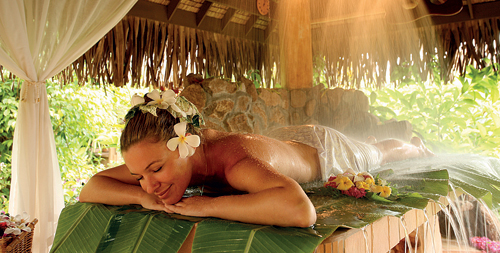
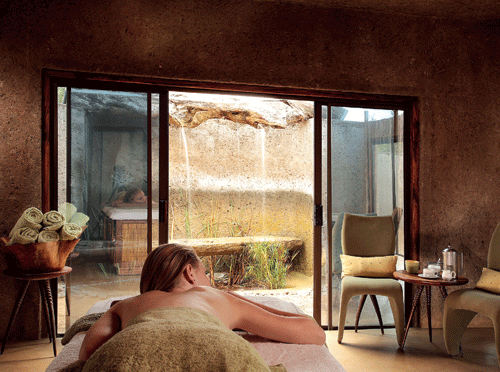
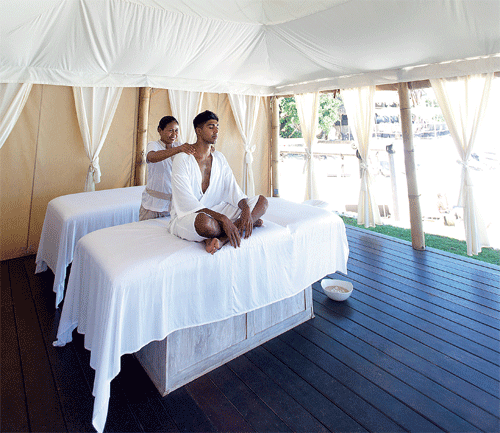
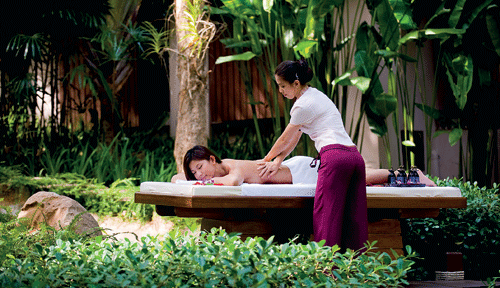
Wellness travel is more likely to be within a country’s borders than abroad, the study found / shutterstock.com/MJTH
Consumers have long associated travel with their personal wellness. Many people look forward to their vacation trips as an opportunity to rejuvenate and de-stress, and to enrich themselves by immersing in new cultures, sites, and experiences. Not surprisingly, “take a vacation” was among the top five things consumers do to maintain and enhance their wellness, according to the Spas and the Global Wellness Market report conducted by SRI International in 2010 (see 2011 Spa Business Handbook p78). Some travellers take trips specifically to maintain and improve their health. Others want to keep up with their healthy habits when they travel. This growing trend is giving rise to wellness tourism on a global scale.
Wellness tourism is positioned at a profitable intersection between two massive and growing industries – wellness and tourism – estimated at US$2 trillion (€1.5tn, £1.2tn) and US$3.2 trillion (€2.3tn, £2tn) respectively. Exactly what is wellness tourism, and how large is this market? This was the subject of the SRI research report The Global Wellness Tourism Economy, commissioned by the Global Spa and Wellness Summit that was revealed at its annual conference in New Delhi on 5 October this year (see p70).
Wellness travellers In contrast to the medical paradigm, wellness tourism is proactive, focusing on personal responsibility and initiative to integrate a variety of healthy habits, activities and practices that bring an individual to an increasingly optimal state of wellbeing.
At the core of wellness travel are the multidimensional values related to wellness, which extend from the physical and emotional, to the social and environmental. Motivated by these values, a wellness traveller may take part in many different kinds of activities during travel. These activities and businesses make up the diverse wellness tourism economy. They include spas, health resorts, baths and springs, as well as yoga retreats, national parks, gyms and fitness centres, specialty restaurants, and complementary and alternative medicine centres. Based on this framework, we define wellness tourism as “travel associated with the pursuit of maintaining or enhancing one’s personal wellbeing”.
Domestic dominance We identified two types of wellness travellers in our research – primary purpose and secondary purpose. For the primary purpose wellness traveller, wellness is the sole purpose for the trip and for choosing the destination. Examples are those who stay at a destination spa or wellness resort such as Kamalaya in Koh Samui, enroll in a yoga or meditation retreat, or travel to experience authentic ayurveda medicine.
What surprised us, however, is that secondary purpose wellness travellers make up a much larger proportion – accounting for 85 per cent of all wellness trips and expenditures . These travellers have an interest in maintaining wellness during travel, although it’s not the sole purpose for taking a trip. Examples would be a tourist visiting India mainly with a cultural interest, but who also visits an ayurveda centre, or takes a yoga class. It could be the business traveller who chooses to stay at a hotel that offers healthy food and has a good gym, or a person who visits a spa during a ski vacation.
Another very interesting finding is that while many people think of tourism as travel to a different country, in reality much of the world’s tourism takes place within a country’s borders. This is especially true in large countries, such as the US, Canada, Russia, India, and China. We estimate that domestic tourism accounts for roughly two-thirds of the global wellness tourism market, similar to the distribution in the global tourism market.
What’s it worth? Measuring the size of an industry is a challenging task and we based our methodology on estimating the number of wellness tourists by country, and aggregating their expenditures (see p82). In total, we estimate that the wellness tourism economy is worth US$439bn (€318.8bn, £272.8bn), roughly 14 per cent of global tourism expenditures. Wellness tourism directly creates 12 million jobs around the world and has a total economic impact of US$1.3tn (€962bn, £809bn), when multiplied economic impacts are included.
Not surprisingly, wellness tourism is a rather large segment, similar in size to ecotourism and culinary tourism, but bigger than sports tourism and medical tourism. Importantly, however, these niche markets do not operate exclusively of one another – a wellness tourist can be simultaneously an eco-tourist, a cultural tourist and a sports tourist. And we see that there many opportunities to cross-market niche tourism products to these potential customers.
The 525 million trips made by wellness travellers represent only 6 per cent of all tourism trips, but account for 14 per cent of all tourism spending. Wellness travellers spend more per trip on average as they tend to be wealthier and more educated. While an international tourist on average spends US$1,000 (€726, £621) per trip (exclusive of air travel), an international wellness tourist spends 65 per cent more. The differential between an average domestic traveller and a wellness traveller is even greater, with domestic wellness traveller spending 2.5 times the average domestic tourist per trip.
Spa tourism The spa industry is obviously a very important and core player in wellness tourism. We define spa tourism as an overnight trip in which the person’s motivation for the trip includes the enjoyment of spa services or treatments (as either a primary or secondary purpose); and it accounts for approximately 225 million annual trips. Spa tourism, estimated at US$180bn (€130.7bn, £111.8bn), represents about 41 per cent of the global wellness tourism market – the largest sub sector within wellness tourism. As wellness tourism is high-yield, and can potentially bring additional social benefits to the community such as preservation and support for local products, environment, culture and traditions, the spa industry may find many allies and partners with other key stakeholders – such as those in the hospitality, health and tourism sectors, as well as government ministries – to explore new business opportunities and models in this high growth market. We predict that it will grow by 9.7 per cent a year and that it will reach US$285bn (€211bn, £177bn) by 2017.
Global growth Wellness tourism is very concentrated in the top destination countries, with the top 20 accounting for 88 per cent of the global wellness tourism market. These are primarily concentrated in North America, Western Europe, and the high-income Asian countries. The top five countries alone represent 63 per cent of the global market.
Wellness tourism will grow rapidly in the coming years, at a much higher rate than the overall tourism market. We estimate that wellness tourism trips will grow at an annual rate of 9.1 per cent through 2017 (compared to a 6.2 per cent global tourism annual growth forecast), bringing wellness tourism up to 16 per cent of global tourism expenditures. More than half of the growth will take place in Asia, Latin America and Middle East and North Africa, fuelled by a rise in both domestic wellness tourism and intra-regional wellness tourism (see Table 1). In the more established markets of North America and Europe, wellness tourism growth will be driven by ageing populations and their increasing concern with preventive health measures. In addition, the maturing of Gen X and Gen Y consumer cohorts – who are more self-aware, globally conscious, and open to new experiences – are also likely to boost wellness travel.
Read more from this issue of Spa Business magazine
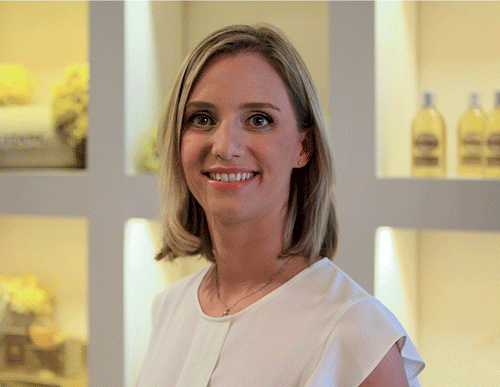
Interview: Helene Goetzelmann
L'Occitane's international spa director tells Rhianon Howells how the consumer retail company has become a spa operator with 60 facilities
Ask an expert: Profit & Loss
Hotel spas need to fight capital expenditure allocation said an investor panel at this year's Global Spa & Wellness Summit
Research: All rise
There's been an increase in the five top key performance indicators in the US spa industry shows the 2013 ISPA study
Company Profile Promotion: ESPA promotion
As ESPA's 20th
anniversary year draws
to a close, founder and
CEO Sue Harmsworth
explains how and why the
company is still evolving
Safari Spa: Animal instinct
Safari spas are the staple for Amani, one of South Africa's largest spa chains. Lisa Starr talks to MD Ronleigh Gordon
Trends: Brief encounters
We take a look at some of the most innovative spa pop-ups, a growing trend across the leisure sector
Interview: Paul Smyth
Something & Son designer shares his insights on creating pop-up spa facilities. Magali Robathan reports
Summit review: Upping the ante
Katie Barnes reveals the takeaway messages from the 2013 Global Spa & Wellness Summit in New Delhi, India, attended by 375 industry leaders
Research: Local news
Domestic travellers dominate the global wellness tourism market which has an economic impact of US$1.3 trillion. SRI's Ophelia Yeung reports
Research: Thai up
Prantik Bordoloi analyses a 2013 Thai spa industry study based on both spa consumer and spa operator opinions
Software news: Tech talk
The latest developments and news from spa software suppliers from around the world
Don’t miss an opportunity to highlight the value of wellness tourism says the former WTTC president
Jean-Claude BaumgartenFormer president of the WTTC
Jean-Claude Baumgarten, former president of the WTTC, has advised the global spa industry to press home the value of wellness tourism at every possible opportunity. Speaking at the first Global Wellness Tourism Congress – part of the GSWS – he said that now the industry has such compelling statistics from The Global Wellness Tourism Economy study, it’s time to decide on the message it wants to convey and shout about it.
“Everyone must be on-message in quoting these numbers at every opportunity, at every press briefing, meeting and in every interview,” he said, adding that the travel and tourism industry originally promoted the profile of the sector to governments by doing just that.
Politicians are influenced by research which shows the value of a market against other sectors, he said, urging the wellness tourism industry to compare itself with well known sectors such as manufacturing, automobile and pharmaceuticals.
Methodology
To calculate the value of the global wellness tourism industry, SRI International estimated the number of wellness tourists by country and aggregated their expenditures inclusive of: * Primary and secondary wellness travellers * International (in-bound) and domestic tourists * Measuring economic activity at the destination of travel, not where tourist come from * Only trips that involved at least one overnight stay * Money spent on lodging, meals, entertainment and excursions, shopping and other related activities and services
Ophelia Yeung is the senior consultant at SRI International’s Centre for Science, Technology and Economic Development Email: [email protected] Tel: +1 703 247 8445
Wellness travel is more likely to be within a country’s borders than abroad, the study found / shutterstock.com/Maridav
In the fast-paced world of fitness and wellness, where high-intensity workouts push us to
our limits and the sweat pours, the importance of efficient recovery cannot be overstated. [more...]
Contrast therapy, based on the alternation of hot and cold rituals, has become one of the
most valued practices in the fields of wellness and recovery. [more...]
+ More featured suppliers
COMPANY PROFILES
Blu Spas, Inc.
Blu is a full-service firm offering project feasibility, planning and design as well as operational [more...]
Elemental Herbology
Founded in 2008 by a Traditional Chinese Medicine Practitioner, Elemental Herbology is a spa, retail [more...]
Wellness travel is more likely to be within a country’s borders than abroad, the study found / shutterstock.com/MJTH
Consumers have long associated travel with their personal wellness. Many people look forward to their vacation trips as an opportunity to rejuvenate and de-stress, and to enrich themselves by immersing in new cultures, sites, and experiences. Not surprisingly, “take a vacation” was among the top five things consumers do to maintain and enhance their wellness, according to the Spas and the Global Wellness Market report conducted by SRI International in 2010 (see 2011 Spa Business Handbook p78). Some travellers take trips specifically to maintain and improve their health. Others want to keep up with their healthy habits when they travel. This growing trend is giving rise to wellness tourism on a global scale.
Wellness tourism is positioned at a profitable intersection between two massive and growing industries – wellness and tourism – estimated at US$2 trillion (€1.5tn, £1.2tn) and US$3.2 trillion (€2.3tn, £2tn) respectively. Exactly what is wellness tourism, and how large is this market? This was the subject of the SRI research report The Global Wellness Tourism Economy, commissioned by the Global Spa and Wellness Summit that was revealed at its annual conference in New Delhi on 5 October this year (see p70).
Wellness travellers In contrast to the medical paradigm, wellness tourism is proactive, focusing on personal responsibility and initiative to integrate a variety of healthy habits, activities and practices that bring an individual to an increasingly optimal state of wellbeing.
At the core of wellness travel are the multidimensional values related to wellness, which extend from the physical and emotional, to the social and environmental. Motivated by these values, a wellness traveller may take part in many different kinds of activities during travel. These activities and businesses make up the diverse wellness tourism economy. They include spas, health resorts, baths and springs, as well as yoga retreats, national parks, gyms and fitness centres, specialty restaurants, and complementary and alternative medicine centres. Based on this framework, we define wellness tourism as “travel associated with the pursuit of maintaining or enhancing one’s personal wellbeing”.
Domestic dominance We identified two types of wellness travellers in our research – primary purpose and secondary purpose. For the primary purpose wellness traveller, wellness is the sole purpose for the trip and for choosing the destination. Examples are those who stay at a destination spa or wellness resort such as Kamalaya in Koh Samui, enroll in a yoga or meditation retreat, or travel to experience authentic ayurveda medicine.
What surprised us, however, is that secondary purpose wellness travellers make up a much larger proportion – accounting for 85 per cent of all wellness trips and expenditures . These travellers have an interest in maintaining wellness during travel, although it’s not the sole purpose for taking a trip. Examples would be a tourist visiting India mainly with a cultural interest, but who also visits an ayurveda centre, or takes a yoga class. It could be the business traveller who chooses to stay at a hotel that offers healthy food and has a good gym, or a person who visits a spa during a ski vacation.
Another very interesting finding is that while many people think of tourism as travel to a different country, in reality much of the world’s tourism takes place within a country’s borders. This is especially true in large countries, such as the US, Canada, Russia, India, and China. We estimate that domestic tourism accounts for roughly two-thirds of the global wellness tourism market, similar to the distribution in the global tourism market.
What’s it worth? Measuring the size of an industry is a challenging task and we based our methodology on estimating the number of wellness tourists by country, and aggregating their expenditures (see p82). In total, we estimate that the wellness tourism economy is worth US$439bn (€318.8bn, £272.8bn), roughly 14 per cent of global tourism expenditures. Wellness tourism directly creates 12 million jobs around the world and has a total economic impact of US$1.3tn (€962bn, £809bn), when multiplied economic impacts are included.
Not surprisingly, wellness tourism is a rather large segment, similar in size to ecotourism and culinary tourism, but bigger than sports tourism and medical tourism. Importantly, however, these niche markets do not operate exclusively of one another – a wellness tourist can be simultaneously an eco-tourist, a cultural tourist and a sports tourist. And we see that there many opportunities to cross-market niche tourism products to these potential customers.
The 525 million trips made by wellness travellers represent only 6 per cent of all tourism trips, but account for 14 per cent of all tourism spending. Wellness travellers spend more per trip on average as they tend to be wealthier and more educated. While an international tourist on average spends US$1,000 (€726, £621) per trip (exclusive of air travel), an international wellness tourist spends 65 per cent more. The differential between an average domestic traveller and a wellness traveller is even greater, with domestic wellness traveller spending 2.5 times the average domestic tourist per trip.
Spa tourism The spa industry is obviously a very important and core player in wellness tourism. We define spa tourism as an overnight trip in which the person’s motivation for the trip includes the enjoyment of spa services or treatments (as either a primary or secondary purpose); and it accounts for approximately 225 million annual trips. Spa tourism, estimated at US$180bn (€130.7bn, £111.8bn), represents about 41 per cent of the global wellness tourism market – the largest sub sector within wellness tourism. As wellness tourism is high-yield, and can potentially bring additional social benefits to the community such as preservation and support for local products, environment, culture and traditions, the spa industry may find many allies and partners with other key stakeholders – such as those in the hospitality, health and tourism sectors, as well as government ministries – to explore new business opportunities and models in this high growth market. We predict that it will grow by 9.7 per cent a year and that it will reach US$285bn (€211bn, £177bn) by 2017.
Global growth Wellness tourism is very concentrated in the top destination countries, with the top 20 accounting for 88 per cent of the global wellness tourism market. These are primarily concentrated in North America, Western Europe, and the high-income Asian countries. The top five countries alone represent 63 per cent of the global market.
Wellness tourism will grow rapidly in the coming years, at a much higher rate than the overall tourism market. We estimate that wellness tourism trips will grow at an annual rate of 9.1 per cent through 2017 (compared to a 6.2 per cent global tourism annual growth forecast), bringing wellness tourism up to 16 per cent of global tourism expenditures. More than half of the growth will take place in Asia, Latin America and Middle East and North Africa, fuelled by a rise in both domestic wellness tourism and intra-regional wellness tourism (see Table 1). In the more established markets of North America and Europe, wellness tourism growth will be driven by ageing populations and their increasing concern with preventive health measures. In addition, the maturing of Gen X and Gen Y consumer cohorts – who are more self-aware, globally conscious, and open to new experiences – are also likely to boost wellness travel.
Read more from this issue of Spa Business magazine
Interview: Helene Goetzelmann
L'Occitane's international spa director tells Rhianon Howells how the consumer retail company has become a spa operator with 60 facilities
Ask an expert: Profit & Loss
Hotel spas need to fight capital expenditure allocation said an investor panel at this year's Global Spa & Wellness Summit
Research: All rise
There's been an increase in the five top key performance indicators in the US spa industry shows the 2013 ISPA study
Company Profile Promotion: ESPA promotion
As ESPA's 20th
anniversary year draws
to a close, founder and
CEO Sue Harmsworth
explains how and why the
company is still evolving
Safari Spa: Animal instinct
Safari spas are the staple for Amani, one of South Africa's largest spa chains. Lisa Starr talks to MD Ronleigh Gordon
Trends: Brief encounters
We take a look at some of the most innovative spa pop-ups, a growing trend across the leisure sector
Interview: Paul Smyth
Something & Son designer shares his insights on creating pop-up spa facilities. Magali Robathan reports
Summit review: Upping the ante
Katie Barnes reveals the takeaway messages from the 2013 Global Spa & Wellness Summit in New Delhi, India, attended by 375 industry leaders
Research: Local news
Domestic travellers dominate the global wellness tourism market which has an economic impact of US$1.3 trillion. SRI's Ophelia Yeung reports
Research: Thai up
Prantik Bordoloi analyses a 2013 Thai spa industry study based on both spa consumer and spa operator opinions
Software news: Tech talk
The latest developments and news from spa software suppliers from around the world
Don’t miss an opportunity to highlight the value of wellness tourism says the former WTTC president
Jean-Claude BaumgartenFormer president of the WTTC
Jean-Claude Baumgarten, former president of the WTTC, has advised the global spa industry to press home the value of wellness tourism at every possible opportunity. Speaking at the first Global Wellness Tourism Congress – part of the GSWS – he said that now the industry has such compelling statistics from The Global Wellness Tourism Economy study, it’s time to decide on the message it wants to convey and shout about it.
“Everyone must be on-message in quoting these numbers at every opportunity, at every press briefing, meeting and in every interview,” he said, adding that the travel and tourism industry originally promoted the profile of the sector to governments by doing just that.
Politicians are influenced by research which shows the value of a market against other sectors, he said, urging the wellness tourism industry to compare itself with well known sectors such as manufacturing, automobile and pharmaceuticals.
Methodology
To calculate the value of the global wellness tourism industry, SRI International estimated the number of wellness tourists by country and aggregated their expenditures inclusive of: * Primary and secondary wellness travellers * International (in-bound) and domestic tourists * Measuring economic activity at the destination of travel, not where tourist come from * Only trips that involved at least one overnight stay * Money spent on lodging, meals, entertainment and excursions, shopping and other related activities and services
Ophelia Yeung is the senior consultant at SRI International’s Centre for Science, Technology and Economic Development Email: [email protected] Tel: +1 703 247 8445
Wellness travel is more likely to be within a country’s borders than abroad, the study found / shutterstock.com/Maridav
Private hotel owner and developer HVL Hotels will open a new luxury resort and tourism
destination called Laval Hunter Valley in the second half of 2027 in Pokolbin, Australia.
The annual wellness festival dedicated to wellbeing, culture, longevity and human connection,
called Alma, will be hosted by Rocco Forte hotel, Verdura Resort in Sicily, Italy.
Capella Hotel Group has appointed Feisal Jaffer as chief development officer as the company
ramps up its global expansion of both its Capella and Patina brands.
People taking GLP-1 weight loss medications such as Ozempic, Wegovy, Mounjaro and Zepbound
may be losing weight, but they’re also becoming less physically active, according to new
research presented at the ENDO 2026 annual meeting of the Endocrine Society
Abu Dhabi-based investment firm Mubadala Capital has made a binding, fully financed
€1 billion
offer to acquire Pierre and Vacances SA, the European holiday resort operator behind the
continental European Center Parcs business.
Global retreat trade show, Synergy The Retreat Show, has launched a resource called The
Source, which hosts an open-access online Transformation Series programme.
The Standards Authority for Touch in Cancer Care (SATCC) charity has announced its first five-
day Living with Cancer and Beyond retreat, which will be held at Carden Park Hotel and Spa in
Cheshire, UK, between 1 and 5 September.
Patmos Aktis, a Luxury Collection Resort and Spa, has opened in Greece, with a renovated and
rebranded wellness offering called Ansana Wellness and Spa.
The Mauna Kea Beach Hotel, an Autograph Collection property in Hawaii, US, has opened its
22,000 sq ft indoor-outdoor Spa at Mauna Kea as the final step in the property’s overall
renovation, which has cost more than US$180 million (€166 million, £140 mill
In the fast-paced world of fitness and wellness, where high-intensity workouts push us to
our limits and the sweat pours, the importance of efficient recovery cannot be overstated. [more...]
Contrast therapy, based on the alternation of hot and cold rituals, has become one of the
most valued practices in the fields of wellness and recovery. [more...]
+ More featured suppliers
COMPANY PROFILES
Blu Spas, Inc. Blu is a full-service firm offering project feasibility, planning and design as well as operational [more...]