Twenty years after opening, The Olympic
Museum in Lausanne, Switzerland has undergone
an extensive refurbishment. Director Francis
Gabet explains how it reflects the excitement
and diversity of the modern Games
By Julie Cramer | Published in Attractions Management 2014 issue 2
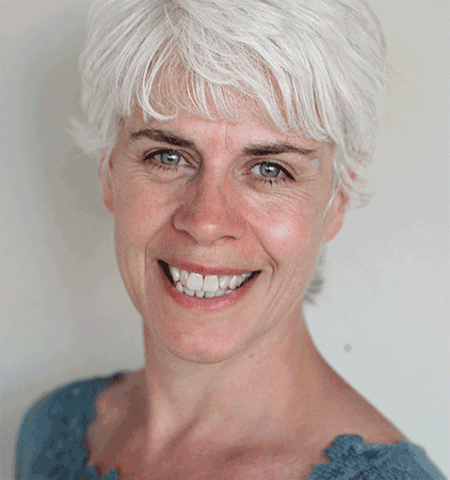
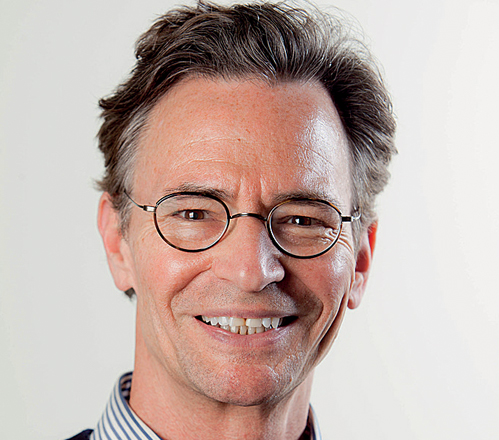
Francis Gabet, Director, The Olympic Museum in Lausanne, Switzerland
Why did you decide on the refurbishment? The museum first opened on 23rd June 1993 – the 23rd June being the anniversary of the famous speech by Pierre De Coubertin [the founder of the modern Olympic movement and the International Olympic Committee] at the Sorbonne in Paris, setting out his vision for the Olympics’ future.
We began looking at changing things at the museum six years ago. We were having problems with the old scenography which wasn’t upgradeable and generally becoming more and more difficult to maintain. It was 20-years-old, but may as well have been from another century considering how much museum technology has moved on since then.
We clearly needed hardware and software products that could link into web-based technologies and be much more sustainable into the future. We also needed more flexibility to follow the “olympic movement”, creating new stories at least every two years.
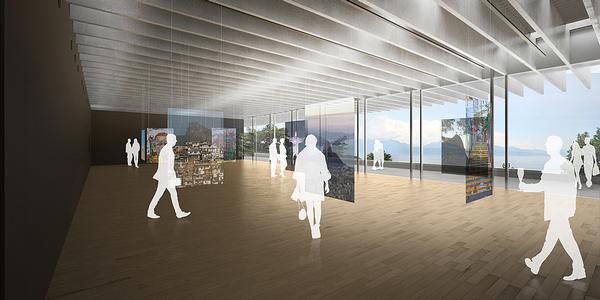
How have you changed the interior? We’ve increased our permanent exhibition space from 2,000 to 3,000sq m (21,500 to 32,290sq ft), which is quite significant.
We’ve also covered our second floor open air terrace of 1,500sq m (16,150sq ft) to accommodate all the new hospitality areas. All of these areas and gallery spaces on the second floor now have incredible views over Lake Geneva and the Alps.
What challenges did you face? The old museum had a lot of chronological wall displays, which meant we could only really manage spaces for a 12- to 16-year time period, before we had to redesign everything.
After the London Games in 2012, the current lifecycle of exhibits was at an end and we saw it as an opportunity to change everything in a major way.
As well as redesigning the museum, we were also able to make general improvements to comply to updated health and safety standards and sustainable building practices and so on.
So we closed the doors for almost two years and reopened in December 2013.
What are the changes? The previous museum offered quite an institutional and dated point of view. For example, when we covered issues like doping in sport it was from a moral standpoint, whereas now the battle to protect clean athletes is no longer a debate and we present the facts for visitors to interpret as they wish.
We want to offer a 360-degree view of the modern Olympic movement – and of course the Games are at the centre of that. We cover its philosophical roots and the aims of De Courbetin and the achievements of the athletes. But we also take in the thousands of people behind the scenes – the volunteers, designers, architects – who make it all happen.
How has the outdoor space changed? We’ve redesigned many of the spaces and the journey through them. We think of the museum as the temple at the top of Mount Olympus, sitting on top of the hill surrounded by a beautiful, cultural park.
We cleared the space nearest to Lake Geneva and opened up the west side of the museum to offer panoramic views.
We wanted the inspiring messages of the Olympics to be in evidence as soon as people entered the park. For example, we’ve built a staircase leading up from the lake to the museum, where the steps are engraved with the names of the Olympic torchbearers.
What’s the next development stage? During 2014, we’ll be working on our digital platforms, setting up a framework that will hopefully go live this summer. This digital space will be yet another location for the museum.
On the website, there’ll be an ‘Olympic Journey’ for people to follow. It draws on the vast amount of multimedia resources that we’ve used in all the permanent exhibitions in the past couple of decades.
We’re re-versioning everything for our digital space, so that we can create the kind of user connections you just can’t achieve on a solid platform. Material from our rolling, temporary exhibitions will also be fed to these platforms, including much more new content suitable for school parties.
What exhibitions are coming up? In May, we’ll have a programme looking at the relationship between time and sport. For example, Olympic records are a modern phenomenon – the concept didn’t exist in Ancient Greece. So we’re exploring how society is changing sport and how sport is reacting to society.
In September we’re planning to use our new digital platforms to have more conversations and interesting partnerships with artists and creators.
How many visitors do you predict? The original museum attracted 180,000 to 200,000 visitors a year – the top end of those numbers during the Olympic years, especially the summer Games.
But Lausanne is Lausanne, it’s not New York or London or Paris. It’s not very geared towards leisure or tourism – it’s much more of a business centre.
Our new museum isn’t really about generating more visitors. It’s more about creating a modern way of recording the Games, something inspiring and symbolic that can now easily be shared around the world on digital platforms.
But maybe in time, more people will be inspired to visit the museum also.
Read more from this issue of Spa Business magazine
View contents of Spa Business 2014 issue 2
Editor's letter: The New Philanthropists
Tech is hot and as the growing number of tech millionaires
turn their thoughts to philanthropy, tech-related
attactions will prosper
Profile: Mario Mamon
The current chair of IAAPA talks about
his role with the organisation, doubling
the size of family theme park Enchanted
Kingdom in the Philippines and the
devastation of Super Typhoon Haiyan
Museums: MOHAI
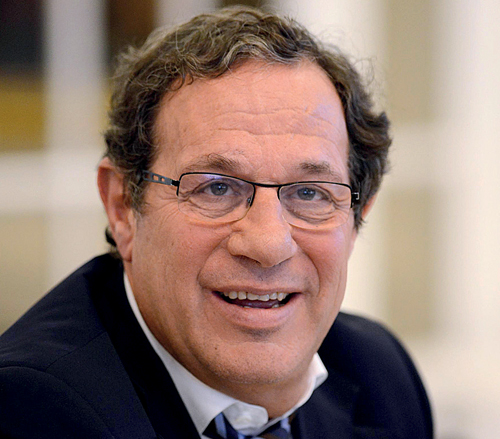
MOHAI's executive director,
Leonard Garfield, talks about
the Seattle museum's new Bezos
Center for Innovation, named after
Amazon founder Jeff Bezos
Science centres: Appliance of science
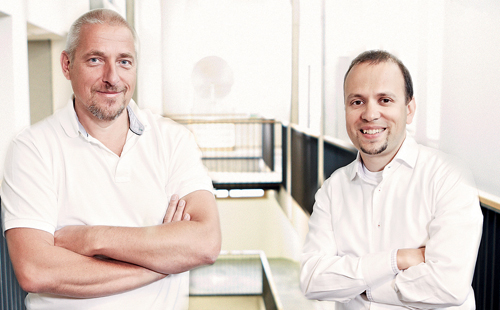
Andreas Waschk and Mike Boris
explain how they made Blueprint
Entertainment into Europe's largest
private science centre operator
Museums: Olympic Movement
Director Francis Gabet describes how
The Olympic Museum's extensive
refurbishment reflects the excitement
and diveristy of the modern Games
Planetariums: Starry skies
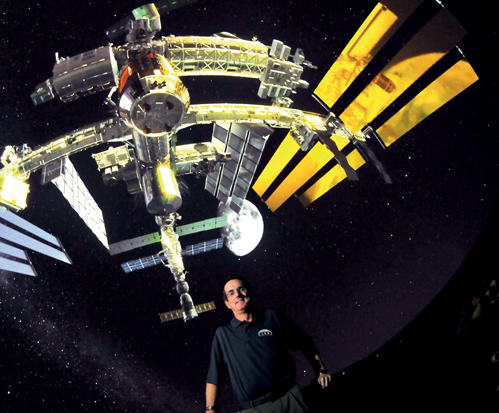
The newly upgraded Fiske Planetarium in
Boulder, Colorado now boasts the highest
specification full dome theatre in the US.
Director Douglas Duncan tells us more
Museums: Beautiful minds
The founders of MoMath, the New York
Museum of Mathematics, tell us how
they're on a mission to get ordinary
people to fall in love with maths
World expos: Brave new world
Christian Lachel considers how world
expos can raise global awareness
about what matters for the planet
3D/4D/5D: IMERSA
A review of the fifth annual IMERSA
conference held in Denver, Colorado
Advertisement feature: EAS 2014
The exhibitors reveal what they’ll be showcasing at EAS in
September and what the hot topics of conversation will be
Waterparks: Wet'n'Wild
Wet'n'Wild Sydney has welcomed
a million visitors through its gates
since opening in December. Managing
director Chris Warhurst tells us why
Ticketing: Convenience store
Gateway's Liesel Tarquini explains
how mobile web stores can help
generate additional revenue
for attractions operators
Olympic Museum tour The Olympic Museum houses the largest Olympic archive in the world. Its hometown of Lausanne in Switzerland is headquarters to the International Olympics Committee (IOC).
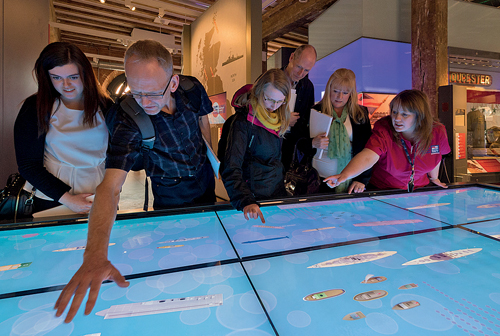
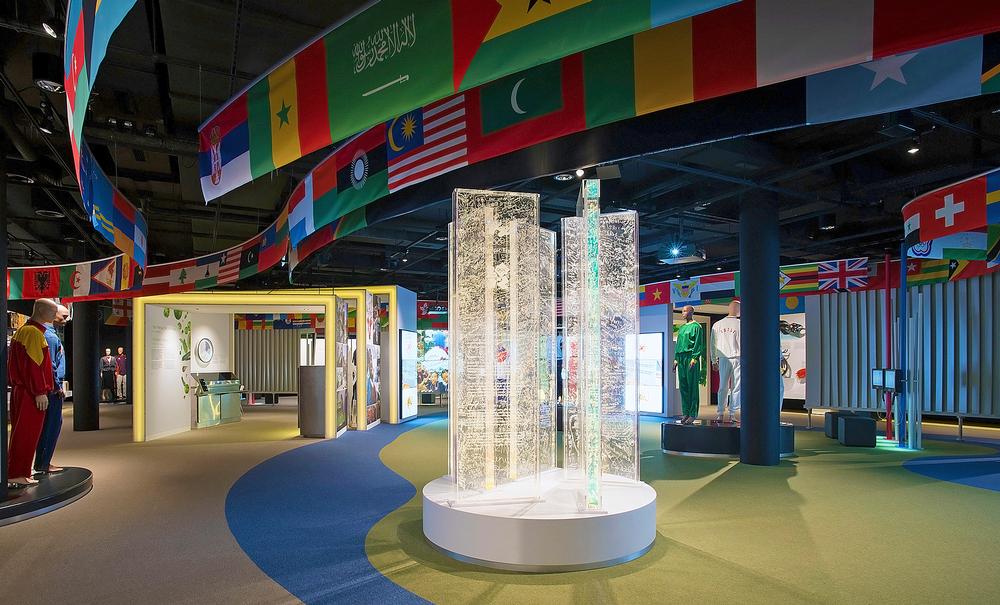
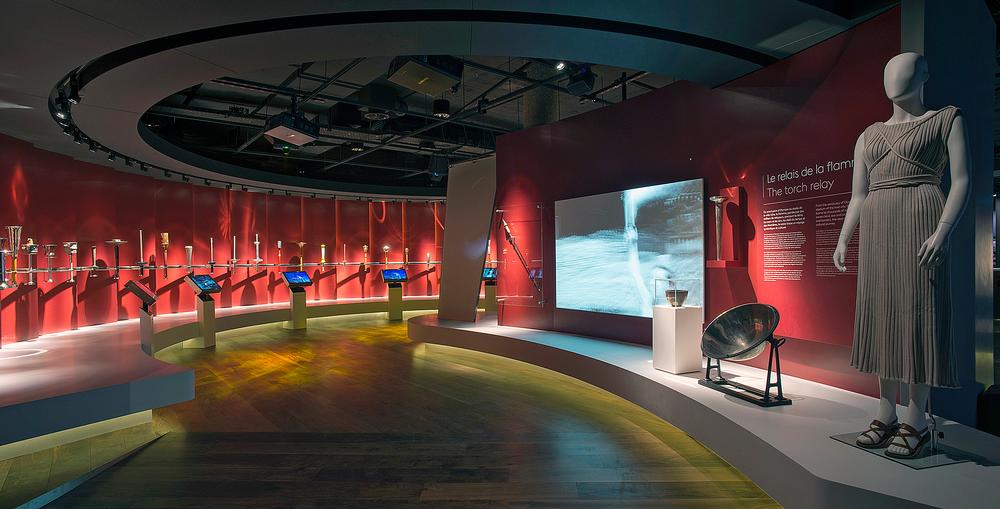
The revamped museum now offers 50 per cent more exhibition space, employing a greater use of digital displays. The permanent exhibition is spread over three levels with more than 1,000 objects and 150 screens.
Each level revisits an essential aspect of the modern Olympic movement, finding out about Olympians along the way by means of an interactive dialogue.
Two rooms equipped with the latest teaching resources allow groups of young people to participate in educational workshops. There’s also a new café on the top floor and a retail area on the ground floor.
The campus is also home to the Olympic Studies Centre, where researchers, students and journalists can access the library of extensive Olympic information and memorabilia from the official archives, books, images and artefacts.
The museum sits within a large park on the banks of Lake Geneva, with newly designed themed outdoor spaces that include creative sculptures, a garden of Olympic records, a themed Olympic pathway, and even a real athletics track that allows visitors to imagine they’re competing against the last Olympic 100m champion.
The museum is a modern way of recording the Games to be shared digitally
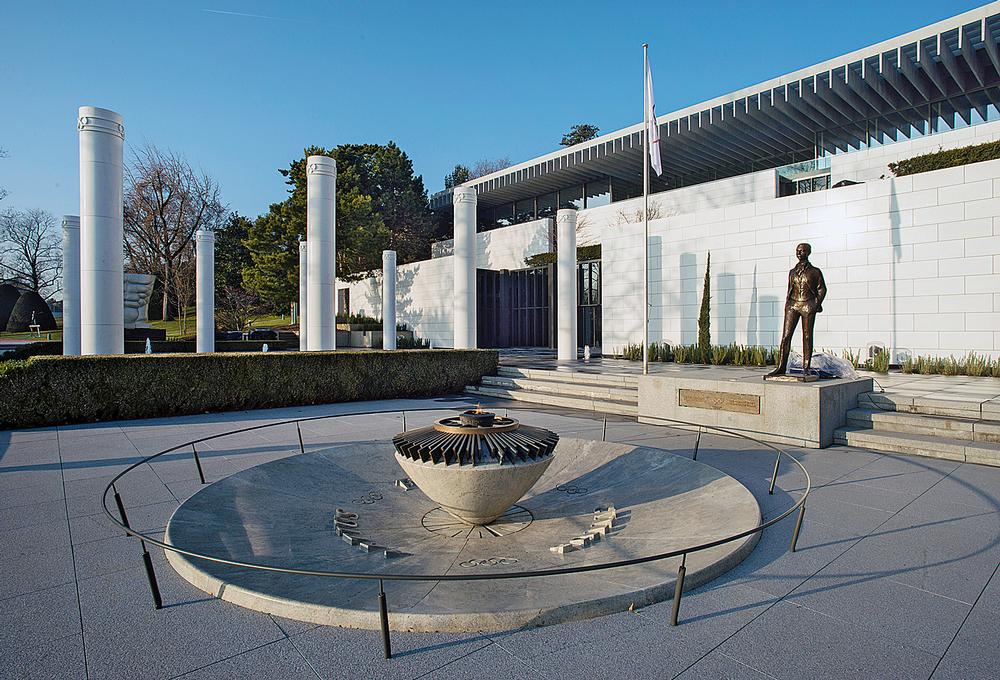
The Olympic Museum in Lausanne, Switzerland
The museum’s collection spans the period from ancient times to the present day
the redesigned outdoor spaces
The permanent exhibition is spread over three levels with more than 1,000 objects and 150 screens
Twenty years after opening, The Olympic
Museum in Lausanne, Switzerland has undergone
an extensive refurbishment. Director Francis
Gabet explains how it reflects the excitement
and diversity of the modern Games
By Julie Cramer | Published in Attractions Management 2014 issue 2
Francis Gabet, Director, The Olympic Museum in Lausanne, Switzerland
Why did you decide on the refurbishment? The museum first opened on 23rd June 1993 – the 23rd June being the anniversary of the famous speech by Pierre De Coubertin [the founder of the modern Olympic movement and the International Olympic Committee] at the Sorbonne in Paris, setting out his vision for the Olympics’ future.
We began looking at changing things at the museum six years ago. We were having problems with the old scenography which wasn’t upgradeable and generally becoming more and more difficult to maintain. It was 20-years-old, but may as well have been from another century considering how much museum technology has moved on since then.
We clearly needed hardware and software products that could link into web-based technologies and be much more sustainable into the future. We also needed more flexibility to follow the “olympic movement”, creating new stories at least every two years.
How have you changed the interior? We’ve increased our permanent exhibition space from 2,000 to 3,000sq m (21,500 to 32,290sq ft), which is quite significant.
We’ve also covered our second floor open air terrace of 1,500sq m (16,150sq ft) to accommodate all the new hospitality areas. All of these areas and gallery spaces on the second floor now have incredible views over Lake Geneva and the Alps.
What challenges did you face? The old museum had a lot of chronological wall displays, which meant we could only really manage spaces for a 12- to 16-year time period, before we had to redesign everything.
After the London Games in 2012, the current lifecycle of exhibits was at an end and we saw it as an opportunity to change everything in a major way.
As well as redesigning the museum, we were also able to make general improvements to comply to updated health and safety standards and sustainable building practices and so on.
So we closed the doors for almost two years and reopened in December 2013.
What are the changes? The previous museum offered quite an institutional and dated point of view. For example, when we covered issues like doping in sport it was from a moral standpoint, whereas now the battle to protect clean athletes is no longer a debate and we present the facts for visitors to interpret as they wish.
We want to offer a 360-degree view of the modern Olympic movement – and of course the Games are at the centre of that. We cover its philosophical roots and the aims of De Courbetin and the achievements of the athletes. But we also take in the thousands of people behind the scenes – the volunteers, designers, architects – who make it all happen.
How has the outdoor space changed? We’ve redesigned many of the spaces and the journey through them. We think of the museum as the temple at the top of Mount Olympus, sitting on top of the hill surrounded by a beautiful, cultural park.
We cleared the space nearest to Lake Geneva and opened up the west side of the museum to offer panoramic views.
We wanted the inspiring messages of the Olympics to be in evidence as soon as people entered the park. For example, we’ve built a staircase leading up from the lake to the museum, where the steps are engraved with the names of the Olympic torchbearers.
What’s the next development stage? During 2014, we’ll be working on our digital platforms, setting up a framework that will hopefully go live this summer. This digital space will be yet another location for the museum.
On the website, there’ll be an ‘Olympic Journey’ for people to follow. It draws on the vast amount of multimedia resources that we’ve used in all the permanent exhibitions in the past couple of decades.
We’re re-versioning everything for our digital space, so that we can create the kind of user connections you just can’t achieve on a solid platform. Material from our rolling, temporary exhibitions will also be fed to these platforms, including much more new content suitable for school parties.
What exhibitions are coming up? In May, we’ll have a programme looking at the relationship between time and sport. For example, Olympic records are a modern phenomenon – the concept didn’t exist in Ancient Greece. So we’re exploring how society is changing sport and how sport is reacting to society.
In September we’re planning to use our new digital platforms to have more conversations and interesting partnerships with artists and creators.
How many visitors do you predict? The original museum attracted 180,000 to 200,000 visitors a year – the top end of those numbers during the Olympic years, especially the summer Games.
But Lausanne is Lausanne, it’s not New York or London or Paris. It’s not very geared towards leisure or tourism – it’s much more of a business centre.
Our new museum isn’t really about generating more visitors. It’s more about creating a modern way of recording the Games, something inspiring and symbolic that can now easily be shared around the world on digital platforms.
But maybe in time, more people will be inspired to visit the museum also.
Read more from this issue of Spa Business magazine
View contents of Spa Business 2014 issue 2
Editor's letter: The New Philanthropists
Tech is hot and as the growing number of tech millionaires
turn their thoughts to philanthropy, tech-related
attactions will prosper
Profile: Mario Mamon
The current chair of IAAPA talks about
his role with the organisation, doubling
the size of family theme park Enchanted
Kingdom in the Philippines and the
devastation of Super Typhoon Haiyan
Museums: MOHAI
MOHAI's executive director,
Leonard Garfield, talks about
the Seattle museum's new Bezos
Center for Innovation, named after
Amazon founder Jeff Bezos
Science centres: Appliance of science
Andreas Waschk and Mike Boris
explain how they made Blueprint
Entertainment into Europe's largest
private science centre operator
Museums: Olympic Movement
Director Francis Gabet describes how
The Olympic Museum's extensive
refurbishment reflects the excitement
and diveristy of the modern Games
Planetariums: Starry skies
The newly upgraded Fiske Planetarium in
Boulder, Colorado now boasts the highest
specification full dome theatre in the US.
Director Douglas Duncan tells us more
Museums: Beautiful minds
The founders of MoMath, the New York
Museum of Mathematics, tell us how
they're on a mission to get ordinary
people to fall in love with maths
World expos: Brave new world
Christian Lachel considers how world
expos can raise global awareness
about what matters for the planet
3D/4D/5D: IMERSA
A review of the fifth annual IMERSA
conference held in Denver, Colorado
Advertisement feature: EAS 2014
The exhibitors reveal what they’ll be showcasing at EAS in
September and what the hot topics of conversation will be
Waterparks: Wet'n'Wild
Wet'n'Wild Sydney has welcomed
a million visitors through its gates
since opening in December. Managing
director Chris Warhurst tells us why
Ticketing: Convenience store
Gateway's Liesel Tarquini explains
how mobile web stores can help
generate additional revenue
for attractions operators
Olympic Museum tour The Olympic Museum houses the largest Olympic archive in the world. Its hometown of Lausanne in Switzerland is headquarters to the International Olympics Committee (IOC).
The revamped museum now offers 50 per cent more exhibition space, employing a greater use of digital displays. The permanent exhibition is spread over three levels with more than 1,000 objects and 150 screens.
Each level revisits an essential aspect of the modern Olympic movement, finding out about Olympians along the way by means of an interactive dialogue.
Two rooms equipped with the latest teaching resources allow groups of young people to participate in educational workshops. There’s also a new café on the top floor and a retail area on the ground floor.
The campus is also home to the Olympic Studies Centre, where researchers, students and journalists can access the library of extensive Olympic information and memorabilia from the official archives, books, images and artefacts.
The museum sits within a large park on the banks of Lake Geneva, with newly designed themed outdoor spaces that include creative sculptures, a garden of Olympic records, a themed Olympic pathway, and even a real athletics track that allows visitors to imagine they’re competing against the last Olympic 100m champion.
The museum is a modern way of recording the Games to be shared digitally
The Olympic Museum in Lausanne, Switzerland
The museum’s collection spans the period from ancient times to the present day
the redesigned outdoor spaces
The permanent exhibition is spread over three levels with more than 1,000 objects and 150 screens
Global Wellness Day (GWD) marked its 15th anniversary on Saturday 13 June 2026, with the
theme: #JoyMagenta – a celebration of the healing qualities of simple gestures and activities
that spark joy.
Global luxury hospitality brand, Six Senses, has partnered with longevity healthcare provider,
HUM2N, to launch a clinic at Six Senses London, at The Whiteley.
As part of its first hotel partnership, Mayrlife – the medical health resort company known for its
site in Altaussee, Austria – has launched a day clinic at the Rosewood Vienna.
Premium London health club, KX Chelsea, will imminently unveil its most significant
redevelopment since its launch in 2002 to create an integrated wellness model combining
training, recovery and relaxation.
Rosewood Le Guanahani St Barth, on the northeast coast of Saint Barthélemy in the French
West Indies, is offering a programme of ocean-inspired yoga classes between 8-14 June to
celebrate Global Wellness Day (GWD).
Hotel de France, located on the British Isle of Jersey, has created a wellness retreat package
that includes a hot yoga session that will take place in Jersey Zoo’s butterfly sanctuary.
The Ritz-Carlton, Langkawi, in Malaysia, has revealed a schedule for Global Wellness Day
(GWD) that includes guided rainforest walks, mindful movement and guided coastal meditation
experiences.
Longevitix, a clinical platform for preventive and longevity medicine, has launched its AI-
powered intelligence system to help physicians deliver continuous, personalised longevity-
focused care at scale.
Atmantan Wellness Centre, an integrative wellness destination in Mulshi, near Pune in India, is
expanding its portfolio by adding a new centre in Hyderabad that will launch between 2028 and
2029.