Yes! Send me the FREE digital editions of Spa Business and Spa Business insider magazines and the FREE weekly Spa Business and Spa Business insider ezines and breaking news alerts!
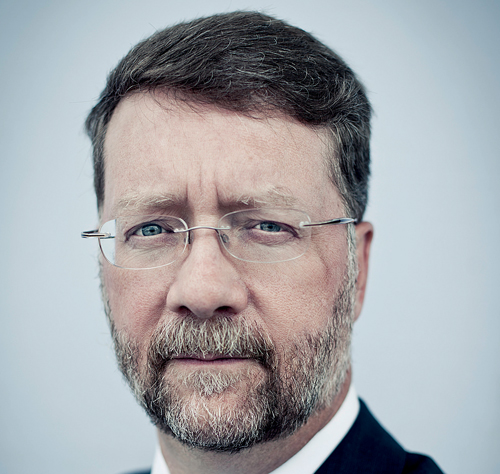
Richard Marples, strategic marketing director at Barco, believes impressive digitised experiences can transform a visitor attraction. “Attractive visualisation engages customers via technology, creating memories that will make them come back again,” he says. Aside from the cutting-edge visuals that the company builds with its range of projection technology, video walls and LED displays, Barco provides digital signage and works extensively behind the scenes. Networked visualisation technology is also part of the company’s education and collaboration portfolio and central to its security and monitoring portfolio. We talked to Marples about Barco’s growth.
Can you give us an overview of Barco? Barco is a visualisation technology company at its heart, and over a number of years we’ve developed products in various markets. The company is split into three main businesses: Entertainment and Corporate, Industrial and Government and Healthcare. We focus on projectors and displays, but we also offer lighting, digital signage, networking, image processing – these are all adjacent technology sectors which fit into those markets.
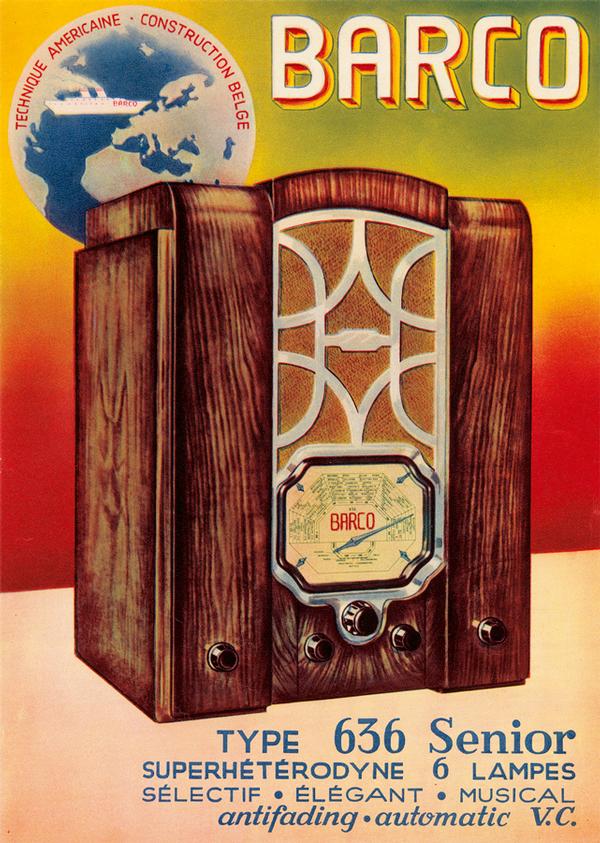
When was the company founded? Barco was founded in 1934. The name BARCO stands for the Belgian American Radio Corporation. An entrepreneurial Belgian named Lucien de Puydt did a deal with an American component supplier to bring radio components into Belgium and he began making traditional wooden cabinet valve radios. It was very much a consumer product company.
Once you’re making radios with valves, it isn’t a big leap to make televisions and record players. As the technology developed and more people started making radios and televisions, Barco found a niche in the broadcast industry.
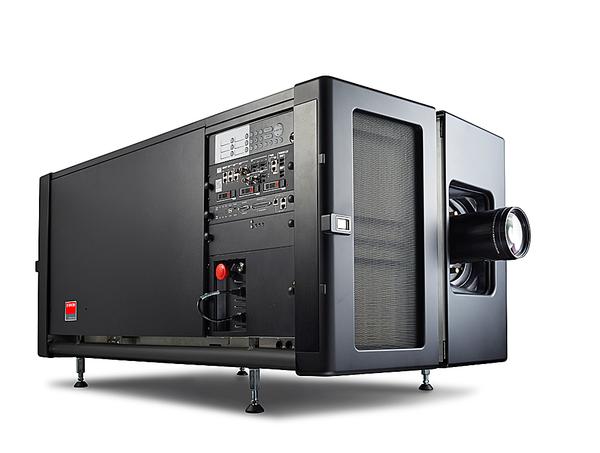
From those valves and the radios came the CRT with the television, and then CRT projectors. During the 70s, the projectors had the red, green and blue guns and 500 to 700 lumen projectors. You had to have a completely dark room and they were difficult to set up and maintain – certainly not like the projectors we make today.
Then there was a gradual move by Barco to become exclusively involved in professional markets – both niche and mainstream businesses – which are usually centred around some sort of visualisation application with its associated add-ons.
Who are your key customers? Barco’s largest division today is Entertainment and Corporate. The biggest market within E&C is digital cinema. There are only four suppliers worldwide who deliver a Hollywood-compliant projector and as one of those we’ve amassed just over 40 per cent of the worldwide market of about 130,000 screens. The digital cinema market continues to be one of our core activities. We’ve also developed an offering for media servers, audio systems and control systems. A cinema owner can now run the whole cinema from the lobby, and that’s revolutionised cinema.
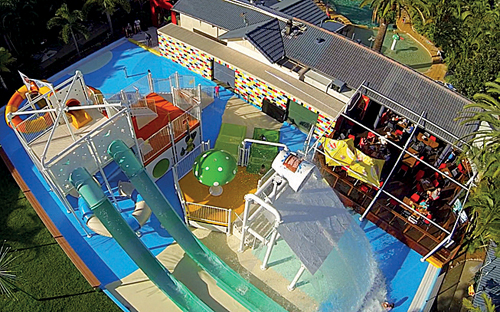
What solutions do you offer attractions? It’s the same visualisation solution for a number of different applications.
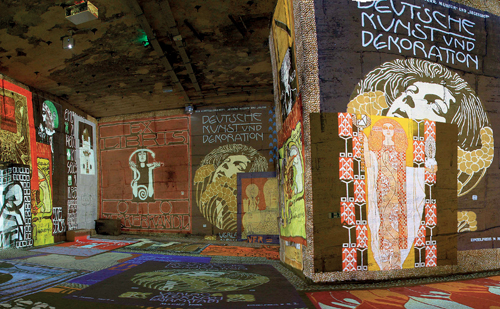
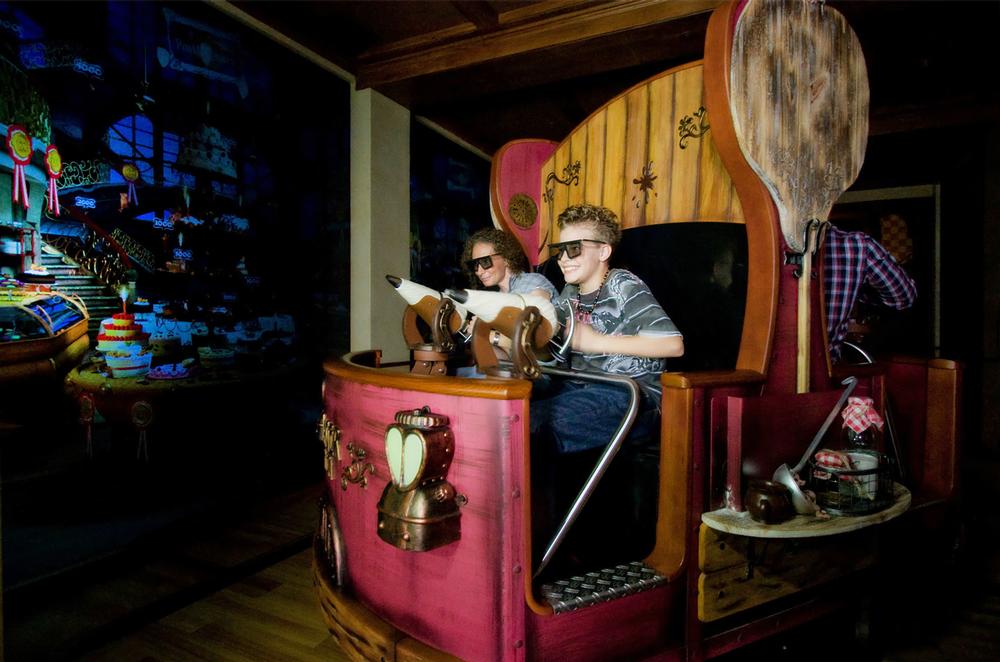
With our attractions customers there’s always an entertainment or experience part, whether that’s a 4D ride or dark ride or the end of day show at a theme park.
Another market is security and monitoring, a key element of all visitor attractions. We have complete security monitoring technology and display walls, allowing the security team to monitor and get feedback on what’s happening in the park. All the data an attraction owner needs can be displayed on a single screen.
We have a range which is signage and promotion, great for F&B outlets or souvenir shops. Our displays can give realtime information about queue times, promotions and so forth.
Lastly, there’s a meeting and collaboration element, so where there’s an educational focus, then we can get involved. Those are the four main elements. The solutions you need depend on the size and the number of visitors.
You bought projectiondesign in 2012? We bought the Norwegian projection technology manufacturer in December 2012, giving us a complimentary set of products to target a broader market.
Where in the world is Barco working? Everywhere. We have about 4,000 employees in 90 offices and factories around the world. We produce projectors in Belgium, China and Norway now because of projectiondesign. We have a lighting factory in Austin, Texas, and factories in California, India and Taiwan.
What are your immediate plans? We’re always developing our product range to be relevant to our markets. There are certain technologies that are coming through into all our markets, such as laser light sources for projectors or more powerful computers and graphics cards.
What are the advantages of laser projectors? Using laser, we can generate very pure colours. We can make them brighter because we’re not primarily producing heat, like with a lamp, but light. They’re very long-lasting and a laser will last 30,000 to 40,000 hours in the future. It’s more attractive in terms of running costs. The downside is lasers are expensive at the moment which is why we don’t see them universally yet. We’re developing the products and as the technology is used more the costs will come down, as happens with all new technology.
Has Barco overcome any challenges? The success of Barco as it is now comes from when Eric van Zele joined as our CEO. He came in at a crucial time, in the middle of the financial crisis. He says openly that Barco had lost its way a little at that time. He quickly recognised we needed to change a number of key things and, at a time when there was no investment at all, he invested heavily in the cinema business. That turned out to be crucial. His foresight and vision turned the company around. Heading up the E&C division, Wim Buyens was looking after digital cinema and his strategy to develop cinema and parts of the entertainment business such as visitor attractions has got us to where we are today.
What’s the best thing about working for Barco? We get involved in so many fascinating projects and see so many different ways of using our equipment. We never cease to be amazed by the creativity of our customers and the way they use our products to create brilliant projects. All attractions are competing for visitors, and they want repeat visitors and visitors who tell their friends about what a fantastic day they had. Providing entertaining visualisation is a great way of doing this. If your visitor is immersed and engaged, you’ve created an experience.
Read more from this issue of Spa Business magazine
View contents of Spa Business 2014 issue 4
Editor’s letter: Access for all
We ask whether enough is being done to ensure access for all to
attractions and what practical steps can be taken to improve things
Interview: Tim Smit
The Eden Project was groundbreaking
when it opened in 2001. Now the
attraction’s founder Tim Smit is taking
the concept to a global audience,
and he’s starting with China
Interview: Jonathan Gottschall
Literary scholar and author of The
Storytelling Animal explains why we’re
all addicted to story, and how attractions
can capitalise on our love of narrative
Heritage: Actions Speak Louder
The National Trust’s Ben Cowell
describes how landscaping can build up
to a reveal, and ways the organisation
is using actors to bring history to life
Conference Report: SATE 2014
TEA president Christine Kerr presents
the hot topics from the annual design
conference devoted to Storytelling,
Architecture, Technology, Experience
Story Centres: Tell Me A Story
The popularity of story centres shows
the youngest generation – dubbed
digital natives – are thirsty for
children’s literature and illustration
Technology: Reinventing the Nerd
Meet carnival-inspired Two Bit
Circus, created from its founders’
passion for engineering, video games
and the newest technologies
Promotional feature: BARCO
Barco offers state-of-the-art visualisation technology and
a holistic solution uniquely tailored to suit any attraction
Rides: The Ride Makers
In the first of a new series,
industry-leading manufacturers
tell us about the latest trends and
innovations in thrill coasters
Theme Parks: Kooza Came to Town
PortAventura’s general manager
on the Spanish park’s partnership
with celebrated circus troupe Cirque
du Soleil and its Kooza show
Planetariums: Tom Falvey
A new planetarium, capable of live
streaming to 14,000 schools, opens
as a new addition to the South
Carolina State Museum in the US
Show Preview: IAAPA EXPO
IAAPA returns to the Orange County Convention Center in Orlando,
Florida, from 18-21 November, with more than 1,000 exhibitors
and an expected 27,000 attendees
Multimedia: Art Project
State-of-the-art projectors and
world-class artists combine to
create inspiring installations
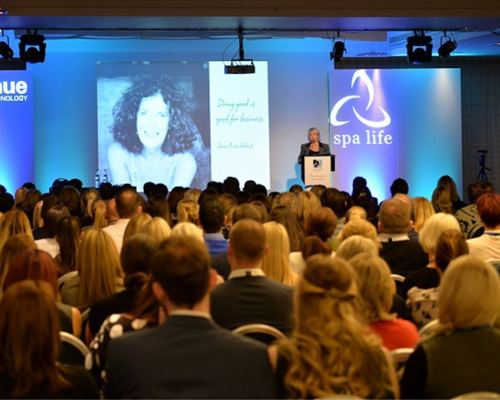
The Spa Life UK Convention returns from 21–23 June 2026 at Whittlebury Park Hotel, Spa &
Golf Resort, bringing together spa managers, directors and owners for two days of focused
education, meaningful connection and commercial insight. [more...]
Richard Marples, strategic marketing director at Barco, believes impressive digitised experiences can transform a visitor attraction. “Attractive visualisation engages customers via technology, creating memories that will make them come back again,” he says. Aside from the cutting-edge visuals that the company builds with its range of projection technology, video walls and LED displays, Barco provides digital signage and works extensively behind the scenes. Networked visualisation technology is also part of the company’s education and collaboration portfolio and central to its security and monitoring portfolio. We talked to Marples about Barco’s growth.
Can you give us an overview of Barco? Barco is a visualisation technology company at its heart, and over a number of years we’ve developed products in various markets. The company is split into three main businesses: Entertainment and Corporate, Industrial and Government and Healthcare. We focus on projectors and displays, but we also offer lighting, digital signage, networking, image processing – these are all adjacent technology sectors which fit into those markets.
When was the company founded? Barco was founded in 1934. The name BARCO stands for the Belgian American Radio Corporation. An entrepreneurial Belgian named Lucien de Puydt did a deal with an American component supplier to bring radio components into Belgium and he began making traditional wooden cabinet valve radios. It was very much a consumer product company.
Once you’re making radios with valves, it isn’t a big leap to make televisions and record players. As the technology developed and more people started making radios and televisions, Barco found a niche in the broadcast industry.
From those valves and the radios came the CRT with the television, and then CRT projectors. During the 70s, the projectors had the red, green and blue guns and 500 to 700 lumen projectors. You had to have a completely dark room and they were difficult to set up and maintain – certainly not like the projectors we make today.
Then there was a gradual move by Barco to become exclusively involved in professional markets – both niche and mainstream businesses – which are usually centred around some sort of visualisation application with its associated add-ons.
Who are your key customers? Barco’s largest division today is Entertainment and Corporate. The biggest market within E&C is digital cinema. There are only four suppliers worldwide who deliver a Hollywood-compliant projector and as one of those we’ve amassed just over 40 per cent of the worldwide market of about 130,000 screens. The digital cinema market continues to be one of our core activities. We’ve also developed an offering for media servers, audio systems and control systems. A cinema owner can now run the whole cinema from the lobby, and that’s revolutionised cinema.
What solutions do you offer attractions? It’s the same visualisation solution for a number of different applications.
With our attractions customers there’s always an entertainment or experience part, whether that’s a 4D ride or dark ride or the end of day show at a theme park.
Another market is security and monitoring, a key element of all visitor attractions. We have complete security monitoring technology and display walls, allowing the security team to monitor and get feedback on what’s happening in the park. All the data an attraction owner needs can be displayed on a single screen.
We have a range which is signage and promotion, great for F&B outlets or souvenir shops. Our displays can give realtime information about queue times, promotions and so forth.
Lastly, there’s a meeting and collaboration element, so where there’s an educational focus, then we can get involved. Those are the four main elements. The solutions you need depend on the size and the number of visitors.
You bought projectiondesign in 2012? We bought the Norwegian projection technology manufacturer in December 2012, giving us a complimentary set of products to target a broader market.
Where in the world is Barco working? Everywhere. We have about 4,000 employees in 90 offices and factories around the world. We produce projectors in Belgium, China and Norway now because of projectiondesign. We have a lighting factory in Austin, Texas, and factories in California, India and Taiwan.
What are your immediate plans? We’re always developing our product range to be relevant to our markets. There are certain technologies that are coming through into all our markets, such as laser light sources for projectors or more powerful computers and graphics cards.
What are the advantages of laser projectors? Using laser, we can generate very pure colours. We can make them brighter because we’re not primarily producing heat, like with a lamp, but light. They’re very long-lasting and a laser will last 30,000 to 40,000 hours in the future. It’s more attractive in terms of running costs. The downside is lasers are expensive at the moment which is why we don’t see them universally yet. We’re developing the products and as the technology is used more the costs will come down, as happens with all new technology.
Has Barco overcome any challenges? The success of Barco as it is now comes from when Eric van Zele joined as our CEO. He came in at a crucial time, in the middle of the financial crisis. He says openly that Barco had lost its way a little at that time. He quickly recognised we needed to change a number of key things and, at a time when there was no investment at all, he invested heavily in the cinema business. That turned out to be crucial. His foresight and vision turned the company around. Heading up the E&C division, Wim Buyens was looking after digital cinema and his strategy to develop cinema and parts of the entertainment business such as visitor attractions has got us to where we are today.
What’s the best thing about working for Barco? We get involved in so many fascinating projects and see so many different ways of using our equipment. We never cease to be amazed by the creativity of our customers and the way they use our products to create brilliant projects. All attractions are competing for visitors, and they want repeat visitors and visitors who tell their friends about what a fantastic day they had. Providing entertaining visualisation is a great way of doing this. If your visitor is immersed and engaged, you’ve created an experience.
Read more from this issue of Spa Business magazine
View contents of Spa Business 2014 issue 4
Editor’s letter: Access for all
We ask whether enough is being done to ensure access for all to
attractions and what practical steps can be taken to improve things
Interview: Tim Smit
The Eden Project was groundbreaking
when it opened in 2001. Now the
attraction’s founder Tim Smit is taking
the concept to a global audience,
and he’s starting with China
Interview: Jonathan Gottschall
Literary scholar and author of The
Storytelling Animal explains why we’re
all addicted to story, and how attractions
can capitalise on our love of narrative
Heritage: Actions Speak Louder
The National Trust’s Ben Cowell
describes how landscaping can build up
to a reveal, and ways the organisation
is using actors to bring history to life
Conference Report: SATE 2014
TEA president Christine Kerr presents
the hot topics from the annual design
conference devoted to Storytelling,
Architecture, Technology, Experience
Story Centres: Tell Me A Story
The popularity of story centres shows
the youngest generation – dubbed
digital natives – are thirsty for
children’s literature and illustration
Technology: Reinventing the Nerd
Meet carnival-inspired Two Bit
Circus, created from its founders’
passion for engineering, video games
and the newest technologies
Promotional feature: BARCO
Barco offers state-of-the-art visualisation technology and
a holistic solution uniquely tailored to suit any attraction
Rides: The Ride Makers
In the first of a new series,
industry-leading manufacturers
tell us about the latest trends and
innovations in thrill coasters
Theme Parks: Kooza Came to Town
PortAventura’s general manager
on the Spanish park’s partnership
with celebrated circus troupe Cirque
du Soleil and its Kooza show
Planetariums: Tom Falvey
A new planetarium, capable of live
streaming to 14,000 schools, opens
as a new addition to the South
Carolina State Museum in the US
Show Preview: IAAPA EXPO
IAAPA returns to the Orange County Convention Center in Orlando,
Florida, from 18-21 November, with more than 1,000 exhibitors
and an expected 27,000 attendees
Multimedia: Art Project
State-of-the-art projectors and
world-class artists combine to
create inspiring installations
Global Wellness Day (GWD) will mark its 15th anniversary on Saturday 13 June 2026, with the
theme: #JoyMagenta – a celebration of the healing qualities of simple gestures and activities
that spark joy.
Global luxury hospitality brand, Six Senses, has partnered with longevity healthcare provider,
HUM2N, to launch a clinic at Six Senses London, at The Whiteley.
As part of its first hotel partnership, Mayrlife – the medical health resort company known for its
site in Altaussee, Austria – has launched a day clinic at the Rosewood Vienna.
Premium London health club, KX Chelsea, will imminently unveil its most significant
redevelopment since its launch in 2002 to create an integrated wellness model combining
training, recovery and relaxation.
Rosewood Le Guanahani St Barth, on the northeast coast of Saint Barthélemy in the French
West Indies, is offering a programme of ocean-inspired yoga classes between 8-14 June to
celebrate Global Wellness Day (GWD).
Hotel de France, located on the British Isle of Jersey, has created a wellness retreat package
that includes a hot yoga session that will take place in Jersey Zoo’s butterfly sanctuary.
The Ritz-Carlton, Langkawi, in Malaysia, has revealed a schedule for Global Wellness Day
(GWD) that includes guided rainforest walks, mindful movement and guided coastal meditation
experiences.
Longevitix, a clinical platform for preventive and longevity medicine, has launched its AI-
powered intelligence system to help physicians deliver continuous, personalised longevity-
focused care at scale.
Atmantan Wellness Centre, an integrative wellness destination in Mulshi, near Pune in India, is
expanding its portfolio by adding a new centre in Hyderabad that will launch between 2028 and
2029.
A recent survey by the UK Spa Association (UKSA) into the industry’s approach to cancer care
has revealed that almost half of participating respondents (46 per cent) are unaware that
cancer is a disability and guests with a cancer diagnosis must be given
The Spa Life UK Convention returns from 21–23 June 2026 at Whittlebury Park Hotel, Spa &
Golf Resort, bringing together spa managers, directors and owners for two days of focused
education, meaningful connection and commercial insight. [more...]