Technical and mechanical knowledge infused with originality and enthusiasm:
Two Bit Circus inspires everyone from attractions insiders to schoolchildren
By Kath Hudson | Published in Attractions Management 2014 issue 4
Brent Bushnell, one of the founders of Two Bit Circus and the STEAM Carnival
Since 2012, Two Bit Circus, a group of entertainment engineers, has been playing around with robots, lasers and fire, creating quirky, exciting, interactive experiences for wide-eyed audience and co-founders Brent Bushnell and Eric Gradman have been steadily challenging the assumption that science and engineering are boring.
We talk to Bushnell to find out more about the Los Angeles-based collective.
How did Two Bit Circus come about? I met Eric about seven years ago. We were both STEM [science, technology, engineering and maths] guys. He was building robots for the military and I was making video games, but we both wanted to be playing with other tech. The first night we met in person we stayed up until 4am building things. We began to find other people in LA who got similar enjoyment out of fabrication and all that stuff, so we formed a little band of nerds.
You don’t seem like nerds in the way you present and engage with audiences. Has the world got nerds wrong? One of the opportunities we have at the moment is to rebrand what it is to be a nerd. There’s a negative cultural narrative around the sciences and maths. There’s a traditional thinking that engineering is all pencil ties and lab coats, but that’s all wrong: there are lasers and fires and robots and all sorts of neat things which make engineering, maths and science really exciting. People who fit the role of engineer are still playful and fun.
You want to inspire a future generation of inventors, so who inspired and continues to inspire you? On many levels, Eric and I inspire each other. My dad was a big inspiration and it’s fun to be back around my family as a peer. [Bushnell’s father is entrepreneur and engineer Nolan Bushnell, founder of Atari and other video game companies].
I read an interesting study which underscored the fact that there’s no shortage of hard problems to work on, and that’s where the genesis of inspiring inventors came from: how could us nerds inspire an army of inventors and what impact could they have on the world?
You and Eric shared a vision of making STEM fun, but how easy was it to find a way of bringing that idea to fruition? It extended from our core team pretty naturally. Leading up to the creation of Two Bit Circus, we were always playing with technology. We didn’t have a business model in the beginning. We were just playing with stuff and taking it to parties. We did fundraisers and parties for companies like Amazon and Intel, with up to 10,000 guests.
Then we made a music video for the band Ok Go’s single This Too Shall Pass. We built a huge Rube Goldberg Machine in a warehouse and the video went viral with 45 million views. Loads of parents and teachers called us to say the kids loved it.
We ended up also being on-camera inventors for a home makeover TV show, ABC’s Extreme Makeover: Home Edition, building a new invention for each house.
We were having a lot of fun with engineering and we were going into schools to talk about it. Statistics show America is ranked 47th in maths across the world, but we saw kids getting excited about this stuff, which made us think about how we could take this show on the road. That’s how STEAM Carnival came about, it’s our biggest undertaking to date.
What does STEAM carnival involve? We want the focus of STEAM Carnival to be to convert non-STEM kids into STEM kids. We decided to do that by putting art into the mix, turning STEM into STEAM. Adding art – fashion, music, games – was a pretty powerful shift: those things appeal to most kids.
The STEAM Carnival involves a lead-up element at school, where kids learn about design, creation, programming and fabrication. This culminates in a live event at the show. The children create a fashion show of wearable electronics, a battle of the bands for musical robots and an arcade made of indie-group games.
It’s aimed at 11 to 14-year-olds, as this is the age they often opt out. We’re aiming to create a curriculum for under-12s as well.
Was it easy to get schools on board? Our Kickstarter campaign received a lot of media and internet coverage which enabled us to trial the concept. From that we had teachers and schools call us.
Do you have plans to take the STEAM Carnival overseas? Yes, it’s just a question of timing. We’re in talks with a group in Poland and also in China, as well as about 10 other cities around the US to take it on the road.
Could this be adapted for an attraction? We would love to do that. We’ve talked about modifying it to become a touring museum exhibit and spoken with science museums about what it could look like.
We’ve got all the games we’ve been making: one of the original ideas with the carnival was we’d test and trial ideas under our own control and then sell them to theme and amusement parks.
Can you tell us about any new projects you have on the go? We’ve been working on virtual reality and filming in 360, and we’re looking at mixing that with a story adventure.
Is there ever anything you want to do, but can’t make happen? We have to consider safety and the size of things, making sure they’re portable, but we try not to put the brakes on too early. However, I do wish we had more time.
Read more from this issue of Spa Business magazine
View contents of Spa Business 2014 issue 4
Editor’s letter: Access for all
We ask whether enough is being done to ensure access for all to
attractions and what practical steps can be taken to improve things
Interview: Tim Smit
The Eden Project was groundbreaking
when it opened in 2001. Now the
attraction’s founder Tim Smit is taking
the concept to a global audience,
and he’s starting with China
Interview: Jonathan Gottschall
Literary scholar and author of The
Storytelling Animal explains why we’re
all addicted to story, and how attractions
can capitalise on our love of narrative
Heritage: Actions Speak Louder
The National Trust’s Ben Cowell
describes how landscaping can build up
to a reveal, and ways the organisation
is using actors to bring history to life
Conference Report: SATE 2014
TEA president Christine Kerr presents
the hot topics from the annual design
conference devoted to Storytelling,
Architecture, Technology, Experience
Story Centres: Tell Me A Story
The popularity of story centres shows
the youngest generation – dubbed
digital natives – are thirsty for
children’s literature and illustration
Technology: Reinventing the Nerd
Meet carnival-inspired Two Bit
Circus, created from its founders’
passion for engineering, video games
and the newest technologies
Promotional feature: BARCO
Barco offers state-of-the-art visualisation technology and
a holistic solution uniquely tailored to suit any attraction
Rides: The Ride Makers
In the first of a new series,
industry-leading manufacturers
tell us about the latest trends and
innovations in thrill coasters
Theme Parks: Kooza Came to Town
PortAventura’s general manager
on the Spanish park’s partnership
with celebrated circus troupe Cirque
du Soleil and its Kooza show
Planetariums: Tom Falvey
A new planetarium, capable of live
streaming to 14,000 schools, opens
as a new addition to the South
Carolina State Museum in the US
Show Preview: IAAPA EXPO
IAAPA returns to the Orange County Convention Center in Orlando,
Florida, from 18-21 November, with more than 1,000 exhibitors
and an expected 27,000 attendees
Multimedia: Art Project
State-of-the-art projectors and
world-class artists combine to
create inspiring installations
Two Bit Circus is a collective of inventors, developers and engineers that’s full of imagination. The group’s mix of innovation, technological know-how and creativity translates into a variety of pop-up interactive amusements. Two Bit Circus brings its productions – immersive story games, stunt shows, plus an arcade roadshow that showcases its one-off games and activities – to parties and events, as well as running the educational, hands-on touring platform STEAM Carnival.
TWO BIT CIRCUS CONCEPTS THIS TOO SHALL PASS MSUIC VIDEO This music video is a showcase for Two Bit Circus’s skills and humour. A warehouse was transformed into a Rube Goldberg Machine, a giant sequence of events. Starting off with a domino run, four minutes of action are perfectly synched with the music, including water pouring, metal balls dropping, a sledgehammer crashing into a TV, a piano dropping, a flock of umbrellas – culminating with the Ok Go members being splattered with paint. Watch it and smile.
https://www.youtube.com/watch?v=qybUFnY7Y8w
STORY ROOM Like many of Two Bit Circus’s concepts, Story Room started as a bit of fun. Set in a themed room, players become part of the story and must collaborate with others in a process full of surprises and mysteries. In order to work through the story, they must unlock a sequence of clues and puzzles. The narrative behind the original version set the participants in a scientist’s laboratory, where they had to work together to stop a virus from escaping. The concept can be re-themed countless ways: a crash landing on a strange planet, an adventure under the sea…
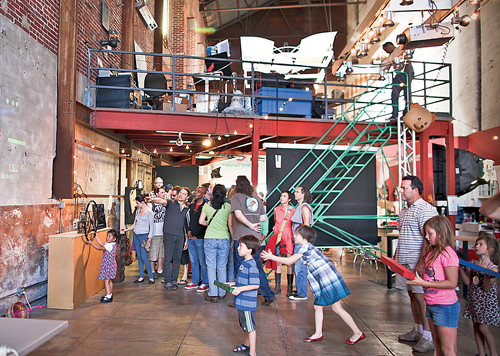
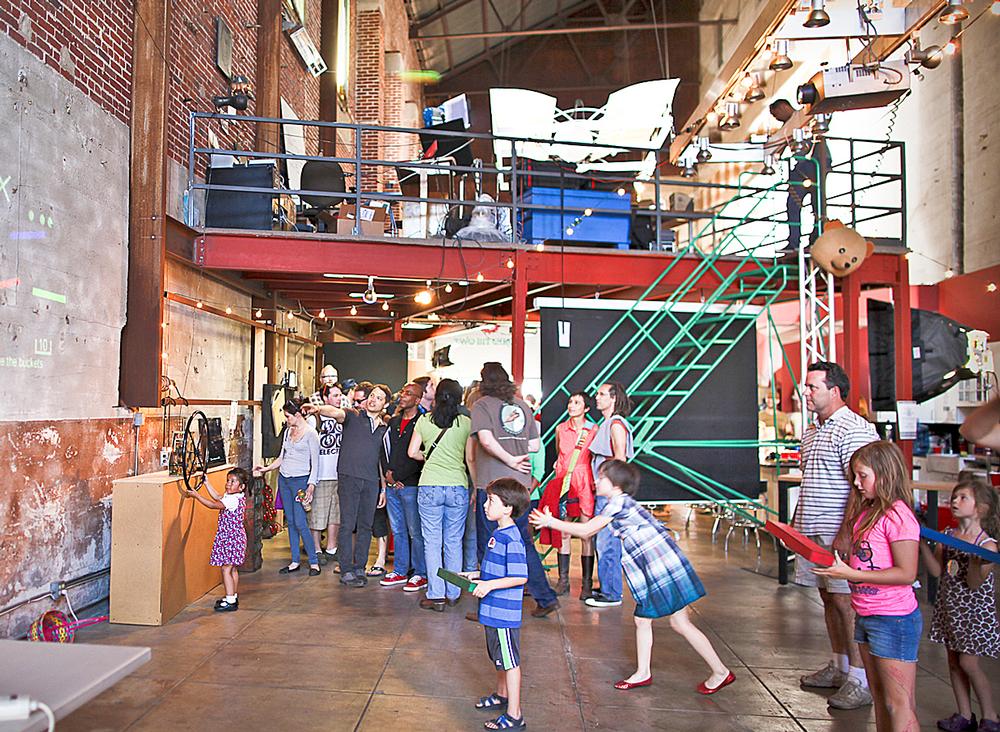
LA ARTWALK The Two Bit Circus workshop is in one of the biggest artist communities in the world and twice a year artists open their doors to showcase their wares to the public. Two Bit Circus creates an arcade of all their latest games and ideas. Last year, one of the most popular games involved a laser projector, a tracking camera and a basket of balls. People had to throw balls at the walls to hit the moving hoops. It was a real hit. “There was no start, no finish, and no scorekeeping, but people loved it – 10,000 balls were thrown at the wall over the weekend,” says Bushnell.
The finale of the video This Too Shall Pass by the band Ok Go
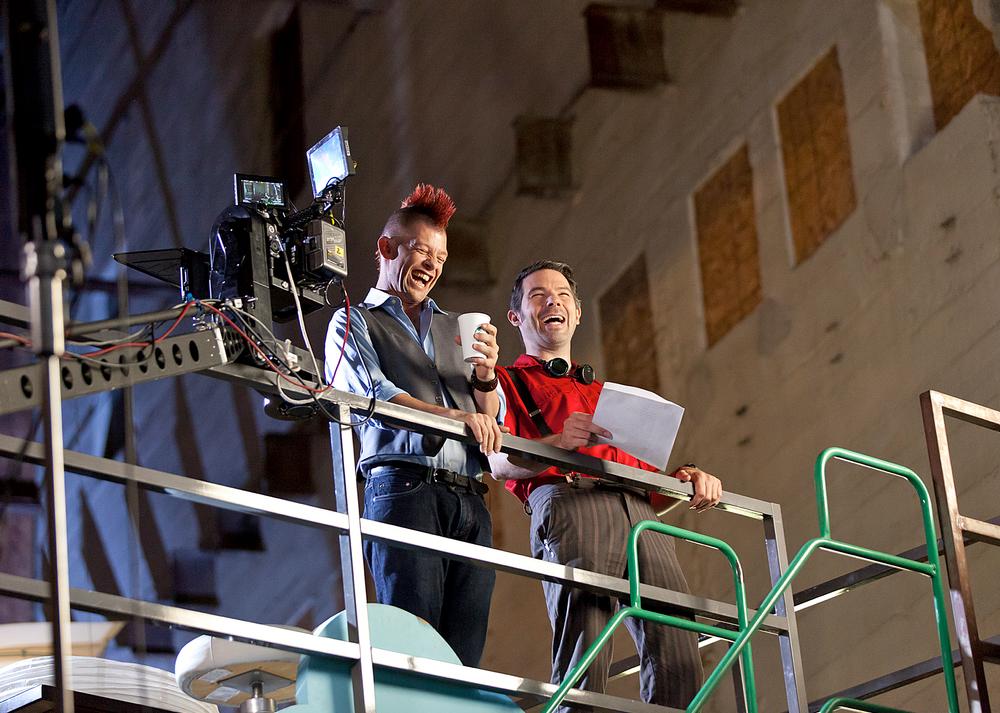
Eric Gradman, one of the founders of Two Bit Circus and the STEAM Carnival
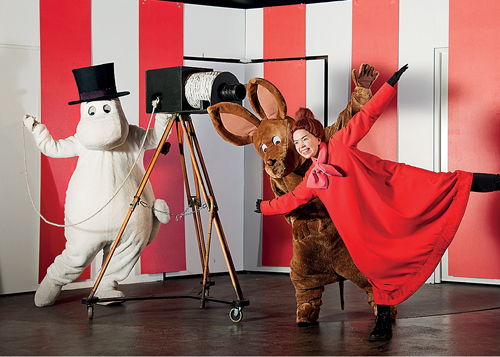
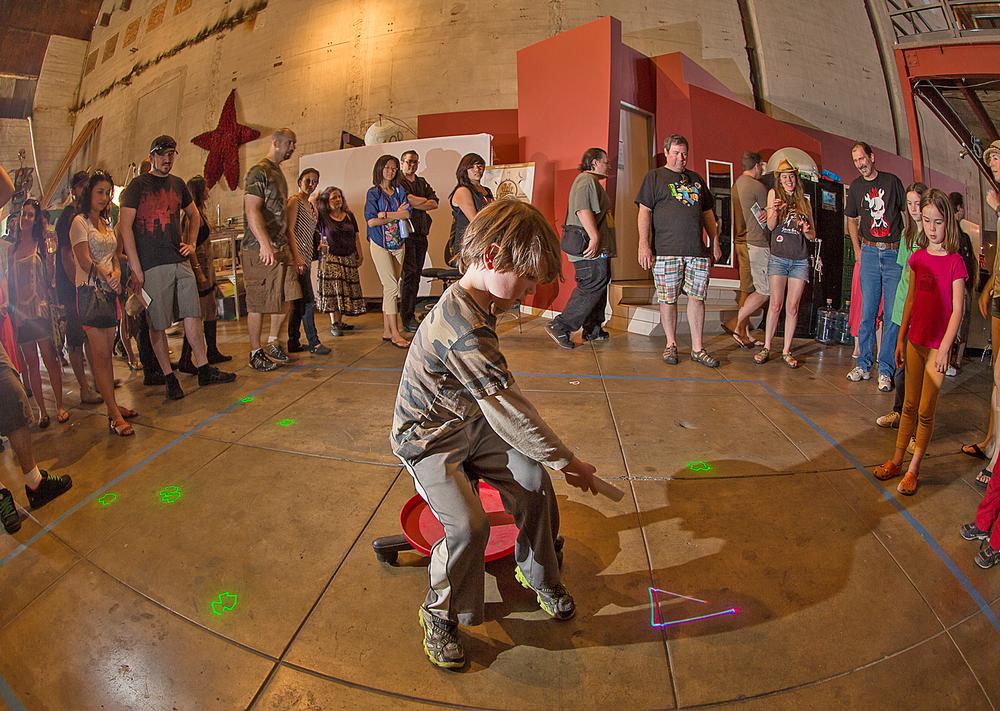
Human Asteroids, by Two Bit Circus for STEAM Carnival, is a tribute to the Atari game Asteroids. In this version, the player himself is the ship
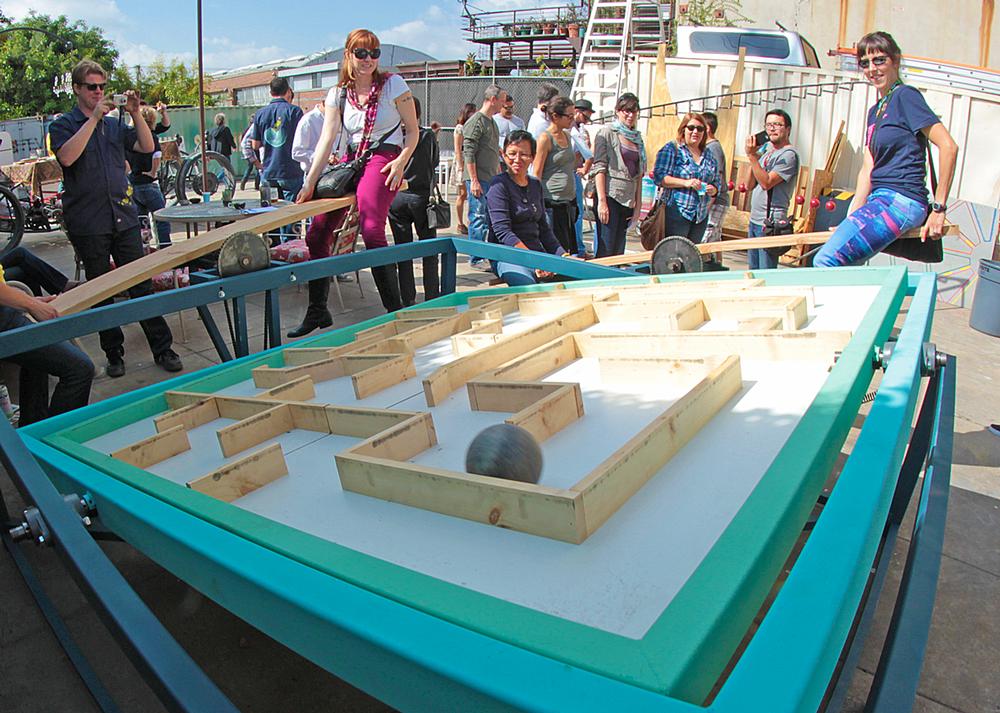
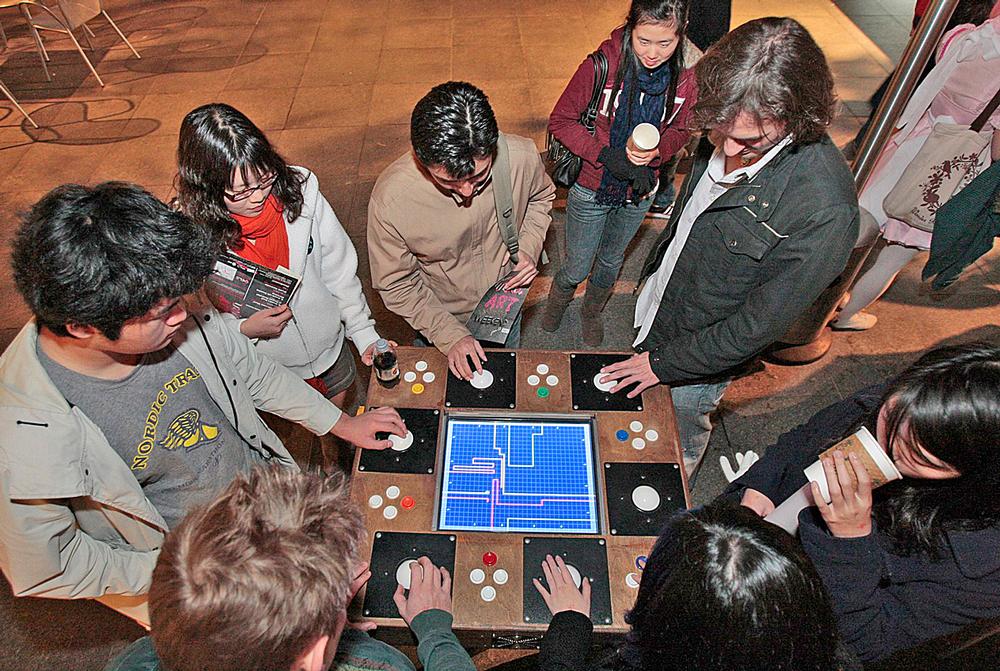
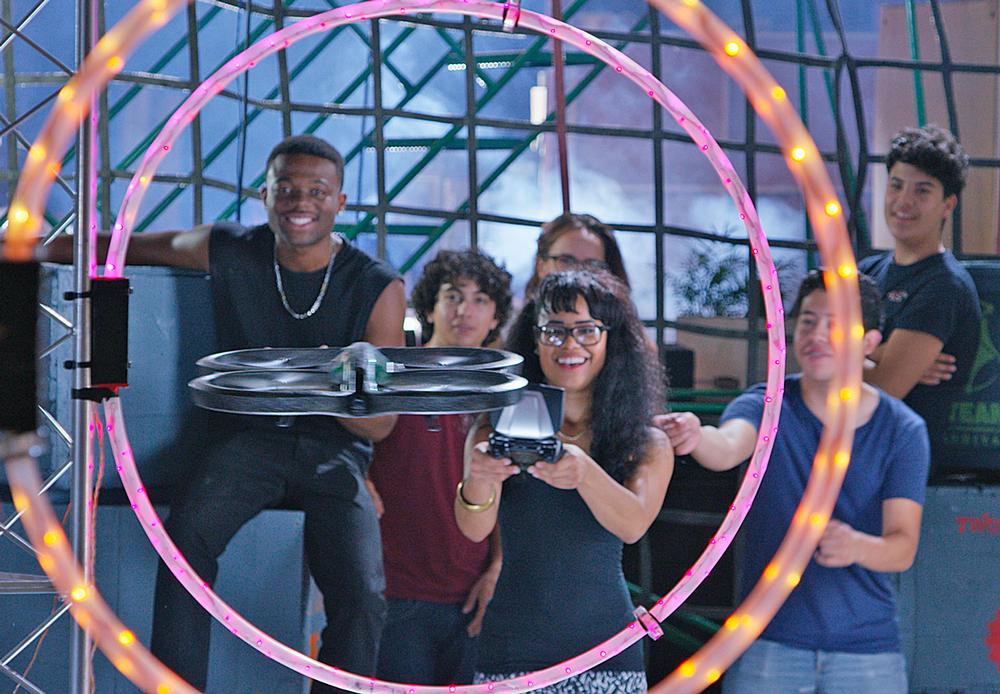
The Arcade Road Show is an amusement event that can host between 50 and 5,000 people
The Arcade Road Show is an amusement event that can host between 50 and 5,000 people
The Arcade Road Show is an amusement event that can host between 50 and 5,000 people
The Arcade Road Show is an amusement event that can host between 50 and 5,000 people
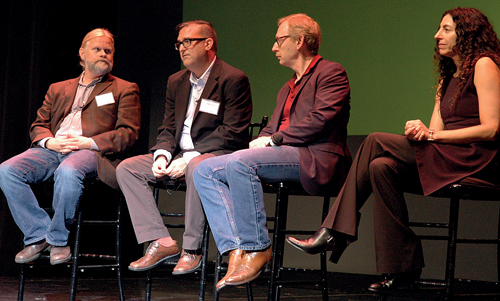
Gradman (left) and Bushnell make it their mission to create a positive narrative around the STEM subjects
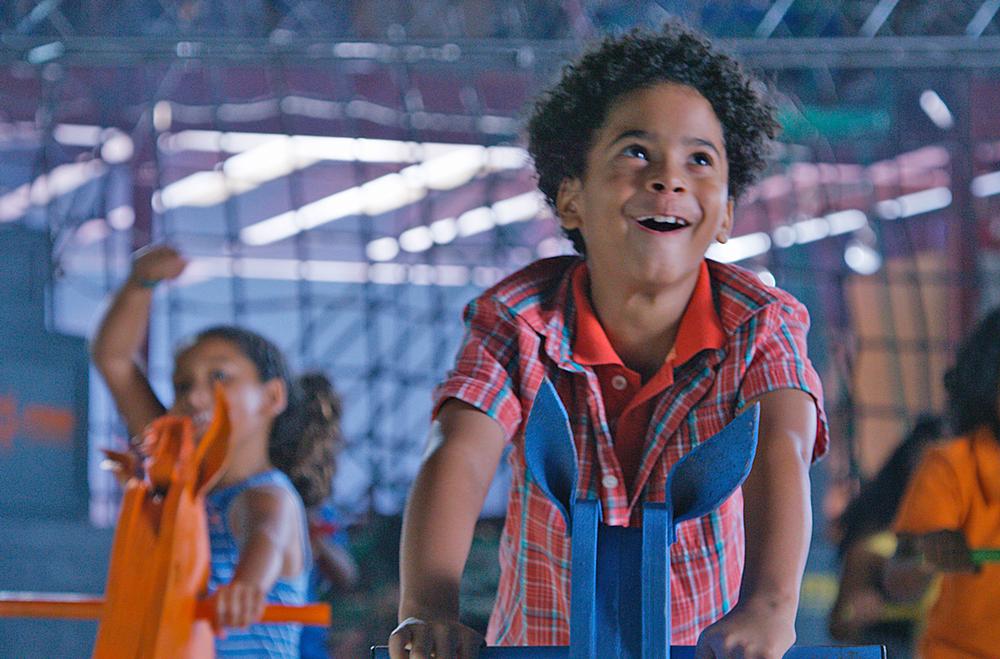
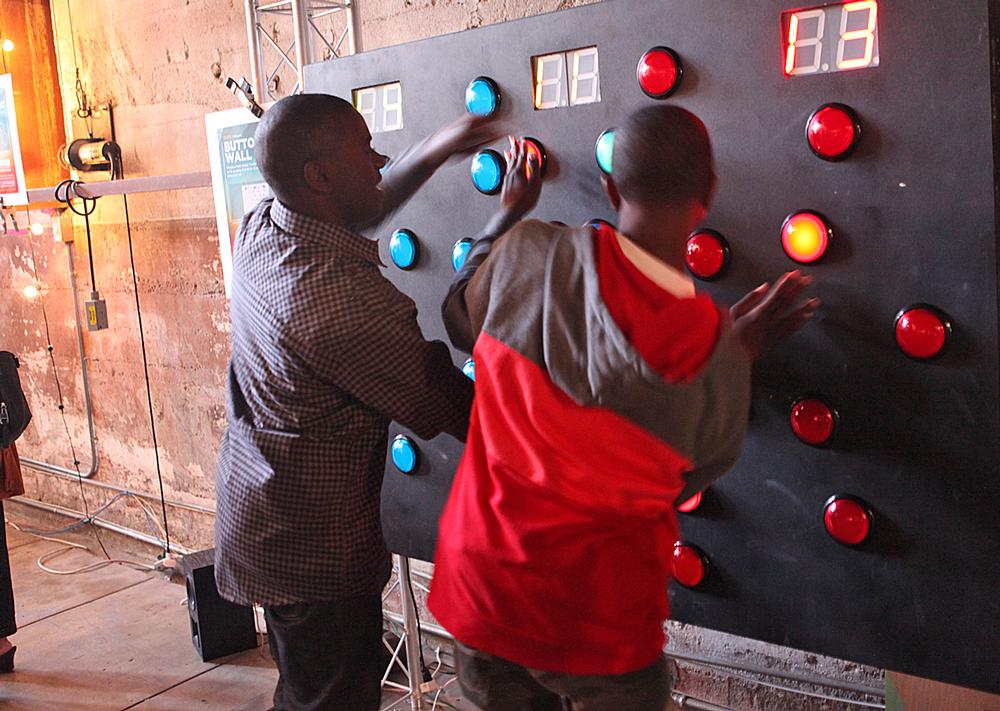
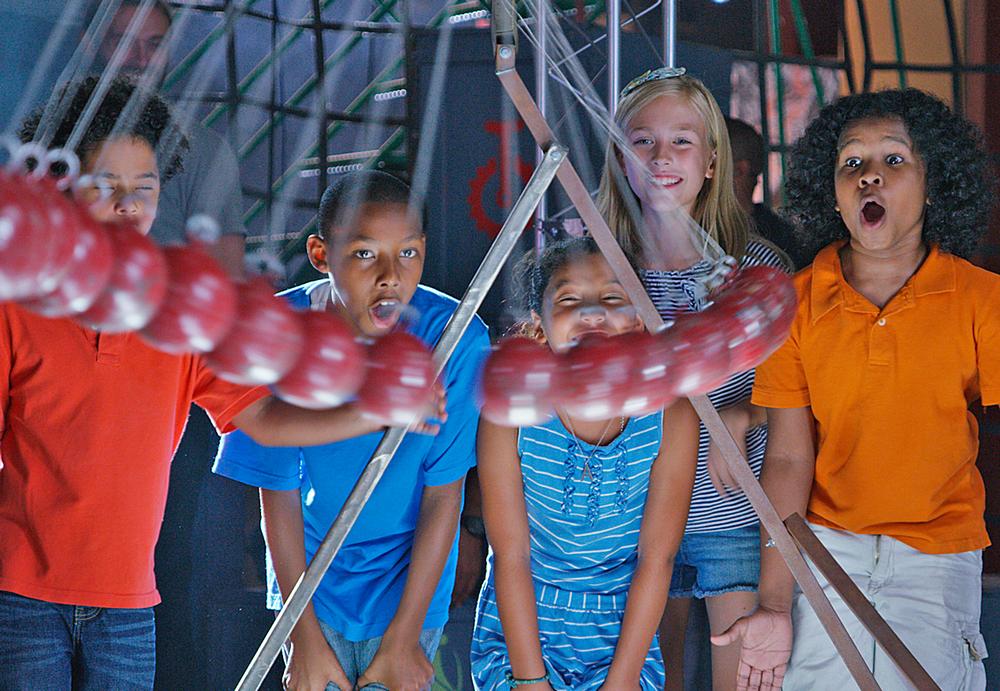
Two Bit Circus creates hands-on games, which could be used in the attractions markets
Two Bit Circus creates hands-on games, which could be used in the attractions markets
Two Bit Circus creates hands-on games, which could be used in the attractions markets
Two Bit Circus creates hands-on games, which could be used in the attractions markets
Le Atelier by C.O.D.E. doesn't offer a standard bespoke service, it provides a highly
customised approach to designing massage beds and loungers in high-end wellness
environments. [more...]
Technical and mechanical knowledge infused with originality and enthusiasm:
Two Bit Circus inspires everyone from attractions insiders to schoolchildren
By Kath Hudson | Published in Attractions Management 2014 issue 4
Brent Bushnell, one of the founders of Two Bit Circus and the STEAM Carnival
Since 2012, Two Bit Circus, a group of entertainment engineers, has been playing around with robots, lasers and fire, creating quirky, exciting, interactive experiences for wide-eyed audience and co-founders Brent Bushnell and Eric Gradman have been steadily challenging the assumption that science and engineering are boring.
We talk to Bushnell to find out more about the Los Angeles-based collective.
How did Two Bit Circus come about? I met Eric about seven years ago. We were both STEM [science, technology, engineering and maths] guys. He was building robots for the military and I was making video games, but we both wanted to be playing with other tech. The first night we met in person we stayed up until 4am building things. We began to find other people in LA who got similar enjoyment out of fabrication and all that stuff, so we formed a little band of nerds.
You don’t seem like nerds in the way you present and engage with audiences. Has the world got nerds wrong? One of the opportunities we have at the moment is to rebrand what it is to be a nerd. There’s a negative cultural narrative around the sciences and maths. There’s a traditional thinking that engineering is all pencil ties and lab coats, but that’s all wrong: there are lasers and fires and robots and all sorts of neat things which make engineering, maths and science really exciting. People who fit the role of engineer are still playful and fun.
You want to inspire a future generation of inventors, so who inspired and continues to inspire you? On many levels, Eric and I inspire each other. My dad was a big inspiration and it’s fun to be back around my family as a peer. [Bushnell’s father is entrepreneur and engineer Nolan Bushnell, founder of Atari and other video game companies].
I read an interesting study which underscored the fact that there’s no shortage of hard problems to work on, and that’s where the genesis of inspiring inventors came from: how could us nerds inspire an army of inventors and what impact could they have on the world?
You and Eric shared a vision of making STEM fun, but how easy was it to find a way of bringing that idea to fruition? It extended from our core team pretty naturally. Leading up to the creation of Two Bit Circus, we were always playing with technology. We didn’t have a business model in the beginning. We were just playing with stuff and taking it to parties. We did fundraisers and parties for companies like Amazon and Intel, with up to 10,000 guests.
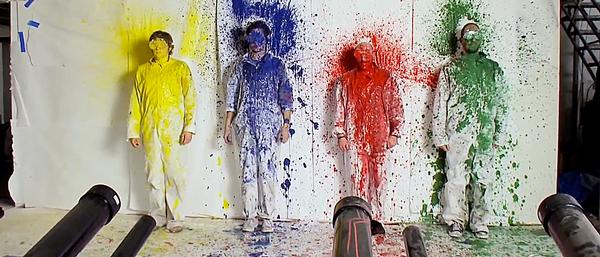
Then we made a music video for the band Ok Go’s single This Too Shall Pass. We built a huge Rube Goldberg Machine in a warehouse and the video went viral with 45 million views. Loads of parents and teachers called us to say the kids loved it.
We ended up also being on-camera inventors for a home makeover TV show, ABC’s Extreme Makeover: Home Edition, building a new invention for each house.
We were having a lot of fun with engineering and we were going into schools to talk about it. Statistics show America is ranked 47th in maths across the world, but we saw kids getting excited about this stuff, which made us think about how we could take this show on the road. That’s how STEAM Carnival came about, it’s our biggest undertaking to date.
What does STEAM carnival involve? We want the focus of STEAM Carnival to be to convert non-STEM kids into STEM kids. We decided to do that by putting art into the mix, turning STEM into STEAM. Adding art – fashion, music, games – was a pretty powerful shift: those things appeal to most kids.
The STEAM Carnival involves a lead-up element at school, where kids learn about design, creation, programming and fabrication. This culminates in a live event at the show. The children create a fashion show of wearable electronics, a battle of the bands for musical robots and an arcade made of indie-group games.
It’s aimed at 11 to 14-year-olds, as this is the age they often opt out. We’re aiming to create a curriculum for under-12s as well.
Was it easy to get schools on board? Our Kickstarter campaign received a lot of media and internet coverage which enabled us to trial the concept. From that we had teachers and schools call us.
Do you have plans to take the STEAM Carnival overseas? Yes, it’s just a question of timing. We’re in talks with a group in Poland and also in China, as well as about 10 other cities around the US to take it on the road.
Could this be adapted for an attraction? We would love to do that. We’ve talked about modifying it to become a touring museum exhibit and spoken with science museums about what it could look like.
We’ve got all the games we’ve been making: one of the original ideas with the carnival was we’d test and trial ideas under our own control and then sell them to theme and amusement parks.
Can you tell us about any new projects you have on the go? We’ve been working on virtual reality and filming in 360, and we’re looking at mixing that with a story adventure.
Is there ever anything you want to do, but can’t make happen? We have to consider safety and the size of things, making sure they’re portable, but we try not to put the brakes on too early. However, I do wish we had more time.
Read more from this issue of Spa Business magazine
View contents of Spa Business 2014 issue 4
Editor’s letter: Access for all
We ask whether enough is being done to ensure access for all to
attractions and what practical steps can be taken to improve things
Interview: Tim Smit
The Eden Project was groundbreaking
when it opened in 2001. Now the
attraction’s founder Tim Smit is taking
the concept to a global audience,
and he’s starting with China
Interview: Jonathan Gottschall
Literary scholar and author of The
Storytelling Animal explains why we’re
all addicted to story, and how attractions
can capitalise on our love of narrative
Heritage: Actions Speak Louder
The National Trust’s Ben Cowell
describes how landscaping can build up
to a reveal, and ways the organisation
is using actors to bring history to life
Conference Report: SATE 2014
TEA president Christine Kerr presents
the hot topics from the annual design
conference devoted to Storytelling,
Architecture, Technology, Experience
Story Centres: Tell Me A Story
The popularity of story centres shows
the youngest generation – dubbed
digital natives – are thirsty for
children’s literature and illustration
Technology: Reinventing the Nerd
Meet carnival-inspired Two Bit
Circus, created from its founders’
passion for engineering, video games
and the newest technologies
Promotional feature: BARCO
Barco offers state-of-the-art visualisation technology and
a holistic solution uniquely tailored to suit any attraction
Rides: The Ride Makers
In the first of a new series,
industry-leading manufacturers
tell us about the latest trends and
innovations in thrill coasters
Theme Parks: Kooza Came to Town
PortAventura’s general manager
on the Spanish park’s partnership
with celebrated circus troupe Cirque
du Soleil and its Kooza show
Planetariums: Tom Falvey
A new planetarium, capable of live
streaming to 14,000 schools, opens
as a new addition to the South
Carolina State Museum in the US
Show Preview: IAAPA EXPO
IAAPA returns to the Orange County Convention Center in Orlando,
Florida, from 18-21 November, with more than 1,000 exhibitors
and an expected 27,000 attendees
Multimedia: Art Project
State-of-the-art projectors and
world-class artists combine to
create inspiring installations
Two Bit Circus is a collective of inventors, developers and engineers that’s full of imagination. The group’s mix of innovation, technological know-how and creativity translates into a variety of pop-up interactive amusements. Two Bit Circus brings its productions – immersive story games, stunt shows, plus an arcade roadshow that showcases its one-off games and activities – to parties and events, as well as running the educational, hands-on touring platform STEAM Carnival.
TWO BIT CIRCUS CONCEPTS THIS TOO SHALL PASS MSUIC VIDEO This music video is a showcase for Two Bit Circus’s skills and humour. A warehouse was transformed into a Rube Goldberg Machine, a giant sequence of events. Starting off with a domino run, four minutes of action are perfectly synched with the music, including water pouring, metal balls dropping, a sledgehammer crashing into a TV, a piano dropping, a flock of umbrellas – culminating with the Ok Go members being splattered with paint. Watch it and smile.
https://www.youtube.com/watch?v=qybUFnY7Y8w
STORY ROOM Like many of Two Bit Circus’s concepts, Story Room started as a bit of fun. Set in a themed room, players become part of the story and must collaborate with others in a process full of surprises and mysteries. In order to work through the story, they must unlock a sequence of clues and puzzles. The narrative behind the original version set the participants in a scientist’s laboratory, where they had to work together to stop a virus from escaping. The concept can be re-themed countless ways: a crash landing on a strange planet, an adventure under the sea…
LA ARTWALK The Two Bit Circus workshop is in one of the biggest artist communities in the world and twice a year artists open their doors to showcase their wares to the public. Two Bit Circus creates an arcade of all their latest games and ideas. Last year, one of the most popular games involved a laser projector, a tracking camera and a basket of balls. People had to throw balls at the walls to hit the moving hoops. It was a real hit. “There was no start, no finish, and no scorekeeping, but people loved it – 10,000 balls were thrown at the wall over the weekend,” says Bushnell.
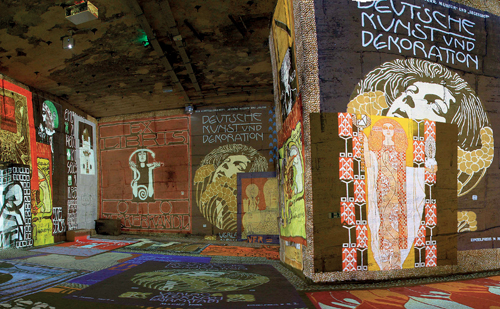
The finale of the video This Too Shall Pass by the band Ok Go
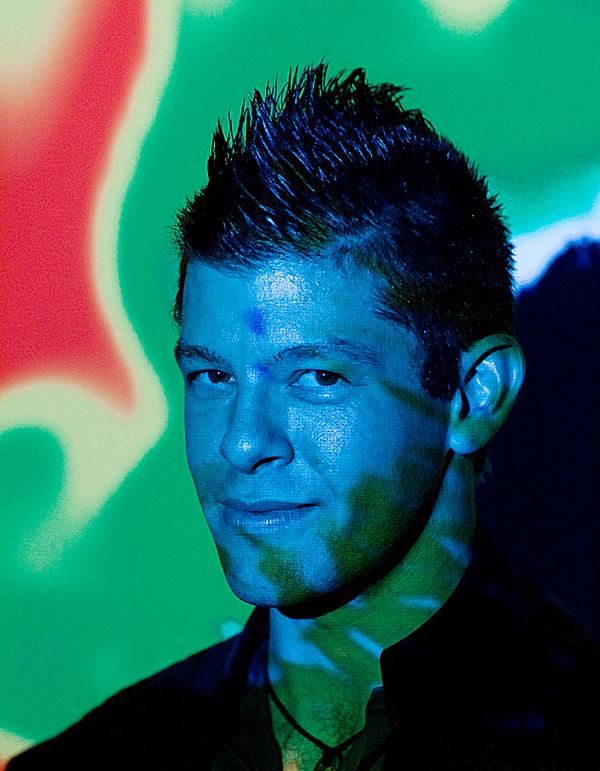
Eric Gradman, one of the founders of Two Bit Circus and the STEAM Carnival
Human Asteroids, by Two Bit Circus for STEAM Carnival, is a tribute to the Atari game Asteroids. In this version, the player himself is the ship
The Arcade Road Show is an amusement event that can host between 50 and 5,000 people
The Arcade Road Show is an amusement event that can host between 50 and 5,000 people
The Arcade Road Show is an amusement event that can host between 50 and 5,000 people
The Arcade Road Show is an amusement event that can host between 50 and 5,000 people
Gradman (left) and Bushnell make it their mission to create a positive narrative around the STEM subjects
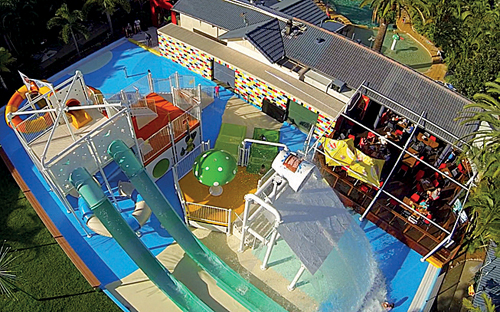
Two Bit Circus creates hands-on games, which could be used in the attractions markets
Two Bit Circus creates hands-on games, which could be used in the attractions markets
Two Bit Circus creates hands-on games, which could be used in the attractions markets
Two Bit Circus creates hands-on games, which could be used in the attractions markets
Global Wellness Day (GWD) marked its 15th anniversary on Saturday 13 June 2026, with the
theme: #JoyMagenta – a celebration of the healing qualities of simple gestures and activities
that spark joy.
Global luxury hospitality brand, Six Senses, has partnered with longevity healthcare provider,
HUM2N, to launch a clinic at Six Senses London, at The Whiteley.
As part of its first hotel partnership, Mayrlife – the medical health resort company known for its
site in Altaussee, Austria – has launched a day clinic at the Rosewood Vienna.
Premium London health club, KX Chelsea, will imminently unveil its most significant
redevelopment since its launch in 2002 to create an integrated wellness model combining
training, recovery and relaxation.
Rosewood Le Guanahani St Barth, on the northeast coast of Saint Barthélemy in the French
West Indies, is offering a programme of ocean-inspired yoga classes between 8-14 June to
celebrate Global Wellness Day (GWD).
Hotel de France, located on the British Isle of Jersey, has created a wellness retreat package
that includes a hot yoga session that will take place in Jersey Zoo’s butterfly sanctuary.
The Ritz-Carlton, Langkawi, in Malaysia, has revealed a schedule for Global Wellness Day
(GWD) that includes guided rainforest walks, mindful movement and guided coastal meditation
experiences.
Longevitix, a clinical platform for preventive and longevity medicine, has launched its AI-
powered intelligence system to help physicians deliver continuous, personalised longevity-
focused care at scale.
Atmantan Wellness Centre, an integrative wellness destination in Mulshi, near Pune in India, is
expanding its portfolio by adding a new centre in Hyderabad that will launch between 2028 and
2029.
Le Atelier by C.O.D.E. doesn't offer a standard bespoke service, it provides a highly
customised approach to designing massage beds and loungers in high-end wellness
environments. [more...]