Spa revenue is at an all-time high in the US for the second
year running, but does this momentum have a threshold?
Megan Whitby digs into the findings of two fresh ISPA studies
More spa-goers consider visits benefit their mental wellbeing / photo: shutterstock/Dmytro Buianskyi
The US spa industry reached US$21.3 billion (€19.9 billion, £17 billion) in revenues in 2023, surpassing the previous industry high of US$20.1 billion (€18.7 billion, £16 billion) in 2022, according to a sneak peek of the Big Five statistics from the International Spa Association (ISPA).
The other core metrics from the 2024 ISPA Spa Industry Study, based on 2,400 operators and conducted in partnership with PricewaterhouseCoopers (PWC), were positive too, yet some KPIs experienced stronger growth than others (see Table 1).
Average revenue per visit in 2023 climbed more than 5 per cent from US$111.5 (€104, £89) to US$117.2 (€109, £93) and the total number of employees now sits at 370,100, a 2.6 per cent rise since 2022. Less uptick was observed in the number of spa visits which equalled 182 million (+0.6 per cent) and the number of locations that came in at 21,840 (+0.2 per cent).
So what meaning can we attribute to these benchmarks? Spa Business takes a closer look at the figures and also delves into the 2024 edition of ISPA’s Consumer Snapshot survey to gain more insights.
Is growth slowing? Every year, ISPA reveals its Big Five statistics ahead of its full research in July/August and first teased its 2024 findings with delegates at the ISPA Conference in Arizona, USA this April.
ISPA president Lynne McNees says overall these latest numbers give out a positive message. “Revenue drives growth for spas,” she says. “Increasing overall revenue and dollars spent per visit allows spas to hire more employees and open new locations. This year’s good news will enable the spa community to reinvest in growth.”
Colin Mcilheneny, ISPA research advisor – who presented the Big Five on stage – however, flags that the metrics required further attention.
He notes that with overall revenues steadily climbing while visitor numbers remain stagnant, the driving force behind this growth lies with consumers who are investing more per visit to spas. “In light of the current cost of living crisis, it’s crucial to ask: Are these upward trends sustainable,” he says. While a portion of the revenue increase can be attributed to adjusted pricing structures, it’s essential to recognise that customers may have reached their spending thresholds, he adds.
Best customers Released in March, the 2024 edition of ISPA’s Consumer Snapshot survey suggests that customers who visit spas more frequently could be the key to future success.
The survey was based on the responses of 1,002 spa-goers in December 2023. ISPA defines a spa-goer as someone who’s been to a spa in the last 12 months and found that 70 per cent of survey participants had visited at least twice in the previous year – making them a ‘regular spa-goer’. Subsequently, it found that these regular spa-goers will likely spend the most – US$200 (€186, £159) and over – in a year.
“Regular spa-goers are significantly more likely to spend more money while in the spa on treatments and spend money on other wellness-related facilities, such as gyms and beauty salons,” according to the report.
“They’re also more inclined to adopt healthy lifestyles and see going to the spa as a long-term commitment to their health and wellbeing. They have higher incomes than irregular spa-goers which gives them more flexibility to spend their money on discretionary activities and add them into their regular routines.”
Enticing regulars A further breakdown of regular spa-goers shows that 45 per cent of them are millennials (aged 27-42), mostly employed (82 per cent) and that 58 per cent have a household income between US$50,000-US$149,000 (€46,613-€138,906, £39,882-£118,848).
To encourage more regular customers, spa operators might want to consider introducing membership packages as the rise in popularity of Netflix and Amazon has opened consumer mindsets to subscriptions. And on p110 Spa Business investigates how software suppliers can help operators with membership set-up and management.
Almost all spa-goers (96 per cent) have purchased some form of annual subscription/membership that has year-round access/benefits (see Graph 1). Specifically, 31 per cent are already members of spas and 41 per cent have signed up to gyms. Furthermore, 67 per cent of participants agreed with the statement ‘Spa memberships that extend a set number of treatments per month are of great interest to me’.
However, across all spa-goers, there was a sentiment that spas are expensive and that having deals or offers could entice them to visit more frequently.
Mental health focus A shift in perspective emerged among frequent spa attendees, who increasingly view treatments as indispensable investments in stress reduction and mental wellbeing. While spas were once regarded as luxuries, today’s patrons prioritise their visits not only for indulgence but for mental health and overall wellness, the survey shows.
In fact, even though indulgence came out as the key motivator behind spa visits, reducing stress and taking a step towards leading a healthier lifestyle were significant contributing factors.
Around 80 per cent of respondents agree that looking after mental wellbeing and eating healthily is an important part of the daily routine. Moreover, 96 per cent of spa-goers state they’ve taken steps to look after their mental wellbeing in the past 12 months with sleep and health being the key focus.
In the aftermath of a global pandemic, it’s interesting to note how spa consumer behaviours, habits, attitudes and expectations are changing. And the two ISPA studies not only illustrate the current state of play in the US industry but also highlight where the opportunities lie for the future.
photo: Echo Starmaker Photography
“Increasing overall revenue and dollars spent per visit allows spas to hire more employees and open new locations. This year’s good news will enable the spa community to reinvest in growth.” –
Lynne McNees, ISPA president
photo: ISPA
“In light of the current cost of living crisis, it’s crucial to ask: Are these upward trends sustainable?” – Colin Mcilheneny, ISPA research advisor
Read more from this issue of Spa Business magazine
View contents of Spa Business 2024 issue 2
Editor's letter: Cool customers
Spas must adapt to unlock new avenues for growth while mitigating the impact of climate change, says Katie Barnes
Top Team: Therme Group
With its focus on affordable wellness, Therme Group is expanding its social spa concept globally. Jane Kitchen speaks to the people behind the brand
Interview: Susie Ellis
The chair of the Global Wellness Summit has been fundamental in defining the industry and continues to drive it forward
Sponsored: Comfort Zone: Powered by nature
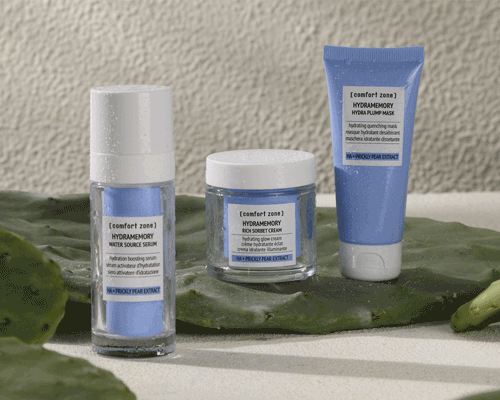
B Corp-certified skincare company Comfort Zone has added a new body lotion to its Hydramemory range, which is inspired by the water-retaining powers of desert plants
Interview: Roger Tempest
The owner of Broughton Sanctuary in the UK is transforming the 900-year-old estate into a retreat-based business
Sponsored: Lemi: touched by tech
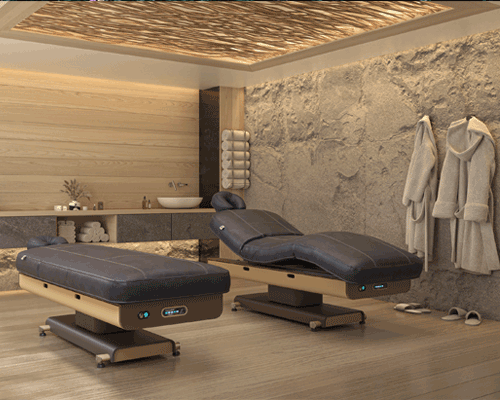
Italian spa equipment supplier, Lemi, is embracing the trend towards tech-driven wellness treatments, while also driving sustainable industry practices
First person: The real deal?
What’s the value of an authentic treatment? Andrew and Karin Gibson take to the hammams of Istanbul to find out
Wellness: Full recovery
SIRO is staking a claim to be the world’s first fitness and recovery hotel brand and is planning 100 properties. Lisa Starr visits the first site in Dubai
Sponsored: Gharieni: Defining the well universe
The launch of Gharieni’s new touchless technology brand
Metawell is perfectly aligned with the future direction of spa
and wellness, says the company’s CEO, Sammy Gharieni
Software: Member benefits
Up to a third of spa-goers now have a spa membership. What support can software systems offer?
Sponsored: Myrtha: Herbal Sauna
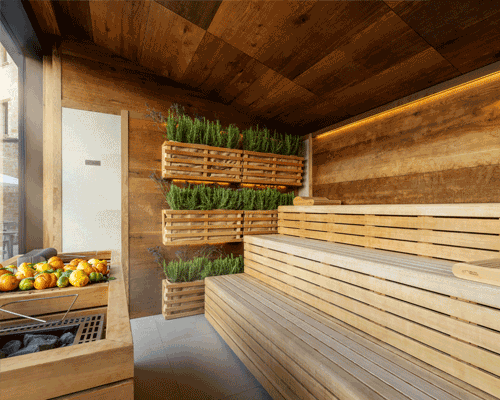
Pools and wellness facilities expert, Myrtha’s new Herbal Sauna, brings an innovative and therapeutic experience to the spa, says Stefano Cattaneo
In a world where imbalance often accumulates quietly, Wildsmith unveils its newest
wellbeing innovation: Silent Loads, an approach designed to meet the needs of modern spa
guests with precision and depth. [more...]
+ More featured suppliers
COMPANY PROFILES
Hydrafacial
Founded in 1997, Hydrafacial has grown to become one of the world’s leading skin health brands. [more...]
FIBO
FIBO is the international platform for fitness, wellness and health. During four days, FIBO connects [more...]
Spa revenue is at an all-time high in the US for the second
year running, but does this momentum have a threshold?
Megan Whitby digs into the findings of two fresh ISPA studies
More spa-goers consider visits benefit their mental wellbeing / photo: shutterstock/Dmytro Buianskyi
The US spa industry reached US$21.3 billion (€19.9 billion, £17 billion) in revenues in 2023, surpassing the previous industry high of US$20.1 billion (€18.7 billion, £16 billion) in 2022, according to a sneak peek of the Big Five statistics from the International Spa Association (ISPA).
The other core metrics from the 2024 ISPA Spa Industry Study, based on 2,400 operators and conducted in partnership with PricewaterhouseCoopers (PWC), were positive too, yet some KPIs experienced stronger growth than others (see Table 1).
Average revenue per visit in 2023 climbed more than 5 per cent from US$111.5 (€104, £89) to US$117.2 (€109, £93) and the total number of employees now sits at 370,100, a 2.6 per cent rise since 2022. Less uptick was observed in the number of spa visits which equalled 182 million (+0.6 per cent) and the number of locations that came in at 21,840 (+0.2 per cent).
So what meaning can we attribute to these benchmarks? Spa Business takes a closer look at the figures and also delves into the 2024 edition of ISPA’s Consumer Snapshot survey to gain more insights.
Is growth slowing? Every year, ISPA reveals its Big Five statistics ahead of its full research in July/August and first teased its 2024 findings with delegates at the ISPA Conference in Arizona, USA this April.
ISPA president Lynne McNees says overall these latest numbers give out a positive message. “Revenue drives growth for spas,” she says. “Increasing overall revenue and dollars spent per visit allows spas to hire more employees and open new locations. This year’s good news will enable the spa community to reinvest in growth.”
Colin Mcilheneny, ISPA research advisor – who presented the Big Five on stage – however, flags that the metrics required further attention.
He notes that with overall revenues steadily climbing while visitor numbers remain stagnant, the driving force behind this growth lies with consumers who are investing more per visit to spas. “In light of the current cost of living crisis, it’s crucial to ask: Are these upward trends sustainable,” he says. While a portion of the revenue increase can be attributed to adjusted pricing structures, it’s essential to recognise that customers may have reached their spending thresholds, he adds.
Best customers Released in March, the 2024 edition of ISPA’s Consumer Snapshot survey suggests that customers who visit spas more frequently could be the key to future success.
The survey was based on the responses of 1,002 spa-goers in December 2023. ISPA defines a spa-goer as someone who’s been to a spa in the last 12 months and found that 70 per cent of survey participants had visited at least twice in the previous year – making them a ‘regular spa-goer’. Subsequently, it found that these regular spa-goers will likely spend the most – US$200 (€186, £159) and over – in a year.
“Regular spa-goers are significantly more likely to spend more money while in the spa on treatments and spend money on other wellness-related facilities, such as gyms and beauty salons,” according to the report.
“They’re also more inclined to adopt healthy lifestyles and see going to the spa as a long-term commitment to their health and wellbeing. They have higher incomes than irregular spa-goers which gives them more flexibility to spend their money on discretionary activities and add them into their regular routines.”
Enticing regulars A further breakdown of regular spa-goers shows that 45 per cent of them are millennials (aged 27-42), mostly employed (82 per cent) and that 58 per cent have a household income between US$50,000-US$149,000 (€46,613-€138,906, £39,882-£118,848).
To encourage more regular customers, spa operators might want to consider introducing membership packages as the rise in popularity of Netflix and Amazon has opened consumer mindsets to subscriptions. And on p110 Spa Business investigates how software suppliers can help operators with membership set-up and management.
Almost all spa-goers (96 per cent) have purchased some form of annual subscription/membership that has year-round access/benefits (see Graph 1). Specifically, 31 per cent are already members of spas and 41 per cent have signed up to gyms. Furthermore, 67 per cent of participants agreed with the statement ‘Spa memberships that extend a set number of treatments per month are of great interest to me’.
However, across all spa-goers, there was a sentiment that spas are expensive and that having deals or offers could entice them to visit more frequently.
Mental health focus A shift in perspective emerged among frequent spa attendees, who increasingly view treatments as indispensable investments in stress reduction and mental wellbeing. While spas were once regarded as luxuries, today’s patrons prioritise their visits not only for indulgence but for mental health and overall wellness, the survey shows.
In fact, even though indulgence came out as the key motivator behind spa visits, reducing stress and taking a step towards leading a healthier lifestyle were significant contributing factors.
Around 80 per cent of respondents agree that looking after mental wellbeing and eating healthily is an important part of the daily routine. Moreover, 96 per cent of spa-goers state they’ve taken steps to look after their mental wellbeing in the past 12 months with sleep and health being the key focus.
In the aftermath of a global pandemic, it’s interesting to note how spa consumer behaviours, habits, attitudes and expectations are changing. And the two ISPA studies not only illustrate the current state of play in the US industry but also highlight where the opportunities lie for the future.
photo: Echo Starmaker Photography
“Increasing overall revenue and dollars spent per visit allows spas to hire more employees and open new locations. This year’s good news will enable the spa community to reinvest in growth.” –
Lynne McNees, ISPA president
photo: ISPA
“In light of the current cost of living crisis, it’s crucial to ask: Are these upward trends sustainable?” – Colin Mcilheneny, ISPA research advisor
Read more from this issue of Spa Business magazine
View contents of Spa Business 2024 issue 2
Editor's letter: Cool customers
Spas must adapt to unlock new avenues for growth while mitigating the impact of climate change, says Katie Barnes
Top Team: Therme Group
With its focus on affordable wellness, Therme Group is expanding its social spa concept globally. Jane Kitchen speaks to the people behind the brand
Interview: Susie Ellis
The chair of the Global Wellness Summit has been fundamental in defining the industry and continues to drive it forward
Sponsored: Comfort Zone: Powered by nature
B Corp-certified skincare company Comfort Zone has added a new body lotion to its Hydramemory range, which is inspired by the water-retaining powers of desert plants
Interview: Roger Tempest
The owner of Broughton Sanctuary in the UK is transforming the 900-year-old estate into a retreat-based business
Sponsored: Lemi: touched by tech
Italian spa equipment supplier, Lemi, is embracing the trend towards tech-driven wellness treatments, while also driving sustainable industry practices
First person: The real deal?
What’s the value of an authentic treatment? Andrew and Karin Gibson take to the hammams of Istanbul to find out
Wellness: Full recovery
SIRO is staking a claim to be the world’s first fitness and recovery hotel brand and is planning 100 properties. Lisa Starr visits the first site in Dubai
Sponsored: Gharieni: Defining the well universe
The launch of Gharieni’s new touchless technology brand
Metawell is perfectly aligned with the future direction of spa
and wellness, says the company’s CEO, Sammy Gharieni
Software: Member benefits
Up to a third of spa-goers now have a spa membership. What support can software systems offer?
Sponsored: Myrtha: Herbal Sauna
Pools and wellness facilities expert, Myrtha’s new Herbal Sauna, brings an innovative and therapeutic experience to the spa, says Stefano Cattaneo
Four Seasons Resort The Nam Hai in Hoi An, Vietnam, has put together a Global Wellness Day
(GWD) agenda with activations rooted in nature and shaped by four pillars of Joy – in
alignment with the day’s theme #JoyMagenta.
The Global Wellness Summit (GWS) will celebrate its 20th anniversary at the 2026 event in
Phuket, Thailand, later this year with the theme: The Science, Art and Soul of Wellness.
Auko, an all-inclusive development, is opening in Phong Nha in Vietnam in Q3 2026, with a
series of 30 tented eco-lodges and wellness hospitality operations by Lumina Wellbeing.
Therme Manchester’s 28-acre development, which will include interconnected glass pavilions
that measure 65,000sq m, will be the largest bathing and wellbeing attraction in the world once
complete, according to prof David Russell, CEO of Therme UK.
Naples Beach Club, a Four Seasons Resort, has opened a 2,800sq m spa called The Sanctuary,
with the design and concept inspired by the Native American people that populated Florida’s
Southwest coast – the Calusa.
Swire Hotels’ luxury hospitality brand Upper House has revealed it will roll out its two-day
House of Healing retreats at its three hotels in Hong Kong, Chengdu and Shanghai.
LVMH-owned beauty house Guerlain will launch up to five spas with partners a year as part of
its plan to expand globally, according to the brand’s international spa and wellness director,
Diane Davody.
A new global study by Kevin Kelly and Peter Yesawich, called WELLSurvey 2.0, has revealed
more than half of consumers in the UK, US and Germany would not choose numerous high-
profile wellness resort brands for a future trip.
Luxury hospitality and wellness pioneer Jeremy McCarthy has launched Leisure Alchemy, a
digital platform that will provide professionals with strategic guidance on how to build
transformational leisure experiences that drive profit.
In a world where imbalance often accumulates quietly, Wildsmith unveils its newest
wellbeing innovation: Silent Loads, an approach designed to meet the needs of modern spa
guests with precision and depth. [more...]
+ More featured suppliers
COMPANY PROFILES
Hydrafacial Founded in 1997, Hydrafacial has grown to become one of the world’s leading skin health brands. [more...]