Yes! Send me the FREE digital editions of Spa Business and Spa Business insider magazines and the FREE weekly Spa Business and Spa Business insider ezines and breaking news alerts!
Interview: Tony Butler
Tony Butler, executive director of Derby
Museums Trust, on how museums can
be a force for good in their communities
Attractions: Perfect Brew
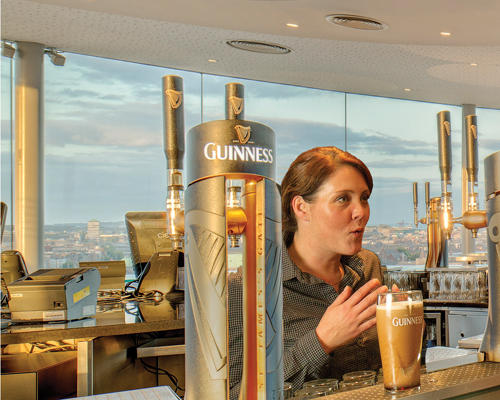
At 15 years old, the Guinness Storehouse
has been voted Europe’s best-loved
attraction. Manager Paul Carty reveals
the secrets of the Dublin brandland
Profile: John McReynolds
IAAPA’s new chairman reveals his aims
for the year ahead, his vision for a
global association and how his role at
Universal Orlando informs his goals
Analysis: The Attractions Business
Business planning consultant
David Camp starts an exclusive eight-part
series, delving into the fine art of attractions
operation from a business perspective
Science Centres: How to Future-Proof a Science Centre
Peter Slavenburg of design agency
NorthernLight describes how invisible
technology, serious play, co-creation
and the digital experience will inform
the science centre of tomorrow
Promotional feature: Simworx Ventures
Simworx Ventures is bringing its expertise in cutting-edge media-based attractions
to a new audience of museums, heritage sites, zoos and aquariums
Technology: Beacons on the Horizon
Beacons have countless applications in
the world of attractions. A case study
from the Cleveland Museum of Art
illustrates the technology’s potential
Museums & Galleries: Art Attack
Some of the most exciting attractions
design is happening in new and
upcoming galleries around the world,
from firms like Kengo Kuma and BIG
Promotional feature: IDEA
2016 is shaping up to be an interesting year for the attractions industry.
IDEA looks at what it takes to win audiences and command attention
Mystery Shopper: Spring in Your Step
We disappear down the rabbit hole as we
pay a mystery shopper visit to Bounce
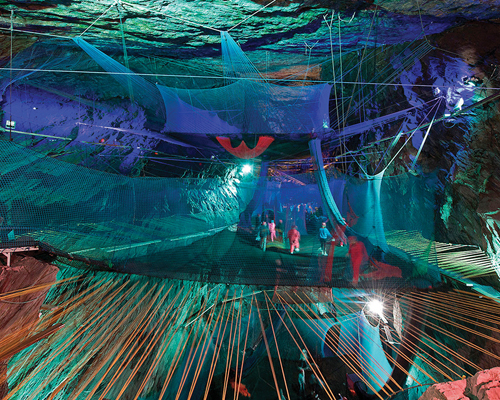
Below, a unique underground trampolining
attraction in Snowdonia, north Wales
Rides: The Ride Makers
Our ride makers series continues with
water rides, a firm favourite with park
guests. Three leading companies reveal
the latest trends in flumes and chutes
Technology: Tech Check
The industry technology unveiled at
IAAPA 2015: from VR to interactives, and
digital puppets to 20-storey LED giants
SUPER 78 Geppetto technology breathes life into digital puppetry Creative entertainment production studio Super 78 is taking state-of-the-art digital puppetry to a wider market, thanks to its Geppetto Animation Control System (ACS) technology. Developments have not only improved the quality of the animated puppetry, but made the technology more accessible to regional-level operators.
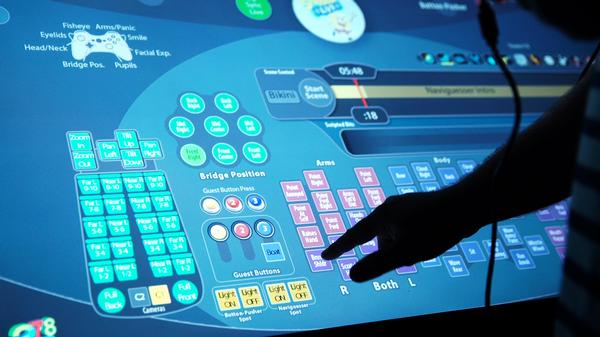
Visitors to the Spongebob Subpants Adventure at Moody Gardens in Galveston, Texas, not only determine the course of the underwater journey, but get to interact with Patrick Star, the 3D attraction’s spontaneous animated host, in real time – so no experience is ever the same.
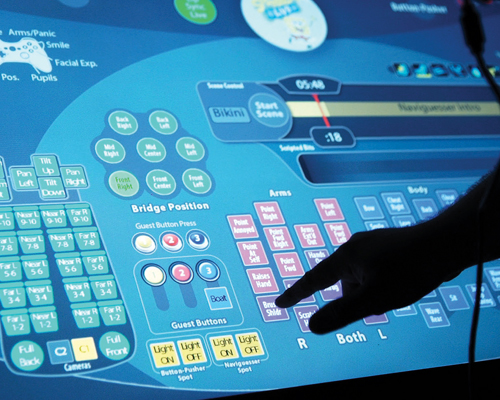
Patrick is a state-of-the-art 3D digital puppet, controlled by an actor using the Geppetto system. Patrick’s actions and words are improvised by the actor, who can interact with audience members and perform an array of special effects tricks. The control system has won the 2016 Thea Award for Outstanding Achievement: Technology Breakthrough.
Super 78 has been developing Geppetto for several years and first created the Donkey Live show at Universal Studios Singapore in 2009. Since then, Super 78 has been working to make the system affordable to smaller operators, refine the technology and improve its capabilities.
“We wanted to bring an affordable feature-quality animation attraction with the most advanced live character system in the world to regional parks,” says Brent Young, CEO at Super 78. Since Donkey Live, the technology has improved to create higher graphics quality and run a 3D rather than a 2D show. The show runs on 4K resolution, achieving a higher quality image at a higher rate of 6fps (frames per second), resulting in more realistic and detailed character motion.
“However,” Young says, “the biggest improvement is that we’ve brought the whole system down to where it can be run by just two people. The host manages the audience and the show itself is managed by a single operator/performer.”
“We’ve also made the user experience fun for the performer, which then translates into a really fun show. We’ve given them all kinds of crazy tools and moves to use. The performer really has the ability to design the show as they go, but there’s also a show timeline built into the software and an autopilot function if anything goes wrong.”
It doesn’t stop there, of course. Super 78 is already developing the next generation of Geppetto, which has gamified performer training and rehearsal features and show feedback capabilities.
Super 78 is also working on a Geppetto-powered digital puppet system called Pine-occhio. With cutting-edge animation based on the famous stringed marionette, it will boast a variety of brand new features.
Despite starting out as an internal R&D project, Young says Pine-occhio has already garnered interest from potential buyers.
The Gepetto control system could soon be an option for smaller operators
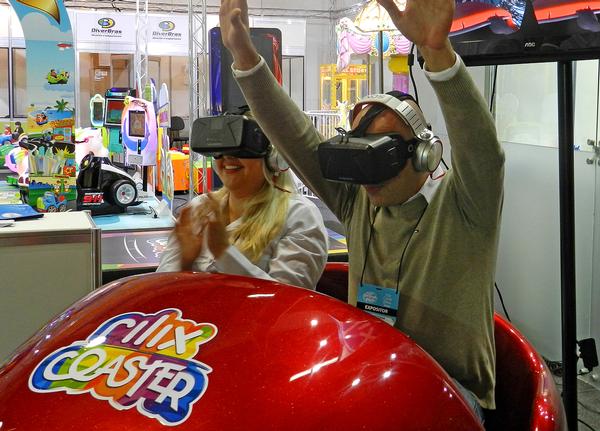
RILIX Rilix facilitates rollercoaster thrills in any environment Rilix debuted its Rilix Coaster at IAAPA, a VR rollercoaster ride that provides a fully immersive experience in a tiny footprint.
Participants don their HMD and a set of headphones, and once seated in the brightly coloured fibreglass pod, they experience a coaster experience that simulates speeds of up to 140kph (87mph), complete with pod vibrations.
There’s a range of scenarios to choose from, including a kid’s ride, adventure ride, horror ride and sci-fi ride. The product is aimed at FECs, shopping centres and similar entertainment venues.
Companies like Rilix are bringing VR offerings to FECs, malls and small operators
TRIOTECH Gesture-tech raises expectations for Ninjago rides Ride maker Triotech unveiled its new gesture-led technology at IAAPA, as Merlin announced a third location for a dark ride using the Maestro technology.
Ninjago: The Ride has been confirmed for upcoming Ninjago-themed areas at Legoland California, Legoland Billund (in spring) and Legoland Malaysia in November.
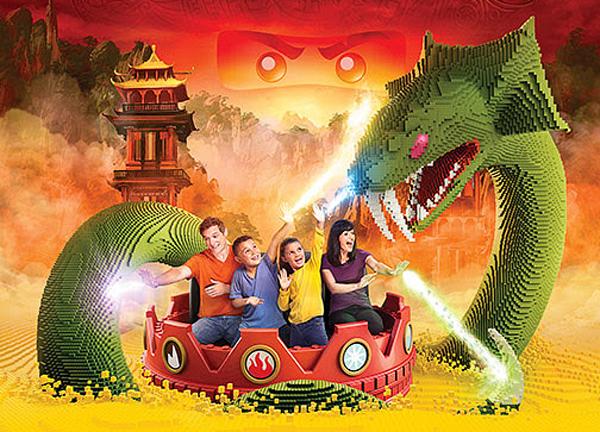
Maestro allows guests to control their actions in the game by waving or sweeping their hands. In Ninjago: The Ride, these gestures will translate as throwing lightning bolts, shockwaves and fire balls.
Maestro works with sensors that detect the guest’s hand motion, and uses software that determines where the guest is aiming. That’s then translated into an image showing the projectile’s progress on screen.
Hand gestures control Ninjago: The Ride
VIDERO Revolutionary Videro technology streamlines AV for museums, 3D/4D attractions A new platform is set to change the way operators and visitors interact with AV content, allowing them to manage multimedia content from their smart device.
Videro is an operating system that removes the need for multiple hardware modules, streamlining the solution to a single, compact hardware, making it up to 60 per cent more energy efficient and many times more cost effective.
The operating system allows theme parks and museums to change their storytelling capabilities from their smart phone or smart device. With a single swipe of a finger, an operator can change the media displayed on any or all of the attraction’s screens in an instant. The operating system was co-created by American-based Edwards Technologies and German-based Videro.
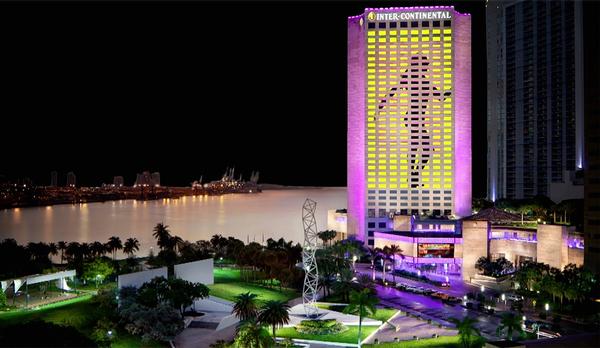
Videro is used by Times Square New York, Intercontinental Hotel Miami, Sega, Oprah and Hilton Grand Vacations, as well as managing and operating a further 5,000 screens worldwide. Videro can be connected to an attraction’s own database, so unique content can be managed by the operator and changed or updated at any time. Different content can be played on different screens, or the same content on all screens.
According to Brian Edwards, CEO of Edwards Technologies, the technology is such a leap forward, there’s a gap between where immersive, digital storytelling is now and where it will be in the near future.
“We don’t experience things on one screen any more. We use multiple devices and multiple delivery systems. Now we have the ability to tell a story by selecting the media we want to play with the slide of a finger,” Edwards told Attractions Management. “The magic is in how simple this is.”
The Mercedes-Benz Museum is one example of an attraction using the Videro operating system, with 230 players running on that platform. Film-based attractions can also use the system, which not only hosts and plays the 3D film, but can also be programmed to control special effects such as seat vibrations, fog and water.
Miami’s Intercontinental hotel uses Videro technology
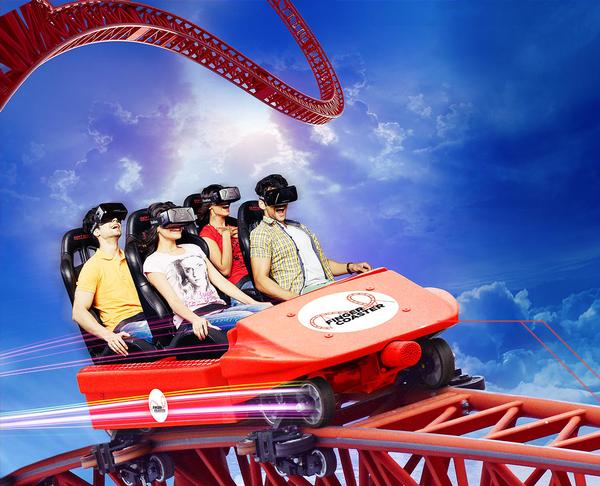
FINGER COASTER Smaaash’s Finger Coaster lets you draw and ride your own VR rollercoaster Mumbai-based VR games developer Smaaash debuted its Finger Coaster innovation at the IAAPA attractions expo, with the new technology allowing users to draw a rollercoaster and then ride their creation in a virtual space.
“The Finger Coaster is a ‘make-your-own-ride experience’,” says Smaaash’s chief technology officer, Kaizad Bajina. “You draw it out with your finger, making it as long as you want with however many loops you want, and then you choose the setting – a lake, a theme park, a beach.”
Once users have drawn their coaster, up to four people can ride it. Each wearing an HMD, they are seated in a rollercoaster car mounted on an electronic motion platform. To complete the experience, sounds of the rollercoaster are played to the riders, while a fan activates at certain points to simulate downhill sections of the virtual ride.
Finger Coaster is installed at FECs in India, and has orders for Europe, Asia and the US
AV STUMPFL AV Stumpfl system takes pain out of projection alignment A leading manufacturer of show control, multimedia and screen technology, AV Stumpfl, has launched a groundbreaking set of solutions for the attractions industries.
“Wings VIOSO uses a small camera pointed at the ceiling to automatically realign the images and the blends. Nobody is going to miss the tedium of projector alignment,” says Kevin Zevchik, US manager at AV Stumpfl.
The new product range hinges on the company’s Avio Manager 2.0 software, which simplifies systems infrastructure management by automatically recognising and configuring projectors, scaler/switchers, displays and other devices, no matter what make or model. Inputs and outputs can be wired on-screen using the intuitive software.
Avio Manager 2.0 is compatible with motion-tracking devices, such as Microsoft Kinect and facial recognition systems, as well as social media.
Avio Manager 2.0 automatically recognises and configures projectors
GANTOM LIGHTING & CONTROLS Gantom’s interactive torch and tags enhance storytelling and games The THEA award-winning Gantom Torch looks like a normal battery-powered flashlight. But unlike a normal torch, it’s controlled via infrared (IR) emitters placed around the attraction.
The lighting designer can programme the Gantom Torch to flicker, switch off and on, change the colour of the light and vibrate as the visitor moves around the attraction. Its potential in haunted house and dark attractions and adventure and escape room experiences is evident, and it can provide a new layer to a storytelling experience.
The LED torch has full RGB colour mixing and vibrate capabilities. The BlinkFX MiniEmitters are IR emitters that are installed throughout the show and control the torches as the guests walk through. When a torch picks up the signal from an emitter, it switches to the program broadcast by that unit.
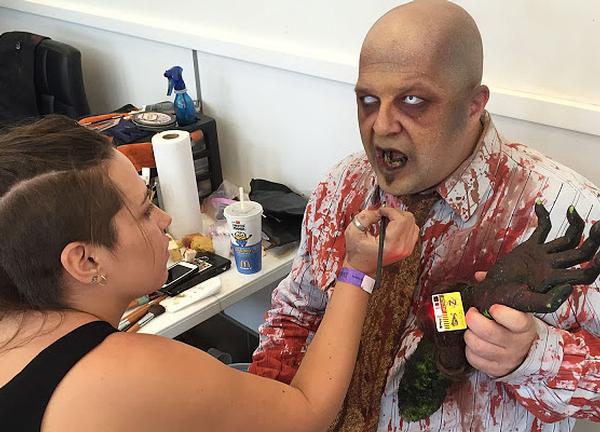
Gantom has also used its Torch technology to create a zombie tag game. The ZTag is a badge that allows users to interact with one another using infrared. The badge contains an IR receiver, an IR emitter, RGB LED, a button to change the modes and a microprocessor. The badges react when they come into close proximity with other badges or IR emitters.
In one example of how the technology can be used, ZTag was used at the ScareLA convention in Pasadena, California. Players became “infected” when they come close to “zombie” players and the ZTag signalled when the player was healthy, in danger and infected.
The badge and torch can be programmed via a free-to-download Gantom app.
A zombie actor wears a yellow ZTag at ScareLA; and the Gantom torch (inset)
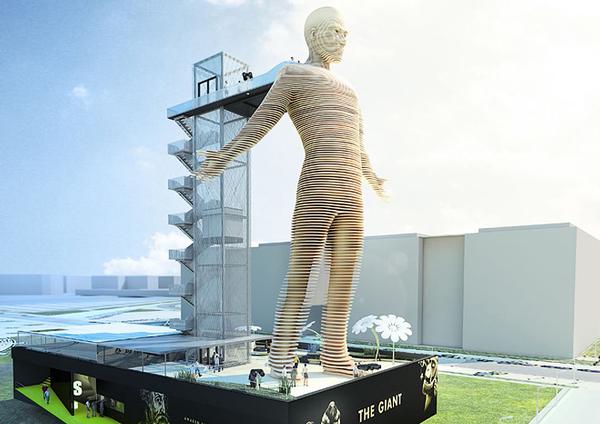
THE GIANT COMPANY Irish entrepreneur launches mammoth moving attraction Architecture firm Dan Pearlman has unveiled plans for a 10-storey articulated sculpture and museum known as The Giant, which will be rolled out from 2017.
Touted as “the visitor attraction for the 21st Century”, the sculpture will take the form of a mythical giant, with moving limbs and eyes. Each will be custom-designed for its location, with the first slated to open in Berlin in 2017 and a further 20 planned for major cities around the world.
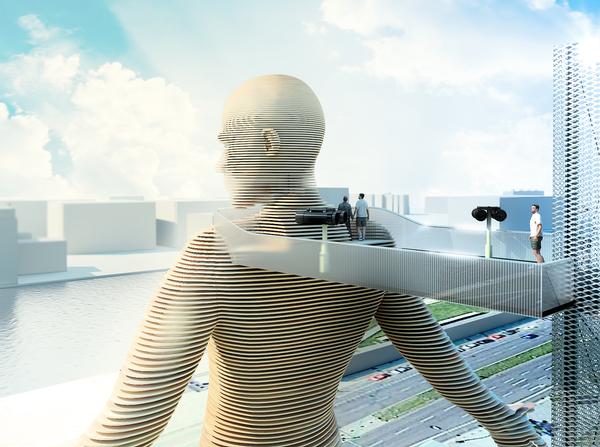
According to Dan Pearlman, visitors will be able to stand on the shoulders of the giant by ascending to the top of the sculpture where a platform will offer views of the local surroundings.
The Giant will be embedded with more than 10,000 LEDs, making it a blank canvas for the projection of art or famous people from history. Visitors will also be scanned to have their likeness appear on the giant sculpture.
A 10,000sq ft (930sqm) museum beneath The Giant will give visitors the opportunity to explore the Giant Experience, where interactive exhibits will document giants from ancient mythology, while also celebrating whichever city and country the attraction stands in.
The Giant Experience will also include the Fee Fi Foo Fum Snack Shack and Goliath’s: The World’s Smallest Department Store, which will sell products designed by local inventors and artists.
“We’re working with major city governments and expect to establish 20 Giants over the next decade,” said Paddy Dunning, CEO of the Giant Company.
“While each Giant will offer an original experience, there will be an interconnection between our family of Giants and with the aid of new technologies they will be able to communicate with each other to create real-time global events,” he said.
As part of the worldwide rollout, an organisation called the Giant’s Foundation will be established to fund the philanthropic, educational and humanitarian goals of the project, which include the creation of programmes and engagements for children, and scholarships for a variety of educational institutions.
10-storey articulated sculpture and museum known as The Giant
A viewing platform on The Giant’s shoulders provides views of the city below
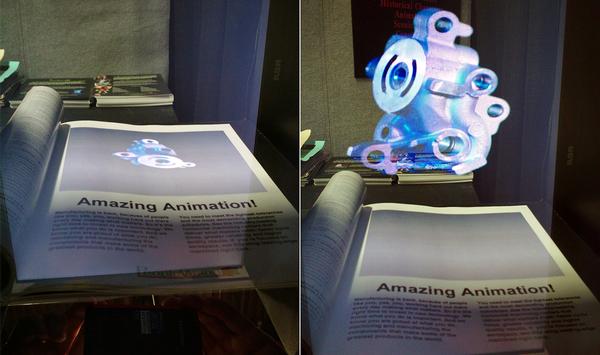
PEOPLEVISIONFX PeopleVisionFX unveils new hologram technology The PhotonAnimated Object is a device that animates any 3D object with holographic effects. The moving hologram is superimposed over the physical object, and can be produced in any size. The device can also bring an object to life “from the pages of a book”. PeopleVisionFX, who specialise in 3D video projection technology, also offers PhotonOpticon, where a hologram effect is created by projecting video images onto a transparent screen.
The PhotonAnimated Object can bring an object to life from the pages of a book
ALTERFACE Alterface opens up world of ride possibilities with new interactive technologies Alterface Projects is continuing to advance the potential of interactive technology in the dark ride sector, working on both gesture-led technologies and its “magic” wand, which work with the company’s Come To Life sceneries.
The gesture sensor technology allows ride designers to create device-free scenarios, where guests don’t have to interact with the game using a gun-style device, but control their role in the ride experience with arm and hand movements.
“For the past 15 years, most interactive attractions have been using gun-shaped devices,” says Alterface marketing manager Guillaume Gallant. “Now, to interact with the surrounding scenery and media content, all the user has to do is to move their hand above the sensor in front of their seat. This system calls for never-seen-before gestures and gameplay action, and provides a surprising magical feel.”
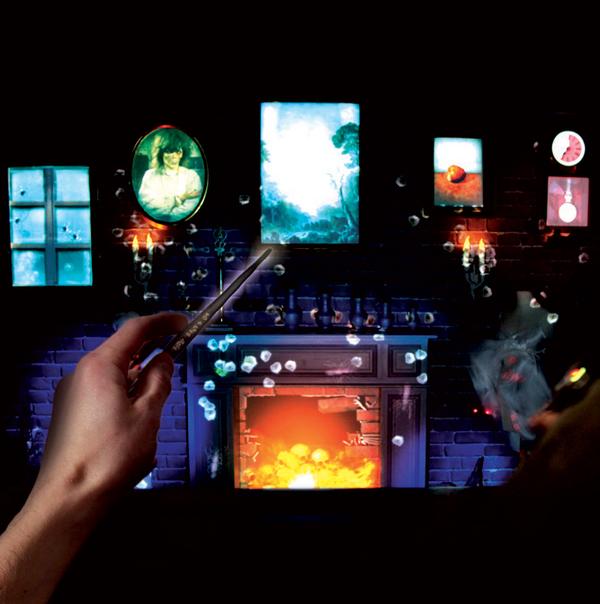
The second new concept under development with Alterface offers masses of possibilities for designers. Alterface’s Magic Wand is an intuitive wireless, button-free device that can be used with Come To Life scenery, a mixture of video projection mapping with physical set props.
“This interactive device offers the most intuitive gameplay: point at the objects in the Come To Life scenery – whether physical or media objects – and the wand activates the on-set response. Aim at a window and it breaks; aim at a frame and the painting comes alive,” Gallant says.
Guests can interact with videos projected onto real objects, which animate the scenery and respond as targets. Media is programmed with Salto software to produce an audiovisual reaction. Alterface’s gesture tech will also be compatible with Come To Life installations.
Come To Life scenery consists of video projection mapping and physical props
MEDIAMATION MediaMation injects teamwork and competition into VR experience Attractions technology company MediaMation has launched a virtual motion gaming platform, the ReactiVR, a machine that combines multiplayer interaction, player freedom and competition in one package.
The ReactiVR, demoed at IAAPA, was an ATV that’s been turned into a 3DOF motion-base. Player one drives the ATV and player two shoots other vehicles. The pod dynamically reacts to the gameplay, so the physical experience is matched with the visual experience inside the HMD.
According to MediaMation vice president Daniel Jamele, integrating VR with motion technology is more likely to tempt people away from playing VR games at home. “We previously showcased a VR shooting game experience with pre-programmed motion,” Jamele says. “But the problem is that it doesn’t involve teamwork and it lacks repeatability. This is why we developed the two-player ReactiVR pods, which we aim to offer as a four-player option soon. Without competition and teamwork it’s just a video game.”
“This is also far more interactive than the passive VR experiences where you have to go where the ride takes you. You decide where you want to go and the VR experience responds to your choices.”
MediaMation, which turned 25 last year, says it continues to offer products that are non-proprietary.
“We try to be universal so we can work with big players and they can develop the games they want. We’ve always been focused on enabling our customers to integrate any media with our products.”
MediaMation’s ReactiVR combines VR and a two-player motion-base vehicle
In the fast-paced world of fitness and wellness, where high-intensity workouts push us to
our limits and the sweat pours, the importance of efficient recovery cannot be overstated. [more...]
Le Atelier by C.O.D.E. doesn't offer a standard bespoke service, it provides a highly
customised approach to designing massage beds and loungers in high-end wellness
environments. [more...]
+ More featured suppliers
COMPANY PROFILES
Gharieni Group
For 35 years, the Gharieni Group has
redefined wellness, spa and medical
equipment, setting global [more...]
Myndstream
The Stream, Myndstream's purpose-built streaming service enables you to personalise the music to sui [more...]
Interview: Tony Butler
Tony Butler, executive director of Derby
Museums Trust, on how museums can
be a force for good in their communities
Attractions: Perfect Brew
At 15 years old, the Guinness Storehouse
has been voted Europe’s best-loved
attraction. Manager Paul Carty reveals
the secrets of the Dublin brandland
Profile: John McReynolds
IAAPA’s new chairman reveals his aims
for the year ahead, his vision for a
global association and how his role at
Universal Orlando informs his goals
Analysis: The Attractions Business
Business planning consultant
David Camp starts an exclusive eight-part
series, delving into the fine art of attractions
operation from a business perspective
Science Centres: How to Future-Proof a Science Centre
Peter Slavenburg of design agency
NorthernLight describes how invisible
technology, serious play, co-creation
and the digital experience will inform
the science centre of tomorrow
Promotional feature: Simworx Ventures
Simworx Ventures is bringing its expertise in cutting-edge media-based attractions
to a new audience of museums, heritage sites, zoos and aquariums
Technology: Beacons on the Horizon
Beacons have countless applications in
the world of attractions. A case study
from the Cleveland Museum of Art
illustrates the technology’s potential
Museums & Galleries: Art Attack
Some of the most exciting attractions
design is happening in new and
upcoming galleries around the world,
from firms like Kengo Kuma and BIG
Promotional feature: IDEA
2016 is shaping up to be an interesting year for the attractions industry.
IDEA looks at what it takes to win audiences and command attention
Mystery Shopper: Spring in Your Step
We disappear down the rabbit hole as we
pay a mystery shopper visit to Bounce
Below, a unique underground trampolining
attraction in Snowdonia, north Wales
Rides: The Ride Makers
Our ride makers series continues with
water rides, a firm favourite with park
guests. Three leading companies reveal
the latest trends in flumes and chutes
Technology: Tech Check
The industry technology unveiled at
IAAPA 2015: from VR to interactives, and
digital puppets to 20-storey LED giants
SUPER 78 Geppetto technology breathes life into digital puppetry Creative entertainment production studio Super 78 is taking state-of-the-art digital puppetry to a wider market, thanks to its Geppetto Animation Control System (ACS) technology. Developments have not only improved the quality of the animated puppetry, but made the technology more accessible to regional-level operators.
Visitors to the Spongebob Subpants Adventure at Moody Gardens in Galveston, Texas, not only determine the course of the underwater journey, but get to interact with Patrick Star, the 3D attraction’s spontaneous animated host, in real time – so no experience is ever the same.
Patrick is a state-of-the-art 3D digital puppet, controlled by an actor using the Geppetto system. Patrick’s actions and words are improvised by the actor, who can interact with audience members and perform an array of special effects tricks. The control system has won the 2016 Thea Award for Outstanding Achievement: Technology Breakthrough.
Super 78 has been developing Geppetto for several years and first created the Donkey Live show at Universal Studios Singapore in 2009. Since then, Super 78 has been working to make the system affordable to smaller operators, refine the technology and improve its capabilities.
“We wanted to bring an affordable feature-quality animation attraction with the most advanced live character system in the world to regional parks,” says Brent Young, CEO at Super 78. Since Donkey Live, the technology has improved to create higher graphics quality and run a 3D rather than a 2D show. The show runs on 4K resolution, achieving a higher quality image at a higher rate of 6fps (frames per second), resulting in more realistic and detailed character motion.
“However,” Young says, “the biggest improvement is that we’ve brought the whole system down to where it can be run by just two people. The host manages the audience and the show itself is managed by a single operator/performer.”
“We’ve also made the user experience fun for the performer, which then translates into a really fun show. We’ve given them all kinds of crazy tools and moves to use. The performer really has the ability to design the show as they go, but there’s also a show timeline built into the software and an autopilot function if anything goes wrong.”
It doesn’t stop there, of course. Super 78 is already developing the next generation of Geppetto, which has gamified performer training and rehearsal features and show feedback capabilities.
Super 78 is also working on a Geppetto-powered digital puppet system called Pine-occhio. With cutting-edge animation based on the famous stringed marionette, it will boast a variety of brand new features.
Despite starting out as an internal R&D project, Young says Pine-occhio has already garnered interest from potential buyers.
The Gepetto control system could soon be an option for smaller operators
RILIX Rilix facilitates rollercoaster thrills in any environment Rilix debuted its Rilix Coaster at IAAPA, a VR rollercoaster ride that provides a fully immersive experience in a tiny footprint.
Participants don their HMD and a set of headphones, and once seated in the brightly coloured fibreglass pod, they experience a coaster experience that simulates speeds of up to 140kph (87mph), complete with pod vibrations.
There’s a range of scenarios to choose from, including a kid’s ride, adventure ride, horror ride and sci-fi ride. The product is aimed at FECs, shopping centres and similar entertainment venues.
Companies like Rilix are bringing VR offerings to FECs, malls and small operators
TRIOTECH Gesture-tech raises expectations for Ninjago rides Ride maker Triotech unveiled its new gesture-led technology at IAAPA, as Merlin announced a third location for a dark ride using the Maestro technology.
Ninjago: The Ride has been confirmed for upcoming Ninjago-themed areas at Legoland California, Legoland Billund (in spring) and Legoland Malaysia in November.
Maestro allows guests to control their actions in the game by waving or sweeping their hands. In Ninjago: The Ride, these gestures will translate as throwing lightning bolts, shockwaves and fire balls.
Maestro works with sensors that detect the guest’s hand motion, and uses software that determines where the guest is aiming. That’s then translated into an image showing the projectile’s progress on screen.
Hand gestures control Ninjago: The Ride
VIDERO Revolutionary Videro technology streamlines AV for museums, 3D/4D attractions A new platform is set to change the way operators and visitors interact with AV content, allowing them to manage multimedia content from their smart device.
Videro is an operating system that removes the need for multiple hardware modules, streamlining the solution to a single, compact hardware, making it up to 60 per cent more energy efficient and many times more cost effective.
The operating system allows theme parks and museums to change their storytelling capabilities from their smart phone or smart device. With a single swipe of a finger, an operator can change the media displayed on any or all of the attraction’s screens in an instant. The operating system was co-created by American-based Edwards Technologies and German-based Videro.
Videro is used by Times Square New York, Intercontinental Hotel Miami, Sega, Oprah and Hilton Grand Vacations, as well as managing and operating a further 5,000 screens worldwide. Videro can be connected to an attraction’s own database, so unique content can be managed by the operator and changed or updated at any time. Different content can be played on different screens, or the same content on all screens.
According to Brian Edwards, CEO of Edwards Technologies, the technology is such a leap forward, there’s a gap between where immersive, digital storytelling is now and where it will be in the near future.
“We don’t experience things on one screen any more. We use multiple devices and multiple delivery systems. Now we have the ability to tell a story by selecting the media we want to play with the slide of a finger,” Edwards told Attractions Management. “The magic is in how simple this is.”
The Mercedes-Benz Museum is one example of an attraction using the Videro operating system, with 230 players running on that platform. Film-based attractions can also use the system, which not only hosts and plays the 3D film, but can also be programmed to control special effects such as seat vibrations, fog and water.
Miami’s Intercontinental hotel uses Videro technology
FINGER COASTER Smaaash’s Finger Coaster lets you draw and ride your own VR rollercoaster Mumbai-based VR games developer Smaaash debuted its Finger Coaster innovation at the IAAPA attractions expo, with the new technology allowing users to draw a rollercoaster and then ride their creation in a virtual space.
“The Finger Coaster is a ‘make-your-own-ride experience’,” says Smaaash’s chief technology officer, Kaizad Bajina. “You draw it out with your finger, making it as long as you want with however many loops you want, and then you choose the setting – a lake, a theme park, a beach.”
Once users have drawn their coaster, up to four people can ride it. Each wearing an HMD, they are seated in a rollercoaster car mounted on an electronic motion platform. To complete the experience, sounds of the rollercoaster are played to the riders, while a fan activates at certain points to simulate downhill sections of the virtual ride.
Finger Coaster is installed at FECs in India, and has orders for Europe, Asia and the US
AV STUMPFL AV Stumpfl system takes pain out of projection alignment A leading manufacturer of show control, multimedia and screen technology, AV Stumpfl, has launched a groundbreaking set of solutions for the attractions industries.
“Wings VIOSO uses a small camera pointed at the ceiling to automatically realign the images and the blends. Nobody is going to miss the tedium of projector alignment,” says Kevin Zevchik, US manager at AV Stumpfl.
The new product range hinges on the company’s Avio Manager 2.0 software, which simplifies systems infrastructure management by automatically recognising and configuring projectors, scaler/switchers, displays and other devices, no matter what make or model. Inputs and outputs can be wired on-screen using the intuitive software.
Avio Manager 2.0 is compatible with motion-tracking devices, such as Microsoft Kinect and facial recognition systems, as well as social media.
Avio Manager 2.0 automatically recognises and configures projectors
GANTOM LIGHTING & CONTROLS Gantom’s interactive torch and tags enhance storytelling and games The THEA award-winning Gantom Torch looks like a normal battery-powered flashlight. But unlike a normal torch, it’s controlled via infrared (IR) emitters placed around the attraction.
The lighting designer can programme the Gantom Torch to flicker, switch off and on, change the colour of the light and vibrate as the visitor moves around the attraction. Its potential in haunted house and dark attractions and adventure and escape room experiences is evident, and it can provide a new layer to a storytelling experience.
The LED torch has full RGB colour mixing and vibrate capabilities. The BlinkFX MiniEmitters are IR emitters that are installed throughout the show and control the torches as the guests walk through. When a torch picks up the signal from an emitter, it switches to the program broadcast by that unit.
Gantom has also used its Torch technology to create a zombie tag game. The ZTag is a badge that allows users to interact with one another using infrared. The badge contains an IR receiver, an IR emitter, RGB LED, a button to change the modes and a microprocessor. The badges react when they come into close proximity with other badges or IR emitters.
In one example of how the technology can be used, ZTag was used at the ScareLA convention in Pasadena, California. Players became “infected” when they come close to “zombie” players and the ZTag signalled when the player was healthy, in danger and infected.
The badge and torch can be programmed via a free-to-download Gantom app.
A zombie actor wears a yellow ZTag at ScareLA; and the Gantom torch (inset)
THE GIANT COMPANY Irish entrepreneur launches mammoth moving attraction Architecture firm Dan Pearlman has unveiled plans for a 10-storey articulated sculpture and museum known as The Giant, which will be rolled out from 2017.
Touted as “the visitor attraction for the 21st Century”, the sculpture will take the form of a mythical giant, with moving limbs and eyes. Each will be custom-designed for its location, with the first slated to open in Berlin in 2017 and a further 20 planned for major cities around the world.
According to Dan Pearlman, visitors will be able to stand on the shoulders of the giant by ascending to the top of the sculpture where a platform will offer views of the local surroundings.
The Giant will be embedded with more than 10,000 LEDs, making it a blank canvas for the projection of art or famous people from history. Visitors will also be scanned to have their likeness appear on the giant sculpture.
A 10,000sq ft (930sqm) museum beneath The Giant will give visitors the opportunity to explore the Giant Experience, where interactive exhibits will document giants from ancient mythology, while also celebrating whichever city and country the attraction stands in.
The Giant Experience will also include the Fee Fi Foo Fum Snack Shack and Goliath’s: The World’s Smallest Department Store, which will sell products designed by local inventors and artists.
“We’re working with major city governments and expect to establish 20 Giants over the next decade,” said Paddy Dunning, CEO of the Giant Company.
“While each Giant will offer an original experience, there will be an interconnection between our family of Giants and with the aid of new technologies they will be able to communicate with each other to create real-time global events,” he said.
As part of the worldwide rollout, an organisation called the Giant’s Foundation will be established to fund the philanthropic, educational and humanitarian goals of the project, which include the creation of programmes and engagements for children, and scholarships for a variety of educational institutions.
10-storey articulated sculpture and museum known as The Giant
A viewing platform on The Giant’s shoulders provides views of the city below
PEOPLEVISIONFX PeopleVisionFX unveils new hologram technology The PhotonAnimated Object is a device that animates any 3D object with holographic effects. The moving hologram is superimposed over the physical object, and can be produced in any size. The device can also bring an object to life “from the pages of a book”. PeopleVisionFX, who specialise in 3D video projection technology, also offers PhotonOpticon, where a hologram effect is created by projecting video images onto a transparent screen.
The PhotonAnimated Object can bring an object to life from the pages of a book
ALTERFACE Alterface opens up world of ride possibilities with new interactive technologies Alterface Projects is continuing to advance the potential of interactive technology in the dark ride sector, working on both gesture-led technologies and its “magic” wand, which work with the company’s Come To Life sceneries.
The gesture sensor technology allows ride designers to create device-free scenarios, where guests don’t have to interact with the game using a gun-style device, but control their role in the ride experience with arm and hand movements.
“For the past 15 years, most interactive attractions have been using gun-shaped devices,” says Alterface marketing manager Guillaume Gallant. “Now, to interact with the surrounding scenery and media content, all the user has to do is to move their hand above the sensor in front of their seat. This system calls for never-seen-before gestures and gameplay action, and provides a surprising magical feel.”
The second new concept under development with Alterface offers masses of possibilities for designers. Alterface’s Magic Wand is an intuitive wireless, button-free device that can be used with Come To Life scenery, a mixture of video projection mapping with physical set props.
“This interactive device offers the most intuitive gameplay: point at the objects in the Come To Life scenery – whether physical or media objects – and the wand activates the on-set response. Aim at a window and it breaks; aim at a frame and the painting comes alive,” Gallant says.
Guests can interact with videos projected onto real objects, which animate the scenery and respond as targets. Media is programmed with Salto software to produce an audiovisual reaction. Alterface’s gesture tech will also be compatible with Come To Life installations.
Come To Life scenery consists of video projection mapping and physical props
MEDIAMATION MediaMation injects teamwork and competition into VR experience Attractions technology company MediaMation has launched a virtual motion gaming platform, the ReactiVR, a machine that combines multiplayer interaction, player freedom and competition in one package.
The ReactiVR, demoed at IAAPA, was an ATV that’s been turned into a 3DOF motion-base. Player one drives the ATV and player two shoots other vehicles. The pod dynamically reacts to the gameplay, so the physical experience is matched with the visual experience inside the HMD.
According to MediaMation vice president Daniel Jamele, integrating VR with motion technology is more likely to tempt people away from playing VR games at home. “We previously showcased a VR shooting game experience with pre-programmed motion,” Jamele says. “But the problem is that it doesn’t involve teamwork and it lacks repeatability. This is why we developed the two-player ReactiVR pods, which we aim to offer as a four-player option soon. Without competition and teamwork it’s just a video game.”
“This is also far more interactive than the passive VR experiences where you have to go where the ride takes you. You decide where you want to go and the VR experience responds to your choices.”
MediaMation, which turned 25 last year, says it continues to offer products that are non-proprietary.
“We try to be universal so we can work with big players and they can develop the games they want. We’ve always been focused on enabling our customers to integrate any media with our products.”
MediaMation’s ReactiVR combines VR and a two-player motion-base vehicle
Global Wellness Day (GWD) marked its 15th anniversary on Saturday 13 June 2026, with the
theme: #JoyMagenta – a celebration of the healing qualities of simple gestures and activities
that spark joy.
Global luxury hospitality brand, Six Senses, has partnered with longevity healthcare provider,
HUM2N, to launch a clinic at Six Senses London, at The Whiteley.
As part of its first hotel partnership, Mayrlife – the medical health resort company known for its
site in Altaussee, Austria – has launched a day clinic at the Rosewood Vienna.
Premium London health club, KX Chelsea, will imminently unveil its most significant
redevelopment since its launch in 2002 to create an integrated wellness model combining
training, recovery and relaxation.
Rosewood Le Guanahani St Barth, on the northeast coast of Saint Barthélemy in the French
West Indies, is offering a programme of ocean-inspired yoga classes between 8-14 June to
celebrate Global Wellness Day (GWD).
Hotel de France, located on the British Isle of Jersey, has created a wellness retreat package
that includes a hot yoga session that will take place in Jersey Zoo’s butterfly sanctuary.
The Ritz-Carlton, Langkawi, in Malaysia, has revealed a schedule for Global Wellness Day
(GWD) that includes guided rainforest walks, mindful movement and guided coastal meditation
experiences.
Longevitix, a clinical platform for preventive and longevity medicine, has launched its AI-
powered intelligence system to help physicians deliver continuous, personalised longevity-
focused care at scale.
Atmantan Wellness Centre, an integrative wellness destination in Mulshi, near Pune in India, is
expanding its portfolio by adding a new centre in Hyderabad that will launch between 2028 and
2029.
In the fast-paced world of fitness and wellness, where high-intensity workouts push us to
our limits and the sweat pours, the importance of efficient recovery cannot be overstated. [more...]
Le Atelier by C.O.D.E. doesn't offer a standard bespoke service, it provides a highly
customised approach to designing massage beds and loungers in high-end wellness
environments. [more...]
+ More featured suppliers
COMPANY PROFILES
Gharieni Group For 35 years, the Gharieni Group has
redefined wellness, spa and medical
equipment, setting global [more...]