Yes! Send me the FREE digital editions of Spa Business and Spa Business insider magazines and the FREE weekly Spa Business and Spa Business insider ezines and breaking news alerts!
Guinness Storehouse celebrates its 15th birthday and another record-breaking year. We found out how Europe’s best-loved attraction sustains its enviable reputation
By Alice Davis | Published in Attractions Management 2016 issue 1
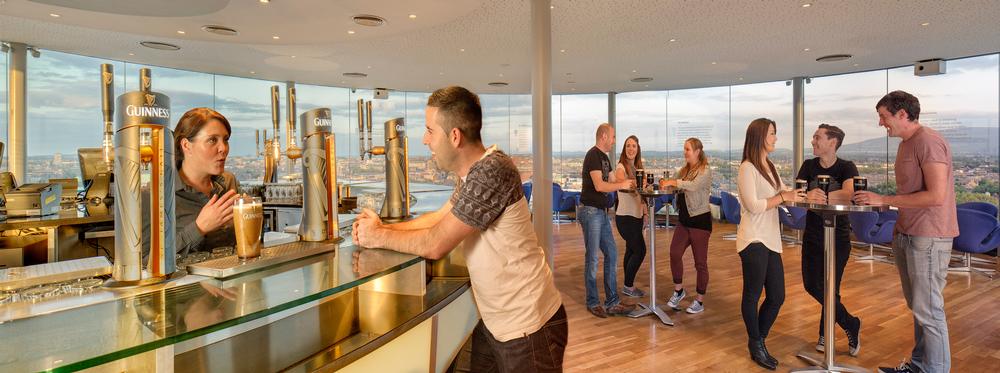
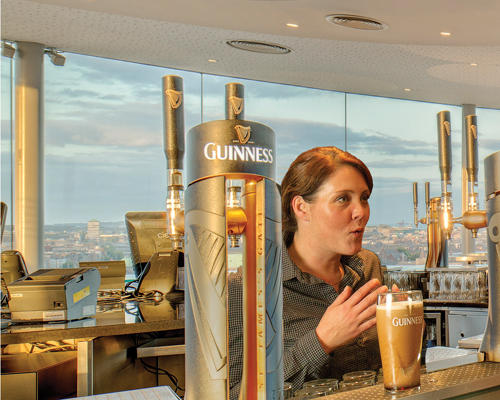
A visit to Dublin’s Guinness Storehouse ends at the Gravity Bar on the seventh floor
Guinness is one of the most recognisable drinks on the planet, thanks to its distinctive look and years of seriously clever advertising campaigns. So when the new visitor centre, the Guinness Storehouse, opened at St James Gate brewery in Dublin in 2000, it had to embody the same values that made the brand so successful.
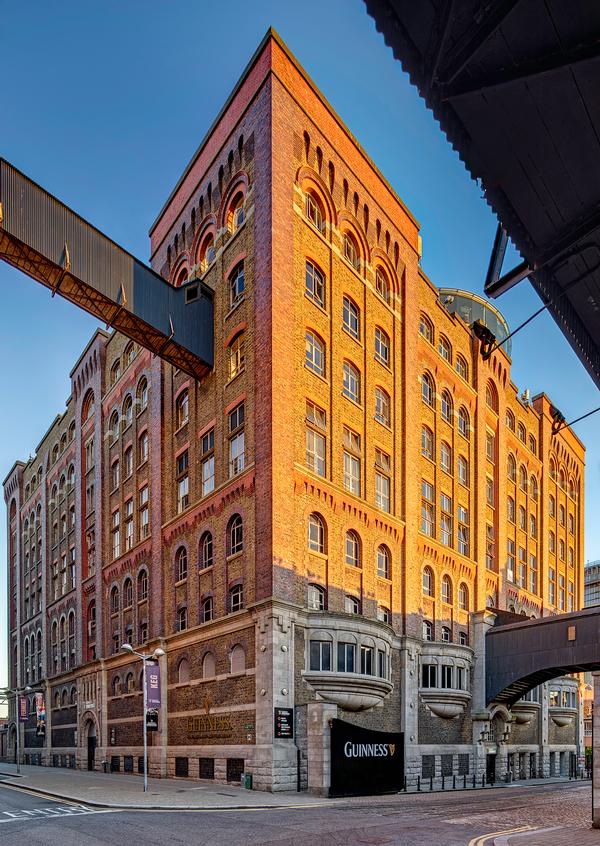
Designed by London-based Imagination in conjunction with Dublin architects RKD, a disused grain storage building was turned into a contemporary brandland at a cost of €42m (£32m, $45m). Today, half of all tourists to Ireland visit the attraction.
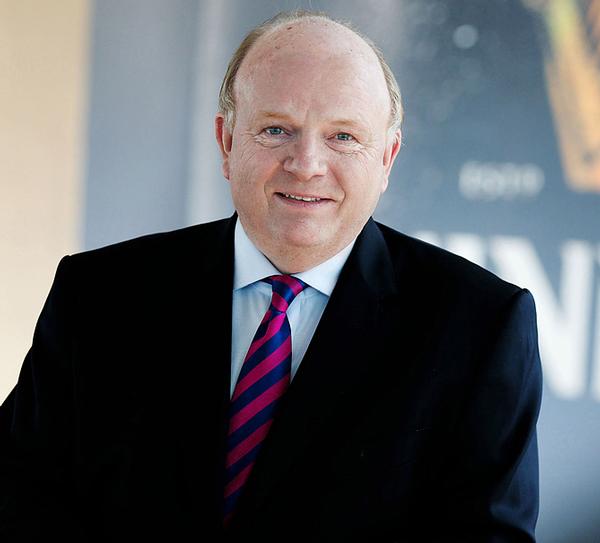
“You have to give credit to the executives from [parent company] Diageo who had the courage and bravery to spend that amount of money on a visitor centre,” says Paul Carty, managing director at the Guinness Storehouse. “That was an incredible vote of confidence in the Guinness brand and in the value of an experiential attraction.”
Fast forward to 2015, and 1.5 million people visited the Guinness Storehouse, an 18 per cent increase on the previous year’s figure. Of those, 93 per cent were from overseas, with people from the UK and US making up half of all visitors. French and German visitors formed 6 per cent each of the total, while the biggest year-on-year growth markets were the Dutch (up 34 per cent) and the Chinese (up 38 per cent).
In fact, from the very beginning, the attraction has been on an upward trajectory, both popular and profitable. Even during the recession, the Guinness Storehouse experienced growth. The only dip in attendance was in 2010, when air travel was severely disrupted by the erupting Eyjafjallajökull volcano in Iceland.
“Eighty-five per cent of our business comes via Dublin airport. We’re totally dependent on tourists coming to the island in the first place,” Carty says. “It just shows the importance of access. Airlines like Ryanair and Aer Lingus do a great job of delivering volumes of people to the island.”
Constant reinvention Carty, who started out in the global hospitality industry, has been at the Guinness Storehouse since it opened. He says the attraction is successful thanks to a business model that’s highly sustainable, funding all its own investments.
“We reinvest every year. We always try to create a new area so we have a new story to tell. This helps us maintain our position as a must-see attraction for tourists and encourages repeat visitors,” Carty says.
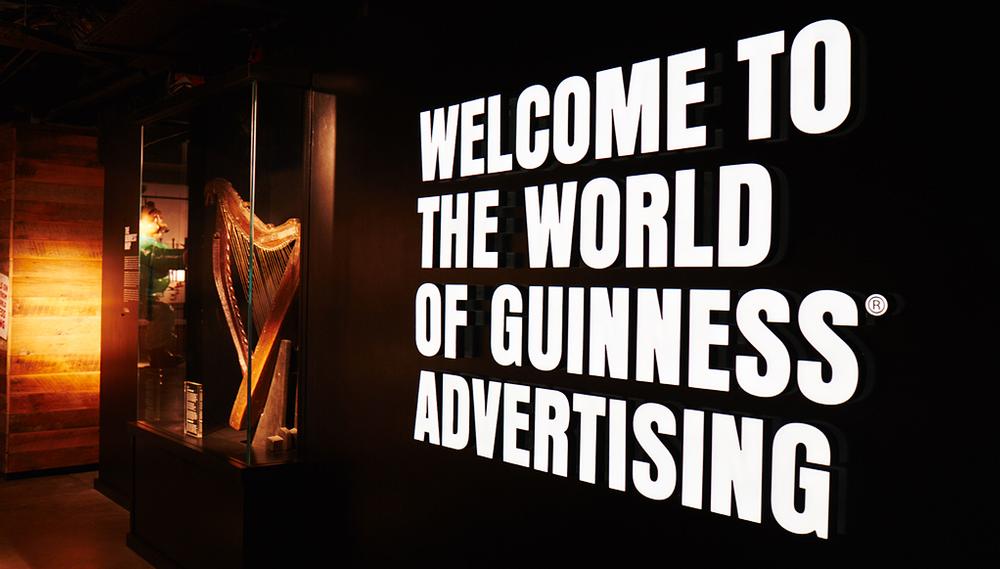
A major new investment – a result of customer feedback – is the new third floor, which opened in March 2015 and is dedicated to the world of advertising. Interactive displays bring to life the best TV and print advertising from Guinness, from the iconic John Gilroy Toucan illustrations of the 1930s to the iconic modern campaigns.
Design agency Love created the new 1,500sqm (16,146sq ft) space, introducing high-tech elements including a playable digital version of the brand’s trademark golden harp and an 8-metre (26-foot) high interactive Instagram wall to integrate social media more powerfully into the space.
The Guinness Storehouse generates 350 million media impressions every year for the brand and the 1080p-resolution gesture-controlled Instagram installation has massively boosted the attraction’s social media presence since it opened.
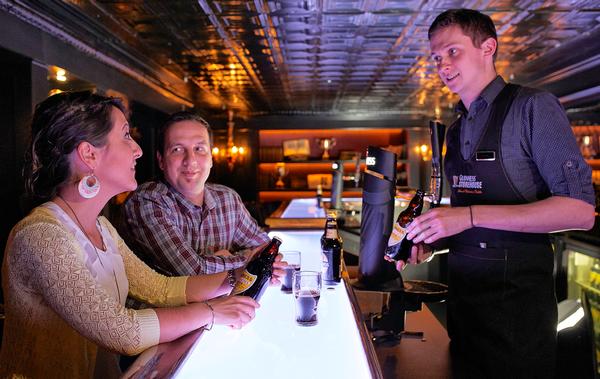
An intimate 75-minute tasting experience at the Connoisseur Bar was another new offering at the attraction last year.
“In the past five years we’ve invested €10 million [£7.6m, $10.8m]. We’re constantly reinventing and upgrading,” Carty says. “We see the return on investment and from a brand perspective we track and survey things, such as whether guests consume more Guinness after their visit, or whether they feel warmer towards the brand.”
One of the most crucial investment decisions was the appointment of BRC Imagination Arts to rethink the way the brand’s story was being told, Carty says. In 2011, BRC completed an upgrade, which included the themeing of each floor to create a coherent and more interactive visitor journey. The results were a 35 per cent jump in attendance and 240 per cent increase in net profit.
Warm Irish welcome Carty’s background in high-end hotels shines through at the attraction, where a “warm Irish welcome” and top-class customer service are paramount. A great deal is invested in finding the right staff and training them to ensure visitors enjoy a high-quality experience and form a good impression of Guinness.
“It’s similar to running hotels because of shared skill sets: F&B, entertainment, staff training and standards,” he says.
It’s the same welcome extended to Britain’s Queen Elizabeth II when she and husband Prince Philip toured the attraction in 2013, as part of the first royal visit to Ireland since 1911, For Carty, it was a career highlight: “The hairs on my neck stood up. I felt so proud to be involved such a historic event,” he says. “We showed the Queen the art of pouring the perfect Guinness. It was a beautiful occasion.”
Read more from this issue of Spa Business magazine
Interview: Tony Butler
Tony Butler, executive director of Derby
Museums Trust, on how museums can
be a force for good in their communities
Attractions: Perfect Brew
At 15 years old, the Guinness Storehouse
has been voted Europe’s best-loved
attraction. Manager Paul Carty reveals
the secrets of the Dublin brandland
Profile: John McReynolds
IAAPA’s new chairman reveals his aims
for the year ahead, his vision for a
global association and how his role at
Universal Orlando informs his goals
Analysis: The Attractions Business
Business planning consultant
David Camp starts an exclusive eight-part
series, delving into the fine art of attractions
operation from a business perspective
Science Centres: How to Future-Proof a Science Centre
Peter Slavenburg of design agency
NorthernLight describes how invisible
technology, serious play, co-creation
and the digital experience will inform
the science centre of tomorrow
Promotional feature: Simworx Ventures
Simworx Ventures is bringing its expertise in cutting-edge media-based attractions
to a new audience of museums, heritage sites, zoos and aquariums
Technology: Beacons on the Horizon
Beacons have countless applications in
the world of attractions. A case study
from the Cleveland Museum of Art
illustrates the technology’s potential
Museums & Galleries: Art Attack
Some of the most exciting attractions
design is happening in new and
upcoming galleries around the world,
from firms like Kengo Kuma and BIG
Promotional feature: IDEA
2016 is shaping up to be an interesting year for the attractions industry.
IDEA looks at what it takes to win audiences and command attention
Mystery Shopper: Spring in Your Step
We disappear down the rabbit hole as we
pay a mystery shopper visit to Bounce
Below, a unique underground trampolining
attraction in Snowdonia, north Wales
Rides: The Ride Makers
Our ride makers series continues with
water rides, a firm favourite with park
guests. Three leading companies reveal
the latest trends in flumes and chutes
Technology: Tech Check
The industry technology unveiled at
IAAPA 2015: from VR to interactives, and
digital puppets to 20-storey LED giants
SEVEN STORIES IN SEVEN STOREYS The Guinness Storehouse is arranged across seven storeys, with each floor presenting the visitor with a new aspect of the brand history. The building itself is shaped like a gigantic pint of Guinness. If it were filled with Guinness it would hold 14.3 million pints.
• GROUND FLOOR: The Guinness flagship retail store sells branded memorabilia and exclusive merchandise.
• FIRST FLOOR: Learn about the legendary Arthur Guinness’ lease of 1759 and the beginnings of Guinness.
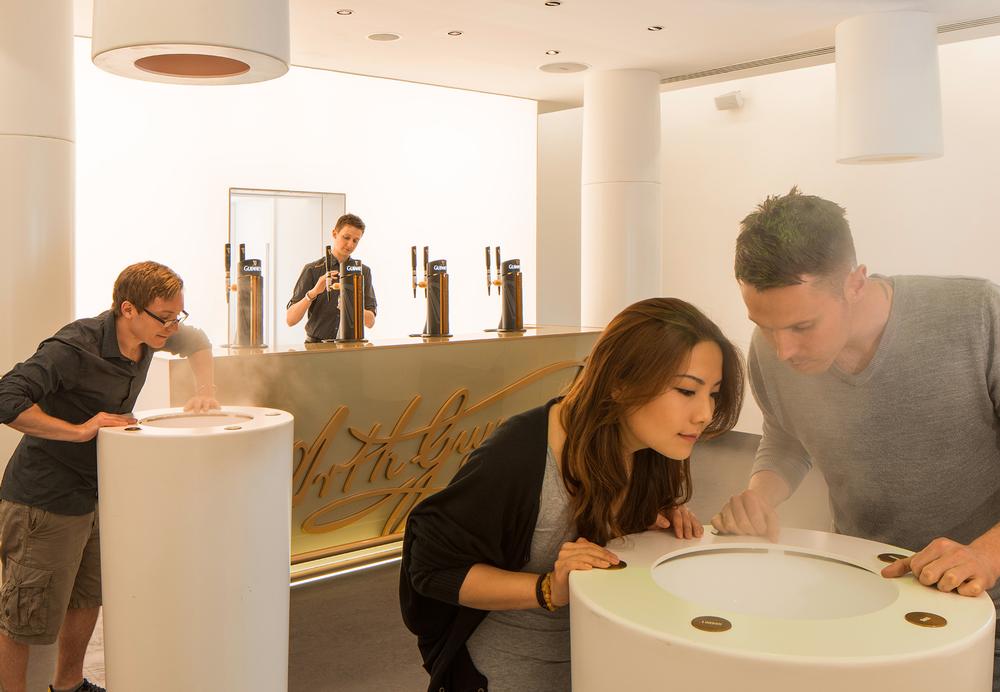
• SECOND FLOOR: Enjoy the tasting experience, a multi-sensory education on the distinctive flavours of the stout.
• THIRD FLOOR: Be immersed in 80 years of groundbreaking print, digital and TV advertising campaigns on the attraction’s Advertising Floor.
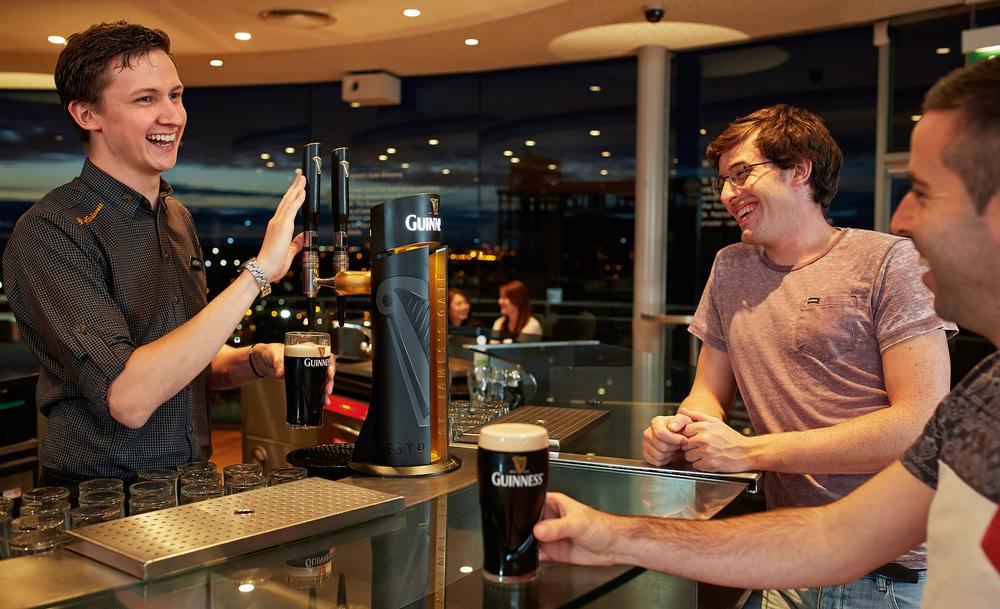
• FOURTH FLOOR: Learn to pour the perfect pint at the Guinness Academy. It’s a six-step process – mastered by bartenders across the country – that takes exactly 119.5 seconds.
• FIFTH FLOOR: Eat and drink at the Brewers’ Dining Hall, with an open kitchen and a menu of Guinness dishes.
• SEVENTH FLOOR: The journey ends at the Gravity Bar, with panoramic views and a pint of the “black stuff”.
The Guinness Storehouse
Collette CoughlanBrand ManagerGuinness Storehouse
Collette Coughlan
The Guinness Storehouse was named best attraction in Europe in the World Travel Awards.
What makes it so successful?
The experience is authentic and unique to Guinness and we celebrate the Guinness story throughout the building – the brewing, the history and heritage. It’s an engaging experience.
What values make the Guinness brand and how do you convey them in an attraction? The Guinness brand values are power, goodness and communion. Everything we do reflects those values and by staying true to those values we create an authentic experience. We want the Guinness Storehouse to be the most distinctive immersive brand experience in the world.
How are the values communicated in the design or the visitor journey? Power relates to the ingredients and brewing process. Goodness relates to what we do in terms of advertising and communion relates to bringing people together and celebrating.
For example, we have entertainment on the fifth floor with Irish music and we host a four-day St Patrick’s Day festival every year. We’re here to entertain people who come to Dublin to have a fun, memorable and engaging experience.
What types of campaigns do you do? Our main marketing tools are PR, word of mouth and “talkability”. Canada is an emerging market for us thanks to increased air access, so we’re investing in a PR campaign to ensure they know that the Guinness Storehouse is a must-see destination in Dublin.
We’re reaching out to Canadian media, travel media and brand media and where possible inviting them to the Guinness Storehouse so they can experience it. Last year we ran a campaign where our ambassador Aaron Ridgeway went to Canada for St Patrick’s Day, where he was demonstrating the six steps to the perfect pint on TV stations.
How important is social media? Online is a huge part of our strategy. We have Facebook and Twitter and we’ve just launched an Instagram wall in the Guinness Storehouse where you can post your photographs instantly. The experience is very emotive. People love posting pictures with their perfect pint of Guinness in the Gravity Bar or in the Academy. Investing in digital enables us to reach younger audiences who want share content with friends and family in the instant.
A buzz topic at the moment is the emotionalisation of brands. How do you emotionalise the brand? Our staff members are our greatest asset so it’s about the connection that our staff has with the visitors. You enter the Guinness Storehouse and receive a warm Irish welcome, and we take you in hand and interact with you throughout the tour. It’s something we place a lot of value on. It’s a massive building so it could feel quite cold, but the staff make it a very warm place. We try to emotionalise the brand through our people.
How does the attraction manage its responsibilities when it comes to promoting alcohol? We’re a brand immersion experience, but we do take our role as a drink-related attraction very seriously. We adhere to the strict responsible service of alcohol code throughout the experience and apply Diageo’s marketing code to all the exhibits. The Diageo code is about responsible drinking and being aware of the alcohol content. We have a drink IQ website that tells you about the effects that alcohol can have on your body. We’re fully transparent and try to educate people as much as possible. We welcome younger people and there’s no age limit on entry, but the legal age limit of 18 applies for pouring and buying a pint. We don’t charge for water and we have restaurants serving food.
Visitors enjoy a private tasting session at the attraction’s Connoisseur Bar
Visitors try out scent pods, part of a multi-sensory tasting experience on the attraction’s second floor
A new permanent exhibit devoted to Guinness advertising, which opened in March 2015, features interactive and digital elements
More than 1.5 million people – most of them tourists – visited the brandland in 2015
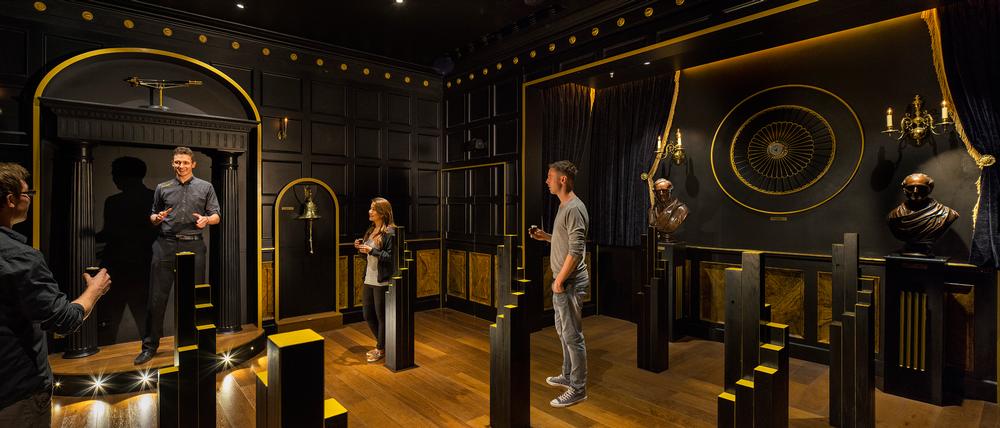
Visitors learn techniques for tasting Guinness in the Bompas & Paar-designed Velvet Chamber
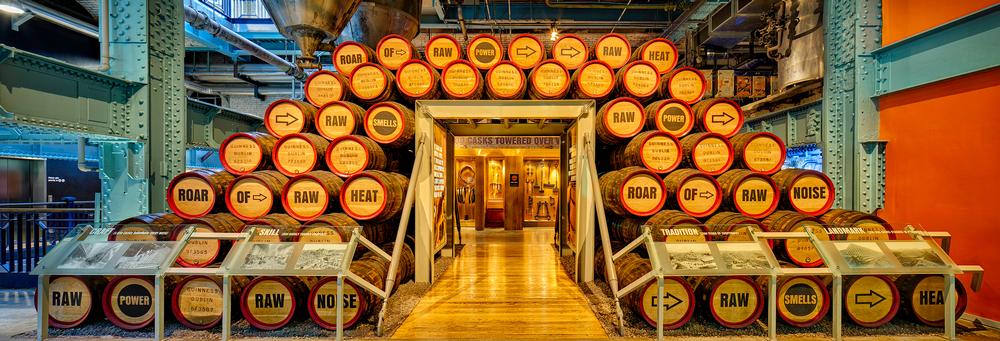
The Cooperage & Transport exhibition teaches visitors about how Guinness barrels were made and transported
Guinness Storehouse’s Paul Carty
A new permanent exhibit devoted to Guinness advertising, which opened in March 2015, features interactive and digital elements
Le Atelier by C.O.D.E. doesn't offer a standard bespoke service, it provides a highly
customised approach to designing massage beds and loungers in high-end wellness
environments. [more...]
Guinness Storehouse celebrates its 15th birthday and another record-breaking year. We found out how Europe’s best-loved attraction sustains its enviable reputation
By Alice Davis | Published in Attractions Management 2016 issue 1
A visit to Dublin’s Guinness Storehouse ends at the Gravity Bar on the seventh floor
Guinness is one of the most recognisable drinks on the planet, thanks to its distinctive look and years of seriously clever advertising campaigns. So when the new visitor centre, the Guinness Storehouse, opened at St James Gate brewery in Dublin in 2000, it had to embody the same values that made the brand so successful.
Designed by London-based Imagination in conjunction with Dublin architects RKD, a disused grain storage building was turned into a contemporary brandland at a cost of €42m (£32m, $45m). Today, half of all tourists to Ireland visit the attraction.
“You have to give credit to the executives from [parent company] Diageo who had the courage and bravery to spend that amount of money on a visitor centre,” says Paul Carty, managing director at the Guinness Storehouse. “That was an incredible vote of confidence in the Guinness brand and in the value of an experiential attraction.”
Fast forward to 2015, and 1.5 million people visited the Guinness Storehouse, an 18 per cent increase on the previous year’s figure. Of those, 93 per cent were from overseas, with people from the UK and US making up half of all visitors. French and German visitors formed 6 per cent each of the total, while the biggest year-on-year growth markets were the Dutch (up 34 per cent) and the Chinese (up 38 per cent).
In fact, from the very beginning, the attraction has been on an upward trajectory, both popular and profitable. Even during the recession, the Guinness Storehouse experienced growth. The only dip in attendance was in 2010, when air travel was severely disrupted by the erupting Eyjafjallajökull volcano in Iceland.
“Eighty-five per cent of our business comes via Dublin airport. We’re totally dependent on tourists coming to the island in the first place,” Carty says. “It just shows the importance of access. Airlines like Ryanair and Aer Lingus do a great job of delivering volumes of people to the island.”
Constant reinvention Carty, who started out in the global hospitality industry, has been at the Guinness Storehouse since it opened. He says the attraction is successful thanks to a business model that’s highly sustainable, funding all its own investments.
“We reinvest every year. We always try to create a new area so we have a new story to tell. This helps us maintain our position as a must-see attraction for tourists and encourages repeat visitors,” Carty says.
A major new investment – a result of customer feedback – is the new third floor, which opened in March 2015 and is dedicated to the world of advertising. Interactive displays bring to life the best TV and print advertising from Guinness, from the iconic John Gilroy Toucan illustrations of the 1930s to the iconic modern campaigns.
Design agency Love created the new 1,500sqm (16,146sq ft) space, introducing high-tech elements including a playable digital version of the brand’s trademark golden harp and an 8-metre (26-foot) high interactive Instagram wall to integrate social media more powerfully into the space.
The Guinness Storehouse generates 350 million media impressions every year for the brand and the 1080p-resolution gesture-controlled Instagram installation has massively boosted the attraction’s social media presence since it opened.
An intimate 75-minute tasting experience at the Connoisseur Bar was another new offering at the attraction last year.
“In the past five years we’ve invested €10 million [£7.6m, $10.8m]. We’re constantly reinventing and upgrading,” Carty says. “We see the return on investment and from a brand perspective we track and survey things, such as whether guests consume more Guinness after their visit, or whether they feel warmer towards the brand.”
One of the most crucial investment decisions was the appointment of BRC Imagination Arts to rethink the way the brand’s story was being told, Carty says. In 2011, BRC completed an upgrade, which included the themeing of each floor to create a coherent and more interactive visitor journey. The results were a 35 per cent jump in attendance and 240 per cent increase in net profit.
Warm Irish welcome Carty’s background in high-end hotels shines through at the attraction, where a “warm Irish welcome” and top-class customer service are paramount. A great deal is invested in finding the right staff and training them to ensure visitors enjoy a high-quality experience and form a good impression of Guinness.
“It’s similar to running hotels because of shared skill sets: F&B, entertainment, staff training and standards,” he says.
It’s the same welcome extended to Britain’s Queen Elizabeth II when she and husband Prince Philip toured the attraction in 2013, as part of the first royal visit to Ireland since 1911, For Carty, it was a career highlight: “The hairs on my neck stood up. I felt so proud to be involved such a historic event,” he says. “We showed the Queen the art of pouring the perfect Guinness. It was a beautiful occasion.”
Read more from this issue of Spa Business magazine
Interview: Tony Butler
Tony Butler, executive director of Derby
Museums Trust, on how museums can
be a force for good in their communities
Attractions: Perfect Brew
At 15 years old, the Guinness Storehouse
has been voted Europe’s best-loved
attraction. Manager Paul Carty reveals
the secrets of the Dublin brandland
Profile: John McReynolds
IAAPA’s new chairman reveals his aims
for the year ahead, his vision for a
global association and how his role at
Universal Orlando informs his goals
Analysis: The Attractions Business
Business planning consultant
David Camp starts an exclusive eight-part
series, delving into the fine art of attractions
operation from a business perspective
Science Centres: How to Future-Proof a Science Centre
Peter Slavenburg of design agency
NorthernLight describes how invisible
technology, serious play, co-creation
and the digital experience will inform
the science centre of tomorrow
Promotional feature: Simworx Ventures
Simworx Ventures is bringing its expertise in cutting-edge media-based attractions
to a new audience of museums, heritage sites, zoos and aquariums
Technology: Beacons on the Horizon
Beacons have countless applications in
the world of attractions. A case study
from the Cleveland Museum of Art
illustrates the technology’s potential
Museums & Galleries: Art Attack
Some of the most exciting attractions
design is happening in new and
upcoming galleries around the world,
from firms like Kengo Kuma and BIG
Promotional feature: IDEA
2016 is shaping up to be an interesting year for the attractions industry.
IDEA looks at what it takes to win audiences and command attention
Mystery Shopper: Spring in Your Step
We disappear down the rabbit hole as we
pay a mystery shopper visit to Bounce
Below, a unique underground trampolining
attraction in Snowdonia, north Wales
Rides: The Ride Makers
Our ride makers series continues with
water rides, a firm favourite with park
guests. Three leading companies reveal
the latest trends in flumes and chutes
Technology: Tech Check
The industry technology unveiled at
IAAPA 2015: from VR to interactives, and
digital puppets to 20-storey LED giants
SEVEN STORIES IN SEVEN STOREYS The Guinness Storehouse is arranged across seven storeys, with each floor presenting the visitor with a new aspect of the brand history. The building itself is shaped like a gigantic pint of Guinness. If it were filled with Guinness it would hold 14.3 million pints.
• GROUND FLOOR: The Guinness flagship retail store sells branded memorabilia and exclusive merchandise.
• FIRST FLOOR: Learn about the legendary Arthur Guinness’ lease of 1759 and the beginnings of Guinness.
• SECOND FLOOR: Enjoy the tasting experience, a multi-sensory education on the distinctive flavours of the stout.
• THIRD FLOOR: Be immersed in 80 years of groundbreaking print, digital and TV advertising campaigns on the attraction’s Advertising Floor.
• FOURTH FLOOR: Learn to pour the perfect pint at the Guinness Academy. It’s a six-step process – mastered by bartenders across the country – that takes exactly 119.5 seconds.
• FIFTH FLOOR: Eat and drink at the Brewers’ Dining Hall, with an open kitchen and a menu of Guinness dishes.
• SEVENTH FLOOR: The journey ends at the Gravity Bar, with panoramic views and a pint of the “black stuff”.
The Guinness Storehouse
Collette CoughlanBrand ManagerGuinness Storehouse
Collette Coughlan
The Guinness Storehouse was named best attraction in Europe in the World Travel Awards.
What makes it so successful?
The experience is authentic and unique to Guinness and we celebrate the Guinness story throughout the building – the brewing, the history and heritage. It’s an engaging experience.
What values make the Guinness brand and how do you convey them in an attraction? The Guinness brand values are power, goodness and communion. Everything we do reflects those values and by staying true to those values we create an authentic experience. We want the Guinness Storehouse to be the most distinctive immersive brand experience in the world.
How are the values communicated in the design or the visitor journey? Power relates to the ingredients and brewing process. Goodness relates to what we do in terms of advertising and communion relates to bringing people together and celebrating.
For example, we have entertainment on the fifth floor with Irish music and we host a four-day St Patrick’s Day festival every year. We’re here to entertain people who come to Dublin to have a fun, memorable and engaging experience.
What types of campaigns do you do? Our main marketing tools are PR, word of mouth and “talkability”. Canada is an emerging market for us thanks to increased air access, so we’re investing in a PR campaign to ensure they know that the Guinness Storehouse is a must-see destination in Dublin.
We’re reaching out to Canadian media, travel media and brand media and where possible inviting them to the Guinness Storehouse so they can experience it. Last year we ran a campaign where our ambassador Aaron Ridgeway went to Canada for St Patrick’s Day, where he was demonstrating the six steps to the perfect pint on TV stations.
How important is social media? Online is a huge part of our strategy. We have Facebook and Twitter and we’ve just launched an Instagram wall in the Guinness Storehouse where you can post your photographs instantly. The experience is very emotive. People love posting pictures with their perfect pint of Guinness in the Gravity Bar or in the Academy. Investing in digital enables us to reach younger audiences who want share content with friends and family in the instant.
A buzz topic at the moment is the emotionalisation of brands. How do you emotionalise the brand? Our staff members are our greatest asset so it’s about the connection that our staff has with the visitors. You enter the Guinness Storehouse and receive a warm Irish welcome, and we take you in hand and interact with you throughout the tour. It’s something we place a lot of value on. It’s a massive building so it could feel quite cold, but the staff make it a very warm place. We try to emotionalise the brand through our people.
How does the attraction manage its responsibilities when it comes to promoting alcohol? We’re a brand immersion experience, but we do take our role as a drink-related attraction very seriously. We adhere to the strict responsible service of alcohol code throughout the experience and apply Diageo’s marketing code to all the exhibits. The Diageo code is about responsible drinking and being aware of the alcohol content. We have a drink IQ website that tells you about the effects that alcohol can have on your body. We’re fully transparent and try to educate people as much as possible. We welcome younger people and there’s no age limit on entry, but the legal age limit of 18 applies for pouring and buying a pint. We don’t charge for water and we have restaurants serving food.
Visitors enjoy a private tasting session at the attraction’s Connoisseur Bar
Visitors try out scent pods, part of a multi-sensory tasting experience on the attraction’s second floor
A new permanent exhibit devoted to Guinness advertising, which opened in March 2015, features interactive and digital elements
More than 1.5 million people – most of them tourists – visited the brandland in 2015
Visitors learn techniques for tasting Guinness in the Bompas & Paar-designed Velvet Chamber
The Cooperage & Transport exhibition teaches visitors about how Guinness barrels were made and transported
Guinness Storehouse’s Paul Carty
A new permanent exhibit devoted to Guinness advertising, which opened in March 2015, features interactive and digital elements
People taking GLP-1 weight loss medications such as Ozempic, Wegovy, Mounjaro and Zepbound
may be losing weight, but they’re also becoming less physically active, according to new
research presented at the ENDO 2026 annual meeting of the Endocrine Society
Abu Dhabi-based investment firm Mubadala Capital has made a binding, fully financed
€1 billion
offer to acquire Pierre and Vacances SA, the European holiday resort operator behind the
continental European Center Parcs business.
Global retreat trade show, Synergy The Retreat Show, has launched a resource called The
Source, which hosts an open-access online Transformation Series programme.
The Standards Authority for Touch in Cancer Care (SATCC) charity has announced its first five-
day Living with Cancer and Beyond retreat, which will be held at Carden Park Hotel and Spa in
Cheshire, UK, between 1 and 5 September.
Patmos Aktis, a Luxury Collection Resort and Spa, has opened in Greece, with a renovated and
rebranded wellness offering called Ansana Wellness and Spa.
The Mauna Kea Beach Hotel, an Autograph Collection property in Hawaii, US, has opened its
22,000 sq ft indoor-outdoor Spa at Mauna Kea as the final step in the property’s overall
renovation, which has cost more than US$180 million (€166 million, £140 mill
The UK spa review and discovery platform for consumers, the Good Spa Guide, has announced
it will host the Good Spa Guide Awards 2026 during an event on 16 November at Sopwell House
Hotel in St Albans, UK.
Eighty-four per cent of consumers now say wellness is a top priority in their lives, with this
percentage increasing year on year, according to a preview presentation of McKinsey’s Future of
Wellness 2026 research report.
Mass protests have been taking place since Monday 1 June in Albania over the development of
a luxury resort by Donald Trump’s daughter Ivanka Trump and her husband Jared Kushner.
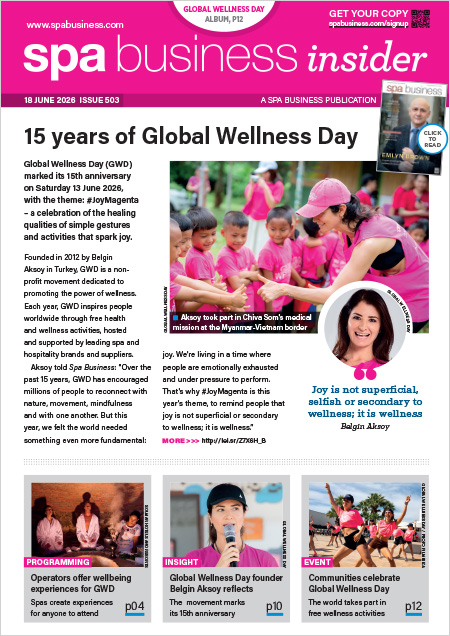
Global Wellness Day (GWD) marked its 15th anniversary on Saturday 13 June 2026, with the
theme: #JoyMagenta – a celebration of the healing qualities of simple gestures and activities
that spark joy.
Le Atelier by C.O.D.E. doesn't offer a standard bespoke service, it provides a highly
customised approach to designing massage beds and loungers in high-end wellness
environments. [more...]