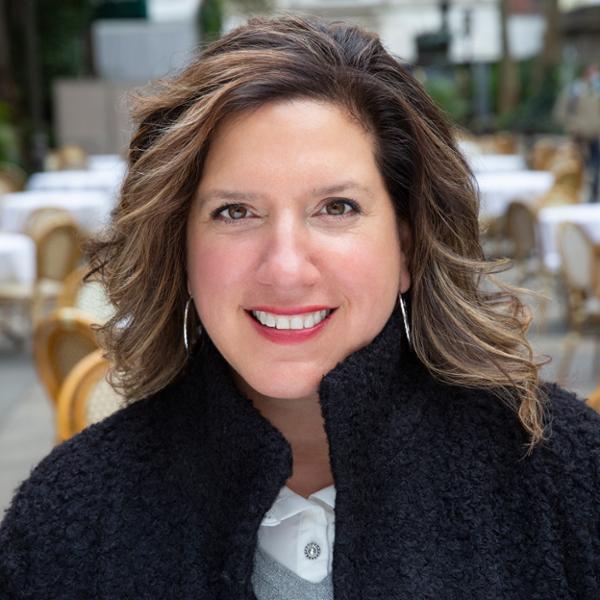
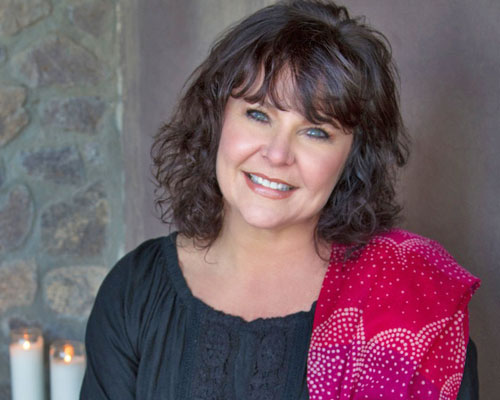
The Ecosystem of Wellbeing is a new protocol developed and
trademarked by Kyricos and Associates and designed to give a
framework for the development and delivery of wellness interventions.
Spa Business finds out more from the company’s founder
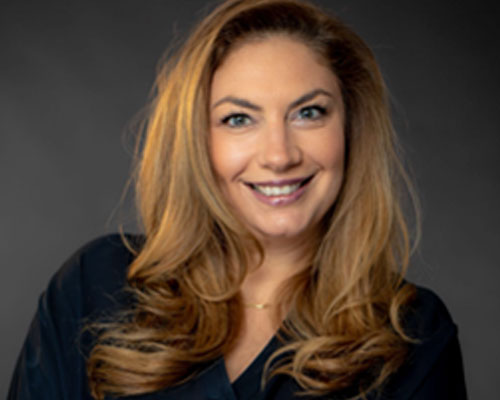
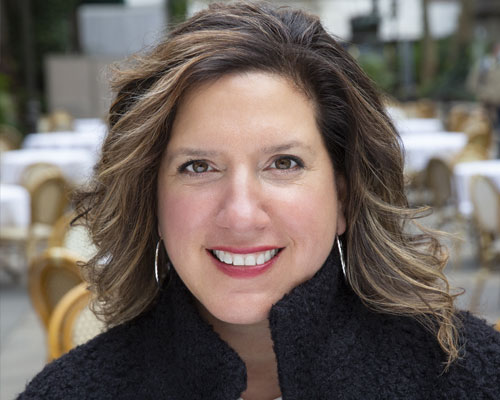
Kyricos says the new ecosystem is enabling her to ‘live her purpose’
What’s changing at Kyricos & Associates? The essence of our business hasn’t changed, but the approach has. I like to think it’s changed with the times, but the reality is, it’s been informed by my personal learnings advising on wellness strategies for organisations of all kinds.
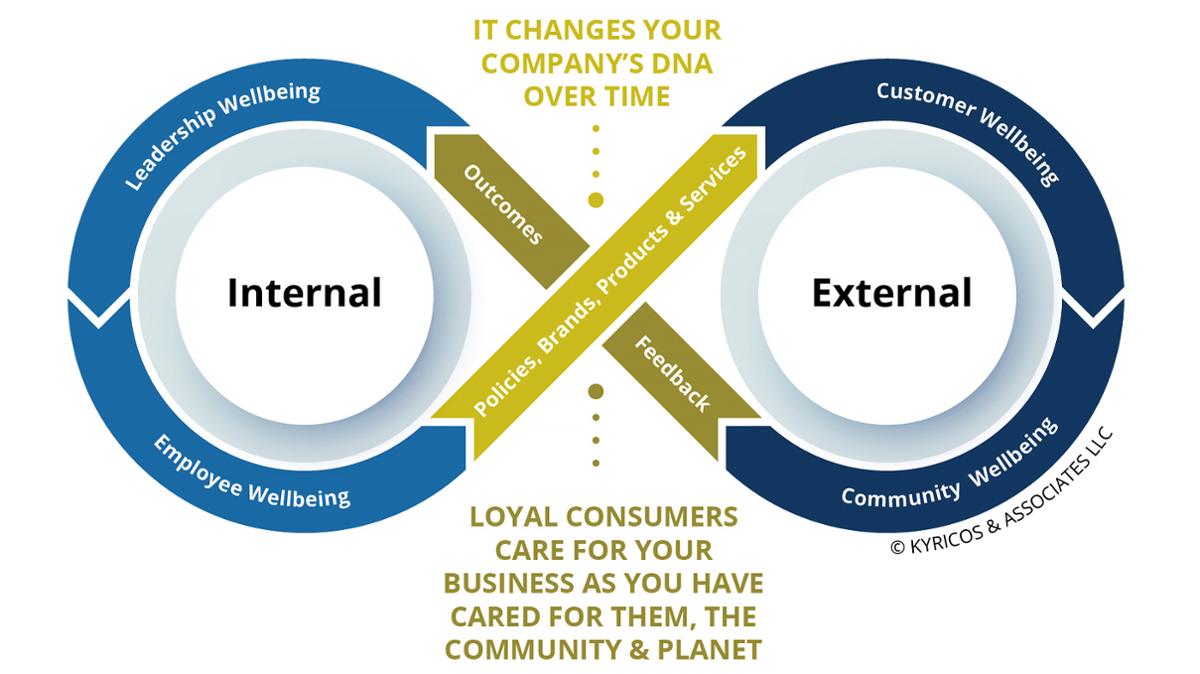
We need to move beyond products, services and programmes and think strategically and holistically – to make wellness a part of how companies and organisations behave and operate, not just what they offer.
For example, it’s not only about hotels offering spa and wellness treatments to guests but also about the example GMs and corporate leaders set, how they operate, source and recruit talent and deliver experiences. It’s also about how they show up and give back to their communities and their overall impact on the planet.
With this lens, we’re changing the way we support organisations that want to leverage wellness as a strategic differentiator and at the same time, impact the wellbeing of people, planet and community.
In my opinion, this is what’s expected of 21st century organisations. We call this approach the Ecosystem of Wellbeing and have recently trademarked this term.
What inspired you to create this new framework? The pandemic was a time of great realisation and inspiration. I left a job, a company and a city I loved and returned to my own consultancy that, candidly, didn’t inspire me anymore. I knew I had to rediscover my inspiration and work through some personal disappointment, which involved everything from deepening my meditation practice and prioritising the things in life that give me the greatest joy, to researching crazy concepts such as love as a business strategy – which I would later learn was not so crazy, hence my title change to ‘chief love officer’
I had to step back from the world in order to see it more clearly. I watched, listened and learned how people and communities responded to everything from COVID-19 to the death of George Floyd and renewed corporate efforts to make diversity and inclusion a strategic priority.
A lightbulb went off when I added these observations to my professional experiences creating and implementing wellness brands and products or workplace wellness programmes within largely unwell systems. I realised we need to look at wellness systemically, not just symptomatically.
Why did you register your proprietary process? I’m purpose-driven, which is not always a good thing because I’m in the habit of freely sharing what I later learn was pioneering. I had a team to help me; a brand strategist who illustrated Ecosystem of Wellbeing as an infinity symbol, which I thought was genius and when I shared it with our website manager he suggested I meet with a trademark lawyer, saying “you’ve articulated what I’d failed to understand until this moment and I think the world will want to copy you.”
I realised the concept may be easy to understand, but actualising it is a greater challenge, which is where our proprietary thinking and my experience working in the corporate and consulting worlds come in.
Our brand manager says, “Kyricos is the special sauce and our “associates” are who help us to scale, so we hope, over time, to guide our associate network around the world to identify and activate Ecosystems of Wellbeing, so we can oversee and make systems well together.
How will it change your work? It will expand its scope and the business impact we create for companies. We’re changing mindsets in terms of how people perceive wellness and wellbeing, so we stand to reduce costs by streamlining resources, products and programmes that have historically been siloed, while increasing brand awareness and the overall appeal of companies, both internally and externally.
Who will it benefit? For companies serious about making wellbeing part of their DNA, it presents a strategic approach to wellness that supports business and brand objectives.
If companies are wishing to address leadership, employee, consumer or even community wellness, it gives them a point-of-entry into a wider ecosystem they often don’t realise exists. For others who may have failed or had fleeting success with the launch of wellness-driven programmes, products and/or services, it gives an objective lens to reevaluate, evolve and deepen the potential for success. It’s a tool from which we can teach and learn because every company, every organisation – even every city and country – has an Ecosystem of Wellbeing that’s unique to them.
How happily does wellness sit with commercialism? The answer is profoundly simple: it comes down to the authenticity of leadership. I ask leaders all the time if they’re trying to “tick the box” by offering a wellness-driven product, service or programme, or if they really want to change their companies for the better? Either answer is OK, but they need to be honest with themselves from the start.
We should stop feeling ashamed about making money. On the contrary, doing good often comes at a cost, so why not reward companies and organisations that do this while also caring for the wellbeing of people, community and planet?
The key to success and the future of work will be more about how we work than what we do or even where we do it from.
You’re suggesting executives spend time on their wellbeing… If we only focus on challenges and stress, it becomes self-defeating because we ultimately grow what we feed.
Leaders who don’t personally identify or practice wellness are the ones that don’t understand it, or who secretly don’t believe in it, while publicly being responsible for its success. In both cases, they’re just setting themselves up to fail.
My advice is to find a wellness ‘religion’ of some kind. It doesn’t matter if it’s spiritual, emotional, physical, mental or financial. It doesn’t matter what time of day it’s practised, or for how long, just that it’s identified, respected and practised every day. If you look to the world’s most successful leaders and happiest individuals, you’ll find they have wellness practices they’re religious about and regularly share, publicly.
Do we have to accept wellness is for the privileged? This is such an important question and one that those in the business of wellness have either complicated or neglected because it comes down to the environment required for our wellness to thrive.
For example, it’s impossible to think about being mindful or taking time to connect with loved ones or even eating or sleeping well when we’re worried about food or shelter. It’s difficult to take advantage of a workplace wellness programme or a free meditation app when you don’t feel included, seen or supported at work, or safe in the community where you live.
We have to remember that wellness is personal and the path to wellbeing is dependent on environmental factors inside and outside our control, both at work and in life.
We have to get real about the factors that affect personal health and wellbeing in order to refine what we offer, to whom and how. Only then will we stand to make wellness more equitable and achievable for all.
Can the wellness market be sustainable? This comes down to the ‘how’ for every single company, community, industry or even country. All it takes is one thing: intention.
Just think about how far we’ve come. I grew up in the 70s and 80s, and we never talked about caring for people or the planet in the context of business – and if we’re being honest, some people and organisations weren’t even doing this by 2019.
But the world has changed, and the worst thing we can do at this point is to have collective amnesia. We can and should do better.
For me, it’s as simple as being conscious and having the intention to leave the world a better place, which I genuinely feel is a responsibility for us all.
How is your new framework being received? Answering this question makes me emotional because the response has been overwhelmingly positive. I’ve been contacted by people from all over the world and all walks of life who identify with the Ecosystem of Wellbeing in some way, or who’ve shared how it’s helping them to see the world of wellness, and their part in it, much more clearly.
Over time, organisations of all kinds will engage with it. This will lead to more data being shared, more positive outcomes and more learnings that will help us guide others to do the same. Perhaps the model will even be taught in business schools one day.
Read more from this issue of Spa Business magazine
View contents of Spa Business 2022 issue 2
Editor's letter: The wellness metaverse
We’re being handed a powerful new tool that will become a channel for creativity and innovation – pioneering wellness operators are already getting to grips with its exciting potential
Spa People: Michael Stusser
The wellness pioneer explains how he created an authentic Japanese bathing experience in the heart of the California hills
Spa People: Scot Toon
The Asia MD of The Pavilions Hotels & Resorts unveils the company's latest island development plans
Project preview: Off-grid
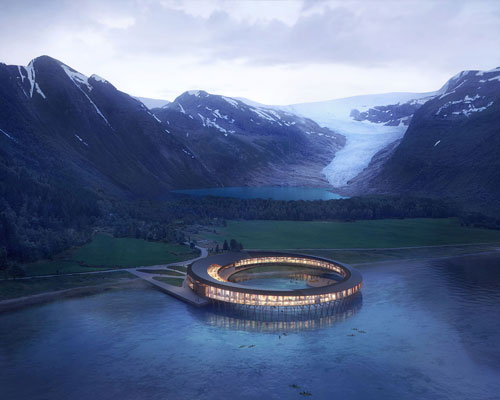
Svart Six Senses is set to open in Norway in 2024, and redefine the meaning of sustainable wellness tourism and regenerative travel
Sponsored: Myrtha Wellness: watertight expertise
Myrtha has transformed the world of aquatics over the last 60 years. Now it’s bringing its ingenuity-driven expertise to the international wellness industry
Interview: Rainer Usselmann
Tech business Happy Finish is bringing metaverse-based experiences to the wellness sector, working with Wund
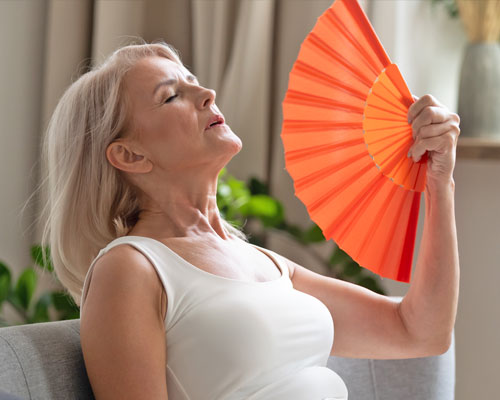
Everyone's talking about: Menopause
From taboo to hot topic – how can spas offer treatments and a safe space for women to explore this often challenging phase of life?
Research: Bounceback
PwC says the US spa market was worth US$1bn in 2021 and growing well, according to data from ISPA's latest industry-wide study
First person: An icon reborn
Fairmont unveils the stunning renovation of its iconic Century Plaza hotel in LA, and Rianna Riego checks out the new spa
Q&A: Magdaleena Nikolov
The GM of spa, wellness and retail at Fairmont
Century Plaza talks to Jane Kitchen
Q&A: Mia Kyricos
The wellness leader talks about the creation of her new trademarked framework for the development and delivery of wellness interventions
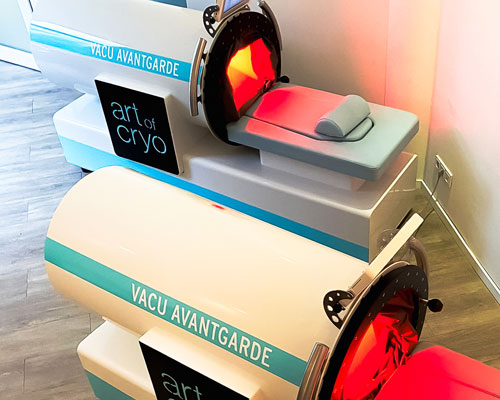
Sponsored: Art of Cryo: raising the bar
Art of Cryo is complementing its high
performance cryotherapy range with advanced
new technology to enhance treatment benefits
Mystery Shopper: The Londoner
Our reviewer travels undercover to check out the spa offering at The Londoner – one of the most high profile openings in the capital in recent times
In today’s premium spa environment, every detail shapes the guest experience – right down to
the softness of towels and the freshness of linens. [more...]
The Ecosystem of Wellbeing is a new protocol developed and
trademarked by Kyricos and Associates and designed to give a
framework for the development and delivery of wellness interventions.
Spa Business finds out more from the company’s founder
Kyricos says the new ecosystem is enabling her to ‘live her purpose’
What’s changing at Kyricos & Associates? The essence of our business hasn’t changed, but the approach has. I like to think it’s changed with the times, but the reality is, it’s been informed by my personal learnings advising on wellness strategies for organisations of all kinds.
We need to move beyond products, services and programmes and think strategically and holistically – to make wellness a part of how companies and organisations behave and operate, not just what they offer.
For example, it’s not only about hotels offering spa and wellness treatments to guests but also about the example GMs and corporate leaders set, how they operate, source and recruit talent and deliver experiences. It’s also about how they show up and give back to their communities and their overall impact on the planet.
With this lens, we’re changing the way we support organisations that want to leverage wellness as a strategic differentiator and at the same time, impact the wellbeing of people, planet and community.
In my opinion, this is what’s expected of 21st century organisations. We call this approach the Ecosystem of Wellbeing and have recently trademarked this term.
What inspired you to create this new framework? The pandemic was a time of great realisation and inspiration. I left a job, a company and a city I loved and returned to my own consultancy that, candidly, didn’t inspire me anymore. I knew I had to rediscover my inspiration and work through some personal disappointment, which involved everything from deepening my meditation practice and prioritising the things in life that give me the greatest joy, to researching crazy concepts such as love as a business strategy – which I would later learn was not so crazy, hence my title change to ‘chief love officer’
I had to step back from the world in order to see it more clearly. I watched, listened and learned how people and communities responded to everything from COVID-19 to the death of George Floyd and renewed corporate efforts to make diversity and inclusion a strategic priority.
A lightbulb went off when I added these observations to my professional experiences creating and implementing wellness brands and products or workplace wellness programmes within largely unwell systems. I realised we need to look at wellness systemically, not just symptomatically.
Why did you register your proprietary process? I’m purpose-driven, which is not always a good thing because I’m in the habit of freely sharing what I later learn was pioneering. I had a team to help me; a brand strategist who illustrated Ecosystem of Wellbeing as an infinity symbol, which I thought was genius and when I shared it with our website manager he suggested I meet with a trademark lawyer, saying “you’ve articulated what I’d failed to understand until this moment and I think the world will want to copy you.”
I realised the concept may be easy to understand, but actualising it is a greater challenge, which is where our proprietary thinking and my experience working in the corporate and consulting worlds come in.
Our brand manager says, “Kyricos is the special sauce and our “associates” are who help us to scale, so we hope, over time, to guide our associate network around the world to identify and activate Ecosystems of Wellbeing, so we can oversee and make systems well together.
How will it change your work? It will expand its scope and the business impact we create for companies. We’re changing mindsets in terms of how people perceive wellness and wellbeing, so we stand to reduce costs by streamlining resources, products and programmes that have historically been siloed, while increasing brand awareness and the overall appeal of companies, both internally and externally.
Who will it benefit? For companies serious about making wellbeing part of their DNA, it presents a strategic approach to wellness that supports business and brand objectives.
If companies are wishing to address leadership, employee, consumer or even community wellness, it gives them a point-of-entry into a wider ecosystem they often don’t realise exists. For others who may have failed or had fleeting success with the launch of wellness-driven programmes, products and/or services, it gives an objective lens to reevaluate, evolve and deepen the potential for success. It’s a tool from which we can teach and learn because every company, every organisation – even every city and country – has an Ecosystem of Wellbeing that’s unique to them.
How happily does wellness sit with commercialism? The answer is profoundly simple: it comes down to the authenticity of leadership. I ask leaders all the time if they’re trying to “tick the box” by offering a wellness-driven product, service or programme, or if they really want to change their companies for the better? Either answer is OK, but they need to be honest with themselves from the start.
We should stop feeling ashamed about making money. On the contrary, doing good often comes at a cost, so why not reward companies and organisations that do this while also caring for the wellbeing of people, community and planet?
The key to success and the future of work will be more about how we work than what we do or even where we do it from.
You’re suggesting executives spend time on their wellbeing… If we only focus on challenges and stress, it becomes self-defeating because we ultimately grow what we feed.
Leaders who don’t personally identify or practice wellness are the ones that don’t understand it, or who secretly don’t believe in it, while publicly being responsible for its success. In both cases, they’re just setting themselves up to fail.
My advice is to find a wellness ‘religion’ of some kind. It doesn’t matter if it’s spiritual, emotional, physical, mental or financial. It doesn’t matter what time of day it’s practised, or for how long, just that it’s identified, respected and practised every day. If you look to the world’s most successful leaders and happiest individuals, you’ll find they have wellness practices they’re religious about and regularly share, publicly.
Do we have to accept wellness is for the privileged? This is such an important question and one that those in the business of wellness have either complicated or neglected because it comes down to the environment required for our wellness to thrive.
For example, it’s impossible to think about being mindful or taking time to connect with loved ones or even eating or sleeping well when we’re worried about food or shelter. It’s difficult to take advantage of a workplace wellness programme or a free meditation app when you don’t feel included, seen or supported at work, or safe in the community where you live.
We have to remember that wellness is personal and the path to wellbeing is dependent on environmental factors inside and outside our control, both at work and in life.
We have to get real about the factors that affect personal health and wellbeing in order to refine what we offer, to whom and how. Only then will we stand to make wellness more equitable and achievable for all.
Can the wellness market be sustainable? This comes down to the ‘how’ for every single company, community, industry or even country. All it takes is one thing: intention.
Just think about how far we’ve come. I grew up in the 70s and 80s, and we never talked about caring for people or the planet in the context of business – and if we’re being honest, some people and organisations weren’t even doing this by 2019.
But the world has changed, and the worst thing we can do at this point is to have collective amnesia. We can and should do better.
For me, it’s as simple as being conscious and having the intention to leave the world a better place, which I genuinely feel is a responsibility for us all.
How is your new framework being received? Answering this question makes me emotional because the response has been overwhelmingly positive. I’ve been contacted by people from all over the world and all walks of life who identify with the Ecosystem of Wellbeing in some way, or who’ve shared how it’s helping them to see the world of wellness, and their part in it, much more clearly.
Over time, organisations of all kinds will engage with it. This will lead to more data being shared, more positive outcomes and more learnings that will help us guide others to do the same. Perhaps the model will even be taught in business schools one day.
Read more from this issue of Spa Business magazine
View contents of Spa Business 2022 issue 2
Editor's letter: The wellness metaverse
We’re being handed a powerful new tool that will become a channel for creativity and innovation – pioneering wellness operators are already getting to grips with its exciting potential
Spa People: Michael Stusser
The wellness pioneer explains how he created an authentic Japanese bathing experience in the heart of the California hills
Spa People: Scot Toon
The Asia MD of The Pavilions Hotels & Resorts unveils the company's latest island development plans
Project preview: Off-grid
Svart Six Senses is set to open in Norway in 2024, and redefine the meaning of sustainable wellness tourism and regenerative travel
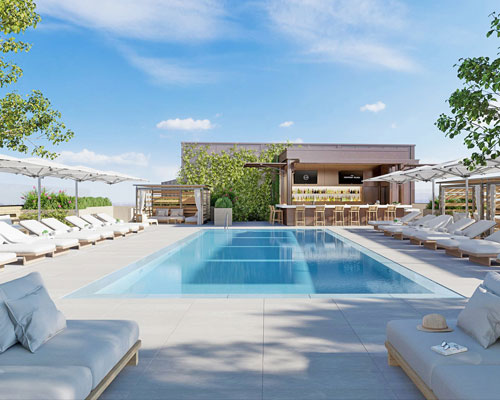
Sponsored: Myrtha Wellness: watertight expertise
Myrtha has transformed the world of aquatics over the last 60 years. Now it’s bringing its ingenuity-driven expertise to the international wellness industry
Interview: Rainer Usselmann
Tech business Happy Finish is bringing metaverse-based experiences to the wellness sector, working with Wund
Everyone's talking about: Menopause
From taboo to hot topic – how can spas offer treatments and a safe space for women to explore this often challenging phase of life?
Research: Bounceback
PwC says the US spa market was worth US$1bn in 2021 and growing well, according to data from ISPA's latest industry-wide study
First person: An icon reborn
Fairmont unveils the stunning renovation of its iconic Century Plaza hotel in LA, and Rianna Riego checks out the new spa
Q&A: Magdaleena Nikolov
The GM of spa, wellness and retail at Fairmont
Century Plaza talks to Jane Kitchen
Q&A: Mia Kyricos
The wellness leader talks about the creation of her new trademarked framework for the development and delivery of wellness interventions
Sponsored: Art of Cryo: raising the bar
Art of Cryo is complementing its high
performance cryotherapy range with advanced
new technology to enhance treatment benefits
Mystery Shopper: The Londoner
Our reviewer travels undercover to check out the spa offering at The Londoner – one of the most high profile openings in the capital in recent times
Global Wellness Day (GWD) marked its 15th anniversary on Saturday 13 June 2026, with the
theme: #JoyMagenta – a celebration of the healing qualities of simple gestures and activities
that spark joy.
Global luxury hospitality brand, Six Senses, has partnered with longevity healthcare provider,
HUM2N, to launch a clinic at Six Senses London, at The Whiteley.
As part of its first hotel partnership, Mayrlife – the medical health resort company known for its
site in Altaussee, Austria – has launched a day clinic at the Rosewood Vienna.
Premium London health club, KX Chelsea, will imminently unveil its most significant
redevelopment since its launch in 2002 to create an integrated wellness model combining
training, recovery and relaxation.
Rosewood Le Guanahani St Barth, on the northeast coast of Saint Barthélemy in the French
West Indies, is offering a programme of ocean-inspired yoga classes between 8-14 June to
celebrate Global Wellness Day (GWD).
Hotel de France, located on the British Isle of Jersey, has created a wellness retreat package
that includes a hot yoga session that will take place in Jersey Zoo’s butterfly sanctuary.
The Ritz-Carlton, Langkawi, in Malaysia, has revealed a schedule for Global Wellness Day
(GWD) that includes guided rainforest walks, mindful movement and guided coastal meditation
experiences.
Longevitix, a clinical platform for preventive and longevity medicine, has launched its AI-
powered intelligence system to help physicians deliver continuous, personalised longevity-
focused care at scale.
Atmantan Wellness Centre, an integrative wellness destination in Mulshi, near Pune in India, is
expanding its portfolio by adding a new centre in Hyderabad that will launch between 2028 and
2029.
In today’s premium spa environment, every detail shapes the guest experience – right down to
the softness of towels and the freshness of linens. [more...]