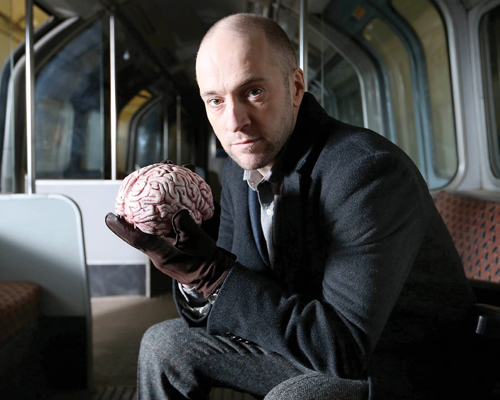
After decades of crazy inventions being the stuff of sci-fi, this year marks the point where they hit the mainstream, with affordable tech coming to market in everything from VR to drones, robots and augmented reality. We need to grab it with both hands, figure it out and make it our own
By Liz Terry | Published in Attractions Management 2016 issue 1
Visitors expect their attractions experiences to be more astonishing, exciting, immersive, engaging and high-end than anything they can get at home or simply buy for themselves off the shelf.
This has always been a fundamental challenge for attractions, and as consumer electronics suppliers push out evermore sophisticated products at evermore affordable prices, the competition is accelerating, intensifying and shape-shifting. All operators need to take a view on this – where do you stand on technology? How will you harness it, how will you pay for it, how will you integrate it into your attraction in an effective, appropriate way to enhance the entire experience?
New tech is coming at us thick and fast in all areas from VR to augmented reality, robots, holograms, drones, beacons, Internet of Things sensors and micro-controllers. Many of these inventions, products and ideas are not new, but are moving from being concepts to practical, affordable and implementable options.
VR tech is advancing so rapidly, for example, that some very cool tools will be available at entry-level prices within a year, including VR functionality on smart phones. This means we’ll see competition emerging in the most unexpected places.
And other tech is coming on-stream fast. Only last month, real-time holographic American football was announced for Microsoft’s HoloLens, enabling fans to watch games live as holograms, replay them and even be among the action. This means we’ll be competing even more directly with the sports market than at present, unless we move to collaborate.
Also making fast progress is emerging tech giant Magic Leap, which just scored another round of funding – US$800m – for further development of its augmented reality lightfield device (see page 32). This will have amazing applications for museums and science centres when it’s brought to market.
Every sector – from museums to theme parks – needs to tackle the challenge its own way, but the one thing industry experts agree on is the importance of keeping up with change. Speaking at the Museum Tech conference recently (see page 32), a Museum Association panel of experts told delegates “risks must be taken to develop new technologies, with those playing it safe risking getting left behind.” They advocated testing tech within attractions environments and committing wholeheartedly to innovation.
There’s a role for sleight of hand in some applications: by combining VR with existing rollercoasters, the world’s leading theme parks are reskinning existing attractions and creating new ones within tight budgets: Universal Studios Japan has added VR to an existing coaster as part of its ‘Cool Japan’ pop-up attraction, while Alton Towers is gearing up for the relaunch of its Air rollercoaster as Galactica, a space-themed VR ride. Nine more VR coasters are expected to open this year as parks tap into this ‘software refresher’ for rides.
So it’s not just about buying in the latest tech, we need to be creative with the application and make it our own to stay competitive and continue to meet the expectations of visitors.
Read more from this issue of Spa Business magazine
Interview: Tony Butler
Tony Butler, executive director of Derby
Museums Trust, on how museums can
be a force for good in their communities
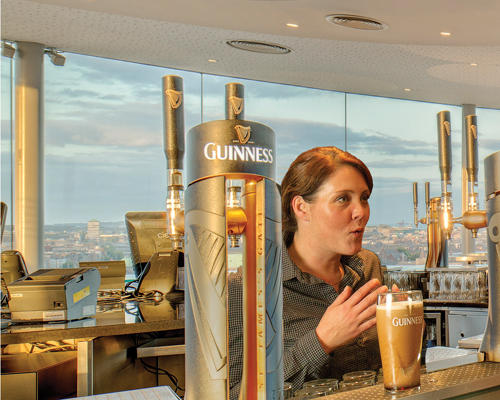
Attractions: Perfect Brew
At 15 years old, the Guinness Storehouse
has been voted Europe’s best-loved
attraction. Manager Paul Carty reveals
the secrets of the Dublin brandland
Profile: John McReynolds
IAAPA’s new chairman reveals his aims
for the year ahead, his vision for a
global association and how his role at
Universal Orlando informs his goals
Analysis: The Attractions Business
Business planning consultant
David Camp starts an exclusive eight-part
series, delving into the fine art of attractions
operation from a business perspective
Science Centres: How to Future-Proof a Science Centre
Peter Slavenburg of design agency
NorthernLight describes how invisible
technology, serious play, co-creation
and the digital experience will inform
the science centre of tomorrow
Promotional feature: Simworx Ventures
Simworx Ventures is bringing its expertise in cutting-edge media-based attractions
to a new audience of museums, heritage sites, zoos and aquariums
Technology: Beacons on the Horizon
Beacons have countless applications in
the world of attractions. A case study
from the Cleveland Museum of Art
illustrates the technology’s potential
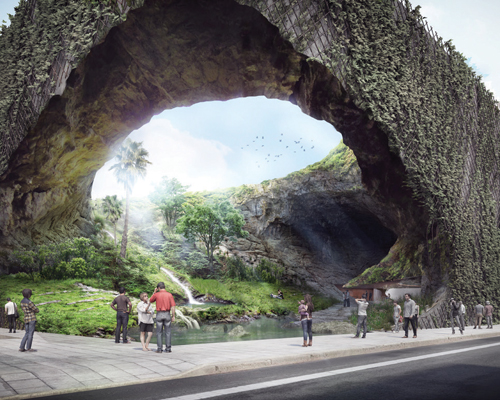
Museums & Galleries: Art Attack
Some of the most exciting attractions
design is happening in new and
upcoming galleries around the world,
from firms like Kengo Kuma and BIG
Promotional feature: IDEA
2016 is shaping up to be an interesting year for the attractions industry.
IDEA looks at what it takes to win audiences and command attention
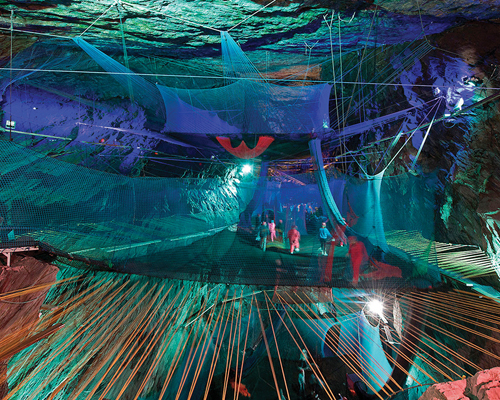
Mystery Shopper: Spring in Your Step
We disappear down the rabbit hole as we
pay a mystery shopper visit to Bounce
Below, a unique underground trampolining
attraction in Snowdonia, north Wales
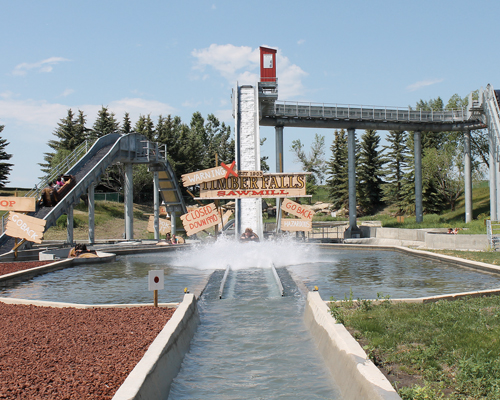
Rides: The Ride Makers
Our ride makers series continues with
water rides, a firm favourite with park
guests. Three leading companies reveal
the latest trends in flumes and chutes
Technology: Tech Check
The industry technology unveiled at
IAAPA 2015: from VR to interactives, and
digital puppets to 20-storey LED giants
After decades of crazy inventions being the stuff of sci-fi, this year marks the point where they hit the mainstream, with affordable tech coming to market in everything from VR to drones, robots and augmented reality. We need to grab it with both hands, figure it out and make it our own
By Liz Terry | Published in Attractions Management 2016 issue 1
Visitors expect their attractions experiences to be more astonishing, exciting, immersive, engaging and high-end than anything they can get at home or simply buy for themselves off the shelf.
This has always been a fundamental challenge for attractions, and as consumer electronics suppliers push out evermore sophisticated products at evermore affordable prices, the competition is accelerating, intensifying and shape-shifting. All operators need to take a view on this – where do you stand on technology? How will you harness it, how will you pay for it, how will you integrate it into your attraction in an effective, appropriate way to enhance the entire experience?
New tech is coming at us thick and fast in all areas from VR to augmented reality, robots, holograms, drones, beacons, Internet of Things sensors and micro-controllers. Many of these inventions, products and ideas are not new, but are moving from being concepts to practical, affordable and implementable options.
VR tech is advancing so rapidly, for example, that some very cool tools will be available at entry-level prices within a year, including VR functionality on smart phones. This means we’ll see competition emerging in the most unexpected places.
And other tech is coming on-stream fast. Only last month, real-time holographic American football was announced for Microsoft’s HoloLens, enabling fans to watch games live as holograms, replay them and even be among the action. This means we’ll be competing even more directly with the sports market than at present, unless we move to collaborate.
Also making fast progress is emerging tech giant Magic Leap, which just scored another round of funding – US$800m – for further development of its augmented reality lightfield device (see page 32). This will have amazing applications for museums and science centres when it’s brought to market.
Every sector – from museums to theme parks – needs to tackle the challenge its own way, but the one thing industry experts agree on is the importance of keeping up with change. Speaking at the Museum Tech conference recently (see page 32), a Museum Association panel of experts told delegates “risks must be taken to develop new technologies, with those playing it safe risking getting left behind.” They advocated testing tech within attractions environments and committing wholeheartedly to innovation.
There’s a role for sleight of hand in some applications: by combining VR with existing rollercoasters, the world’s leading theme parks are reskinning existing attractions and creating new ones within tight budgets: Universal Studios Japan has added VR to an existing coaster as part of its ‘Cool Japan’ pop-up attraction, while Alton Towers is gearing up for the relaunch of its Air rollercoaster as Galactica, a space-themed VR ride. Nine more VR coasters are expected to open this year as parks tap into this ‘software refresher’ for rides.
So it’s not just about buying in the latest tech, we need to be creative with the application and make it our own to stay competitive and continue to meet the expectations of visitors.
Read more from this issue of Spa Business magazine
Interview: Tony Butler
Tony Butler, executive director of Derby
Museums Trust, on how museums can
be a force for good in their communities
Attractions: Perfect Brew
At 15 years old, the Guinness Storehouse
has been voted Europe’s best-loved
attraction. Manager Paul Carty reveals
the secrets of the Dublin brandland
Profile: John McReynolds
IAAPA’s new chairman reveals his aims
for the year ahead, his vision for a
global association and how his role at
Universal Orlando informs his goals
Analysis: The Attractions Business
Business planning consultant
David Camp starts an exclusive eight-part
series, delving into the fine art of attractions
operation from a business perspective
Science Centres: How to Future-Proof a Science Centre
Peter Slavenburg of design agency
NorthernLight describes how invisible
technology, serious play, co-creation
and the digital experience will inform
the science centre of tomorrow
Promotional feature: Simworx Ventures
Simworx Ventures is bringing its expertise in cutting-edge media-based attractions
to a new audience of museums, heritage sites, zoos and aquariums
Technology: Beacons on the Horizon
Beacons have countless applications in
the world of attractions. A case study
from the Cleveland Museum of Art
illustrates the technology’s potential
Museums & Galleries: Art Attack
Some of the most exciting attractions
design is happening in new and
upcoming galleries around the world,
from firms like Kengo Kuma and BIG
Promotional feature: IDEA
2016 is shaping up to be an interesting year for the attractions industry.
IDEA looks at what it takes to win audiences and command attention
Mystery Shopper: Spring in Your Step
We disappear down the rabbit hole as we
pay a mystery shopper visit to Bounce
Below, a unique underground trampolining
attraction in Snowdonia, north Wales
Rides: The Ride Makers
Our ride makers series continues with
water rides, a firm favourite with park
guests. Three leading companies reveal
the latest trends in flumes and chutes
Technology: Tech Check
The industry technology unveiled at
IAAPA 2015: from VR to interactives, and
digital puppets to 20-storey LED giants
Global Wellness Day (GWD) marked its 15th anniversary on Saturday 13 June 2026, with the
theme: #JoyMagenta – a celebration of the healing qualities of simple gestures and activities
that spark joy.
Global luxury hospitality brand, Six Senses, has partnered with longevity healthcare provider,
HUM2N, to launch a clinic at Six Senses London, at The Whiteley.
As part of its first hotel partnership, Mayrlife – the medical health resort company known for its
site in Altaussee, Austria – has launched a day clinic at the Rosewood Vienna.
Premium London health club, KX Chelsea, will imminently unveil its most significant
redevelopment since its launch in 2002 to create an integrated wellness model combining
training, recovery and relaxation.
Rosewood Le Guanahani St Barth, on the northeast coast of Saint Barthélemy in the French
West Indies, is offering a programme of ocean-inspired yoga classes between 8-14 June to
celebrate Global Wellness Day (GWD).
Hotel de France, located on the British Isle of Jersey, has created a wellness retreat package
that includes a hot yoga session that will take place in Jersey Zoo’s butterfly sanctuary.
The Ritz-Carlton, Langkawi, in Malaysia, has revealed a schedule for Global Wellness Day
(GWD) that includes guided rainforest walks, mindful movement and guided coastal meditation
experiences.
Longevitix, a clinical platform for preventive and longevity medicine, has launched its AI-
powered intelligence system to help physicians deliver continuous, personalised longevity-
focused care at scale.
Atmantan Wellness Centre, an integrative wellness destination in Mulshi, near Pune in India, is
expanding its portfolio by adding a new centre in Hyderabad that will launch between 2028 and
2029.