Yes! Send me the FREE digital editions of Spa Business and Spa Business insider magazines and the FREE weekly Spa Business and Spa Business insider ezines and breaking news alerts!
Ngái Tahu, an entrepreneurial Maori tribe, has a growing wellness tourism portfolio in New Zealand. Jennifer Harbottle takes a look at how its built up business and its plans for hot springs developments
By Jennifer Harbottle | Published in Spa Business 2014 issue 4
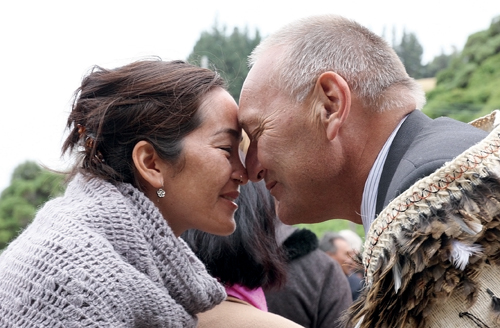
Ngai Tahu is the main Maori tribe of south New Zealand / Photo supplied by Te Ránanga o Ngái Tahu
If you’re one of the millions who’ve visited the land of the long white cloud, chances are you’ve also taken in at least one Ng?i Tahu Tourism (NTT) attraction.
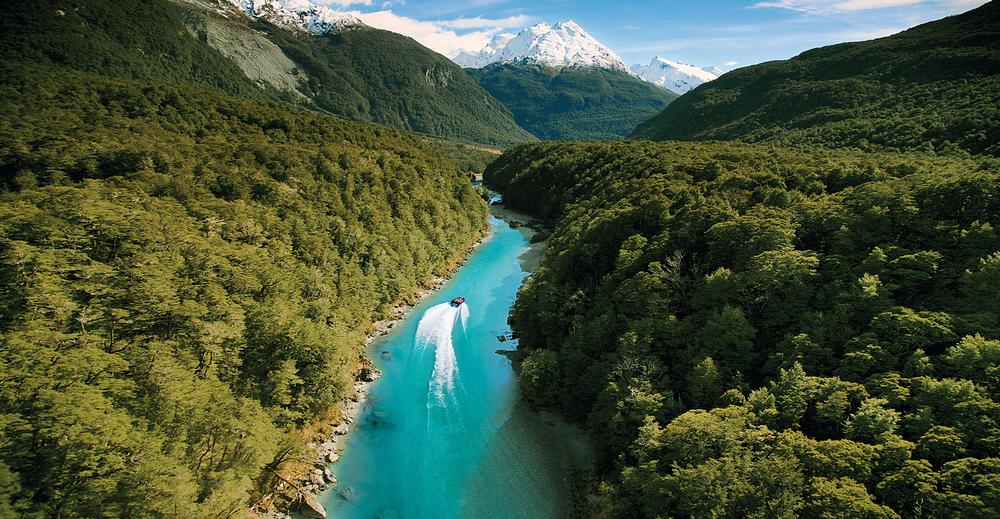
NTT belongs to Ng?i Tahu, one of the richest Maori tribes in New Zealand (see p84). The organisation owns and runs eight iconic visitor experiences across the country, including jetboat rides and a wildlife park (see p82). It’s also behind the Glacier Hot Pools on the South Island and has just announced plans to develop a second hot pool attraction in Queenstown.
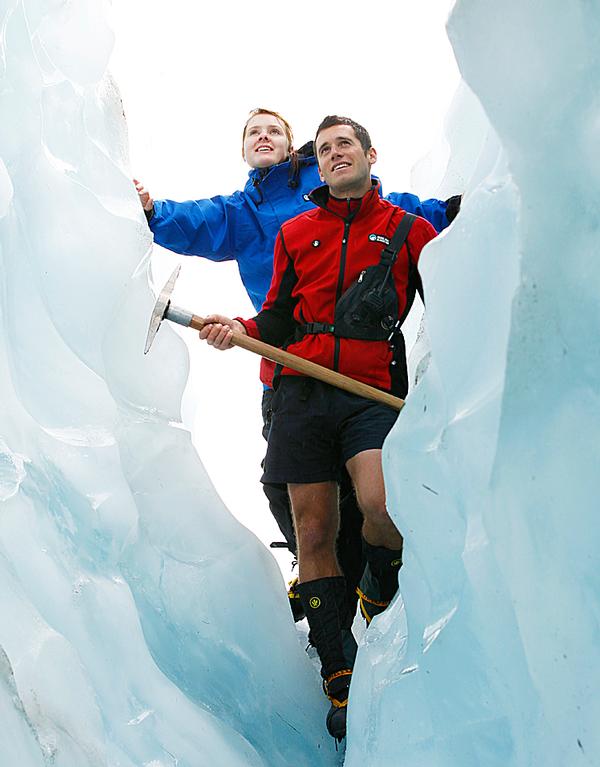
Market gap The Ngái Tahu tribe entered the tourism industry more than 20 years ago by investing in, and eventually fully acquiring, a number of nature-based leisure operations under NTT. A key business included guided tours of the Franz Josef Glacier in the Southern Alps, an area famous for its outdoor activities – there’s hiking, cycling and kayaking as well as the glacial walk. But NTT felt something was missing. “Our [market] research showed visitors wanted a more leisurely offer, as well as something that could be done at night and enjoyed by all demographics,” says Kerry Myers, a regional sales and marketing manager for NTT. People kept suggesting something for relaxation and rejuvenation in the research. This prompted NTT to develop the Glacier Hot Pools, its first start-up venture, which opened in 2008.
“We decided the hot pools were the perfect mix with all the other activities on offer in the area. They gave visitors a chance to relax after a few days in the wilderness and had the added benefit of being an all-weather attraction.”
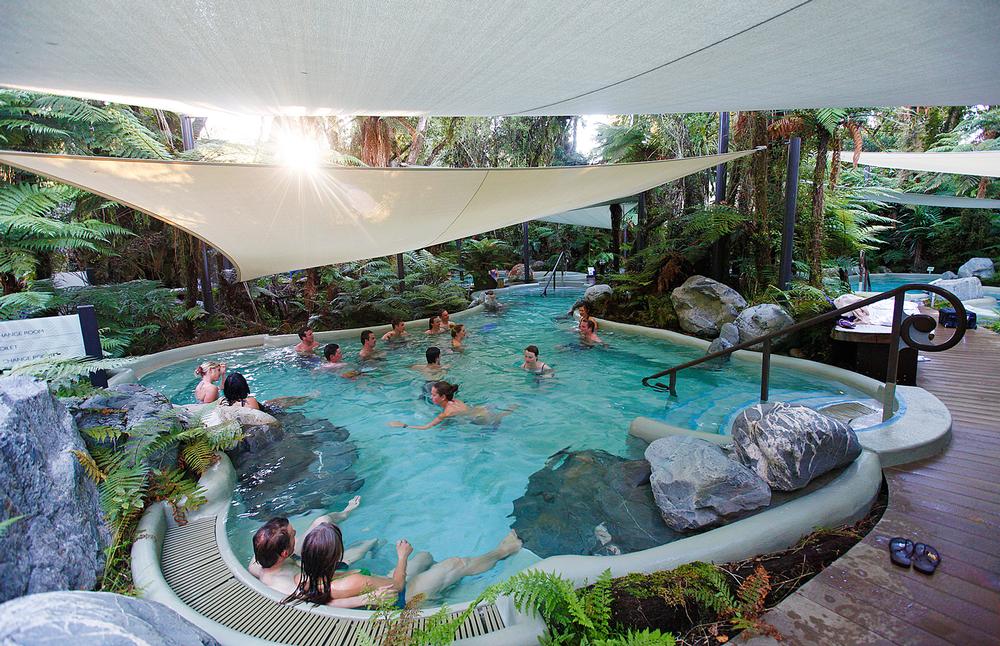
Dipping in The popular Glacier Hot Pools attraction is nested within a rainforest at the footfalls of the Franz Josef Glacier. It’s a natural setting that’s fitting for the outdoor activities market it targets.
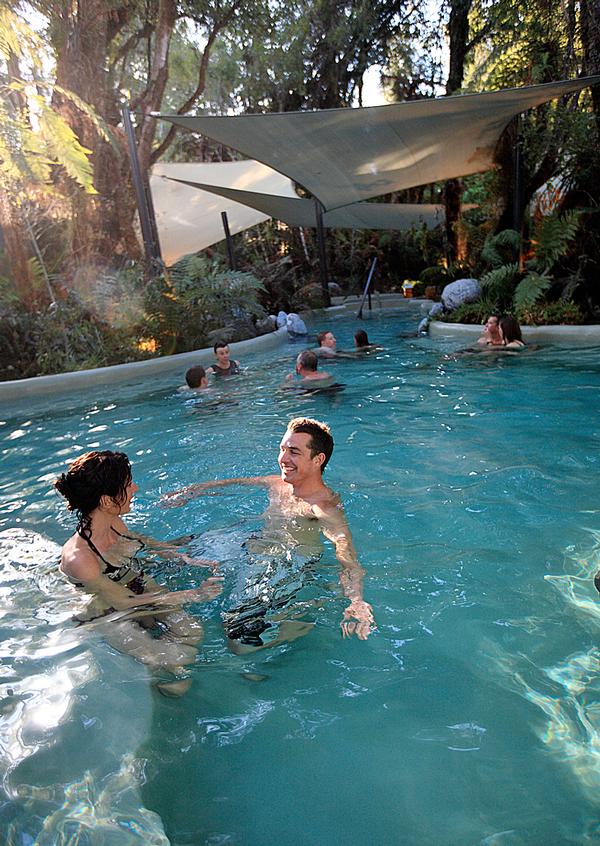
Currently, facilities consist of three public and three private pools – which range in temperature from 36-40?C – and a massage facility. But plans for expansion include up to 11 more pools.
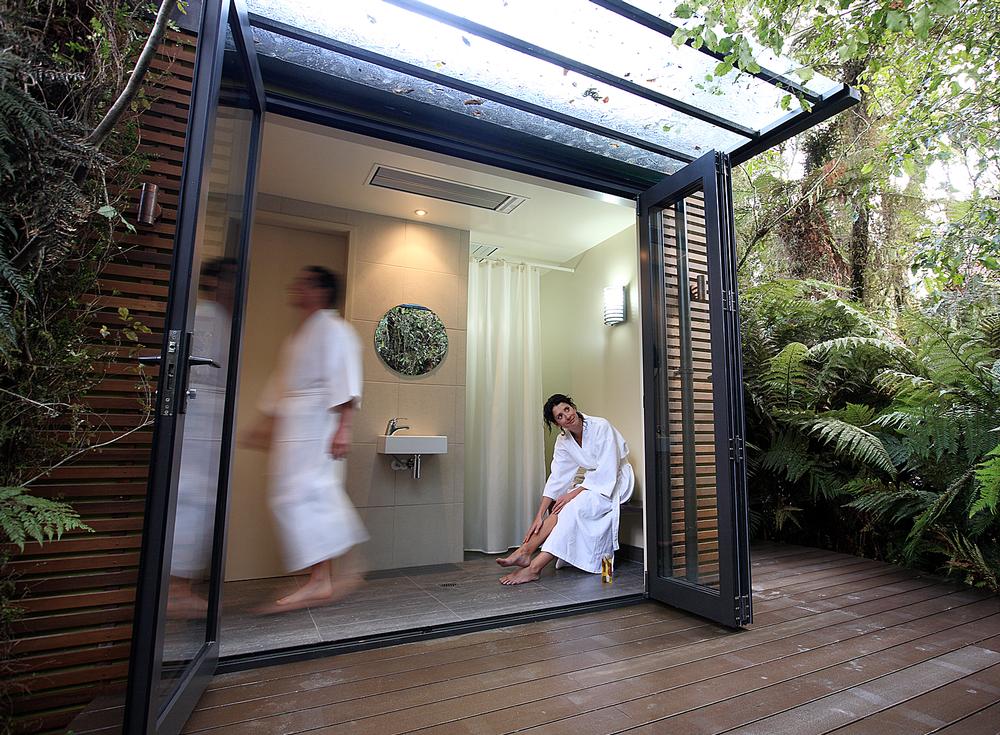
The public pools are located at the front of the property and for NZ$25 (US$22, €16, £13) guests can spend as long as they want in them. For a more exclusive experience, the private pools are set deeper into the rainforest and cost NZ$85 (US$74, €55, £43) for 45 minutes and can hold up to four people. They have dedicated changing facilities and the price also includes entry into the public pools.
The hot pools are filled with water collected from the glacier and heated by gas. The water treatment process uses a combination of salt and electricity to sanitise the pools and while there is a natural spring on-site – one of over 20 in the area – NTT hasn’t plugged into this yet.
“We’re not 100 per cent sure where the spring is, but we do know it’s located in a fault line zone and that it’s prone to movement because of the shifting landscape,” explains Myers. “The cost to drill down, combined with the uncertainty of the location, makes it prohibitive at the moment.” But she adds that it could be something worth considering once they have more pools.
As the massage facility only has one treatment room, the menu has been kept simple. There are relaxation, deep tissue or hot stone massages, using local organic beeswax products, which cost NZ$85 (US$74, €55, £43) for 30 minutes or NZ$175 (US$175, €153, £113) for 90 minutes. However, plans are in motion to expand. This year, the company begins the largest development on-site since its opening, including the addition of a couple’s massage room, as well as a small café and extended retail area.
“The new development will mean we can expand our therapeutic offer and cater for a wider range in the market,” Myers says. “Our plan has always been to develop the treatments to meet demand and with customers indicating their desire to see more in terms of an offer at the complex, we’re now in the position to do so.”
At the front of the site, a joint reception area for the Glacier Hot Pools and the Franz Josef Glacier Guides is also in the works. This makes commercial sense, given that a ticket to the glacier includes a complimentary visit to the hot pools. As of this month, visitors will be able to check in for their hikes on the ice and return to the Glacier Hot Pools straight afterwards to warm up and relax.
important contributor Myers says the Glacier Hot Pools are a long-term investment that have helped NTT to expand its product offering in Franz Josef. Each of the businesses in NTT’s portfolio operates separately, partly because of the diversity of the offers. However, geographical clusters have been formed – the hot pools are part of the West Coast group – and general management and marketing are shared across them.
“NTT has significant visitor levels at the Franz Josef Glacier and the Glacier Hot Pools provide an additional activity for these visitors.” Myers says. “This makes the West Coast cluster an important contributor to the overall group.”
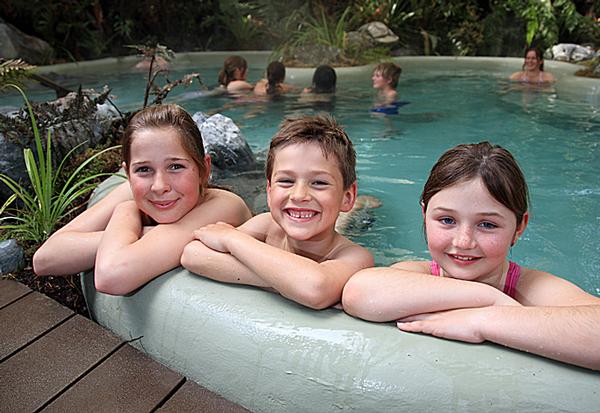
In the past 12 months, 60,000 people have come to relax and spend time in the hot pools. Guests are predominantly international visitors from Australia, the UK and Europe, followed closely by New Zealand domestic travellers and US and Chinese visitors. The family demographic is strong, particularly during the school holiday periods when Myers says the company runs promotions to encourage that target market to visit the area.
The main challenge of the business, explains Myers, is the remote location, which she says dictates many things – from staffing the facility to maintenance. “Everything needs to be managed and planned well in advance to ensure best possible outcomes.”
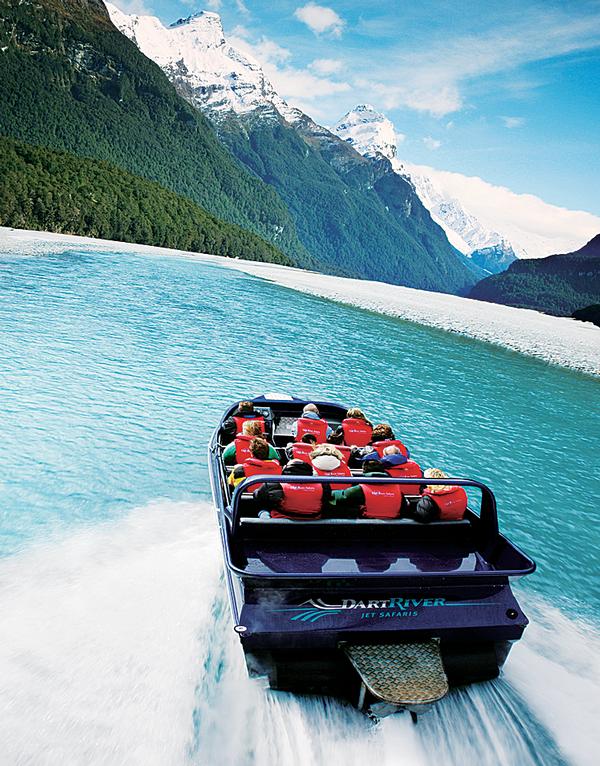
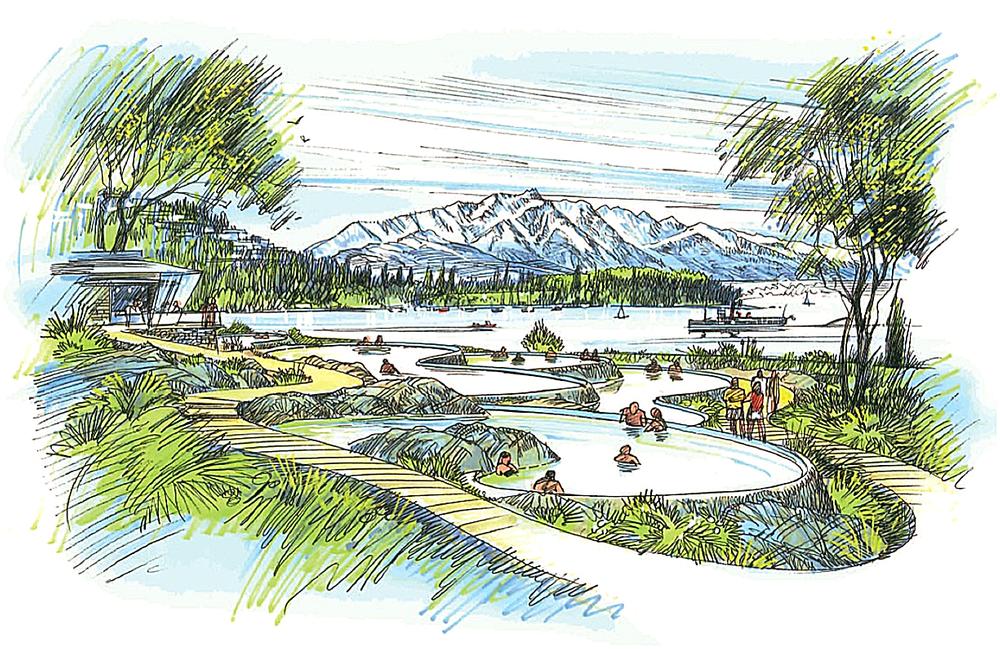
Queenstown plans With the hot pools adding another dimension to its portfolio, NTT is keen to replicate the model elsewhere. And the organisation is now in talks with the Lakeview Holiday Park in Queenstown to lease 7,500sq m (80,730sq ft) of land to build a major hot pools development. The site is within walking distance of the centre of Queenstown, where it already operates Shotover Jet and Dart River Jet boat rides – major tourism experiences.
The NZ$25m (US$21.9m, €16m, £12.6m) proposed development includes 12 large public hot pools, four smaller private hot pools, changing facilities and a day spa in addition to a café-restaurant.
David Kennedy, NTT’s regional general manager in the area, is responsible for seeking out growth potential. And he anticipates that the new hot springs attraction will draw in up to 300,000 visitors a year and will boost NTT’s existing businesses too. “The Queenstown Hot Pools will be an all-weather activity that will also give us the chance to create unique cross-selling packages with our jetboat operations,” he says.
In July, NTT also welcomed a new CEO. Quinton Hall, previously COO of another New Zealand attractions company Tourism Holdings, has extensive operational experience in the tourism sector. Ross Keenan, chair of NTT, is confident he’ll help to drive future success: “His [Hall’s] wide industry knowledge of distribution systems, with particular expertise in systems development, reflects our current business objectives.” Meanwhile, Hall himself is relishing the opportunity of “working with such an exciting portfolio of iconic tourism operations and brands”.
Read more from this issue of Spa Business magazine
Spa Foresight™: Spa Foresight™
Trends, technologies and strategies which will shape the future of the global spa and wellness industry
Interview: Steve Jeisman
The group director of spas and development at Alila talks to Katie Barnes about leading the way in spa innovation and about new investment from US firm Geolo Capital
Ask an expert: Fasting
What makes a successful fasting programme and how can spas offer them safely? Julie Cramer investigates
Advertisement promotion: ESPA
At 21, ESPA is a veteran
of the global spa industry,
but it’s still leading the
way. Founder and CEO Sue
Harmsworth explains how
Therapy: Mineral matters
Sophie Benge focuses on water and mud therapies in the last of her series on wellness in central and eastern Europe
Everyone’s talking about: Russia
Jak Phillips gives a SWOT analysis of the Russian spa industry and gets insights from operators and consultants working in the sector
Glacial Spa: Tribal gathering
Wellness and adventure tourism is a key focus for Ng?i Tahu, one of the richest Maori tribes in New Zealand. Jennifer Harbottle finds out more
Summit review: Bright future
Katie Barnes shares her highlights from the 2014 Global Spa & Wellness Summit held in Marrakech, Morocco
Research: Strength in numbers
The worldwide spa industry has grown 56 per cent since 2007 and is part of a US$3.4tn cluster according to the 2014 Global Spa & Wellness Economy Monitor report. Ophelia Yeung reveals more
Wellness: Wearable technology
The latest wellness wearables for your spa, including devices by Google, Apple and Ralph Lauren
- Shotover Jet (Queenstown) - Franz Josef Glacier Guides (Franz Josef) - Glacier Hot Pools (Franz Josef) - Rainbow Springs Kiwi Wildlife Park (Rotorua) - Huka Falls Jet (Taup?) - Agrodome (Rotorua) - Dart River Safaris (Queenstown) - Hollyford Track (Fiordland National Park)
Entrepreneurial history Ngái Tahu is the principal Maori tribe of south New Zealand. The tribespeople settled in the region more than 800 years ago and originally made their money in the economies of whaling, agriculture and, later on, by selling their land.
As times changed, so did the entrepreneurial tribe and in 1998 it set up Ngái Tahu Tourism (NTT) and purchased a controlling stake in Shotover Group, which owned a number of leisure operations in Queenstown, Taupó and Rotorua (see p82). In 2004, NTT took on full ownership of Shotover.
NTT is one of four subsidiaries of the Ngái Tahu Holdings Corporation, which invests in businesses on behalf of the tribe’s charitable trust to ensure a sustainable social, cultural and environmental future for the Ngái Tahu community. Other subsidiaries are involved in seafood, property and finance.
Today, Ngái Tahu is one of the richest tribes in New Zealand. Last year its turnover was NZ$230m (US$202.8m, €147.7m, £117.6m) and its tourism division accounted for around 18 per cent of that.
All money is invested back into the tribe’s community to preserve the culture that is at the heart of its existence
Jennifer Harbottle is a leisure industry writer based in Asia Email: [email protected] Tel: +86 1888 9846196
The tribe runs eight iconic outdoor visitor attractions in New Zealand
The tribe runs eight iconic outdoor visitor attractions in New Zealand, including guided tours of the Franz Josef Glacier
The tribe runs eight iconic outdoor visitor attractions in New Zealand, including guided tours of the Franz Josef Glacier
The Glacier Hot Pools opened in 2008 and met the demand for a more relaxing experience in the area that could open in the evenings and be enjoyed by all
The Glacier Hot Pools opened in 2008 and met the demand for a more relaxing experience in the area that could open in the evenings and be enjoyed by all
Up to 60,000 people a year visit the hot pools and the experience is proving so popular that there are plans to add 11 more pools
Up to 60,000 people a year visit the hot pools and the experience is proving so popular that there are plans to add 11 more pools
The NZ$25m proposed development in Queenstown includes 16 hot pools and a day spa and is expected to attract up to 300,000 annual visitors
Contrast therapy, based on the alternation of hot and cold rituals, has become one of the
most valued practices in the fields of wellness and recovery. [more...]
+ More featured suppliers
COMPANY PROFILES
Aquaform
With a rich heritage in the spa industry, Aquaform offers a diverse array of water wellness experien [more...]
Oakworks Inc
Oakworks is a US-based FSC-certified manufacturer of spa, massage, and medical equipment. [more...]
Ngái Tahu, an entrepreneurial Maori tribe, has a growing wellness tourism portfolio in New Zealand. Jennifer Harbottle takes a look at how its built up business and its plans for hot springs developments
By Jennifer Harbottle | Published in Spa Business 2014 issue 4
Ngai Tahu is the main Maori tribe of south New Zealand / Photo supplied by Te Ránanga o Ngái Tahu
If you’re one of the millions who’ve visited the land of the long white cloud, chances are you’ve also taken in at least one Ng?i Tahu Tourism (NTT) attraction.
NTT belongs to Ng?i Tahu, one of the richest Maori tribes in New Zealand (see p84). The organisation owns and runs eight iconic visitor experiences across the country, including jetboat rides and a wildlife park (see p82). It’s also behind the Glacier Hot Pools on the South Island and has just announced plans to develop a second hot pool attraction in Queenstown.
Market gap The Ngái Tahu tribe entered the tourism industry more than 20 years ago by investing in, and eventually fully acquiring, a number of nature-based leisure operations under NTT. A key business included guided tours of the Franz Josef Glacier in the Southern Alps, an area famous for its outdoor activities – there’s hiking, cycling and kayaking as well as the glacial walk. But NTT felt something was missing. “Our [market] research showed visitors wanted a more leisurely offer, as well as something that could be done at night and enjoyed by all demographics,” says Kerry Myers, a regional sales and marketing manager for NTT. People kept suggesting something for relaxation and rejuvenation in the research. This prompted NTT to develop the Glacier Hot Pools, its first start-up venture, which opened in 2008.
“We decided the hot pools were the perfect mix with all the other activities on offer in the area. They gave visitors a chance to relax after a few days in the wilderness and had the added benefit of being an all-weather attraction.”
Dipping in The popular Glacier Hot Pools attraction is nested within a rainforest at the footfalls of the Franz Josef Glacier. It’s a natural setting that’s fitting for the outdoor activities market it targets.
Currently, facilities consist of three public and three private pools – which range in temperature from 36-40?C – and a massage facility. But plans for expansion include up to 11 more pools.
The public pools are located at the front of the property and for NZ$25 (US$22, €16, £13) guests can spend as long as they want in them. For a more exclusive experience, the private pools are set deeper into the rainforest and cost NZ$85 (US$74, €55, £43) for 45 minutes and can hold up to four people. They have dedicated changing facilities and the price also includes entry into the public pools.
The hot pools are filled with water collected from the glacier and heated by gas. The water treatment process uses a combination of salt and electricity to sanitise the pools and while there is a natural spring on-site – one of over 20 in the area – NTT hasn’t plugged into this yet.
“We’re not 100 per cent sure where the spring is, but we do know it’s located in a fault line zone and that it’s prone to movement because of the shifting landscape,” explains Myers. “The cost to drill down, combined with the uncertainty of the location, makes it prohibitive at the moment.” But she adds that it could be something worth considering once they have more pools.
As the massage facility only has one treatment room, the menu has been kept simple. There are relaxation, deep tissue or hot stone massages, using local organic beeswax products, which cost NZ$85 (US$74, €55, £43) for 30 minutes or NZ$175 (US$175, €153, £113) for 90 minutes. However, plans are in motion to expand. This year, the company begins the largest development on-site since its opening, including the addition of a couple’s massage room, as well as a small café and extended retail area.
“The new development will mean we can expand our therapeutic offer and cater for a wider range in the market,” Myers says. “Our plan has always been to develop the treatments to meet demand and with customers indicating their desire to see more in terms of an offer at the complex, we’re now in the position to do so.”
At the front of the site, a joint reception area for the Glacier Hot Pools and the Franz Josef Glacier Guides is also in the works. This makes commercial sense, given that a ticket to the glacier includes a complimentary visit to the hot pools. As of this month, visitors will be able to check in for their hikes on the ice and return to the Glacier Hot Pools straight afterwards to warm up and relax.
important contributor Myers says the Glacier Hot Pools are a long-term investment that have helped NTT to expand its product offering in Franz Josef. Each of the businesses in NTT’s portfolio operates separately, partly because of the diversity of the offers. However, geographical clusters have been formed – the hot pools are part of the West Coast group – and general management and marketing are shared across them.
“NTT has significant visitor levels at the Franz Josef Glacier and the Glacier Hot Pools provide an additional activity for these visitors.” Myers says. “This makes the West Coast cluster an important contributor to the overall group.”
In the past 12 months, 60,000 people have come to relax and spend time in the hot pools. Guests are predominantly international visitors from Australia, the UK and Europe, followed closely by New Zealand domestic travellers and US and Chinese visitors. The family demographic is strong, particularly during the school holiday periods when Myers says the company runs promotions to encourage that target market to visit the area.
The main challenge of the business, explains Myers, is the remote location, which she says dictates many things – from staffing the facility to maintenance. “Everything needs to be managed and planned well in advance to ensure best possible outcomes.”
Queenstown plans With the hot pools adding another dimension to its portfolio, NTT is keen to replicate the model elsewhere. And the organisation is now in talks with the Lakeview Holiday Park in Queenstown to lease 7,500sq m (80,730sq ft) of land to build a major hot pools development. The site is within walking distance of the centre of Queenstown, where it already operates Shotover Jet and Dart River Jet boat rides – major tourism experiences.
The NZ$25m (US$21.9m, €16m, £12.6m) proposed development includes 12 large public hot pools, four smaller private hot pools, changing facilities and a day spa in addition to a café-restaurant.
David Kennedy, NTT’s regional general manager in the area, is responsible for seeking out growth potential. And he anticipates that the new hot springs attraction will draw in up to 300,000 visitors a year and will boost NTT’s existing businesses too. “The Queenstown Hot Pools will be an all-weather activity that will also give us the chance to create unique cross-selling packages with our jetboat operations,” he says.
In July, NTT also welcomed a new CEO. Quinton Hall, previously COO of another New Zealand attractions company Tourism Holdings, has extensive operational experience in the tourism sector. Ross Keenan, chair of NTT, is confident he’ll help to drive future success: “His [Hall’s] wide industry knowledge of distribution systems, with particular expertise in systems development, reflects our current business objectives.” Meanwhile, Hall himself is relishing the opportunity of “working with such an exciting portfolio of iconic tourism operations and brands”.
Read more from this issue of Spa Business magazine
Spa Foresight™: Spa Foresight™
Trends, technologies and strategies which will shape the future of the global spa and wellness industry
Interview: Steve Jeisman
The group director of spas and development at Alila talks to Katie Barnes about leading the way in spa innovation and about new investment from US firm Geolo Capital
Ask an expert: Fasting
What makes a successful fasting programme and how can spas offer them safely? Julie Cramer investigates
Advertisement promotion: ESPA
At 21, ESPA is a veteran
of the global spa industry,
but it’s still leading the
way. Founder and CEO Sue
Harmsworth explains how
Therapy: Mineral matters
Sophie Benge focuses on water and mud therapies in the last of her series on wellness in central and eastern Europe
Everyone’s talking about: Russia
Jak Phillips gives a SWOT analysis of the Russian spa industry and gets insights from operators and consultants working in the sector
Glacial Spa: Tribal gathering
Wellness and adventure tourism is a key focus for Ng?i Tahu, one of the richest Maori tribes in New Zealand. Jennifer Harbottle finds out more
Summit review: Bright future
Katie Barnes shares her highlights from the 2014 Global Spa & Wellness Summit held in Marrakech, Morocco
Research: Strength in numbers
The worldwide spa industry has grown 56 per cent since 2007 and is part of a US$3.4tn cluster according to the 2014 Global Spa & Wellness Economy Monitor report. Ophelia Yeung reveals more
Wellness: Wearable technology
The latest wellness wearables for your spa, including devices by Google, Apple and Ralph Lauren
- Shotover Jet (Queenstown) - Franz Josef Glacier Guides (Franz Josef) - Glacier Hot Pools (Franz Josef) - Rainbow Springs Kiwi Wildlife Park (Rotorua) - Huka Falls Jet (Taup?) - Agrodome (Rotorua) - Dart River Safaris (Queenstown) - Hollyford Track (Fiordland National Park)
Entrepreneurial history Ngái Tahu is the principal Maori tribe of south New Zealand. The tribespeople settled in the region more than 800 years ago and originally made their money in the economies of whaling, agriculture and, later on, by selling their land.
As times changed, so did the entrepreneurial tribe and in 1998 it set up Ngái Tahu Tourism (NTT) and purchased a controlling stake in Shotover Group, which owned a number of leisure operations in Queenstown, Taupó and Rotorua (see p82). In 2004, NTT took on full ownership of Shotover.
NTT is one of four subsidiaries of the Ngái Tahu Holdings Corporation, which invests in businesses on behalf of the tribe’s charitable trust to ensure a sustainable social, cultural and environmental future for the Ngái Tahu community. Other subsidiaries are involved in seafood, property and finance.
Today, Ngái Tahu is one of the richest tribes in New Zealand. Last year its turnover was NZ$230m (US$202.8m, €147.7m, £117.6m) and its tourism division accounted for around 18 per cent of that.
All money is invested back into the tribe’s community to preserve the culture that is at the heart of its existence
Jennifer Harbottle is a leisure industry writer based in Asia Email: [email protected] Tel: +86 1888 9846196
The tribe runs eight iconic outdoor visitor attractions in New Zealand
The tribe runs eight iconic outdoor visitor attractions in New Zealand, including guided tours of the Franz Josef Glacier
The tribe runs eight iconic outdoor visitor attractions in New Zealand, including guided tours of the Franz Josef Glacier
The Glacier Hot Pools opened in 2008 and met the demand for a more relaxing experience in the area that could open in the evenings and be enjoyed by all
The Glacier Hot Pools opened in 2008 and met the demand for a more relaxing experience in the area that could open in the evenings and be enjoyed by all
Up to 60,000 people a year visit the hot pools and the experience is proving so popular that there are plans to add 11 more pools
Up to 60,000 people a year visit the hot pools and the experience is proving so popular that there are plans to add 11 more pools
The NZ$25m proposed development in Queenstown includes 16 hot pools and a day spa and is expected to attract up to 300,000 annual visitors
Gran Hotel Taoro in northern Tenerife, Spain, has completed the final phase of its three-year
renovation with the debut of its Sandára Wellness Centre.
Hand and Stone Massage and Facial Spa, the spa business with more than 650 locations across
the US and Canada, has appointed franchise expert Carrie Walsh as CEO as the company plans
to expand.
Synergy – The Retreat Show, the global trade show for retreats, has launched a global research
initiative that will provide insights into the retreat sector from both consumer and industry
perspectives.
The Wellness Tourism Association (WTA) has published a non-regulatory global industry
framework designed to ensure the retreat market offers responsible experiences.
A new survey of UK and international spa practitioners shows that stress, burnout and
wellbeing concerns have caused one in three respondents to consider leaving the industry.
The UK's four Chief Medical Officers have published a refreshed edition of Physical activity
guidelines: UK Chief Medical Officers' report, updating the evidence that underpins the nation's
physical activity recommendations and placing greater emphasis on strength, balance, reducing
sedentary behaviour and, for the first time, supporting people taking weight loss medications.
Anna Bjurstam has left her role as Wellness Pioneer at Six Senses Hotels and Resorts and
launched a new wellness, longevity and “consciousness consultancy” called Wahayla.
Fairmont Cheshire, The Mere, has opened today (10 July) in the Northwest of England
with a
1,715sq m Fairmont Spa that has been designed using a ‘Wellness without Walls’
concept.
Contrast therapy, based on the alternation of hot and cold rituals, has become one of the
most valued practices in the fields of wellness and recovery. [more...]
+ More featured suppliers
COMPANY PROFILES
Aquaform With a rich heritage in the spa industry, Aquaform offers a diverse array of water wellness experien [more...]