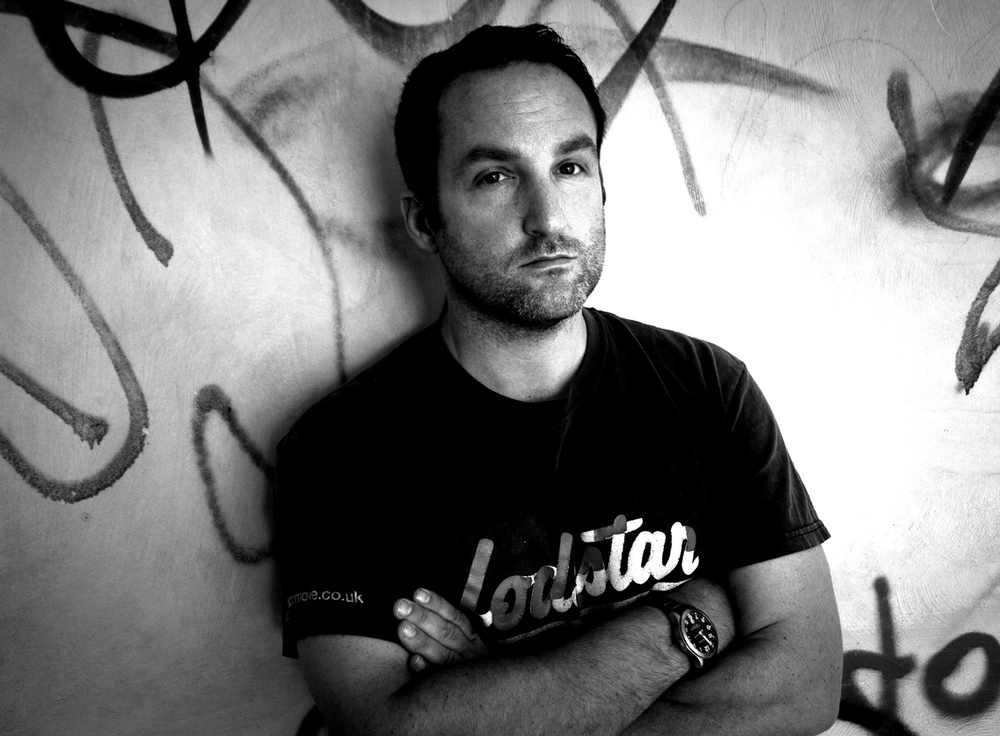
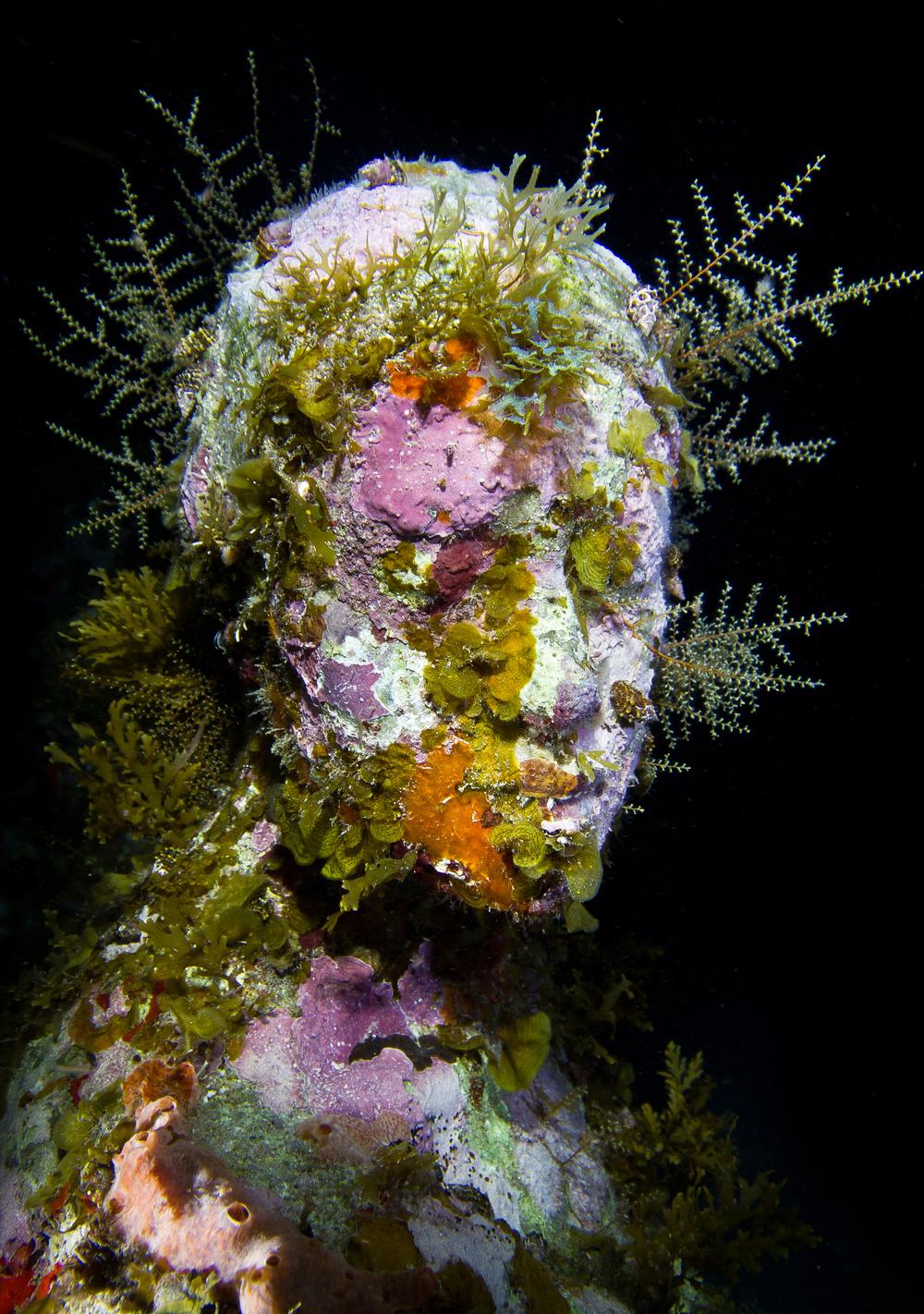
Jason deCaires Taylor has been creating underwater sculptures for 12 years
It wasn’t really a careers option after leaving school,” says Jason deCaires Taylor, who created his first installation 12 years ago. “I studied art and I also worked as a scuba diving instructor so I naturally fell into it.”
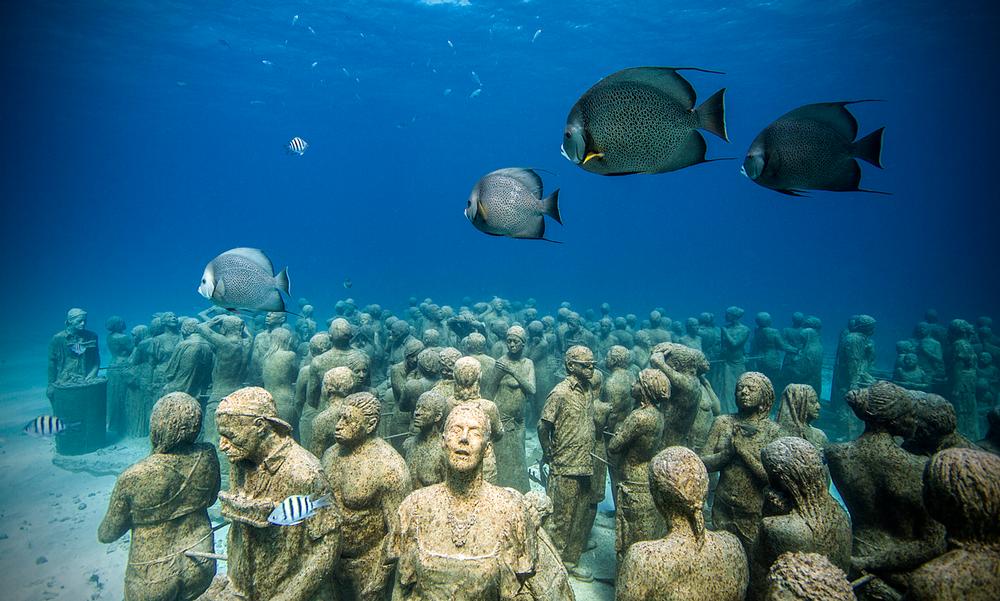
The British-born Taylor has one of the most unusual jobs in the world, creating underwater art installations for more than a million scuba divers and snorkelers a year. He’s most famously known for a collection of more than 500 life-size sculptures at the Cancún Marine Park in Mexico.
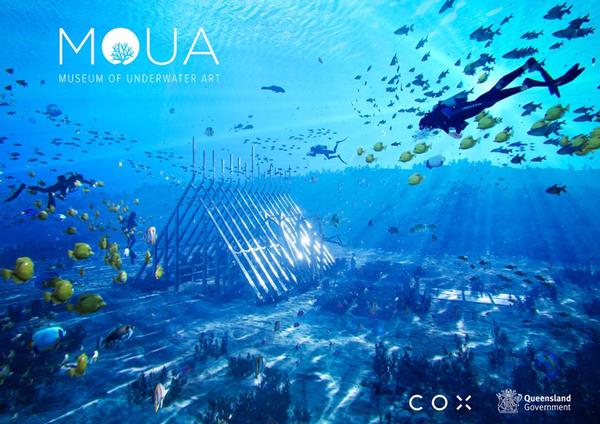
His latest project takes him to Australia’s Great Barrier Reef for the first time, where he’s creating the Museum of Underwater Art (MOUA) – a first of its kind installation for Australia, which is being created to increase awareness of threatened ecosystems and to rehabilitate parts of the Great Barrier Reef.
“It’s been on the cards for a few years, with planning and organisation,” he says. “I’ve spent a lot of 2019 producing the works that are there at the moment. We’re installing them in November with the first to open in December.
“Its aim first and foremost is to showcase how wonderful the Great Barrier Reef is. There’s a misconception that it’s all gloom and doom and dying but that’s not the case. A lot of it is fantastic and thriving. But it really needs us to help conserve it.”
Artworks will be installed at several locations along the Queensland coast, including John Brewer Reef, Magnetic Island, Palm Island and Townsville. MOUA is a not-for-profit collaboration between both the national and local government, as well as James Cook University, the Australian Institute of Marine Science and the Great Barrier Reef Marine Park Authority.
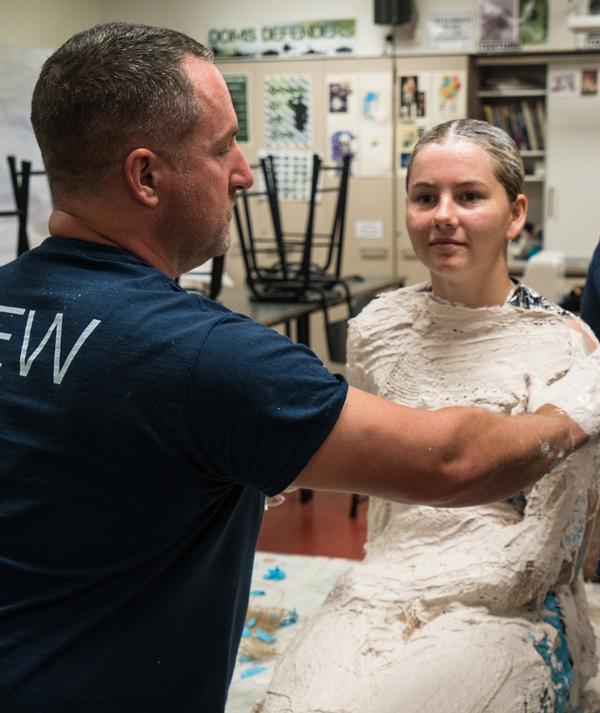
The first installation, called Ocean Siren, will be a solar-powered sculpture of a young indigenous girl. Standing above water at low tide and submerged at high tide, the sculpture in Townsville will change colour using live water temperature data. This, says Taylor, is designed to raise awareness for critical warming of the oceans, which is directly linked to coral bleaching.
“The Australian Institute of Marine Science has set up temperature loggers around the reef,” he explains.
“The data will be fed into the sculpture so that changes in temperature will be seen in real-time.”
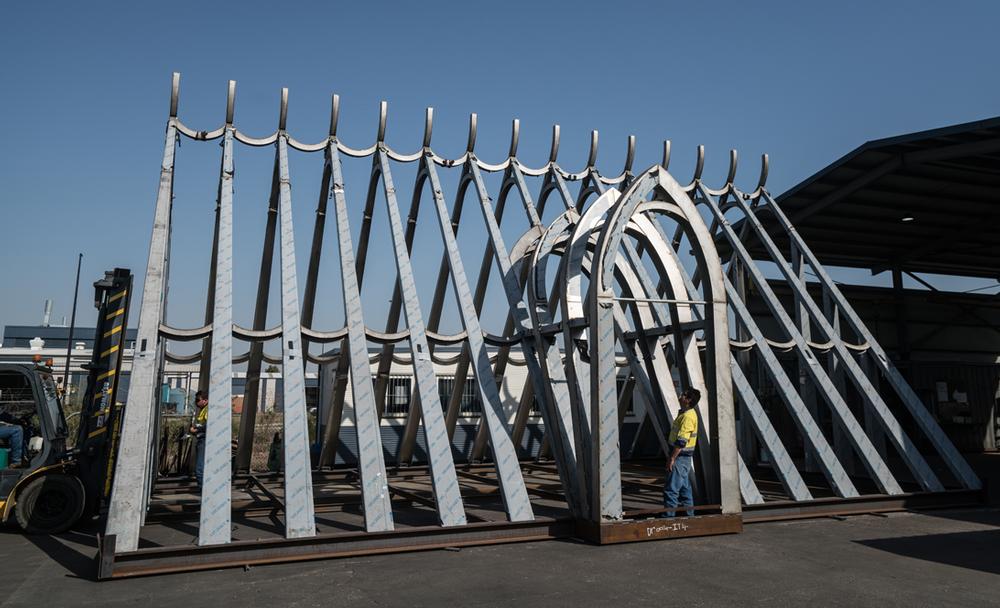
The Coral Greenhouse will open shortly after Ocean Siren at Hohn Brewer Reef. The 12m-high (39.3ft) underwater botanical structure has been designed as an art space, underwater educational centre, science laboratory and a sheltered space for marine life. When installed, it will be planted with more than 2,000 coral fragments, which will help to create a marine ecosystem.
For the Magnetic Island site, which will be completed by the end of 2020, Taylor will tell the story of reef science. The installation on Palm Island is being created in consultation with the indigenous community and is set to open in August 2020. The aim is to boost tourism to give an economic boost to the local area.
“We’re very much trying to create a strong link between art and science,” says Taylor. “The installations are also going to be monitoring stations with coral nurseries and scientific equipment. The idea is that we engage the community in becoming the guardians of the reef.”
Eco-friendly With an underwater installation, there are a range of factors to consider, including durability, eco-friendliness and habitat.
“It’s a much more complicated process than working with sculptures on land,” says Taylor. “First of all, the materials have to be durable and not a pollutant in any way. They also have to be able to cope with extreme stress from cyclones, wave action and strong currents. The forces and dynamics are very different underwater, so they have to be able to withstand the high impact of a marine environment. These installations will take hundreds of years until they’re fully developed, so the materials have to be able to withstand that type of resistance.”
The sculptures are all made from a pH-neutral marine cement with a textured surface designed to help the settlement of corals and other marine life.
“Our pieces allow the corals to flourish and provide a place for creatures to live,” says Taylor. “They’ll definitely go through many different evolutions underwater. With the ‘greenhouse’, the idea is to use the structure to aggregate the land and make it a place of refuge for sea life.
New frontiers With 12 years of experience and countless projects open to the public worldwide, de Caires Taylor thinks his work is far from done, with plans to take his underwater projects to new and exciting locations across the world.
“Art is a really good way to explore new seascapes and highlight how incredibly beautiful these underwater sites are,” he says. “I’ve done quite a few different projects now, working in the Atlantic Ocean, the Caribbean Sea and the Pacific Ocean. I’m interested in doing something in the Arctic – I’m concerned about the loss of ice coverage – and I’m always interested in working in new environments.
“People think of beautiful underwater areas as tropical reefs and coral areas. I did a project in Norway in a fjord in the centre of Oslo last year. From the surface, its greywater that looks cold and unappealing. When you get under there, you realise there’s a wealth of life and that some of the creatures that grow and flourish there are equally beautiful as some of the things you’d find on a coral reef. I’m keen on working in these kinds of new areas.”
Read more from this issue of Spa Business magazine
Interview: Yves Pépin
A man whose spectaculars have been
witnessed by billions, Yves Pépin
speaks about his trail-blazing career
Rides: Supersonic
We take a look at some of the most
significant ride openings around the world
Preview: Rulantica Rising
Germany’s top theme park is about to
launch a €180m addition with the opening of its long-awaited second
gate. Attractions Management looks
at Rulantica and how the new
waterpark addition is taking shape
Theme Parks: Parisian Magic
Daniel Delcourt and David Wilson
share more about Disney’s €2bn
expansion of Disneyland Paris
Promotional feature: Simworx Ltd
CEO, Terry Monkton, takes
us through the development of two unique projects, from conception to creation
Waterparks: Water World
Debrecen in Hungary is gaining an iconic
new addition – a US$30.1m waterpark
Promotional feature: WhiteWater
WhiteWater’s Una deBoer tells us
how the company maintains elite safety standards
in waterparks and the steps operators can take
to improve safety across the entire industry
Operations: Disaster Management
What can be learned from the experiences
of those unfortunate operators who have
had to react when disaster strikes?
Exhibitions: World Tour
Kath Hudson looks at the potential of the
pop-up and touring exhibition market
In the fast-paced world of fitness and wellness, where high-intensity workouts push us to
our limits and the sweat pours, the importance of efficient recovery cannot be overstated. [more...]
Jason deCaires Taylor has been creating underwater sculptures for 12 years
It wasn’t really a careers option after leaving school,” says Jason deCaires Taylor, who created his first installation 12 years ago. “I studied art and I also worked as a scuba diving instructor so I naturally fell into it.”
The British-born Taylor has one of the most unusual jobs in the world, creating underwater art installations for more than a million scuba divers and snorkelers a year. He’s most famously known for a collection of more than 500 life-size sculptures at the Cancún Marine Park in Mexico.
His latest project takes him to Australia’s Great Barrier Reef for the first time, where he’s creating the Museum of Underwater Art (MOUA) – a first of its kind installation for Australia, which is being created to increase awareness of threatened ecosystems and to rehabilitate parts of the Great Barrier Reef.
“It’s been on the cards for a few years, with planning and organisation,” he says. “I’ve spent a lot of 2019 producing the works that are there at the moment. We’re installing them in November with the first to open in December.
“Its aim first and foremost is to showcase how wonderful the Great Barrier Reef is. There’s a misconception that it’s all gloom and doom and dying but that’s not the case. A lot of it is fantastic and thriving. But it really needs us to help conserve it.”
Artworks will be installed at several locations along the Queensland coast, including John Brewer Reef, Magnetic Island, Palm Island and Townsville. MOUA is a not-for-profit collaboration between both the national and local government, as well as James Cook University, the Australian Institute of Marine Science and the Great Barrier Reef Marine Park Authority.
The first installation, called Ocean Siren, will be a solar-powered sculpture of a young indigenous girl. Standing above water at low tide and submerged at high tide, the sculpture in Townsville will change colour using live water temperature data. This, says Taylor, is designed to raise awareness for critical warming of the oceans, which is directly linked to coral bleaching.
“The Australian Institute of Marine Science has set up temperature loggers around the reef,” he explains.
“The data will be fed into the sculpture so that changes in temperature will be seen in real-time.”
The Coral Greenhouse will open shortly after Ocean Siren at Hohn Brewer Reef. The 12m-high (39.3ft) underwater botanical structure has been designed as an art space, underwater educational centre, science laboratory and a sheltered space for marine life. When installed, it will be planted with more than 2,000 coral fragments, which will help to create a marine ecosystem.
For the Magnetic Island site, which will be completed by the end of 2020, Taylor will tell the story of reef science. The installation on Palm Island is being created in consultation with the indigenous community and is set to open in August 2020. The aim is to boost tourism to give an economic boost to the local area.
“We’re very much trying to create a strong link between art and science,” says Taylor. “The installations are also going to be monitoring stations with coral nurseries and scientific equipment. The idea is that we engage the community in becoming the guardians of the reef.”
Eco-friendly With an underwater installation, there are a range of factors to consider, including durability, eco-friendliness and habitat.
“It’s a much more complicated process than working with sculptures on land,” says Taylor. “First of all, the materials have to be durable and not a pollutant in any way. They also have to be able to cope with extreme stress from cyclones, wave action and strong currents. The forces and dynamics are very different underwater, so they have to be able to withstand the high impact of a marine environment. These installations will take hundreds of years until they’re fully developed, so the materials have to be able to withstand that type of resistance.”
The sculptures are all made from a pH-neutral marine cement with a textured surface designed to help the settlement of corals and other marine life.
“Our pieces allow the corals to flourish and provide a place for creatures to live,” says Taylor. “They’ll definitely go through many different evolutions underwater. With the ‘greenhouse’, the idea is to use the structure to aggregate the land and make it a place of refuge for sea life.
New frontiers With 12 years of experience and countless projects open to the public worldwide, de Caires Taylor thinks his work is far from done, with plans to take his underwater projects to new and exciting locations across the world.
“Art is a really good way to explore new seascapes and highlight how incredibly beautiful these underwater sites are,” he says. “I’ve done quite a few different projects now, working in the Atlantic Ocean, the Caribbean Sea and the Pacific Ocean. I’m interested in doing something in the Arctic – I’m concerned about the loss of ice coverage – and I’m always interested in working in new environments.
“People think of beautiful underwater areas as tropical reefs and coral areas. I did a project in Norway in a fjord in the centre of Oslo last year. From the surface, its greywater that looks cold and unappealing. When you get under there, you realise there’s a wealth of life and that some of the creatures that grow and flourish there are equally beautiful as some of the things you’d find on a coral reef. I’m keen on working in these kinds of new areas.”
Read more from this issue of Spa Business magazine
Interview: Yves Pépin
A man whose spectaculars have been
witnessed by billions, Yves Pépin
speaks about his trail-blazing career
Rides: Supersonic
We take a look at some of the most
significant ride openings around the world
Preview: Rulantica Rising
Germany’s top theme park is about to
launch a €180m addition with the opening of its long-awaited second
gate. Attractions Management looks
at Rulantica and how the new
waterpark addition is taking shape
Theme Parks: Parisian Magic
Daniel Delcourt and David Wilson
share more about Disney’s €2bn
expansion of Disneyland Paris
Promotional feature: Simworx Ltd
CEO, Terry Monkton, takes
us through the development of two unique projects, from conception to creation
Waterparks: Water World
Debrecen in Hungary is gaining an iconic
new addition – a US$30.1m waterpark
Promotional feature: WhiteWater
WhiteWater’s Una deBoer tells us
how the company maintains elite safety standards
in waterparks and the steps operators can take
to improve safety across the entire industry
Operations: Disaster Management
What can be learned from the experiences
of those unfortunate operators who have
had to react when disaster strikes?
Exhibitions: World Tour
Kath Hudson looks at the potential of the
pop-up and touring exhibition market
The Standards Authority for Touch in Cancer Care (SATCC) charity has announced its first five-
day Living with Cancer and Beyond retreat, which will be held at Carden Park Hotel and Spa in
Cheshire, UK, between 1 and 5 September.
Patmos Aktis, a Luxury Collection Resort and Spa, has opened in Greece, with a renovated and
rebranded wellness offering called Ansana Wellness and Spa.
The Mauna Kea Beach Hotel, an Autograph Collection property in Hawaii, US, has opened its
22,000 sq ft indoor-outdoor Spa at Mauna Kea as the final step in the property’s overall
renovation, which has cost more than US$180 million (€166 million, £140 mill
The UK spa review and discovery platform for consumers, the Good Spa Guide, has announced
it will host the Good Spa Guide Awards 2026 during an event on 16 November at Sopwell House
Hotel in St Albans, UK.
Eighty-four per cent of consumers now say wellness is a top priority in their lives, with this
percentage increasing year on year, according to a preview presentation of McKinsey’s Future of
Wellness 2026 research report.
Mass protests have been taking place since Monday 1 June in Albania over the development of
a luxury resort by Donald Trump’s daughter Ivanka Trump and her husband Jared Kushner.
Global Wellness Day (GWD) marked its 15th anniversary on Saturday 13 June 2026, with the
theme: #JoyMagenta – a celebration of the healing qualities of simple gestures and activities
that spark joy.
Global luxury hospitality brand, Six Senses, has partnered with longevity healthcare provider,
HUM2N, to launch a clinic at Six Senses London, at The Whiteley.
As part of its first hotel partnership, Mayrlife – the medical health resort company known for its
site in Altaussee, Austria – has launched a day clinic at the Rosewood Vienna.
Premium London health club, KX Chelsea, will imminently unveil its most significant
redevelopment since its launch in 2002 to create an integrated wellness model combining
training, recovery and relaxation.
In the fast-paced world of fitness and wellness, where high-intensity workouts push us to
our limits and the sweat pours, the importance of efficient recovery cannot be overstated. [more...]