Yes! Send me the FREE digital editions of Spa Business and Spa Business insider magazines and the FREE weekly Spa Business and Spa Business insider ezines and breaking news alerts!
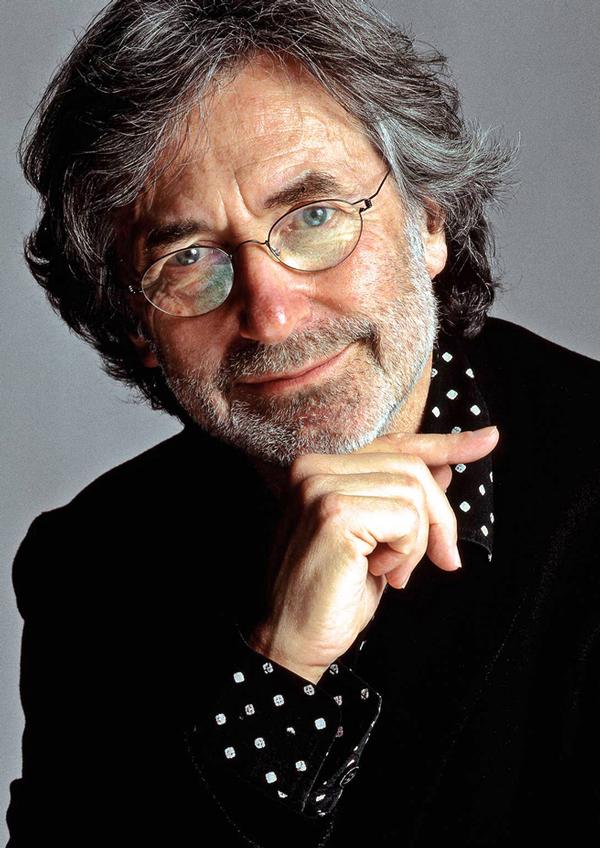
From international sport to major theme parks and global celebrations, Yves Pépin’s spectaculars have been seen by billions of people around the world. Tom Anstey speaks to this industry innovator to find out more
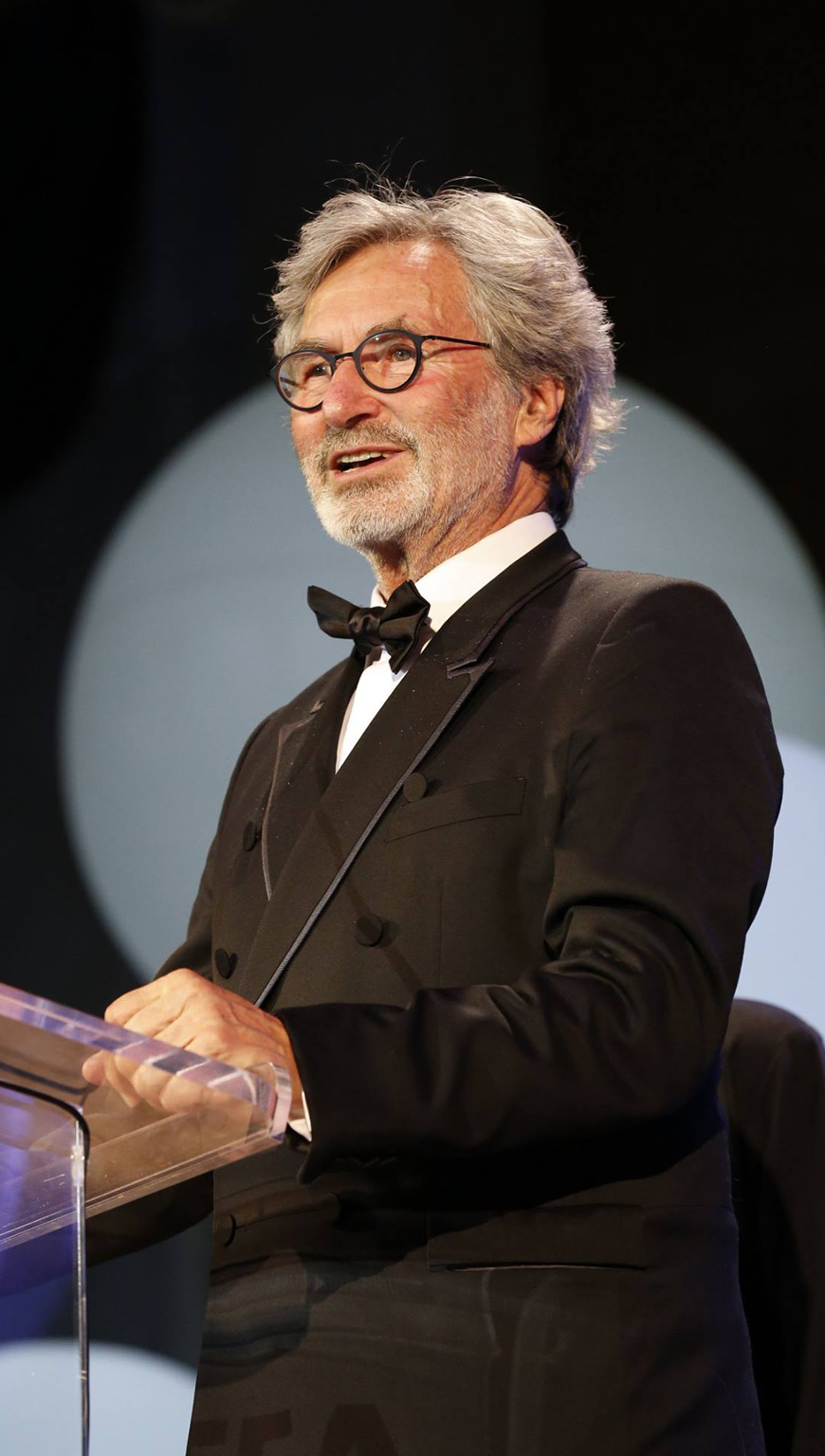
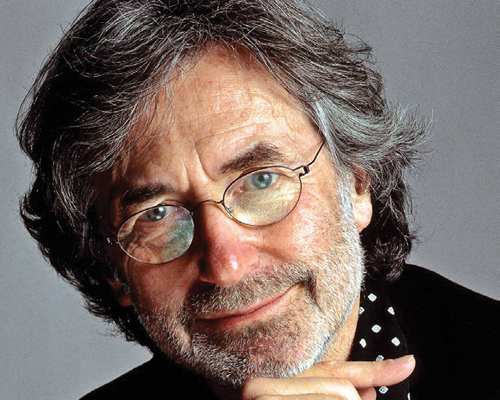
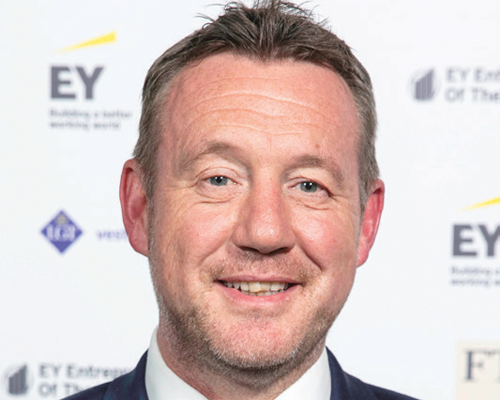
Yves Pépin has worked in the attractions and entertainment industries for nearly five decades
We started with this idea that the attraction is not just a question of making fun things for people to enjoy,” says Yves Pépin. “It’s about creating a place that represents the life of its people.”
A cornerstone of the attractions industry for more than 45 years, Pépin is a creator of multimedia shows and large-scale events such as the Eiffel Tower Millennium Show – a spectacle seen by an estimated one million people in person and four billion viewers on television worldwide. He’s also responsible for the opening ceremony of the 1998 FIFA World Cup and worked on the 2008 Olympic Games in Beijing, China.
Starting in 1974, his journey started alongside Yves Devraine and Thierry Arnaud, when the trio founded design and production company ECA2. While working there, he would take the traditional concept of theatre and apply it on an incredibly grand scale.
“Our ambition at the start was to create a company designing spaces,” he says.
“In every project, we try to make our shows and attractions represent real life and not be something totally alien.
“In public spaces and for big events, that was our main direction of work, which was really to involve the attractions and shows. One of our first ever shows was in La Défense, Paris. It was in 1989 and we were celebrating the Bicentennial of the French Revolution. We needed to tell that story while trying to find out what would be the animation of this place and how it could come to life. We wanted to make a show that gave the people a different relationship with the district, to make a link with the people and the places we are working.”
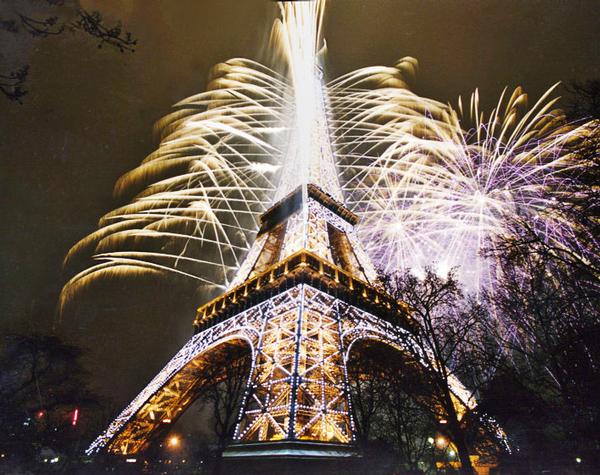
Ringing in the new year The Eiffel Tower show was produced with Christophe Berthonneau. As the world started to celebrate the new millennium, each major city, in turn, would try and pull out the most lavish celebration of the last 1,000 years. Pépin’s creation topped everything and is still talked about nearly two decades on.
To mark the occasion, ECA2 and Groupe F designed a grand pyrotechnic display. Starting at three minutes to midnight, the show included a combination of lights and 20,0000 fireworks.
“At the time we were working with models to test what we were doing,” said Pepin. “What we decided to do was very new in the field of fireworks and it had to be absolutely secure in every way – from a technical, safety, installation and operation perspective.”
The show, celebrated around the world, changed industry perspectives about what you can do with an existing structure to put on a special display. For Pépin, safety and security were key.
“The main challenge is that with such a grand project you cannot fail,” he says. “Spectacular means astounding and amazing your guests, making them feel things they’ve never felt before. At the same time, you must assess all risk, which is often in conflict with the spectacular. We want creativity, originality and something new in terms of concept and technology.”
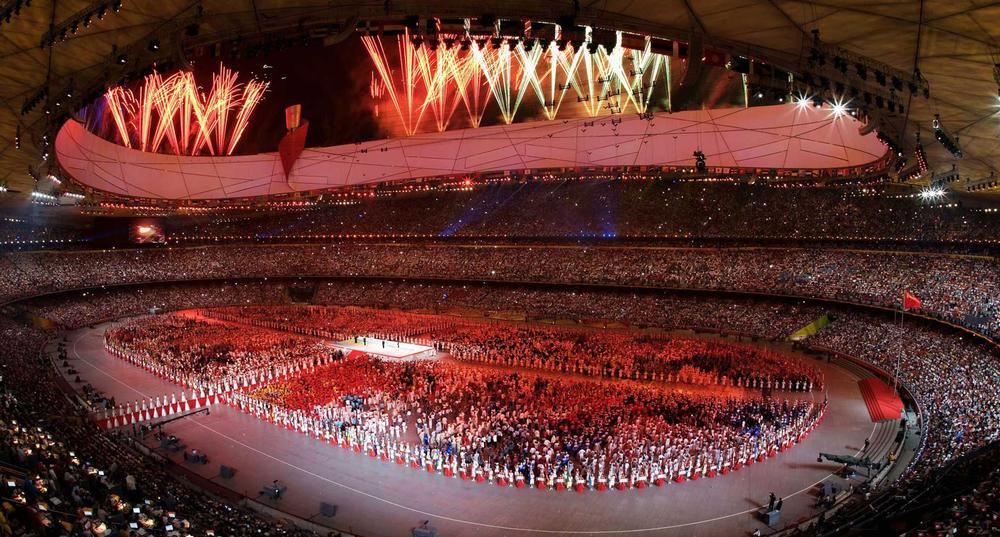
The Olympics In Beijing, Pépin worked alongside renowned Chinese film director Zhang Yimou; Ric Birch, producer of the ceremonies at the 2000 Olympic Games in Sydney; and iconic director Steven Spielberg. Together, they would create the opening ceremony for the Olympic games.
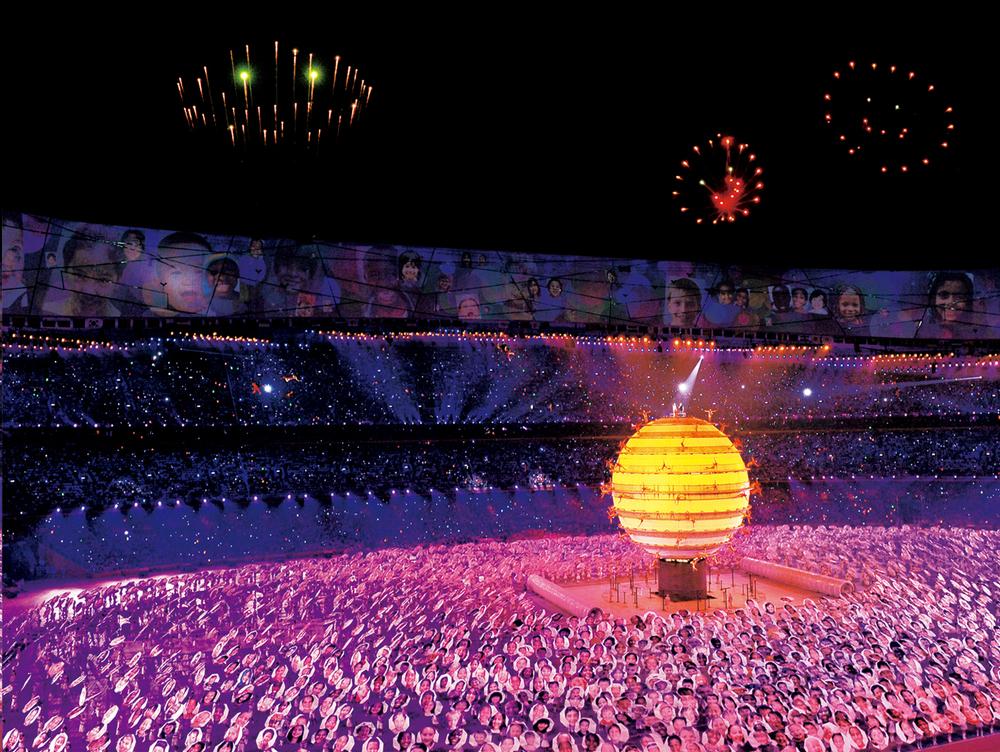
The ceremony comprised two parts titled “Brilliant Civilization” and “Glorious Era”. Seen by 91,000 people in person and billions more worldwide, the first part of the celebration highlighted the Chinese civilisation and the second part exhibited “modern China and its dream of harmony between the people of the world”.
Featuring 15,000 performers, the ceremony lasted over four hours and cost a reported US$100m to produce. The event was described as spectacular and spellbinding, with much of the international press declaring it “the greatest ever opening ceremony in the history of Olympics”.
“It was a four-year total process, says Pépin. “The Chinese authorities asked different teams from across the world come up with individual projects. Following this process, they told four teams that they had been selected to do the Olympics but as a collective. This means you have to forget what you thought about and come together with a new project. We put our own concept aside and started together with these four teams tocreate the final project.”
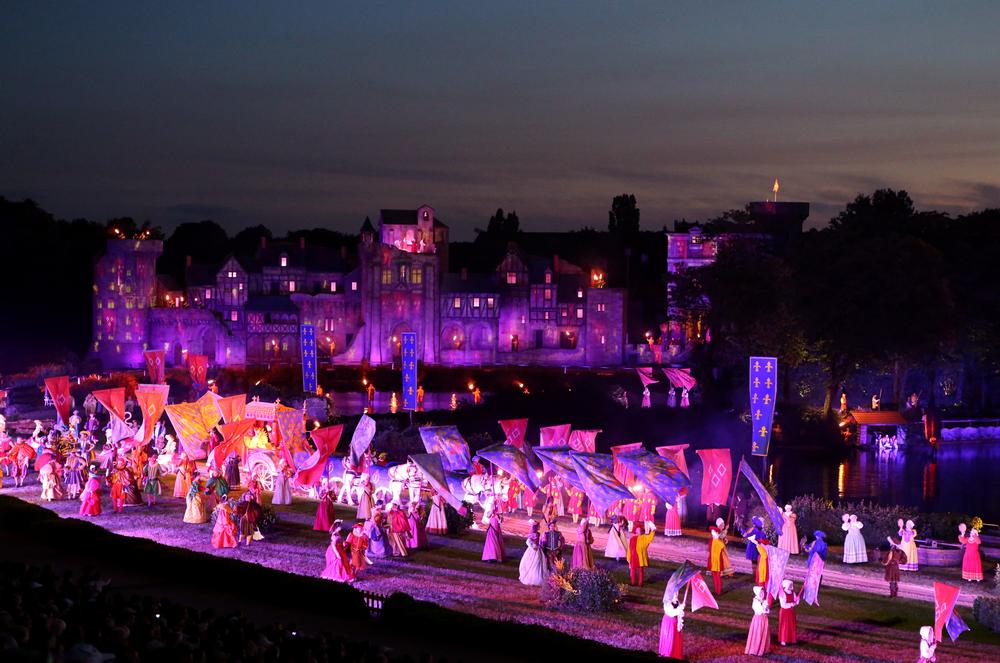
La Cinescénie In the worlld of attractions, Pépin helped to creat one of France’s most celebrated and iconic attractions – the Cinescénie at Puy du Fou, which has been running continuously since 1978.
Telling the story of the Vendée region of France between the fourteenth century and World War II, the show involves 2,400 actors on an outdoor ‘stage’ spread over 230,000sq m (2.47 million sq ft) with 28,000 costumes. Lasting for 1 hour and 40 minutes, the Cinescénie includes a number of constantly evolving performances.
In recent years, the show has reached a new level, with innovations such as lighting effects, 3D projection and new sets.
Puy du Fou welcomes two million visitors a year, making it the second-most popular park in France behind Disneyland. More than 11 million people have taken in the show.
“Puy du Fou started with the Cinéscénie,” says Pépin. “Every year it gets an upgrade and refresh with new elements and new scenes.
“It’s like constructing a building. Each year another stone is being added or replacing another one and the structure is becoming larger, better and more beautiful. It’s the same construction in the same place with the same scene but by adding more stones to this house, it eventually has become a palace.
“For visitors, they can come every few years and experience something new. This is the only example of this kind of a show which is building on itself in this manner. It’s a constantly evolving project.”
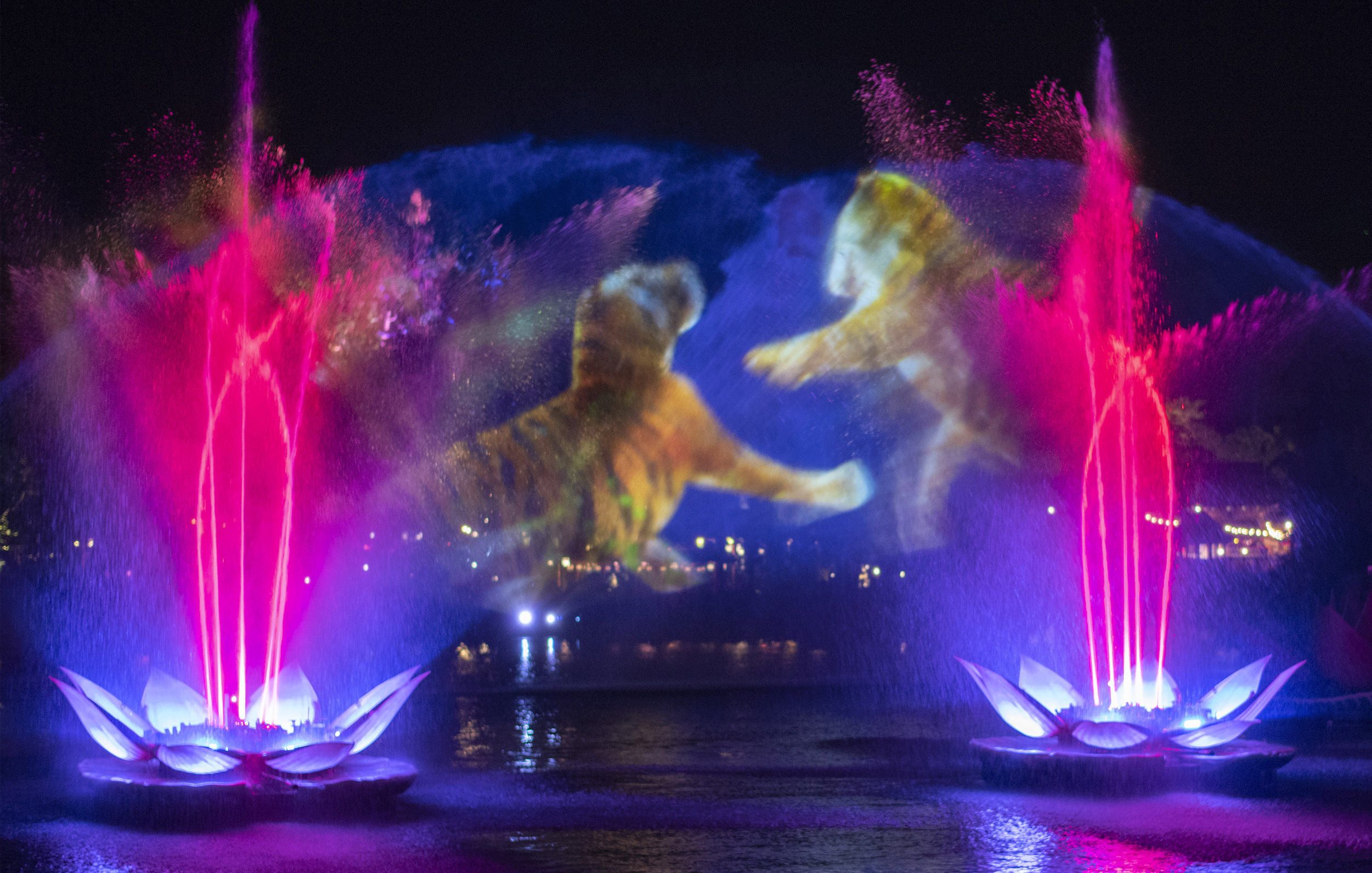
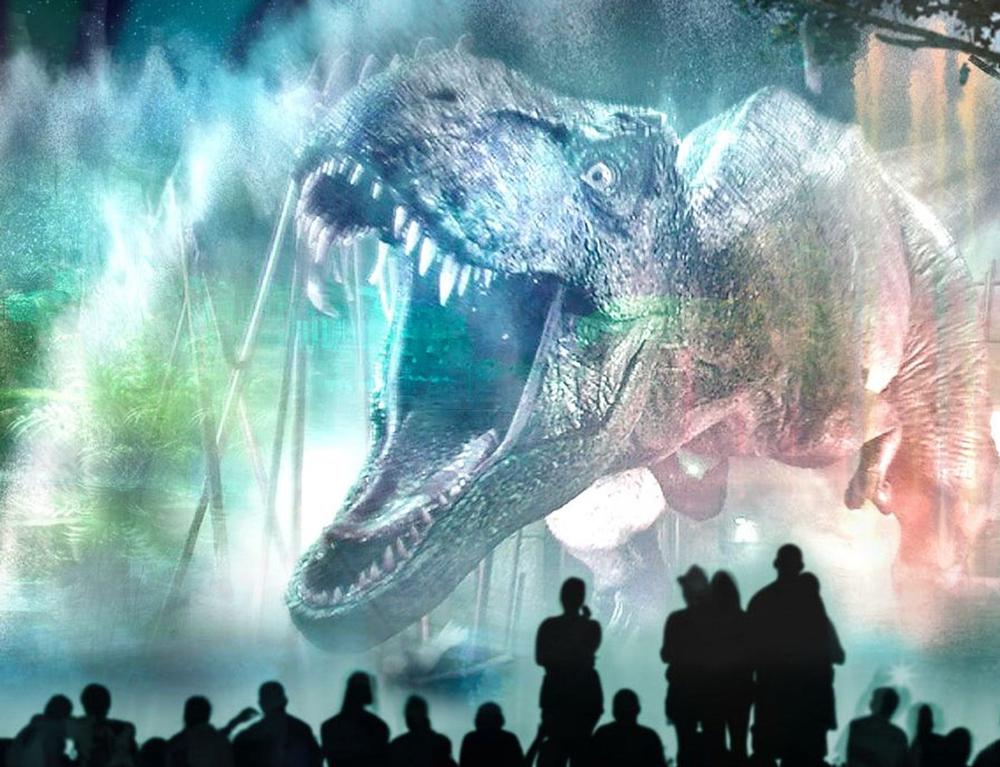
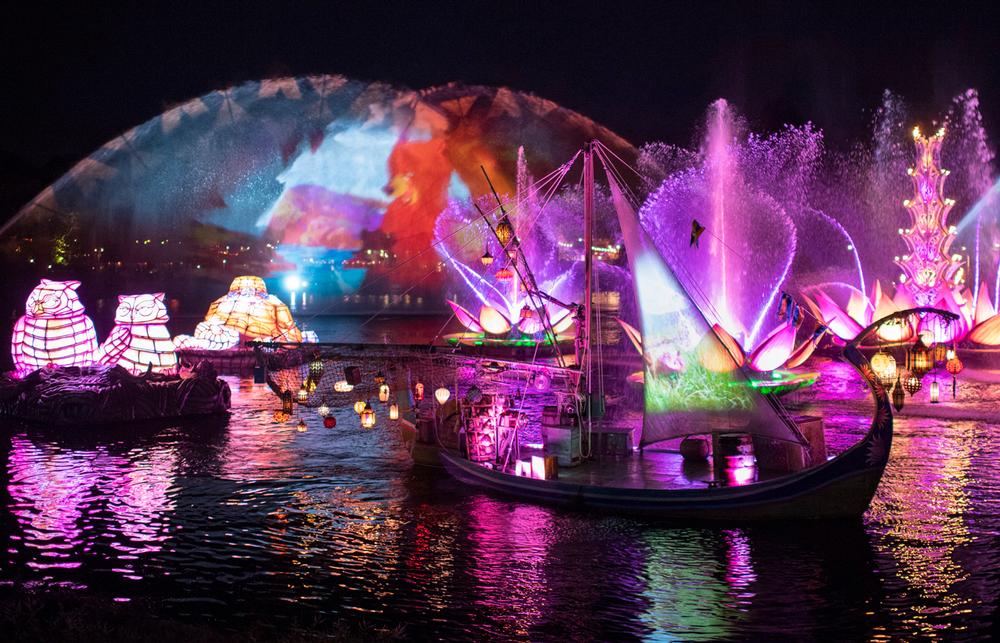
Waterscreens The waterscreen is probably Pépin’s most significant contribution to themed entertainment. The technique combines water jets and projection technology to create a moving image, which appears seemingly out of nowhere. The first such use of the waterscreen was installed at La Défense for the show in 1989.
The fountain show projected images celebrating the Bicentennial of the French Revolution. It was such a success, that the technology has subsequently been adopted by Disney, Universal and SeaWorld, among many.
“We created it as an experiment and it took off from there,” he says. “If it’s well used, it’s like the image appears somewhere where there was nothing before. It was revolutionary in the sense that during shows you could have characters appear in a place like a lake or an open area. To have that appearing and moving and speaking is astounding.”
Scaling up When creating a show on the scale of Pépin’s spectaculars, there are multiple factors to consider. A primary idea is that the story being told must go beyond language, with an international audience needing to be able to take in the narrative that has been created.
“No matter what culture or walk of life you’re from, we all have something in common,” he says. “We try to conceive stories and characters which share common values with all of these people and this is where we must place our story and our expression.
“We must find something which people can recognise themselves and with their culture. It must speak to them and speak to their neighbours. It’s quite challenging because we need to be understood by everyone and at the same time we need to make them feel that we’re telling them something specific.
“The story we’re telling in our shows need to be as deep as possible so that we can connect emotionally with our audience. I believe a lot in the power of the emotion. It’s what links the people and what must be understood by everyone.”
Always innovating After decades upon decades of success, Pépin continues to create and work in projects all over the world. He no longer heads ECA2, the production company he founded in 1974 and left in 2008, but continues to create spectacle and wonder as an independent consultant.
“Working for myself, I can really choose and do the things that I want to,” he says. “I’m working on projects in India and I’m also doing theme park consultancy work. I’ve got some larger, long term projects, which are very interesting too but those are currently under wraps.”
No matter the size of the project, Pépin believes that audience engagement is the key to long-term success: “If there’s no engagement or sincerity for what you are doing, it will feel like something is missing. Engagement means a connection with the audience. If you can recognise that then you’re onto a real winner. Experience without sincerity is really a pity.”
Looking to the future, Pépin sees ever-changing advancements in technology as the way forward to creating an even grander spectacle, with an array of new advancements offering exciting ways to create audience engagement.
“I wouldn’t say that the next step will be, for example, VR,” he says, “We shouldn’t think this way. We should think about how this new technology connects and what it means for the overall experience.
“VR and 3D are already in existence but there are still tools to invent. There will be a way of communication to bring people together and to invent. The next step will be discovering new ways to link people and to bring them together.”
Pearls of wisdom For someone wanting to replicate Pépin’s success, what advice would he give? “I’ve worked in this field for a long time, primarily on outdoor attractions and shows. I’d tell people to be ambitious and never being satisfied with anything. Have that level of ambition for the audience. Always think if you can do more or do better. Can you get deeply into the heart of the people? This is what must drive you.”
PÉPIN’s PROJECTS
• 1998 FIFA World Cup, Paris, France: Stade de France was transformed into a magical garden, with fantastic and colourful “insects” performing around and above giant buds that bloomed to reveal flowers concealing giant footballs within their petals.
• 2000 Eiffel Tower Millennium show, Paris, France: The first ever pyrotechnic display to be installed directly on an historic monument and launched from it.
• 2002-2004 Luz Y Voces Del Tajin, El Tajin, Mexico: Paying homage to Totonac cultural heritage, the show was conceived as a 1.2km (0.75mi) route through a historic archaeological site, with visitors enjoying displays of light and images projected onto the various monuments of the site, such as the famous Niches Pyramid and the ritual “pelota” playing field.
• 2002-2006 Magical Sentosa, Singapore: The multimedia water show played out as a competition between a live conductor and Kiki – a virtual monkey. In the show, each tried to control the Musical Fountains of Sentosa.
• 2004 Tokyo Disney Sea BraviSeamo, Tokyo, Japan: Telling the tale of the meeting of the Water Spirit and Fire Spirit, this development included several technical firsts for Disney’s park shows. Running until 2010, it used a range of cutting-edge technology and equipment, including a giant mechanical underwater creature and a water spirit character.
• 2008 Beijing Olympics Ceremony, Beijing, China: The event took place inside the Bird’s Nest stadium in front of a worldwide audience of approximately four-and-a-half billion.
• 2014 Akshardham Temple Show, New Delhi, India: An immersive water show based on the story of Kena Upanishad. The show is created using water fountains, music, fire, lasers, video animations, projections, pyrotechnics and live acting.
• 2018 Lost in Space, Toulouse, France: A spectacular staging of US DJ Jeff Mills’ creation, with Prabhu Edouard on the tablas and Christophe Mangou directing the Orchestre du Capitole.
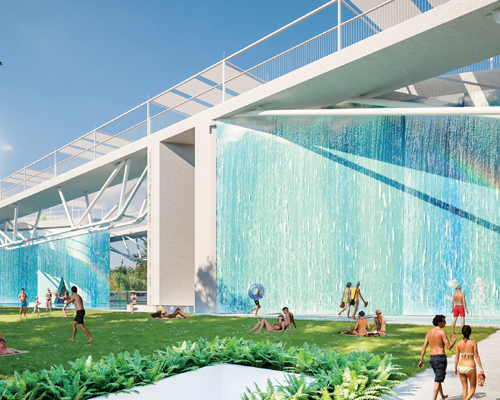
The waterscreen uses jets of water to project a giant moving image seemingly out of nowhere
Read more from this issue of Spa Business magazine
Interview: Yves Pépin
A man whose spectaculars have been
witnessed by billions, Yves Pépin
speaks about his trail-blazing career
Rides: Supersonic
We take a look at some of the most
significant ride openings around the world
Preview: Rulantica Rising
Germany’s top theme park is about to
launch a €180m addition with the opening of its long-awaited second
gate. Attractions Management looks
at Rulantica and how the new
waterpark addition is taking shape
Theme Parks: Parisian Magic
Daniel Delcourt and David Wilson
share more about Disney’s €2bn
expansion of Disneyland Paris
Promotional feature: Simworx Ltd
CEO, Terry Monkton, takes
us through the development of two unique projects, from conception to creation
Waterparks: Water World
Debrecen in Hungary is gaining an iconic
new addition – a US$30.1m waterpark
Promotional feature: WhiteWater
WhiteWater’s Una deBoer tells us
how the company maintains elite safety standards
in waterparks and the steps operators can take
to improve safety across the entire industry
Operations: Disaster Management
What can be learned from the experiences
of those unfortunate operators who have
had to react when disaster strikes?
Exhibitions: World Tour
Kath Hudson looks at the potential of the
pop-up and touring exhibition market
The Spa Life UK Convention returns from 21–23 June 2026 at Whittlebury Park Hotel, Spa &
Golf Resort, bringing together spa managers, directors and owners for two days of focused
education, meaningful connection and commercial insight. [more...]
+ More featured suppliers
COMPANY PROFILES
UK Spa Association
Our mission is to raise awareness of our industry within schools, colleges, society and crucially at [more...]
RKF Luxury Linen
RKF Luxury Linen, established in the East of France for several decades, owns an artisanal know-how [more...]
From international sport to major theme parks and global celebrations, Yves Pépin’s spectaculars have been seen by billions of people around the world. Tom Anstey speaks to this industry innovator to find out more
Yves Pépin has worked in the attractions and entertainment industries for nearly five decades
We started with this idea that the attraction is not just a question of making fun things for people to enjoy,” says Yves Pépin. “It’s about creating a place that represents the life of its people.”
A cornerstone of the attractions industry for more than 45 years, Pépin is a creator of multimedia shows and large-scale events such as the Eiffel Tower Millennium Show – a spectacle seen by an estimated one million people in person and four billion viewers on television worldwide. He’s also responsible for the opening ceremony of the 1998 FIFA World Cup and worked on the 2008 Olympic Games in Beijing, China.
Starting in 1974, his journey started alongside Yves Devraine and Thierry Arnaud, when the trio founded design and production company ECA2. While working there, he would take the traditional concept of theatre and apply it on an incredibly grand scale.
“Our ambition at the start was to create a company designing spaces,” he says.
“In every project, we try to make our shows and attractions represent real life and not be something totally alien.
“In public spaces and for big events, that was our main direction of work, which was really to involve the attractions and shows. One of our first ever shows was in La Défense, Paris. It was in 1989 and we were celebrating the Bicentennial of the French Revolution. We needed to tell that story while trying to find out what would be the animation of this place and how it could come to life. We wanted to make a show that gave the people a different relationship with the district, to make a link with the people and the places we are working.”
Ringing in the new year The Eiffel Tower show was produced with Christophe Berthonneau. As the world started to celebrate the new millennium, each major city, in turn, would try and pull out the most lavish celebration of the last 1,000 years. Pépin’s creation topped everything and is still talked about nearly two decades on.
To mark the occasion, ECA2 and Groupe F designed a grand pyrotechnic display. Starting at three minutes to midnight, the show included a combination of lights and 20,0000 fireworks.
“At the time we were working with models to test what we were doing,” said Pepin. “What we decided to do was very new in the field of fireworks and it had to be absolutely secure in every way – from a technical, safety, installation and operation perspective.”
The show, celebrated around the world, changed industry perspectives about what you can do with an existing structure to put on a special display. For Pépin, safety and security were key.
“The main challenge is that with such a grand project you cannot fail,” he says. “Spectacular means astounding and amazing your guests, making them feel things they’ve never felt before. At the same time, you must assess all risk, which is often in conflict with the spectacular. We want creativity, originality and something new in terms of concept and technology.”
The Olympics In Beijing, Pépin worked alongside renowned Chinese film director Zhang Yimou; Ric Birch, producer of the ceremonies at the 2000 Olympic Games in Sydney; and iconic director Steven Spielberg. Together, they would create the opening ceremony for the Olympic games.
The ceremony comprised two parts titled “Brilliant Civilization” and “Glorious Era”. Seen by 91,000 people in person and billions more worldwide, the first part of the celebration highlighted the Chinese civilisation and the second part exhibited “modern China and its dream of harmony between the people of the world”.
Featuring 15,000 performers, the ceremony lasted over four hours and cost a reported US$100m to produce. The event was described as spectacular and spellbinding, with much of the international press declaring it “the greatest ever opening ceremony in the history of Olympics”.
“It was a four-year total process, says Pépin. “The Chinese authorities asked different teams from across the world come up with individual projects. Following this process, they told four teams that they had been selected to do the Olympics but as a collective. This means you have to forget what you thought about and come together with a new project. We put our own concept aside and started together with these four teams tocreate the final project.”
La Cinescénie In the worlld of attractions, Pépin helped to creat one of France’s most celebrated and iconic attractions – the Cinescénie at Puy du Fou, which has been running continuously since 1978.
Telling the story of the Vendée region of France between the fourteenth century and World War II, the show involves 2,400 actors on an outdoor ‘stage’ spread over 230,000sq m (2.47 million sq ft) with 28,000 costumes. Lasting for 1 hour and 40 minutes, the Cinescénie includes a number of constantly evolving performances.
In recent years, the show has reached a new level, with innovations such as lighting effects, 3D projection and new sets.
Puy du Fou welcomes two million visitors a year, making it the second-most popular park in France behind Disneyland. More than 11 million people have taken in the show.
“Puy du Fou started with the Cinéscénie,” says Pépin. “Every year it gets an upgrade and refresh with new elements and new scenes.
“It’s like constructing a building. Each year another stone is being added or replacing another one and the structure is becoming larger, better and more beautiful. It’s the same construction in the same place with the same scene but by adding more stones to this house, it eventually has become a palace.
“For visitors, they can come every few years and experience something new. This is the only example of this kind of a show which is building on itself in this manner. It’s a constantly evolving project.”
Waterscreens The waterscreen is probably Pépin’s most significant contribution to themed entertainment. The technique combines water jets and projection technology to create a moving image, which appears seemingly out of nowhere. The first such use of the waterscreen was installed at La Défense for the show in 1989.
The fountain show projected images celebrating the Bicentennial of the French Revolution. It was such a success, that the technology has subsequently been adopted by Disney, Universal and SeaWorld, among many.
“We created it as an experiment and it took off from there,” he says. “If it’s well used, it’s like the image appears somewhere where there was nothing before. It was revolutionary in the sense that during shows you could have characters appear in a place like a lake or an open area. To have that appearing and moving and speaking is astounding.”
Scaling up When creating a show on the scale of Pépin’s spectaculars, there are multiple factors to consider. A primary idea is that the story being told must go beyond language, with an international audience needing to be able to take in the narrative that has been created.
“No matter what culture or walk of life you’re from, we all have something in common,” he says. “We try to conceive stories and characters which share common values with all of these people and this is where we must place our story and our expression.
“We must find something which people can recognise themselves and with their culture. It must speak to them and speak to their neighbours. It’s quite challenging because we need to be understood by everyone and at the same time we need to make them feel that we’re telling them something specific.
“The story we’re telling in our shows need to be as deep as possible so that we can connect emotionally with our audience. I believe a lot in the power of the emotion. It’s what links the people and what must be understood by everyone.”
Always innovating After decades upon decades of success, Pépin continues to create and work in projects all over the world. He no longer heads ECA2, the production company he founded in 1974 and left in 2008, but continues to create spectacle and wonder as an independent consultant.
“Working for myself, I can really choose and do the things that I want to,” he says. “I’m working on projects in India and I’m also doing theme park consultancy work. I’ve got some larger, long term projects, which are very interesting too but those are currently under wraps.”
No matter the size of the project, Pépin believes that audience engagement is the key to long-term success: “If there’s no engagement or sincerity for what you are doing, it will feel like something is missing. Engagement means a connection with the audience. If you can recognise that then you’re onto a real winner. Experience without sincerity is really a pity.”
Looking to the future, Pépin sees ever-changing advancements in technology as the way forward to creating an even grander spectacle, with an array of new advancements offering exciting ways to create audience engagement.
“I wouldn’t say that the next step will be, for example, VR,” he says, “We shouldn’t think this way. We should think about how this new technology connects and what it means for the overall experience.
“VR and 3D are already in existence but there are still tools to invent. There will be a way of communication to bring people together and to invent. The next step will be discovering new ways to link people and to bring them together.”
Pearls of wisdom For someone wanting to replicate Pépin’s success, what advice would he give? “I’ve worked in this field for a long time, primarily on outdoor attractions and shows. I’d tell people to be ambitious and never being satisfied with anything. Have that level of ambition for the audience. Always think if you can do more or do better. Can you get deeply into the heart of the people? This is what must drive you.”
PÉPIN’s PROJECTS
• 1998 FIFA World Cup, Paris, France: Stade de France was transformed into a magical garden, with fantastic and colourful “insects” performing around and above giant buds that bloomed to reveal flowers concealing giant footballs within their petals.
• 2000 Eiffel Tower Millennium show, Paris, France: The first ever pyrotechnic display to be installed directly on an historic monument and launched from it.
• 2002-2004 Luz Y Voces Del Tajin, El Tajin, Mexico: Paying homage to Totonac cultural heritage, the show was conceived as a 1.2km (0.75mi) route through a historic archaeological site, with visitors enjoying displays of light and images projected onto the various monuments of the site, such as the famous Niches Pyramid and the ritual “pelota” playing field.
• 2002-2006 Magical Sentosa, Singapore: The multimedia water show played out as a competition between a live conductor and Kiki – a virtual monkey. In the show, each tried to control the Musical Fountains of Sentosa.
• 2004 Tokyo Disney Sea BraviSeamo, Tokyo, Japan: Telling the tale of the meeting of the Water Spirit and Fire Spirit, this development included several technical firsts for Disney’s park shows. Running until 2010, it used a range of cutting-edge technology and equipment, including a giant mechanical underwater creature and a water spirit character.
• 2008 Beijing Olympics Ceremony, Beijing, China: The event took place inside the Bird’s Nest stadium in front of a worldwide audience of approximately four-and-a-half billion.
• 2014 Akshardham Temple Show, New Delhi, India: An immersive water show based on the story of Kena Upanishad. The show is created using water fountains, music, fire, lasers, video animations, projections, pyrotechnics and live acting.
• 2018 Lost in Space, Toulouse, France: A spectacular staging of US DJ Jeff Mills’ creation, with Prabhu Edouard on the tablas and Christophe Mangou directing the Orchestre du Capitole.
The waterscreen uses jets of water to project a giant moving image seemingly out of nowhere
Read more from this issue of Spa Business magazine
Interview: Yves Pépin
A man whose spectaculars have been
witnessed by billions, Yves Pépin
speaks about his trail-blazing career
Rides: Supersonic
We take a look at some of the most
significant ride openings around the world
Preview: Rulantica Rising
Germany’s top theme park is about to
launch a €180m addition with the opening of its long-awaited second
gate. Attractions Management looks
at Rulantica and how the new
waterpark addition is taking shape
Theme Parks: Parisian Magic
Daniel Delcourt and David Wilson
share more about Disney’s €2bn
expansion of Disneyland Paris
Promotional feature: Simworx Ltd
CEO, Terry Monkton, takes
us through the development of two unique projects, from conception to creation
Waterparks: Water World
Debrecen in Hungary is gaining an iconic
new addition – a US$30.1m waterpark
Promotional feature: WhiteWater
WhiteWater’s Una deBoer tells us
how the company maintains elite safety standards
in waterparks and the steps operators can take
to improve safety across the entire industry
Operations: Disaster Management
What can be learned from the experiences
of those unfortunate operators who have
had to react when disaster strikes?
Exhibitions: World Tour
Kath Hudson looks at the potential of the
pop-up and touring exhibition market
Global Wellness Day (GWD) will mark its 15th anniversary on Saturday 13 June 2026, with the
theme: #JoyMagenta – a celebration of the healing qualities of simple gestures and activities
that spark joy.
Global luxury hospitality brand, Six Senses, has partnered with longevity healthcare provider,
HUM2N, to launch a clinic at Six Senses London, at The Whiteley.
As part of its first hotel partnership, Mayrlife – the medical health resort company known for its
site in Altaussee, Austria – has launched a day clinic at the Rosewood Vienna.
Premium London health club, KX Chelsea, will imminently unveil its most significant
redevelopment since its launch in 2002 to create an integrated wellness model combining
training, recovery and relaxation.
Rosewood Le Guanahani St Barth, on the northeast coast of Saint Barthélemy in the French
West Indies, is offering a programme of ocean-inspired yoga classes between 8-14 June to
celebrate Global Wellness Day (GWD).
Hotel de France, located on the British Isle of Jersey, has created a wellness retreat package
that includes a hot yoga session that will take place in Jersey Zoo’s butterfly sanctuary.
The Ritz-Carlton, Langkawi, in Malaysia, has revealed a schedule for Global Wellness Day
(GWD) that includes guided rainforest walks, mindful movement and guided coastal meditation
experiences.
Longevitix, a clinical platform for preventive and longevity medicine, has launched its AI-
powered intelligence system to help physicians deliver continuous, personalised longevity-
focused care at scale.
Atmantan Wellness Centre, an integrative wellness destination in Mulshi, near Pune in India, is
expanding its portfolio by adding a new centre in Hyderabad that will launch between 2028 and
2029.
A recent survey by the UK Spa Association (UKSA) into the industry’s approach to cancer care
has revealed that almost half of participating respondents (46 per cent) are unaware that
cancer is a disability and guests with a cancer diagnosis must be given
The Spa Life UK Convention returns from 21–23 June 2026 at Whittlebury Park Hotel, Spa &
Golf Resort, bringing together spa managers, directors and owners for two days of focused
education, meaningful connection and commercial insight. [more...]
+ More featured suppliers
COMPANY PROFILES
UK Spa Association Our mission is to raise awareness of our industry within schools, colleges, society and crucially at [more...]