Yes! Send me the FREE digital editions of Spa Business and Spa Business insider magazines and the FREE weekly Spa Business and Spa Business insider ezines and breaking news alerts!
Do you have a strong opinion, or disagree with somebody else’s point of view on topics related to the spa industry? If so, Spa Business would love to hear from you. Email your letters, thoughts and suggestions to [email protected]
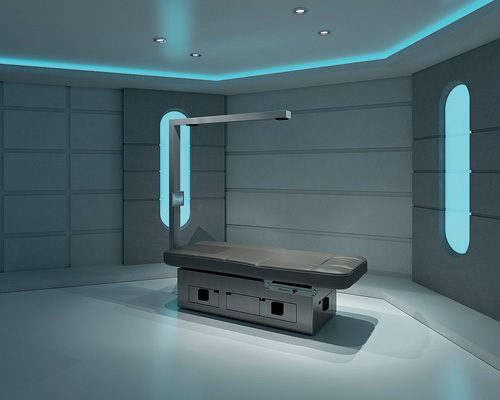
Promotional feature: Anne Semonin
Katherine Connolly, newly appointed global
director of retail and spa operations at Anne
Semonin, discusses her plans for the brand
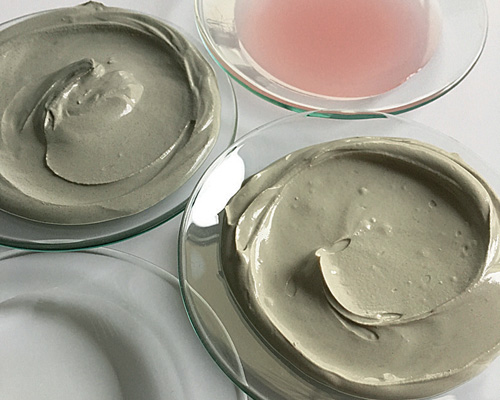
Promotional feature: Thalion
Thalion is the first company to develop highly
specialised mineral therapies for clients, says
training manager Sophie Alemany
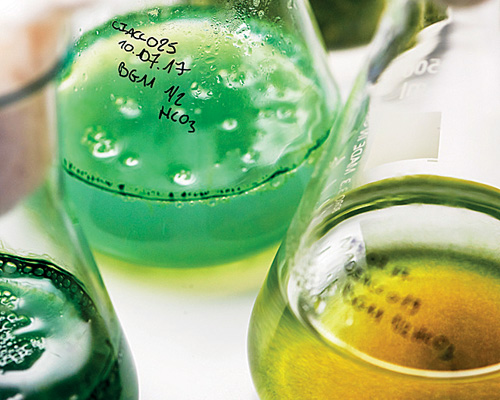
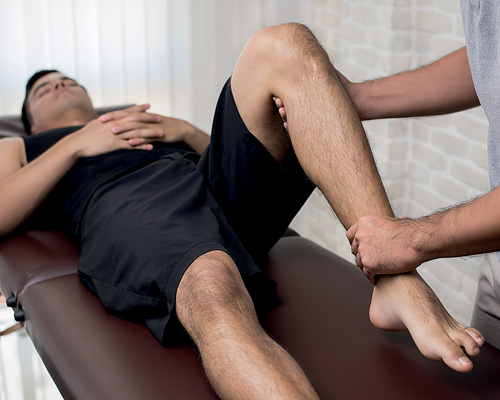
Research: Finishing touch
A new study shows that massage can
help muscle re-growth after an injury –
even when applied to the opposite limb
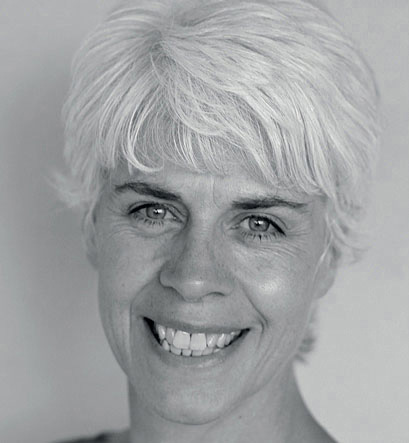
Dr Claudia Aguirre, neuroscientist and mind-body expert
Dr Claudia Aguirre
I was pleased to see the skin microbiome introduced in the Spa Foresight section of the Spa Business Handbook 2017– 2018 (see page 68). The segment hit the two key points around the skin microbiome – balance and immunity – but I’d like to add a bit more depth into our understanding of the skin microbiome.
It’s important for skin professionals – and the general public – to realise how diverse and multitudinous the skin microbiome population really is. The communities thriving on the forehead are likely very different than those on the cheeks, arms and toes. What’s more, the biodiversity of skin habitats is heavily influenced by the biodiversity of the ecosystems in which we reside (humid beach town vs. dry desert town). That means simply travelling around can impact our skin’s biodiversity, potentially affecting our risk of skin disease, allergies or other inflammatory conditions.
Another important point is our supposed understanding of bacteria in skincare. For many years, anti-acne products, treatments and education have positioned the P. acnes bacteria as the main culprit in causing acne. Fighting ‘acne-causing bacteria’ with antimicrobials is still the leading method in the anti-acne industry; however, just last year, UCLA researchers found that people with healthy skin actually had more P. acnes bacteria than acne patients. This is contrary to the long-held belief that this bacteria causes acne – in fact, the researchers position P. acnes as a probiotic! So if we’re still determining which bacteria are probiotic, perhaps it’s prudent to wait until more research is available before wiping out a potentially beneficial population on our skin, or introducing bacteria known only to be beneficial in other areas like the gut.
"The biodiversity of skin habitats is heavily influenced by the biodiversity of the ecosystems in which we reside"
shutterstock
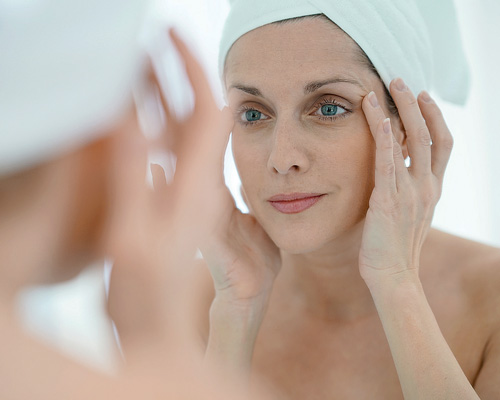
The bacteria on the forehead is likely different from those on the cheeks
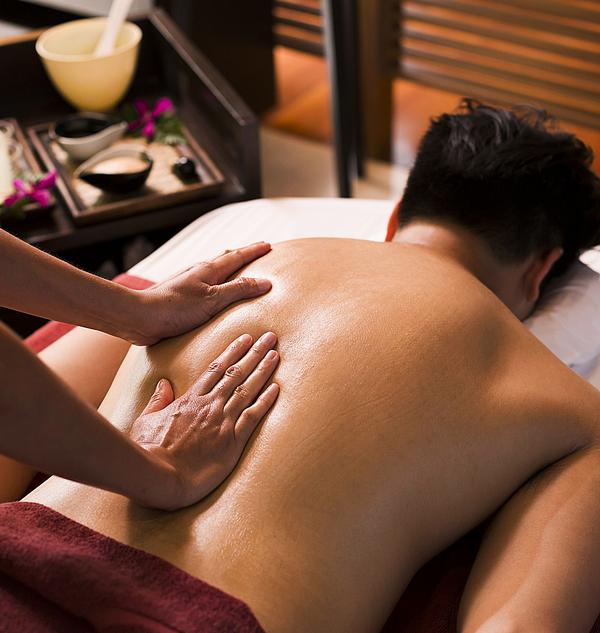
Next generation massage
Beata Aleksandrowicz, co-founder, Pure Massage Spa Training Method®
Beata Aleksandrowicz
I read with great interest your trend report in the Spa Business Handbook’s Spa Foresight section about the next generation of massage – Nose to Toe (see page 74). I agree that it’s time that we consider the whole body as one, and this is certainly a step towards that goal. All systems of the body are connected and depend on each other, but this is especially true for the muscular system. It is connected, there is a oneness and there is always a ripple effect from any movement within the body.
It is also important to bring wholeness back into our discussions about spa. Clients are coming to the spa and are often disconnected – both mentally and physically. We need to look at them as whole people.
But I would urge caution too. By simply introducing long, flowing movements from the nose to the toe – without intention or deep understanding of oneness – we may lose the great opportunity to make change for our clients. If the therapist is not present in mind and body and doesn’t make a true connection with the client, it is lost. The movements merely become a series of protocols to follow like a robot. There must be deep understanding of the connection and the reason why we are working from nose to toe. Only then will the massage deliver the true benefits for the client.
"Clients are coming to the spa and are often disconnected – both mentally and physically. We need to look at them as a whole person"
shutterstock
The muscular system is highly connected
Prevention is key for wellness – and spas
Patrick Saussay, founder and CEO, Global Project & Spa Advisory
Patrick Saussay
The adage ‘an ounce of prevention is better than a pound of cure,’ is well-known, but it seems in our modern society – focused on the present and possessions – we may have forgotten about these wise words. The culture of immediacy, a focus on external looks, economic pressures, a lack of information, and the relative novelty of the wellbeing market may explain this.
At spas, we should embrace the concern for underlying causes, and genuinely listen to people and create truly personalised care. Techniques of empathy and psychology, together with holistic treatments that incorporate exercise, nutrition, sleep, meditation and silence, can be combined with lifestyle suggestions and follow-up visits.
To live longer is not an end in itself if someone is not leading a life of health and wellness. Prevention to secure wellness is a daily process that starts early, and spas can help by offering solutions beyond curative treatments – which could lead the way for guests to interact with the spa in a more in-depth way.
There are challenges that will have to be overcome: a serious inclusion of wellness at work; educating and teaching the younger generations what wellbeing is all about; and creating a quality environment – which includes access to quality food, air and water, as well as healthy living spaces at home and at work.
These dimensions are linked, and our wellness industry seems to be ideally positioned to play a major role in these challenges.
"To live longer is not an end in itself if someone is not leading a life of health and wellness"
shutterstock
Holistic programmes and lifestyle suggestions are key
In a world where imbalance often accumulates quietly, Wildsmith unveils its newest
wellbeing innovation: Silent Loads, an approach designed to meet the needs of modern spa
guests with precision and depth. [more...]
+ More featured suppliers
COMPANY PROFILES
Blu Spas, Inc.
Blu is a full-service firm offering project feasibility, planning and design as well as operational [more...]
BC Softwear Ltd
Established in 2002 by Barbara Cooke, BC SoftWear provides unmatched expertise in the crafting of th [more...]
Do you have a strong opinion, or disagree with somebody else’s point of view on topics related to the spa industry? If so, Spa Business would love to hear from you. Email your letters, thoughts and suggestions to [email protected]
Promotional feature: Anne Semonin
Katherine Connolly, newly appointed global
director of retail and spa operations at Anne
Semonin, discusses her plans for the brand
Promotional feature: Thalion
Thalion is the first company to develop highly
specialised mineral therapies for clients, says
training manager Sophie Alemany
Research: Finishing touch
A new study shows that massage can
help muscle re-growth after an injury –
even when applied to the opposite limb
Dr Claudia Aguirre, neuroscientist and mind-body expert
Dr Claudia Aguirre
I was pleased to see the skin microbiome introduced in the Spa Foresight section of the Spa Business Handbook 2017– 2018 (see page 68). The segment hit the two key points around the skin microbiome – balance and immunity – but I’d like to add a bit more depth into our understanding of the skin microbiome.
It’s important for skin professionals – and the general public – to realise how diverse and multitudinous the skin microbiome population really is. The communities thriving on the forehead are likely very different than those on the cheeks, arms and toes. What’s more, the biodiversity of skin habitats is heavily influenced by the biodiversity of the ecosystems in which we reside (humid beach town vs. dry desert town). That means simply travelling around can impact our skin’s biodiversity, potentially affecting our risk of skin disease, allergies or other inflammatory conditions.
Another important point is our supposed understanding of bacteria in skincare. For many years, anti-acne products, treatments and education have positioned the P. acnes bacteria as the main culprit in causing acne. Fighting ‘acne-causing bacteria’ with antimicrobials is still the leading method in the anti-acne industry; however, just last year, UCLA researchers found that people with healthy skin actually had more P. acnes bacteria than acne patients. This is contrary to the long-held belief that this bacteria causes acne – in fact, the researchers position P. acnes as a probiotic! So if we’re still determining which bacteria are probiotic, perhaps it’s prudent to wait until more research is available before wiping out a potentially beneficial population on our skin, or introducing bacteria known only to be beneficial in other areas like the gut.
"The biodiversity of skin habitats is heavily influenced by the biodiversity of the ecosystems in which we reside"
shutterstock
The bacteria on the forehead is likely different from those on the cheeks
Next generation massage
Beata Aleksandrowicz, co-founder, Pure Massage Spa Training Method®
Beata Aleksandrowicz
I read with great interest your trend report in the Spa Business Handbook’s Spa Foresight section about the next generation of massage – Nose to Toe (see page 74). I agree that it’s time that we consider the whole body as one, and this is certainly a step towards that goal. All systems of the body are connected and depend on each other, but this is especially true for the muscular system. It is connected, there is a oneness and there is always a ripple effect from any movement within the body.
It is also important to bring wholeness back into our discussions about spa. Clients are coming to the spa and are often disconnected – both mentally and physically. We need to look at them as whole people.
But I would urge caution too. By simply introducing long, flowing movements from the nose to the toe – without intention or deep understanding of oneness – we may lose the great opportunity to make change for our clients. If the therapist is not present in mind and body and doesn’t make a true connection with the client, it is lost. The movements merely become a series of protocols to follow like a robot. There must be deep understanding of the connection and the reason why we are working from nose to toe. Only then will the massage deliver the true benefits for the client.
"Clients are coming to the spa and are often disconnected – both mentally and physically. We need to look at them as a whole person"
shutterstock
The muscular system is highly connected
Prevention is key for wellness – and spas
Patrick Saussay, founder and CEO, Global Project & Spa Advisory
Patrick Saussay
The adage ‘an ounce of prevention is better than a pound of cure,’ is well-known, but it seems in our modern society – focused on the present and possessions – we may have forgotten about these wise words. The culture of immediacy, a focus on external looks, economic pressures, a lack of information, and the relative novelty of the wellbeing market may explain this.
At spas, we should embrace the concern for underlying causes, and genuinely listen to people and create truly personalised care. Techniques of empathy and psychology, together with holistic treatments that incorporate exercise, nutrition, sleep, meditation and silence, can be combined with lifestyle suggestions and follow-up visits.
To live longer is not an end in itself if someone is not leading a life of health and wellness. Prevention to secure wellness is a daily process that starts early, and spas can help by offering solutions beyond curative treatments – which could lead the way for guests to interact with the spa in a more in-depth way.
There are challenges that will have to be overcome: a serious inclusion of wellness at work; educating and teaching the younger generations what wellbeing is all about; and creating a quality environment – which includes access to quality food, air and water, as well as healthy living spaces at home and at work.
These dimensions are linked, and our wellness industry seems to be ideally positioned to play a major role in these challenges.

"To live longer is not an end in itself if someone is not leading a life of health and wellness"
shutterstock
Holistic programmes and lifestyle suggestions are key
Four Seasons Resort The Nam Hai in Hoi An, Vietnam, has put together a Global Wellness Day
(GWD) agenda with activations rooted in nature and shaped by four pillars of Joy – in
alignment with the day’s theme #JoyMagenta.
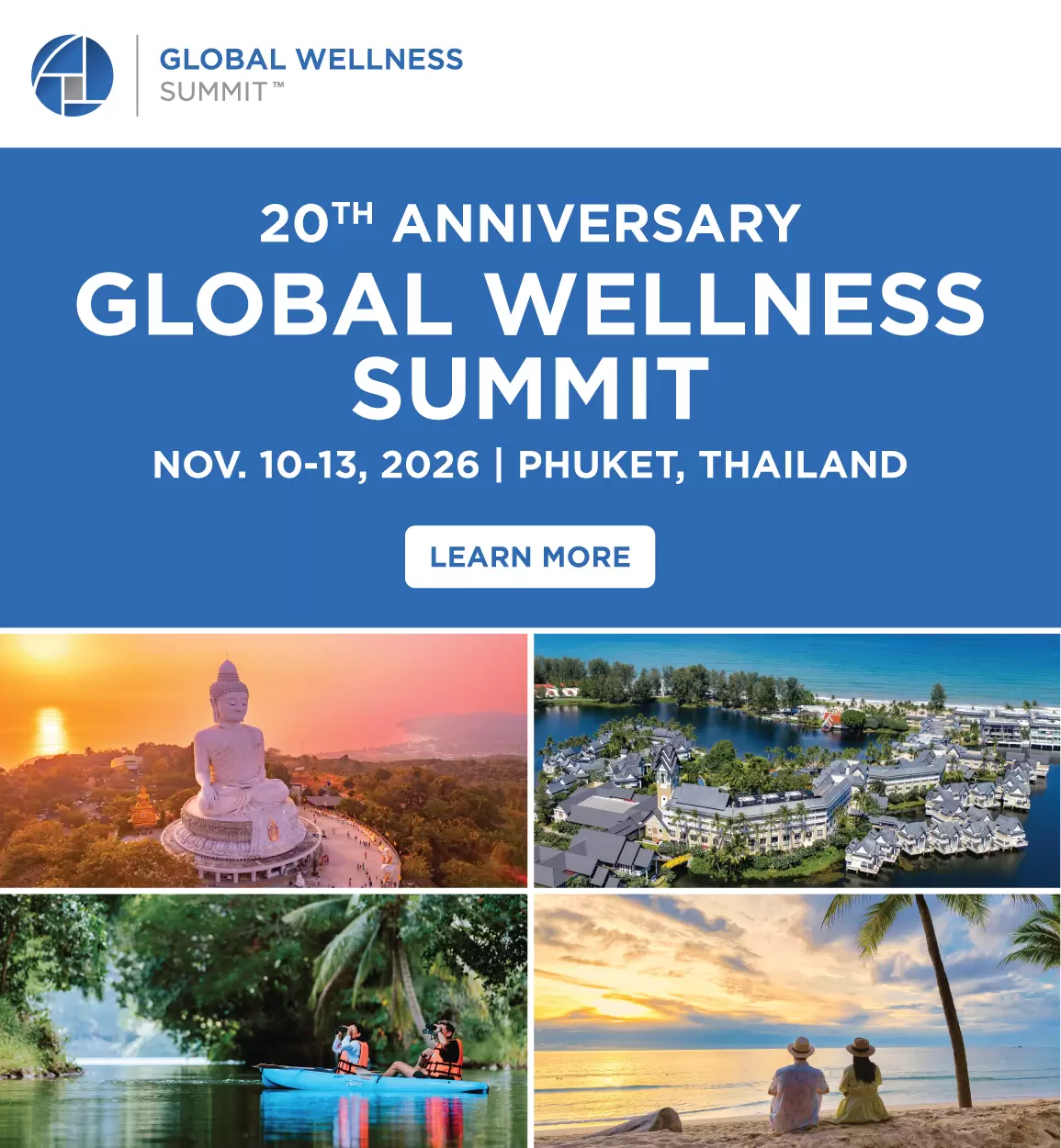
The Global Wellness Summit (GWS) will celebrate its 20th anniversary at the 2026 event in
Phuket, Thailand, later this year with the theme: The Science, Art and Soul of Wellness.
Auko, an all-inclusive development, is opening in Phong Nha in Vietnam in Q3 2026, with a
series of 30 tented eco-lodges and wellness hospitality operations by Lumina Wellbeing.
Therme Manchester’s 28-acre development, which will include interconnected glass pavilions
that measure 65,000sq m, will be the largest bathing and wellbeing attraction in the world once
complete, according to prof David Russell, CEO of Therme UK.
Naples Beach Club, a Four Seasons Resort, has opened a 2,800sq m spa called The Sanctuary,
with the design and concept inspired by the Native American people that populated Florida’s
Southwest coast – the Calusa.
Swire Hotels’ luxury hospitality brand Upper House has revealed it will roll out its two-day
House of Healing retreats at its three hotels in Hong Kong, Chengdu and Shanghai.
LVMH-owned beauty house Guerlain will launch up to five spas with partners a year as part of
its plan to expand globally, according to the brand’s international spa and wellness director,
Diane Davody.
A new global study by Kevin Kelly and Peter Yesawich, called WELLSurvey 2.0, has revealed
more than half of consumers in the UK, US and Germany would not choose numerous high-
profile wellness resort brands for a future trip.
Luxury hospitality and wellness pioneer Jeremy McCarthy has launched Leisure Alchemy, a
digital platform that will provide professionals with strategic guidance on how to build
transformational leisure experiences that drive profit.
In a world where imbalance often accumulates quietly, Wildsmith unveils its newest
wellbeing innovation: Silent Loads, an approach designed to meet the needs of modern spa
guests with precision and depth. [more...]
+ More featured suppliers
COMPANY PROFILES
Blu Spas, Inc. Blu is a full-service firm offering project feasibility, planning and design as well as operational [more...]