Empower your staff to decide who is charged for no-shows
Cancellations are a big headache in the spa and salon business. They cost you money and mess up your schedule – and you can’t avoid them.
Obviously, cancellations are a necessary evil. But you can minimize the damage they cause. There are several steps you can take to do this, including taking a credit card deposit at time of booking and sending out email reminders. But there is no one-size-fits-all solution. Let’s have a look at the steps you can take to decrease the negative impact of cancellations on your spa or salon business.
Set parameters First things first, you must have a policy in place. There are situations in which you might waver from it, but it’s best to start with something and to set parameters.
Your policy can actually get quite granular. Consider different rules for different types of bookings. You want to maintain your cancellation policy, but still have some flexibility to show empathy and say “I totally understand that your car broke down.”
Ask yourself how long you reasonably need to fill treatment spots. Do you allow 24 hours or 48 hours? It might be easy to fill one massage that cancels eight hours in advance, but you will probably need longer lead times for a group cancellation of five or 10 people. Communicate that policy to guests; you can’t enforce it if they’re unaware of it.
Use available resources Use your own data to track revenue lost through cancellations. With Turn Away Tracking, you can track times with high cancellation rates, equate that to a dollar value, and look at trends.
Then, if you know people are more likely to cancel a Sunday morning appointment, you might charge a higher deposit for those specific reservations.
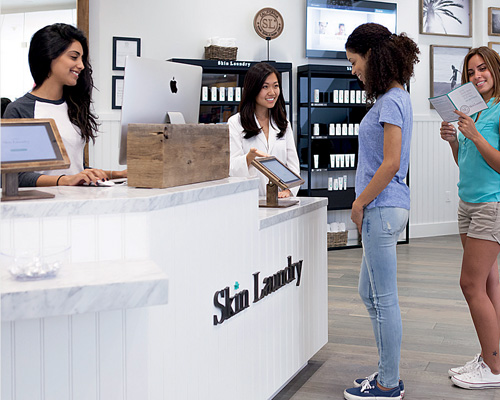
Empower your staff Your front desk staff should be empowered to make decisions such as who is charged for a no-show and who isn’t, and they should be supported in their decisions. Because if a front desk staffer says to a couple, “We are going to charge you $320 for this missed couples massage,” the client is not going to be happy and is going to ask to speak to the manager. If you want staff to enforce your policy you have to support them in doing so.
Exercise good judgement How hard are you going to enforce your cancellation policy if you’re losing $50 revenue on one 45-minute manicure, vs losing $320 on a couples’ massage? Our business is about guest experience, and you want your guests to be happy and to come back.
Guests are smart, and if you tell them you’re charging them $320 for a missed massage, they may cancel their credit card – and then you can be sure they’re not coming back.
Whatever your policy, there are going to be times when you have to take a hit, because your goal isn’t to punish people, but to get them to return. Providing customer satisfaction means being aware of the line where charging guests for no-shows negatively impacts building your customer base. At that point, you have to ask yourself whether it’s worth it – and only you can decide the answer.
Read more from this issue of Spa Business magazine
Promotional feature: Anne Semonin
Katherine Connolly, newly appointed global
director of retail and spa operations at Anne
Semonin, discusses her plans for the brand
Promotional feature: Thalion
Thalion is the first company to develop highly
specialised mineral therapies for clients, says
training manager Sophie Alemany
Research: Finishing touch
A new study shows that massage can
help muscle re-growth after an injury –
even when applied to the opposite limb
Contrast therapy, based on the alternation of hot and cold rituals, has become one of the
most valued practices in the fields of wellness and recovery. [more...]
+ More featured suppliers
COMPANY PROFILES
Trybe
Trybe was founded back in 2020, and the past five years has seen Trybe become the fastest growing al [more...]
Oakworks Inc
Oakworks is a US-based FSC-certified manufacturer of spa, massage, and medical equipment. [more...]
Empower your staff to decide who is charged for no-shows
Cancellations are a big headache in the spa and salon business. They cost you money and mess up your schedule – and you can’t avoid them.
Obviously, cancellations are a necessary evil. But you can minimize the damage they cause. There are several steps you can take to do this, including taking a credit card deposit at time of booking and sending out email reminders. But there is no one-size-fits-all solution. Let’s have a look at the steps you can take to decrease the negative impact of cancellations on your spa or salon business.
Set parameters First things first, you must have a policy in place. There are situations in which you might waver from it, but it’s best to start with something and to set parameters.
Your policy can actually get quite granular. Consider different rules for different types of bookings. You want to maintain your cancellation policy, but still have some flexibility to show empathy and say “I totally understand that your car broke down.”
Ask yourself how long you reasonably need to fill treatment spots. Do you allow 24 hours or 48 hours? It might be easy to fill one massage that cancels eight hours in advance, but you will probably need longer lead times for a group cancellation of five or 10 people. Communicate that policy to guests; you can’t enforce it if they’re unaware of it.
Use available resources Use your own data to track revenue lost through cancellations. With Turn Away Tracking, you can track times with high cancellation rates, equate that to a dollar value, and look at trends.
Then, if you know people are more likely to cancel a Sunday morning appointment, you might charge a higher deposit for those specific reservations.
Empower your staff Your front desk staff should be empowered to make decisions such as who is charged for a no-show and who isn’t, and they should be supported in their decisions. Because if a front desk staffer says to a couple, “We are going to charge you $320 for this missed couples massage,” the client is not going to be happy and is going to ask to speak to the manager. If you want staff to enforce your policy you have to support them in doing so.
Exercise good judgement How hard are you going to enforce your cancellation policy if you’re losing $50 revenue on one 45-minute manicure, vs losing $320 on a couples’ massage? Our business is about guest experience, and you want your guests to be happy and to come back.
Guests are smart, and if you tell them you’re charging them $320 for a missed massage, they may cancel their credit card – and then you can be sure they’re not coming back.
Whatever your policy, there are going to be times when you have to take a hit, because your goal isn’t to punish people, but to get them to return. Providing customer satisfaction means being aware of the line where charging guests for no-shows negatively impacts building your customer base. At that point, you have to ask yourself whether it’s worth it – and only you can decide the answer.
Read more from this issue of Spa Business magazine
Promotional feature: Anne Semonin
Katherine Connolly, newly appointed global
director of retail and spa operations at Anne
Semonin, discusses her plans for the brand
Promotional feature: Thalion
Thalion is the first company to develop highly
specialised mineral therapies for clients, says
training manager Sophie Alemany
Research: Finishing touch
A new study shows that massage can
help muscle re-growth after an injury –
even when applied to the opposite limb
Aditya Saluja, an industry leader in luxury wellness hospitality, has been
appointed as
commercial director of spa and wellness for the spa management division of
Minor Hotels,
MSpa International.
Preidlhof Luxury DolceVita Resort, a destination resort and spa in Naturno, South Tyrol in Italy,
will reveal a new spa in February 2027, which has been designed by wellness expert and
consultant Patrizia Bortolin.
Private hotel owner and developer HVL Hotels will open a new luxury resort and tourism
destination called Laval Hunter Valley in the second half of 2027 in Pokolbin, Australia.
The annual wellness festival dedicated to wellbeing, culture, longevity and human connection,
called Alma, will be hosted by Rocco Forte hotel, Verdura Resort in Sicily, Italy.
Capella Hotel Group has appointed Feisal Jaffer as chief development officer as the company
ramps up its global expansion of both its Capella and Patina brands.
Contrast therapy, based on the alternation of hot and cold rituals, has become one of the
most valued practices in the fields of wellness and recovery. [more...]
+ More featured suppliers
COMPANY PROFILES
Trybe Trybe was founded back in 2020, and the past five years has seen Trybe become the fastest growing al [more...]